
Theory Test Pass Mark: Requirements, Strategy, and What to Expect 2026
🎓 Theory test pass mark guide: 43/50 multiple choice and 44/75 hazard perception requirements, scoring details, and effective preparation approaches.
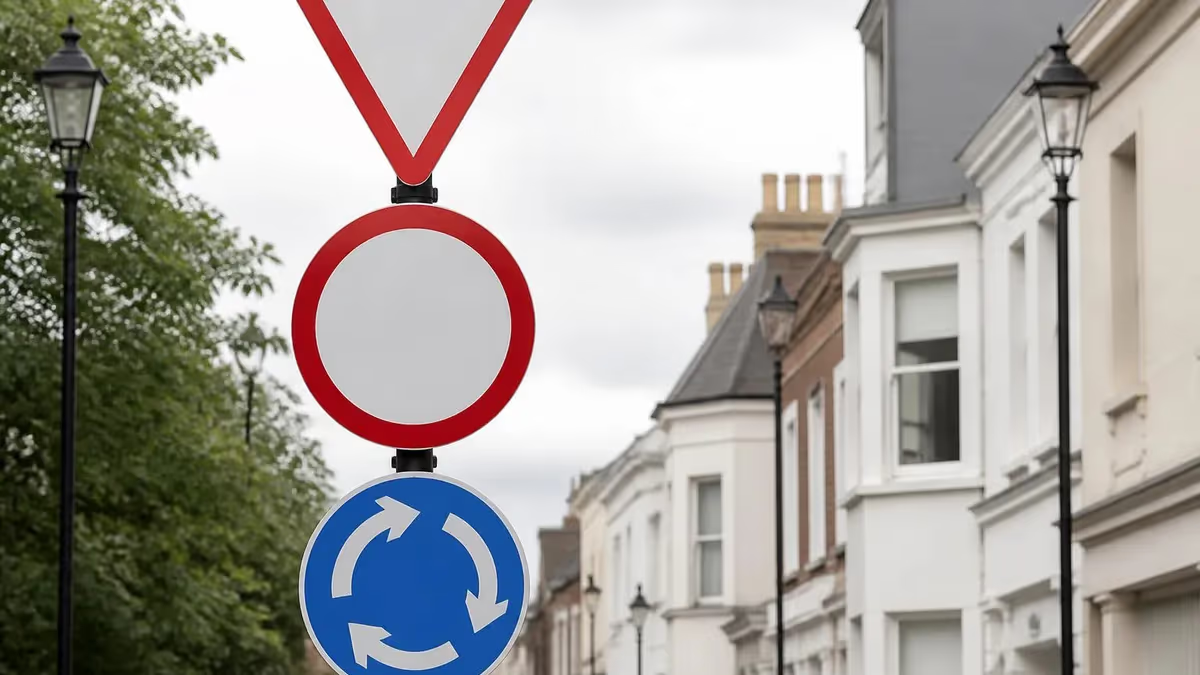
Theory test pass mark for the UK driving theory test requires passing both sections in a single sitting. The multiple choice section requires 43 out of 50 correct answers (86%). The hazard perception section requires 44 out of 75 points. Both sections must be passed simultaneously — failing one means retaking the entire test (both sections) at next attempt. Understanding these specific pass marks, what they mean strategically, and how to prepare effectively helps candidates succeed on theory test attempts. Whether you're preparing for first attempt or retaking after failure, knowing exact requirements supports targeted preparation.
For multiple choice section specifically, the 43/50 pass mark means you can miss 7 questions while still passing. The section has 57 minutes total time for 50 questions. Pass score relatively forgiving compared to many exams, but the breadth of content tested across road rules, signs, vehicle handling, safety, and DVSA regulations creates real challenge. Strong preparation produces consistent passing scores. Weak preparation produces inconsistent results sometimes passing, sometimes failing the multiple choice section.
For hazard perception section specifically, the 44/75 pass mark requires identifying developing hazards across 14 video clips. Each clip contains one or two hazards with maximum 5 points per hazard. Earlier hazard identification scores more points than later identification. The 44 point threshold means you don't need to score perfectly on every clip — but consistent strong performance across all clips matters. Hazard perception requires specific skill different from theoretical knowledge tested in multiple choice section.
This guide covers theory test pass marks comprehensively: specific scoring requirements, what scores actually represent, effective preparation approaches for each section, common mistakes leading to failure, and strategies for first-attempt success. Whether you're new to UK theory tests or returning after previous attempts, you'll find practical guidance here.
Multiple choice: 43/50 (86%) required — 7 questions can be missed
Hazard perception: 44/75 points required across 14 video clips
Both sections required: Failing one means retaking entire test
Time limits: 57 minutes for multiple choice; ~25 minutes for hazard perception
Test fee: £23 typical for car category
For multiple choice section content specifically, several topic areas appear consistently. Highway Code rules and procedures. Road signs and their meanings. Vehicle handling in various conditions. Safe driving practices. DUI/DWI laws and consequences. Sharing the road with various vehicles, pedestrians, bicycles. Stopping distances and following distances. Various other driving knowledge topics. Each topic has specific factual content that requires study. The Highway Code is the foundational reference; theory test books supplement with practice questions.
For hazard perception section specifically, the test format involves watching 14 video clips and clicking when developing hazards appear. Each clip is approximately 1 minute. One clip contains two hazards (worth more total points). Click timing matters — clicking too early before hazard develops scores zero; clicking after hazard fully develops scores zero. The specific window for scoring varies by clip. Practice on official-style clips builds the timing intuition. The theory test resources cover the test broadly.
For preparation strategy for multiple choice specifically, several approaches work. Read official driver handbook (Highway Code) thoroughly. Study theory test book covering specific test content areas. Take practice tests using official-style questions. Review wrong answers carefully to address content gaps. Take timed practice tests under realistic conditions. Build until consistently scoring 90%+ on practice tests before scheduling actual test. Match preparation intensity to your specific knowledge baseline. The theory test practice resources cover practice approaches.
For preparation strategy for hazard perception specifically, several approaches work. Hazard perception app from DVSA provides official-style practice. Various third-party practice resources. Watch driving videos analyzing developing hazards. Specifically practice timing — early identification scores more. Multiple practice attempts build pattern recognition. Build until consistently scoring above 50/75 on practice clips before scheduling actual test. Hazard perception requires specific skill that develops through practice rather than just reading.
For combined preparation specifically, both sections require attention. Don't focus exclusively on multiple choice while neglecting hazard perception. Many candidates pass multiple choice while failing hazard perception (or vice versa) on first attempt. Comprehensive preparation across both sections produces better first-attempt outcomes. Allocate study time appropriately to both sections. Multiple choice typically requires more total study time but hazard perception practice essential for that section's success.
Theory Test Pass Mark Components
57 minutes for 50 questions. 86% pass rate required. Topics: Highway Code, road signs, vehicle handling, safety, DUI laws, sharing the road, stopping distances. Foundation knowledge tested factually. Strong preparation through Highway Code study, theory book practice, timed practice tests. Build to 90%+ on practice before scheduling.
14 video clips with 1-2 hazards each. Click when developing hazards appear. Earlier identification scores more points. ~25 minutes total for section. Specific skill different from theoretical knowledge. Develops through practice rather than just reading. Practice on DVSA app and similar tools. Build to 50+/75 on practice.
Both sections must be passed in single sitting. Failing one means retaking entire test (both sections again) at next attempt. Each section's pass mark independent — strong score on one doesn't compensate for weak score on other. Comprehensive preparation across both sections produces better first-attempt outcomes.
Total exam time 1 hour 22 minutes. Brief instructions before each section. Computer-based testing at Pearson VUE testing centres. Strict environment — no phones, food, drinks. Lockers for personal items. Results available almost immediately after test completion. Pass certificate valid 2 years for booking practical test.
For theory test pass rates specifically, statistics provide context. First-time pass rate around 47-50% nationally. Pass rates vary by region and demographics. Multiple attempts common — many candidates pass on second or third attempt. The pass rate suggests theory test is genuinely challenging requiring substantial preparation. Don't approach it casually — even prepared candidates sometimes fail. The investment in thorough preparation produces better outcomes than minimum study.
For common reasons for failure specifically, several patterns emerge. Insufficient Highway Code knowledge — failing multiple choice questions requiring specific factual content. Poor hazard perception timing — clicking too early or too late. Skipping practice tests — taking actual test without realistic preparation experience. Test anxiety affecting performance — preparation looks fine but anxiety produces worse scores than preparation suggests. Generic vs UK-specific content — practicing wrong content. Each cause has specific remediation approaches. The hazard perception test resources cover the specific section.
For test day strategies specifically, several approaches help. Sleep well the night before. Eat reasonable breakfast. Arrive early at testing centre. Bring required documentation (provisional licence, valid ID). Empty pockets per testing centre rules. Listen to instructions carefully. Read each multiple choice question carefully. Click hazard perception clips at first sign of developing hazard rather than waiting for fully-developed hazard. Each strategy supports better test performance. Don't underprepare assuming day-of strategies compensate for poor study.
For after the test specifically, results available almost immediately. Pass: certificate valid 2 years for booking practical test. Failure: option to rebook for additional £23 fee with minimum 3 working days wait. Identify weak sections through detailed result feedback. Focus retake preparation on areas that failed. Most second-attempt candidates pass with focused additional preparation addressing actual gaps. Don't approach retake with same preparation that failed first time.
For specific approaches to scoring above pass mark specifically, several practices target higher scores. Don't aim just at pass mark — aim well above to handle inevitable variability. Most candidates scoring 47/50 on practice tests pass actual test consistently. Aiming at 45/50 or 46/50 on practice as confirmation threshold provides cushion against variability. For hazard perception, aiming at 55/75+ on practice provides cushion above actual 44 pass mark. Stronger preparation than minimum prevents marginal failures.
Theory Test Preparation Strategies
No prior driving knowledge:
- Time: 4-8 weeks part-time study typical
- Resources: Highway Code, official theory book, DVSA hazard perception app
- Strategy: Foundation building before practice testing intensity
- Practice goal: 90%+ multiple choice; 50+/75 hazard perception consistently
- Common pitfall: Skipping foundation in rush to take test

For specific Highway Code topics emphasized specifically, several areas appear frequently in tests. Right-of-way rules at various intersections. Speed limits in different contexts (school zones, residential, motorways, etc.). Specific signage meanings. DUI/DWI laws and consequences. Stopping distances at various speeds. Following distances. Lane usage rules. Parking restrictions. Vehicle equipment requirements. Each topic has specific factual content that test questions assess. Building solid Highway Code knowledge across these topics supports passing.
For specific hazard perception techniques specifically, several approaches help. Watch each clip actively rather than passively. Look for developing hazards (situations that could cause incident) not just stationary objects. Click at first indication hazard developing — earlier scoring more. Don't click when no hazard exists (no points but reasonable). Don't click after hazard fully developed (zero points for that hazard). The timing window matters substantially. Practice builds intuition for appropriate click timing.
For test anxiety specifically, several approaches help. Thorough preparation reduces anxiety from inadequate readiness. Familiarity with test format reduces anxiety about unknowns. Sleep and eating well supports calm performance. Practice taking under realistic timed conditions builds tolerance for time pressure. Brief breathing exercises before test calm nerves. Acceptance that not every question will be perfect — focus on overall performance rather than individual question performance. Most candidates manage anxiety well enough to perform near practice levels. The theory test practice resources cover practice approaches.
For mental rehearsal specifically, visualizing test day produces better performance. Mentally walk through arriving at testing centre, checking in, taking test. Practice answering specific question types calmly. Visualize clicking hazard perception clips at appropriate timing. Mental rehearsal builds confidence and reduces test-day surprises. The investment in mental preparation supplements practical preparation effectively.
For specific common multiple choice question patterns specifically, several types appear. Knowledge questions: "What does this sign mean?" or "What is the speed limit on a motorway?" Application questions: scenario requiring application of road rules. Specific number questions: stopping distances, fines, penalty points. Specific procedural questions: actions required in specific situations. Each type tests different aspect of preparation. Building practice across all question types supports comprehensive readiness.
Theory test passage requires passing both multiple choice (43/50) and hazard perception (44/75) sections in same sitting. Strong score on one section doesn't compensate for failing the other. Failing either section means retaking entire test (both sections) at next attempt with another £23 fee. Comprehensive preparation across both sections matters substantially — neglecting one section while focusing on the other often produces failure. Many candidates skilled in theoretical knowledge struggle with hazard perception due to its different skill requirements. Practice both sections regularly during preparation period.
For specific multiple choice question variation specifically, questions vary in difficulty across actual tests. Some questions test obvious factual content. Others test subtle distinctions or specific procedural details. Difficulty distribution roughly normal — some easy, some moderate, some challenging. The 43/50 pass mark allows missing 7 questions, providing cushion against challenging questions. Don't expect every question to be straightforward; preparation builds capability for full difficulty range.
For hazard perception across various conditions specifically, clips include various driving scenarios. Urban driving with pedestrians and parked cars. Rural driving with potential animal hazards. Motorway driving with merging and traffic flow. Various weather conditions. Various time-of-day scenarios. Each scenario type tests different hazard recognition. Diverse practice across scenarios builds skill applicable to actual exam variety. The theory test resources cover theory test preparation.
For preparation timeline specifically, several patterns work. Plan for 2-8 weeks total preparation. Adjust based on baseline knowledge. Start with foundation content (Highway Code reading). Add practice tests after foundation building. Final week intensive practice mimicking actual test conditions. Adjust based on practice score progression. Don't schedule actual test until practice scores demonstrate readiness. The investment in thorough preparation produces better outcomes than rushed inadequate preparation.
For specific online practice resources specifically, several quality options exist. Official DVSA Theory Test Kit app (paid, comprehensive). Driving Theory Test Free 4 in 1 (free with ads). Theory Test Pro (subscription). Various other apps with varying quality. Combining app practice with Highway Code reading and physical theory book study produces strongest preparation. Single-source preparation often misses content other sources cover.
For specific final-week practice specifically, several approaches help. Take 2-3 full-length practice tests under realistic timed conditions. Focus particularly on weak areas identified earlier. Light review night before test (don't try to learn new material). Get adequate sleep. Trust preparation rather than cramming. The final week solidifies preparation rather than introducing new material. Most candidates who've prepared adequately perform well on test day with reasonable final preparation.
Theory Test Final Prep Checklist
- ✓Multiple choice practice scores 90%+ consistently
- ✓Hazard perception practice scores 50+/75 consistently
- ✓Highway Code reviewed thoroughly
- ✓Required documentation gathered (provisional licence, ID)
- ✓Adequate sleep night before test

For specific UK regional considerations specifically, theory test format consistent across UK regions but accents in some hazard perception clips reflect local accents. Candidates from various regions adapt to clips with various drivers and conditions. Specific regional preparation typically not needed — the test content is national rather than regional.
For specific motorcycle theory test variations specifically, motorcycle theory test similar format to car but with motorcycle-specific content. Some questions specifically about motorcycle handling, equipment, conditions. Hazard perception clips include scenarios particularly relevant to motorcyclists. Pass marks similar to car test. Preparation requires motorcycle-specific resources beyond car-focused materials.
For specific lorry/bus theory test variations specifically, commercial vehicle theory tests include specific commercial driving content. Heavier vehicles' specific operational considerations. Specific safety regulations for commercial vehicles. Various commercial vehicle types covered. Pass marks vary slightly from car test. Commercial test preparation requires specific commercial-focused resources.
For specific scoring transparency specifically, DVSA has published scoring framework for hazard perception. Specific point distribution per hazard documented. Specific clip difficulty considerations. The transparency supports better understanding of how scoring works. Practicing with this understanding produces better preparation outcomes.
For specific gradual difficulty progression specifically, hazard perception clips designed with progressive difficulty. Earlier clips somewhat easier than later clips. Clips test variety of skills across different scenario types. Building practice from easier to more difficult clips supports skill development progression. Most successful candidates practice extensively rather than just attempting actual test cold.
For specific testing centre logistics specifically, several practical considerations matter. Arrive 15-20 minutes early. Bring required documentation (provisional licence photocard plus paper counterpart, valid ID). Empty pockets per testing centre rules — phones, watches, etc. go in lockers. Listen to instructions before each section. Don't start clicking on hazard perception until prompted. Read multiple choice questions carefully. Each logistical element supports smooth test experience. The investment in preparation extends to test-day operational considerations.
For specific candidate populations with adaptations specifically, several accommodations available. Reading or recognition difficulties may qualify for special arrangements. Hearing-impaired candidates can request appropriate accommodations. Disabled candidates have specific access provisions. Foreign language considerations don't automatically permit translation but specific arrangements may apply. Each accommodation requires advance notice when booking. Discussing specific needs with DVSA before booking supports appropriate test experience.
For specific maintaining-status post-pass specifically, theory pass certificate valid 2 years for booking practical test. Practical test must be taken within validity period. Failing to take practical test within 2 years means retaking theory test. Many candidates take theory test with practical readiness in mind to avoid theory retaking. Plan integrated theory-practical timeline to maximize theory certificate value. Strategic timing produces better overall licensing outcomes.
For specific final-week confidence specifically, candidates who've prepared adequately benefit from confidence in their preparation rather than last-minute cramming. The preparation done well in advance produces strong outcomes; trying to fundamentally improve readiness in final week typically doesn't work well. Trust the preparation done well in advance. Confidence in capability supports better test-day performance. Mental approach matters alongside technical preparation. Combined preparation across knowledge, skills, and mindset produces best outcomes. Each preparation element supports the others toward overall test success.
Theory Test Pass Mark Quick Facts
Theory Test Preparation
- +Pass marks reasonable with adequate preparation
- +Practice tests support targeted study and readiness assessment
- +Multiple resources available (Highway Code, books, apps)
- +Both sections testable through realistic practice
- +Pass rates suggest preparation matters more than aptitude
- −Both sections must be passed simultaneously — failing one means retaking entire test
- −Hazard perception requires specific skill different from theoretical knowledge
- −Test anxiety can affect performance despite adequate preparation
- −Failure produces additional £23 fee plus 3-day waiting period for retake
- −Theory pass certificate validity only 2 years before retaking required
Pros and Cons at a Glance
| Pros | Cons |
|---|---|
| Pass marks reasonable with adequate preparation | Both sections must be passed simultaneously — failing one means retaking entire test |
| Practice tests support targeted study and readiness assessment | Hazard perception requires specific skill different from theoretical knowledge |
| Multiple resources available (Highway Code, books, apps) | Test anxiety can affect performance despite adequate preparation |
Sample DVSA UK Driving Theory Practice Questions
Try these questions from our free DVSA UK Driving Theory practice tests. The correct answer and an explanation follow each question.
On a smart motorway, what does a speed limit sign inside a red circle on a gantry mean compared to one without a red circle?
- A. Red circle means advisory only, no circle means mandatory
- B. Red circle means mandatory and enforceable, no circle means advisory
- C. Both are mandatory
- D. Neither is enforceable
Answer: B. Red circle means mandatory and enforceable, no circle means advisory
A speed limit displayed in a red circle on a gantry is a mandatory, legally enforceable speed limit. A speed limit displayed without a red circle is advisory — it is recommended but not legally enforceable. However, you should still follow advisory limits as they indicate a hazard.
What is the minimum distance you should leave when overtaking a cyclist?
- A. At least 0.5 metres
- B. At least 1.0 metre
- C. At least 1.5 metres
- D. At least 2.0 metres
Answer: C. At least 1.5 metres
The Highway Code (updated 2022) states that when overtaking a cyclist at speeds of up to 30 mph, you should leave at least 1.5 metres of space. At higher speeds, you should leave even more room.
What colour are the reflective road studs (cat's eyes) that mark the central reservation of a motorway?
- A. Red
- B. White
- C. Green
- D. Amber
Answer: D. Amber
Amber cat's eyes mark the central reservation on a motorway, warning drivers they are near the central barrier.
You are approaching a horse and rider on a country lane. What is the maximum speed at which you should pass?
- A. 10 mph
- B. 20 mph
- C. 30 mph
- D. The speed is not specified, but you must pass 'wide and slow'
Answer: A. 10 mph
The Highway Code (Rule 215) is very specific about passing horses. You must slow down to a maximum of 10 mph and allow at least 2 metres of space. Horses are flight animals and can be easily scared by vehicles that are moving too fast or are too close.
DVSA Questions and Answers
How this page was made: written with AI tools. Exam facts are checked against the official sources listed below. Not reviewed by a subject-matter expert. Editorial policy
Sources & references
Exam facts on this page (fees, format, dates, passing scores) are checked against these official sources; the date is our last check. Editorial policy
- gov.uk — Time limit, eligibility, registration, test dates, passing score, retake policy, score release, score validity, exam format, fees · verified Oct 2026