
Official DVSA Theory Test: Complete Study Guide for UK Drivers in 2026 September
Everything you need to pass the official DVSA theory test in 2026 September — 🟢 format, pass marks, study tips, and free practice questions.
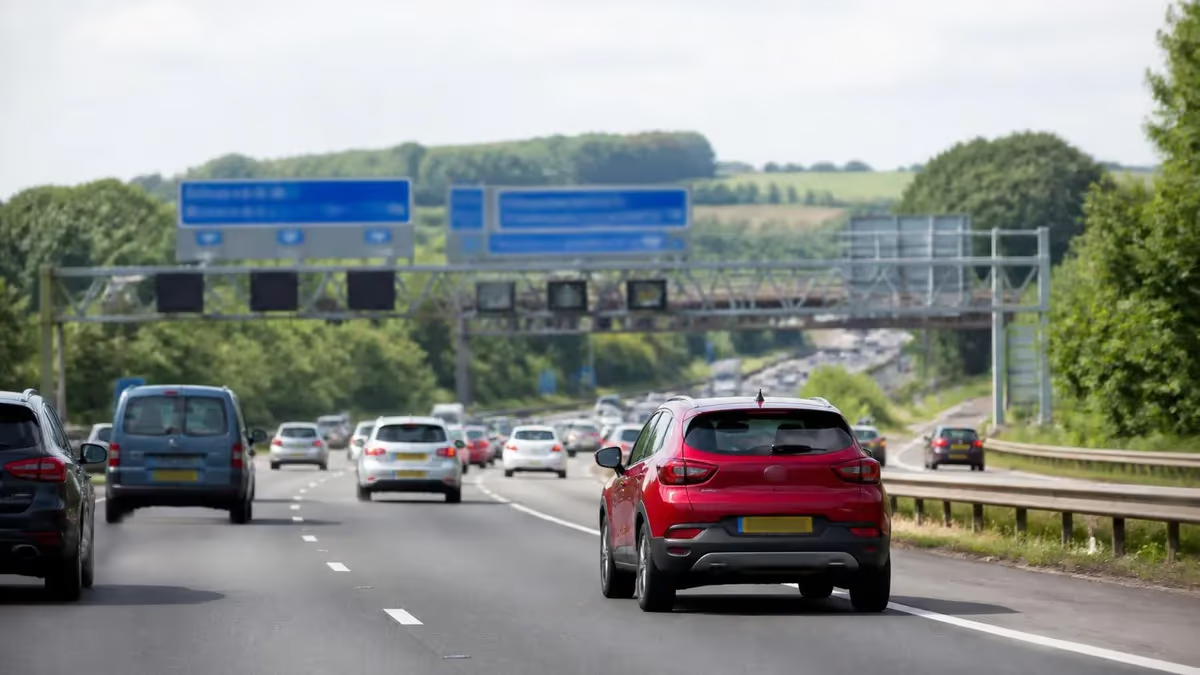
The official dvsa theory test is a mandatory step every learner driver in Great Britain must pass before booking a practical driving test. Administered by the Driver and Vehicle Standards Agency, the test is designed to assess whether you have the knowledge and hazard perception skills needed to drive safely on UK roads. Understanding exactly what the test involves — its structure, scoring system, and the topics it covers — gives you a significant advantage before you sit in front of that DVSA touchscreen terminal.
The theory test is split into two distinct parts: the multiple-choice questions section and the hazard perception section. Both parts are taken on the same day at a DVSA-approved test centre, and you must pass both parts in a single sitting. If you fail either part, you must retake the entire test and wait at least three full working days before booking again. Many candidates underestimate this requirement and are caught off guard by the waiting period, so planning ahead is essential.
There are currently over 180 theory test centres across England, Scotland, and Wales, making it reasonably accessible for most learner drivers. You can book your theory test through the official GOV.UK booking service, and the current fee as of 2026 is £23. The booking process requires a valid provisional driving licence, and you must bring that licence — along with any other required identification — to the test centre on the day of your test.
Preparation is the single most important factor in passing first time. Research consistently shows that candidates who use structured study materials, including the official DVSA Highway Code and the DVSA's own revision publications, pass at a significantly higher rate than those who rely solely on experience or guess-work. The official question bank contains over 900 questions across 14 topic categories, and examiners draw from this pool for every test session.
Many learner drivers are surprised to discover that the theory test is not just about memorising road signs. Topics range from vehicle safety and first aid at the scene of an accident, to eco-friendly driving, motorway rules, and the effects of alcohol and drugs on driving ability. Each of these areas carries real-world significance, and the DVSA has designed the question bank to reflect genuine hazards and dilemmas you will face as a driver throughout your life.
This guide covers everything you need to know about the official DVSA theory test — from the exact format and pass marks, to revision strategies, common pitfalls, and how to make the most of practice tests in the weeks leading up to your exam. Whether you are preparing for a car licence, a motorcycle licence, or a larger vehicle category, the principles outlined here will help you approach test day with confidence and clarity.
By the time you have worked through this guide, you will have a clear picture of the theory test's structure, know which topics to prioritise, understand how the hazard perception scoring system works, and have a realistic revision schedule to follow. Let us start with the numbers that put the challenge in context.
DVSA Theory Test by the Numbers
DVSA Theory Test Study Schedule
- ▸Read Highway Code sections 1–60 (road users requiring extra care)
- ▸Learn all mandatory, warning, and information road signs
- ▸Complete one full 50-question mock test to identify weak areas
- ▸Review the DVSA's official Know Your Traffic Signs publication
- ▸Study DVSA first aid at the scene of an accident guidance
- ▸Practise vehicle safety questions — lights, brakes, tyres, loads
- ▸Learn stopping distances at all key speeds (20, 30, 50, 70 mph)
- ▸Complete two timed mock tests and review every incorrect answer
- ▸Watch 10 DVSA hazard perception practice clips daily
- ▸Study eco-friendly driving techniques and vehicle loading rules
- ▸Review motorway, dual-carriageway, and rural road regulations
- ▸Practise clicking timing on developing hazards — aim for scores of 4–5 per clip
- ▸Take a complete combined mock test (both sections back to back)
- ▸Revisit every category where you are scoring below 80%
- ▸Study effects of alcohol, drugs, and fatigue on driving performance
- ▸Confirm your test centre location, arrival time, and ID requirements
The official DVSA theory test covers 14 distinct topic categories drawn from the Highway Code, DVSA guidance publications, and road safety research. Understanding which categories carry the most questions — and which concepts are tested most frequently — is one of the most effective ways to focus your revision time. Rather than trying to memorise every single question in the official bank, you should aim to deeply understand the principles behind each topic area so that you can reason through unfamiliar questions on the day.
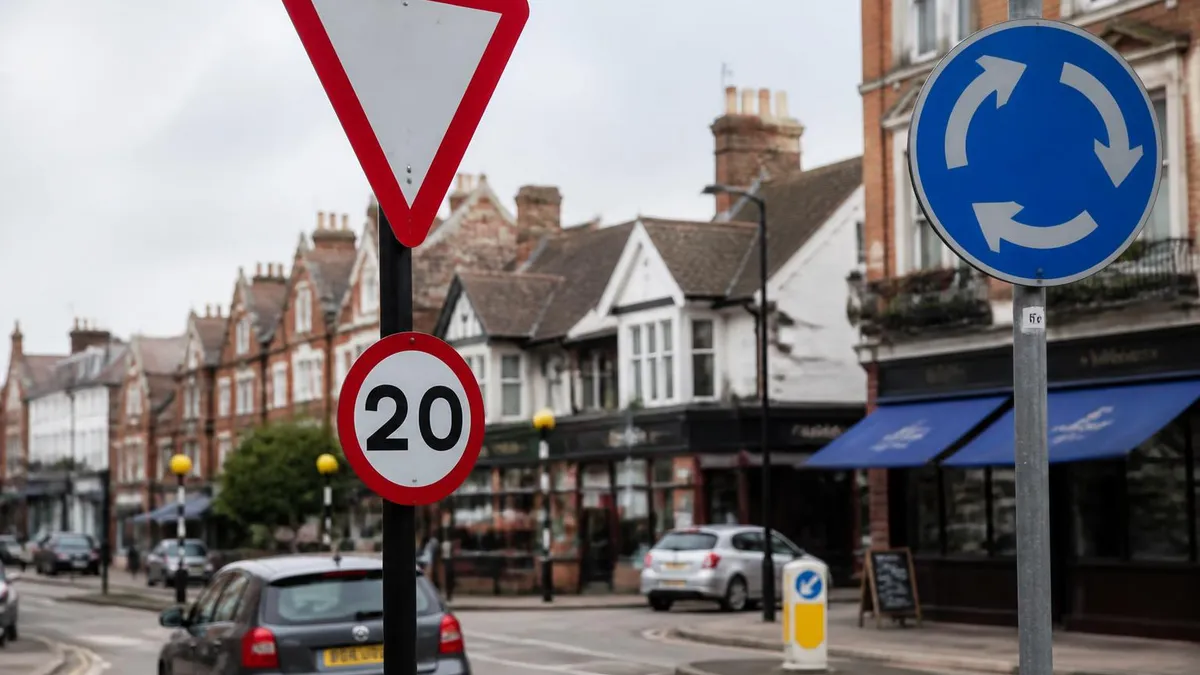
Road signs and markings form the backbone of the multiple-choice section. Questions in this area test your ability to identify the meaning of mandatory signs (red circles), warning signs (red triangles), and information signs (blue rectangles and squares), as well as road markings including yellow box junctions, hatched areas, and lane markings. The DVSA's own Know Your Traffic Signs publication, available as a free download from GOV.UK, is the definitive reference for this category and is worth reading cover to cover at least once.
Alertness and attitude questions account for a significant portion of the test and cover topics such as the dangers of fatigue, the effects of emotional stress on driving concentration, and appropriate responses to aggressive driving behaviour from other road users. The DVSA consistently asks questions about following distances, reaction times, and how conditions such as rain, fog, and bright sunshine affect the distance you need to stop safely from various speeds.
Vehicle safety questions require you to know the legal requirements for tyres (including minimum tread depth of 1.6 mm across the central three-quarters of the tread), headlight rules, brake testing, and carrying loads safely. You will be tested on what checks to carry out before a journey and what to do if a warning light illuminates on the dashboard. These practical vehicle knowledge questions are straightforward to learn with a structured approach and represent reliable marks in the test.
Safety and your vehicle also extends to understanding the implications of vehicle modifications, the legal requirements for seatbelts across all passenger types, and the rules around towing trailers and caravans. Many candidates find that reading the DVSA's The Official DVSA Guide to Driving publication alongside the Highway Code fills in the gaps that pure question-bank practice leaves behind, particularly for less common scenarios like towing regulations and motorway breakdowns.
Incidents, accidents, and first aid represent one of the most important topic areas from a real-world perspective. The test frequently asks about the correct sequence of actions at the scene of an accident — checking for danger, calling 999, administering basic first aid, and managing other hazards. You should know the recovery position, how to deal with a casualty who is not breathing, and when it is safe to move an injured person. These questions are often the difference between passing and failing for candidates who have not specifically revised this area.
Eco-friendly driving and vehicle loading is a growing area of the test, reflecting the DVSA's commitment to promoting fuel-efficient, environmentally responsible driving behaviour. Questions in this category cover topics such as the effect of tyre pressure on fuel consumption, how smooth acceleration and anticipation reduce fuel use, and the rules for carrying loads safely on roof racks and trailers. Spending time on this category pays dividends, as many candidates overlook it in favour of road signs revision.
Hazard Perception: How It Works, How It Scores, and How to Pass
The hazard perception section consists of 14 video clips, each filmed from the perspective of a driver moving through a real UK road environment. Each clip contains at least one developing hazard — a situation that requires the driver to take some action, such as slowing down, changing direction, or giving way. One of the 14 clips contains two developing hazards. Your job is to click the mouse button (or tap the screen) as soon as you spot a hazard beginning to develop, before it becomes a fully formed danger.
The scoring system rewards early identification. Each developing hazard is worth up to five points, and the scoring window opens as soon as the hazard begins to develop and closes once it has fully materialised. Clicking early within the window scores five points; clicking slightly later scores four, three, two, or one point depending on when within the window your response falls. Clicking too early — before the hazard window opens — scores zero for that hazard, as does clicking too late. The maximum possible score is 75 points across all 14 clips.
Preparing with Practice Tests vs. Reading the Highway Code Alone
- +Practice tests expose you to the exact question format used in the real DVSA exam
- +Timed mock tests build the focus and pace needed to answer 50 questions in 57 minutes
- +Immediate feedback on incorrect answers reinforces correct knowledge faster than passive reading
- +Repeated exposure to the question bank highlights your weakest topic categories clearly
- +Hazard perception practice clips train your eye to spot developing hazards in real road footage
- +Online practice platforms are available 24/7 and can be used on mobile devices during commutes
- −Question-only revision can lead to pattern recognition rather than genuine understanding
- −Free practice platforms may use outdated questions not aligned with the current DVSA question bank
- −Over-reliance on mock tests can leave gaps in topic areas that appear rarely in practice
- −Without reading the Highway Code, candidates may fail questions that require applied reasoning
- −Hazard perception clips on unofficial platforms may not replicate the timing and scoring of the real test
- −Candidates who only use practice tests may struggle with unfamiliar phrasings of familiar concepts
Your Official DVSA Theory Test Revision Checklist
- ✓Read the complete Highway Code at least once from cover to cover before your test date
- ✓Learn all road sign categories — mandatory, warning, information, and direction signs
- ✓Memorise stopping distances at 20, 30, 40, 50, 60, and 70 mph in dry and wet conditions
- ✓Study the minimum legal tyre tread depth (1.6 mm) and tyre safety requirements
- ✓Practise at least five full 50-question timed mock tests under real exam conditions
- ✓Complete a minimum of 14 hazard perception practice clips per revision session
- ✓Revise first aid procedures — recovery position, CPR basics, and traffic accident protocol
- ✓Study eco-friendly driving techniques including anticipation, tyre pressure, and smooth acceleration
- ✓Review motorway driving rules including lane discipline, contraflow systems, and breakdown procedures
- ✓Check your test centre address, confirm your arrival time, and prepare your provisional licence ID
Only around 47% of car theory test candidates pass first time
DVSA published data consistently shows that nearly half of all candidates fail the theory test on their first attempt. The most common reason is under-preparation for the hazard perception section, which many learners treat as an afterthought. Candidates who spend equal time on both sections pass at a significantly higher rate — make sure your revision covers the clips as thoroughly as it covers the multiple-choice questions.
Passing the official DVSA theory test first time is absolutely achievable with the right approach — but it requires structured preparation rather than last-minute cramming. The most consistently successful candidates start revising four to six weeks before their test date, use a combination of the Highway Code and practice questions, and treat each revision session as deliberate practice rather than passive reading. Knowing the content is not enough; you also need to be comfortable with the format, the timing pressure, and the specific way DVSA phrases its questions.
One of the most valuable habits you can develop is reviewing every incorrect answer after a mock test, not just noting that you got it wrong. When you answer a question incorrectly, look up the relevant section of the Highway Code and read it in full context. Understanding why the correct answer is correct — and why the distractors are wrong — creates lasting knowledge rather than temporary memorisation. This approach transforms each mistake into a learning opportunity that compounds across your revision period.
Time management during the actual test matters more than most candidates expect. You have 57 minutes to answer 50 questions, which gives you just over a minute per question on average. Most questions can be answered in 20 to 30 seconds if you know the material well, which means you will have time to review flagged questions at the end.
Use the flagging feature — provided on the DVSA test terminal — to mark any questions you are unsure about, then return to them after completing the rest of the section. Do not spend so long on a difficult question early on that you run short of time at the end.
On the day of your test, arrive at the test centre at least 15 minutes early. You will need to present your valid UK provisional driving licence and, if your licence was issued before 1998, you will also need a valid passport. You cannot bring a phone, revision materials, or food into the testing room. The invigilator will provide all necessary equipment, and you will receive a brief tutorial on the computer system before your test begins. This tutorial does not count towards your time allowance.
After you complete both sections of the theory test, your results are displayed on screen immediately. You receive a printed certificate showing your score for each section, your overall result (pass or fail), and the date your pass certificate will expire. Theory test passes are valid for two years from the date of the test.
If you do not pass your practical driving test within those two years, your theory test pass expires and you must resit the theory test before booking another practical test — so aim to book your practical test as soon as you have received your theory certificate.
Candidates who fail the theory test can rebook after three working days. Before rebooking, take time to review your score breakdown and identify whether your weak area was the multiple-choice section, the hazard perception section, or both. Targeted revision in the weaker area is significantly more efficient than restarting your preparation from scratch. Many candidates who fail by a narrow margin find that a focused two-week revision sprint on their specific weak topics is all they need to pass at the next attempt.
Using a combination of official DVSA materials and high-quality practice tests — like those available on PracticeTestGeeks — gives you the strongest possible foundation. Practice test platforms allow you to track your progress over time, measure your performance by topic category, and build confidence through repetition. Consistency is key: 30 minutes of focused daily practice over four weeks is more effective than three hours of cramming the night before the test.
Your theory test pass certificate is valid for exactly two years from the date you pass. If you have not passed your practical driving test within this window, your theory certificate expires and you must sit the theory test again before you can book a new practical test. Book your practical test promptly after receiving your theory pass to avoid losing your result — particularly important given current DVSA practical test waiting times, which in some areas exceed six months.
Common mistakes in the DVSA theory test are well documented, and understanding them in advance gives you a clear advantage. One of the most frequent errors is misreading questions that contain the words 'should', 'must', 'would', and 'could' — these modal verbs change the meaning of a question significantly, and the correct answer often hinges on the precise legal obligation being described.
A rule that says you 'must' do something is a legal requirement; a rule that says you 'should' do something is advisory best practice. Read every question word by word before selecting an answer, even when you feel confident.
Distractors — the wrong answer options in a multiple-choice question — are carefully written by the DVSA to catch candidates who have partially learned a topic. A common distracter technique is to give a figure that is close to the correct figure but slightly wrong: for example, quoting a stopping distance that is 5 metres longer or shorter than the correct answer.
Another technique is to include an answer that is correct in a different context — for example, a speed limit that applies on motorways being listed as an answer to a question about national speed limits on single-carriageway roads.
Many candidates make the mistake of skipping the hazard perception tutorial at the beginning of the test. The tutorial takes only a few minutes and explains exactly how the scoring system works, including how to click and what constitutes a developing hazard versus a non-scoring event. Even if you have practised extensively, watching the tutorial ensures you are not surprised by any aspect of the interface or scoring mechanics on the day. Do not dismiss it as irrelevant review material.
Anxiety is a significant contributor to theory test failures, particularly among younger candidates sitting their first major formal assessment. Test anxiety causes candidates to second-guess correct answers they initially selected, leading to a pattern of changing right answers to wrong ones. Research in educational psychology consistently shows that your first instinct on multiple-choice questions is correct more often than your second-guessed replacement. Develop the habit during practice of trusting your first answer unless you have a specific factual reason to change it.
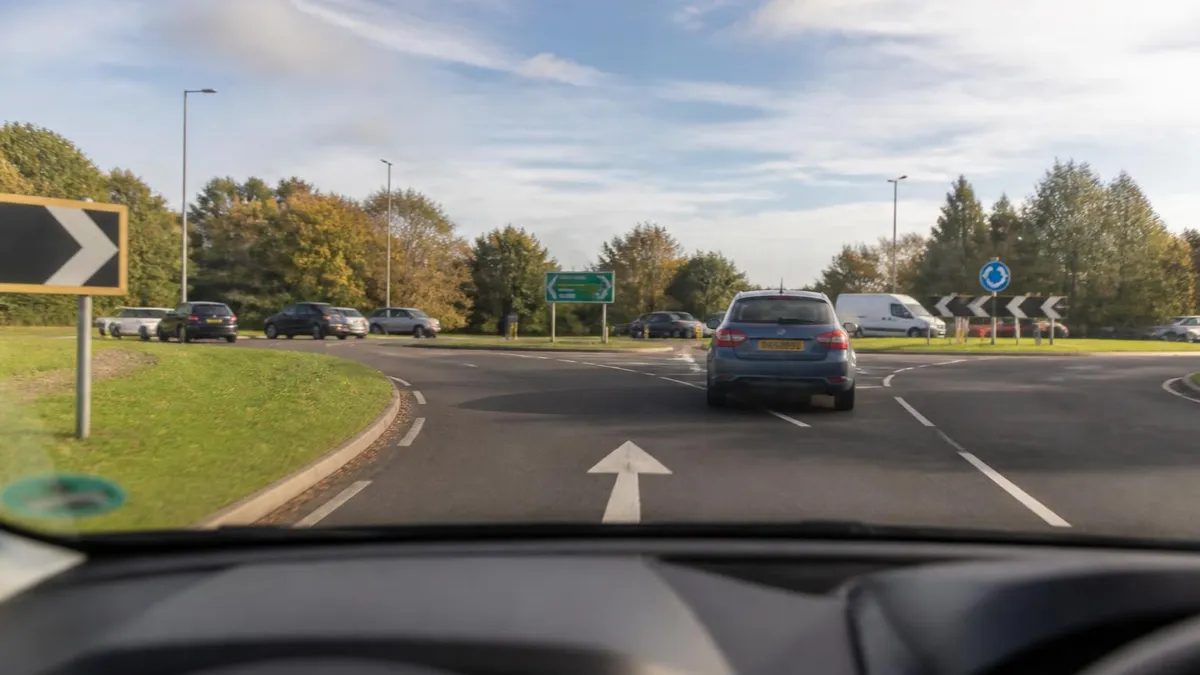
Candidates who have not driven frequently alongside their theory revision sometimes struggle with questions that require applied judgement rather than factual recall. For example, questions about appropriate speed in specific road conditions or the safest position on a multi-lane roundabout require you to visualise the situation and apply principles rather than recall a memorised fact. If you are in this position, consider supplementing your theory revision with additional driving lessons to reinforce the practical context behind the knowledge you are building.
The category of rules and regulations covers an enormous amount of ground, including the rules for specific vehicle types (motorcycles, towing, large goods vehicles), the legal blood alcohol limit (80 milligrams per 100 millilitres of blood for England, Wales, and Northern Ireland; 50 milligrams per 100 millilitres in Scotland), and the penalties for mobile phone use while driving. These specific figures and legal rules are consistently tested and reward candidates who have taken the time to learn them precisely rather than approximately.
Finally, overconfidence is a genuine risk for candidates who have been driving on private land or abroad and feel they already know the rules. The DVSA theory test is specifically designed for UK road regulations, and some rules differ significantly from those in other countries. Experienced drivers who skip structured revision because they feel they 'know how to drive' fail at a higher rate than complete beginners who approach the test with appropriate humility and disciplined preparation.
In the final weeks before your theory test, the most important shift you can make is from learning new material to consolidating and testing what you already know. Many candidates continue to read new sections of the Highway Code in the days before their test, creating anxiety about unfamiliar material rather than building confidence in their existing knowledge. Unless you have a specific identified weakness in a topic you have not yet revised, the final ten days are best spent on mock tests, review sessions, and timed practice under real exam conditions.
Create a quiet, distraction-free environment when you practise. The DVSA test centre is a formal, silent room where you will be concentrating intensely for up to 70 minutes. If your practice sessions take place with background noise, frequent interruptions, or while multitasking, you are not training the specific mental state you will need on the day. Sit at a desk, set a timer, put your phone in another room, and complete each mock test as though it counts. The cognitive discipline you build in practice carries directly into the real test.
On the morning of your test, eat a proper meal and stay hydrated. Cognitive performance declines measurably with hunger and mild dehydration — both extremely common on test day mornings when candidates are too nervous to eat. You are not allowed to bring food into the testing room, so make sure you have eaten beforehand. A short walk before entering the test centre can help to reduce cortisol levels and sharpen your focus. These simple physical preparation steps are frequently overlooked but make a measurable difference to concentration and recall.
If you are sitting the theory test for a licence category other than a standard car licence — for example, a motorcycle, large goods vehicle, or passenger-carrying vehicle licence — the pass marks and question counts differ from the standard car test. For motorcycle candidates, the multiple-choice section is the same format as the car test with the same pass mark of 43 out of 50. For LGV and PCV candidates, the multiple-choice section contains 100 questions with a pass mark of 85, and the test covers additional topics specific to heavy vehicles, professional driving, and transport legislation.
The DVSA periodically updates its official question bank to reflect changes in legislation, road design, and safety research. Questions about smart motorways, electric vehicles, charging infrastructure, and environmental regulations have become increasingly prominent in recent updates. If you are revising with older materials — particularly printed books or apps that have not been updated recently — you may be missing questions on these newer topics. Always check that your practice platform explicitly states it is aligned with the current DVSA question bank before relying on it for your revision.
After you pass your theory test, keep your certificate safe and note the expiry date prominently in your calendar. Book your practical driving test as soon as you feel ready — your instructor can advise you on this — and continue driving practice in the meantime to reinforce the knowledge you built during theory revision. The connection between theoretical knowledge and practical application is strongest when the two forms of learning overlap, so treat your theory pass as the beginning of a new phase of preparation rather than the end of the process.
Remember that every hour you invest in quality revision now pays dividends not just in passing the test but in making you a safer, more aware driver for the rest of your life. The concepts covered in the DVSA theory test — from hazard perception and following distances to first aid and eco-driving — are not abstract exam topics. They are the foundations of safe driving behaviour, and internalising them thoroughly is one of the most valuable things you can do before you get behind the wheel independently on UK roads.
DVSA Questions and Answers
DVSA Theory Test: What It Covers, How to Prepare, and What to Expect on Test Day

How to Change Theory Test Date: Complete DVSA Rebooking Guide for 2026
Driving Test Centre Near Me: How to Find, Book, and Prepare for Your Local DVSA Centre (2026)
UK Theory Test Pass Mark: Car, Bike, LGV, PCV & ADI Scores
Driving Lessons Intensive Course Birmingham: Complete UK Guide to Fast-Track Your Licence in 2026
About the Author

Licensed Driving Instructor & DMV Test Specialist
Penn State UniversityRobert J. Williams graduated from Penn State University with a degree in Transportation Management and has spent 20 years as a certified driving instructor and DMV examiner consultant. He has personally coached thousands of applicants through written knowledge tests, skills assessments, and commercial driver licensing programs across more than 30 states.