
Theory Test Centre Sheffield: Your Complete Guide to Booking, Preparing and Passing in 2026 September
Theory test centre Sheffield: locations, booking tips, what to expect & how to pass first time. 🎓 Everything UK learners need to know.
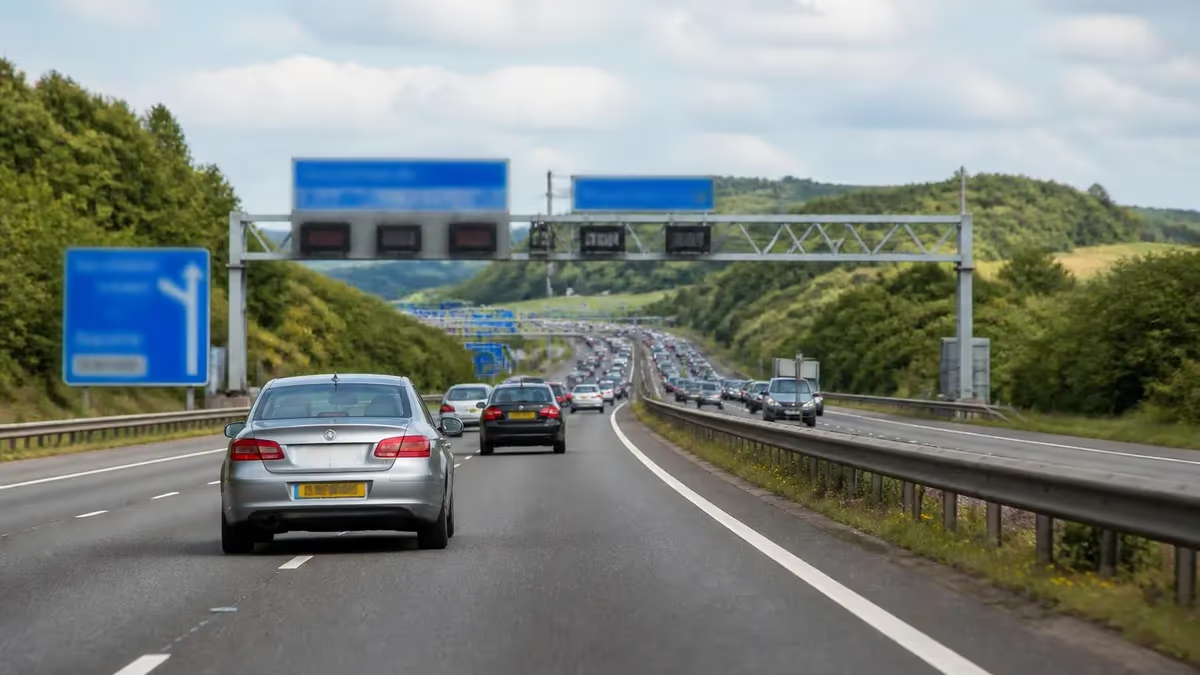
The theory test centre sheffield serves thousands of learner drivers across South Yorkshire every year, offering a convenient and accessible location for one of the most important milestones on the road to a full UK driving licence. Sheffield is a major city with strong transport links, and understanding exactly how its theory test centre operates — from booking your slot online to walking through the door on test day — can make a significant difference to how calm and prepared you feel when the questions begin.
The DVSA manages theory test centres across England, Scotland and Wales, and the Sheffield facility follows the same strict standards as every other approved site. That means you can expect a quiet, controlled testing environment, identity verification on arrival, and a structured examination that tests both your knowledge of the Highway Code and your ability to spot developing hazards in video clips. Knowing what to expect in advance removes a great deal of unnecessary anxiety from the experience.
Sheffield's centre is particularly popular with learners from the surrounding suburbs and satellite towns including Rotherham, Barnsley, Doncaster and Chesterfield. If you live in any of these areas and have been assigned a Sheffield appointment, the journey is almost always straightforward by bus, tram, or car. Parking availability varies by the specific address, so it is worth checking the DVSA booking confirmation for directions specific to your test centre location.
Many learners make the mistake of treating the theory test as a box-ticking formality rather than a genuine intellectual challenge. In reality, around 40% of candidates fail on their first attempt nationally, with hazard perception being the most common weak point. Understanding the format, the scoring system, and the types of questions asked at Sheffield — which mirror those at every other DVSA centre — is the foundation of effective revision and a confident test day performance.
This guide covers everything you need to know about Sheffield's theory test centre: how to find and book it, what to bring on the day, how the examination is structured, and which revision strategies give you the best chance of walking out with a pass certificate. Whether you are sitting your car theory test, a motorcycle test, or a vocational licence examination, the practical information in this article applies directly to your situation.
One important point to emphasise at the outset: you must hold a valid theory test pass certificate before you can book your practical driving test. The certificate is valid for two years from the date of your theory test, so timing your revision and booking carefully is essential. If your certificate expires before you pass the practical, you will need to sit the theory test again, paying the full fee a second time.
Throughout this guide you will find statistics drawn from DVSA published data, step-by-step preparation advice, and answers to the questions Sheffield learners ask most frequently. Whether you are booking your first test or rebooking after an unsuccessful attempt, this resource is designed to give you the knowledge and confidence to succeed.
Sheffield Theory Test: Key Numbers
How to Book Your Sheffield Theory Test: Step by Step
Create a DVSA Account Online
Search for Sheffield Test Centres
Choose Your Date and Time
Pay the £23 Test Fee
Receive and Review Your Confirmation
Revise, Practice, and Arrive Ready
Knowing exactly what to bring to your Sheffield theory test appointment is just as important as knowing the Highway Code. The DVSA operates a strict identity verification process at every centre, and failing to present the correct documents means you will be turned away without a refund. For the vast majority of UK residents, the required document is your provisional driving licence — specifically the photocard version. The DVSA does not accept paper licences on their own, so if yours is old-format paper-only, contact the DVLA to arrange a replacement before your test date.
If you hold a foreign driving licence or have recently moved to the UK and do not yet have a UK provisional, the rules are slightly different. You will need to bring both photographic identification and proof of your right to drive in the UK. Contact the DVSA customer service line or check GOV.UK for the most current requirements for your specific situation, as these rules can change and the consequences of turning up without the right documents are severe — you lose your £23 fee and must rebook.
Mobile phones must be switched off and stored away before you enter the testing area. The Sheffield centre, like all DVSA facilities, has lockers or secure storage available for personal belongings. You are not permitted to bring notes, revision materials, headphones, or smart watches into the testing room. The invigilators carry out a security check before each session, so there is no value in attempting to bring unauthorised materials — and significant risk if you do, as it could result in a permanent ban from DVSA tests.
Comfortable clothing is worth thinking about. Theory test rooms are usually air-conditioned and can feel cool even in summer, so layering is sensible. You will be seated at a computer workstation for up to an hour, so comfortable shoes and clothing that allows you to sit without distraction are practical considerations. Some candidates also find that having a light snack and a drink of water before entering the centre helps them maintain concentration throughout the test.
Arrive at the centre at least fifteen minutes before your stated appointment time. The DVSA recommends this window to allow for the check-in process, document verification, and a brief tutorial on how to use the test software. If you arrive late, the centre is not obliged to admit you and you may forfeit your fee. Sheffield's centre can be busy at peak times, so factor in extra time if you are travelling by public transport during morning rush hours.
The test itself begins with a short practice session on the computer interface before the real questions start. This gives you a chance to familiarise yourself with how to flag questions for review, how to change your answers, and how to navigate between the multiple choice and hazard perception sections. Use this practice time fully — do not rush through it just because you feel confident with the technology.
Finally, remember that the theory test is only one part of your driving qualification journey. Passing opens the door to booking your practical test, but the knowledge you gain from thorough preparation also makes you a safer and more aware driver on real roads. Every hour invested in understanding the Highway Code, road markings, and hazard awareness is an hour invested in your long-term safety, not just in passing an exam.
Understanding the Sheffield Theory Test Format
The multiple choice section of the car theory test consists of 50 questions drawn from the DVSA's official question bank, which contains over 700 items covering every aspect of the Highway Code, road signs, vehicle safety, and driving conditions. You have 57 minutes to complete this section, though most candidates finish well within 40 minutes. Each question presents four answer options and you must select the single correct response, though a small number of questions require you to choose two correct answers from the list provided.
Questions are presented in a randomised order, and the system allows you to flag any question you are unsure about and return to it before submitting. To pass, you need to answer at least 43 out of 50 questions correctly — a pass mark of 86%. The most commonly failed topic areas nationally include motorway rules, towing regulations, and the rules around vehicle defects and responsibilities. Targeted revision in these areas pays dividends for Sheffield candidates just as it does across the rest of the UK.
Sheffield Theory Test Centre: Advantages and Challenges
- +Excellent public transport links including trams, buses and trains serving Sheffield city centre
- +Multiple test slots available throughout the week including early morning and late afternoon
- +Modern DVSA-standard facilities with ergonomic computer workstations and good lighting
- +Central location accessible from Rotherham, Barnsley, Doncaster and Chesterfield
- +Online booking system allows you to check availability and book 24 hours a day
- +Immediate results display means no waiting for postal confirmation after your test
- −High demand in Sheffield means popular morning slots can book up three to four weeks in advance
- −City centre parking can be expensive and limited during weekday peak hours
- −The centre is busy and queues during peak check-in times can feel stressful for anxious candidates
- −Sheffield city traffic can add unpredictable journey time if driving to the centre on a weekday morning
- −No on-site revision materials or waiting room study resources are provided
- −If you miss your slot due to public transport delays, the DVSA is not obligated to offer a free rebook
Theory Test Day Checklist for Sheffield Candidates
- ✓Bring your valid UK provisional photocard driving licence — no other ID is accepted on its own.
- ✓Arrive at the Sheffield test centre at least 15 minutes before your appointment time.
- ✓Switch off your mobile phone completely before entering the test area.
- ✓Leave revision notes, books and smart watches at home or in your car.
- ✓Wear comfortable, layered clothing as test rooms are often air-conditioned.
- ✓Complete the pre-test computer tutorial fully before your real questions begin.
- ✓Flag multiple choice questions you are unsure about and return to them before submitting.
- ✓Click the hazard perception screen only when you genuinely see a hazard developing — never in patterns.
- ✓Remember you must pass both sections to receive an overall theory test pass.
- ✓Collect your printed results slip from the invigilator before leaving the centre.
Hazard Perception Accounts for Most Failures — Practise It Daily
Nationally, hazard perception is the section where most theory test candidates lose marks. Unlike multiple choice, which rewards factual recall, hazard perception tests a perceptual skill that genuinely improves with daily video clip practice. DVSA data consistently shows that candidates who practise hazard perception clips for at least fifteen minutes every day in the two weeks before their test are significantly more likely to meet the 44-out-of-75 pass mark. Do not leave this section as an afterthought.
Building an effective revision strategy for your Sheffield theory test is less about the total hours you put in and more about the quality and consistency of your study sessions. Research into skill acquisition consistently shows that short, frequent practice sessions outperform long, infrequent cramming marathons. For theory test preparation, this means aiming for thirty to forty-five minutes of focused revision every day rather than a single four-hour session at the weekend. Your brain retains information better when it is exposed to it repeatedly across multiple sessions with sleep intervals in between.
Start your revision by reading the current edition of the Highway Code from cover to cover. This is available free online at GOV.UK and contains every rule, regulation, and road sign that the DVSA draws its question bank from. Do not skip sections that seem irrelevant to your daily driving — motorway rules, rules for cyclists and pedestrians, and regulations around large vehicles all appear in the theory test question bank. Sheffield learners often underestimate how many questions relate to situations they have never personally encountered on the road.
After your initial Highway Code read-through, move to official DVSA practice questions. The DVSA publishes an official question bank and there are numerous apps and websites that present these questions in a randomised test format. Aim to complete at least two full mock tests per week under timed conditions, exactly replicating the pressure of the real test. Review every question you get wrong, understand why the correct answer is correct, and revisit those topic areas the following day to consolidate the learning.
Topic-by-topic revision is more efficient than simply repeating random mixed question sets once you have identified your weak areas. If you consistently score poorly on questions about stopping distances, for example, dedicate specific revision sessions to learning and understanding those figures rather than relying on chance encounters in mixed practice papers. Stopping distances, tyre tread depth requirements, and drink-drive limits are among the most commonly tested factual items and are worth committing to memory precisely.
For hazard perception, use the official DVSA hazard perception practice clips rather than unofficial YouTube compilations. The official clips are produced to the same specification as those used in the real test, including the same camera angles, clip lengths, and hazard development timing. Third-party clips can sometimes be poorly calibrated, leading you to develop clicking habits that do not transfer well to the actual examination. Most DVSA-licensed apps and the GOV.UK practice section provide access to official-standard clips.
Study groups can be surprisingly effective for theory test preparation. If you have friends or family members also working towards their licence, testing each other on Highway Code questions and discussing the reasoning behind answers reinforces understanding more deeply than solo revision. Explaining why a particular rule exists, rather than simply memorising the correct response, helps you handle the small variations in wording that the DVSA uses to test genuine comprehension rather than rote memorisation.
In the final week before your Sheffield appointment, shift your focus from learning new material to consolidation and confidence-building. Complete full mock tests daily, review your weakest areas briefly each morning, and practise hazard perception clips each evening. Avoid starting new topics or reading unfamiliar sections of the Highway Code in the last few days — the risk of confusing yourself with new information outweighs the potential benefit. Trust the preparation you have done and approach test day with the calm confidence that thorough revision earns.
If you need to change or cancel your Sheffield theory test appointment, you must give at least three clear working days' notice to receive a full refund of your £23 fee. Cancellations made with less than three clear working days' notice result in the full fee being forfeited. The DVSA does not offer exceptions for personal emergencies unless you can provide documentary evidence, and even then refunds are assessed case by case. Always reschedule well in advance if your plans change.
Once you have passed your theory test at the Sheffield centre, the next step is to book your practical driving test — but there are important considerations around timing that many new drivers overlook. Your theory test pass certificate is valid for exactly two years from the date you sat the test.
If you do not pass your practical driving test within that two-year window, your theory test certificate expires and you must sit and pass the theory test again before you can book another practical. This catches a surprising number of learners who delay their practical lessons or who take multiple attempts at the practical over a long period.
Practical driving tests in the Sheffield area are conducted at DVSA-approved practical test centres, which are separate facilities from the theory test centre. The most common practical test centres serving Sheffield candidates include Middlewood and Ecclesfield, both of which operate under DVSA standards. Waiting times for practical tests have been significant in recent years due to post-pandemic backlogs, so it is worth checking availability and booking your practical test slot as soon as you receive your theory test pass certificate, even if you feel you need more driving lessons before you are ready.
Between passing your theory test and sitting your practical, continue to apply the Highway Code knowledge you built during theory preparation to your driving lessons. Many learner drivers notice that their practical lesson quality improves significantly after passing the theory test, because they have a much clearer understanding of the rules governing the manoeuvres and decisions their instructor asks them to make. The two phases of preparation genuinely reinforce each other rather than being entirely separate undertakings.
If you fail your first theory test attempt at the Sheffield centre, do not be discouraged — the national first-attempt fail rate of approximately 40% means that failing is statistically common, not exceptional. Most candidates who fail identify a specific weak area (most often hazard perception) and address it directly in their revision before rebooking. The mandatory three-day waiting period before rebooking is sufficient for targeted revision if used well, though most candidates benefit from a slightly longer gap of one to two weeks to rebuild genuine confidence.
Candidates who fail the theory test sometimes make the mistake of simply rebooking immediately and sitting the test again without meaningfully changing their preparation approach. This rarely produces a different result. Instead, take the time to analyse your results slip carefully — it will indicate which broad topic areas you lost marks in for the multiple choice section — and design a focused revision plan that addresses those specific weaknesses before your next appointment.
For those sitting vocational theory tests in Sheffield — covering categories such as large goods vehicles (LGV), passenger-carrying vehicles (PCV), or agricultural vehicles — the format differs from the car theory test in terms of question count, pass marks, and subject matter. LGV and PCV theory tests have separate question banks covering topics specific to professional driving, including tachograph rules, vehicle maintenance responsibilities, and passenger safety. The same Sheffield centre handles vocational tests, but you should check the specific pass marks and preparation resources for your licence category rather than assuming they match the car test format.
Finally, remember that passing the theory test is not just a bureaucratic hurdle — it is a genuine assessment of whether you have the knowledge base to drive safely on UK roads. The questions are drawn from real-world scenarios and the hazard perception clips reflect genuine driving conditions. Candidates who pass with thorough, genuine understanding of the material are better equipped for their practical test and, ultimately, for a lifetime of safe independent driving. Approach your Sheffield theory test with that perspective and you are already thinking like a driver who deserves to pass.
Practical preparation for your Sheffield theory test goes beyond revision alone — the logistical and psychological aspects of test day deserve equal attention. One of the most underrated factors in theory test performance is sleep. Multiple studies on cognitive performance confirm that candidates who sleep seven to eight hours the night before an examination perform measurably better on attention, recall, and decision-making tasks than those who stay up late revising.
In the final two nights before your Sheffield appointment, prioritise sleep over additional revision hours — your brain consolidates learning during deep sleep cycles, so rest is productive even when it does not feel that way.
Nutrition on test day also matters more than most candidates realise. Sitting a fifty-minute examination requiring sustained concentration is cognitively demanding, and blood sugar levels affect mental performance. Eat a balanced meal containing slow-release carbohydrates — porridge, wholegrain toast, eggs — in the two hours before your test rather than relying on caffeine or sugary snacks. Avoid large amounts of caffeine, which can amplify anxiety and reduce fine motor control, both of which affect hazard perception click accuracy.
Managing test anxiety is a skill that can be learned and practised before your Sheffield appointment. One of the most effective techniques is controlled breathing: inhaling slowly for four counts, holding for two counts, and exhaling slowly for six counts activates the parasympathetic nervous system and reduces the physical symptoms of anxiety including racing heart rate and shallow breathing. Practise this technique during your mock tests so that it feels natural to use it in the real examination environment.
If you have specific learning differences such as dyslexia, dyspraxia, or ADHD, the DVSA offers reasonable adjustments including additional time, a voice-over option for questions, or a reader. You must apply for these adjustments when booking your test, not on the day — the centre cannot make ad hoc adjustments without prior authorisation from the DVSA. Contact the DVSA customer service team as early as possible in your preparation to ensure your adjustments are in place before you book your Sheffield slot.
Candidates who are resitting the theory test after a previous failure often approach the second attempt with significantly more anxiety than the first. This is natural but counterproductive. Remind yourself that a fail is informative — it tells you precisely where to direct your remaining preparation — and that the majority of candidates who fail once go on to pass at their next sitting.
Your additional experience of the test environment is also an advantage: you know exactly what the room looks like, how the software works, and what the invigilators expect, giving you a baseline familiarity that first-time candidates do not have.
In the waiting area before your test begins, avoid comparing notes with other candidates about what questions they are expecting or which topics they have revised. This kind of conversation can introduce last-minute doubt about areas you were previously confident in and serve no productive purpose. Instead, spend the waiting time in quiet, calm review of a few key facts you want to have fresh in your mind, or simply practise the controlled breathing technique to maintain a steady, focused state of mind.
When you sit down at the workstation and begin the practice tutorial, treat it as part of the test itself — not as dead time before the real thing starts. Use it to confirm that the mouse responds correctly, that you understand how to flag and revisit questions, and that the screen is at a comfortable reading distance. Report any technical issues to the invigilator immediately rather than struggling through and potentially losing valuable time or making errors on real questions due to equipment problems.
DVSA Questions and Answers
Cancel Driving Test UK: Complete DVSA Guide to Refunds, Rebooking & Avoiding Lost Fees in 2026
UK Theory Test Pass Mark: Car, Bike, LGV, PCV & ADI Scores

Free Theory Test App: The Complete UK Guide to Choosing, Using and Passing With Mobile Practice in 2026

Cancelling Driving Test: The Complete UK Guide to Refunds, Rebooking and Avoiding Lost Fees in 2026
Book Practical Driving Test: How to Pass Your DVSA Exam First Time
About the Author
Licensed Driving Instructor & DMV Test Specialist
Penn State UniversityRobert J. Williams graduated from Penn State University with a degree in Transportation Management and has spent 20 years as a certified driving instructor and DMV examiner consultant. He has personally coached thousands of applicants through written knowledge tests, skills assessments, and commercial driver licensing programs across more than 30 states.