
LGV Theory Test 2026 October: Complete UK Guide to Passing the Large Goods Vehicle Theory Exam
🆕 Complete 2026 October guide to the UK lgv theory test: 100 multiple-choice questions, 19 hazard clips, pass marks, £37 cost, booking via DVSA, prep tips.
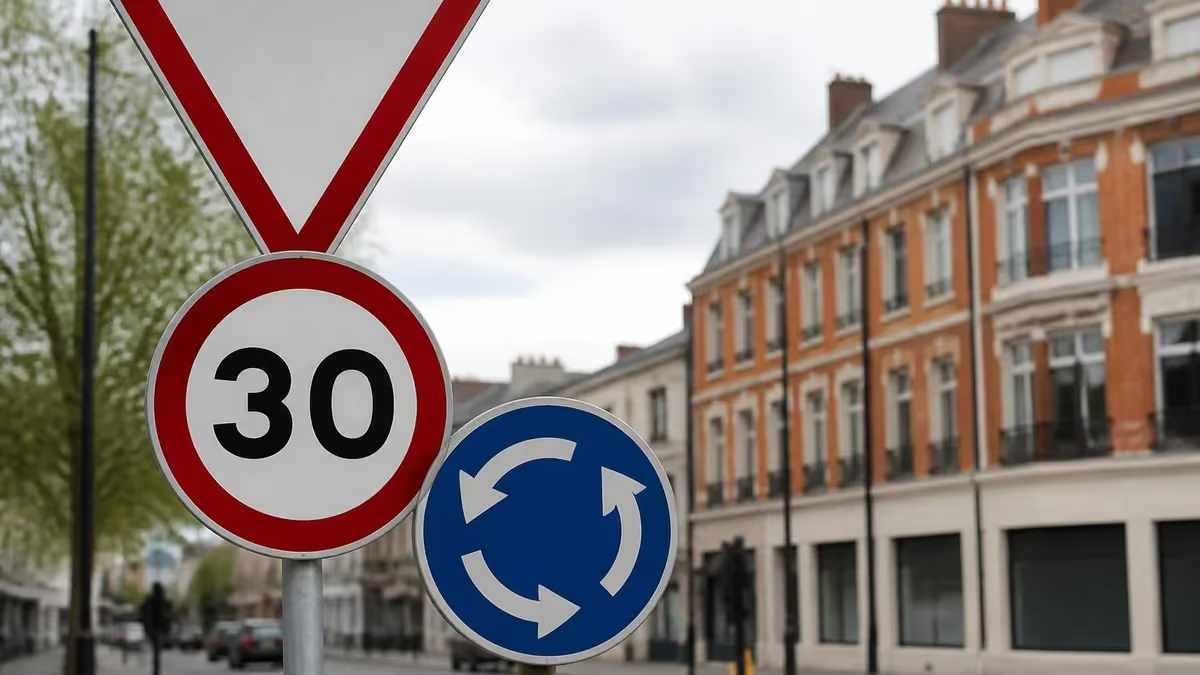
If you want to drive a lorry, rigid truck, or articulated unit professionally in the UK, the LGV theory test is your first major hurdle. It's the gateway exam that proves you understand the rules, hazards, and responsibilities that come with handling a Large Goods Vehicle on public roads. Pass it, and you can move on to the practical driving and CPC modules. Fail it, and you're stuck waiting three working days before you can try again.
Here's the thing that confuses a lot of new drivers: LGV and HGV refer to the same test. The DVSA officially uses LGV (Large Goods Vehicle) terminology, while the trade and most training schools still call it the HGV theory test. Same exam, same questions, same pass marks. So if you've been searching for one term and finding the other, don't worry — you're in the right place.
This guide walks you through every detail: what the LGV theory test covers, who needs to take it, how to book, what to study, and how to prepare for both parts. We'll also break down the differences between the LGV test and the standard car theory test, because they're not the same beast. Stick with us, and by the end you'll know exactly what to expect on test day.
Quick facts: The LGV theory test costs £37 total (£26 multiple-choice + £11 hazard perception). You need 85/100 on the multiple-choice and 67/100 on hazard perception to pass. Both parts are taken in one sitting at a DVSA theory test centre.
Whether you're aiming for a Category C licence to drive a rigid lorry, or pushing on to C+E so you can pull an articulated trailer, this is the test that starts your professional driving career. Take it seriously. The pass rate isn't terrible — but it's not a walk in the park either, especially the multiple-choice section with its vocational focus on tachographs, drivers' hours, and load security.
Many candidates underestimate the gap between a casual car driver's knowledge and what's needed here. The LGV syllabus assumes you'll know things a normal motorist never has to think about: rolling resistance on long downhill gradients, axle weight distribution when loading, the legal limits on continuous driving before a mandatory break. None of this is intuitive. All of it gets tested.
It also helps to think about why the test exists in the first place. A 44-tonne articulated lorry can't stop on a sixpence, can't dart out of trouble, and can't see what a small car driver can see. The DVSA built the LGV theory test to weed out anyone who doesn't grasp those realities before they ever sit behind a real wheel. Every question on the paper traces back to a real-world incident or near-miss that the industry has learned from.
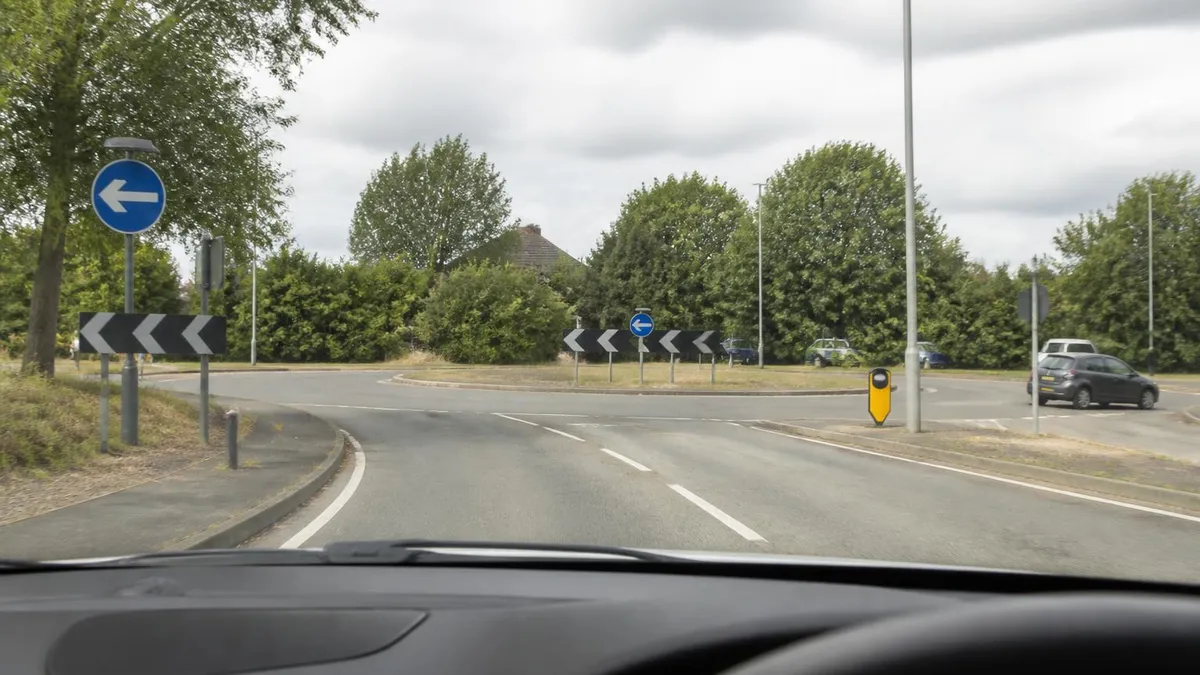
LGV Theory Test At A Glance
The LGV theory test is the UK's mandatory written and video-based exam for anyone wanting to drive a vehicle over 3,500kg gross weight commercially. It's run by the Driver and Vehicle Standards Agency (DVSA) and is split into two parts: a 100-question multiple-choice paper and a hazard perception video test with 19 clips. You take both parts at the same appointment.
Let's start with the elephant in the room. People often ask why there are two terms — LGV and HGV — for what looks like the same thing. The DVSA switched to LGV (Large Goods Vehicle) decades ago to align with European Union vehicle classifications, but the haulage industry, training providers, and most older drivers still use HGV (Heavy Goods Vehicle) in everyday speech. You'll see both on test booking sites, training materials, and job ads.
For your theory test revision, this means you can use any study materials labelled either LGV or HGV — they cover the exact same syllabus. The DVSA's official question bank doesn't change based on which term the publisher uses on the cover. Don't waste hours hunting for one specific term. Pick a reputable resource, learn the material, and move on.
LGV Theory Test Structure
- Questions: 100
- Time allowed: 1 hour 55 minutes
- Pass mark: 85 / 100 (85%)
- Format: On-screen, single best answer
- Video clips: 19
- Developing hazards: 20 (one clip has 2)
- Score per clip: 0–5 points
- Pass mark: 67 / 100
- Multiple-choice fee: £26
- Hazard perception fee: £11
- Total cost: £37
- Where to book: gov.uk (DVSA)
- Total appointment: Approx 2.5 hours
- Practice/intro: 15 minutes
- Multiple-choice time: Up to 1h 55min
- Hazard perception time: Approx 20 min
The multiple-choice section is the longest part of the day. You get 100 questions covering everything from braking distances and tachograph regulations to load security and emergency procedures. The questions are drawn from a much larger official bank, so two candidates sitting on the same day won't see identical papers. You can flag questions and come back to them — useful if you're unsure and want to think it through later.
Don't underestimate the hazard perception section. It looks easier than the multiple-choice on paper, but the scoring system catches people out. You score 5 points for spotting a hazard the moment it starts developing, 4 points if you're slightly late, and so on down to zero. Click too early or too often, and the system flags you as guessing — you'll score zero for that clip. It's a precision exercise, not a clicking marathon.
Pacing matters. With 100 questions in under two hours, that's roughly 70 seconds per question on average — plenty of time if you know the material, far too little if you're guessing. Most prepared candidates finish in 80 to 90 minutes and use the leftover time to review their flagged answers carefully.
Numbers to Remember
Key Facts at a Glance
| Item | Value | Details |
|---|---|---|
| Multiple-choice questions | 100 | |
| MCQ pass mark required | 85% | |
| Total test cost (2026) | £37 | |
| Working days until retake | 3 |

Now let's talk about what you actually need to study. The LGV multiple-choice paper covers seven main topic areas, and the questions are weighted toward vocational subjects you wouldn't see on a standard car test. If you're a confident car driver who hasn't opened the Highway Code in years, this is where you'll struggle. The vocational content is dense and unforgiving.
Don't try to wing it with general driving knowledge. The DVSA examiners aren't testing your common sense — they're testing whether you've absorbed specific regulations that apply to commercial vehicles. Memorising key numbers (weights, hours, distances, fines) gives you an instant advantage in roughly a third of the questions.
Topics You Must Study
- ✓Vehicle weights, dimensions, and axle loading rules
- ✓Drivers' hours regulations (EU and UK domestic)
- ✓Tachograph operation, manual entries, and downloading
- ✓Vehicle condition checks, walkaround inspections, and defect reporting
- ✓Load security, lashing, and weight distribution
- ✓Route planning, bridge heights, and weight restrictions
- ✓Environmental considerations: fuel efficiency, emissions, idling rules
- ✓Highway Code rules specific to large vehicles (mirrors, blind spots, swept paths)
Drivers' hours and tachographs are where most candidates lose marks. You need to know the difference between daily driving time (9 hours, extendable to 10 twice per week), weekly limits (56 hours), and fortnightly limits (90 hours). You also need to understand rest periods — daily 11-hour rest, weekly 45-hour rest, and how reduced rests work. It's not the kind of thing you can just skim through the night before.
If you want to know exactly what score you need on the day, check our breakdown of the theory test pass mark. The short version is that you need both 85% on the multiple-choice and 67% on the hazard perception — fail either, and the whole test counts as a fail. There's no carry-over and no second chance within the same booking.
Important: You must hold a full Category B (car) licence before you can apply for a provisional Category C licence and book the LGV theory test. You'll also need a medical examination (DVLA form D4) completed by a doctor.
Hazard perception is a different beast entirely. Each of the 19 clips runs for about a minute and shows real-life driving footage from the perspective of a vehicle on UK roads. Somewhere in each clip, a hazard develops — a pedestrian stepping out, a cyclist wobbling, a parked car opening its door, a vehicle pulling out from a junction. Your job is to click the moment the hazard starts to develop into something that would make you take action.
Click too early — when you can see the hazard but it's not yet developing — and you'll score lower or even zero. Click too late, and you'll also lose points. The sweet spot is recognising the danger as it transitions from potential to actual. Practice with the official DVSA clips repeatedly. There's no substitute for that exact format.
One more thing about hazard perception: the clips were filmed years ago and look slightly dated, but the principles are timeless. Don't dismiss them because the cars look old. The DVSA has tested millions of candidates with the same clips, and the timing windows are scientifically calibrated. Trust the process and learn the rhythm.
A common mistake is to spam-click whenever something looks remotely dangerous. The system is built to catch this. If your click pattern looks like a panic response rather than a measured reaction, the software wipes your score for that clip. Watch the clip, register the danger, then click once at the right moment. One deliberate click beats five frantic ones every time.
Your Path To Passing
Get your provisional Category C licence
Book your theory test online
Study the syllabus
Take the test
Get your pass certificate
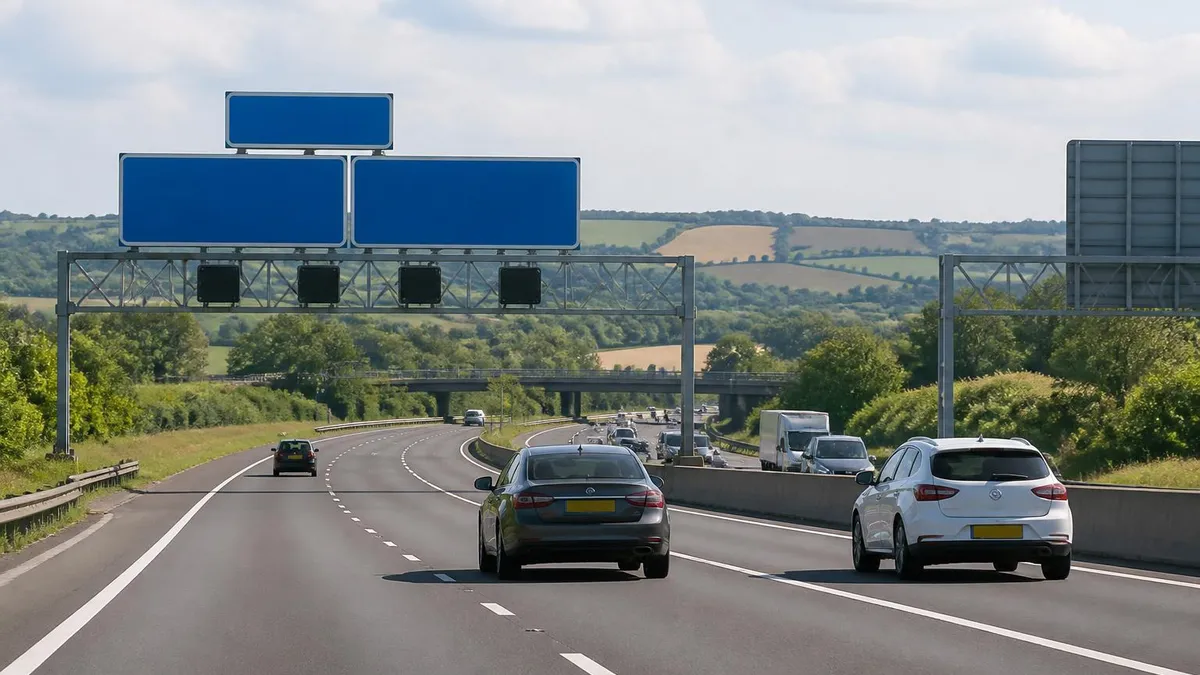
Test day itself is straightforward but you need to come prepared. Find your nearest theory test centre ahead of time, plan your journey, and aim to arrive at least 15 minutes early. You'll need your photocard provisional licence — no licence, no test, and no refund. Lockers are available for phones and bags, which must be stored before you enter the testing room.
Once you're in, the staff run through a short tutorial covering how the on-screen interface works. You can practise navigating questions and using the flag feature before the real test starts. Take this seriously — fumbling with the controls during the actual exam wastes precious time.
A small but important detail: you cannot bring food, drink (other than a clear bottle of water), notes, or any electronic device into the testing room. Empty your pockets before you enter. Anything found on you mid-test counts as cheating, and the consequences include an instant fail and a possible ban from rebooking for months.
LGV Theory Test Pros & Cons
- +Cheaper than the practical test — only £37 to sit
- +Can be retaken quickly (3 working days minimum)
- +Pass certificate valid for 2 years
- +Same syllabus whether called LGV or HGV
- +Strong overlap with Driver CPC Module 2 content
- +Free official practice materials available from DVSA
- −Vocational content is dense and unfamiliar to car drivers
- −Drivers' hours and tachograph rules are notoriously tricky
- −Hazard perception scoring penalises early or repeated clicking
- −Must pass both parts in one sitting — no carrying over a pass
- −Pass certificate expires after 2 years — practical must be done in time
- −Booking slots can be scarce in busy regions
Preparation is where most people either set themselves up to pass or set themselves up to fail. The DVSA publishes official LGV theory test books and hazard perception apps — these should be your starting point. They use the actual question style and the actual hazard clips you'll see on test day. Third-party apps and books can be useful for extra practice, but make sure the publisher is reputable and the content is up to date for 2026.
Build a study schedule. A typical learner needs four to six weeks of consistent revision to cover the full syllabus. Spend half your time on multiple-choice practice and half on hazard perception clips. Don't just memorise answers — understand the reasoning. The DVSA changes the wording of questions occasionally, and rote memorisation falls apart fast when the phrasing shifts.
If you can, study in short focused blocks rather than marathon sessions. Twenty minutes morning and evening beats a single three-hour grind. Your brain consolidates information during breaks, so spaced repetition over weeks delivers far better recall than cramming the night before. The candidates who pass first time almost always describe a steady, daily routine rather than a last-minute panic.
Hazard perception practice is non-negotiable. The DVSA's official hazard perception app costs around a tenner and gives you access to interactive clips with scoring feedback. Use it daily for two weeks before your test. Pay attention to the feedback after each clip — it shows you exactly when the scoring window opened and closed, which trains your timing.
One trick that helps: don't watch the road, watch the whole scene. Hazards develop in mirrors, on pavements, in driveways, behind parked vans. The DVSA wants drivers who scan their environment, not drivers who tunnel-vision on the lane ahead. Train your eyes to sweep across the screen continuously.
If you fail, you can rebook the test for any working day at least three working days after your last attempt. There's no limit on the number of attempts, but each one costs another £37, so it pays to be properly prepared rather than treating early sittings as practice. Most failed candidates pass on their second attempt with another fortnight of focused revision.
The current theory test price of £37 is set by the DVSA and reviewed periodically. There are no hidden fees if you book directly through gov.uk — be wary of third-party sites that add booking surcharges or charge inflated prices for the same official slots. If a site is asking for £50 or more, you're being overcharged.
Keep your booking confirmation email safe. If you need to rearrange or cancel, you can do it free of charge as long as you give at least three clear working days' notice. Cancel inside that window and you'll lose the full fee. Show up late or to the wrong centre and the same applies — the DVSA does not refund avoidable mistakes, so always double-check your booking the day before you travel.
Once you've passed the LGV theory test, your work isn't done. You'll need to complete Driver CPC Module 2 (case studies) and Module 4 (vehicle safety demonstration), plus Module 3 (the practical driving test). The theory test pass certificate covers you for both Module 1a and 1b of the CPC, but not the others.
The CPC Module 2 case studies build directly on what you learned for the theory test — drivers' hours, tachograph compliance, defect reporting, and customer relations. Many candidates take Module 2 within a few weeks of passing theory while the content is still fresh. Don't wait six months and have to relearn the regulations from scratch.
How does the LGV theory test differ from the standard car theory test? Three big ways. First, length: the car test has 50 multiple-choice questions, the LGV test has 100. Second, time: car test is 57 minutes, LGV test is 1 hour 55 minutes. Third, content: the LGV test focuses heavily on vocational topics — vehicle weights, drivers' hours, tachographs, load security — that don't appear at all on the car test.
The pass marks are also stricter in absolute terms. Car theory test pass mark is 43/50 (86%), LGV is 85/100 (85%). They look similar, but the LGV test is testing twice as many topics, so the chance of stumbling on an unfamiliar question is much higher. Treat it as a serious professional exam, not an extension of your car test.
One more comparison worth making: the car hazard perception uses 14 clips with one hazard each, while the LGV version uses 19 clips and includes one with two developing hazards. More clips, more chances to score — and more chances to mess up. Train accordingly.
Sample DVSA UK Driving Theory Practice Questions
Try these questions from our free DVSA UK Driving Theory practice tests. The correct answer and an explanation follow each question.
You are joining a motorway from a slip road. What is the correct procedure?
- A. Stop at the end of the slip road and wait for a large gap in the traffic.
- B. Match your speed to the traffic in the left-hand lane and filter in when safe.
- C. Force your way into the traffic as vehicles on the motorway must give way to you.
- D. Drive along the hard shoulder until you find a safe gap.
Answer: B. Match your speed to the traffic in the left-hand lane and filter in when safe.
When joining a motorway, you should use the slip road to adjust your speed to match the traffic already on the motorway. You must give priority to traffic on the main carriageway and join when there is a safe gap in the left-hand lane.
What is the general rule for lane discipline on a three-lane motorway in the UK?
- A. You should always stay in the left-hand lane unless you are overtaking.
- B. The left-hand lane is for slow-moving vehicles only.
- C. You can use any lane as long as you are travelling at the speed limit.
- D. The middle lane is for cruising, and the right-hand lane is for fast traffic.
Answer: A. You should always stay in the left-hand lane unless you are overtaking.
The Highway Code (Rule 264) states that you should always drive in the left-hand lane when the road ahead is clear. The centre and right-hand lanes should only be used for overtaking. After overtaking, you should return to the left-hand lane as soon as it is safe to do so.
What is the key difference between a Toucan crossing and a Puffin crossing?
- A. Puffin crossings have a flashing amber light phase, whereas Toucan crossings do not.
- B. Toucan crossings are for pedestrians only, while Puffin crossings are for pedestrians and cyclists.
- C. Toucan crossings allow both pedestrians and cyclists to cross, while Puffin crossings are for pedestrians only.
- D. Puffin crossings have pedestrian signals on the opposite side of the road.
Answer: C. Toucan crossings allow both pedestrians and cyclists to cross, while Puffin crossings are for pedestrians only.
The name 'Toucan' is a play on 'two can' cross, meaning both pedestrians and cyclists can use the crossing without cyclists having to dismount. Puffin (Pedestrian User-Friendly Intelligent) crossings are for pedestrians only and have sensors to detect when people are waiting or crossing.
What shape are warning signs used on UK roads?
- A. Circular with a red border
- B. Triangular with a red border
- C. Square with a blue border
- D. Rectangular with a green border
Answer: B. Triangular with a red border
Warning signs in the UK are triangular with a red border, alerting drivers to hazards ahead.
LGV Theory Test Questions and Answers
About the Author

Licensed Driving Instructor & DMV Test Specialist
Penn State UniversityRobert J. Williams graduated from Penn State University with a degree in Transportation Management and has spent 20 years as a certified driving instructor and DMV examiner consultant. He has personally coached thousands of applicants through written knowledge tests, skills assessments, and commercial driver licensing programs across more than 30 states.