
Hazard Perception Practice: Pass the DVSA HPT First Time 2026 October
✍🏼 Hazard perception practice — DVSA HPT format, scoring, pass mark, how to identify developing hazards, click timing, top apps and revision strategy.
The hazard perception test (HPT) is the second part of the DVSA theory test, taken immediately after the multiple choice section. The HPT shows 14 video clips of everyday driving situations and asks the candidate to click the mouse as soon as they spot a developing hazard.
The score for each click depends on timing — earlier (but not too early) earns more points, up to a maximum of 5 per hazard. The pass mark is 44 out of 75. Both the multiple choice and the hazard perception sections must be passed in the same sitting to pass the overall theory test.
The format is structured to test whether you can spot hazards as they develop in real driving situations. A developing hazard is something that requires the driver to take action — slow down, change direction, signal or stop. The clip shows ordinary driving scenes from the driver's perspective, and at some point during each clip a hazard begins to develop. Click as soon as you see the hazard begin to require driver action; click again if the hazard intensifies or changes. The earlier valid click within the scoring window earns the higher score.
One of the 14 clips contains two developing hazards (giving 15 hazards across 14 clips, totalling the 75 maximum points). The clips run about a minute each. The total HPT section takes 15 to 20 minutes. Each hazard scores 0 to 5 — 5 for an immediate response when the hazard becomes a hazard, 4 for slightly later, dropping by one point as the click occurs later in the scoring window, with 0 for clicks outside the window or for click patterns flagged as guessing.
This guide explains the hazard perception test in detail — the test format and scoring, what counts as a developing hazard, the click timing strategy that produces high scores, the early-click penalty that catches out unprepared candidates, the practice apps that genuinely help, the eye-scanning techniques that improve hazard spotting, and the revision strategy that produces consistent passes on the first attempt. Whether you are preparing to sit your theory test for the first time or retaking after a fail, the techniques here are tested by hundreds of thousands of UK candidates each year.
Hazard perception in 30 seconds
The HPT is the second part of the UK theory test. 14 video clips show ordinary driving; click as soon as you see a developing hazard requiring driver action. 15 developing hazards across the 14 clips (one clip has two hazards). Each hazard scores 0 to 5 based on click timing, max 75 total. Pass mark 44 out of 75. Click too early or in obvious patterns and the system gives zero. Practice on the DVSA Theory Test Kit app and similar tools before sitting the test.
A developing hazard, in DVSA terms, is something that would cause you to take action behind the wheel. A child running into the road is a developing hazard. A car pulling out of a side road into your path is a developing hazard. A cyclist signalling a right turn into your lane is a developing hazard. The key word is developing — the hazard begins as a normal road situation and then changes into something that requires you to slow, swerve or stop. Click at the moment of change, not before.
Static hazards are not what the test scores. A parked car is not a developing hazard unless it is about to pull out, open a door or otherwise change behaviour. A pedestrian standing on a pavement is not a developing hazard unless they begin to step toward the road. The DVSA refers to these as potential hazards but only scores developing hazards — situations where the hazard transitions from normal to action-requiring. Distinguishing potential from developing hazards is the core skill the HPT measures.
The scoring window for each hazard is roughly 4 to 5 seconds long, beginning at the moment a trained driver would identify the hazard as developing. Click within the first second of the window and you score 5. Click in the second second and you score 4. The score drops by 1 each subsequent second. Click after the window closes (typically when the hazard has fully manifested) and you score 0. The exact window timings are set by DVSA based on driver behaviour studies and are confidential to the test, but the general pattern is consistent across clips.
The early-click penalty exists to discourage guessing or clicking randomly. Click before the developing hazard has actually started developing and you score 0 for that hazard. The system also detects click patterns — multiple rapid clicks throughout the clip, or clicks at suspiciously consistent intervals, can flag the candidate for guessing and produce zero scores even on otherwise valid clicks. Two clicks per hazard maximum is the rule of thumb; click once when you spot the developing hazard, once more if the hazard intensifies, and stop.
Hazard perception test format
The HPT plays 14 video clips of everyday driving situations from the driver's perspective. 13 clips have one developing hazard each; one clip has two developing hazards. Total 15 hazards across the 14 clips. Each clip runs about a minute. The full HPT section takes 15 to 20 minutes including instructions and brief breaks between clips.
Each developing hazard scores 0 to 5 based on click timing. 5 for the earliest valid click, dropping by 1 each second within the scoring window. 0 for clicks before the hazard begins developing, after the window closes, or as part of a flagged click pattern. Total maximum 75 points across the 15 hazards. Pass mark 44 out of 75.
Click the moment a hazard transitions from a normal road situation to one requiring driver action. Click again if the hazard intensifies. Maximum 2 clicks per hazard before pattern detection triggers. The first valid click in the scoring window determines the score; later clicks within the window do not improve the score but also do not penalise it.
Pass mark is 44 out of 75 points. To pass the HPT, the candidate needs roughly 3 points per hazard average — clicking somewhere in the middle of the scoring window for most hazards. Strong candidates score 50 to 60. Borderline candidates land in the 40 to 50 range where small timing differences determine pass or fail. Practice consistently produces stronger timing.
For practice apps, the DVSA's official Theory Test Kit app is the most direct match for the actual test format. The app uses real DVSA HPT clips and the same scoring algorithm. Available on iOS and Android for around £4 to £5, the official app is the highest-yield single investment for hazard perception preparation. Most candidates who pass the HPT first time have practised on the official app or the desktop equivalent before sitting the test.
Third-party apps and websites offer additional clips for practice. Driving Test Success, Theory Test Pro and Top Tests UK are widely used alternatives. These apps use clips developed by their authors rather than actual DVSA clips, so the visual style differs slightly. The scoring algorithms approximate the DVSA approach. For variety beyond the official app, the third-party options provide extra practice content. Most successful candidates use the official app as the primary practice tool and one or two third-party options as supplementary content.
YouTube also offers free hazard perception practice. Search for "hazard perception practice" and you will find hours of clips with embedded scoring overlays. The YouTube content is variable in quality but free and accessible without setup. Useful for casual practice but the official app remains the gold standard. Combining 30 minutes of YouTube practice with 30 minutes of official app practice each day for a week or two before the test produces the consistency that distinguishes pass from fail outcomes.
Free online practice is also available through the Driving Test Success website and others. The official DVSA website offers a single sample clip with detailed scoring explanation as a free preview. Use this to understand the scoring system before paying for any of the apps. The DVSA preview clarifies what counts as a developing hazard versus a potential hazard, which is the central concept the HPT measures.
Practice resources for the HPT
Official app from DVSA on iOS and Android. Uses real HPT clips and the actual DVSA scoring algorithm. £4-£5 one-time purchase. The closest practice match for the actual test. Most candidates who pass first time have used this app. The single best practice investment for hazard perception preparation.
The eye-scanning technique that produces consistent high scores is sometimes called active scanning or driver vision. Rather than fixating on the road ahead, scan continuously across the field of view — left mirror, ahead, right mirror, instruments, ahead, left mirror and back. The scanning pattern matches what experienced drivers do automatically and trains your peripheral vision to spot movement at the edges. In HPT clips, hazards often emerge from the edges of the visible scene before becoming apparent in the centre.
For the test specifically, focus your attention on the parts of the scene where hazards typically emerge. Side roads where vehicles pull out. Pedestrian crossings where someone may step into the road. Parked cars that may open doors or pull away. Bus stops where pedestrians may emerge from in front of the bus. Traffic lights changing colour. Cyclists in the lane ahead. Children near schools or playgrounds. The DVSA selects clips that test these typical hazard patterns; recognising them quickly comes from practice.
The timing strategy that maximises scores is to click the moment you genuinely see the hazard developing, not before. Pre-emptive clicking based on suspicion ("there might be something around that corner") produces early-click penalties. Wait until you actually see the developing hazard, then click immediately. The discipline to wait for actual hazards rather than clicking on every potential threat is what distinguishes high scorers from average scorers. Practice on the official app builds this discipline.
For the second click on a hazard, click again if the hazard intensifies — for example, the cyclist who signalled a right turn now actually starts to swing right; the child running toward the road is now stepping into the road. The second click can capture additional points if the first click was slightly early. Two clicks maximum — additional clicks beyond two trigger pattern detection and risk zeroing the score for that hazard. Click twice and stop, even if the hazard continues to develop in the clip.
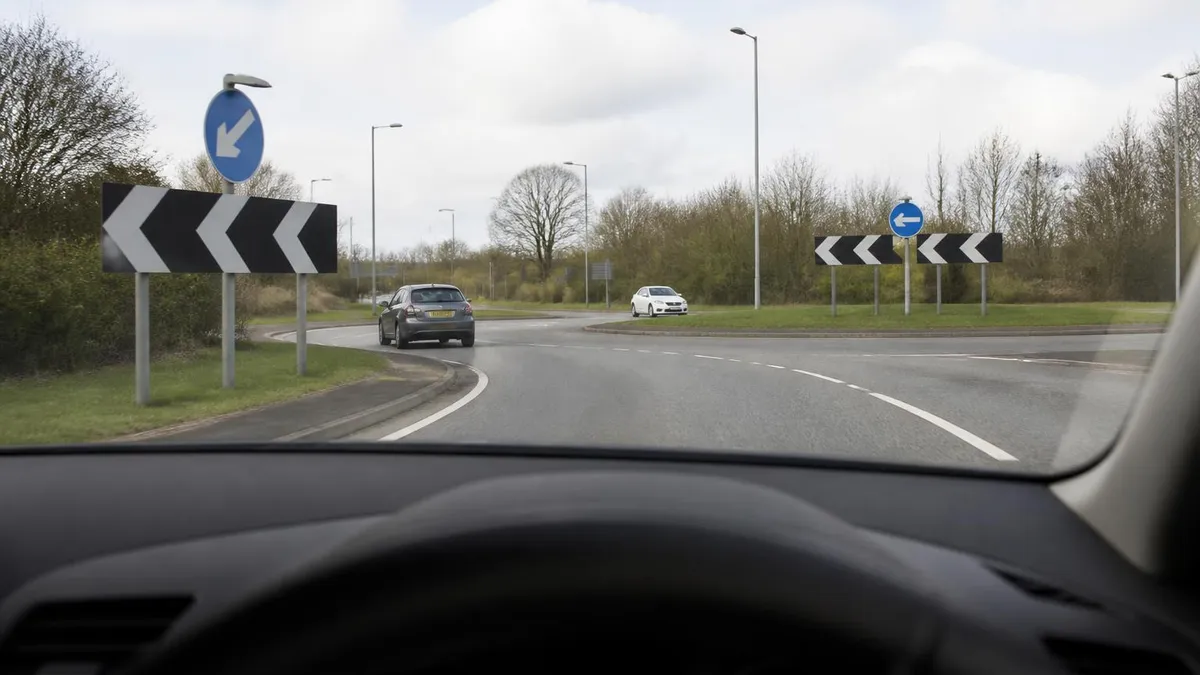
The HPT scoring system penalises clicks that happen before the developing hazard begins, clicks at suspiciously consistent intervals across multiple clips, and rapid multi-click patterns that suggest guessing. Click only when you genuinely see a developing hazard. Use a maximum of 2 clicks per hazard. Do not click on every parked car or pedestrian — those are potential hazards, not developing hazards, and clicking on them produces 0 scores. The scoring system is sophisticated enough to detect random clicking; deliberate clicking is the only path to a passing score.
For the revision schedule that consistently produces passes, plan 2 to 4 weeks of regular practice before the test. Daily practice sessions of 30 to 45 minutes work better than occasional long sessions. Mix the practice between the multiple choice section and the hazard perception section so both sections improve in parallel. Many candidates focus heavily on the multiple choice section and underprepare for hazard perception; the result is failing the overall theory test on the HPT specifically. Both sections deserve substantial practice time.
For the days immediately before the test, taper the practice rather than cramming. Take a full mock test on the official app the day before to gauge readiness. Get a full night's sleep before the test day. Eat a substantial breakfast to maintain concentration through the 60-90 minute test session. Arrive at the test centre 15 minutes early. The test itself takes about 90 minutes total — 60 minutes for multiple choice plus 15-20 minutes for hazard perception plus introduction and breaks.
For first-time candidates feeling test anxiety, the best preparation is genuine practice familiarity. The HPT format is unusual — most school exams do not involve clicking on video clips. The first few times you try the format feel awkward; by the 50th to 100th clip the format becomes natural. Build that familiarity through practice so test day feels like just another practice session. Anxiety about the format itself usually fades after a couple of weeks of regular practice.
For candidates retaking after a fail, the score report identifies which section caused the failure. If the multiple choice section was passed but the HPT was not, focus prep entirely on hazard perception for the retake. The minimum waiting period between attempts is 3 working days. Use the time deliberately on the official app. Most retake candidates pass on the second attempt because they understand the format and have addressed the specific areas where they fell short. Treat the failed attempt as expensive practice rather than a setback.
Hazard perception preparation checklist
- ✓Buy the DVSA Theory Test Kit app on iOS or Android
- ✓Practice 30-45 minutes daily for 2-4 weeks before the test
- ✓Mix practice across multiple choice and hazard perception sections
- ✓Take a full mock HPT every few days to track progress
- ✓Aim for consistent 50-60 score on practice tests before booking
- ✓Click only when developing hazards genuinely emerge
- ✓Use 2 clicks maximum per hazard to avoid pattern detection
- ✓Practice the eye-scanning technique on YouTube real driving footage
- ✓Get a full night sleep and substantial breakfast on test day
For the test day itself, the procedure is straightforward. Arrive at the DVSA theory test centre 15 minutes early with your provisional driving licence. Check in at reception, store personal items in the locker, complete the brief identity verification and wait to be called to a testing station. The full test runs about 90 minutes including the multiple choice section first, then a short break, then the hazard perception section. Results are delivered immediately on screen at the end and a printed pass certificate is issued at reception if you pass.
For candidates who pass the theory test, the certificate is valid for 2 years. The practical driving test must be passed within the 2-year window or the theory must be retaken. Most candidates book and pass the practical test within 6 to 12 months of theory passage. The 2-year window provides flexibility for candidates who need additional driving practice before taking the practical, but should not be assumed as time to spare — start practical preparation immediately after the theory pass.
For candidates failing the test, the result includes a score report showing performance on the multiple choice and hazard perception sections separately. Both sections must pass for an overall pass; failing either section fails the overall test. The minimum waiting period before retaking is 3 working days. The fee for the retake is the same £23 as the original test. Focus retake preparation on the section that caused the failure — multiple choice or hazard perception — rather than re-preparing both sections equally.
For learners considering when to book the theory test, the practical answer is to book it once you can consistently pass mock tests on practice apps. Booking too early before you are ready wastes the £23 fee plus the time and stress. Booking too late delays your eligibility to take the practical driving test (theory passage is a prerequisite for practical booking). Aim for consistent mock-test passes on the official app before booking the actual test. Most candidates need 2 to 4 weeks of regular practice to reach this consistency.
For learners with disabilities or specific accessibility requirements, the DVSA accommodates a range of needs. Extra time for the test, audio versions of the multiple choice questions, BSL interpretation, modified hazard perception clips and similar adjustments can be requested at the time of booking. The accessibility request process is documented on gov.uk. The HPT format itself can be challenging for candidates with certain visual processing conditions; the available adjustments aim to give every candidate a fair opportunity to demonstrate their hazard perception ability.
For learners practising on multiple devices, consistency in input matters. Mouse clicks on a desktop computer feel different from screen taps on a phone. The actual test uses a mouse on a desktop computer at the test centre. If you primarily practise on a phone, do at least the final week of practice on a desktop computer or laptop with a mouse to build the right input muscle memory. The official app on phone is excellent practice for the content and timing; desktop practice is excellent practice for the actual interaction style.

Hazard perception quick reference
Tips for higher HPT scores
A developing hazard is something that requires the driver to slow down, change direction, signal or stop. Static potential hazards (parked cars, pedestrians on pavements) score 0 unless they begin to develop. Distinguish potential from developing through practice; the difference is the central concept the HPT measures.
Click the instant the hazard transitions from normal road situation to action-requiring. Earlier click within the scoring window produces higher score (5 points maximum). Too early triggers the early-click penalty (0 points). Practice on the official app builds the muscle memory for the right timing across varied scenarios.
Click once when the developing hazard begins, click again if the hazard intensifies. Beyond two clicks per hazard, the system flags the click pattern as guessing and may zero the hazard's score. Discipline yourself to two clicks even if the hazard continues to develop visibly in the clip.
Active scanning across the visible scene — mirrors, ahead, instruments, mirrors, ahead — trains peripheral vision to spot movement at the edges. Hazards often emerge from edges before becoming apparent in the centre. The scanning pattern matches experienced driver behaviour and produces faster hazard detection.
For driving instructors helping learners prepare for the theory test, the HPT often gets less attention than the multiple choice section because instructors cannot easily simulate the test format during normal lessons. Recommend that learners use the official DVSA app between lessons. During lessons, point out developing hazards as they occur in real traffic and ask the learner to identify them — "What's the developing hazard at the cyclist ahead?" The verbal practice during lessons reinforces the format and builds the right hazard-spotting habits.
For the connection between hazard perception practice and actual road safety, the HPT is more than a credentialing hurdle. The skills it measures — anticipation, peripheral awareness, distinguishing potential from developing hazards — are exactly the skills that distinguish safe drivers from risky drivers in real traffic. Candidates who genuinely develop these skills through HPT practice carry the benefit forward into independent driving. The test is designed to filter for this skill; learners who treat it as a meaningful safety competency rather than just an exam tend to be safer drivers as well.
DVSA: Pros and Cons
- +DVSA exam preparation strengthens your knowledge across all domains
- +Passing the exam proves competency to employers and clients
- +Study materials and practice tests are widely available
- +Exam-based credentials are portable across states and employers
- +Clear exam objectives help focus your study plan effectively
- −Exam anxiety can affect performance — practice tests help reduce it
- −Registration fees are non-refundable if you miss your test date
- −Limited retake opportunities may apply with waiting periods
- −Exam content updates periodically — use current study materials
- −Testing center availability may require advance scheduling
Pros and Cons at a Glance
| Pros | Cons |
|---|---|
| DVSA exam preparation strengthens your knowledge across all domains | Exam anxiety can affect performance — practice tests help reduce it |
| Passing the exam proves competency to employers and clients | Registration fees are non-refundable if you miss your test date |
| Study materials and practice tests are widely available | Limited retake opportunities may apply with waiting periods |
| Exam-based credentials are portable across states and employers | Exam content updates periodically — use current study materials |
| Clear exam objectives help focus your study plan effectively | Testing center availability may require advance scheduling |
Sample DVSA UK Driving Theory Practice Questions
Try these questions from our free DVSA UK Driving Theory practice tests. The correct answer and an explanation follow each question.
What should you do if you break down on a smart motorway with no hard shoulder?
- A. Stay in the live lane and wait for help
- B. Try to reach an emergency refuge area and call for help using the SOS phone
- C. Walk along the motorway to the next junction
- D. Stand behind your vehicle to warn other drivers
Answer: B. Try to reach an emergency refuge area and call for help using the SOS phone
If you break down on a smart motorway without a hard shoulder, try to reach an emergency refuge area (ERA). If you cannot, move to the left-hand verge if possible, switch on your hazard lights, and call 999. Stay behind the crash barrier if there is one.
After a collision where another person is injured, what document must you provide to anyone with reasonable grounds to ask for it?
- A. Your driving licence
- B. Your MOT certificate
- C. Your insurance certificate
- D. Your vehicle logbook (V5C)
Answer: C. Your insurance certificate
You are legally required to produce a valid certificate of insurance to anyone who has reasonable grounds to request it following a collision.
In which situation is it safe to move an injured person after a road collision?
- A. When they are in immediate danger such as fire or further collision risk
- B. Whenever you think it will help them
- C. Only when they ask you to move them
- D. Only when another motorist tells you to
Answer: A. When they are in immediate danger such as fire or further collision risk
An injured person should only be moved if leaving them in place poses an immediate threat to their life, such as fire or risk of being struck by traffic.
You see a circular blue sign with the number '30' in white. What does this sign mean?
- A. Maximum speed limit of 30 mph.
- B. Recommended speed of 30 mph.
- C. End of the 30 mph speed restriction.
- D. Minimum speed limit of 30 mph.
Answer: D. Minimum speed limit of 30 mph.
A circular sign with a blue background indicates a mandatory instruction. In this case, it signifies a minimum speed limit. You must not drive slower than the speed indicated, unless it is unsafe to do so. Maximum speed limits are shown in a red circle.
DVSA Questions and Answers
About the Author

Licensed Driving Instructor & DMV Test Specialist
Penn State UniversityRobert J. Williams graduated from Penn State University with a degree in Transportation Management and has spent 20 years as a certified driving instructor and DMV examiner consultant. He has personally coached thousands of applicants through written knowledge tests, skills assessments, and commercial driver licensing programs across more than 30 states.