
Car Theory Test Practice: Free UK DVSA Mock Tests 2026 September
🎓 Free car theory test practice with 50 multiple choice questions, 14 hazard perception clips, and the same DVSA 43/50 and 44/75 pass marks.
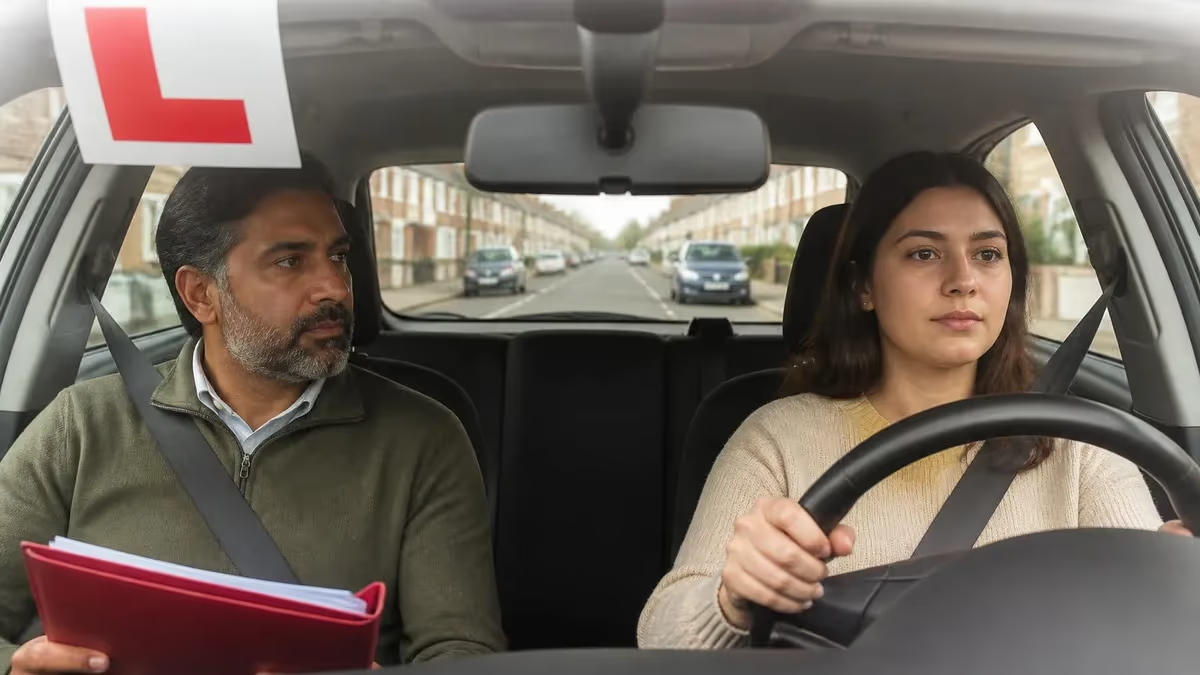
Car Theory Test Practice: What You're Up Against
The UK car theory test isn't getting any easier. DVSA data shows just 44.2% of candidates passed first time in 2024-25, down from 47.5% five years ago. That's the lowest pass rate on record. With a £23 fee per attempt and waiting times stretching past 16 weeks at busy centres, going in unprepared is expensive. The DVSA also added 23 new questions to the bank in late 2024, mostly covering smart motorways and electric vehicle rules.
Real car theory test practice matters because the test has two parts. Part one: 50 multiple choice questions, pass mark 43. Part two: 14 hazard perception clips, pass mark 44 out of 75. You need both on the same day, in one sitting, no retries. Fail one part and the entire test is void, costing you £23 plus a fresh waiting period for your next slot.
Here's what trips most learners up. The multiple choice questions pull from a bank of over 1,000, but the wording shifts. You might've memorised an answer about stopping distances from an app, then the real test phrases it as a road sign question. Rote learning fails fast. Understanding the Highway Code, what each sign means, why each rule exists, that's what passes. Treat the question bank like a textbook, not a cheat sheet.
And the hazard perception clips? They're brutal. You score 5 points for spotting a developing hazard the instant it starts, 0 if you wait too long or click too many times. Most apps don't replicate the DVSA's exact scoring window. Our hazard perception test practice uses the same 14-clip format with realistic timing. The official clips are filmed in different UK regions — urban, rural, motorway — and conditions vary from bright daylight to dusk.
If you're booking your first attempt, start with our free practice theory test to see where you stand. Then drill the weak topics. Most people fail by 1-2 points on multiple choice, not by miles, so even a single weekend of focused study can flip a fail into a pass. Learners who score 41 or 42 the first time almost always pass the rebook. Learners scoring below 35 need at least 2-3 more weeks of practice.
One more thing worth knowing before you book. The DVSA publishes pass rate data by test centre, and it varies wildly. Norwich currently sits at 53% first-time pass. Inner London Charing Cross hits just 36%. The questions are the same nationwide — the difference is how prepared candidates are when they walk in. Picking a quieter centre won't make you pass, but it can mean shorter waits if you need a rebook.
The Numbers You Need to Know
Cost: £23 per attempt (set by DVSA, same since 2014).
Multiple choice: 50 questions, 57 minutes, pass mark 43/50 (86%).
Hazard perception: 14 clips with 15 hazards, pass mark 44/75 (58.6%).
Total test time: 1 hour 32 minutes including the 3-minute break.
2024-25 pass rate: 44.2% — lowest since records began in 1996.
Certificate validity: 2 years from pass date. Miss the deadline and you start over.
Car Theory Test Format
| Section | Questions | Time | Weight | Notes |
|---|---|---|---|---|
| Multiple Choice Questions | 50 | 57 min | Pass: 43/50 | Drawn from 14 topic areas including road signs, vulnerable users, motorways |
| Hazard Perception Clips | 14 clips, 15 hazards | 20 min | Pass: 44/75 | One clip contains 2 hazards. Score 0-5 per hazard based on reaction speed |
| Optional Break | — | 3 min | — | Between sections. Most learners skip it to keep momentum |
| Total | 50 MCQ + 14 clips | 1h 32m | 100% |
UK Theory Test Pass Rate 2024-25
Pass rates have dropped every year since 2019. Practice tests are now the difference between passing and paying again.
Car Theory Online: How to Practice the Right Way
Practising car theory online beats books every time, and the data backs it up. A 2023 DVSA-commissioned study found candidates who used digital practice tests scored 11 percentage points higher on the multiple choice section than book-only learners. Why? Format familiarity. The test is delivered on a touchscreen, not paper, and the on-screen flagging and review features take getting used to. The interface looks dated, almost like Windows XP, but the layout is identical at every UK test centre.
Start with a baseline mock test
Don't open the Highway Code on page one and read cover to cover. Take a full free theory test online first. You'll find out fast which topics you already know and which need work. Most learners discover they're solid on road signs (they see them every day) but weak on motorway rules and vulnerable users. That baseline score also tells you how many weeks of practice you really need before booking.
Drill the weak topics, not the easy ones
If you scored 45/50 on a mock, don't keep taking full mocks. Pull up topic-specific sets for the questions you missed. Our practice theory test bank lets you filter by topic — incidents, motorway rules, hazard awareness, road and traffic signs. Spend 80% of practice time on topics you scored below 70% on. Spend 20% maintaining strong topics with weekly review tests.
Don't ignore hazard perception
Two-thirds of theory test fails happen on the hazard perception section, not multiple choice. It's the part most learners under-practice because it's harder to fit in casually. Block out 30 minutes twice a week for clip practice. The skill is timing your click to the moment a hazard starts developing, not the moment you spot it visually. That gap between visual recognition and motor response can be half a second — enough to drop you from 5 points to 2.
Mix in real exam conditions
One week before your test, take 3 full timed mocks under exam conditions — no pausing, no notes, no second-guessing. If you score above 47/50 consistently with under 5 minutes left, you're ready. Below 43 means more drilling. Set up your practice space to mimic the test centre: phone off, water bottle away, single screen, no music. The DVSA centres are sparse on purpose and you want to be used to that environment.
Refresh on Highway Code updates
The Highway Code has changed three times since 2022, with new rules on cyclist priority, hierarchy of road users, and electric vehicle charging etiquette. Older study materials miss these completely. Always check the publication date on any book or app you use — anything before 2023 is partially out of date and will cost you on the test.
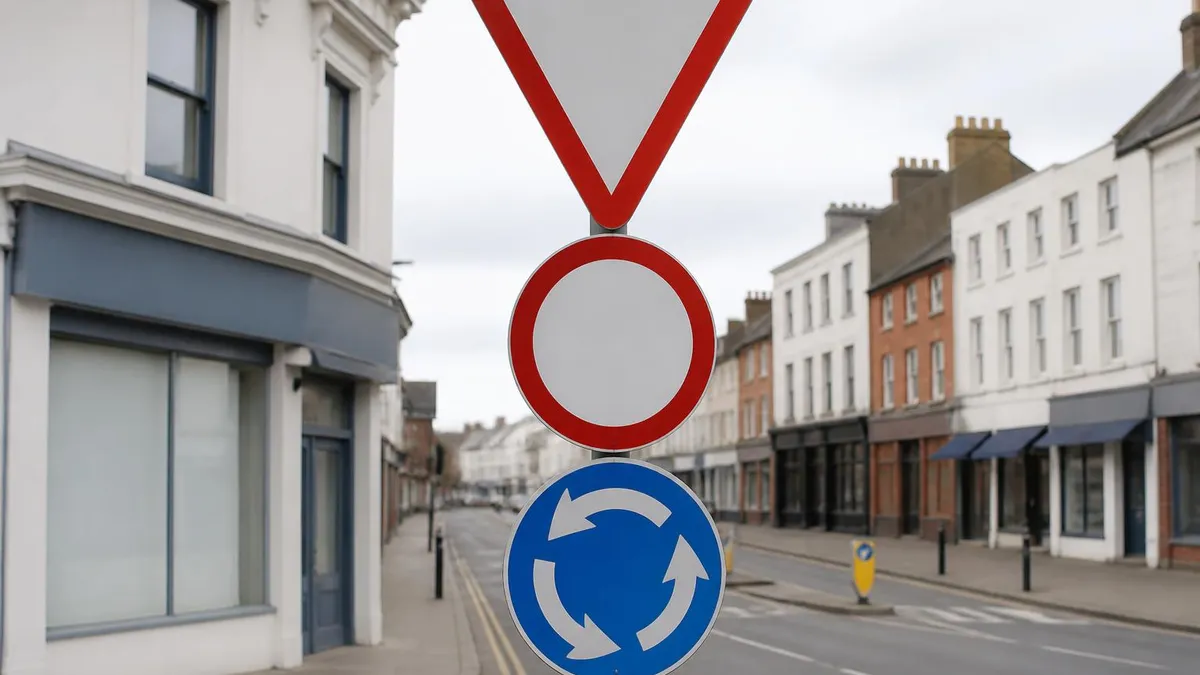
Practice Theory Test: 14 Topic Areas You'll Be Tested On
- Focus area: Concentration, observation, distractions
- Avg questions: 3-4 per test
- Focus area: Courtesy, consideration, road rage
- Avg questions: 2-3 per test
- Focus area: Maintenance, tyres, brakes, MOT
- Avg questions: 4-5 per test
- Focus area: Anticipating dangers on the road
- Avg questions: 5-6 per test
- Focus area: Pedestrians, cyclists, motorcyclists, horses
- Avg questions: 4-5 per test
- Focus area: Warning, regulatory, informational signs
- Avg questions: 6-7 per test
- Focus area: Smart motorways, lane discipline, breakdowns
- Avg questions: 3-4 per test
- Focus area: Insurance, MOT, licence requirements
- Avg questions: 2-3 per test
Hazard Perception Test Practice Test: How the Scoring Actually Works
The hazard perception section confuses more learners than any other part. Here's how the DVSA actually scores it, drawn from their official examiner training materials and the 2018 scoring revision that's still in force today.
You'll watch 14 video clips. Each clip is roughly one minute long and shot from a driver's-eye view through a windscreen. One clip contains 2 scorable hazards. The other 13 contain one each, for 15 total hazards across the test. You click the mouse (or tap the screen) the instant you see a developing hazard — something that would cause you to brake, slow down, or change direction in a real driving situation.
The scoring window is 5 seconds long. Click in the first second and you score 5 points. Click in seconds 2-3, you score 3-4 points. Click in the final second, you score 1 point. Miss the window entirely or click too early before the hazard becomes a hazard, you score 0. That's where most fails happen — premature clicking gets flagged as cheating, especially if you're clicking the same hazard multiple times trying to maximise your score.
Click too many times in a clip (more than 3-4 clicks) and the system zeroes that clip's score. The DVSA calls this anti-cheat measure the "click pattern detector." It's been catching out learners who try to spam-click since 2007. The detector also flags suspicious patterns like clicking at exact 5-second intervals across multiple clips, which used to be a common cheat technique before the algorithm was tightened.
You also can't pause, rewind, or skip clips. They play in a fixed sequence and you only see each one once. If you spot a hazard but hesitate, the window closes and that's that. This is why click-timing practice on apps matters so much — you're building motor memory, not just visual recognition.
For dedicated drill work, use our free hazard perception test. It uses the same 15-hazard, 14-clip structure and reveals your scoring window after each clip so you can see exactly when you should've clicked. Most learners need 20-30 clip sessions before their timing is consistent enough to score 45+ on the real test.
Book a Car Theory Test: Your Two Options
The fastest route: gov.uk/book-theory-test. Costs £23, takes 5 minutes if you have your provisional licence number, theory reference (if rebooking), and a debit/credit card.
You'll see real-time slot availability. Off-peak slots (Tuesday-Thursday, 11am-2pm) typically have shorter waits. Don't refresh — the gov.uk site locks slots for 15 minutes once you pick one.
Need to change your date? Use our where can I book a theory test guide for full step-by-step instructions and what to do if the site crashes mid-booking.
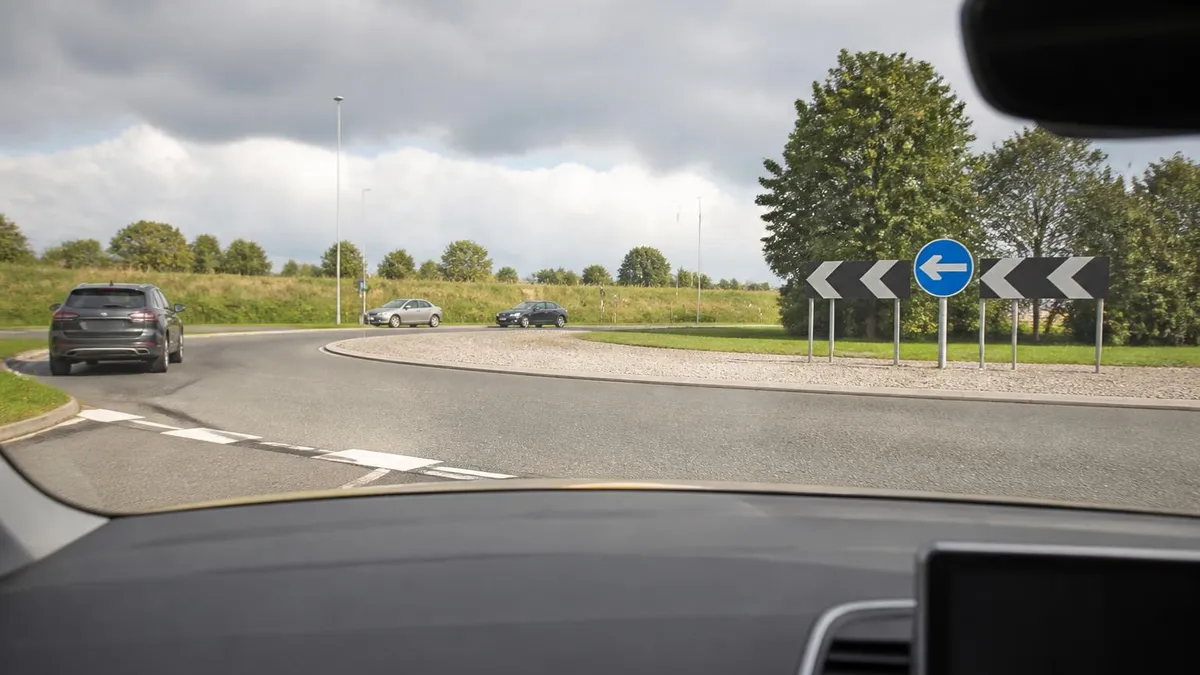
Theory Test Costs: What You'll Pay
UK Car Theory Test: 7 Common Mistakes That Cost Learners a Pass
After analysing thousands of learner outcomes, the same mistakes show up over and over. Here's what trips people up, and exactly how to avoid each one. Read these before you book — they could save you a £23 retake fee and 8 weeks of waiting.
Mistake 1: Cramming the night before
The theory test isn't a memory game, it's a reasoning game. Last-minute cramming loads short-term facts but doesn't build the understanding you need when the question is phrased differently. Start practice at least 3 weeks before your test date, 30 minutes a day beats 8 hours the night before every time. Sleep is also non-negotiable — tired brains misjudge hazard timing badly.
Mistake 2: Skipping the Highway Code
Mock test apps drill questions, but the Highway Code drills why. Read it once, cover to cover, even if it feels dry. It explains the logic behind stopping distances, road markings, and right-of-way rules — knowledge that helps you answer questions you've never seen before. The 2022 hierarchy of road users update is particularly important and shows up in roughly 4 out of every 50 questions now.
Mistake 3: Memorising answers instead of understanding
Apps will let you take the same 50 questions 30 times. By the fifth try you're recognising answers, not learning. Always rotate question sets, and when you get one right, ask yourself "why is that right and the others wrong?" If you can't explain, you didn't learn it. Some learners record themselves explaining tricky answers out loud — it sounds silly, but verbalising the logic locks it in.
Mistake 4: Under-practising hazard perception
Multiple choice feels harder, but hazard perception is where 60-65% of fails happen. Block out separate practice sessions for clips. Use proper free theory test app tools that simulate the click timing window, not just video clips with a yes/no answer. Practice in different lighting too — your home screen is brighter than the test centre monitor, which affects how quickly you spot subtle hazards.
Mistake 5: Booking before you're ready
The 16-week wait time creates pressure to grab any slot. Don't. Book only when you're consistently scoring 47+ on multiple choice and 50+ on hazard perception. A failed test costs you another £23 and another 6-12 week wait. Trust the data: if your last 5 mock scores were 38, 41, 43, 39, 42, you're not ready. Hit 47+ on five consecutive mocks before locking in your test date.
Mistake 6: Forgetting both ID documents
You need your photocard provisional licence AND a second photo ID (passport or pass certificate from a previous test). Forget either and the test centre turns you away — no refund, no rebook, full £23 lost. Check our how to pass theory test checklist 24 hours before. Put both documents in your bag the night before, not the morning of, when nerves make you forgetful.
Mistake 7: Letting nerves take over
You get 57 minutes for 50 questions — that's 68 seconds per question. Plenty of time. If a question stumps you, flag it and move on. Come back at the end. Most learners burn 5+ minutes on a single tough question they could've solved in 30 seconds with a clear head. Box breathing helps: inhale 4 seconds, hold 4, exhale 4, hold 4. Two cycles of that resets your focus mid-test.
Test Day Checklist: What to Bring
- ✓UK photocard provisional driving licence (must be valid, not expired)
- ✓Second photo ID — passport, theory pass certificate from a previous test, or older paper licence
- ✓Booking confirmation email or theory test reference number
- ✓Reading glasses if you wear them (no contact lenses needed to declare)
- ✓Arrive 15 minutes before your slot — the centre locks at the start time
- ✓No phones, watches, or bags allowed in the test room (lockers provided)
- ✓Confirm your <a href="/dvsa/theory-test-certificate"><strong>theory test certificate</strong></a> details print correctly before leaving the centre

Free vs Paid Theory Test Practice: What's Worth It
- +Free practice tests cover all 14 DVSA topics with no paywall
- +Most free tools update questions monthly to match DVSA bank changes
- +Hazard perception clips on free platforms now match DVSA scoring windows
- +You can take unlimited mocks without spending a penny
- +Free options work on any device — phone, tablet, laptop
- −Paid apps may have official DVSA licensed content with exam-identical clips
- −Some free tools show ads between questions, which breaks concentration
- −Free platforms occasionally lag with question updates after DVSA changes
- −Paid apps often include progress tracking and analytics free ones lack
- −Premium apps may bundle the Highway Code and study guides in one bundle
Theory Test Stats Worth Knowing
Driving Theory Test Questions: Sample Questions With Explanations
Here's how real theory test questions are structured, with the kind of explanation you should be able to give yourself before clicking the answer. If you can't explain why the correct answer is correct, you're not ready yet. Examiners design the wrong answers (distractors) to sound plausible, so process of elimination only works when you actually know the rule.
Sample 1 — Hazard Awareness
"You are about to overtake a slow-moving cyclist. What's the minimum distance you should leave?" The correct answer is at least 1.5 metres (or the width of a car door). Why? Highway Code Rule 163 sets this distance specifically because cyclists wobble unpredictably and need room to react to wind, potholes, or door openings. The 1.5-metre rule applies when overtaking at speeds up to 30mph — above 30mph the safe distance grows to 2 metres.
Sample 2 — Road Signs
"What does a red triangular sign with an exclamation mark inside mean?" Answer: warning of an unspecified hazard ahead. Red triangles always mean warning. The shape carries the meaning even if you don't recognise the specific symbol — and that's a key Highway Code principle. Circles mean orders (must do or must not do), triangles mean warnings, rectangles mean information. Memorise the shape rules and you'll get partial credit even when a specific symbol stumps you.
Sample 3 — Motorway Rules
On a smart motorway, what does a red X above a lane mean? Answer: lane closed, do not enter. Driving in a closed lane carries an automatic £100 fine and 3 penalty points since 2019. The question tests whether you've kept up with recent rule changes — older drivers used to ignore the red X on hard shoulders, but modern smart motorways now use them on standard lanes too.
Sample 4 — Vulnerable Road Users
"You're driving past a parked car when a child suddenly runs into the road. What should you do?" Answer: brake firmly and stop. The expected reaction tests both Highway Code knowledge and basic risk hierarchy. The 2022 hierarchy update placed pedestrians at the top of the priority pyramid, so the question often appears with multi-part scenarios involving cyclists or horse riders.
For more sample questions covering all 14 topic areas, use the UK theory test pass mark resources and topic-specific practice sets. Aim to score 90%+ on each topic before booking the real test. The DVSA does not publish which exact questions are on each test, but learners report that around 30% of questions feel "new" on every fresh attempt — which is why understanding beats memorisation every time.
Once you pass theory, you have exactly 2 years to pass your practical driving test. Miss that deadline and your theory pass is void — you pay £23 and take theory again. With current practical test wait times hitting 24+ weeks at some centres, book your practical the same week you pass theory.
Car Theory Test Practice Questions and Answers
Related DVSA Guides
Practice Theory Test: Free UK Driving Practice (2026)
Hazard Perception Test Practice: Tips, Scoring, and Sample Tests
How To Pass Theory Test: Free DVSA Practice & Pass First Time (2026)
UK Theory Test Pass Mark: Car, Bike, LGV, PCV & ADI Scores
Book a Theory Test: How to Use the DVSA Online Booking Portal

Free Theory Test Online: The Complete UK 2026 Guide to Passing the DVSA Test With Unlimited Practice Questions
About the Author

Registered Nurse & Healthcare Educator
Johns Hopkins University School of NursingDr. Sarah Mitchell is a board-certified registered nurse with over 15 years of clinical and academic experience. She completed her PhD in Nursing Science at Johns Hopkins University and has taught NCLEX preparation and clinical skills courses for nursing students across the United States. Her research focuses on evidence-based exam preparation strategies for healthcare certification candidates.