
CPR AED Certification: Programs, Recognition, and Real Differences 2026 October
CPR AED certification compared: 🏆 AHA, Red Cross, online programs, recognition by employers, course content, costs, and what to expect from training.
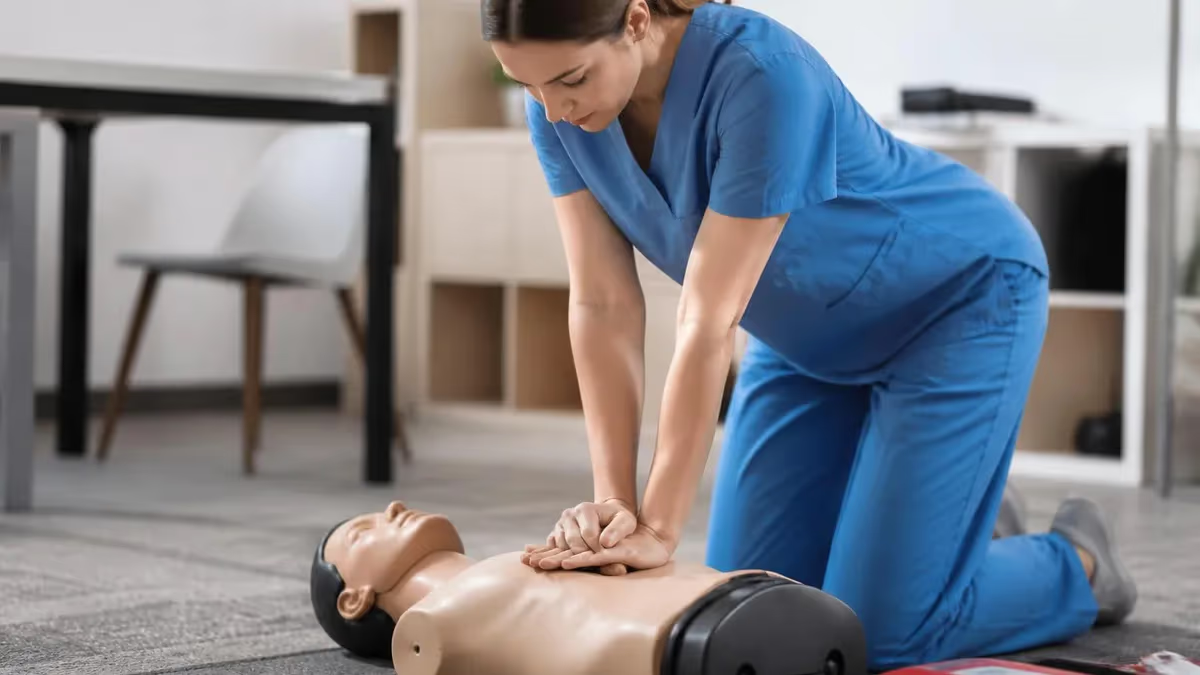
CPR AED certification combines training in cardiopulmonary resuscitation (CPR) with use of automated external defibrillators (AED) — devices that analyze heart rhythm and deliver shocks when needed during cardiac arrest. Combined CPR/AED certification is now standard rather than separate certifications because both skills work together during cardiac emergencies. The training prepares you to recognize cardiac emergencies, perform effective compressions and rescue breaths, use AED devices safely, and coordinate with emergency medical services. Whether for personal preparedness, workplace requirement, healthcare profession, or community responder roles, certified CPR/AED training provides skills that genuinely save lives.
The major certification providers include the American Heart Association (AHA) and the American Red Cross — these dominate the U.S. market with broad recognition. Various other providers (American Safety and Health Institute/ASHI, National Safety Council, online-only providers) offer alternatives with varying recognition. Healthcare employers typically require AHA Healthcare Provider certification for clinical staff. General workplace, school, and community CPR certification accepts broader range of providers. The right certification depends on your specific use case.
For training format specifically, options include traditional classroom courses (4-6 hours typical), blended online plus in-person skills sessions, fully online courses (recognized in some contexts but not others), and refresher courses for renewals. Cost ranges from free (community classes through fire departments, libraries, etc.) to $50-$150+ for paid courses. Certification is typically valid for 2 years before renewal required. Healthcare provider courses run longer and cost more than general CPR courses; the additional content covers two-rescuer CPR, advanced bag-mask ventilation, and various other professional content.
This guide covers CPR AED certification comprehensively: the major certifying organizations and their differences, course content and what's actually taught, online vs in-person training tradeoffs, recognition by employers and other contexts, costs and renewal requirements, and how to select the right certification for your specific needs. Whether you're getting certified for the first time or renewing an existing certification, you'll find practical guidance.
Major providers: American Heart Association (AHA), American Red Cross
Course length: 4-6 hours typical for combined CPR/AED training
Validity: 2 years typical before renewal required
Cost: Free (community) to $50-$150+ for paid courses
Recognition: AHA Healthcare Provider for clinical staff; either AHA or Red Cross broadly accepted
The American Heart Association (AHA) is the most widely recognized provider in healthcare contexts. AHA offers multiple course levels: BLS (Basic Life Support) for healthcare providers, Heartsaver CPR/AED for general public, Heartsaver First Aid CPR AED for additional first aid integration, and various specialty courses (PALS for pediatric, ACLS for advanced cardiac life support). The Healthcare Provider/BLS course is essentially mandatory for clinical healthcare staff. AHA materials are widely used and the Heartsaver courses are available through many training centers including hospitals, fire departments, and independent providers. The AHA CPR certification resources cover AHA-specific information.
The American Red Cross is the other major provider with broad recognition. Red Cross CPR/AED courses are widely available and recognized by most non-healthcare employers. Red Cross offers Adult CPR/AED, Adult and Pediatric CPR/AED, Adult First Aid/CPR/AED (combined), and various BLS and professional courses. Red Cross courses are widely available through Red Cross chapters, hospitals, schools, and independent training centers. Both AHA and Red Cross meet broad workplace and community certification needs; healthcare-specific roles typically require AHA. The Red Cross CPR certification resources cover Red Cross-specific information.
For other CPR providers specifically, several options exist with varying recognition. American Safety and Health Institute (ASHI) is recognized in many contexts though somewhat less widely than AHA/Red Cross. National Safety Council provides CPR training in workplace contexts. National CPR Foundation offers online certification with mixed recognition. Various online-only providers offer convenience but employer acceptance varies enormously. Verify employer or licensing authority's specific recognition before choosing alternative providers — convenience of one specific provider doesn't help if employer requires AHA. The National CPR Foundation resources cover one specific alternative provider.
For course content specifically, combined CPR/AED training covers several areas. Recognition of cardiac arrest signs (unresponsiveness, no breathing or only gasping). Effective chest compression technique (depth, rate, recoil). Rescue breath delivery (when included in protocol). Two-rescuer coordination (in healthcare provider courses). AED operation including device-specific differences. Choking response (Heimlich maneuver, infant choking). Various cardiac emergency scenarios. Pediatric and infant CPR (in courses covering those age groups). Special situations (drowning, electrical injuries, etc.). Course depth varies; healthcare provider courses cover more than general public courses.
For online vs in-person training specifically, several considerations matter. Pure online certification — convenient but recognition varies enormously. Many employers don't accept online-only certification. The skills component (hands-on practice with manikin, AED device use) requires in-person practice for effective skill development. Online-only courses skip this critical practice. Blended programs (online theory plus in-person skills session) combine convenience with proper skills practice — recognition matches in-person courses for most contexts. Choosing format based on employer requirements first, convenience second produces best outcomes.
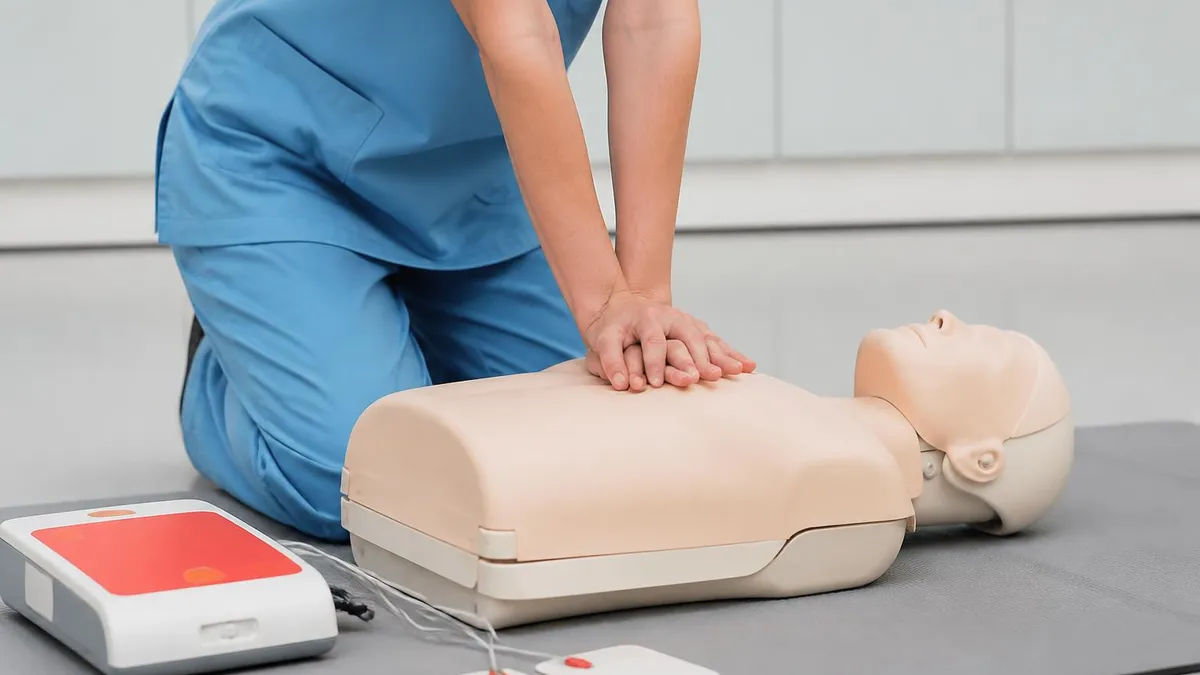
CPR AED Certification Options
American Heart Association's professional course. Required for clinical healthcare staff. 4-5 hours typically. Covers two-rescuer CPR, advanced bag-mask, AED. $60-$100+ typical cost. Renewal every 2 years. Universally recognized in healthcare. The standard for nurses, doctors, EMTs, and other clinical roles.
AHA's general public course. Suitable for workplace, schools, community responders. 3-4 hours typical. $50-$80 typical cost. Covers single rescuer CPR/AED for adult and pediatric victims. Renewal every 2 years. Widely accepted for non-healthcare roles. Many employers accept this certification.
American Red Cross general or professional courses. 4-5 hours typical. $50-$120 cost depending on course level. Adult, pediatric, infant CPR coverage available. Renewal every 2 years. Widely accepted in non-healthcare contexts. Some healthcare employers accept Red Cross BLS; others require specifically AHA.
Various online-only providers. Convenient but recognition varies. Many employers don't accept online-only. Skills component (manikin practice, AED use) typically can't be effectively learned online. Blended online theory plus in-person skills sessions provide good middle ground when offered.
For certification recognition specifically, the right certification depends on intended use. Healthcare clinical roles — verify which specific certification (typically AHA BLS Healthcare Provider). Non-clinical workplace requirement — most employers accept AHA, Red Cross, or other established providers. Education contexts (teachers, coaches) — varies by institution; verify before purchasing course. Community responder programs — typically accept multiple providers. Voluntary personal certification — any quality course works. Always verify acceptance with employer or licensing authority before paying for course; some contexts have very specific requirements.
For finding CPR/AED courses specifically, several approaches work. AHA has training center directory at heart.org with courses near you. Red Cross has class finder at redcross.org. Local hospitals often offer public CPR courses, sometimes free or low-cost. Fire departments and EMS agencies frequently offer community CPR training. YMCAs and recreation centers sometimes offer courses. Local Red Cross chapters often have community programs. Workplaces sometimes provide on-site training as employee benefit. The CPR classes near me resources cover finding local courses.
For renewal specifically, CPR/AED certifications typically expire after 2 years. Renewal requires repeating the certification process — full course or shortened renewal course depending on certification body and expiration timing. Letting certification expire requires full re-certification rather than shorter renewal. Tracking expiration dates and scheduling renewal before expiration prevents losing certified status. Many employers track employee certification dates and remind employees before expirations. Healthcare workers in particular need active certification continuously.
For preparation specifically, CPR courses don't require extensive prerequisites but some preparation helps. Familiarity with current CPR guidelines (AHA updates guidelines every 5 years; current is 2020 with 2025 update expected). Comfort with potentially physical training (compressions are physically demanding). Ability to follow instruction and demonstrate skills. Various medical conditions may limit ability to physically perform CPR — discuss with course instructor in advance if you have concerns. Most adults can complete CPR training successfully with reasonable physical capability.
For course experience specifically, expect several elements. Brief lecture or video covering recognition and protocols. Hands-on manikin practice for compressions and breaths. AED device practice using training devices. Choking response practice. Possible written test (in some courses). Skills evaluation by instructor. Certificate issued upon successful completion. Total time 3-6 hours depending on course depth. Quality courses balance instruction with substantial hands-on practice. The how to perform CPR resources cover specific techniques.
CPR AED Certification by Use Case
Clinical healthcare professionals:
- Required certification: Typically AHA BLS Healthcare Provider
- Course length: 4-5 hours (in-person required)
- Cost: $60-$100+ typically
- Renewal: Every 2 years
- Why AHA specifically: Most healthcare employers, hospitals, and licensing authorities require AHA
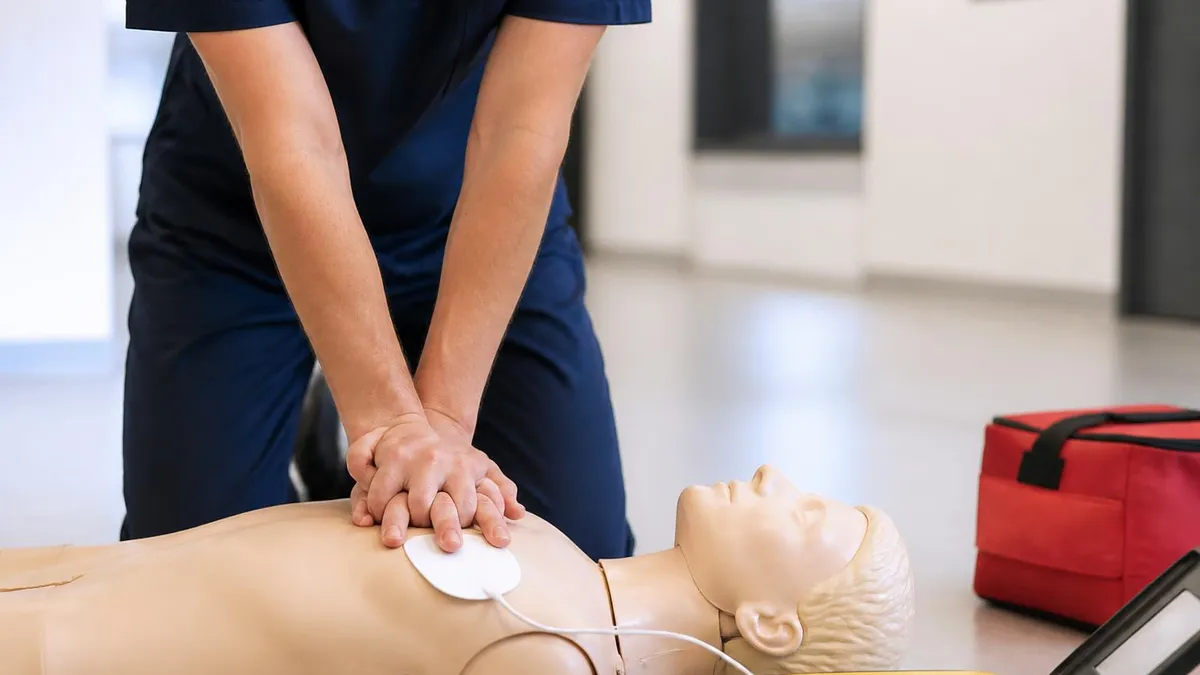
For specific scenarios where CPR/AED training matters specifically, several patterns appear. Workplaces with health-related responsibilities (childcare, fitness facilities, schools, healthcare). Public-facing roles where assisting customers in emergencies might occur. Family situations with elderly relatives or others at elevated cardiac risk. Community responders, first aid teams, sports coaches. Recreational activities with elevated risk (swimming pools, beaches, hiking groups). Each scenario benefits from current CPR/AED skills. The training is widely valuable beyond formal employment requirements.
For real-world cardiac emergencies specifically, the bystander response timing matters enormously. Cardiac arrest survival drops about 10% per minute without CPR. Effective bystander CPR before EMS arrival roughly doubles survival chances. AED defibrillation within first few minutes of cardiac arrest produces survival rates of 50-70% in some studies. Beyond 10 minutes without intervention, survival rates drop to single digits. The narrow time window for effective intervention is why community CPR/AED preparation matters — paramedics typically can't arrive within the critical window. Trained bystanders are first responders by necessity.
For AED specifically, these devices are increasingly common in public spaces — airports, gyms, schools, malls, large workplaces. Modern AEDs are designed for use by laypeople with limited training — they analyze heart rhythm automatically and deliver shock only when warranted. Voice prompts guide users through the process. The technology has democratized cardiac arrest response substantially compared to era when only trained professionals could effectively defibrillate. Familiarity with AED operation through training reduces hesitation in actual emergencies. The CPR meaning resources cover broader CPR context.
For pediatric CPR specifically, several differences from adult CPR matter. Compression depth is shallower for children. Rate similar to adults but compression force adjusted for body size. Two-finger compressions for infants vs hand compressions for older children. AED use modified for children — pediatric pads when available, adult pads if necessary. Many CPR/AED courses cover both adult and pediatric content; some focus on adult only. For people working with children (teachers, daycare staff, parents), pediatric-inclusive courses provide more relevant training.
For combined CPR/First Aid certification specifically, many providers offer combined courses. Adult First Aid/CPR/AED courses run 5-7 hours and combine CPR/AED with first aid topics (wounds, burns, fractures, environmental emergencies, etc.). The combined certification often makes sense for workplace or community responder contexts where both skills might be needed. Cost is somewhat higher than CPR/AED alone but lower than separate courses. Renewal periods typically match — both cycles together. The CPR first aid certification resources cover combined certification.
CPR certification recognition varies enormously by employer and use case. Healthcare employers typically require specifically AHA BLS Healthcare Provider — Red Cross BLS may or may not be accepted. Non-healthcare employers often accept multiple providers but specific employer policies vary. Online-only certifications have particularly inconsistent recognition. Always verify with your specific employer or licensing authority which certifications they accept before paying for courses. The wrong certification means retaking — wasted time and money. Quick phone call or email to HR or licensing authority before enrolling prevents this issue.
For maintaining skills between certifications specifically, several practices help. Periodic mental review of CPR steps. Watching CPR demonstration videos to refresh memory. Taking annual refresher courses (shorter than full re-certification, available through some providers). Practice on manikins when accessible (workplace training, community programs sometimes offer practice opportunities). The 2-year certification window can produce skill decay; periodic practice maintains readiness. People who've maintained certification 5+ cycles often have more reliable performance than those who recertify every 2 years without practice between.
For confidence in actual emergencies specifically, training builds confidence but actual emergency performance varies. Some trained responders freeze in actual emergencies; others perform well. Repeated practice builds automatic responses that survive emergency stress better than once-trained skills. Mental rehearsal of likely scenarios builds familiarity. Recognizing that imperfect CPR is better than no CPR reduces hesitation. Community programs (like AHA's Heartsaver Hero campaigns) emphasize that any reasonable response beats inaction. The CPR training resources cover ongoing training.
For Good Samaritan laws specifically, all U.S. states have laws protecting bystanders who attempt to help in emergencies from liability. Specific protections vary by state — some protect any reasonable response; others have more limited protections. Acting in good faith without expectation of payment generally produces protection. Acting beyond your training scope (attempting medical procedures you're not trained for) sometimes loses protection. The legal framework supports bystander response; understanding your state's specific laws builds confidence about responding without liability concerns. Most CPR courses cover Good Samaritan laws briefly.
For specific certifications by profession specifically, several patterns matter. Nurses, EMTs, doctors, dentists — typically require AHA BLS Healthcare Provider. Lifeguards — typically Red Cross or AHA with water rescue components. Teachers and childcare workers — varies by state and employer; usually adult/pediatric/infant CPR. Coaches — varies by sport and league; first aid/CPR commonly required. Personal trainers — typically required by certifying body for fitness credentials. Construction workers in some roles — varies by employer. Each profession has specific norms; verify before assuming general CPR certification suffices.
Looking forward, CPR guidelines and certification requirements continue evolving. AHA updates guidelines every 5 years based on emerging research. Compression-only CPR (no rescue breaths) has been emphasized for laypeople in recent guidelines. AED technology continues improving. Various technological aids (CPR feedback devices, smartphone apps) support better technique. Online and blended training options continue expanding. The fundamentals of effective CPR/AED response remain stable while specific protocols evolve. Maintaining certification through current providers ensures alignment with current best practices.
Bystander CPR Decision Steps
- ✓Check unresponsiveness (tap and shout)
- ✓Call 911 (or have someone else call)
- ✓Begin chest compressions (push hard and fast, center of chest)
- ✓Use AED as soon as available
- ✓Continue until EMS arrives or person regains breathing
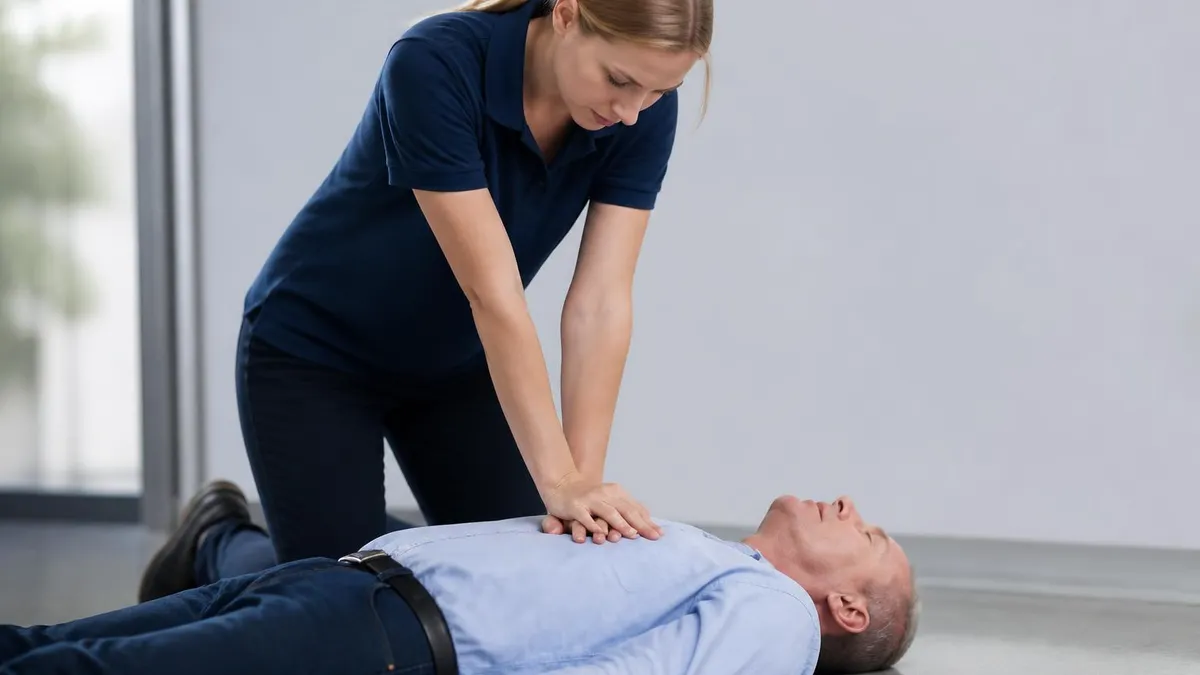
For CPR for specific populations specifically, several variants matter. Pediatric CPR for children. Infant CPR for babies under 1 year. Drowning CPR for water rescue scenarios. Hypothermia CPR with specific protocols. Pregnancy CPR with adjusted positioning. Each variant has specific considerations addressed in courses covering those scenarios. General CPR/AED courses typically cover adult and pediatric basics; specialty scenarios may require additional training or healthcare-level courses.
For when CPR is indicated specifically, several signs trigger CPR initiation. Person is unresponsive (doesn't respond to voice or shaking). Person is not breathing or only gasping (agonal breathing). No pulse detected (in healthcare provider context with pulse check). Time matters — start CPR within seconds of recognizing cardiac arrest. The recognition step is critical; CPR for someone breathing normally is unnecessary and potentially harmful. Training emphasizes recognition criteria so trained responders initiate CPR appropriately.
For CPR myths specifically, several common misconceptions affect bystander response. Myth: "You'll get sued if CPR doesn't work." Reality: Good Samaritan laws protect reasonable response. Myth: "CPR usually saves lives if done correctly." Reality: Even perfect CPR has limited survival rates without rapid defibrillation; CPR buys time but isn't usually sufficient alone. Myth: "Don't do CPR unless you're certified." Reality: Untrained CPR (compression-only) is much better than no CPR. Myth: "AED can hurt someone who doesn't need shock." Reality: AEDs only deliver shock when needed. Each myth potentially reduces willingness to help; addressing them increases bystander response.
For CPR effectiveness statistics specifically, several facts inform realistic expectations. Cardiac arrest survival rates remain low overall — approximately 10-20% of out-of-hospital cardiac arrest survive to hospital discharge. Bystander CPR roughly doubles these survival chances. Early defibrillation (within first 3-5 minutes) produces survival rates of 50-70% in some studies. Combined effective bystander CPR plus early AED defibrillation produces best outcomes. The numbers explain why community CPR/AED preparation matters substantially despite imperfect overall outcomes.
CPR AED Certification Quick Facts
Key Facts at a Glance
| Item | Value | Details |
|---|---|---|
| Typical certification validity period | 2 years | |
| Typical course length for combined CPR/AED | 4-6 hours | |
| Typical course cost range | $50-$150+ | |
| Cardiac arrest survival decrease per minute without CPR | 10%/min |
Getting CPR AED Certified
- +Genuine life-saving skill with high real-world impact
- +Free or low-cost options available through community programs
- +Required for many healthcare and other professional roles
- +Personal preparedness for family and community emergencies
- +Builds confidence to respond in cardiac emergencies
- −Time investment of 3-6 hours plus 2-year renewal cycles
- −Cost ($50-$150+) for paid courses adds up over years
- −Online-only certifications have inconsistent recognition
- −Skill decay between certifications without practice
- −Stress of actual emergency may affect performance despite training
CPR Questions and Answers
About the Author

Registered Nurse & Healthcare Educator
Johns Hopkins University School of NursingDr. Sarah Mitchell is a board-certified registered nurse with over 15 years of clinical and academic experience. She completed her PhD in Nursing Science at Johns Hopkins University and has taught NCLEX preparation and clinical skills courses for nursing students across the United States. Her research focuses on evidence-based exam preparation strategies for healthcare certification candidates.