
BLS Certification on Resume: What It Is, How to List It & Why It Matters
Learn what a BLS certification is, how to add it to your resume, 🏆 and why healthcare employers look for basic life support credentials in 2026 September.

Understanding what is a BLS certification is the first step toward advancing your healthcare career. BLS — which stands for Basic Life Support — is a standardized credential that demonstrates your ability to recognize and respond to life-threatening emergencies, including cardiac arrest, respiratory failure, and severe choking. When you add a BLS certification on resume, you immediately signal to employers that you can act decisively in critical moments, a quality that separates competitive candidates from the rest of the applicant pool in virtually every clinical and many non-clinical roles.
The American Heart Association (AHA) and the American Red Cross are the two most widely recognized bodies that issue BLS credentials in the United States. Both organizations follow evidence-based guidelines updated roughly every five years, ensuring that every certified professional has learned the most current techniques for high-quality CPR, automated external defibrillator (AED) use, and relief of foreign-body airway obstruction. Most employers will accept certification from either issuing body, although some hospital systems specify AHA by name in their job postings.
A common question from new healthcare students is whether BLS and CPR are the same thing. The short answer is no — BLS includes CPR but goes substantially further. While a standard CPR course may teach bystander compression-only rescue for lay responders, the is bls certification the same as cpr question is best answered by noting that BLS adds mask ventilation, two-rescuer techniques, AED protocols, and team dynamics that lay-public CPR training simply does not cover. Employers in clinical settings specifically seek the healthcare-provider level of BLS, not basic bystander CPR.
For nurses, medical assistants, EMTs, respiratory therapists, dental hygienists, physical therapists, and countless other allied health professionals, BLS is not optional — it is a baseline licensure or employment requirement. Many state boards of nursing and accreditation bodies require proof of a current, unexpired BLS credential before a license is granted or renewed. Even professionals in roles that seem less directly patient-facing, such as health information technicians or medical coders who work in clinical environments, are increasingly expected to hold the credential as a condition of hospital employment.
Listing the certification correctly on your resume is more than a formality. Recruiters using applicant tracking systems (ATS) often filter candidates by specific keywords, and a correctly formatted entry — including the full credential name, issuing organization, and expiration date — is far more likely to pass automated screening than a vague reference to CPR training. Taking a few minutes to format this section properly can meaningfully improve your callback rate without changing anything else about your application.
Beyond the resume itself, having an active BLS credential demonstrates a commitment to patient safety that resonates with hiring managers at every level. Hiring directors for intensive care units, emergency departments, and outpatient surgery centers routinely report that candidates who arrive with current BLS already completed save the organization onboarding time and cost. Some employers even reimburse certification fees or provide on-site classes, recognizing that a certified workforce reduces liability and improves patient outcomes simultaneously.
This guide covers everything you need to know about BLS — what the credential involves, how to get certified or renew, how to format it on your resume, and how to leverage it during salary negotiations and job applications. Whether you are entering healthcare for the first time or refreshing credentials after a gap in employment, you will find practical, actionable guidance here to present your BLS certification on resume as the professional asset it truly is.
BLS Certification by the Numbers

BLS Course Structure: What You Will Learn and Do
Students practice adult, child, and infant chest compressions at the correct rate (100–120/min) and depth (2–2.4 inches for adults). Proper hand placement, full recoil, and minimizing interruptions are drilled during multiple hands-on repetitions with feedback manikins.
BLS adds mask ventilation skills not found in bystander CPR classes. Providers learn bag-mask technique, head-tilt chin-lift, jaw thrust for suspected spinal injury, and how to achieve adequate chest rise with each breath during two-rescuer CPR cycles.
Automated external defibrillator operation is a core BLS competency. Students learn to power on the device, place pads correctly on adults and children, clear the patient before shock delivery, and resume CPR immediately after each shock without delay.
Healthcare-provider BLS emphasizes coordinated two- and three-rescuer scenarios. Students practice role rotation to prevent compressor fatigue, closed-loop communication, and clear leadership so that every team member knows their responsibility during a real resuscitation event.
Certification requires passing both a hands-on skills station evaluated by an instructor and a short written or online knowledge test. The skills evaluation uses a standardized checklist, so knowing exactly what actions are assessed helps candidates perform consistently under observation.
Getting your BLS credential for the first time — or completing a basic life support renewal class — follows a straightforward process that most working professionals can fit around a busy schedule. Initial certification courses are offered by AHA-authorized training centers, American Red Cross chapters, community colleges, hospitals, and independent providers across every major metro area. In-person classes typically run four to five hours and include both the skills check-off stations and a brief written examination administered on the same day. You leave the session with a temporary card and receive your official two-year certification card within days.
The renewal pathway is called a BLS Renewal or Heartsaver Renewal depending on the issuing organization, and it is intentionally streamlined because the goal is to keep credentialed professionals current rather than to create unnecessary barriers. Renewal classes run approximately three to three and a half hours for those who hold a current, unexpired card.
If your card has already lapsed — even by a few months — most instructors will still accept you in a renewal format, though some training centers require a full initial course after a lapse of six months or more. Check with the specific center before enrolling to avoid surprises.
Online and blended learning options have expanded significantly since the AHA introduced its HeartCode platform. The blended model lets you complete the cognitive portion — videos, animations, and a knowledge test — entirely online at your own pace, then schedule a brief in-person skills session (often 60–90 minutes) at a local training center to complete the hands-on check-off.
This format is popular with busy nurses, paramedics, and traveling healthcare workers who cannot easily block a full afternoon for a traditional class. If you are wondering how long does it take to get bls certification, the blended route can compress total time commitment to as little as two to three hours spread across multiple days.
Before enrolling, confirm that the course you select is recognized by your employer or licensing board. Some hospital credentialing departments accept only AHA-issued cards, while others also recognize the American Red Cross, the National Health and Safety Education Council (NHSEC), and a handful of other accredited providers. Military and federal healthcare settings may have additional requirements. When in doubt, call your HR department or check your state nursing or allied health board's website for a list of approved BLS vendors before paying enrollment fees.
The cost of obtaining your credential varies by provider, location, and format. In-person group classes at community training centers typically cost between $30 and $55 per person. Hospital-hosted classes offered to staff are often free or employer-subsidized. Independent providers and private training companies sometimes charge $75 or more, particularly for small-group or one-on-one sessions that offer more flexible scheduling. Online-plus-skills blended courses from AHA-authorized centers generally fall in the $40–$70 range depending on geographic market. Understanding basic life support certification cost ahead of time helps you budget accurately and spot overpriced providers.
Once you complete your course, store your certification card — both the physical card and a digital photo — somewhere accessible. Many employers ask for proof of BLS during onboarding paperwork, during annual compliance audits, or when extending your hospital privileges. Creating a dedicated folder on your phone's cloud storage with photos of your BLS card, ACLS card, and other relevant credentials eliminates stressful last-minute searches when human resources calls. Some professionals also upload their cards to their LinkedIn profile as a verified certification, which adds a layer of credibility visible to recruiters without them needing to request documentation.
Setting a renewal reminder 90 days before your expiration date is one of the simplest habits that separates consistently credentialed professionals from those who let certifications lapse. A lapsed BLS card is not merely an administrative inconvenience — in many clinical environments it triggers automatic suspension from patient care duties until a new card is presented, which can disrupt scheduling, income, and professional relationships.
Calendar reminders, phone alerts, or free credential tracking apps can all serve this purpose effectively. Staying ahead of renewal is far easier than scrambling to get certified on an emergency basis when your first shift at a new job is three days away.
AHA, Red Cross, and Other BLS Providers Compared
The AHA basic life support exam and skills course is the gold standard accepted by the vast majority of hospital systems, nursing schools, and clinical employers nationwide. The AHA updates its guidelines every five years through its Emergency Cardiovascular Care (ECC) program, and every certified instructor must complete regular recertification to remain authorized. The HeartCode BLS blended-learning platform makes it easy to complete the cognitive portion online before an abbreviated in-person skills session, which appeals to professionals with unpredictable schedules.
AHA BLS cards are printed with a clear two-year expiration date and include the trainee's name, completion date, and the specific course title. Most hospital credentialing departments and state licensing boards explicitly list AHA as an approved issuing body, making it the safest choice when you are unsure which provider your employer accepts. The AHA also offers the Basic Life Support for Healthcare Providers instructor course, allowing experienced clinicians to teach and certify others within their organizations.

Pros and Cons of Adding BLS Certification to Your Resume
- +Immediately signals patient safety competency to hiring managers and ATS keyword filters
- +Required for licensure by most state nursing boards and allied health regulatory bodies
- +Increases employability across clinical, administrative, and community health roles
- +Demonstrates initiative when held by professionals in roles that don't strictly require it
- +Provides a 2-year credential that is relatively inexpensive and fast to obtain or renew
- +Qualifies you for higher-acuity clinical rotations in nursing and allied health programs
- −Expires every two years and requires recurring time and cost investment to maintain
- −Some employers accept only AHA-issued cards, limiting your provider options
- −Does not substitute for ACLS, PALS, or NRP certifications in high-acuity specialty roles
- −Skills degrade without regular practice — certification does not equal proficiency
- −Lapsed certification can trigger automatic suspension from patient care in hospital settings
- −Blended online courses still require an in-person skills session, limiting scheduling flexibility
Pros and Cons at a Glance
| Pros | Cons |
|---|---|
| Immediately signals patient safety competency to hiring managers and ATS keyword filters | Expires every two years and requires recurring time and cost investment to maintain |
| Required for licensure by most state nursing boards and allied health regulatory bodies | Some employers accept only AHA-issued cards, limiting your provider options |
| Increases employability across clinical, administrative, and community health roles | Does not substitute for ACLS, PALS, or NRP certifications in high-acuity specialty roles |
| Demonstrates initiative when held by professionals in roles that don't strictly require it | Skills degrade without regular practice — certification does not equal proficiency |
| Qualifies you for higher-acuity clinical rotations in nursing and allied health programs | Lapsed certification can trigger automatic suspension from patient care in hospital settings |
BLS Certification Resume Formatting Checklist
- ✓List BLS under a dedicated 'Certifications & Licensure' section, not under Skills or Education
- ✓Write the full credential name: 'Basic Life Support (BLS) for Healthcare Providers'
- ✓Include the issuing organization: American Heart Association or American Red Cross
- ✓Add the exact expiration date (month and year) so recruiters can confirm currency at a glance
- ✓Use the format: Credential Name | Issuing Body | Exp. MM/YYYY on a single line
- ✓List certifications in reverse-chronological order if you hold multiple (ACLS above BLS is standard)
- ✓Mirror the exact terminology used in the job posting — some postings say 'BLS,' others say 'Basic Life Support'
- ✓Include certification number if the employer or licensing board requires it for verification
- ✓Verify the card is not expired before applying — recruiters may request immediate proof
- ✓Update your LinkedIn profile 'Certifications' section to match your resume entry exactly
ATS Systems Scan for Exact Credential Terminology
Applicant tracking systems used by large health systems often filter resumes before a human ever reads them. Including both 'BLS' and 'Basic Life Support' in your certifications section — or matching the exact phrasing from the job posting — significantly increases your chances of passing the initial automated screen and reaching a recruiter's desk.
Knowing which jobs require you to list BLS certification on resume — and which ones benefit from it even without a hard requirement — helps you prioritize your credentialing investments. At the top of the list are registered nurses, licensed practical nurses, and certified nursing assistants, for whom an active BLS credential is typically a non-negotiable condition of employment at any facility that receives Medicare or Medicaid funding. Hospital credentialing departments conduct annual audits of BLS expiration dates, and a lapsed card can result in removal from the patient care schedule until the credential is restored.
Emergency medical technicians and paramedics represent another tier where BLS is foundational — though for these professionals it is the minimum, with ACLS and PALS certifications expected on top of it. Respiratory therapists, surgical technologists, radiologic technologists, cardiac sonographers, and other imaging or procedure-focused allied health professionals are increasingly required to hold BLS as part of their department's safety standards, even when they are not the primary responders to a code event. Being present on a unit when a cardiac arrest occurs means everyone in that space may be called upon before the rapid response team arrives.
Dental offices represent a frequently overlooked sector where BLS is legally mandated in most states. Dental assistants, dental hygienists, and dentists themselves are required to maintain current BLS or equivalent emergency response training as a condition of their professional licensure in the majority of US states. The dental chair creates a unique airway risk environment, and state dental boards enforce credentialing requirements seriously. A dental professional who lets BLS lapse risks both licensure consequences and personal liability in the event of an in-office emergency.
School nurses, athletic trainers, occupational health nurses, and correctional health nurses all operate in environments where they may be the only medically trained person on site during an emergency. Employers in these settings not only require BLS but often prefer candidates who also hold first aid instructor credentials, enabling them to train non-clinical staff in basic response skills. Listing BLS prominently on your resume when applying to these positions demonstrates awareness of the autonomous nature of the role and the life-safety expectations attached to it.
Non-clinical healthcare roles — medical scribes, patient care technicians, phlebotomists, and patient access representatives — are increasingly being hired into environments where BLS is expected even though it may not appear in the formal job description. Hospital systems have adopted standardized safety cultures in which every employee who enters patient care areas undergoes annual BLS training. Candidates who arrive already certified reduce onboarding burden and demonstrate alignment with that safety culture before their first day.
Outside traditional healthcare, BLS is becoming a differentiating credential for professionals in fitness and wellness (personal trainers, group exercise instructors), childcare and early education, corporate safety officers, and first responder-adjacent roles like security at healthcare facilities or large public venues. If you are uncertain whether a role benefits from BLS on your resume, the answer is almost always yes — it signals responsibility and preparation regardless of the industry, and it never hurts to have it listed. The credential's low cost and short acquisition time mean the return on investment is among the highest of any professional certification available.
Graduate school and clinical residency applicants should also be aware that BLS is frequently listed as an admission prerequisite or a condition of clinical placement. Medical school, physician assistant programs, nurse practitioner programs, and many physical therapy programs require proof of current BLS before students may participate in patient care rotations. Obtaining BLS before or during application season means one fewer item to scramble for after an acceptance letter arrives, and including it on your application strengthens the narrative that you are practically prepared for clinical work.

Many candidates accept job offers and then discover their BLS card expires within 30 days — before their start date or during orientation. Most hospital systems require a valid card on file before your first patient care shift, and some will rescind or delay the offer if you cannot produce one. Renew at least 60 days before any anticipated start date to avoid this scenario. You can renew up to 60 days early without losing time on your next cycle.
Once your BLS certification is on your resume, the next question is how to leverage it most effectively during the job search and salary negotiation process. Credentials only create value when they are visible to decision-makers at the right moment, so understanding how to surface your BLS certification throughout the application lifecycle — not just on the static resume document — is the key to extracting maximum professional benefit from the time and money you have invested.
During the initial application phase, ensure that your LinkedIn profile's Certifications section mirrors your resume exactly. Recruiters who source candidates directly on LinkedIn use the same keyword filters that hospital ATS systems use, and a LinkedIn profile without 'Basic Life Support' or 'BLS' in the certifications section will be invisible to those searches.
Add the credential name in full, select American Heart Association or American Red Cross from LinkedIn's issuer dropdown, enter your expiration date, and optionally add your credential ID number if your card includes one. This takes under five minutes and extends the reach of your certification beyond the resume document itself.
In cover letters, you do not need to repeat the literal certification entry, but you can briefly reference your BLS status when it is directly relevant to a described scenario. For example, if applying to an emergency department nursing position, a sentence such as 'I hold a current AHA BLS certification and maintain my ACLS as well' reinforces that you meet the baseline credentialing threshold immediately, which reduces a hiring manager's due-diligence burden before extending an interview invitation.
During interviews, interviewers rarely ask candidates to recite BLS protocol steps, but they do evaluate whether candidates understand the practical context of their credentials. If asked about emergency preparedness or teamwork in high-pressure situations, weaving in a reference to your BLS training — including the team-dynamics and closed-loop communication skills it covers — demonstrates that you understand what the credential represents, not just that you have a card in your wallet. This depth of answer signals genuine engagement with patient safety culture rather than checkbox compliance.
For traveling healthcare professionals and agency nurses, maintaining a continuously current BLS credential is especially important because contracts can be offered and start dates set within 48–72 hours of acceptance. Knowing exactly when your card expires and having a plan to renew on the road — including locating AHA training centers near your assignment city — is a practical habit that protects your ability to accept short-notice contracts.
Most travel nurse staffing agencies require a BLS card valid for the entire duration of the contract, not just on the start date, so factor that into your renewal timing. You can find more detail about certification timelines at how long does basic life support certification last.
When negotiating compensation, BLS on its own is not typically a lever for a higher base salary — it is expected for clinical roles. However, the combination of BLS with ACLS, PALS, NRP, or specialty certifications creates a credential bundle that substantially strengthens your negotiating position. Each additional active credential reduces the employer's cost of onboarding you into high-acuity assignments and demonstrates your commitment to professional development. Bring up this credential package during salary discussions in the context of immediate productivity — you arrive fully credentialed, requiring no training budget for certification, which has tangible value to the department budget.
Professionals who allow their BLS to lapse and then re-enter the workforce after a career gap should treat BLS recertification as their very first action before updating the resume or submitting applications. A resume that lists BLS with an expired date — or, worse, lists BLS without a date and the interviewer discovers it is lapsed during reference checks — creates a negative impression that is hard to reverse.
Renew first, then apply. The few days it takes to complete a renewal course will be paid back many times over in the credibility it adds to your application and the friction it eliminates during the hiring process.
Preparing for your BLS skills check-off and written assessment is straightforward when you approach it systematically. The written portion of the AHA BLS exam typically contains 25 questions covering recognition of cardiac arrest, proper CPR technique, AED operation, relief of choking, and the chain of survival for both adults and pediatric patients.
Questions are multiple choice and the passing score is 84 percent, meaning you can miss no more than four questions. Familiarity with AHA terminology — specifically terms like 'high-quality CPR,' 'minimize interruptions,' and 'give breaths until chest rises' — is more important than memorizing numeric thresholds, because the exam tests conceptual understanding rather than rote recall of every single number.
The compression rate of 100 to 120 per minute and compression depth of at least two inches for adults are the two most commonly tested quantitative facts on the BLS exam. For children, depth is at least one-third the diameter of the chest, approximately two inches; for infants, it is approximately one and a half inches using two fingers placed just below the nipple line.
The compression-to-ventilation ratio is 30:2 for single-rescuer adult, child, and infant CPR, and it shifts to continuous compressions at 100–120 per minute with asynchronous breaths every two to three seconds once an advanced airway is placed by another team member during two-rescuer scenarios.
AED steps are tested in near-identical sequence across every provider: power on, attach pads to bare dry skin, clear the patient while the device analyzes, deliver shock if advised, and immediately resume CPR starting with compressions. Knowing that you resume CPR after the shock — not after checking pulse — is a detail that trips up many first-time test-takers who conflate post-shock protocol with post-ROSC assessment.
The BLS course and written exam are designed around real resuscitation sequencing, so candidates who have watched AHA training videos and practiced with a manikin usually find the written assessment manageable even without intensive studying.
For the skills check-off, instructors use a standardized form that evaluates specific observable actions in a required sequence. For adult single-rescuer CPR, the typical sequence evaluated is: scene safety assessment, tap and shout, call for help or direct someone to call 911, open airway, look-listen-feel for no longer than ten seconds, begin compressions at correct rate and depth with full recoil and minimal interruptions, provide two breaths, and continue the cycle.
Missing a step or performing it out of sequence can result in a remediation — an opportunity to retry — rather than immediate failure. Most instructors want every student to succeed and will coach during remediation rather than simply marking a student as failed.
Practice tests and scenario-based questions are among the most effective study tools for both the written and practical components of BLS. Working through practice questions that describe a clinical scenario — 'You arrive to find a 45-year-old unresponsive patient with no pulse — what is your first action?' — activates the same decision-making pathways that will be engaged during the actual assessment and during real emergencies. The more you can internalize the chain of survival as a mental default rather than a memorized list, the more confident and fluid your performance will be under evaluation conditions.
Candidates who are anxious about the skills check-off benefit from watching the AHA's free instructional videos before class, which demonstrate every skill in the exact format the instructor will expect. Arriving a few minutes early to ask the instructor about equipment — which manikins and which AED trainer model will be used — helps you orient quickly when the skills session begins. If your course uses a feedback manikin that displays compression rate and depth in real time, use that feedback actively during practice rounds rather than waiting to see your score at the end.
After passing both components, your temporary training card is valid immediately and your official card follows within a week to ten days depending on your training center. Photograph the temporary card the same day you receive it and update your resume, LinkedIn profile, and any hospital credentialing portals (such as ECHO, symplr, or Verity) right away while the motivation is fresh.
Delaying that administrative step by even a few weeks frequently leads to gaps in credentialing databases that generate compliance flags during the next audit cycle — a headache that takes far more time to resolve than the original five-minute update would have required.
BLS Questions and Answers
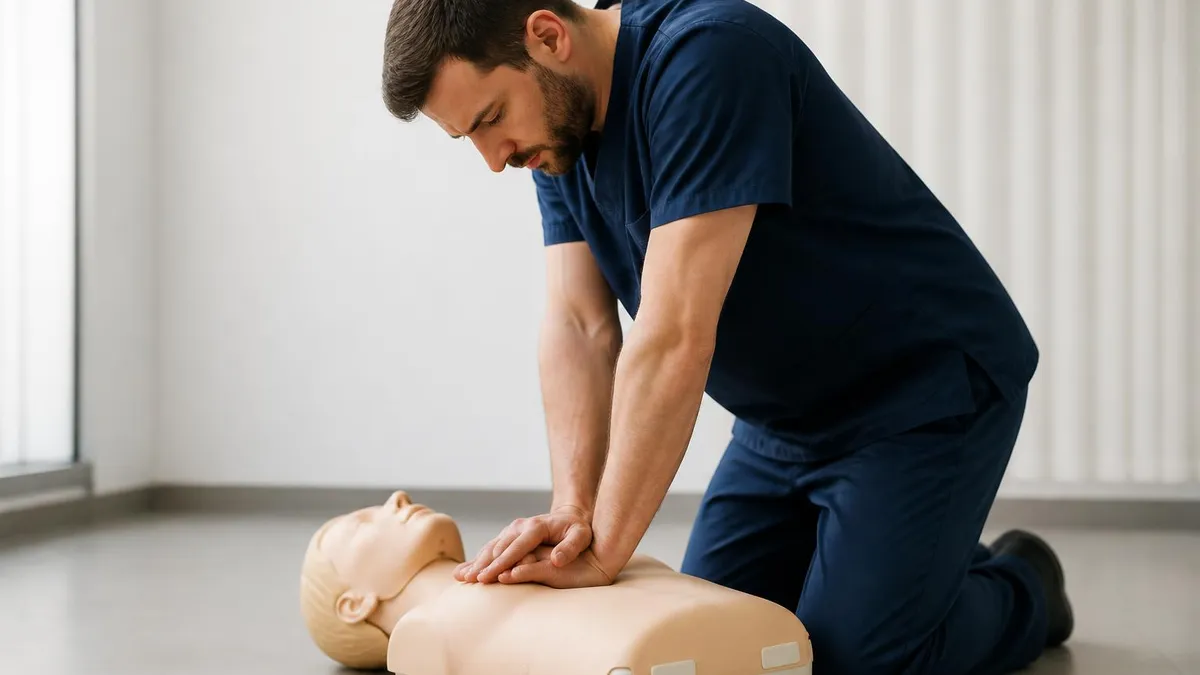
BLS Exam: Complete 2026 Guide to Passing Your Basic Life Support Certification Test
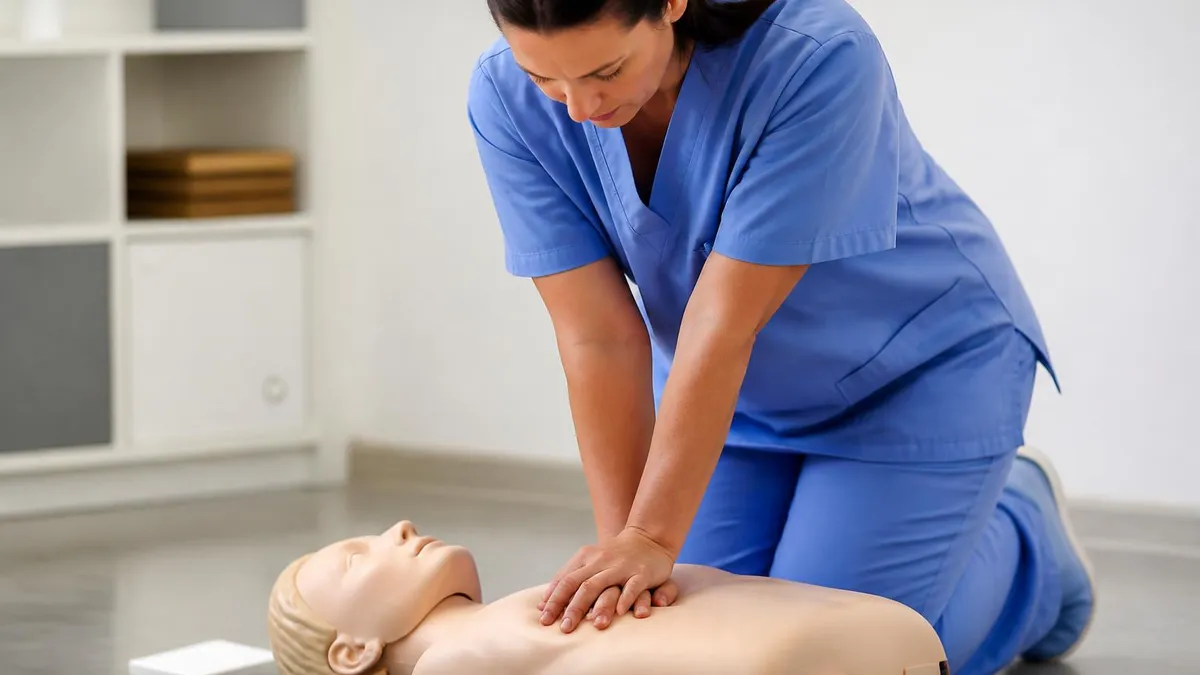
BLS Online Certification: Complete Guide to Getting Certified in Basic Life Support
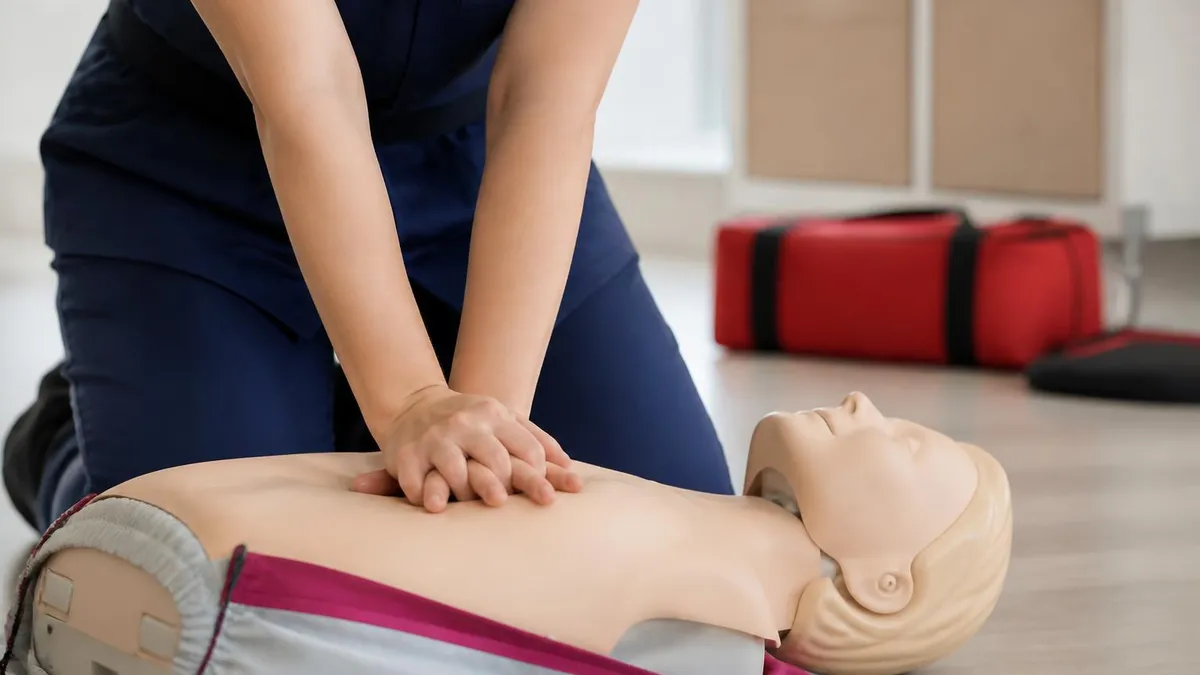
AHA BLS Certification: Course, Renewal, and Exam Guide
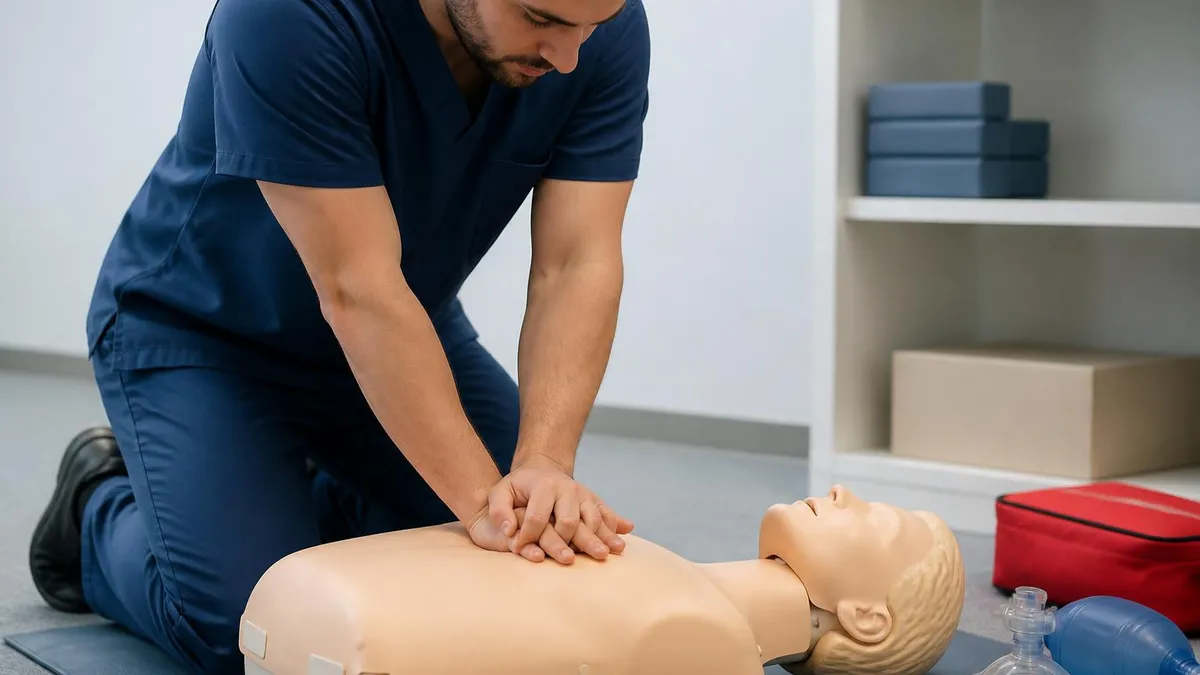
BLS Training: Course Content, Format & How to Get Certified
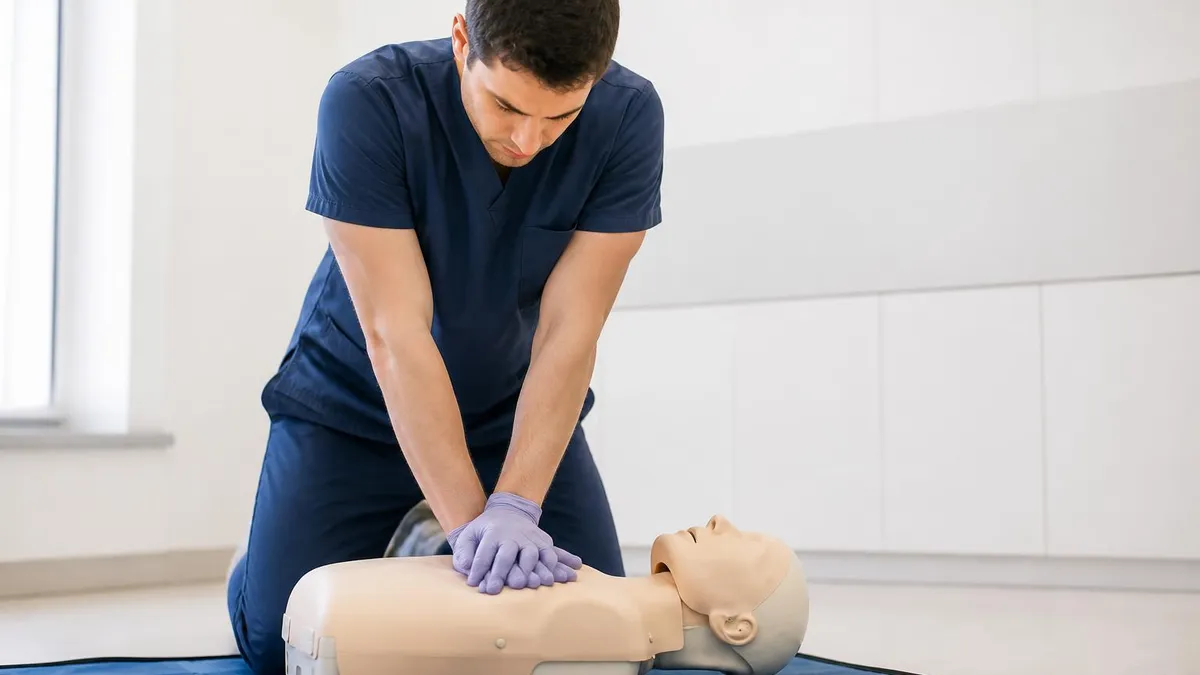
BLS Course: Complete Guide to Basic Life Support
About the Author

Registered Nurse & Healthcare Educator
Johns Hopkins University School of NursingDr. Sarah Mitchell is a board-certified registered nurse with over 15 years of clinical and academic experience. She completed her PhD in Nursing Science at Johns Hopkins University and has taught NCLEX preparation and clinical skills courses for nursing students across the United States. Her research focuses on evidence-based exam preparation strategies for healthcare certification candidates.
Join the Discussion
Connect with other students preparing for this exam. Share tips, ask questions, and get advice from people who have been there.
View discussion (8 replies)