
BLS Book: Complete Study Guide for BLS Certification and AHA Exam Prep
Your complete BLS book and study guide. Learn what BLS certification covers, AHA exam format, CPR differences, and how to pass on your first attempt. ⏳

Understanding what is a BLS certification begins with picking up the right study materials. The bls book published by the American Heart Association is the foundation of every healthcare provider's emergency-response training. It defines compression rates, ventilation ratios, team dynamics, and the chain of survival — concepts that appear verbatim on the written exam. Whether you are a nurse, paramedic, medical student, or respiratory therapist, mastering the AHA provider manual before your class date dramatically improves both your skills test performance and your written score.
Many learners wonder what does BLS stand for before they even open a textbook. BLS stands for Basic Life Support, a standardized set of interventions designed to preserve brain and heart function until advanced care can be delivered. The AHA BLS curriculum covers adult, child, and infant resuscitation, two-rescuer CPR, bag-mask ventilation, AED use, and relief of foreign-body airway obstruction. Each of these topics is testable, which is why working through the official provider manual chapter by chapter — not just skimming it the night before — is the strategy that consistently produces first-attempt passes.
A common question healthcare students ask is whether BLS and CPR are the same thing. The short answer is no, but the two are deeply related. CPR, or cardiopulmonary resuscitation, is the hands-on technique of chest compressions and rescue breaths. BLS is the broader certification program that includes CPR as its central skill plus AED operation, team communication, and recognition of life-threatening emergencies. So while every BLS-certified provider knows CPR, not every CPR-trained person holds a full BLS certification accepted by hospitals and licensing boards.
The AHA Basic Life Support exam is a 25-question written test administered at the conclusion of the hands-on skills course. Students must score at least 84 percent — meaning no more than four incorrect answers — to receive their two-year provider card. The exam draws exclusively from content in the BLS Provider Manual, so candidates who study directly from that source are working from the exact same knowledge base the test writers used. Third-party study guides, flashcard apps, and practice tests like those on PracticeTestGeeks add value by reinforcing and quizzing that core content in new formats.
The basic life support for healthcare providers course differs meaningfully from a standard community CPR class. Healthcare provider BLS assumes you will respond in clinical settings, often as part of a team, with access to equipment like bag-mask devices and supplemental oxygen. The curriculum therefore dedicates significant attention to two-rescuer coordination, proper mask seal technique, and the integration of advanced airway management performed by colleagues. Community CPR focuses almost entirely on a lone bystander calling 911 and performing hands-only compressions, which is a narrower scope than what a licensed clinician needs to know.
If your BLS card has expired or is about to expire, you need a basic life support renewal class rather than a full initial course. Renewal classes are shorter — typically two to two and a half hours — and assume you already hold foundational knowledge.
However, the renewal written exam covers the same content domains as the initial exam, so studying the BLS provider manual or completing targeted practice tests remains just as important. Many providers make the mistake of skipping review because they took the class two years ago; cardiac arrest guidelines do update, and the AHA revises its manual accordingly.
American Red Cross basic life support is a parallel certification pathway offered by a different national organization. While the Red Cross BLS course covers comparable skills and is accepted at many facilities, the AHA BLS certification dominates in hospital and clinical settings across the United States. If your employer or clinical program specifies an AHA card, you must complete an AHA-authorized course and study from AHA materials. When the requirement is unspecified, confirm with your HR department or program director before enrolling, as some institutions will only reimburse or recognize one provider's card over the other.
BLS Certification by the Numbers
Key Facts at a Glance
| Item | Value | Details |
|---|---|---|
| Written Exam Questions | 25 | AHA BLS provider exam |
| Minimum Passing Score | 84% | 21 of 25 correct required |
| Card Validity Period | 2 Years | Renewal required before expiration |
| Typical Course Length | 4–5 hrs | Initial in-person BLS class |

BLS Study Schedule: From Book to Certification
- ▸Read the chain of survival and systems of care chapter
- ▸Memorize adult CPR compression rate (100–120/min) and depth (2–2.4 inches)
- ▸Review AED operation steps and shock indications
- ▸Complete one full practice quiz on high-quality CPR concepts
- ▸Study child and infant compression depth and ratio differences
- ▸Practice two-thumb encircling technique for infant compressions
- ▸Review two-rescuer CPR coordination and team roles
- ▸Complete practice test on special situations and pediatric scenarios
- ▸Review bag-mask ventilation technique and common seal errors
- ▸Study foreign-body airway obstruction procedures for all age groups
- ▸Work through scenario-based practice questions
- ▸Take a full 25-question timed mock exam to identify weak areas
- ▸Review all missed practice test questions and re-read relevant manual sections
- ▸Practice skills checkoff sequences verbally or with a partner
- ▸Complete final practice exam targeting 90%+ score
- ▸Arrive at class with provider manual and provider card (if renewal)
The official basic life support book published by the American Heart Association is structured around practical competency domains, not abstract medical theory. Chapter one covers the science behind the chain of survival — the sequence of actions from recognition of cardiac arrest through post-resuscitation care — and explains why each link matters for patient outcomes. Understanding this framework helps test-takers answer scenario questions correctly, because the exam often describes a situation and asks which action should occur next in the chain rather than asking for a memorized definition.
Chapter two of the BLS Provider Manual focuses on the skills of high-quality CPR for adult patients. This is the most heavily tested section of the AHA Basic Life Support exam. Key numbers you must know cold include a compression rate of 100 to 120 compressions per minute, a compression depth of at least 2 inches but no more than 2.4 inches, a compression-to-ventilation ratio of 30:2 for a single rescuer, and a target of less than 10 seconds for any pause in compressions.
The manual explains not just what these targets are but why each one was chosen based on hemodynamic research, which helps with retention and application on scenario-based questions.
The pediatric and infant chapters are where many candidates lose points on the basic life support exam American Heart Association administers. The compression-to-ventilation ratio for a single rescuer performing child or infant CPR is 30:2 — identical to adults — but switches to 15:2 when two trained rescuers are present, a distinction that trips up candidates who only partially read the manual.
Infant-specific technique also differs: you use two fingers or the two-thumb encircling technique for compressions, and the depth target is approximately 1.5 inches, about one-third of the infant's chest diameter. These numbers appear on the exam frequently enough that flashcard drilling is worthwhile.
Bag-mask ventilation is a skill unique to the BLS for healthcare providers curriculum and absent from community CPR classes. The manual devotes substantial attention to achieving an adequate mask seal, delivering visible chest rise with each breath, avoiding excessive ventilation that can cause gastric inflation and impair venous return, and coordinating ventilations with compression pauses during two-rescuer CPR. On the written exam, questions about bag-mask technique often focus on what happens when ventilations are given incorrectly — a vomiting patient, poor seal, or over-ventilation — so understanding consequences, not just technique steps, prepares you for those answer choices.
AED integration is covered in a dedicated chapter that walks through device activation, pad placement for adults and children, rhythm analysis, shock delivery, and immediate resumption of CPR. A critical testable point is that hands-free pad placement allows compressions to continue without interruption while the AED analyzes the rhythm, minimizing the pause that would otherwise occur. The manual also covers how to modify pad placement if a patient has an implanted pacemaker or defibrillator, if the chest is wet, or if a medication patch is present under a standard pad position. Each of these modifications represents a possible exam question.
Foreign-body airway obstruction — choking — is covered for conscious adults, children, and infants as well as for unconscious patients found unresponsive. For a conscious adult or child with a severe obstruction, the AHA recommends abdominal thrusts until the object is expelled or the patient loses consciousness.
For infants, back blows and chest thrusts replace abdominal thrusts entirely, because the anatomy and force tolerances differ. When a patient becomes unconscious during a choking episode, the provider transitions to CPR, and each time the airway is opened for ventilation attempts, the rescuer looks for a visible object before delivering breaths. These sequential steps are highly testable in scenario format.
Team dynamics and communication rounds out the BLS Provider Manual. While this chapter does not always receive focused study attention, the aha bls exam does include questions about role assignment, closed-loop communication, and how team leaders should direct responders during a code. Knowing the six core elements of effective resuscitation teams — defined roles, knowing one's limitations, constructive intervention, knowledge sharing, mutual respect, and clear communication — prepares you for the two or three questions in this domain. Reviewing this chapter takes less than 30 minutes and consistently recovers points for candidates who overlooked it during initial study passes.
AHA vs Red Cross vs Online BLS: Which Course Is Right for You?
The American Heart Association BLS for Healthcare Providers course is the most widely recognized BLS certification in US clinical settings. Hospitals, nursing schools, medical programs, and EMT certification boards routinely specify an AHA card by name. The course culminates in a written 25-question exam and a hands-on skills check, and the provider card is valid for two years. Study materials center on the official BLS Provider Manual, which aligns exactly with the exam question bank that instructors draw from during testing.
The AHA updates its guidelines on a five-year cycle, with the most recent comprehensive revision published in 2020. Interim focused updates can occur between major revisions when new evidence emerges. This means the provider manual version matters: always confirm your instructor is using the current edition, and if you purchase a used book, verify the publication year. Using a prior-edition manual may cause you to memorize outdated compression depth targets or ratio recommendations that no longer match the exam answer key.

BLS Certification: Benefits and Challenges to Know Before You Start
- +Universally accepted by hospitals, nursing programs, and EMS agencies across the US
- +Two-year validity period means infrequent recertification burden compared to annual requirements
- +Builds real competency in life-saving skills applicable in clinical and non-clinical emergencies
- +AHA provider manual serves as a single, authoritative study source aligned to exam content
- +Blended learning options allow flexible scheduling around clinical rotations or shift work
- +Renewal courses are shorter (2–2.5 hours) and cost less than initial certification classes
- −Written exam requires a minimum 84% score, so casual preparation often leads to failure
- −AHA and Red Cross certifications are not always interchangeable — employer verification required
- −Fully online-only BLS certificates are not accepted as valid clinical credentials
- −Provider manual editions change with guideline updates, making used books a study risk
- −In-person skills checkoff adds scheduling complexity beyond a purely self-paced course
- −Renewal classes still require written exam review — outdated knowledge can cause unexpected failures
BLS Exam Prep Checklist: 10 Steps Before Your Test Day
- ✓Obtain the current edition of the AHA BLS Provider Manual and read it cover to cover at least once.
- ✓Memorize the five critical numbers: compression rate (100–120/min), depth (2–2.4 in), ratio (30:2 single rescuer, 15:2 two-rescuer pediatric), pause limit (<10 sec), and infant depth (~1.5 in).
- ✓Complete at least three full 25-question practice exams and score each to identify knowledge gaps.
- ✓Review every question you missed and re-read the corresponding manual section — do not just memorize the correct answer.
- ✓Practice the AED steps aloud: power on, attach pads, analyze rhythm, clear and shock, resume CPR immediately.
- ✓Drill the differences between adult, child, and infant BLS protocols until you can state them without hesitation.
- ✓Review the foreign-body airway obstruction sequences for conscious adults, conscious infants, and unconscious patients.
- ✓Study the bag-mask ventilation chapter with attention to causes of poor chest rise and how to correct each one.
- ✓Read the team dynamics chapter and memorize the six elements of effective resuscitation team communication.
- ✓Arrive at your BLS class or exam with your provider manual, a valid photo ID, and your previous card if this is a renewal.

The 84% Rule: Four Wrong Answers Is the Maximum
The AHA BLS written exam consists of exactly 25 questions, and you must answer at least 21 correctly to pass — a threshold of 84%. That means you can miss no more than four questions. Because scenario-based questions about pediatric ratios and bag-mask complications are the most commonly missed, spending extra review time on those chapters delivers the highest return on your study investment before test day.
Passing the AHA Basic Life Support exam on the first attempt requires more than reading the provider manual once. The written test is designed to assess applied understanding, not rote memorization, so many questions describe a clinical scenario and ask what the provider should do next. Candidates who study the rationale behind each guideline — why compressions must not pause for more than 10 seconds, why over-ventilation is harmful during CPR — answer scenario questions more accurately than those who simply memorize numbers without context.
Practice exams are one of the highest-yield study tools available for BLS certification prep. Working through full 25-question sets under simulated timed conditions trains your brain to retrieve information under mild pressure, which mirrors the actual exam environment. More importantly, reviewing your wrong answers and understanding why the correct answer is correct — not just that it is — closes the knowledge gaps that surface only when you encounter an unfamiliar phrasing of a familiar concept. Doing this review step is what separates candidates who pass on the first attempt from those who need to retest.
Scenario-based questions are the most common format on the aha bls exam, and they follow predictable patterns once you recognize them. A typical question describes a patient who is unresponsive and not breathing, lists what a first rescuer has done so far, and asks what the next action should be.
The correct answer is almost always the next step in the BLS algorithm — whether that is activating emergency response, beginning compressions, retrieving an AED, or switching roles with a partner. Mapping your study to the algorithm sequence rather than treating each skill as an isolated fact makes these questions straightforward.
Time management on the written exam matters even though most candidates have adequate time. The exam is not formally timed at a per-question level, but the overall session typically runs 20 to 30 minutes. Candidates who second-guess themselves on every question often lose track of time and feel rushed at the end.
The strategy that works best is to answer every question you are confident about first, flag the uncertain ones, and then return to flagged questions after completing the rest. This prevents a single difficult question from consuming time that would have been better spent on the remaining questions you know well.
Understanding common wrong-answer traps on the BLS exam helps candidates avoid predictable mistakes. One of the most frequent traps involves compression-to-ventilation ratios: because 30:2 applies to both adult single-rescuer CPR and pediatric single-rescuer CPR, some candidates assume it applies universally.
When two trained rescuers work on a child or infant, the ratio changes to 15:2 — a detail that appears in exam questions precisely because it is easy to miss. Another trap involves AED use in infants: when a pediatric attenuator is not available, an adult AED may be used as a last resort, which is a testable exception to the standard pediatric AED protocol.
Candidates who fail the BLS exam on the first attempt are typically allowed to retest, though policies vary by training site. The AHA allows instructors to remediate students and retest the written component, and skills remediation is available for those who do not pass the hands-on checkoff. If you fail, the most effective recovery strategy is to identify the specific content areas where you lost points, re-read those sections of the provider manual, and complete additional targeted practice questions before retesting. Generic re-reading without diagnostic focus tends to produce the same result the second time.
Beyond the exam itself, the knowledge gained from a thorough BLS study process has direct, measurable clinical value. Nurses and paramedics who know their BLS algorithms cold respond faster and more calmly during actual cardiac events, because they are executing a familiar sequence rather than retrieving uncertain information under stress.
Studies of resuscitation team performance consistently show that structured training and regular refresher practice — not just holding a current card — correlate with better patient survival rates. The BLS book, studied well, is therefore not just exam prep material; it is a blueprint for the kind of competent, confident emergency responder that patients need at their most critical moments.
Many employers require an active BLS card at all times. If your card expires before you complete a basic life support renewal class, your employer may place you on unpaid administrative leave or reassign your duties until recertification is complete. Start the renewal process at least 60 days before your card expiration date to avoid scheduling conflicts with limited class availability at AHA training sites.
The basic life support renewal class is shorter than the initial certification course, but it deserves the same preparation investment. Renewal classes typically run two to two and a half hours and include both a written exam and a hands-on skills evaluation. Instructors assume renewal candidates hold foundational knowledge, so less time is spent on basic explanations and more time is devoted to scenario practice and skills verification. Candidates who arrive without having reviewed the current AHA guidelines often discover that small but testable details have changed since their last certification cycle.
The AHA updates its cardiac resuscitation guidelines every five years based on the International Liaison Committee on Resuscitation evidence review process. The most recent major guideline update was published in 2020, and providers who certified in 2019 or earlier may hold outdated information about compression depth targets, post-resuscitation care emphasis, or medication use during CPR. Even if you passed your initial BLS exam comfortably, reading the current provider manual before your renewal class takes only two to three hours and consistently pays off on the renewal written exam where updated content is specifically tested.
For healthcare providers juggling busy schedules, the AHA's HeartCode BLS blended learning option streamlines the renewal process. The online cognitive component can be completed at any time and on any device, and the in-person skills session required to complete the certification typically runs 60 to 90 minutes rather than the two-plus hours of a traditional renewal class. Many hospital education departments offer the in-person skills check on-site, eliminating travel time. Completing the online module a week before the skills session, rather than the same day, gives the material time to consolidate in memory before the hands-on evaluation.
Tracking your BLS expiration date proactively saves significant stress. The AHA provider card lists both the issue date and the expiration date, and many healthcare professionals photograph or scan their card immediately after receiving it so they have a digital record.
Setting a calendar reminder for 90 days before expiration provides enough lead time to research renewal class options, complete the online module if using blended learning, and still have a buffer if the scheduled class gets cancelled or rescheduled. HR departments at large health systems may also send automated expiration reminders, but relying on your own tracking system is more reliable.
Some healthcare facilities offer group BLS renewal classes as part of mandatory annual education days. If your employer provides this option, take full advantage of it — the class is typically offered at no cost to employees and is scheduled during paid work hours. Even in these group renewal settings, arriving prepared with reviewed knowledge demonstrates professionalism and makes the skills checkoff smoother. Instructors evaluating large groups during mandatory education days have less time for individual remediation, so candidates who need extra coaching during the skills session may find the process more stressful than those who practiced beforehand.
The red cross basic life support course renewal pathway mirrors the AHA structure in most respects: a written exam, skills evaluation, and two-year card validity. If you initially certified through the Red Cross, renew through the Red Cross unless your employment situation has changed to require an AHA card specifically. Switching certification bodies at renewal is possible but typically requires completing the full initial course rather than the shorter renewal format, since each organization's skills protocols and written content have minor but meaningful differences. Confirming this detail with the training site before enrolling prevents wasted time and money.
For providers working in multiple settings — a hospital employee who also volunteers with a community EMS agency, for example — maintaining concurrent BLS certifications from both the AHA and the Red Cross is sometimes necessary. In practice, this is manageable because the renewal classes are brief and the skills overlap almost entirely.
The written exams test from different question banks but cover the same core competencies, so studying from the AHA provider manual prepares you adequately for either exam. The key organizational habit is tracking two separate expiration dates on your calendar and initiating renewal for each before either lapses.
Building a consistent study routine in the weeks before your BLS class is the single most reliable predictor of first-attempt success. Set aside 30 to 45 minutes on four or five days per week rather than cramming for three hours the night before the exam. Spaced repetition — reviewing material across multiple sessions separated by time — produces stronger long-term retention than massed practice, and BLS content is particularly well-suited to this approach because the algorithms are sequential and each new chapter builds on the previous one.
Use active recall techniques rather than passive re-reading when studying the BLS provider manual. Close the book after reading a section and try to recite the key numbers, steps, and decision points from memory. If you cannot do it, re-read the section and try again. This effort-to-retrieve process strengthens memory encoding more effectively than highlighting text or reading the same paragraphs repeatedly. Flashcards — physical or digital — work especially well for the numerical targets and pediatric-versus-adult distinctions that appear most frequently on the written exam.
Group study with peers who are also preparing for BLS certification adds a dimension that solo study cannot replicate: verbal articulation and peer questioning. When you explain the infant CPR procedure to a study partner from memory, you quickly discover which steps you understand versus which ones you only recognize when you see them written out.
Recognition-level knowledge is not sufficient for scenario-based exam questions, which require retrieval and application. Talking through scenarios aloud with a partner — one person playing the patient history, the other walking through the correct BLS response — is one of the most effective active learning formats available without a manikin.
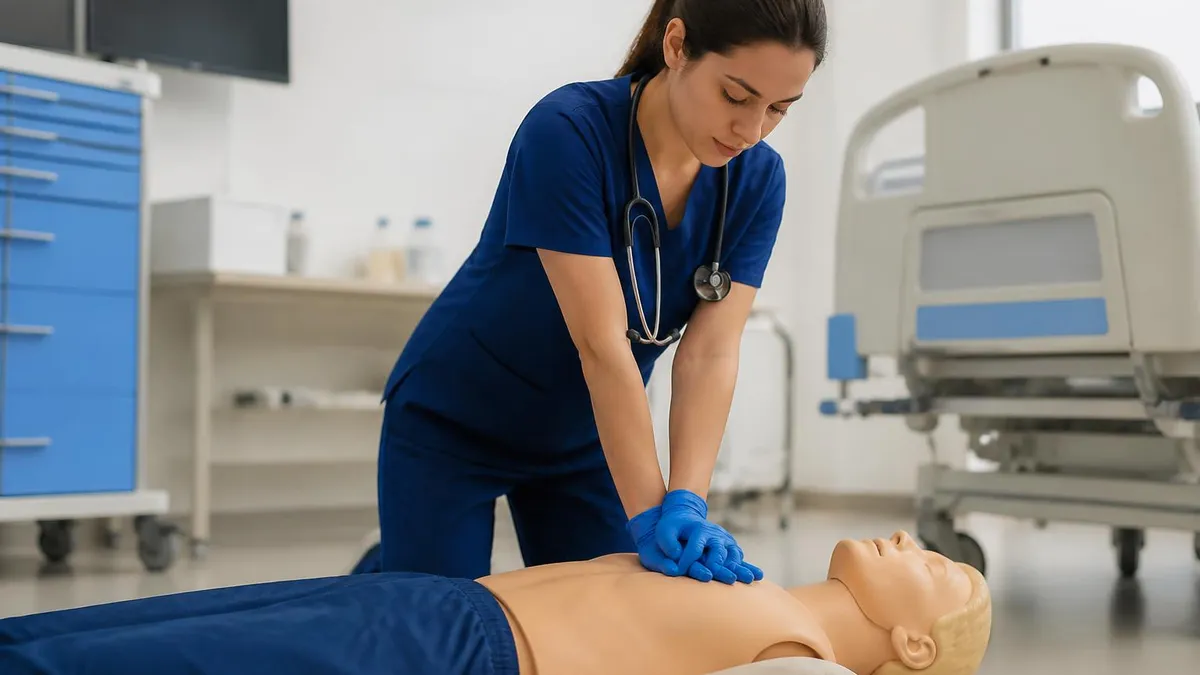
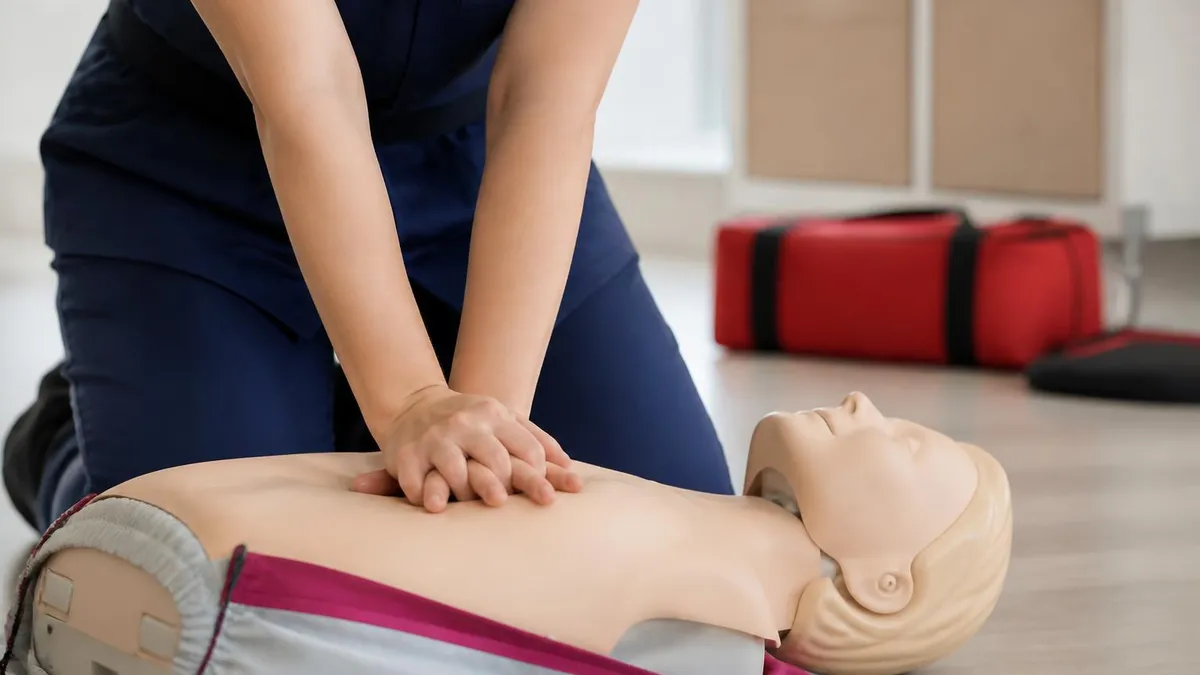
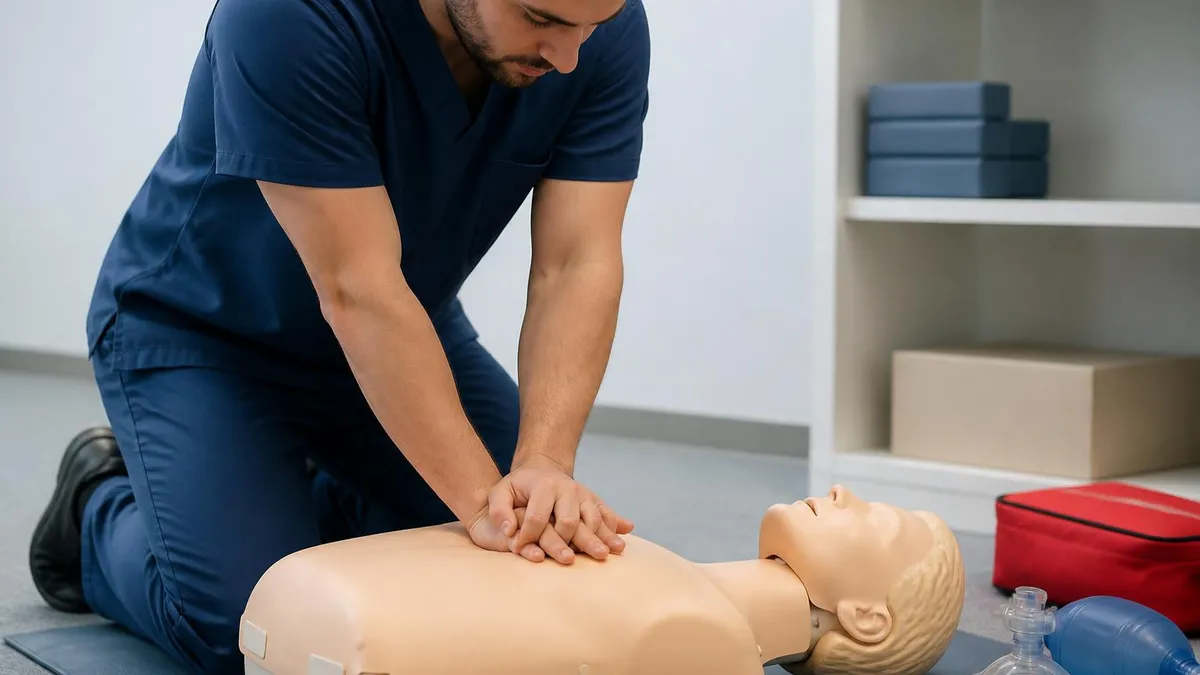
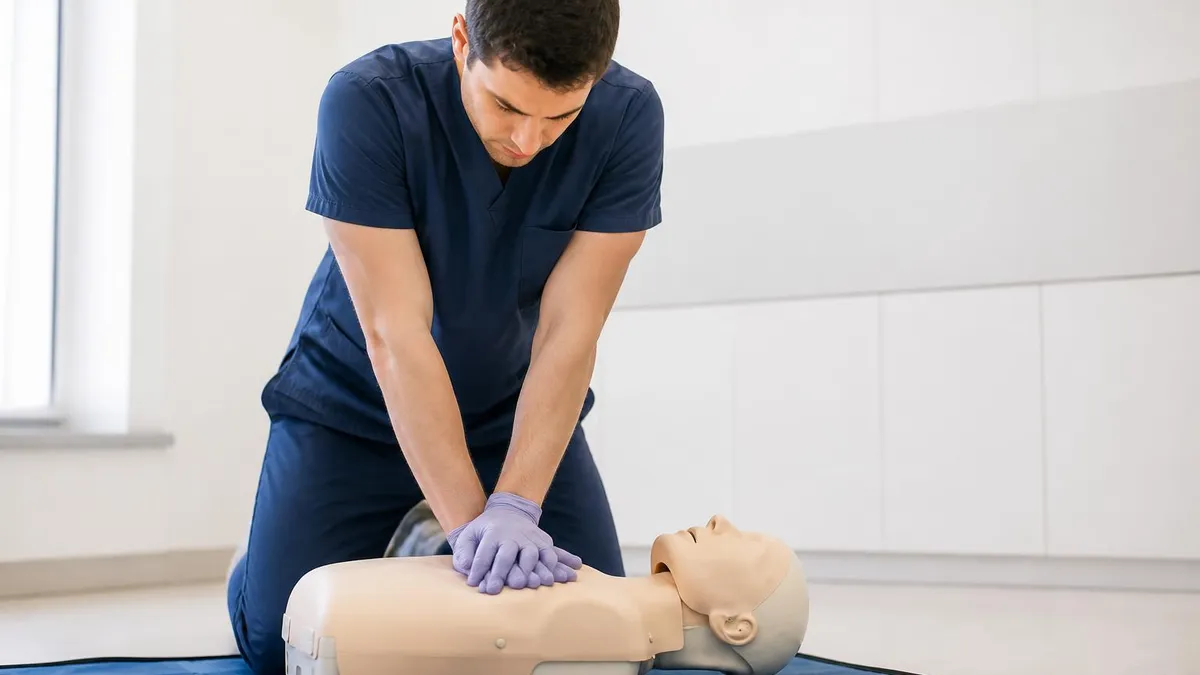
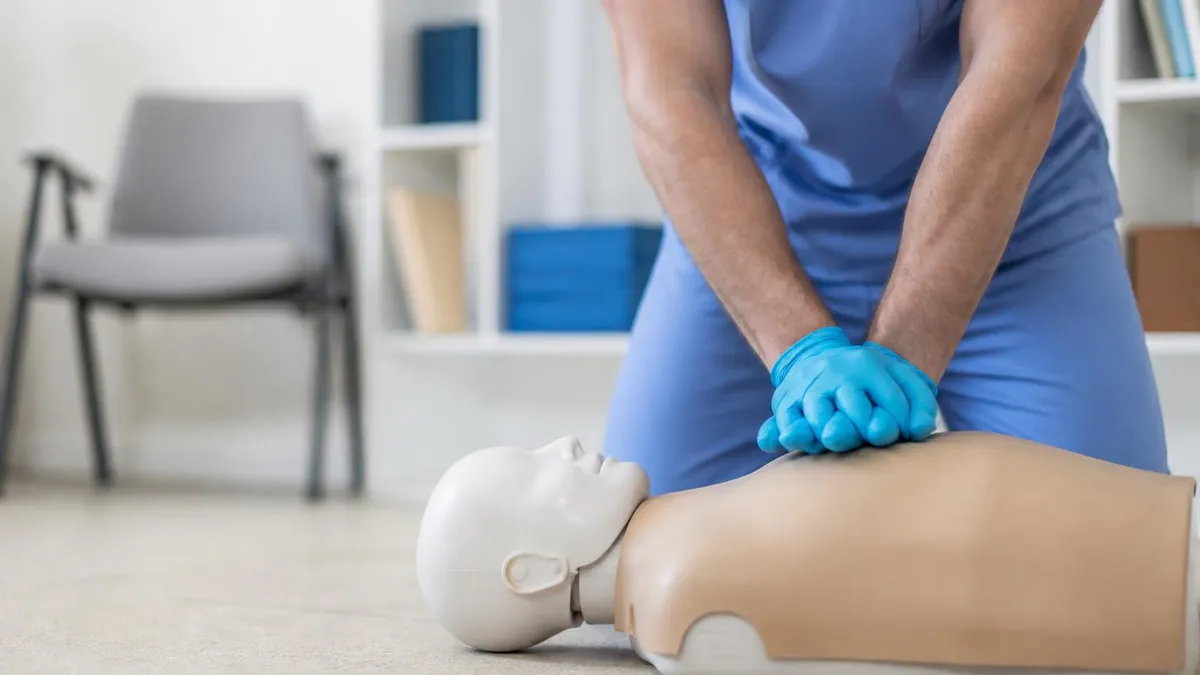
Physical practice before the skills checkoff deserves dedicated time even for experienced clinicians. Compression depth and rate targets that feel intuitive when reading about them often feel uncertain on an actual manikin, where feedback devices may indicate you are compressing too shallowly or too fast.
If you have access to a manikin with a feedback device at your training site or employer, use it in the days before your class. If not, practice the hand position, arm lock, and downward press motion on a firm surface to build muscle memory for the depth and rate. The skills evaluator is watching for correct technique, full recoil, and minimal pause — all things that improve with physical repetition.
Managing exam-day anxiety starts with logistics. Know where the training site is and plan to arrive 15 minutes early. Bring a valid photo ID, your previous BLS card if this is a renewal, and a copy of the provider manual if you want to reference it during any pre-exam review period the instructor offers.
Eat a meal before the class so hunger does not become a cognitive distraction during the written exam. Wear comfortable clothing, because the skills portion requires kneeling on the floor for extended periods during manikin work. These small logistical preparations eliminate unnecessary stress and let you focus entirely on demonstrating your knowledge and skills.
After you pass and receive your provider card, scan or photograph both sides immediately and store the image in a location you can access from any device — cloud storage, a secure email to yourself, or your employer's credential management system. Physical cards can be lost, damaged, or left at home when a credentialing deadline arrives.
Having a digital backup also simplifies the process of updating your record with your state licensing board, nursing registry, or EMS agency. Some employers require you to upload a copy directly to an employee credentialing portal within a specified timeframe after recertification, and having the scan ready on your phone makes this a 30-second task rather than a search through a desk drawer.
Finally, treat your BLS certification as a living skill rather than a checked box. The written exam and skills checkoff verify a baseline, but actual proficiency requires occasional reinforcement. Many hospitals run mock code drills or high-fidelity simulation exercises that give providers a chance to apply BLS skills in a low-stakes environment before a real event occurs.
Participating in these exercises, reviewing BLS guidelines when new AHA updates are published, and completing targeted practice questions between certification cycles keeps your knowledge sharp and ensures that when a patient's heart stops, your response is as competent and automatic as the training was designed to make it.
Sample BLS - Basic Life Support Practice Questions
Try these questions from our free BLS - Basic Life Support practice tests. The correct answer and an explanation follow each question.
Which condition mimics cardiac arrest but requires different treatment?
- A. Diabetes
- B. Fainting
- C. Fever
- D. Anxiety
Answer: B. Fainting
Fainting (syncope) can cause a person to collapse and become unresponsive, mimicking some aspects of cardiac arrest. However, fainting typically involves a temporary loss of consciousness with a return of normal circulation and breathing, unlike cardiac arrest where the heart has stopped. Differentiating these conditions is important for providing appropriate and effective treatment.
How does dispatcher-assisted CPR (DA-CPR) strengthen the Chain of Survival?
- A. It guides untrained bystanders through CPR before EMS arrives, strengthening the early CPR link
- B. It replaces the need for physical CPR training in the community
- C. It is only effective for in-hospital cardiac arrests
- D. It eliminates the need for defibrillation in most cases
Answer: A. It guides untrained bystanders through CPR before EMS arrives, strengthening the early CPR link
DA-CPR allows 911 dispatchers to coach bystanders in real time, increasing the rate of bystander CPR even among untrained callers.
During a code, the team leader gives an order but no one responds. What should the leader do NEXT?
- A. Repeat the order louder to the whole team
- B. Direct the order to a specific team member by name
- C. Assume the task is being handled and continue
- D. Pause compressions to get everyone's attention
Answer: B. Direct the order to a specific team member by name
Directing orders to a named individual ensures clear accountability and avoids the 'bystander effect' where everyone assumes someone else will act.
An AED analyzes the heart rhythm and advises 'No shock recommended.' What is the correct next action?
- A. Repeat the analysis immediately
- B. Deliver a manual shock anyway
- C. Resume CPR immediately, starting with chest compressions
- D. Check for a pulse and wait
Answer: C. Resume CPR immediately, starting with chest compressions
If no shock is advised, resume CPR immediately beginning with chest compressions, as the rhythm may be non-shockable (e.g., PEA or asystole).
BLS Questions and Answers
About the Author

Registered Nurse & Healthcare Educator
Johns Hopkins University School of NursingDr. Sarah Mitchell is a board-certified registered nurse with over 15 years of clinical and academic experience. She completed her PhD in Nursing Science at Johns Hopkins University and has taught NCLEX preparation and clinical skills courses for nursing students across the United States. Her research focuses on evidence-based exam preparation strategies for healthcare certification candidates.
Join the Discussion
Connect with other students preparing for this exam. Share tips, ask questions, and get advice from people who have been there.
View discussion (8 replies)