
Air Brake Training: Complete CDL Guide to Mastering Air Brakes 2026 September
Master air brake training with our complete CDL guide. Learn components, testing procedures, and pass the cdl air brake test first try. ✅

Air brake training is the foundation of safe commercial vehicle operation in the United States, and every CDL candidate who wants to drive trucks, buses, or other large vehicles equipped with air braking systems must complete this critical training before earning their license. The air brakes system is fundamentally different from the hydraulic brakes found on passenger vehicles, and understanding how compressed air generates the stopping power needed to halt 80,000-pound rigs is not optional — it is a legal requirement enforced at the federal and state level through the CDL air brake test.
The scope of air brake training extends far beyond simply memorizing definitions for a written exam. Drivers must develop practical knowledge of how the air compressor builds reservoir pressure, how the foot valve (also called the service brake pedal) modulates brake application, and how safety devices like the spring brakes and the low-pressure warning buzzer protect drivers when systems fail.
Components such as the f-750 air brake treadle valve — a foot-operated control valve that meters air to the brake chambers — appear on real vehicles and on the CDL knowledge test alike, so understanding them at a mechanical level pays dividends both on the road and in the exam room.
Federal regulations under Title 49 CFR Part 383 prohibit CDL holders from operating air-brake-equipped vehicles unless their license is free of the air brake restriction. That restriction is added automatically when a driver takes their CDL skills test in a vehicle without air brakes. Removing it requires passing an air brake knowledge test at a state licensing office, demonstrating that you understand the operating principles, inspection procedures, and emergency protocols that keep heavy vehicles under control in every driving condition imaginable.
Preparing for air brake training starts with understanding what the training actually covers. Most state-approved CDL training programs dedicate between 8 and 16 classroom hours to air brake theory, followed by practical hands-on time in the vehicle.
Topics include dual-circuit air brake systems, the function of the supply and service reservoirs, proper drain valve maintenance, the role of automatic slack adjusters, and how to conduct a complete pre-trip inspection of the braking system. Each of these subjects appears directly on the CDL knowledge examination, and weak understanding in any area is enough to drop a score below the required 80 percent passing threshold.
Beyond the classroom, professional drivers need to internalize the feel of air brakes on the road. Air brakes respond differently from hydraulic systems — there is a slight lag between pedal depression and brake application as compressed air travels through the lines, a phenomenon called brake lag.
On a vehicle traveling at 55 mph, this fraction-of-a-second delay translates to additional feet of stopping distance that must be factored into following distance calculations. The commercial trucking industry tracks brake-related crashes carefully, and federal data consistently shows that brake adjustment defects and driver error in brake application account for a significant proportion of large-truck crashes each year.
This guide is structured to walk you through every dimension of air brake training: the core mechanical concepts you must know, the CDL air brake test format, the pre-trip inspection sequence, study strategies that work, and the most common mistakes that cause drivers to fail. Whether you are entering commercial trucking for the first time or adding an air brake endorsement to an existing license, the material here — combined with targeted practice testing — gives you the knowledge base to pass your examination and operate safely throughout your career.
Use this article alongside our free CDL air brakes practice test resources to reinforce concepts through application rather than passive reading alone. Research in driver training consistently shows that active recall through practice questions produces retention rates two to three times higher than re-reading notes, and the air brake knowledge test rewards drivers who have drilled the specific numbers, procedures, and component names that appear on official state examinations.
Air Brake Training by the Numbers

CDL Air Brake Test Format & Requirements
A written exam of approximately 25 questions covering air brake components, operating principles, inspection procedures, and emergency protocols. Drivers must score at least 80 percent — correctly answering 20 of 25 questions — to pass at most state licensing offices.
CDL holders who tested in a non-air-brake vehicle receive a 'Z' restriction on their license. Passing the air brake knowledge test and completing a skills test in an air-brake vehicle removes this restriction and unlocks full driving eligibility for all commercial vehicles.
While federal minimums apply nationwide, individual states may add requirements. New York air brake rules, for example, require specific pre-trip demonstration steps during the skills test. Always verify your state's DMV requirements before scheduling your appointment.
Beyond the written test, CDL candidates must demonstrate a proper pre-trip air brake inspection during the skills test. Examiners watch for correct reservoir drain procedures, push rod stroke measurement, and proper low-air-warning verification steps.
Understanding the components of an air brake system is the single most important step in air brake training, because the CDL air brake test draws heavily from component identification and function questions. The system begins with the air compressor, which is driven by the engine and forces ambient air into the supply reservoir (also called the wet tank) at pressures between 100 and 125 PSI.
A governor controls the compressor, cutting it off when pressure reaches the cut-out level — typically 125 PSI — and restarting it when pressure drops to the cut-in level, usually around 100 PSI. Knowing both numbers is essential for passing the written exam and for diagnosing pressure irregularities on the road.
From the supply reservoir, air flows through the primary and secondary service reservoirs that feed the front and rear brake circuits independently. This dual-circuit design is a critical federal safety requirement — if one circuit fails, the other retains enough pressure to bring the vehicle to a controlled stop.
The service brake pedal, technically called the foot valve or treadle valve, controls how much air flows to the brake chambers when the driver presses the pedal. The force of that air pushes a diaphragm against a push rod, which turns the slack adjuster and rotates the S-cam to press the brake shoes against the drum. This mechanical chain must function correctly at every link, which is why pre-trip inspections are mandatory, not optional.
Spring brakes are one of the most safety-critical components in the system and a frequent topic on the CDL knowledge test. Unlike service brakes, spring brakes are held in the released position by air pressure — typically 60 PSI or more — and engage automatically when that pressure drops too low.
This design means the brakes are fail-safe: if the air system loses pressure catastrophically, the spring brakes engage and stop the vehicle. Drivers release spring brakes using the yellow diamond-shaped knob in the cab, which opens the valve and allows air to hold the springs back. Understanding the spring brake interplay with air pressure levels is essential knowledge for the CDl air brake test.
The air dryer is another component that receives increasing attention in modern air brake training curricula. Compressed air carries moisture from the atmosphere, and without a dryer, that moisture condenses inside the reservoirs, lines, and valves. In cold weather, this water freezes and can prevent valves from seating properly, leading to pressure leaks and brake failures.
Many fleets supplement their air dryers with air brake antifreeze — a methanol-based solution added to a special tank that vaporizes into the air stream and prevents freezing in extreme conditions. Proper antifreeze use and reservoir draining are both tested on the CDL written examination.
The brake chambers themselves come in two varieties: standard service chambers and combination spring-brake chambers (piggyback or Tri-Pak units). Service chambers handle normal braking, while the spring portion of the combination unit handles parking and emergency braking. Measuring push rod travel — called stroke — during the pre-trip inspection tells the driver whether the brakes are adjusted correctly. Federal regulations specify maximum stroke limits based on chamber size: a Type 30 chamber, the most common size on heavy trucks, has a maximum stroke of 2 inches. Exceeding this limit puts the vehicle out of service under federal brake regulations.
Slack adjusters convert the linear push-rod motion into the rotational cam movement that applies the brake shoes. Manual slack adjusters require periodic adjustment by a qualified mechanic, but most modern vehicles use automatic slack adjusters (ASAs) that continuously self-adjust as linings wear. Even with ASAs installed, CDL regulations require drivers to verify stroke during pre-trip inspections because automatic adjusters can and do fail. Knowing how to check stroke and recognizing when it exceeds legal limits is a core competency that training programs emphasize and that examiners verify during skills tests.
Antilock Braking Systems (ABS) have been required on new air-brake tractors since 1997 and on trailers since 1998. ABS modulates brake application automatically during a stop to prevent wheel lockup, allowing the driver to maintain steering control. ABS does not shorten stopping distance — it maintains directional control. A yellow ABS warning lamp on the dash indicates a system fault that requires service. Drivers should understand that ABS does not change fundamental pre-trip inspection requirements, and the presence of ABS on a vehicle does not exempt it from any portion of the CDL knowledge or skills testing standards.
Air Brake Training Methods: What Actually Works
Traditional CDL school classroom instruction remains the most structured path to air brake training. Certified instructors walk students through the Federal Motor Carrier Safety Administration (FMCSA) entry-level driver training (ELDT) curriculum, which mandates specific air brake theory hours. Students benefit from diagrams, physical component displays, and direct Q&A with instructors who have real-world trucking experience. Programs at accredited schools typically cost between $3,000 and $10,000 for full CDL training, with air brake content integrated throughout.
One major advantage of classroom training is the ability to ask follow-up questions immediately when a concept is unclear. Topics like dual-circuit brake system operation, spring brake interlock systems, and emergency brake procedures can be confusing when read in isolation. An instructor can demonstrate a malfunctioning slack adjuster or show a cutaway brake chamber, making abstract mechanical concepts concrete and memorable. Classroom programs also tend to keep students accountable through scheduled sessions, which drives better retention compared to self-paced study alone.

Air Brake Endorsement: Pros and Cons of Pursuing It
- +Removes the CDL air brake restriction and qualifies you for a much wider range of trucking jobs
- +Significant salary premium — air-brake-qualified drivers earn 10–20% more than restricted CDL holders
- +Opens eligibility for tanker, flatbed, and LTL positions that require full air brake operation
- +Demonstrates to employers a higher level of mechanical knowledge and professional commitment
- +Federal ELDT training requirement ensures you receive standardized, high-quality instruction
- +Knowledge transfers directly to safe driving habits that reduce crash risk throughout your career
- −Written test requires mastering specific PSI numbers, stroke limits, and component names — not just concepts
- −Skills test adds a pre-trip inspection component that fails candidates who skip required steps
- −Some states require scheduling at a separate testing appointment from the basic CDL exam
- −Behind-the-wheel training in an air-brake vehicle adds cost and scheduling complexity
- −New York air brake and other state-specific rules mean study materials must be state-matched
- −Failure to pass on first attempt requires a waiting period before retesting in most states
Air Brake Pre-Trip Inspection Checklist for CDL Drivers
- ✓Build air pressure to 100–125 PSI before starting any inspection steps.
- ✓Test the low-pressure warning by fanning brakes down until the buzzer or light activates at or below 60 PSI.
- ✓Verify spring brakes automatically apply when pressure drops to the 20–45 PSI range.
- ✓Shut the engine off and hold brake pedal for one minute — pressure loss must not exceed 3 PSI.
- ✓Release the brake pedal and check that pressure holds steady with no application — loss must not exceed 1 PSI per minute.
- ✓Walk around and check all visible air lines for cuts, abrasions, worn spots, or improper splices.
- ✓Inspect brake chambers for physical damage and check that no push rods are beyond maximum stroke.
- ✓Verify that all reservoir drain valves are closed and free of leaks after draining accumulated moisture.
- ✓Confirm the air dryer is functioning — no excessive moisture discharge during normal pressure cycling.
- ✓Check that the trailer supply valve (red 8-sided knob) and service valve (blue knob) are fully operational.
The 80% Rule Is Non-Negotiable
Every state requires a minimum score of 80 percent on the CDL air brake knowledge test — typically 20 correct answers out of 25 questions. There is no partial credit and no curve. Candidates who score 79 percent must wait the state-mandated retesting period, often 24 hours to 7 days, before attempting again. Focused practice testing in the week before your exam is the single highest-return preparation activity available.
Effective CDL air brakes practice test strategies separate drivers who pass on the first attempt from those who need multiple tries. The most important principle is specificity: generic truck driver study guides cover air brakes briefly alongside a dozen other CDL topics, but the air brake knowledge test demands deeper understanding than a survey course provides.
Dedicate focused blocks of study time — at least two to three hours — exclusively to air brake content before mixing it with other CDL subject areas. This focused attention allows the specific pressure numbers, component names, and procedural sequences to consolidate in memory without interference from unrelated material.
Start your practice with the FMCSA-produced CDL manual for your specific state. Every state publishes its own version of the manual with state-specific appendices, and some examination questions reference state rules that differ from federal minimums. For example, the required pressure build-up rate (from 85 to 100 PSI within 45 seconds at governed RPM) is a federal standard, but some states test specific local variations.
Reading the official manual at least once cover-to-cover before beginning practice tests ensures you are not blindsided by a state-specific question on exam day. Highlight every number, every threshold, and every procedural step you encounter — these are the facts most likely to appear on your examination.
After reading the manual, shift your preparation to active practice using CDL practice test air brakes question banks that closely mirror the official exam format. Quality practice question sets include answer explanations that tell you not just what the correct answer is but why each distractor answer is wrong.
This deeper engagement with wrong answers is important because the official CDL air brake test frequently uses plausible-sounding distractors — for example, listing 80 PSI as a low-pressure warning threshold when the correct federal standard is 60 PSI — that trip up candidates who studied passively. By understanding why each wrong answer is wrong, you inoculate yourself against those specific traps on test day.
Spaced repetition is the most scientifically validated learning technique for examination preparation, and it applies directly to air brake training. Rather than completing 100 practice questions in a single marathon session, spread 25 questions across four sessions on four separate days.
Research consistently shows that studying the same material across multiple sessions with rest intervals produces significantly better long-term retention than equivalent time in a single session. For air brakes specifically, this means you are more likely to correctly recall that the maximum stroke for a Type 30 chamber is 2 inches when you studied it three times over a week than when you studied it once the night before your test.
Create a personal mistake log as you work through practice tests. Every time you answer a question incorrectly, write down the question topic, what you thought the answer was, and what the correct answer is. Review this log at the start of each new study session before attempting new questions. This targeted review forces your brain to re-engage with the specific material you have not yet mastered rather than spending additional time on concepts you already know well.
Most CDL candidates find that their mistakes cluster around three to five specific topics — common ones include pressure build-up timing, spring brake activation pressures, and slack adjuster stroke limits — and that targeted focus on those weak areas produces rapid score improvement.
Simulate exam conditions in at least two of your practice sessions. Set a timer for 40 minutes (the typical time allotted for the air brake written test), put away all reference materials, and attempt a full 25-question set without interruption.
This simulation practice accomplishes two things: it identifies any remaining knowledge gaps before the real exam, and it builds the test-taking composure that prevents anxiety-driven errors on the actual examination day. Many candidates who know the material well still make avoidable mistakes under pressure because they have not practiced working through questions without the ability to immediately look up uncertain answers.
In the final 48 hours before your exam, shift from new learning to review. Read through your mistake log, re-read the air brake chapter of your state manual, and complete one final practice test to confirm your readiness. Avoid trying to cram new material in this window — the risk of confusion from last-minute overload outweighs the potential benefit of covering an additional topic.
Get adequate sleep the night before; sleep is critical for memory consolidation, and the specific PSI thresholds and component functions you studied during the week will be far more accessible after a full night of rest than after a night of anxious late studying.

Many CDL candidates focus so heavily on written knowledge questions that they neglect the practical air brake verification steps required during the skills test pre-trip inspection. Examiners can and do fail candidates who skip the low-pressure warning test, fail to verbalize what they are checking, or rush through reservoir drain procedures. Treat every pre-trip practice session as if an examiner is watching — because on test day, one will be.
Common mistakes in air brake training fall into predictable patterns, and recognizing them in advance significantly improves your chances of passing both the written and skills components of the CDL examination.
The single most frequent error is confusing the two pressure thresholds that define normal air brake system operation: the governor cut-in and cut-out pressures (roughly 100 and 125 PSI respectively) with the low-pressure warning threshold (60 PSI) and the spring brake application range (20–45 PSI). These four numbers represent distinct system states, and mixing them up on the written exam costs candidates dearly. Build a simple mental model: 125 compressor stops, 100 compressor starts, 60 warning activates, 20–45 spring brakes lock.
A second common mistake is misunderstanding the purpose and limitations of ABS. Candidates frequently answer ABS-related questions incorrectly by claiming that ABS shortens stopping distance, when in fact ABS is designed specifically to maintain steering control during maximum braking — not to reduce the distance required to stop. The exam tests this distinction directly, and candidates who have internalized the marketing perception of ABS as a stopping-distance reducer will miss these questions consistently. ABS prevents wheel lockup; the driver's responsibility to brake early and maintain following distance is unchanged by its presence.
Failure to memorize push rod stroke limits is the third most common source of missed questions and failed pre-trip inspections. Federal regulations specify different maximum stroke values for different chamber sizes, and while Type 30 chambers (2-inch maximum) are most common, the exam may also ask about Type 20 (1.75 inches) or Type 24 (1.75 inches) chambers. Candidates who remember only the Type 30 number and assume all chambers share the same limit will miss these questions. Study the stroke limit table in your state CDL manual and create a simple flashcard for each chamber size.
During the practical skills test, the most commonly cited pre-trip failure points relate to reservoir draining and pressure verification sequencing. Examiners require candidates to drain all reservoirs (supply and service tanks) to verify that moisture is being controlled, but many candidates skip this step or drain only one tank.
Additionally, candidates sometimes perform the low-air warning test and the spring brake application test in the wrong order, which can confuse the examiner about whether the candidate truly understands what they are testing at each stage. Practice the pre-trip sequence until you can execute it from memory in the correct order without prompting.
Misidentifying brake components by name during the vehicle inspection is another practical failure point. Examiners ask candidates to point to and identify specific components — the treadle valve, the slack adjuster, the brake chamber, the S-cam — and candidates who cannot correctly identify these parts on an actual vehicle fail even when they answered written questions about them correctly.
The gap between knowing a component's name abstractly and recognizing it on a real vehicle in a maintenance bay is significant. Spend time with your training vehicle specifically learning where each component is physically located and what it looks like in an operational state versus a worn or damaged state.
Understanding the air brake endorsement removal process is important for drivers who received a Z restriction on their original CDL. Some drivers incorrectly believe that simply retaking the full CDL knowledge test will remove the restriction — it will not. The air brake restriction can only be removed by specifically passing the air brake knowledge test portion AND completing the skills test in an air-brake-equipped vehicle.
Drivers who retake the general knowledge test in a non-air-brake vehicle will retain their Z restriction regardless of how well they score. Confirm the specific removal process with your state DMV before scheduling your appointment to avoid wasting a test attempt.
Finally, many candidates underestimate how much time the CDL air brake test allows and rush through questions unnecessarily. With 40 minutes for 25 questions, you have nearly 100 seconds per question — far more than enough time to carefully read each option. The most damaging exam mistake is misreading a question due to speed. Questions about what happens when pressure drops to a specific level, or which component performs a specific function, often hinge on a single word. Read slowly, eliminate wrong answers systematically, and use all available time before submitting your test.
Practical tips for success in air brake training begin with one foundational habit: treat every number you encounter as a testable fact rather than background detail. The CDL air brake written test is largely a numbers test. Examiners want to know that you understand the specific operating parameters of air brake systems, not just that you have a general sense of how they work.
Write down every threshold — 125 PSI cut-out, 100 PSI cut-in, 60 PSI low warning, 20–45 PSI spring brake activation, 90 PSI minimum before moving, 3 PSI per minute maximum loss with brakes applied — and review them until they are automatic. Flashcards, either physical or digital, remain one of the most effective memorization tools for this type of numerical content.
Use visual learning tools whenever possible. The air brake system is a mechanical system, and understanding how its components connect spatially makes the written content far easier to retain. Draw the system from memory: start with the compressor, draw the air line to the supply reservoir, branch to the primary and secondary service reservoirs, trace the lines to the front and rear brake chambers, and add the spring brake portion of the rear combination chambers.
This drawing exercise forces you to actively reconstruct the system rather than passively recognizing it in a diagram, which builds the deeper understanding needed to answer application questions that go beyond simple component identification.
Build a study group with other CDL candidates if your training program includes multiple students. Teaching a concept to another person is one of the most effective methods for identifying gaps in your own understanding — if you cannot explain how the dual-circuit system protects drivers when one circuit fails, you do not yet understand it well enough to answer exam questions about it reliably.
Study groups also create accountability, keeping candidates on a consistent preparation schedule rather than delaying study sessions until the week before the exam. The candidates who pass on their first attempt almost universally report beginning their air brake study at least two to three weeks before their scheduled test date.
On the day of your CDL air brake test, arrive early and spend 10–15 minutes reviewing your mistake log and the key numbers list you have built during preparation. This brief warm-up primes your memory without adding new information that could create confusion. Bring a government-issued photo ID and any required documentation your state DMV specifies — some states require proof of ELDT completion before allowing you to test.
Turn off your phone and eliminate distractions. The testing environment at state DMV offices is typically quiet but often includes other people testing simultaneously, so practice maintaining focus during your preparation sessions by avoiding background noise or music during timed practice tests.
After passing the written test, prepare for your skills test with the same level of deliberate practice. The pre-trip air brake inspection component of the CDL skills test is evaluated on a point deduction system — each missed item or incorrect verbalization costs points, and accumulating enough deductions results in a failed test.
Know every step of the pre-trip sequence cold: pressure build-up, low-pressure warning test, spring brake application test, static pressure leak test, visual inspection of chambers and lines, and drain valve verification. Practice verbalizing each step out loud while performing it, because examiners grade on both the action and the verbal identification of what you are checking and why.
Take care of your physical preparation in the days leading up to your exam. CDL knowledge tests require sustained focus for 30–45 minutes, and cognitive performance is significantly degraded by inadequate sleep, dehydration, or low blood sugar. The night before your test, eat a regular dinner, limit alcohol and caffeine, and aim for seven to eight hours of sleep. On test morning, eat a moderate meal and arrive at the testing location hydrated. These basic physical preparations sound trivial but genuinely affect the mental performance that determines whether you answer borderline questions correctly or second-guess yourself into wrong answers.
Remember that passing the air brake written test is a beginning, not an end. The knowledge you acquire during CDL air brake training becomes part of the professional foundation you carry throughout your driving career. Drivers who deeply understand their braking systems make better decisions about following distance, brake fade on long downhill grades, and when to pull over and investigate an unusual brake feel or warning light. The investment you make in thorough air brake training pays returns not just on your test score but on every mile you drive commercially for the rest of your career.
Air Brake Questions and Answers
Air Brake Practice Test
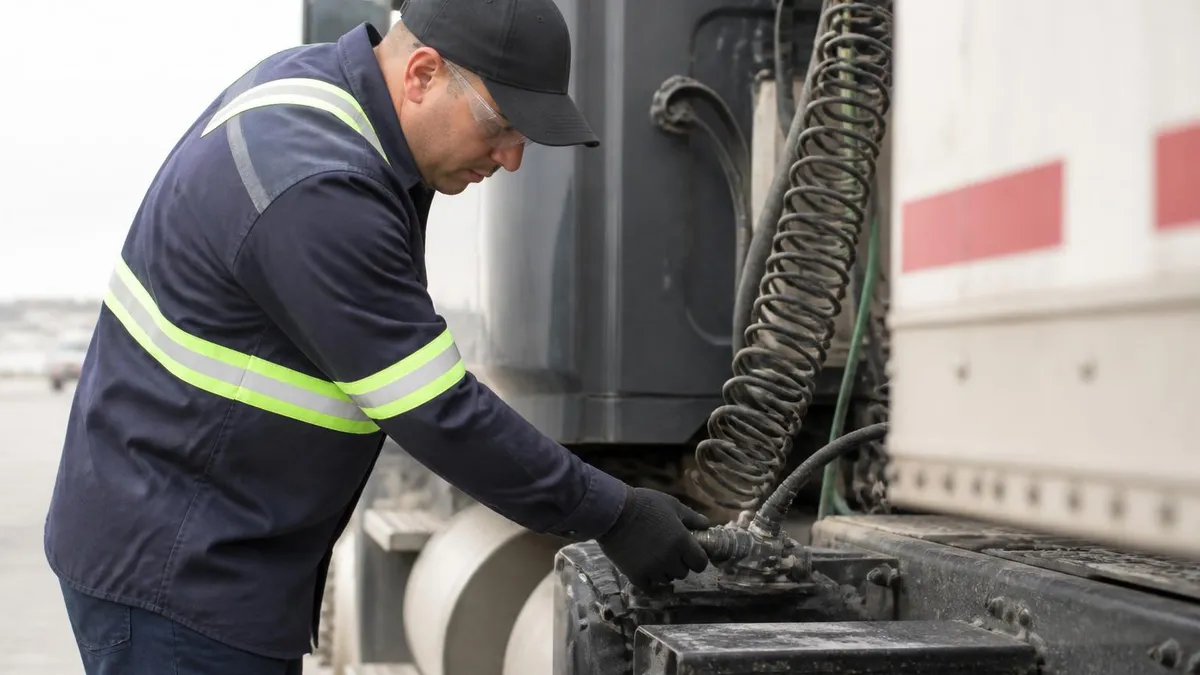
Air Brake System Troubleshooting: Diagnose Leaks, Pressure Drops, and Valve Failures

Air Brake Adjustment: Complete Guide for CDL Drivers
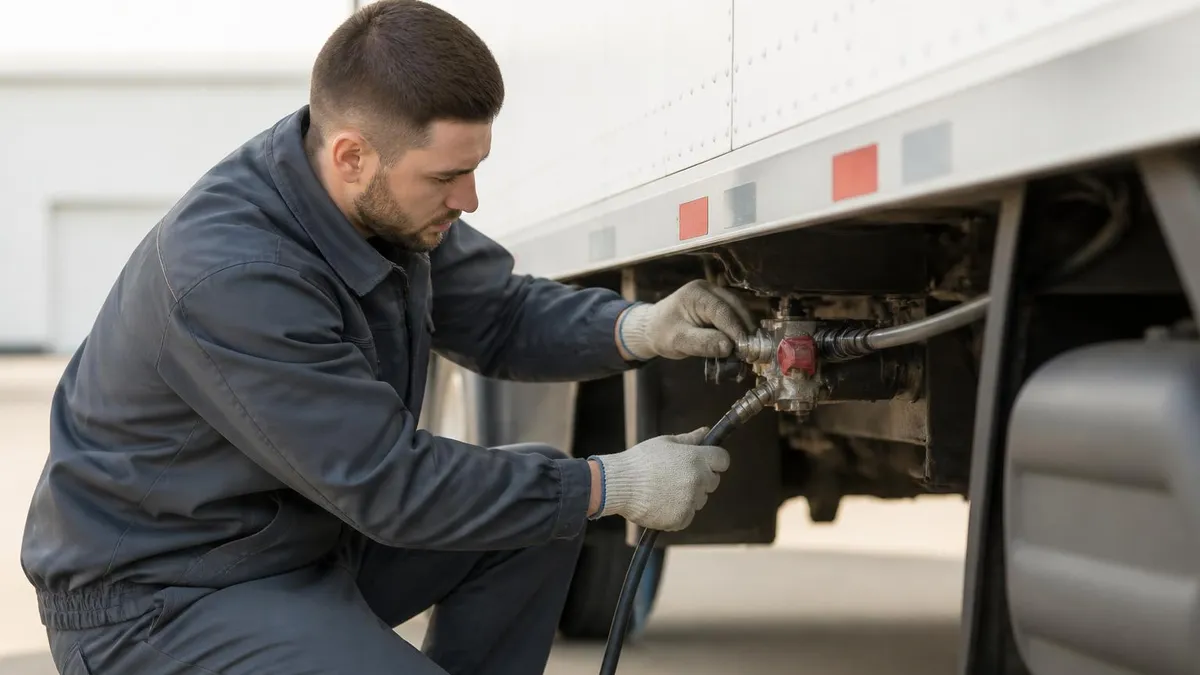
Air Brake System Knowledge: Full Charge PSI, Components, and CDL Test Mastery for 2026
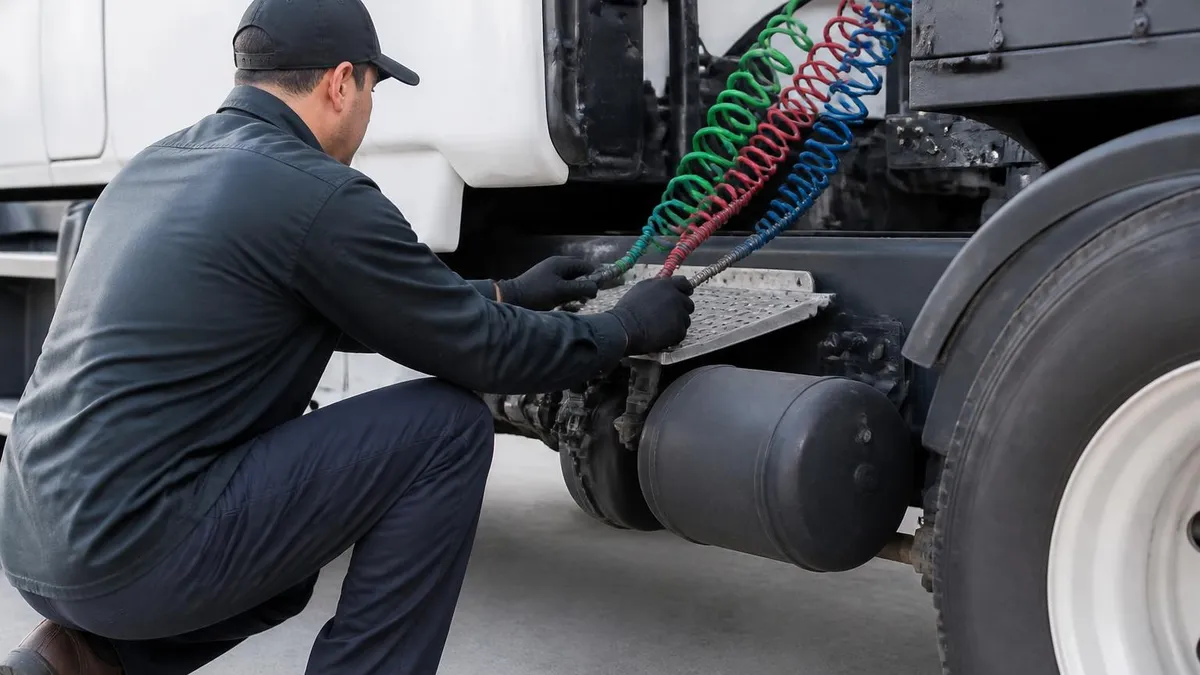
CDL Air Brake Test: Study Guide, State Rules, and How to Pass First Try
About the Author

Educational Psychologist & Academic Test Preparation Expert
Columbia University Teachers CollegeDr. Lisa Patel holds a Doctorate in Education from Columbia University Teachers College and has spent 17 years researching standardized test design and academic assessment. She has developed preparation programs for SAT, ACT, GRE, LSAT, UCAT, and numerous professional licensing exams, helping students of all backgrounds achieve their target scores.