
Vinegar Wound Care: What the Science Says and What Wound Care Professionals Need to Know
Vinegar wound care explained for nurses & patients. Learn uses, risks & when to use professional wound care products instead. 💡

Wound care wound care is a broad discipline that encompasses everything from basic first aid to advanced clinical interventions, and few home remedies spark as much debate as vinegar wound care. Acetic acid — the active component in household vinegar — has been applied to wounds for centuries, yet modern wound care professionals increasingly scrutinize whether this time-honored practice belongs in the clinical toolkit or should be retired to folklore. Understanding where vinegar fits alongside evidence-based wound care products is essential for anyone preparing for the wound care certification exam or practicing in a clinical setting today.
Acetic acid solutions, typically diluted to 0.5–1% concentration, have demonstrated antimicrobial activity against Pseudomonas aeruginosa, a gram-negative bacterium notorious for colonizing chronic wounds and burn injuries. This specific antibacterial property is what drove interest in acetic acid wound irrigation in military medicine and burn centers throughout the twentieth century. However, the same acidic pH that disrupts bacterial membranes can also impair human fibroblast proliferation and keratinocyte migration — two cellular processes that are absolutely central to wound healing and tissue regeneration.
Modern clinical guidance from wound care specialist organizations recommends that clinicians evaluate vinegar use on a case-by-case basis rather than applying it as a universal first-line treatment. When Pseudomonas colonization is confirmed via wound culture and the wound is recalcitrant to standard antiseptic regimens, a short-duration acetic acid soak under physician supervision may offer targeted benefit. Outside of that narrow indication, conventional wound care dressings, antimicrobial foams, and silver-based products generally provide superior healing environments without the cytotoxic tradeoff that undiluted vinegar introduces.
For nursing students and allied health professionals studying for certification, vinegar wound care is most likely to appear in exam questions framed around infection control, wound bed preparation, and the risk-benefit analysis of home remedies. A wound care nurse encountering a patient who has been applying apple cider vinegar to a diabetic foot ulcer, for example, must be prepared to educate that patient on why the practice may delay healing and what evidence-based alternatives are available. The ability to translate complex biochemical concepts into patient-friendly language is a core competency assessed on most wound care certification examinations.
It is also worth noting that vinegar wound care intersects with several adjacent topics that appear frequently on certification exams, including the use of manuka honey wound care as an alternative natural antimicrobial with stronger clinical evidence, the role of hypochlorous acid solutions, and the emerging interest in biofilm disruption strategies. Manuka honey, unlike vinegar, carries an established body of randomized controlled trial evidence supporting its use on partial-thickness burns and venous leg ulcers, making it a more defensible clinical choice when patients prefer a natural treatment option.
The wound care landscape in 2026 is shaped by a growing emphasis on personalized, evidence-based protocols that weigh infection risk, wound etiology, patient comorbidities, and available resources. Vinegar sits at the intersection of tradition, patient preference, and clinical pragmatism — a conversation starter rather than a standalone solution. Clinicians who understand the science behind acetic acid's antimicrobial mechanism while remaining clear-eyed about its cytotoxic limitations are best positioned to guide patients toward optimal outcomes.
Whether you are a seasoned wound care nurse refreshing your knowledge, a student preparing for certification, or a caregiver seeking reliable information, this article provides a comprehensive examination of vinegar in wound care — covering the science, the clinical evidence, the practical risks, and the professional standards that govern its use across acute, post-acute, and home health settings.
Vinegar Wound Care by the Numbers

The Science Behind Acetic Acid in Wound Management
Acetic acid disrupts bacterial cell membranes and lowers intracellular pH, making it particularly lethal to Pseudomonas aeruginosa. This gram-negative pathogen is highly resistant to many standard antiseptics, making acetic acid a targeted option when culture results confirm its presence.
Concentrations above 1% impair fibroblast and keratinocyte viability — the cells responsible for collagen synthesis and re-epithelialization. Even at 0.5%, prolonged exposure can delay wound closure, meaning duration of contact must be strictly controlled in any clinical protocol.
Emerging in vitro research suggests acetic acid may penetrate and disrupt the polysaccharide matrix of bacterial biofilms that standard antibiotics cannot reach. This property is under active investigation for chronic wounds where biofilm is a primary barrier to healing.
Healthy healing wounds maintain a slightly acidic pH of 5.5–6.5. Vinegar's lower pH can temporarily support this environment but risks overshooting into a hyper-acidic state that inhibits enzyme activity, including matrix metalloproteinases essential for wound debridement.
The clinical evidence supporting vinegar wound care is narrow but real. Landmark studies from the 1990s demonstrated that 0.5% to 1% acetic acid solutions significantly reduced Pseudomonas aeruginosa bioburden in burn wounds, leading some burn centers to incorporate brief acetic acid soaks into their infection management protocols. These early findings were compelling enough that military field medicine incorporated diluted acetic acid as an emergency antiseptic option when conventional wound care products were unavailable — a testament to its practical utility under resource-constrained conditions.
However, the evidence base has not grown robustly since those early studies. The majority of published research on vinegar wound care comes from small case series, in vitro laboratory experiments, and retrospective chart reviews rather than the large, randomized controlled trials that form the gold standard for clinical wound care guidelines. Organizations such as the Wound, Ostomy and Continence Nurses Society (WOCN) and the Association for the Advancement of Wound Care (AAWC) do not include vinegar among their first-line recommended wound care products, and major wound formularies do not list acetic acid preparations as preferred antiseptics for most wound types.
In the context of dog wound care, some veterinary sources reference diluted acetic acid rinses for superficial skin infections, and pet owners may ask wound care nurses whether similar approaches are appropriate for human wounds. The short answer is that veterinary and human wound physiology differ enough that pet-care protocols should not be directly extrapolated to human wound management.
Patients with diabetes, peripheral vascular disease, or immunosuppression face significantly higher risks from any delay in wound healing — risks that vinegar's cytotoxic potential makes unacceptable without close medical supervision. Caregivers researching dog wound care online may encounter vinegar recommendations that seem credible, then mistakenly apply the same reasoning to human wound management, making patient education on this topic an important clinical priority.
Contemporary systematic reviews of antiseptic use in chronic wounds consistently find that the evidence for most traditional antiseptics — including iodine, hydrogen peroxide, and acetic acid — is insufficient to recommend routine use. These agents were developed before the modern understanding of wound bed preparation, moisture balance, and cellular healing biology. Current wound care specialist consensus favors wound care dressings engineered to maintain optimal moisture vapor transmission rates, manage exudate, and protect the peri-wound skin, rather than applying broad-spectrum chemical antiseptics that disrupt both pathogens and host tissue equally.
The most clinically nuanced application of vinegar in wound care involves ear canal infections (otitis externa) caused by Pseudomonas, where diluted acetic acid drops are a recognized first-line treatment endorsed by otolaryngology guidelines. This application is worth noting because it illustrates that context matters enormously — the ear canal's anatomy, tissue tolerance, and bacterial ecology differ from that of a chronic leg ulcer or surgical site. Wound care nurses who understand these distinctions can better counsel patients who may have read about acetic acid's success in one context and assumed it transfers universally.
Ongoing research into the use of weak organic acids as biofilm disruptors is generating renewed academic interest in vinegar-derived compounds. Researchers are exploring nano-encapsulated acetic acid formulations designed to release the antiseptic in controlled doses, potentially preserving antimicrobial efficacy while minimizing cytotoxicity. If these delivery technologies prove effective in clinical trials, they could rehabilitate acetic acid as a mainstream wound care product within the next decade — but for now, they remain experimental and are not available for routine clinical use.
For exam preparation purposes, candidates should understand that the wound care icd 10 coding system includes specific codes for wound infections (L08.9 for local skin infections, T79.3 for post-traumatic wound infections) that would be relevant when acetic acid treatment is initiated for Pseudomonas-infected wounds. Accurate coding ensures appropriate reimbursement and supports the clinical documentation that justifies an unconventional treatment choice. Learn more about coding in the context of clinical pathways by reviewing our guide on wound care icd 10 documentation practices for wound care nurses.
Wound Care Products: Vinegar vs. Evidence-Based Alternatives
Acetic acid soaks involve immersing a wound or applying a gauze saturated with 0.5–1% acetic acid solution for 15–20 minutes. This approach has documented efficacy against Pseudomonas aeruginosa in burn and chronic wound settings. The protocol must be time-limited because extended exposure degrades the wound healing environment by impairing fibroblast activity and disrupting the moisture balance that modern wound care dressings are engineered to maintain.
In practice, acetic acid soaks are rarely the first treatment choice. A wound care specialist would typically exhaust first-line wound care products — such as silver-impregnated dressings, cadexomer iodine, or polyhexamethylene biguanide (PHMB) foam — before recommending an acetic acid protocol. When initiated, soaks should be performed under clinical supervision with wound reassessment at each dressing change to monitor for signs of increased cytotoxicity, such as periwound maceration or delayed granulation tissue formation.

Vinegar Wound Care: Advantages and Disadvantages
- +Highly effective against Pseudomonas aeruginosa at 0.5–1% concentration
- +Extremely low cost and widely available in virtually any setting
- +Long historical use provides familiarity for many patients and caregivers
- +May support mildly acidic wound pH that parallels healthy healing conditions
- +Useful emergency antiseptic when conventional wound care products are unavailable
- +Emerging biofilm-disruption research may expand future clinical indications
- −Cytotoxic to fibroblasts and keratinocytes even at therapeutic concentrations
- −Lacks robust randomized controlled trial evidence for most wound types
- −Not recommended by WOCN, AAWC, or major wound care clinical guidelines
- −Undiluted household vinegar (5%) is too acidic for direct wound application
- −Short contact-time windows make proper clinical control difficult in home settings
- −Cannot address wound moisture balance, exudate management, or peri-wound protection
- −Risk of patient overuse and self-treatment delays in seeking professional wound care nurse consultation
Safe Use Checklist for Clinicians Considering Acetic Acid Wound Treatment
- ✓Obtain a wound culture confirming Pseudomonas aeruginosa colonization before initiating acetic acid treatment.
- ✓Prepare a diluted 0.5–1% acetic acid solution — never apply undiluted household vinegar directly to a wound.
- ✓Discuss the evidence base and cytotoxicity risks with the patient and document informed consent in the medical record.
- ✓Limit acetic acid soak contact time to 15–20 minutes per clinical protocol to minimize fibroblast impairment.
- ✓Protect intact peri-wound skin with a moisture barrier cream or skin protectant before applying any acidic solution.
- ✓Reassess the wound at every dressing change for signs of delayed granulation tissue or increased maceration.
- ✓Document wound measurements, appearance, and exudate characteristics using standardized wound assessment language.
- ✓Discontinue acetic acid treatment immediately if wound deterioration, increased pain, or signs of hypersensitivity occur.
- ✓Coordinate with the wound care specialist or physician if there is no measurable improvement in bioburden within two treatment cycles.
- ✓Transition to evidence-based wound care dressings (silver, PHMB, or manuka honey) as the primary long-term treatment strategy.
Dilution Is Non-Negotiable
Household white vinegar is typically 5% acetic acid — five to ten times the concentration considered safe for wound contact. Always dilute to 0.5–1% before any clinical application. A practical mixing ratio is 1 part white vinegar to 4–9 parts sterile saline, verified with pH paper before use. Never rely on patient-prepared solutions without instruction and verification.
When comparing vinegar wound care to the full spectrum of modern wound care products, acetic acid occupies a very narrow and specialized niche. The wound care market in 2026 offers an extraordinary range of advanced dressings — antimicrobial foams, hydrocolloids, hydrofibers, alginates, negative pressure wound therapy systems, collagen matrices, and biological skin substitutes — each engineered to address specific wound characteristics with precision that household vinegar cannot match. Understanding this product landscape is critical for wound care nurses who advise patients on treatment options, and it is heavily tested on wound care certification examinations.
Foam dressings with silver or PHMB are among the most frequently used wound care products for managing moderate to heavily exuding infected wounds. Their multi-layer construction simultaneously absorbs excess exudate, prevents bacterial strikethrough, maintains a moist healing environment, and delivers sustained antimicrobial activity for up to seven days.
Compared to vinegar soaks — which must be applied daily or twice daily and provide no ongoing moisture management — silver foam dressings reduce nursing time, minimize wound disruption, and create a consistently favorable healing environment. From a cost-per-outcome perspective, the investment in advanced wound care products often proves more economical than the nursing labor required to maintain a daily acetic acid protocol.
Hydrocolloid and hydrofiber dressings represent another category of wound care products that address the moisture balance component that vinegar entirely ignores. These dressings are ideal for wounds with low to moderate exudate, where maintaining a slightly moist wound surface accelerates autolytic debridement and epithelialization without the maceration risk associated with oversaturated dressings. When a wound care nurse at a wound care center selects a dressing from a modern formulary, they are choosing from a system of products designed to work synergistically with wound biology — a sophisticated approach that vinegar, however useful in specific situations, cannot replicate.
Collagen-based wound care products have transformed the management of stalled chronic wounds, particularly diabetic foot ulcers and venous leg ulcers that fail to progress despite adequate infection control. Collagen matrices provide a scaffold for fibroblast infiltration and neovascularization, actively stimulating healing rather than merely creating conditions in which healing can occur. This regenerative approach represents the cutting edge of wound care product development — a direction that moves entirely away from the antiseptic-focused paradigm that makes vinegar relevant, toward a biology-driven framework focused on tissue reconstruction and wound bed optimization.
Negative pressure wound therapy (NPWT) systems — commonly known by the brand name VAC therapy — use controlled sub-atmospheric pressure to reduce wound edema, stimulate granulation tissue formation, and manage exudate in complex wounds. NPWT is indicated for surgical dehiscence, open abdominal wounds, traumatic wounds, and diabetic foot wounds with significant depth. These systems represent a category of wound care intervention so sophisticated that they require specialized training and certification to operate safely — underscoring how far professional wound care has evolved beyond the antiseptic remedies of the past.
For patients asking about natural alternatives to pharmaceutical wound care products, the strongest evidence supports medical-grade manuka honey as a bridge between conventional and integrative approaches. Multiple systematic reviews, including Cochrane analyses, have evaluated manuka honey for burn wounds and chronic leg ulcers, finding evidence of reduced time to healing and lower infection rates compared to standard care in some populations. This evidence profile distinguishes manuka honey clearly from vinegar, which lacks equivalent clinical trial data, and makes honey the preferred natural antimicrobial recommendation when patients specifically request a non-pharmaceutical option.
Ultimately, the decision about which wound care product to use — whether conventional, advanced, or adjunctive like acetic acid — should always be grounded in a thorough wound assessment encompassing wound etiology, size, depth, tissue quality, exudate type and volume, infection indicators, patient comorbidities, and healing trajectory.
No single product, including vinegar, is appropriate for every wound. The wound care specialist's role is to integrate evidence, clinical judgment, and patient preference to select the most effective and least harmful treatment pathway — a skill that defines excellence in wound care practice and is the ultimate goal of wound care certification education.

Acetic acid is contraindicated for wounds involving exposed tendon, bone, or joint capsule; ischemic wounds with compromised perfusion; and wounds on patients with known acetic acid sensitivity. Application to deep pressure injuries (Stage 3 or 4) or tunneling wounds risks damaging fragile granulation tissue in areas that cannot be visually monitored. Always consult a wound care specialist before attempting any home antiseptic remedy on complex wounds.
Wound care certification examinations test candidates not only on clinical protocols but also on the regulatory, ethical, and educational dimensions of wound management practice. Understanding vinegar wound care within the broader certification curriculum means recognizing when a home remedy like acetic acid represents a reasonable patient-initiated intervention versus when it signals a knowledge gap that requires targeted patient education and possible clinical redirection. The wound care nurse's role as educator and advocate is central to preventing complications arising from well-intentioned but potentially harmful self-care practices.
The wound care certification landscape in the United States includes several credentialing pathways relevant to nurses, physicians, and allied health professionals who specialize in wound management. The Wound, Ostomy and Continence Nursing Certification Board (WOCNCB) offers the Certified Wound Care Nurse (CWCN) credential, while the American Board of Wound Management (ABWM) administers the Certified Wound Specialist (CWS) examination. Both credentials require candidates to demonstrate competency across wound assessment, treatment planning, product selection, infection management, and patient education — all domains in which vinegar wound care may appear as a case-based scenario or distractor in multiple-choice questions.
Exam questions about vinegar or acetic acid wound treatment are typically designed to assess clinical reasoning rather than simple recall. A question might present a patient with a Pseudomonas-colonized wound who reports using apple cider vinegar at home and ask the candidate to identify the most appropriate nursing response.
The correct answer would involve acknowledging the patient's initiative, explaining the cytotoxicity risks and the lack of concentration control with household products, and presenting evidence-based alternatives — demonstrating therapeutic communication skills alongside clinical knowledge. Candidates who have studied vinegar wound care in depth are far better prepared for these nuanced scenario questions than those who dismiss the topic as peripheral.
Documentation and wound care ICD-10 coding are additional certification competencies where acetic acid treatment creates specific considerations. If a wound care nurse initiates an acetic acid protocol for a Pseudomonas-infected wound, the clinical documentation should capture the culture results justifying the choice, the concentration and duration of treatment, the wound's response at each assessment, and the plan for transition to conventional wound care products. Inadequate documentation can create billing, liability, and continuity-of-care issues — particularly in post-acute settings where multiple clinicians manage the same patient's wound over an extended care episode.
Patient education about vinegar wound care must address the specific risks associated with different patient populations. Patients with diabetes are at heightened risk because peripheral neuropathy may prevent them from detecting pain signals that would otherwise alert them to tissue damage from concentrated acetic acid.
Patients on anticoagulants or immunosuppressive medications face amplified healing impairment if fibroblast function is further compromised. Elderly patients with fragile, atrophic skin are particularly vulnerable to peri-wound maceration and skin breakdown when acidic solutions are applied without adequate skin protection measures — risks that a well-prepared wound care nurse will discuss proactively during the patient education encounter.
Home health nurses and community wound care specialists play a particularly important role in vinegar wound care education because they encounter patients in self-directed care environments where monitoring is limited. A home health nurse who discovers a patient applying undiluted apple cider vinegar to a venous leg ulcer must respond with both clinical urgency and educational sensitivity — correcting the practice without shaming the patient, who likely believed they were helping their healing. This encounter represents a classic wound care certification scenario involving patient education, risk assessment, and care plan modification in a real-world community setting.
For those seeking professional guidance on specialized wound care practices, connecting with a wound care center staffed by certified wound specialists ensures access to the most current evidence-based protocols and a full formulary of advanced wound care products.
Certified specialists can evaluate whether any adjunctive treatment — including acetic acid — is appropriate for a specific wound presentation, provide supervised application if indicated, and ensure the treatment integrates coherently with the overall plan of care. This level of expertise is what distinguishes professional wound care from home management and is precisely what wound care certification is designed to validate and recognize.
Preparing effectively for the wound care certification examination requires more than memorizing facts about individual wound care products or home remedies. Success on the CWCN, CWS, or WCC examinations depends on developing the clinical reasoning framework that allows candidates to evaluate unfamiliar scenarios — including questions about vinegar wound care — by applying foundational principles of wound bed preparation, infection management, and patient-centered care. Building this framework means studying wound healing biology at the cellular level, not just cataloging treatment names and dosages.
One of the highest-yield study strategies for wound care certification candidates is to work through large banks of practice questions across all major content domains while actively analyzing why incorrect answers are wrong — not just why correct answers are right.
When a practice question asks about the appropriate management of a Pseudomonas-colonized wound, the candidate who understands acetic acid's mechanism, limitations, and appropriate concentration can confidently eliminate distractor answers and select the best clinical choice even under examination time pressure. This depth of understanding is what separates candidates who pass on their first attempt from those who struggle despite extensive content review.
Time management during wound care certification study should allocate dedicated sessions to wound assessment, wound classification systems (including the Wagner grading scale for diabetic foot wounds and the National Pressure Injury Advisory Panel staging system), and the principles governing wound care product selection. Antiseptic management — including the niche role of acetic acid and the evidence hierarchy between vinegar, silver, PHMB, and manuka honey — typically represents a focused but testable segment of the examination content, worth understanding thoroughly without spending disproportionate study time on at the expense of higher-weighted domains.
Hands-on clinical experience complements examination preparation in ways that textbook study alone cannot replicate. Candidates who have directly observed or performed wound assessments, participated in multidisciplinary wound care rounds, or worked in a wound care center or specialty clinic develop the clinical intuition that exam scenarios are designed to test. If you are preparing for certification while in a generalist nursing or therapy role, consider seeking out wound care mentorship opportunities, observing wound care specialist consultations, or pursuing a wound care internship program to build the experiential foundation that transforms knowledge into clinical competence.
Study resources for wound care certification should include the Core Curriculum for Wound Management published by the AAWC, the WOCNCB candidate handbook and content outline, peer-reviewed wound care journals such as Advances in Skin and Wound Care and the Journal of Wound, Ostomy and Continence Nursing, and reputable online practice question platforms. When evaluating online content about vinegar wound care or other adjunctive therapies, apply the same evidence-based lens you would use in clinical practice — check whether claims are supported by peer-reviewed research, acknowledge the quality of that evidence, and contextualize recommendations within current clinical guidelines.
On examination day, approaching wound care questions with a structured decision-making framework helps manage uncertainty. Start by identifying the wound type and etiology from the clinical information provided, then assess for signs of infection or critical colonization, determine the wound healing phase, and evaluate which treatment option best matches all clinical variables.
When a question introduces an unconventional treatment like vinegar wound care, use this framework to evaluate it objectively — asking whether the antimicrobial benefit outweighs the cytotoxicity risk in the specific clinical context presented, and whether better evidence-based alternatives are available. This systematic approach consistently leads to the best answer choice.
Finally, maintaining certification after initial credentialing requires ongoing professional development through continuing education, clinical practice hours, and engagement with the latest wound care research. As new evidence emerges — including potential developments in nano-encapsulated acetic acid formulations or expanded manuka honey indications — certified wound care professionals are responsible for updating their practice accordingly.
The wound care field evolves rapidly, and the commitment to lifelong learning that certification represents is ultimately what ensures patients receive the safest, most effective wound management possible — whether that involves a cutting-edge biological skin substitute or the judicious, evidence-guided use of an antiseptic as old as medicine itself.
Wound Care Questions and Answers
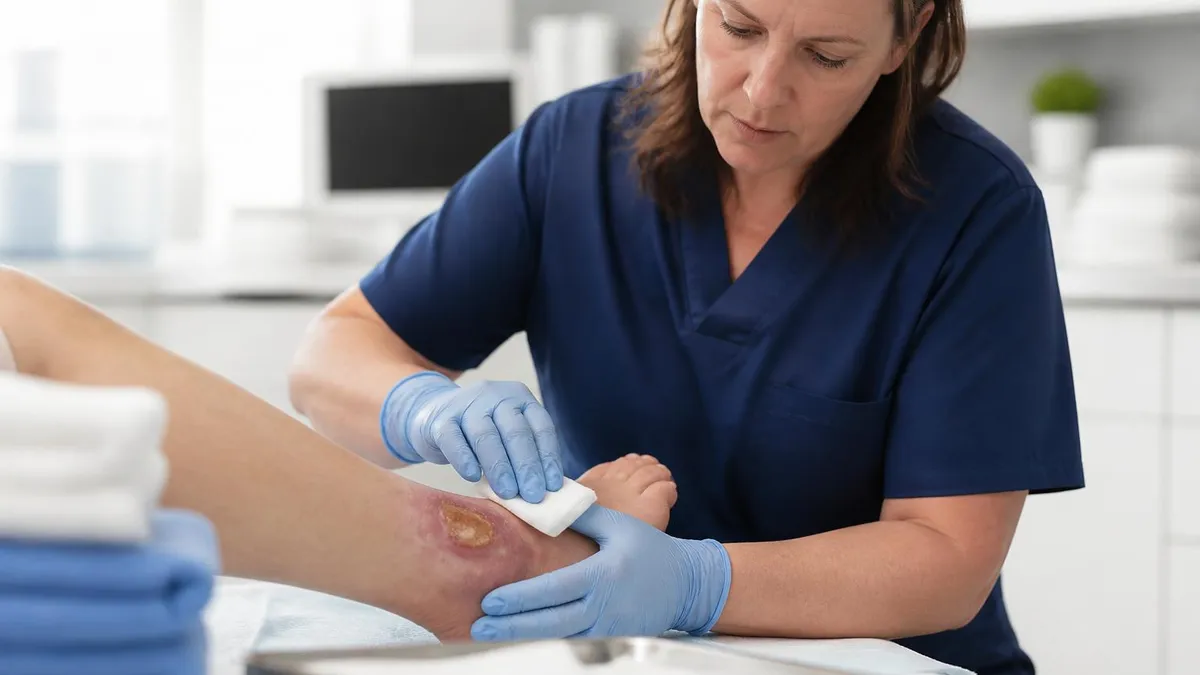
Wound Care Home: Complete Guide to Home Wound Care Services in 2026

How to Become a Wound Care Nurse: Complete 2026 Career Guide
Wound Care Companies: Top Manufacturers, Suppliers & Service Providers in 2026
After Surgery Wound Care: Complete Recovery Guide for Patients & Caregivers
Wound Care Clinics in the U.S.: Services, Networks, and How to Find One
About the Author

Registered Nurse & Healthcare Educator
Johns Hopkins University School of NursingDr. Sarah Mitchell is a board-certified registered nurse with over 15 years of clinical and academic experience. She completed her PhD in Nursing Science at Johns Hopkins University and has taught NCLEX preparation and clinical skills courses for nursing students across the United States. Her research focuses on evidence-based exam preparation strategies for healthcare certification candidates.