
How to Become a Wound Care Nurse: Complete 2026 October Career Guide
Learn how to become a wound care nurse: education, certification, salary, and step-by-step roadmap. Complete 2026 October guide with exam prep tips. ✍🏼
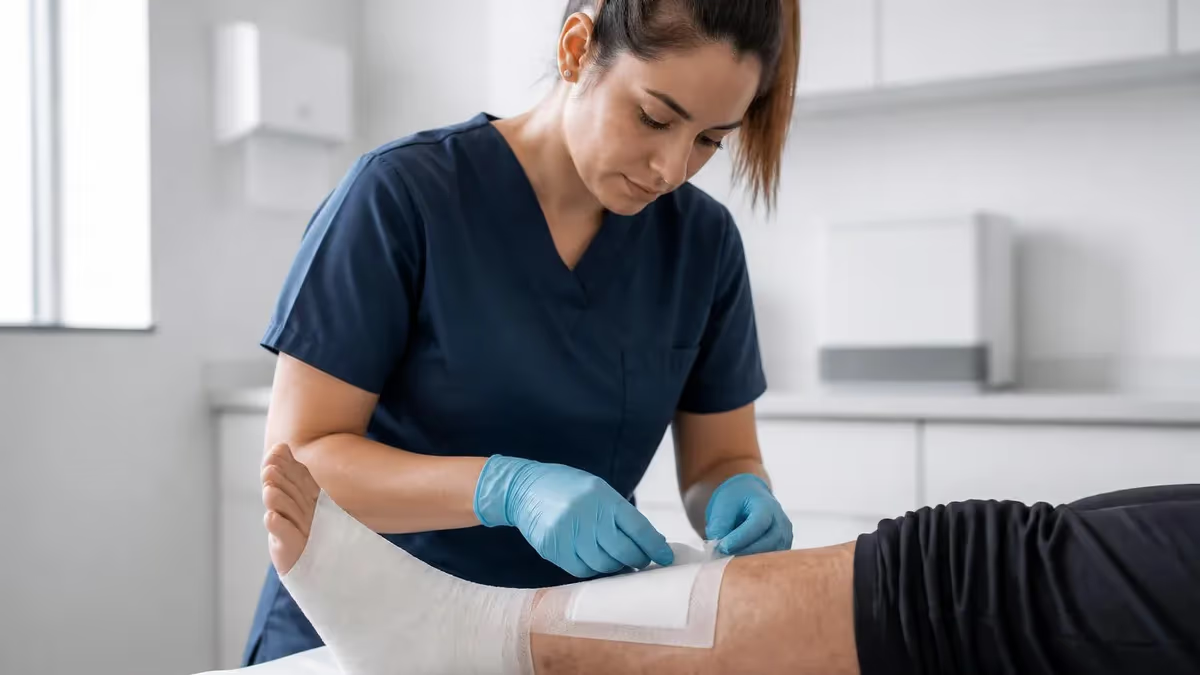
Learning how to become a wound care nurse opens the door to one of the most rewarding and rapidly expanding specialties in modern healthcare. Whether you are a newly licensed RN considering your first specialization or a seasoned bedside nurse looking for a meaningful career pivot, wound care offers clinical depth, autonomy, and steady demand. The aging U.S. population, the chronic wound epidemic affecting more than 8 million Americans, and the growing complexity of wound care wound care protocols have made certified wound nurses indispensable in hospitals, outpatient clinics, home health agencies, and long-term care facilities across the country.
The journey typically takes between three and six years from the start of nursing school to full board certification, but the timeline depends heavily on which credentialing pathway you choose, how quickly you accumulate the required clinical hours, and whether you pursue a BSN before or after entering the workforce. Most practicing wound care nurses hold either the CWCN credential from the Wound, Ostomy and Continence Nursing Certification Board (WOCNCB) or the WCC credential from the National Alliance of Wound Care and Ostomy (NAWCO), each with its own eligibility criteria and exam structure.
Wound care nursing is more than changing dressings. It blends advanced anatomy, microbiology, nutrition science, pharmacology, and patient education into a single highly visible role. Certified wound nurses assess pressure injuries, venous and arterial ulcers, diabetic foot wounds, surgical dehiscence, fistulas, and burns. They select dressings, recommend debridement methods, coordinate offloading equipment, and counsel patients on lifestyle changes that promote healing. In many facilities, the wound nurse functions as a clinical consultant who shapes policy and trains other staff.
Demand for the specialty has surged because chronic wounds cost the U.S. healthcare system an estimated $28 billion every year, and CMS now penalizes hospitals for facility-acquired pressure injuries. That financial pressure has prompted health systems to staff dedicated wound teams, create outpatient wound centers, and reimburse certification fees as a recruitment incentive. As a result, certified wound nurses earn meaningful salary premiums and enjoy stronger job mobility than many of their floor-nursing peers.
Throughout this guide you will find the exact education sequence, certification options, clinical-hour requirements, cost breakdowns, study schedules, and exam preparation strategies you need to move from interested RN to credentialed specialist. We will also cover the realistic salary ranges in 2026, the day-to-day responsibilities you can expect, and the most common mistakes candidates make on the certification exam so you can avoid them.
By the end of this article you will know which certification fits your background, how to budget for the entire process, how to find qualified preceptors, and how to study efficiently for whichever exam you choose. You will also have a clear understanding of the differences between the major credentialing bodies and the practice settings each one favors.
This guide is written for U.S. nurses and reflects 2026 eligibility rules, examination blueprints, and salary data. Use the table of contents on the side to jump to a specific section, or read straight through for a complete roadmap. Either way, by the time you finish, you will have a concrete plan to launch your wound care career with confidence.
Wound Care Nursing by the Numbers

Your Step-by-Step Path to Becoming a Wound Care Nurse
Earn Your Nursing Degree
Pass the NCLEX-RN
Gain Bedside Experience
Accumulate Wound-Specific Hours
Complete a Certification Course
Pass the Board Exam
Before you can pursue any wound care certification, you must first hold an active U.S. registered nurse license. That foundation can be built through either an Associate Degree in Nursing (ADN) or a Bachelor of Science in Nursing (BSN). While both qualify you to sit for the NCLEX-RN and practice as an RN, the BSN has become the de facto requirement for specialty roles because Magnet-designated hospitals and many wound care centers now list it as a hiring prerequisite.
If you already hold an ADN, RN-to-BSN bridge programs can be completed online in 12 to 18 months while you continue working.
Coursework that pays dividends later in your wound career includes advanced anatomy and physiology, pathophysiology, pharmacology, microbiology, nutrition, and gerontology. These subjects feed directly into the wound certification exam blueprints, where roughly 30 percent of questions test underlying disease processes such as diabetes mellitus, peripheral arterial disease, venous insufficiency, and immobility-related tissue damage. Students who weak these areas during nursing school often find the CWCN content much harder to absorb later.
After graduation, you will need to pass the NCLEX-RN and obtain state licensure. Most states also require a criminal background check, fingerprinting, and proof of immunizations. Once licensed, you are eligible to begin accruing the bedside experience that wound certification bodies require. The WOCNCB, for example, mandates a minimum of one year of full-time RN experience within the past five years before you can sit for the CWCN exam through its experiential pathway.
During your first one to two years as an RN, prioritize clinical settings rich in wound exposure. Med-surg floors, surgical units, ICUs, skilled nursing facilities, and home health agencies all expose you to pressure injuries, surgical wounds, ostomies, and chronic ulcers. The more types of wounds you assess and document early in your career, the easier the certification material will feel later. Many nurses also volunteer to shadow their facility's wound team or join a skin-care committee to deepen exposure.
If you know early that wound care is your destination, look for hospitals that offer dedicated wound nurse residencies or tuition reimbursement for certification courses. Large health systems such as HCA, Kaiser, Mayo, and Cleveland Clinic routinely sponsor staff through WOC nursing education programs, covering tuition that can otherwise reach $5,000 to $9,000. Tuition support is one of the most overlooked financial levers in this career path, and it can shave thousands off your out-of-pocket cost.
Continuing education does not stop once you earn your RN. Wound care evolves rapidly, with new wound care products entering the market each year and updated NPUAP and WOCN guidelines reshaping best practices. Building a habit of reading peer-reviewed journals like Advances in Skin and Wound Care or the Journal of Wound, Ostomy, and Continence Nursing during your bedside years will dramatically reduce the learning curve when you transition into a specialty role.
Finally, consider pursuing BLS, ACLS, and a basic wound care fundamentals course such as the Skin and Wound Management Course offered by WCEI even before you meet full certification eligibility. These credentials signal genuine interest to hiring managers and often qualify you for in-house wound consult roles that accelerate your clinical hours and tuition support eligibility.

Wound Care Certification Practice Test Questions
Prepare for the Wound Care Certification Exam exam with our free practice test modules. Each quiz covers key topics to help you pass on your first try.
Wound Care Certification Beginner's Guide
Wound Care Certification Exam Questions covering Beginner's Guide. Master Wound Care Certification Test concepts for certification prep.
Wound Care Certification Knowledge
Free Wound Care Certification Practice Test featuring Knowledge. Improve your Wound Care Certification Exam score with mock test prep.
Wound Care Certification MCQ
Wound Care Certification Mock Exam on MCQ. Wound Care Certification Study Guide questions to pass on your first try.
Wound Care Certification Practice
Wound Care Certification Test Prep for Practice. Practice Wound Care Certification Quiz questions and boost your score.
Wound Care Certification
Wound Care Certification Questions and Answers on Wound Care Certification. Free Wound Care Certification practice for exam readiness.
Wound Care Certification Trivia
Wound Care Certification Mock Test covering Trivia. Online Wound Care Certification Test practice with instant feedback.
Wound Care Certification Atypical Wound Et...
Free Wound Care Certification Quiz on Atypical Wound Etiologies. Wound Care Certification Exam prep questions with detailed explanations.
Wound Care Certification Dressings and Top...
Wound Care Certification Practice Questions for Dressings and Topical Agents. Build confidence for your Wound Care Certification certification exam.
Wound Care Certification Exam Wound Care C...
Wound Care Certification Test Online for Exam Wound Care Certification Debridement Methods and Indications. Free practice with instant results and feedback.
Wound Care Certification Exam Wound Care C...
Wound Care Certification Study Material on Exam Wound Care Certification Infection Management and Antimicrobials. Prepare effectively with real exam-style questions.
Wound Care Certification Pressure Injury P...
Free Wound Care Certification Test covering Pressure Injury Prevention. Practice and track your Wound Care Certification exam readiness.
Wound Care Certification Systemic Factors ...
Wound Care Certification Exam Questions covering Systemic Factors Affecting Healing. Master Wound Care Certification Test concepts for certification prep.
Compare the Major Wound Care Certification Pathways
The Certified Wound Care Nurse (CWCN) credential is offered by the Wound, Ostomy and Continence Nursing Certification Board and is widely regarded as the gold-standard wound care certification in U.S. acute care. Eligibility requires a BSN, an active RN license, and completion of either a WOCN-accredited education program or 1,500 hours of wound-specific clinical experience within the past five years, including 375 hours in the last year.
The CWCN exam contains 120 multiple-choice questions delivered in a 2-hour test window. Topics include assessment, planning, intervention, evaluation, and professional practice. Pass rates hover near 70 percent for first-time candidates. The credential renews every five years through 60 continuing education contact hours or successful re-examination, and most magnet hospitals consider CWCN the preferred credential for promotion into wound coordinator roles.
Is a Wound Care Nursing Career Right for You?
- +Higher salary premium of $8,000 to $15,000 over general RN pay
- +Strong job security driven by aging population and chronic disease
- +Schedule flexibility with many Monday-Friday outpatient roles
- +Autonomy to set treatment plans and consult across departments
- +Visible clinical impact as wounds heal under your management
- +Opportunities in hospital, home health, LTC, and outpatient settings
- +Clear career ladder from staff nurse to wound coordinator to director
- −Certification courses cost $2,500 to $9,000 out of pocket
- −Requires accumulating 50-120 supervised wound clinical hours
- −Recertification every 5 years adds ongoing CE costs and time
- −Exposure to malodorous wounds and emotionally heavy cases
- −Documentation burden is heavy due to reimbursement scrutiny
- −Limited fully remote opportunities outside telehealth consulting
Pros and Cons at a Glance
| Pros | Cons |
|---|---|
| Strong job security driven by aging population and chronic disease | Exposure to malodorous wounds and emotionally heavy cases |
| Schedule flexibility with many Monday-Friday outpatient roles | Documentation burden is heavy due to reimbursement scrutiny |
| Autonomy to set treatment plans and consult across departments | Limited fully remote opportunities outside telehealth consulting |

Wound Care Certification Eligibility Checklist
- ✓Hold an active, unencumbered U.S. RN license in your state
- ✓Earn a BSN (preferred) or be enrolled in an RN-to-BSN bridge
- ✓Complete at least 1 year of full-time RN bedside experience
- ✓Document 50-120 clinical hours in wound care under a certified preceptor
- ✓Finish an approved wound care education program (WEB-WOC, WCEI, Emory)
- ✓Maintain current BLS certification through the American Heart Association
- ✓Submit official transcripts and license verification to WOCNCB or NAWCO
- ✓Pay the application and exam fee (typically $295 to $410)
- ✓Schedule your exam at a Prometric or PSI testing center within 90 days
- ✓Complete annual CE hours to maintain certification every 5 years
Start documenting wound encounters from day one
The single biggest delay for new wound care candidates is missing documentation. From your first RN shift, keep a private clinical log of every wound you assess, the etiology, your interventions, and outcomes. When you apply for CWCN or WCC eligibility, you will need detailed hour verification — nurses who track from day one apply 6 to 9 months sooner than those who reconstruct hours retroactively.
Certified wound care nurses work in a remarkable variety of settings, and your choice of environment will shape both your daily rhythm and your earning potential. Acute care hospitals employ wound nurses as clinical consultants who round on inpatients with complex wounds, train bedside staff, audit pressure injury rates, and serve on skin-care committees. The work is intellectually demanding and high-visibility, but the pace can be intense, with consult lists of 25 to 40 patients per day in larger systems.
Outpatient wound centers, often hospital-affiliated and operated by management companies like Healogics or RestorixHealth, offer a more predictable Monday-through-Friday schedule and exposure to advanced modalities such as hyperbaric oxygen therapy, bioengineered skin substitutes, and negative pressure wound therapy. Nurses in these centers typically carry a panel of 8 to 14 patients per day, perform sharp debridement under physician oversight, and coordinate with vascular surgeons and podiatrists. Many nurses find this setting offers the best work-life balance in the specialty.
Home health agencies represent another massive growth area for wound care nurses. CMS reimbursement reforms have made certified wound nurses extremely valuable to home health agencies, which use their expertise to reduce hospital readmissions and improve OASIS outcomes. Home health wound nurses enjoy significant autonomy, drive between patient homes, and often earn per-visit rates that can exceed $90,000 annually for full caseloads, though documentation and mileage demands are real considerations.
Long-term care and skilled nursing facilities employ wound nurses to manage pressure injuries, surgical wounds from rehabilitation patients, and chronic ulcers among elderly residents. These roles often combine wound responsibilities with infection prevention or staff education duties. With CMS scrutiny on facility-acquired pressure injuries growing, a certified wound nurse in an LTC facility frequently functions as the regulatory lifeline that prevents costly survey deficiencies.
Some certified wound nurses build careers as independent consultants, contracting with multiple facilities, providing telehealth wound consults, or training staff in dressing selection and reimbursement coding. This path requires business savvy and a strong professional network but offers the highest earnings ceiling. Consultants who serve five to seven facilities part-time often net six-figure incomes while controlling their own schedules, though they must shoulder their own benefits and liability insurance.
You can also explore industry roles with dressing manufacturers like Smith & Nephew, 3M, Coloplast, and Mölnlycke, who hire experienced wound nurses as clinical educators, sales representatives, and product development consultants. These positions pay competitively, often include company vehicles and travel budgets, and offer a refreshing change from direct patient care for nurses experiencing bedside burnout. If you live in a major metro and search wound care careers using terms like wound care near me, you will frequently see industry positions among the listings.
Regardless of setting, the certified wound care nurse role is consistently rated among the most professionally satisfying nursing specialties. Outcomes are tangible — you can literally see wounds close under your care — and the multidisciplinary nature of the work keeps the learning curve steep and the burnout rate noticeably lower than general bedside nursing.
Sharp conservative debridement laws vary dramatically by state. Some states permit certified wound RNs to perform sharp debridement under standing orders, while others restrict it to APRNs and physicians. Before accepting any wound care role that includes debridement, confirm your state's nurse practice act and your employer's written protocols. Practicing outside your legal scope, even with certification, can jeopardize your license.
Salary is one of the strongest reasons RNs pursue wound care certification. In 2026, certified wound nurses in the United States earn an average of $87,400 annually, with a 25th-to-75th-percentile range of roughly $76,000 to $102,000. Top earners in metropolitan markets such as San Francisco, Boston, Seattle, and New York routinely break $115,000, particularly in outpatient wound center management or home health agency director roles. Certification typically adds $8,000 to $15,000 over the salary of an uncertified RN with comparable experience.
Geography matters enormously. California, Massachusetts, Washington, Oregon, and Hawaii consistently top the wage tables thanks to higher cost-of-living adjustments and strong nurse-union contracts. Meanwhile, Mississippi, Alabama, Arkansas, and South Dakota fall at the lower end, with certified wound nurse salaries averaging $68,000 to $74,000. Remote consultant and telehealth wound coaching opportunities are flattening some of these geographic gaps, allowing nurses in lower-paying states to supplement income through national contracts.
Practice setting also shapes earnings. Outpatient wound centers tend to pay the highest base salaries with predictable hours but smaller bonus potential. Home health visits paid per encounter can produce the highest annual totals for nurses willing to drive and document heavily. Hospital wound coordinator roles often include differential pay, on-call stipends, and clinical-ladder bonuses that push total compensation higher than the base salary suggests. Industry roles with dressing manufacturers frequently include base plus commission, company car, and benefit packages worth an additional $20,000 in total compensation.
Beyond salary, certified wound nurses enjoy enhanced job security. The U.S. Bureau of Labor Statistics projects 9 percent growth for registered nurses through 2032, with specialty roles such as wound care growing even faster due to the aging population, rising diabetes incidence, and obesity epidemic, all of which drive chronic wound prevalence. Hospitals are also under financial pressure from CMS to reduce hospital-acquired pressure injuries, creating strong incentives to staff dedicated wound teams.
Career mobility within the specialty is excellent. After 3 to 5 years as a staff wound nurse, you can move into wound coordinator, wound team lead, or skin care program manager roles. With additional graduate education, you can pursue a wound-focused NP or DNP track, which opens doors to independent wound clinic practice, hyperbaric medicine, and academic faculty positions. The same applies to specialty areas like dog wound care in veterinary contexts, although that pathway requires separate veterinary credentialing entirely.
Negotiation tip: when interviewing for a new wound care role, ask not only about base salary but about certification renewal reimbursement, CE allowance, conference travel budget, and tuition support for further specialization. Many employers offer $1,000 to $3,000 annually for CE and conferences but do not advertise it. Securing these benefits in writing during hiring can effectively add $5,000 to $7,000 to your annual compensation package.
Looking five years ahead, salary projections suggest wound nurse compensation will rise faster than general RN pay because the supply of certified specialists is not keeping pace with demand. Right now there are roughly 14,000 certified wound nurses in the U.S. for a population of 8 million-plus chronic wound patients — a clear demand surplus that should sustain salary growth, hiring bonuses, and relocation packages through at least the next decade.
Once you have decided which credential to pursue and met the eligibility requirements, exam preparation becomes the final hurdle between you and certification. Most successful candidates spend 10 to 16 weeks studying actively, dedicating 8 to 12 hours per week to a mix of textbook reading, question banks, and case studies. Cramming rarely works because the exams test integrated clinical judgment across assessment, intervention, and reimbursement domains — exactly the kind of material that requires repeated exposure to internalize.
Start with the official exam blueprint published by your certifying body. For CWCN, that means downloading the WOCNCB candidate handbook and noting the percentage weight assigned to each domain. Allocate your study hours proportionally — if pressure injury staging accounts for 18 percent of the exam, it should consume roughly 18 percent of your prep time. This simple discipline prevents the common mistake of over-studying favorite topics while neglecting weaker ones that may carry equal weight on test day.
The two most-recommended textbooks for CWCN and WCC are the Acute and Chronic Wounds: Current Management Concepts by Sussman and Bates-Jensen and the WOCN Core Curriculum: Wound Management. Both are dense but comprehensive. Pair them with a high-quality question bank such as the WOCNCB practice exam, BoardVitals, or the WCEI online review modules. Aim to complete at least 1,500 practice questions before your exam date, reviewing every rationale — including the questions you got right.
Form a study group of three to five candidates if possible. Wound care content is highly visual, and discussing photographs of pressure injuries, venous ulcers, and arterial wounds with peers strengthens pattern recognition far better than reading alone. Many candidates also use flashcard apps like Anki to memorize dressing categories, debridement methods, and ICD-10 codes, which appear consistently on every certification exam.
Two weeks before your exam, take a full-length timed practice test under realistic conditions. This rehearsal builds test-day stamina, exposes weak areas while you still have time to address them, and calibrates your pacing. Most candidates underestimate how mentally taxing 110 to 150 multiple-choice questions in 2 to 3 hours can be. Practicing the full duration once or twice prevents the late-test fatigue that causes careless mistakes on questions you actually know.
On exam day, arrive 30 minutes early with two forms of ID, eat a substantial breakfast, and avoid last-minute cramming, which only increases anxiety. During the test, flag uncertain questions and return to them after completing the easier ones. Trust your first instinct unless you find clear evidence to revise an answer — research consistently shows that changing answers without strong rationale lowers scores. Most importantly, remember that certification exams are designed to be passable for prepared candidates: trust your preparation and pace yourself.
After passing, your certification is valid for five years. Begin tracking continuing education hours immediately by attending the annual WOCN or NAWCO conferences, completing journal-based CE, and participating in case study webinars. Renewing through CE is far less stressful than re-examining, and most employers will reimburse the cost. Treat the post-certification years as continued professional development, not as a finish line — wound care science evolves quickly, and the best wound nurses commit to lifelong learning.
Sample Wound Care Certification Exam Practice Questions
Try these questions from our free Wound Care Certification Exam practice tests. The correct answer and an explanation follow each question.
A comprehensive wound assessment should include multiple components to guide the plan of care. Which of the following is the MOST complete list of essential assessment components?
- A. Wound size and color only.
- B. Location, size, drainage amount, and pain level.
- C. Anatomical location, dimensions (length, width, depth), wound bed tissue types, drainage characteristics, and condition of the periwound skin.
- D. Presence of odor and the patient's nutritional status.
Answer: C. Anatomical location, dimensions (length, width, depth), wound bed tissue types, drainage characteristics, and condition of the periwound skin.
A thorough wound assessment must be comprehensive to be effective. This includes precise anatomical location, measurements (length, width, depth, and any undermining or tunneling), assessment of the tissue types in the wound bed (e.g., granulation, slough, eschar), characteristics of any exudate (amount, color, consistency), and the condition of the skin surrounding the wound (periwound).
A wound care nurse is assessing a shallow, open ulcer on a patient's ischium. The wound bed is pink and moist, with partial-thickness loss of the dermis. There is no slough, eschar, or granulation tissue visible. Adipose tissue is not exposed. How should this pressure injury be staged?
- A. Stage 1
- B. Stage 2
- C. Stage 3
- D. Unstageable
Answer: B. Stage 2
This wound should be staged as a Stage 2 pressure injury. A Stage 2 injury is defined as partial-thickness skin loss with an exposed dermis. The wound bed is viable, pink or red, moist, and may also present as a serum-filled blister. The absence of slough, eschar, granulation tissue, and exposed adipose tissue are key characteristics of a Stage 2 injury.
A wound care nurse documents 'eschar' in a wound assessment. What is eschar?
- A. Yellow, stringy, moist necrotic tissue
- B. Stable, dry, black or brown leathery dead tissue
- C. Bright red granulation tissue
- D. Pale, newly formed epithelial tissue
Answer: B. Stable, dry, black or brown leathery dead tissue
Eschar is thick, hard, dry, and leathery necrotic tissue that is typically black or dark brown in color, and may require debridement unless on a heel wound with stable dry gangrene.
A wound care nurse selects a foam dressing for a moderate-exudate wound. What is the PRIMARY advantage of foam over gauze in this situation?
- A. Foam is cheaper than gauze
- B. Foam provides a moist wound environment and thermal insulation
- C. Foam eliminates the need for secondary dressings
- D. Foam has inherent antimicrobial properties
Answer: B. Foam provides a moist wound environment and thermal insulation
Foam dressings maintain a moist healing environment and provide thermal insulation, which promotes wound healing compared to gauze.
Wound Care Questions and Answers
About the Author

Registered Nurse & Healthcare Educator
Johns Hopkins University School of NursingDr. Sarah Mitchell is a board-certified registered nurse with over 15 years of clinical and academic experience. She completed her PhD in Nursing Science at Johns Hopkins University and has taught NCLEX preparation and clinical skills courses for nursing students across the United States. Her research focuses on evidence-based exam preparation strategies for healthcare certification candidates.