
Types of Forklifts: Complete TLILIC0003 Guide to Every Lift Truck You'll Meet in Australia
Types of forklift explained for TLILIC0003 operators: counterbalance, reach truck, order picker, pallet jack, side loader, telehandler, capacity and 🟢
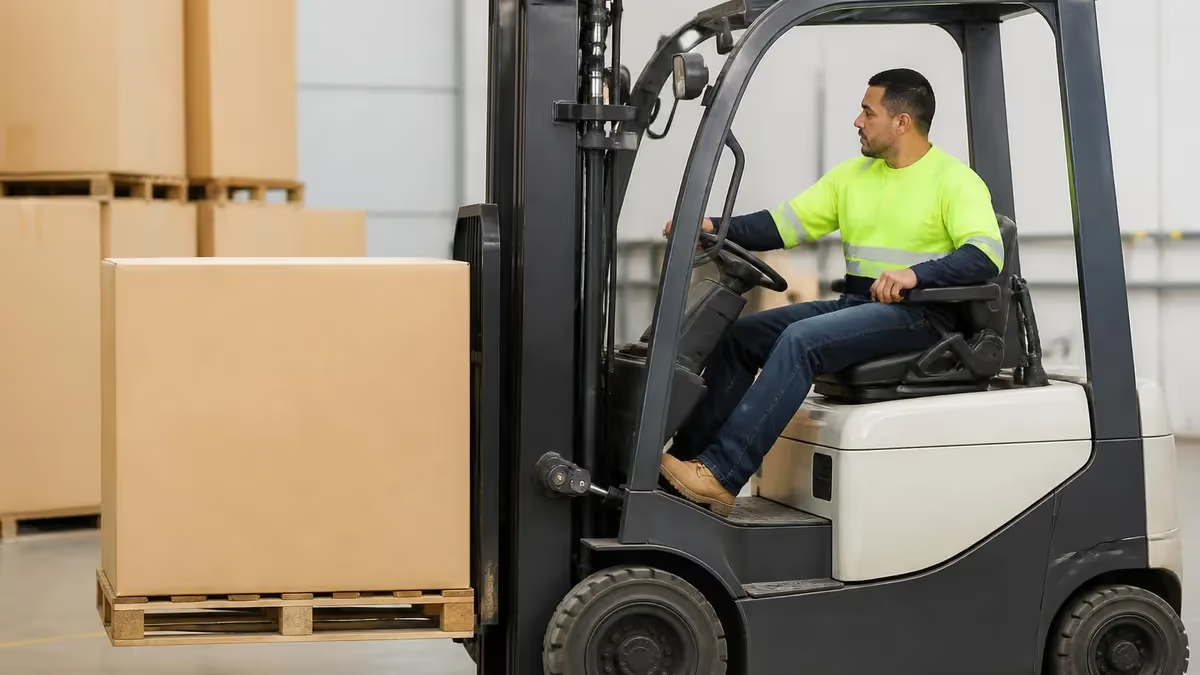
Choosing the right forklift is not a guessing game in Australia, and for anyone chasing a TLILIC0003 ticket, knowing the machine in front of you is non-negotiable. The licence covers high-lift trucks up to and including 8 tonnes of rated capacity, which means a single classification opens the door to a surprisingly wide fleet: little electric counters darting around a Coles distribution centre, big diesel beasts moving 6-tonne pallets of pavers across a Brisbane yard, reach trucks threading 9-metre racking aisles in a Sydney 3PL warehouse. Same ticket. Wildly different rigs.
This guide walks through every major forklift class you might actually meet on shift in 2026, what fuel and drivetrain it runs, what jobs it suits, and — critically — whether your TLILIC0003 covers it or whether you will need a different High Risk Work Licence (HRWL) entirely. Get this wrong on an audit and SafeWork inspectors do not hand out warnings. They hand out infringement notices.
The Australian classification follows AS 2359 (the standard family for powered industrial trucks) layered with the model WHS Regulations that define what counts as high-risk lifting equipment. A forklift truck in the LF category — anything with a powered tilting mast and load-engaging fork carriage — falls under TLILIC0003 if its rated capacity sits at or below 8,000 kg. Step above 8 tonnes, swap the mast for a telescopic boom, or move to non-mast equipment like an order picker above a certain platform height, and the licence picture changes.
Plenty of new operators assume the licence is about driving. It is not. It is about understanding load behaviour, the stability triangle, and how each truck type shifts its centre of gravity differently. A reach truck pushes the load forward of the chassis on extending forks; a side loader sits the load lengthwise to the chassis on platform forks. Same rated tonnage, completely different stability physics. Examiners ask about this. Employers expect you to know it.
By the end of this article you will be able to look at any machine on a worksite and answer four questions before you touch the controls: what type is it, what does it lift and how much, does my TLILIC0003 cover it, and what specific risks does this configuration carry that a different truck would not. That level of literacy is what a modern Australian employer expects, and it is exactly what the National Assessment Instrument pushes you toward during your verbal and practical assessment with a Registered Training Organisation.
We will also cover the fuel-source debate that dominates Australian fleet purchasing right now: electric versus internal combustion. With diesel rebates being trimmed and warehouse net-zero pledges multiplying, the rush to lithium-ion different types of forklifts has reshaped what you will meet on your first day. The good news for TLILIC0003 holders: the licence is fuel-agnostic. Counterbalance is counterbalance, whether the energy comes from a 48V battery pack or a 4-cylinder Mitsubishi LPG engine. The bad news: each fuel source has its own pre-start check list, and skipping any of them is a fast track to a failed audit.
One last framing note before we dive in. The "types of forklift" question gets answered two different ways in industry literature. American sources lean on the OSHA Class I–VII system. Australian sources lean on the AS 2359 powered-truck designations alongside the WHS HRWL classes (LF, LO, RT, RB). Both views are useful; we will touch on the forklift classifications framework where it helps clarify what each machine actually does on the floor, but the TLILIC0003 lens is the one you will be tested against.
Australian Forklift Fleet by the Numbers
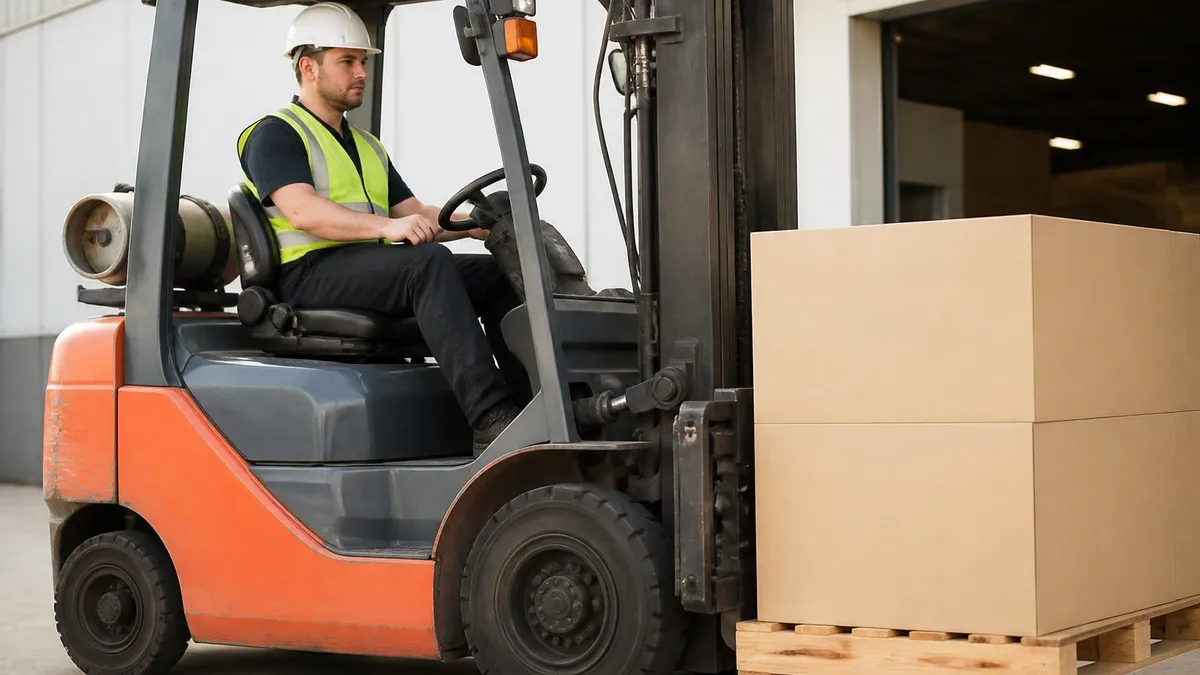
Counterbalance Family: The Workhorses You'll Drive First
Sit-Down Counterbalance
Stand-Up Counterbalance
3-Wheel Counterbalance
Heavy-Duty Counterbalance
Tow Tractor (LO Comparison)
Reach trucks change the geometry of warehouse picking entirely. Where a counterbalance keeps the load inside the chassis footprint by using a heavy rear counterweight, a reach truck uses a pantograph or telescoping mast to extend the forks forward beyond the chassis. The chassis itself sits between two stabilising outrigger legs that run along the floor either side of the lowest pallet position. That outrigger architecture is what lets a reach truck operate in aisles as narrow as 2.6 metres while still lifting to 12 metres of rack height in modern Australian distribution centres.
Reach trucks live in pallet racking. Almost without exception they are electric — 48V is standard, 80V appears in heavier 2.5-tonne models. The operator sits sideways or in a forward-facing pod, which changes pre-start checks compared to a sit-down counter. You will inspect mast rails, reach mechanism rollers, and the often-overlooked outrigger wheel condition, because a worn outrigger castor changes load behaviour at full reach height in ways a tape measure will not detect. Pre-start the truck the same disciplined way you would a counterbalance forklift — fuel/charge level swapped for battery state of charge, hydraulics inspected the same way.
The question every new TLILIC0003 holder asks is whether they can jump into a reach truck on day one. The licence answer is yes — reach trucks are LF-class under HRWL, the same as standard counters. The practical answer is no. Reach trucks have a learning curve measured in weeks, not hours, especially when racking is high.
The lateral load shift at 9 metres feels nothing like the same load at ground level. Most Australian employers will not let a fresh ticket-holder onto a reach truck without supervised site competency hours specifically logged against that machine class. Treat it as a distinct skill within the LF licence, not an automatic capability.
Within the reach family, you will encounter single-reach, double-reach, and moving-mast variants. Single-reach extends forks one pallet position deep — the standard configuration. Double-reach extends two pallets deep, used in double-deep racking to nearly double storage density. Moving-mast (or shuttle-mast) designs slide the entire mast forward on rails, which improves load stability at extreme heights but reduces aisle agility. Each variant has subtly different stability characteristics that you will calibrate to over your first hundred shifts.
The narrow-aisle category overlaps with reach trucks but extends further. VNA (Very Narrow Aisle) trucks include man-up turret trucks where the operator rises with the load to pick directly from rack, and pure articulated narrow-aisle machines like the Bendi and Flexi. Articulated forklifts hinge their mast and front wheel assembly, allowing them to rotate the load sideways inside aisles as narrow as 1.6 metres while still operating outdoors when needed. They are dual-purpose machines, which is why they sell well to operations that want one truck for both warehouse picking and yard work instead of separate counter and reach fleets.
One nuance trips up new operators repeatedly: at very narrow aisle operating heights, additional WHS rules apply regardless of licence class. End-of-aisle barriers, rack-mounted guidance rails, and load-height warning systems become mandatory infrastructure rather than optional. The truck stays LF, but the system around it requires site-specific induction every time you change facility. Treat your first day in any new VNA environment as a re-induction even if you have logged 2,000 hours on the exact same model elsewhere.
The reach truck vs forklift debate is essentially a use-case question. If the work is outdoor, mixed-terrain, or heavy load and short distance, counterbalance wins. If the work is indoor, narrow aisle, high-rack pallet handling, reach truck wins. Most large Australian distribution centres run mixed fleets and expect operators to rotate between both. The TLILIC0003 lets you do that legally; the site-specific competency hours let you do it safely.
TLILIC0003 Practice Test Questions
Prepare for the Forklift Licence Australia - TLILIC0003 exam with our free practice test modules. Each quiz covers key topics to help you pass on your first try.
TLILIC0003 Forklift Licence Australia Atta...
TLILIC0003 Exam Questions covering Forklift Licence Australia Attachments and Modifications. Master TLILIC0003 Test concepts for certification prep.
TLILIC0003 Forklift Licence Australia Batt...
Free TLILIC0003 Practice Test featuring Forklift Licence Australia Battery and Fuel Safety. Improve your TLILIC0003 Exam score with mock test prep.
TLILIC0003 Forklift Licence Australia Emer...
TLILIC0003 Mock Exam on Forklift Licence Australia Emergency Procedures. TLILIC0003 Study Guide questions to pass on your first try.
TLILIC0003 Forklift Licence Australia Fork...
TLILIC0003 Test Prep for Forklift Licence Australia Forklift Pre-Operational Checks. Practice TLILIC0003 Quiz questions and boost your score.
TLILIC0003 Forklift Licence Australia Haza...
TLILIC0003 Questions and Answers on Forklift Licence Australia Hazard Identification. Free TLILIC0003 practice for exam readiness.
TLILIC0003 Forklift Licence Australia Load...
TLILIC0003 Mock Test covering Forklift Licence Australia Load Centre Calculations. Online TLILIC0003 Test practice with instant feedback.
TLILIC0003 Forklift Licence Australia Load...
Free TLILIC0003 Quiz on Forklift Licence Australia Load Handling and Capacity. TLILIC0003 Exam prep questions with detailed explanations.
TLILIC0003 Forklift Licence Australia Oper...
TLILIC0003 Practice Questions for Forklift Licence Australia Operating in Different Environments. Build confidence for your TLILIC0003 certification exam.
TLILIC0003 Forklift Licence Australia Oper...
TLILIC0003 Test Online for Forklift Licence Australia Operating Techniques. Free practice with instant results and feedback.
TLILIC0003 Forklift Licence Australia Pede...
TLILIC0003 Study Material on Forklift Licence Australia Pedestrian Safety. Prepare effectively with real exam-style questions.
Order Pickers, Pallet Jacks, and Walkie Stackers
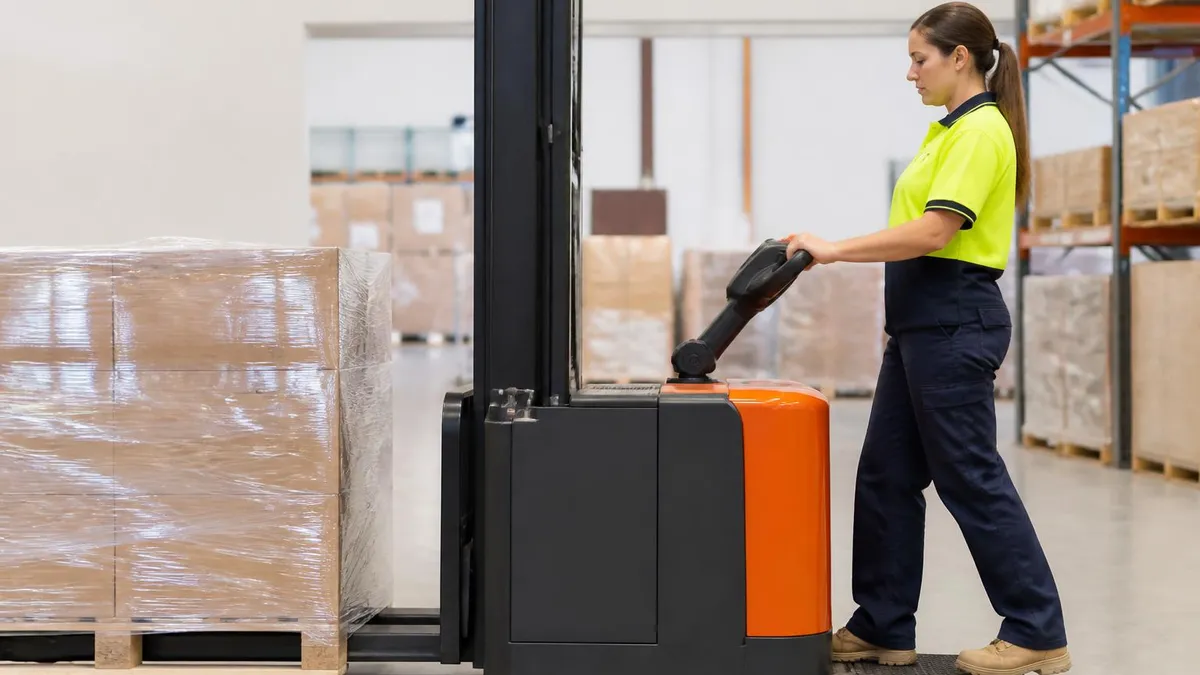
An order picker (also called a stock picker or man-up picker) lifts the operator with the load platform so they can pick individual cartons or items directly from rack. Capacities are deliberately low — usually 500 to 1,000 kg — because the goal is case picking, not pallet handling. The operator wears a full-body use clipped to a hard anchor point on the platform. Without the use, the machine refuses to lift in most modern Australian fleets.
Licence question: a low-level order picker (operator rises with load below 3 metres) sits inside the LF/TLILIC0003 envelope. A high-level order picker that lifts the operator above the threshold defined in the WHS regulations crosses into a different competency category — most Australian RTOs deliver this as a site-specific add-on, but the National Assessment Instrument explicitly tests your awareness that picker height changes the licence picture.
Electric Forklifts vs Internal Combustion: The Australian Buying Decision
- +Zero direct emissions — mandatory in food, pharmaceutical, and indoor warehouse environments
- +Lower running costs per hour ($1.50-$3 electricity vs $6-$12 LPG/diesel)
- +Quieter operation reduces operator fatigue and supports two-shift or three-shift coverage
- +Lithium-ion options now match LPG runtime in 1-3 tonne capacity ranges across most brands
- +Reduced maintenance — no engine oil, filters, or exhaust system service intervals
- +Government net-zero incentives and accelerated depreciation schedules favour electric purchases
- +Regenerative braking extends battery life and reduces brake pad wear significantly
- −Higher upfront purchase price — typically 30-50% above comparable LPG counterbalance
- −Lead-acid batteries require dedicated charging room, water top-ups, and 8-hour cool-down cycles
- −Performance drops in cold storage below 0°C without specialised low-temperature batteries
- −Heavy outdoor yard work in wet conditions still favours diesel pneumatic-tyre counterbalance
- −Lithium-ion replacement cost ($15,000-$40,000) hits the operating budget at 6-10 year mark
- −Charging infrastructure upgrade can add $20,000-$80,000 to facility electrical work
- −Resale value of older electric models drops faster than equivalent diesel counterparts
Specialist forklifts cover the work that standard counterbalance and reach trucks cannot do. Each one exists because a specific industry needed a specific load problem solved. Knowing what each does is part of TLILIC0003 theory because examiners want evidence that you understand the boundaries of your own licence.
The side loader is the long-load specialist. Instead of forks pointing forward at the operator, the platform sits along the side of the chassis with the forks projecting sideways. The operator drives parallel to the rack rather than into it. Side loaders are the standard truck for timber yards, steel merchants, aluminium extrusion handlers, and pipe distributors.
They can carry 6-metre lengths inside aisles that a counterbalance carrying the same load lengthwise could never enter. Capacities run 2-10 tonnes. Under HRWL they are typically classed LF if the rated capacity sits inside the 8-tonne envelope, but larger side loaders cross into specialised competency assessment territory.
The container handler (sometimes called a top-pick or reach stacker) is the giant of the family. These machines stack shipping containers in port and intermodal yards. Capacities run 30-45 tonnes for a top-pick and up to 45 tonnes at the second row for a reach stacker. They are well outside TLILIC0003 — operators need site-specific high-capacity competency plus port-specific authorisation. Mentioned here so you know to walk away if a yard supervisor asks you to "just have a go" on one with only an LF ticket.
The rough terrain forklift is exactly what it sounds like. Big pneumatic tyres, raised ground clearance, four-wheel drive on many models, often with a sealed cab. Built for construction sites, landscaping yards, and any unsealed surface where a standard counter would simply bog down. Capacities run 2.5-5 tonnes. A rough terrain forklift with a standard tilting mast and rated capacity under 8 tonnes stays inside TLILIC0003. The moment that machine becomes a telescopic boom configuration — even on a similar chassis — the licence shifts to TLILIC2005 territory.
The telehandler is the most-confused machine in the Australian classification system. Visually it looks like a forklift on steroids. Functionally it is a different beast entirely. A telehandler uses a telescopic boom that extends both forward and upward — like a small crane with forks bolted on.
Because the boom geometry changes the load behaviour dramatically as it extends, telehandlers carry their own licence class, TLILIC2005, sometimes referred to in industry as the TLF or non-slewing mobile crane variant. TLILIC0003 does not cover telehandlers. If your worksite has telehandlers, you need a separate ticket. This single fact catches new operators every single week across Australian construction sites.
The articulated narrow-aisle forklift — Bendi, Flexi, Aisle-Master — is the chimera of the warehouse world. From the load forward it looks like a standard counter; from the operator station back, the chassis articulates in the middle. The articulation lets the front section pivot up to 220 degrees to face directly into a rack while the rear stays straight in the aisle.
This combines the agility of a reach truck with the outdoor capability of a counter, all on the same chassis. Capacities sit at 1.5-2.5 tonnes. They stay inside TLILIC0003 by classification, but most fleet operators treat them as a distinct competency milestone.
The truck-mounted forklift (sometimes called a Moffett or piggy-back forklift) is the delivery-vehicle specialist. It mounts on the back of a truck during transport, then dismounts at site to unload pallets directly onto the customer floor. No loading dock required. Common in building-materials delivery, brick and block supply, and rural agricultural deliveries. A truck-mounted forklift inside the 8-tonne capacity envelope falls under TLILIC0003 — though again, mounting and dismounting procedures require specific competency training that goes well beyond the standard counterbalance assessment.
Two more specialists round out the family. The tow tractor (mentioned briefly earlier) pulls trailers in airports and large factories. The platform truck (or burden carrier) has a flat deck for carrying mixed loads without a mast. Neither is technically a forklift, but both share Australian workplaces with TLILIC0003 trucks and deserve recognition so you do not mis-categorise them on an audit form.
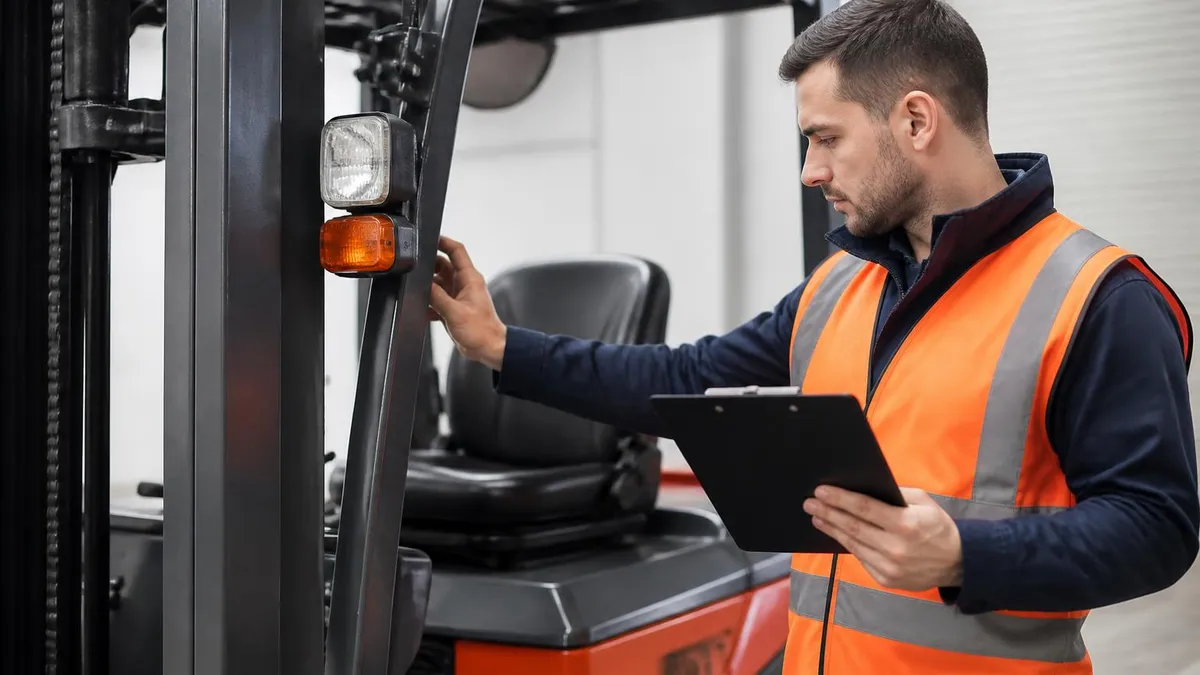
Pre-Start Checklist: Universal Across Every Forklift Type
- ✓Walk a 360° circle around the truck — check for fluid leaks, damaged tyres, missing hardware
- ✓Inspect forks for cracks at the heel, blade twist, and verify identification stamps are legible
- ✓Test horn, reversing alarm, example light, and headlights before climbing into the operator seat
- ✓Confirm load plate (capacity rating plate) is fitted, legible, and matches the attachments fitted
- ✓Test service brake, parking brake, and inching/dead-man pedal where applicable to truck type
- ✓Cycle hydraulics through full lift, tilt, and (where fitted) reach and side-shift before loading
- ✓Check battery state of charge (electric) or fuel and oil levels (LPG/diesel) within service limits
- ✓Verify seatbelt or operator-presence sensor functions correctly — modern trucks immobilise without it
- ✓Document any defect on the daily inspection sheet and report it before commencing work
- ✓Walk pedestrian-traffic routes you plan to use and confirm visibility is unobstructed at intersections
The rated capacity is conditional, not absolute
Every forklift carries a capacity plate that states maximum rated capacity at a specified load centre — usually 500 mm or 600 mm in Australian configurations. The instant your load centre shifts further from the heel (longer pallet, heavier end forward, attachment changes the geometry), the safe capacity drops, often by 30-50 per cent. TLILIC0003 examiners ask candidates to read derated capacity from a load chart under exam conditions. Practise this before you sit your assessment. Lifting a load that exceeds derated capacity is the single most common cause of tip-over incidents reported to SafeWork Australia each year.
The fuel-source choice in Australia has shifted dramatically over the past five years. Walk into a brand-new distribution centre commissioned in 2025 and you will almost certainly see an all-electric fleet. Walk into a 20-year-old timber yard outside Geelong and you will find a fleet running mostly LPG and diesel. Both are correct decisions for their context. Understanding why each fuel suits each environment is part of becoming a competent operator rather than a box-ticking licence holder.
Electric counterbalance forklifts dominate indoor work. The reasons are practical: zero exhaust emissions (mandatory in food processing, pharmaceutical, and most modern retail distribution), lower noise levels, lower per-hour running cost, and substantially less maintenance because there is no engine oil, no filters, and no exhaust components to service. Lithium-ion battery technology has matured to the point that 1-3 tonne electric counters now match LPG runtime in most two-shift operations, with opportunity charging during breaks rather than full overnight cycles. The lithium upgrade changed the calculus permanently.
Lead-acid batteries — still the majority of the existing electric fleet — require more management. You need a dedicated charging room with appropriate ventilation, eyewash stations, neutralising kits, and floor drainage. Batteries need topping up with distilled water on a service schedule. Discharge cycles want to run all the way down and back up; opportunity charging shortens battery life on lead-acid. None of that applies to lithium-ion, which is why fleet replacement programs are migrating that direction faster than expected.
LPG counterbalance trucks remain the workhorse for mixed indoor-outdoor work in food, beverage, and general manufacturing. Bottle-swap takes 60 seconds, the truck runs for 6-8 hours per bottle, and emissions are low enough to meet indoor air-quality requirements in most facilities (though not all — confirm site-specific ventilation requirements before assuming). LPG also handles the cold-storage scenario better than legacy lead-acid electric because the engine produces heat that the battery does not. Modern lithium electric closes that gap, but legacy fleets still favour LPG below 0°C.
Diesel forklifts are the outdoor specialists. Pneumatic tyres, larger frames, higher ground clearance, and the engine torque to push 6-tonne loads up a gradient. They live in container yards, timber merchants, brickworks, mining support, and large-format building suppliers. Diesel emits more particulate than LPG, so most indoor environments exclude diesel entirely. The Australian fuel-tax credit changes of 2024 trimmed some of the operating-cost advantage diesel forklifts previously enjoyed, but they remain the rational choice for heavy outdoor work that electric is not yet ready to handle cost-effectively above 5 tonnes capacity.
Dual-fuel options (LPG plus petrol) still appear in older fleets but new sales have nearly vanished — the operational logic disappeared once LPG bottle networks reached current density across Australia. Hydrogen fuel-cell forklifts have launched in a handful of large warehouses since 2022 but remain a niche pilot category; expect them to scale slowly over the next decade rather than suddenly. For TLILIC0003 purposes, treat hydrogen as conceptually similar to electric (no combustion, fuel-source pre-start checks instead of engine checks, similar performance profile).
Whatever fuel you operate, the licence does not change. TLILIC0003 covers LF-class forklifts regardless of energy source. What changes is your daily routine: charging connector inspection vs LPG bottle changeover vs diesel fuel-quality check. Each fuel source has its own pre-start discipline, and your RTO assessor will test you on whichever fuel matches the truck you sat the practical assessment on. If you assess on LPG, practise on LPG. If you assess on electric, practise on electric. Then learn the others on the job once you have your ticket.
RTO assessors report three recurring confusions during verbal assessment: candidates calling a telehandler a forklift (it needs TLILIC2005 instead), candidates assuming any pallet-moving machine needs an LF ticket (manual pallet jacks do not), and candidates claiming a high-level order picker is fine because it is just an electric forklift (it crosses into separate competency above the platform-height threshold). Lock these three boundaries into memory before sitting your assessment. Examiners ask all three nearly every cycle.
The TLILIC0003 licence is officially titled "Licence to Operate a Forklift Truck". The defining characteristic is the LF classification: a powered industrial truck with a tilting mast and load-engaging fork carriage, rated capacity up to and including 8,000 kg. That definition cuts cleanly through most of the forklift family but leaves three boundary zones where new operators routinely misunderstand the coverage rules.
The first boundary is capacity. At exactly 8,000 kg rated capacity, you stay inside the licence. At 8,001 kg, you cross into specialist high-capacity territory and need either an extended competency-assessed authorisation or a different licence pathway depending on jurisdiction. Most candidates never operate above 8 tonnes commercially, but if you take a role at a heavy-industrial site (mining support, steel manufacturing, large brickworks), the question becomes immediate.
The second boundary is boom geometry. The moment a machine swaps its tilting mast for a telescopic boom, it becomes a TLILIC2005 telehandler regardless of capacity. This is the most common source of cross-licence confusion in Australian construction. A 3-tonne telehandler is not a small forklift — it is a separate licence class with separate stability physics and a separate assessment regime. Look at the boom mechanism, not the load capacity.
The third boundary is operator elevation. A standard forklift lifts the load, not the operator. The moment the operator rides up with the load above the regulatory threshold (commonly 3 metres in Australian application), the machine crosses into Work Platforms territory and may require additional ticket coverage such as TLILIC2001 (LO — Order Picking Forklift) for high-level order pickers. Low-level pickers stay inside LF; high-level pickers do not. Check the operator platform travel height before assuming licence coverage on any picker you see for the first time.
Outside those three boundaries, TLILIC0003 covers a wide range of trucks: sit-down counterbalance (electric, LPG, diesel), stand-up counterbalance, three-wheel counterbalance, reach trucks (single and double-reach), articulated narrow-aisle, side loaders inside capacity limits, rough terrain forklifts inside capacity limits, walkie stackers with powered mast lift, and truck-mounted forklifts inside capacity limits. That is more than a dozen distinct configurations under a single licence — which is exactly why the assessment focuses so heavily on load behaviour and stability theory rather than rote operational steps.
The licence itself is issued by SafeWork in your state of residence (SafeWork NSW, WorkSafe Victoria, Workplace Health and Safety Queensland, and so on through the territories). The licence card is valid nationally — you can take a NSW-issued TLILIC0003 to a Perth warehouse on the same day. Renewal sits at 5 years across most jurisdictions, with a standard renewal application rather than a re-test in normal circumstances. If you let it lapse, the renewal process gets more complex; if it lapses by more than 12 months, expect to re-sit assessment in most jurisdictions.
To get there in the first place: select a Registered Training Organisation that delivers TLILIC0003, complete the classroom component (typically 2-3 days), complete the practical operation hours on the truck, then sit the National Assessment Instrument verbal and practical assessment. Pass and your RTO submits the paperwork; SafeWork posts the card within 60 days. From day one as a holder, you are responsible for understanding which trucks you can lawfully operate and which require a different ticket. This article exists to make that question easy to answer on shift.
TLILIC0003 Questions and Answers
Forklift Licence Australia: How to Get Certified (TLILIC0003)
Multi Directional Forklift Trucks: Complete Guide to Forklift Types and Parts for TLILIC0003 Operators in Australia
Mast of Forklift: Complete Guide to Forklift Parts for TLILIC0003 Operators in Australia
Forklift Clearance Height: Complete Guide to Forklift Specifications for TLILIC0003 Operators in Australia
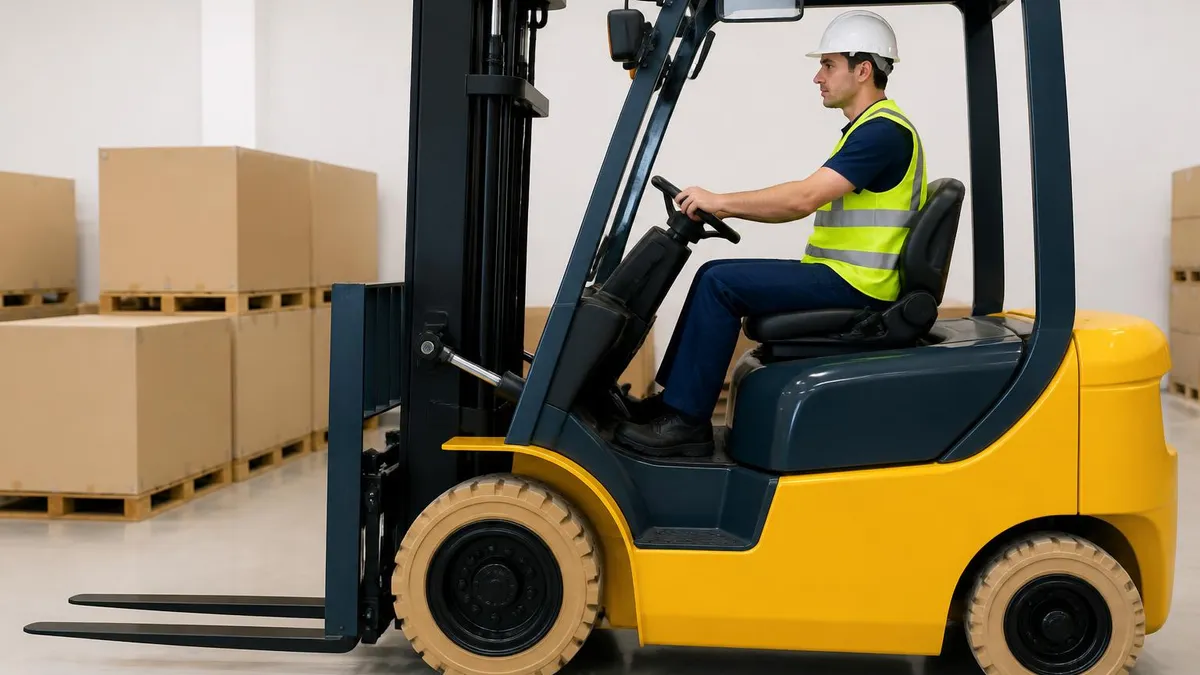
Forklift Rotators and Attachments: Complete TLILIC0003 Guide for Australian Operators
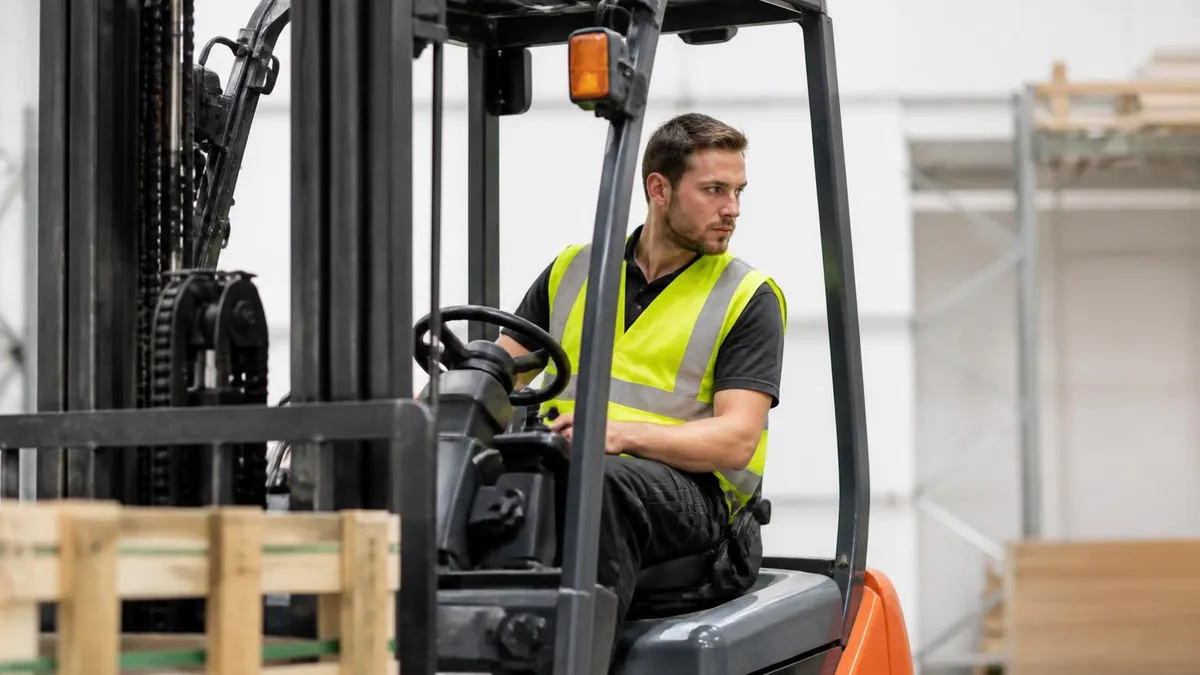
TLILIC0003 Forklift Maintenance: Pre-Shift Checks & Service Guide (2026)
About the Author

Certified Crane Operator & Skilled Trades Exam Specialist
Ferris State UniversityRobert Martinez is a Journeyman Ironworker, NCCCO-certified crane operator, and forklift trainer with a Bachelor of Science in Construction Technology from Ferris State University. He has 21 years of ironworking, rigging, and heavy equipment operation experience across high-rise and industrial construction sites. Robert prepares candidates for crane operator, rigger, forklift, and skilled trades certification examinations.