
Multi Directional Forklift Trucks: Complete Guide to Forklift Types and Parts for TLILIC0003 Operators in Australia
Multi directional forklift trucks guide for TLILIC0003 operators. ✍🏼 Learn forklift types, parts, controls and safety for your Australian licence.
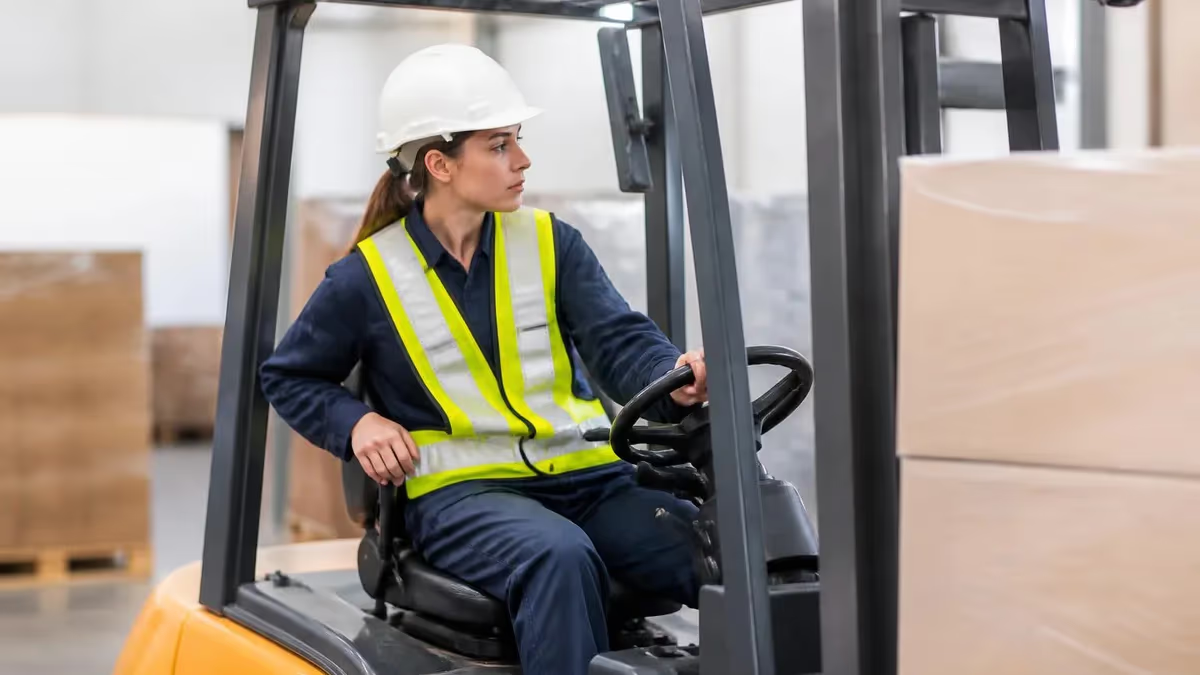
Multi directional forklift trucks have become one of the most versatile pieces of materials handling equipment in Australian warehouses, timber yards and steel fabrication shops. Unlike a standard counterbalance unit, a multi-directional truck can travel forward, backward, sideways and diagonally, which makes it ideal for carrying long loads through narrow aisles. For anyone preparing for the TLILIC0003 high-risk work licence, understanding how these specialised machines differ from conventional forklifts is essential, because the assessor will expect you to identify each truck type confidently during the practical test.
The TLILIC0003 unit of competency covers all powered industrial trucks with a lifting capacity above one tonne, including counterbalance, reach trucks, side-loaders, container handlers and articulated narrow-aisle units. Each design has been engineered to solve a specific storage or transport problem, so operators must learn the strengths and limits of every type. Knowing which truck suits which task is not only an exam requirement but a daily safety decision once you start work on Australian sites under WHS regulations.
This guide walks you through every major forklift category, breaks down the critical components you must inspect before each shift, and explains the load-handling principles assessors quiz you on most often. We cover mast configurations, hydraulic systems, attachment points, data plates and the stability triangle, all framed around the TLILIC0003 performance criteria. If you want to back up the theory with question practice, the official Free Forklift Practice Test 2026 - Forklift Exam Questions is a strong place to start.
Australian workplaces use a wider variety of trucks than many trainees expect. A timber merchant in Brisbane might run side-loaders alongside multi-directional units, while a Melbourne cold-store typically pairs reach trucks with pedestrian pallet movers. Container terminals in Port Botany rely on reach stackers rated at 45 tonnes, and rural co-ops still depend on rough-terrain pneumatic-tyre forklifts. Your licence covers them all in principle, but employers will still require site-specific verification of competency before letting you operate any unfamiliar model.
Beyond knowing the names of trucks, the TLILIC0003 assessment focuses heavily on parts identification. You should be able to point to the carriage, the lift chains, the tilt cylinders, the overhead guard, the load backrest extension and the data plate without hesitation. Examiners often ask candidates to explain the function of each component and describe what a fault in that part would mean for safety. Memorising parts in isolation is not enough; you need to link each one to a risk control or a pre-start check.
Hydraulic and electrical systems also deserve attention. Modern Australian fleets are shifting toward lithium-ion electric forklifts, which behave differently from LPG counterbalance trucks in terms of weight distribution, regenerative braking and battery handling. Multi-directional models often use four independently steered wheels driven by electric motors, giving them turning characteristics that surprise first-time operators. Understanding these drivetrains helps you anticipate how the truck will respond when you lift loads near maximum capacity or manoeuvre on slopes.
By the end of this article you will have a clear mental map of forklift families, the parts that matter on each one, and the questions most likely to appear in your TLILIC0003 knowledge test. Bookmark the page, run through the checklists before your assessment day, and use the linked practice quizzes to test recall under exam pressure. Mastering this material once will serve you for every yard, dock and warehouse you walk into for the rest of your career.
Free Forklift Licence Study Tools
Interactive Forklift Licence resources on PracticeTestGeeks, free to start:
- Forklift Licence practice test — 300+ questions with instant scoring and answer explanations
- Forklift Licence flashcards — review key terms and concepts card by card
- Forklift Licence study guide — topic-by-topic overview of what the exam covers
- Forklift Licence cheat sheet — one-page printable summary for last-minute review
Forklift Types and Parts by the Numbers
Main Forklift Types You Must Recognise
The most common Australian forklift, with a heavy rear counterweight balancing the load on the forks. Available in LPG, diesel and electric versions, typically rated between 1.5 and 5 tonnes for warehouse and yard duties.
A narrow-aisle warehouse truck that extends its forks forward into the racking. The operator sits sideways and the truck has stabilising legs at the front instead of a counterweight, allowing aisles as tight as 2.7 metres.
Trucks with four-way steering that drive sideways as well as forward. Ideal for long loads such as timber, pipe and sheet steel because they convert long aisles into productive storage by eliminating wide turning circles.
Loads are carried lengthways along the chassis, with forks mounted on the side. Used heavily by timber merchants and steel suppliers because they travel down narrow aisles without rotating long stock.
Massive trucks rated 30 to 45 tonnes used at ports and intermodal terminals. They lift shipping containers by their top corner castings using a spreader attachment, often stacking five or six high in storage yards.
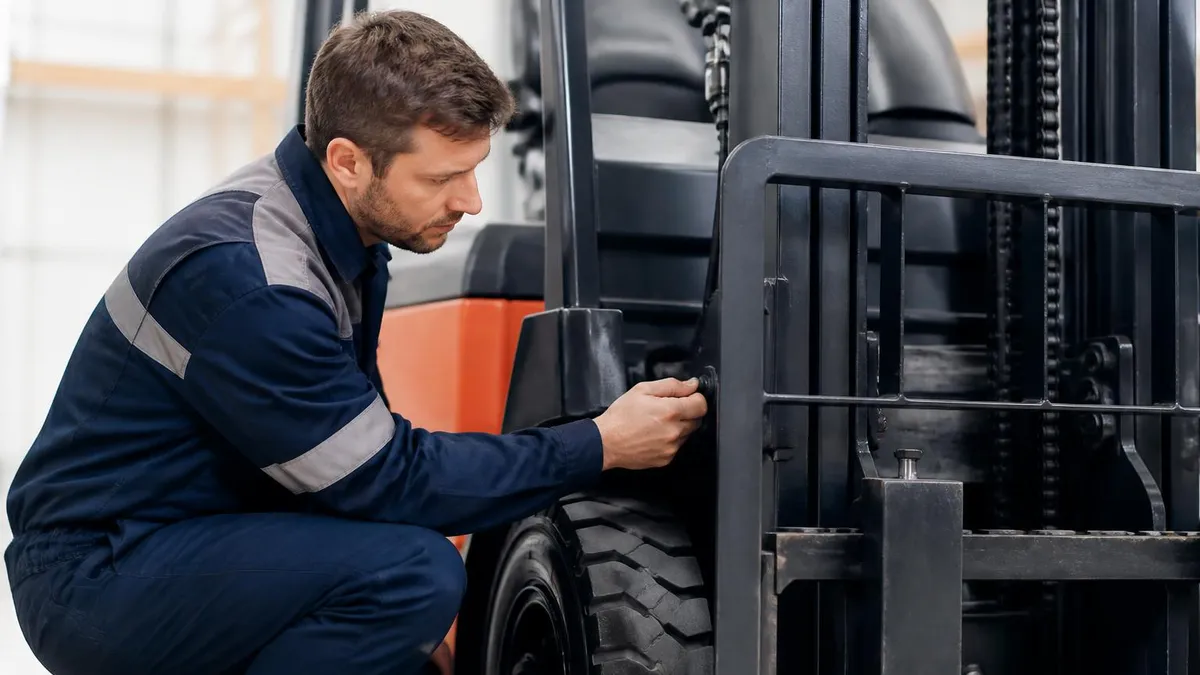
Once you can name each truck type, the next step is to break down their shared anatomy. Every forklift covered by TLILIC0003 has the same core elements: a power unit, a chassis with a counterweight or stabilising legs, a mast assembly, a carriage, forks or an attachment, hydraulic lines, an operator compartment and an overhead guard. The differences between trucks come from how these pieces are arranged, not from the fundamental list of parts. Once you internalise that template, identifying components on an unfamiliar machine becomes much easier.
The chassis is the structural backbone, housing the engine or battery, the transmission and the steering axle. On a counterbalance truck the rear of the chassis carries cast iron weight to offset the load on the forks, while a reach truck uses outrigger legs to spread the centre of gravity. Multi-directional units have four independently driven and steered wheels mounted in pods, allowing them to pivot each wheel ninety degrees so the entire truck slides sideways without changing orientation.
The mast is the vertical assembly that lifts the load. Standard masts come in two-stage simplex, three-stage triplex and quad configurations, each offering different lift heights and visibility profiles. Inside the mast you will find hydraulic lift cylinders, lift chains, rollers and channels. The carriage rides up and down on these channels and supports the load backrest extension plus the forks or attachment. Understanding mast staging is critical because free-lift height affects whether you can work inside shipping containers.
Forks themselves are precision-engineered components, not just lumps of steel. Each fork has a heel where it meets the carriage, a blade that slides under the pallet, and a tip that should be reasonably square. Inspect for cracks at the heel, bending, twisting and excessive heel wear. A fork worn beyond ten percent of original thickness must be removed from service immediately, which is why TLILIC0003 assessors will ask you to demonstrate measuring or estimating heel wear during the pre-start inspection.
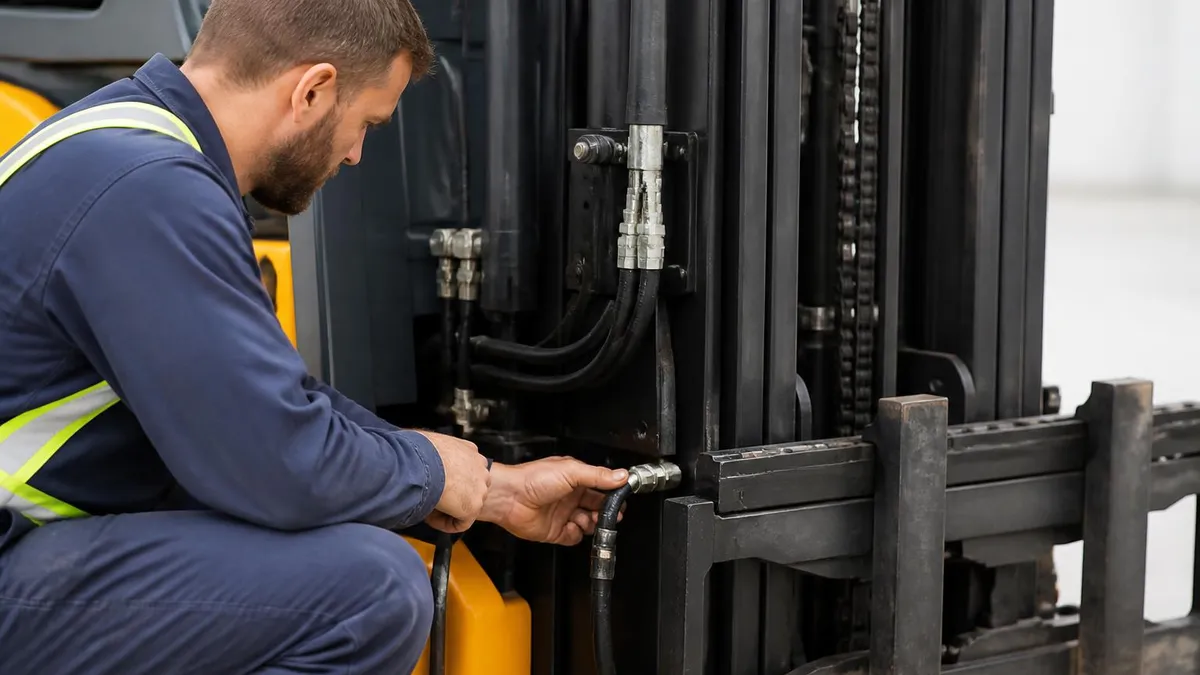
The hydraulic system pressurises fluid to lift, lower, tilt and operate attachments. A typical truck has a pump driven off the engine or an electric motor, a reservoir, filters, control valves at the operator station, hoses, and cylinders for each function. Hydraulic failures show up as slow lifting, jerky movement, oil leaks or drift, and the assessor expects you to recognise these symptoms during pre-start. For deeper diagrams and component photographs, see the dedicated Mast of Forklift: Complete Guide to Forklift Parts for TLILIC0003 Operators in Australia resource.
The operator compartment includes the seat with its presence switch and seatbelt, the steering wheel or tiller, foot pedals or directional controls, lift and tilt levers, the parking brake, instrument cluster and horn. Modern Australian-supplied trucks usually require the operator to be seated with the belt fastened before lift functions become active. Familiarity with these interlocks reduces the chance of fines under WHS Regulation 213, which prohibits operation by unrestrained drivers in seated trucks.
Finally, every forklift carries a data plate, often called the compliance or capacity plate, which is the single most important component on the truck for licence holders. The data plate lists serial number, mast type, attachment fitted, load centre and rated capacity at given lift heights. Operating outside the values on this plate is the most common cause of tip-overs and the fastest way to fail your practical assessment, so always confirm the plate matches the load you are about to lift.
TLILIC0003 Practice Test Questions
Prepare for the Forklift Licence Australia - TLILIC0003 exam with our free practice test modules. Each quiz covers key topics to help you pass on your first try.
TLILIC0003 Forklift Licence Australia Atta...
TLILIC0003 Exam Questions covering Forklift Licence Australia Attachments and Modifications. Master TLILIC0003 Test concepts for certification prep.
TLILIC0003 Forklift Licence Australia Batt...
Free TLILIC0003 Practice Test featuring Forklift Licence Australia Battery and Fuel Safety. Improve your TLILIC0003 Exam score with mock test prep.
TLILIC0003 Forklift Licence Australia Emer...
TLILIC0003 Mock Exam on Forklift Licence Australia Emergency Procedures. TLILIC0003 Study Guide questions to pass on your first try.
TLILIC0003 Forklift Licence Australia Fork...
TLILIC0003 Test Prep for Forklift Licence Australia Forklift Pre-Operational Checks. Practice TLILIC0003 Quiz questions and boost your score.
TLILIC0003 Forklift Licence Australia Haza...
TLILIC0003 Questions and Answers on Forklift Licence Australia Hazard Identification. Free TLILIC0003 practice for exam readiness.
TLILIC0003 Forklift Licence Australia Load...
TLILIC0003 Mock Test covering Forklift Licence Australia Load Centre Calculations. Online TLILIC0003 Test practice with instant feedback.
TLILIC0003 Forklift Licence Australia Load...
Free TLILIC0003 Quiz on Forklift Licence Australia Load Handling and Capacity. TLILIC0003 Exam prep questions with detailed explanations.
TLILIC0003 Forklift Licence Australia Oper...
TLILIC0003 Practice Questions for Forklift Licence Australia Operating in Different Environments. Build confidence for your TLILIC0003 certification exam.
TLILIC0003 Forklift Licence Australia Oper...
TLILIC0003 Test Online for Forklift Licence Australia Operating Techniques. Free practice with instant results and feedback.
TLILIC0003 Forklift Licence Australia Pede...
TLILIC0003 Study Material on Forklift Licence Australia Pedestrian Safety. Prepare effectively with real exam-style questions.
Mast, Carriage and Hydraulic Systems for Multi Directional Forklift Trucks
Mast assemblies are described by the number of telescoping channels they contain. A simplex two-stage mast offers basic lift to around 3.3 metres and is common on outdoor counterbalance trucks. Triplex three-stage masts use an inner free-lift cylinder, allowing the forks to rise before the mast extends, which is essential inside shipping containers where overhead clearance is restricted.
Quad masts add a fourth section for very high lifts in narrow-aisle warehousing, sometimes reaching beyond 7 metres. On multi-directional forklift trucks the mast is usually a heavy-duty triplex rated for sideways travel with improved loads. Always confirm the mast type on the data plate, because capacity ratings drop sharply at full extension and overhead clearance becomes critical near racking and doorways.
Multi Directional Forklift Trucks vs Standard Counterbalance: Pros and Cons
- +Carries long loads through narrow aisles without rotating
- +Four-way travel saves up to 50% of warehouse floor space
- +Reduces double-handling of timber, pipe and steel stock
- +Electric models give zero emissions for indoor work
- +Improves stock visibility because aisles can be tighter
- +Single operator can perform tasks that previously needed two trucks
- +Lower long-term cost where long-load handling is constant
- −Higher purchase price than equivalent counterbalance trucks
- −More complex hydraulics mean costlier maintenance
- −Operators need additional familiarisation training
- −Reduced ground clearance limits outdoor and rough terrain use
- −Capacity drops more sharply at full lift height
- −Tighter aisles leave less margin for steering errors
- −Specialist tyres can be expensive to replace
Pros and Cons at a Glance
| Pros | Cons |
|---|---|
| Carries long loads through narrow aisles without rotating | Higher purchase price than equivalent counterbalance trucks |
| Reduces double-handling of timber, pipe and steel stock | More complex hydraulics mean costlier maintenance |
| Electric models give zero emissions for indoor work | Operators need additional familiarisation training |
| Improves stock visibility because aisles can be tighter | Reduced ground clearance limits outdoor and rough terrain use |
| Single operator can perform tasks that previously needed two trucks | Capacity drops more sharply at full lift height |
| Lower long-term cost where long-load handling is constant | Tighter aisles leave less margin for steering errors |
Pre-Start Inspection Checklist for Multi Directional Forklift Trucks
- ✓Walk around the truck checking for visible damage, leaks or missing guards
- ✓Confirm the data plate matches the attachment fitted and is legible
- ✓Inspect forks for cracks at the heel and measure for ten percent wear
- ✓Check lift chains for stretch, rust, kinks and equal tension on both sides
- ✓Test tyres for cuts, chunking, separation and correct inflation pressure
- ✓Verify hydraulic fluid level on the sight glass and look under the truck for leaks
- ✓Operate horn, lights, reversing alarm and flashing example before driving
- ✓Test foot brake, parking brake and seatbelt interlock from the operator seat
- ✓Cycle lift, tilt and side-shift through full range with no load to confirm smooth movement
- ✓Confirm overhead guard, load backrest extension and mirrors are secure and undamaged
- ✓For multi-directional trucks, test wheel-rotation switch and confirm clean transition between modes
- ✓Record findings in the pre-start log book and tag out the truck if any defect exists
Never skip the data plate cross-check
The single fastest way to fail a TLILIC0003 assessment is to lift a load without confirming the data plate. Always compare the rated capacity at your intended load centre and lift height against the actual weight of the load, especially after fitting any attachment which automatically de-rates the truck.
Stability is the principle that ties every part of the forklift back to safe operation. The truck and its load form a combined centre of gravity that must stay inside the stability triangle, a shape drawn between the two front drive wheels and the pivot point at the centre of the rear axle. Tilt the mast forward with a heavy load high in the air and the combined centre of gravity moves toward the front wheels, raising the risk of a tip-over. Understanding this is the foundation of every load-handling decision.
Load centre is measured from the vertical face of the forks to the centre of the load. Australian data plates are typically calibrated at 600 millimetres for trucks up to five tonnes, meaning the listed capacity assumes a standard 1200 millimetre pallet loaded evenly. When the load centre extends further, perhaps with timber lengths or rolled coils, capacity drops dramatically. Every operator should be able to read the de-rating chart on the plate and convert it into a maximum safe lift for the actual job.
Attachments multiply the complexity. A side-shifter adds weight to the carriage and shifts the load centre forward by about fifty to one hundred millimetres. Rotators, fork positioners and slip-sheet attachments add even more, and the data plate must list capacity for the attachment fitted. If your truck has a rotator and the plate only shows capacity for plain forks, the unit is non-compliant for that work until a new plate is issued. Inspectors regularly fine companies that ignore this requirement.
Travel speed and braking are also stability factors. Multi-directional forklift trucks tend to feel stable because of their wider wheelbase, but they can still tip sideways during a sharp turn at speed, particularly with an improved load. Always lower loads to within 150 millimetres of the ground for travel, accelerate and brake gently, and reduce speed before turning. Wet floors, ramps and loose surfaces all amplify the effect of inertia on the combined centre of gravity.
Ground conditions deserve specific attention in Australian workplaces. Concrete slabs in cold-stores can ice up, gravel yards shift under heavy wheels, and timber decks in older warehouses may sag under point loads. Before driving in any new area, walk the route on foot, identify potholes, drainage grates and overhead obstructions, and confirm the floor is rated for the loaded weight of the truck. A loaded five-tonne forklift can exceed 8 tonnes of point pressure under one wheel.
Travelling up and down slopes follows specific rules. Always travel with the load uphill, regardless of direction of travel, because tilting the load downhill brings the combined centre of gravity past the front wheels. Never turn on a slope. Lower the forks until they almost touch the ground if travelling unloaded down a steep ramp. These principles are tested in every TLILIC0003 written assessment, and they form a fundamental safety habit you will use daily once licensed.
Finally, remember that pedestrians inside the stability and travel zone create additional risk. Multi-directional trucks moving sideways are particularly hard to anticipate because workers expect forklifts to travel forward. Australian Standard AS 2359 recommends segregating pedestrian and forklift traffic wherever possible, with painted walkways, mirrors at blind corners and audible alarms on the truck. Operators carry primary responsibility for spotting and avoiding pedestrians, and TLILIC0003 candidates are tested on horn use and visual checks before every direction change.
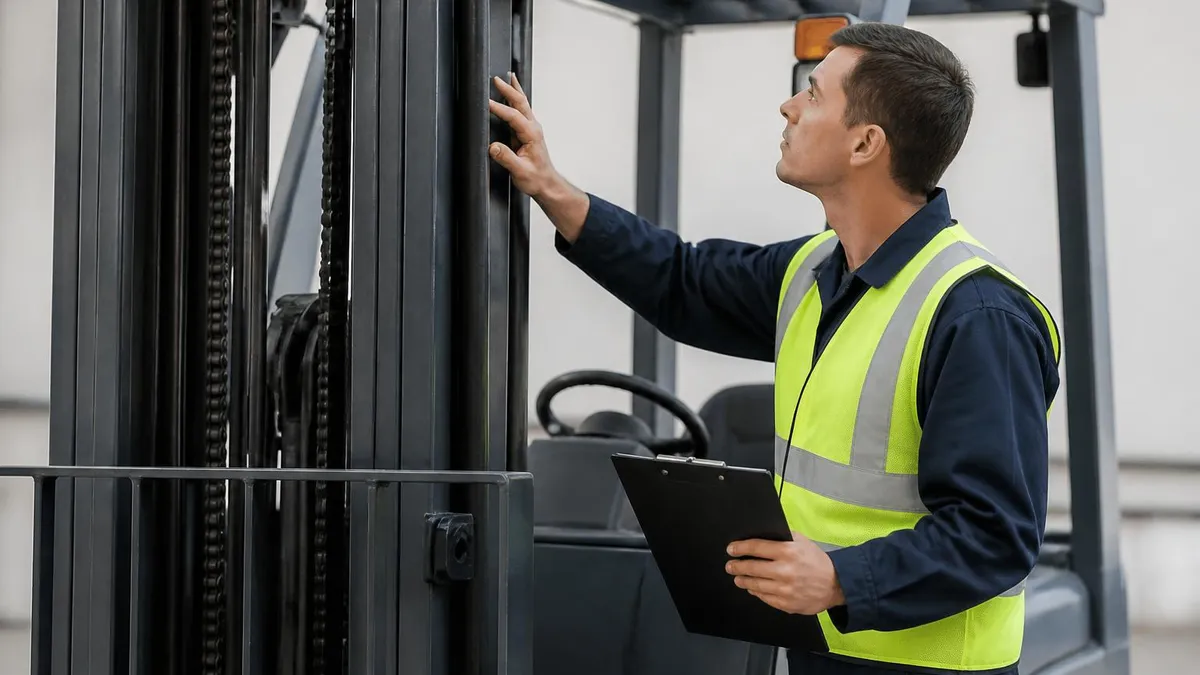
If you fit an attachment such as a rotator, jib or carton clamp, the truck must carry a revised data plate reflecting the new rated capacity. Operating a forklift with the original plate after fitting a heavy attachment can result in WorkSafe fines of more than $10,000 for the employer and personal infringements for the operator. Always confirm the plate matches the equipment.
Preparing for the TLILIC0003 knowledge test requires more than memorising part names. Assessors structure questions around scenarios, so you must combine your understanding of forklift types, parts and stability principles into clear decisions. Expect questions that describe a load weight, attachment and lift height, then ask whether the operation is within the data plate. Practice these calculations on paper and out loud until they feel automatic, because the verbal component of the test rewards confident, structured answers.
Begin study by reviewing the official unit of competency at training.gov.au for TLILIC0003. Map each performance criterion to a section of this guide and practise demonstrating the skill, not just describing it. For example, the criterion about identifying load characteristics requires you to physically point at a load, estimate its weight and centre of gravity, and explain how those factors affect your truck choice. Trainers will often ask you to talk through this aloud during your assessment.
Online practice tests are one of the most effective study tools because they expose gaps in your understanding before you sit the real assessment. The Forklift Licence Australia Practice Test PDF (Free Printable 2026) is useful for offline drilling, while the interactive quizzes linked throughout this article let you check answers instantly. Aim for ninety percent on every category before booking your assessment, because the real exam allows few mistakes on safety-critical questions.
Don't neglect the hands-on practice element. Most registered training organisations in Australia offer between two and five days of practical training, depending on prior experience. During this time you should rotate through different truck types if possible, especially multi-directional models if your workplace uses them. Practise the textbook stability scenarios live: travel up a ramp loaded, navigate a sharp pedestrian crossing, deposit a pallet onto the third level of racking and retrieve it without dragging the load backrest.
Memorising the pre-start inspection routine in a consistent order is one of the highest-value habits you can develop. Most operators use a clockwise walk-around starting at the data plate, moving past the front wheels and forks, around to the rear counterweight, then back to the operator station and finally to the controls. Performing the same sequence every shift means you are less likely to miss a defect and more likely to impress the assessor on test day with your fluency and confidence.
Communication during the test is as important as technical skill. Talk through what you are doing, name the parts as you inspect them, and announce your intentions before each manoeuvre. Phrases like "checking heel wear on the left fork", "confirming load centre at 600 millimetres" or "sounding horn before reversing" demonstrate the structured thinking assessors look for. Silence often leaves them wondering whether you understand the underlying principle, even when your actions are correct.
Finally, look after your physical and mental state on test day. Get a full night's sleep, eat a balanced breakfast and arrive at the test centre early enough to complete site induction without rushing. Bring photo ID, your Unique Student Identifier and any documents your RTO requested. A calm operator makes fewer errors, communicates more clearly, and projects the confidence that turns a borderline result into a clean pass.
Beyond the assessment itself, your career as a licensed forklift operator depends on continuing to deepen your knowledge of trucks and parts. Australian workplaces evolve quickly, with new electric models, automation features and attachments arriving every year. The operators who progress into supervisory or trainer roles are almost always those who treat every new piece of equipment as a fresh learning opportunity rather than just another shift. Build that mindset from day one and the rest of your career becomes much easier.
Start by keeping a personal logbook of every truck model you operate, recording the manufacturer, capacity, attachment, and any quirks you noticed. After twelve months you will have first-hand familiarity with a dozen or more machines, which is invaluable when applying for higher-paid roles in container terminals, steel distribution, cold storage or aviation ground handling. Many employers prefer documented experience over training certificates alone, and a logbook is the easiest way to provide it.
Refresh your understanding of safety standards each year. AS 2359 covers powered industrial trucks, AS 4024 deals with machinery safety, and SafeWork model codes of practice describe how forklifts should be integrated into traffic management plans. Reading even one section a month keeps your knowledge current and prepares you for the toolbox talks you will eventually run for newer operators. Senior operators who can quote standards inspire trust from supervisors, auditors and regulators alike.
Pair theory with hands-on time on attachments. Practice using a side-shifter to align a pallet against a wall, a fork positioner to handle non-standard pallet widths, and a paper roll clamp on dummy loads if your workplace has one. Each attachment changes the centre of gravity and rated capacity, and the more you practise the calculations on real loads, the more instinctive they become. For a deeper attachment-focused study, the Forklift Rotators and Attachments: Complete TLILIC0003 Guide for Australian Operators resource is essential reading.
Develop ergonomic habits early. Forklift operators face long-term risks from vibration, awkward postures and repetitive twisting, particularly on reach trucks where the operator works sideways for hours. Adjust your seat to keep your back fully supported, use mirrors and cameras rather than craning your neck, and take micro-breaks every hour to stretch shoulders and lower back. Operators who protect their bodies stay productive into their fifties and sixties without losing their licence to injury.
Stay current with high-risk work licence requirements. Your TLILIC0003 is valid for five years and must be renewed before expiry. Different states have slightly different renewal procedures, but all require evidence that you have operated forklifts recently and have not had your licence suspended. Diary the expiry date the moment your card arrives, set a reminder six months ahead, and prepare any required documentation early to avoid being unable to work while paperwork catches up.
Finally, contribute to safety culture wherever you work. Report near misses, suggest improvements to traffic management, mentor new operators, and never accept pressure to operate outside the data plate or the truck's rated capacity. The forklift industry in Australia has seen significant reductions in serious injuries over the last decade because experienced operators stood up for safe practice. Make yourself part of that tradition from your very first shift after passing TLILIC0003.
Sample Forklift Licence Practice Questions
Try these questions from our free Forklift Licence practice tests. The correct answer and an explanation follow each question.
What emergency procedures should cover Forklift Pre-Operational Checks scenarios?
- A. No emergency procedures needed
- B. Response actions, evacuation, first aid, communication protocols, and specific hazard responses
- C. Only dialling 000
- D. A general evacuation plan only
Answer: B. Response actions, evacuation, first aid, communication protocols, and specific hazard responses
Emergency procedures must be comprehensive and specific to the hazards associated with the activity.
What penalties apply for non-compliance with Load Handling and Capacity regulations in Australia?
- A. No penalties
- B. Significant fines (up to millions of AUD for corporations) and potential imprisonment for serious offences
- C. A verbal warning only
- D. A small administrative fee
Answer: B. Significant fines (up to millions of AUD for corporations) and potential imprisonment for serious offences
Australian WHS penalties are severe, with Category 1 offences carrying fines up to AUD 3 million and potential imprisonment.
What record retention period applies to Forklift Pre-Operational Checks documents under WHS Regulations?
- A. No retention required
- B. Typically 5 years, or 30 years for health monitoring and asbestos records
- C. 1 month
- D. Until the end of the project
Answer: B. Typically 5 years, or 30 years for health monitoring and asbestos records
Most WHS records must be kept for 5 years, with longer periods for specific records such as health monitoring (30 years) and asbestos.
What penalties apply for non-compliance with Load Centre Calculations regulations in Australia?
- A. No penalties
- B. Significant fines (up to millions of AUD for corporations) and potential imprisonment for serious offences
- C. A verbal warning only
- D. A small administrative fee
Answer: B. Significant fines (up to millions of AUD for corporations) and potential imprisonment for serious offences
Australian WHS penalties are severe, with Category 1 offences carrying fines up to AUD 3 million and potential imprisonment.
TLILIC0003 Questions and Answers
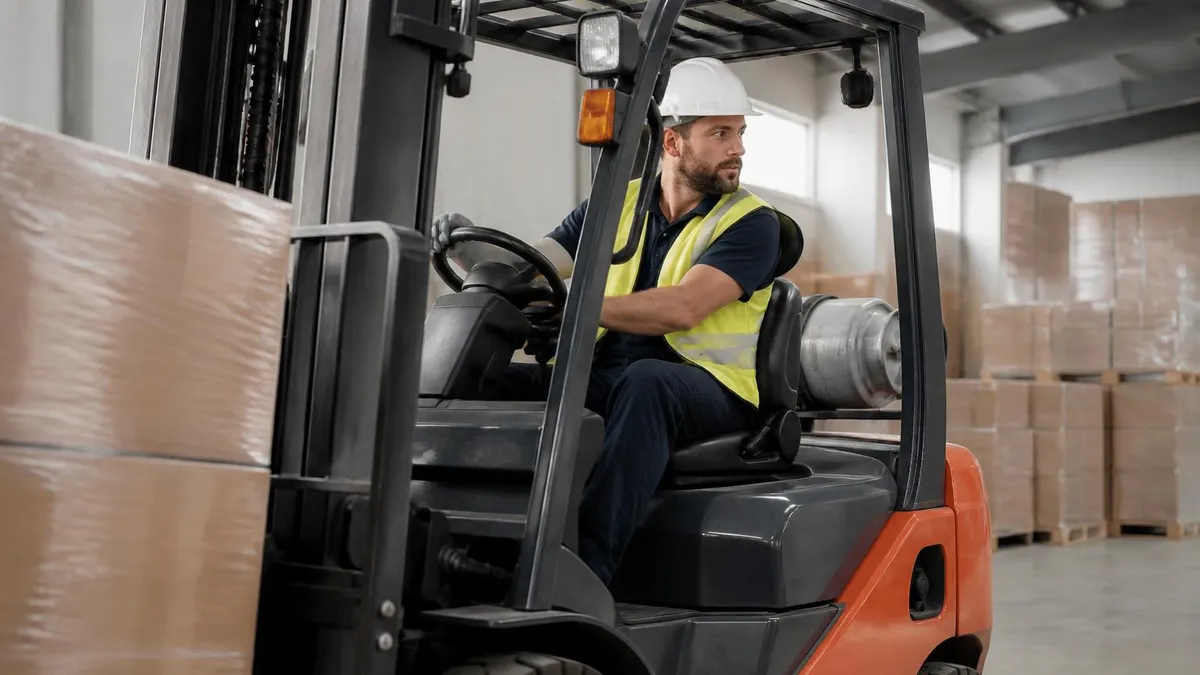
Mast of Forklift: Complete Guide to Forklift Parts for TLILIC0003 Operators in Australia
Free Forklift Practice Test 2026 - Forklift Exam Questions
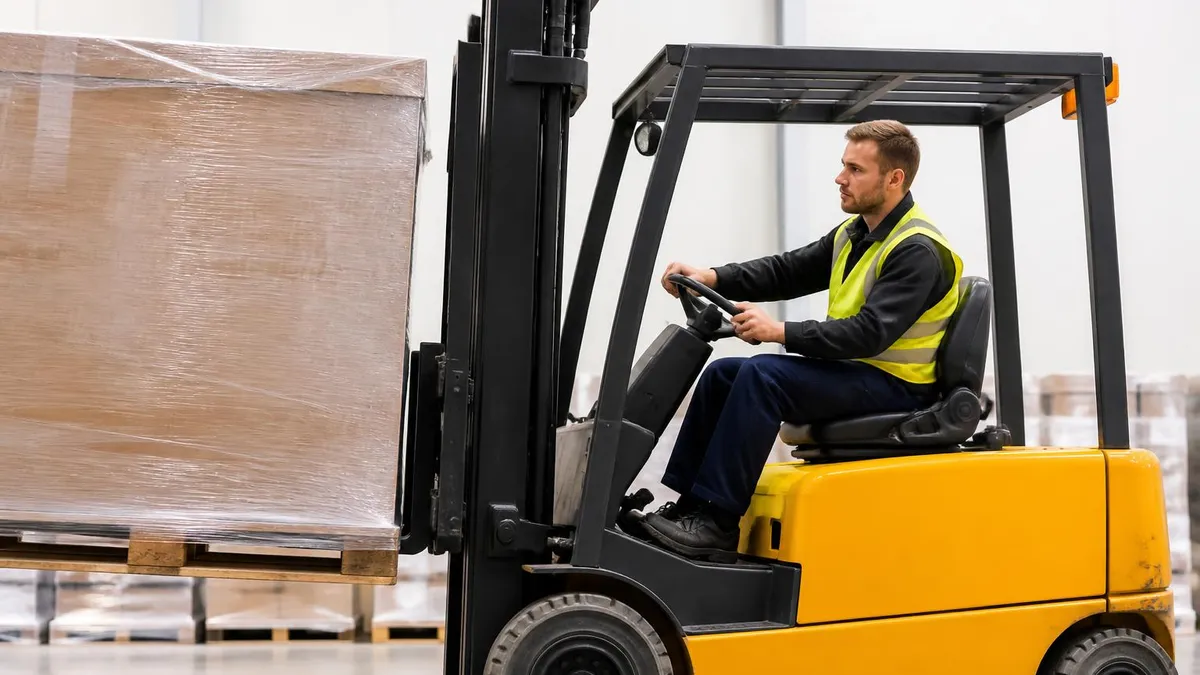
Forklift Licence Australia: How to Get Certified (TLILIC0003)
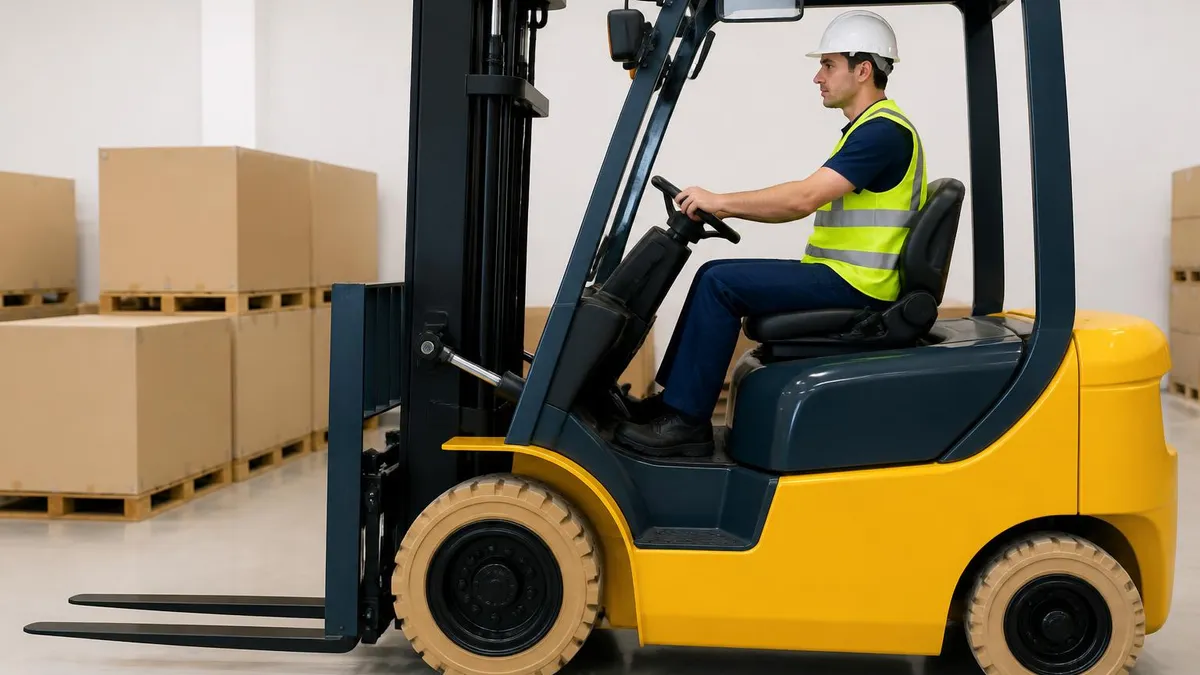
Forklift Rotators and Attachments: Complete TLILIC0003 Guide for Australian Operators

Forklift Licence Australia Practice Test PDF (Free Printable 2026)
About the Author

Certified Crane Operator & Skilled Trades Exam Specialist
Ferris State UniversityRobert Martinez is a Journeyman Ironworker, NCCCO-certified crane operator, and forklift trainer with a Bachelor of Science in Construction Technology from Ferris State University. He has 21 years of ironworking, rigging, and heavy equipment operation experience across high-rise and industrial construction sites. Robert prepares candidates for crane operator, rigger, forklift, and skilled trades certification examinations.