
Forklift Operator Salary Australia 2026 October: Complete Pay Guide for TLILIC0003 Licence Holders
📚 Forklift operator salary in Australia 2026 October: hourly rates, annual pay by state, experience tiers, overtime, allowances and how to boost your earnings.
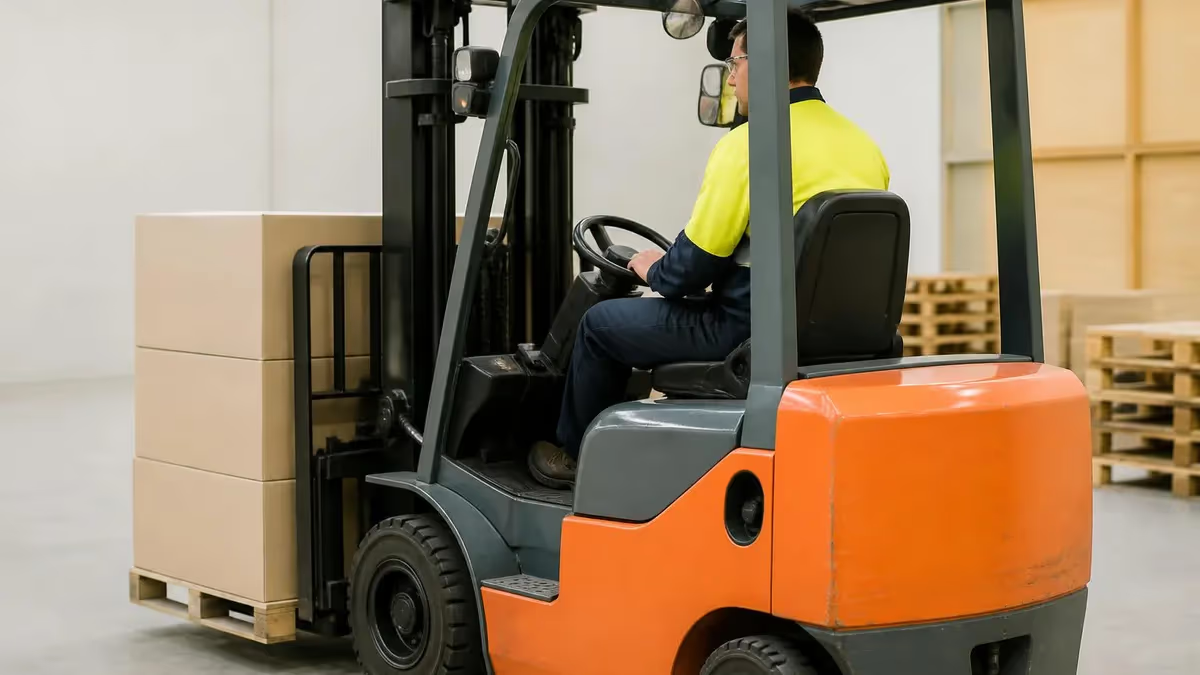
The forklift operator salary in Australia has climbed steadily through 2025 and into 2026, driven by warehouse expansion, e-commerce fulfilment growth and a chronic shortage of TLILIC0003-licensed workers across the eastern seaboard. The national median sits between $58,000 and $72,000 per year for full-time operators, with hourly casual rates ranging from $32 to $48 depending on shift loading, industry and location. This guide breaks down every figure you need to negotiate confidently or plan a career move.
Understanding what drives forklift operator pay is just as important as knowing the headline number. Two operators with identical TLILIC0003 high-risk work licences can earn $20,000 a year apart based on factors like industry sector, attachment certifications, shift patterns and whether they work for a labour-hire agency or directly for a host employer. Cold storage operators in Melbourne, container terminal operators in Port Botany and mine-site forklift drivers in the Pilbara all sit at vastly different points on the pay scale.
This article uses real 2026 data from SEEK, Indeed, the Fair Work Commission Modern Awards, Hays Salary Guide and industry surveys conducted across the Storage Services Award and Manufacturing Award. We cover base rates, penalty rates, allowances, overtime structures and the hidden bonuses that experienced operators negotiate into their packages. We also explain why understanding the equipment you operate — including the mast of forklift and load-handling components — directly influences your earning potential.
Whether you have just passed your TLILIC0003 assessment or you have ten years on a counterbalance, this guide will help you benchmark your current package against the market. We answer the questions operators ask most: how much does a forklift driver make per hour, what is the average annual salary by state, which industries pay the most, and what skills push you into the top quartile of earners.
You will also find practical advice on negotiating pay rises, choosing between casual and permanent positions, and the legal minimum rates you cannot be paid below. The Modern Awards system sets a floor, but many operators do not realise how far above that floor they should reasonably sit based on their experience and the complexity of the equipment they operate.
Finally, we look at the career trajectory. A forklift licence is rarely the final destination — it is often the gateway to warehouse supervisor roles, logistics coordinator positions, or further high-risk work qualifications like the LF, LO or CV licences. We map out the typical salary progression so you can plan five years ahead, not just five weeks ahead.
By the end of this guide you will know exactly what your TLILIC0003 ticket is worth in the 2026 Australian labour market, which industries and locations pay the strongest premiums, and the specific steps you can take in the next 90 days to lift your earnings by $5,000 to $15,000 per year.
Free Forklift Licence Study Tools
Interactive Forklift Licence resources on PracticeTestGeeks, free to start:
- Forklift Licence practice test — 300+ questions with instant scoring and answer explanations
- Forklift Licence flashcards — review key terms and concepts card by card
- Forklift Licence study guide — topic-by-topic overview of what the exam covers
- Forklift Licence cheat sheet — one-page printable summary for last-minute review
Forklift Operator Salary Australia by the Numbers
Forklift Operator Salary by Experience Level
Fresh TLILIC0003 holders typically earn $52,000–$58,000 annually or $28–$32 per hour casual. Most start through labour-hire agencies on short rotations before securing permanent roles. Expect minimal allowances and basic counterbalance duties only.
Operators with steady employment history and proven reliability move into the $60,000–$72,000 band. Hourly casual rates reach $34–$40. Many earn extra by adding reach truck, order picker or VNA endorsements through their employer's RTO partnerships.
Senior operators command $72,000–$82,000 in standard warehouse settings and significantly more in cold storage, hazardous goods or container handling. Allowances for leading-hand duties, training new staff and operating multiple machine classes add $4,000–$8,000 annually.
Specialists running reach trucks above 11 metres, container handlers, or operators in mining and ports regularly clear $85,000–$110,000 with overtime. Lead-hand and 2IC roles add supervisory loadings of 12–18% above the operator base rate.
Forklift operators who progress into warehouse supervisor or shift coordinator roles typically jump to $85,000–$105,000 salaried packages. Many retain their high-risk work licence to cover staff absences, which keeps their operational skills sharp.
The legal minimum forklift operator salary in Australia is set by the relevant Modern Award, with the Storage Services and Wholesale Award 2020 and the Manufacturing and Associated Industries Award 2020 covering the majority of TLILIC0003 holders. As of the July 2025 Annual Wage Review, the Storage Services Grade 3 rate — which applies to most licensed forklift operators — sits at $32.06 per hour for full-time and part-time employees, with casual loading of 25% pushing the casual rate to $40.08 per hour minimum.
Penalty rates change the picture significantly. Saturday work attracts 150% of the base rate, Sunday work pays 200%, and public holidays pay 250% under the Storage Services Award. An operator working a Sunday afternoon shift legally cannot be paid less than $64.12 per hour, and on a public holiday the floor jumps to $80.15. This is the legal minimum — many operators in well-paying warehouses earn 15–30% above these award rates as standard.
Shift loadings stack on top of base rates. Afternoon shift (starting between noon and 6pm) attracts a 15% loading. Permanent night shift loads 30%, while non-rotating night shift adds 25%. An operator on a 38-hour permanent night roster at award minimum earns roughly $82,300 per year before overtime — significantly higher than the day-shift equivalent of $63,300. This is why many experienced operators specifically target afternoon and night roles.
Overtime is calculated at 150% for the first three hours beyond ordinary hours and 200% thereafter. A typical pattern for warehouse operators is four 10-hour days, which generates eight hours of overtime per week. At standard rates, this adds approximately $10,400 per year to base earnings. Operators in distribution centres during peak season (October to January) often double their normal overtime hours.
Allowances are where many operators leave money on the table. The Storage Services Award includes a meal allowance ($16.86 when working two hours overtime), first-aid allowance ($16.06 per week if qualified), leading-hand allowance ($25.71 to $44.78 per week depending on staff supervised) and a cold-work allowance for operators in temperatures below 0°C. Understanding which allowances you are entitled to can add $1,500–$3,500 annually.
Beyond awards, many large employers operate under Enterprise Bargaining Agreements (EBAs) that pay 10–35% above award rates. Coles, Woolworths, Toll, Linfox, DHL and Australia Post all have EBAs that lift forklift operator base rates well above the legal floor. An EBA-covered operator at a major distribution centre commonly earns $38–$45 per hour base, with significantly enhanced penalty structures.
Operators who work across different equipment types — from counterbalance to reach trucks, order pickers and walk-behind pallet jacks — increasingly negotiate skill-based pay structures. Knowing the differences between machine classes, including multi directional forklift trucks and conventional models, makes you measurably more valuable to logistics employers running mixed fleets.
TLILIC0003 Practice Test Questions
Prepare for the Forklift Licence Australia - TLILIC0003 exam with our free practice test modules. Each quiz covers key topics to help you pass on your first try.
TLILIC0003 Forklift Licence Australia Atta...
TLILIC0003 Exam Questions covering Forklift Licence Australia Attachments and Modifications. Master TLILIC0003 Test concepts for certification prep.
TLILIC0003 Forklift Licence Australia Batt...
Free TLILIC0003 Practice Test featuring Forklift Licence Australia Battery and Fuel Safety. Improve your TLILIC0003 Exam score with mock test prep.
TLILIC0003 Forklift Licence Australia Emer...
TLILIC0003 Mock Exam on Forklift Licence Australia Emergency Procedures. TLILIC0003 Study Guide questions to pass on your first try.
TLILIC0003 Forklift Licence Australia Fork...
TLILIC0003 Test Prep for Forklift Licence Australia Forklift Pre-Operational Checks. Practice TLILIC0003 Quiz questions and boost your score.
TLILIC0003 Forklift Licence Australia Haza...
TLILIC0003 Questions and Answers on Forklift Licence Australia Hazard Identification. Free TLILIC0003 practice for exam readiness.
TLILIC0003 Forklift Licence Australia Load...
TLILIC0003 Mock Test covering Forklift Licence Australia Load Centre Calculations. Online TLILIC0003 Test practice with instant feedback.
TLILIC0003 Forklift Licence Australia Load...
Free TLILIC0003 Quiz on Forklift Licence Australia Load Handling and Capacity. TLILIC0003 Exam prep questions with detailed explanations.
TLILIC0003 Forklift Licence Australia Oper...
TLILIC0003 Practice Questions for Forklift Licence Australia Operating in Different Environments. Build confidence for your TLILIC0003 certification exam.
TLILIC0003 Forklift Licence Australia Oper...
TLILIC0003 Test Online for Forklift Licence Australia Operating Techniques. Free practice with instant results and feedback.
TLILIC0003 Forklift Licence Australia Pede...
TLILIC0003 Study Material on Forklift Licence Australia Pedestrian Safety. Prepare effectively with real exam-style questions.
Forklift Operator Salary by Australian State
New South Wales and Victoria account for over 55% of forklift operator jobs in Australia. The Sydney median sits at $67,200 annually, lifted by Western Sydney's massive distribution belt around Eastern Creek, Erskine Park and Prestons. Container terminal operators at Port Botany regularly earn $90,000+ with overtime, while suburban 3PL warehouses pay closer to $62,000–$68,000.
Melbourne's median lands at $66,400, with the Dandenong South, Truganina and Laverton North precincts paying the strongest rates due to intense competition for experienced operators. Cold storage facilities servicing the supermarket networks pay a $2–$4 per hour premium, and night-shift permanent positions in the Western suburbs frequently exceed $82,000 annually.
Casual vs Permanent Forklift Operator Roles: Which Pays More?
- +Casual rates include 25% loading on top of base — often $40+ per hour from day one
- +Flexibility to accept higher-paying short-term contracts during peak season
- +Easier entry point for new TLILIC0003 holders building employment history
- +Labour-hire agencies often pay weekly and offer immediate starts
- +Opportunity to test multiple workplaces before committing to one employer
- +Overtime opportunities frequently higher in casual warehouse roles during peaks
- −No paid leave, sick days, public holidays or superannuation on leave loading
- −Income variability makes mortgage and rental applications harder
- −Permanent roles include annual leave loading of 17.5% — worth $2,000+ annually
- −Permanent EBA workers often access bonuses, share schemes and long-service leave
- −Casual workers typically last hired and first cut when demand softens
- −Skill development and formal training pathways are stronger in permanent roles
Pros and Cons at a Glance
| Pros | Cons |
|---|---|
| Flexibility to accept higher-paying short-term contracts during peak season | No paid leave, sick days, public holidays or superannuation on leave loading |
| Labour-hire agencies often pay weekly and offer immediate starts | Income variability makes mortgage and rental applications harder |
| Opportunity to test multiple workplaces before committing to one employer | Permanent EBA workers often access bonuses, share schemes and long-service leave |
| Overtime opportunities frequently higher in casual warehouse roles during peaks | Casual workers typically last hired and first cut when demand softens |
How to Boost Your Forklift Operator Salary
- ✓Add LF (non-slewing crane) and LO (order picking) tickets to expand your high-risk work portfolio
- ✓Pursue dangerous goods handling certification — IATA, ADG Code and segregation training
- ✓Complete a Certificate III in Warehousing Operations to qualify for higher award classifications
- ✓Target permanent night shift roles to capture the 30% shift loading every week
- ✓Move to EBA-covered employers like Coles, Woolworths, Toll, Linfox or Australia Post
- ✓Negotiate a leading-hand allowance once you informally train or supervise other operators
- ✓Apply for cold-storage roles where temperature allowances add $1.50–$3 per hour worked
- ✓Consider FIFO mining roles in WA's Pilbara region for $40+ per hour plus camp and flights
- ✓Track your hours and ensure overtime is calculated at 150% / 200% as legally required
- ✓Renew your TLILIC0003 every five years on time — lapsed licences disqualify you from premium roles
Your TLILIC0003 ticket is the floor — not the ceiling.
Adding a single complementary high-risk work licence (LF or LO) increases the average operator salary by $6,800 per year in 2026 data. Two endorsements plus dangerous goods training pushes the average premium to $11,200 annually. Most TLILIC0003 holders never add a second ticket — meaning a one-week course can deliver a return that compounds across your entire career.
Not all forklift operator jobs are paid equally — and the gap between the lowest and highest paying industries is wider than most candidates realise. Understanding where your TLILIC0003 ticket commands the highest premium can reshape your career trajectory. In 2026, the five top-paying industries for forklift operators in Australia are mining and resources, container terminals and stevedoring, cold storage and frozen logistics, hazardous goods and chemicals, and steel and heavy manufacturing.
Mining and resources sit firmly at the top. FIFO forklift operators in the Pilbara iron ore operations and Western Australian gold and nickel projects earn $110,000 to $145,000 packaged, typically on 2/1 or 8/6 rosters. The pay reflects long shifts, remote conditions and the requirement to operate forklifts alongside complex mobile plant. Most roles require a mining induction (Standard 11 in Queensland, or site-specific in WA) plus a drug and alcohol screen.
Container terminals and stevedoring follow closely. Stevedores at DP World, Patrick Terminals and Hutchison Ports operating empty container handlers and reach stackers — both of which require the TLILIC0003 plus additional VOC sign-offs — earn base packages of $95,000 to $125,000 under enterprise agreements. The Maritime Union of Australia has historically negotiated some of the strongest wage structures in the Australian logistics sector.
Cold storage and frozen logistics consistently pay 10–18% above general warehouse rates. Operators at Americold, NewCold, Lineage Logistics and the major supermarket cold DCs earn $72,000 to $86,000 in standard counterbalance roles. The premium reflects the physical demands of working at -25°C, the higher concentration required when operating in fogged-up freezer zones, and the additional PPE training involved.
Hazardous goods and chemicals operators at sites handling flammable liquids, corrosives or explosives earn $75,000 to $95,000 due to the additional certifications required — including dangerous goods handling, IBC management and segregation training. Major chemical distributors, paint manufacturers and oil and gas terminals consistently advertise above-market rates because the talent pool is thinner.
Steel, scrap metal and heavy manufacturing roles complete the top five. Operators handling steel coils, structural beams and heavy castings with specialised attachments earn $70,000 to $88,000. These roles often involve coil rams, slab clamps and crane forks — attachments that require additional VOC sign-off and meaningfully change the forklift's capacity. Understanding how attachments affect plated capacity and stability is essential, and roles often pay a skill premium because of it.
At the other end of the scale, retail back-of-house roles in supermarkets, Bunnings and small-format DCs typically pay closer to the award floor of $32–$36 per hour. These positions are easier to secure for new TLILIC0003 holders but should be viewed as a stepping stone rather than a long-term destination if you are focused on maximising your earnings.
Many forklift operators are incorrectly classified at Grade 2 or below under the Storage Services Award, despite holding a TLILIC0003 and performing duties that legally place them at Grade 3 or higher. A single misclassification can cost you $2.50–$4.50 per hour — equivalent to $4,900–$8,900 per year on a full-time roster. Check your payslip classification against the Fair Work Modern Award and request a review in writing if it appears wrong.
A TLILIC0003 forklift licence is far more than a permit to drive a counterbalance — it is the entry point to a career structure that can take you from a $55,000 entry-level operator to a $140,000 logistics manager within ten years. Mapping the progression honestly helps you make better decisions about which roles to accept, which skills to develop, and when to push for a promotion versus when to change employers.
The most common first step beyond pure operating is the leading-hand role. Leading hands continue operating forklifts but also oversee a small team of operators, manage shift handovers and assist with daily planning. Pay typically lifts by $4,000–$8,000 annually through formal leading-hand allowances and informal recognition. Most leading-hand promotions happen between years three and five, and they require demonstrated reliability rather than additional formal qualifications.
The next step is shift supervisor or shift coordinator. These salaried roles range from $78,000 to $98,000 and involve managing 10–25 staff, coordinating with transport, handling minor disciplinary matters and reporting KPIs to warehouse managers. Many supervisors retain their TLILIC0003 to cover shortages and stay close to operations. A Certificate IV in Warehousing Operations or Frontline Management substantially helps secure these positions.
Warehouse manager and DC manager positions sit at $105,000 to $145,000 base, with bonuses pushing total packages higher at major 3PLs and supermarket chains. These roles rarely involve hands-on operating but require deep understanding of warehouse design, WMS systems, labour planning and compliance. A diploma-level qualification or several years of supervisory experience is typically expected.
An alternative pathway is the technical specialist route. Forklift operators with strong mechanical aptitude move into roles like materials handling equipment (MHE) technician, fleet coordinator or WMS super-user. These pay $80,000 to $115,000 and offer better work-life balance than supervisory positions. Familiarity with the equipment you operate every day — including a working understanding of the forklift clearance height and load chart fundamentals — is the foundation that makes this path possible.
Trainer and assessor roles offer another avenue. Experienced operators who hold a TAE40122 Certificate IV in Training and Assessment can work for RTOs delivering TLILIC0003 courses. Pay ranges from $75,000 to $95,000, with senior assessors earning more. Many trainers work part-time alongside continued operational work, blending the two income streams.
Finally, the highest-earning operators often add complementary licences and become multi-skilled plant operators in construction, civil and resources. Adding the CN (non-slewing crane), CB (slewing crane) or DG (dogging) tickets transforms a $65,000 forklift operator into a $95,000–$130,000 plant operator in major projects. Each additional ticket compounds your earning power over the rest of your career.
If your goal over the next 90 days is to lift your forklift operator salary, focus on actions that produce measurable results rather than vague self-improvement. Start by auditing your current package against the figures in this guide. Print your payslip, identify your award classification, base hourly rate, shift loading, overtime accumulation and any allowances. Compare each line against the Storage Services Award and the typical EBA rates for similar workplaces in your area. If you find gaps, you have evidence to negotiate.
Next, document your achievements over the past 12 months. Most operators undersell themselves because they do not track metrics. Record your pick rates, accuracy percentages, near-miss reporting, mentoring of new staff and any time you have stepped up to cover supervisory tasks. These numbers form the basis of a credible pay rise conversation. Ask for an annual review meeting in writing if your employer does not run them automatically.
Identify the single highest-use qualification you could add this year. For most operators that is the LO (order picker) or LF (non-slewing crane) ticket, both of which take less than a week and cost $600–$1,200. Some employers will fund these courses if you commit to staying 12 months. Even self-funded, the typical return is $5,000–$8,000 in your first year after completion.
If your current employer cannot match the market, prepare to move. Update your resume with quantified achievements, list every machine type you have operated, and apply through both direct employer channels and reputable agencies. Aim for three live conversations at any one time so you maintain negotiating use. The biggest single-day pay rise most operators ever receive is the day they start with a new employer.
Build relationships with two or three high-quality recruitment agencies that specialise in industrial and logistics roles. Recruiters at Hays, Programmed, WorkPac and Synaco see live salary data every week and can benchmark your package against current offers in your suburb. A 20-minute conversation with a recruiter is one of the most efficient ways to discover what your skills are actually worth right now.
Finally, think long-term. Many operators stay in identical roles for a decade purely out of habit. Set a three-year and five-year salary target, then reverse-engineer the certifications, role changes and employer moves required to hit them. A forklift licence is one of the most portable, in-demand qualifications in the Australian labour market — make it work for you rather than letting it sit static. The operators who plan deliberately consistently earn $15,000–$30,000 more than peers who drift.
Above all, remember that safe, reliable, professional operating is the foundation of every pay rise conversation. Employers reward operators who never have an incident, complete pre-start checks properly, maintain certificate currency and handle attachments with the right capacity reductions applied. Strong technical fundamentals are what make every other strategy in this article actually work in practice.
Sample Forklift Licence Practice Questions
Try these questions from our free Forklift Licence practice tests. The correct answer and an explanation follow each question.
When must a forklift operator record an entry in the logbook?
- A. Only when a serious fault is found during pre-operational checks
- B. At the start and end of each shift, including any faults or damage found
- C. Only when instructed to do so by a supervisor
- D. Once per week, summarising all operations performed
Answer: B. At the start and end of each shift, including any faults or damage found
Logbook entries must be made at the start and end of each shift, recording pre-operational check results and any faults, damage, or incidents that occurred during operation.
Under the Work Health and Safety (WHS) Act, what duty does a forklift operator have regarding hazards in the workplace?
- A. Report hazards only if they are in the operator's immediate work area
- B. Take reasonable care to identify hazards and report them to the person conducting the business or undertaking (PCBU)
- C. Ignore minor hazards and only report serious injuries
- D. Only follow instructions from supervisors, with no independent duty to report
Answer: B. Take reasonable care to identify hazards and report them to the person conducting the business or undertaking (PCBU)
Under the WHS Act, workers have a duty to take reasonable care for their own and others' health and safety, which includes identifying and reporting hazards to the PCBU.
On a counterbalanced forklift, where is the fulcrum point located?
- A. At the centre of the rear axle
- B. At the tips of the forks
- C. At the front axle between the two drive wheels
- D. At the base of the mast
Answer: C. At the front axle between the two drive wheels
The fulcrum point is at the front axle (between the two drive wheels), and it is the pivot point over which the forklift can tip forward if the combined centre of gravity moves in front of it.
What penalties apply for non-compliance with WHS Legislation regulations in Australia?
- A. No penalties
- B. Significant fines (up to millions of AUD for corporations) and potential imprisonment for serious offences
- C. A verbal warning only
- D. A small administrative fee
Answer: B. Significant fines (up to millions of AUD for corporations) and potential imprisonment for serious offences
Australian WHS penalties are severe, with Category 1 offences carrying fines up to AUD 3 million and potential imprisonment.
TLILIC0003 Questions and Answers
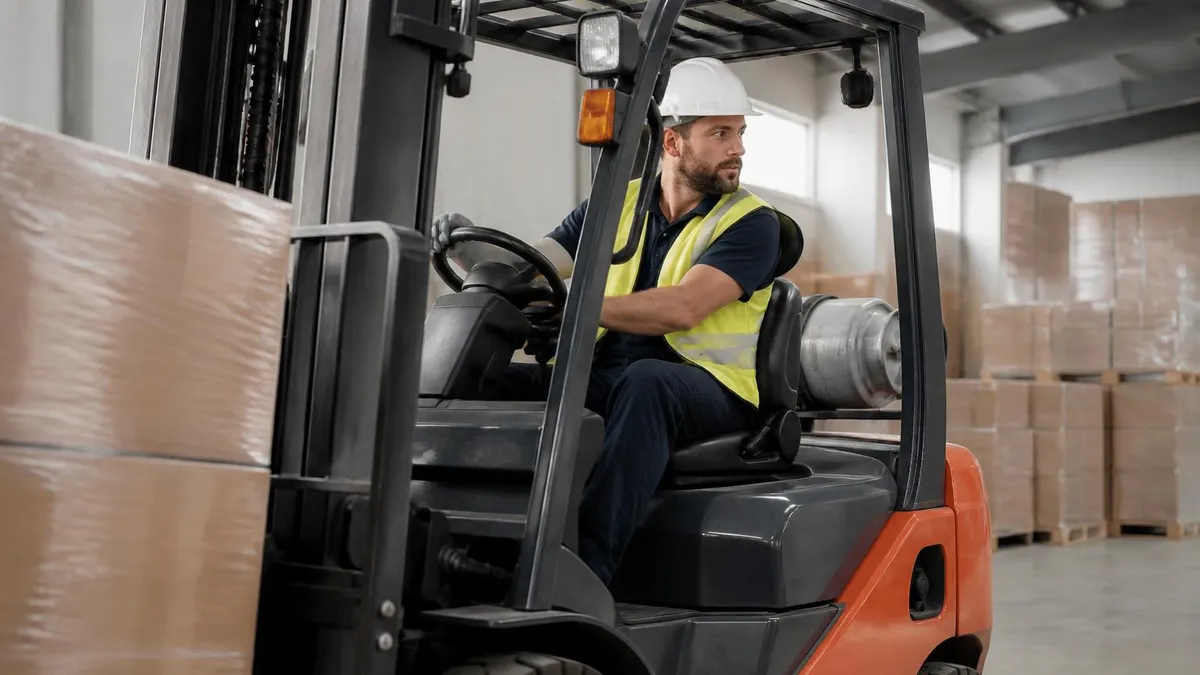
Mast of Forklift: Complete Guide to Forklift Parts for TLILIC0003 Operators in Australia
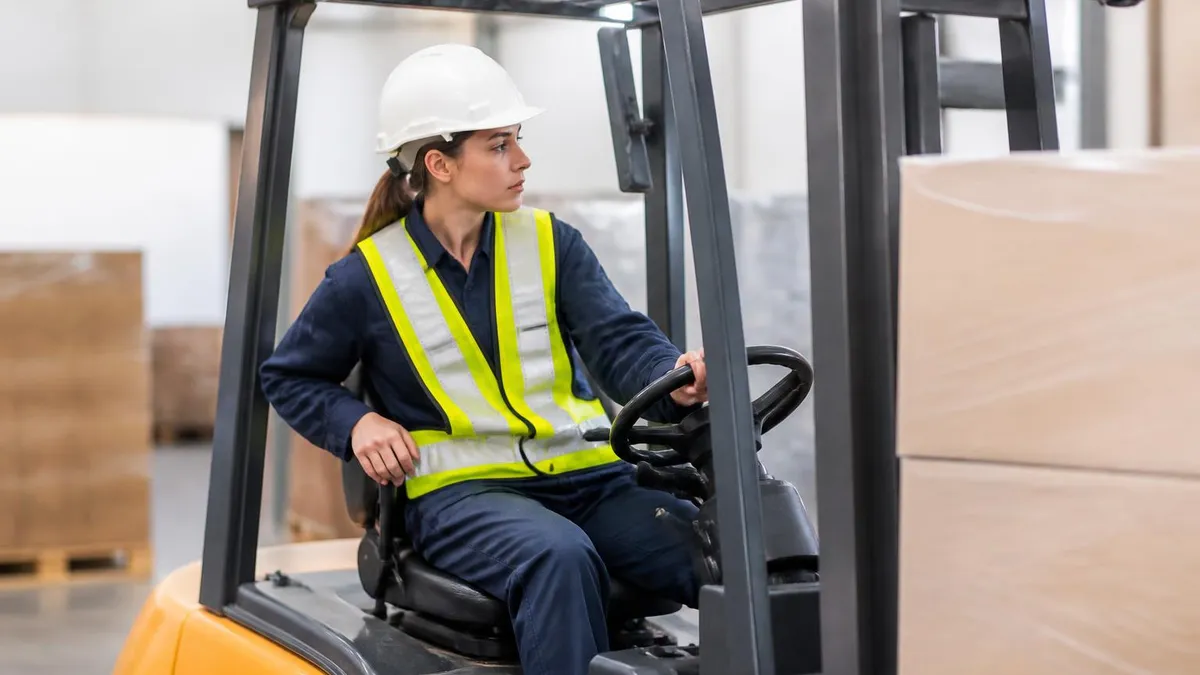
Multi Directional Forklift Trucks: Complete Guide to Forklift Types and Parts for TLILIC0003 Operators in Australia
Free Forklift Practice Test 2026 - Forklift Exam Questions
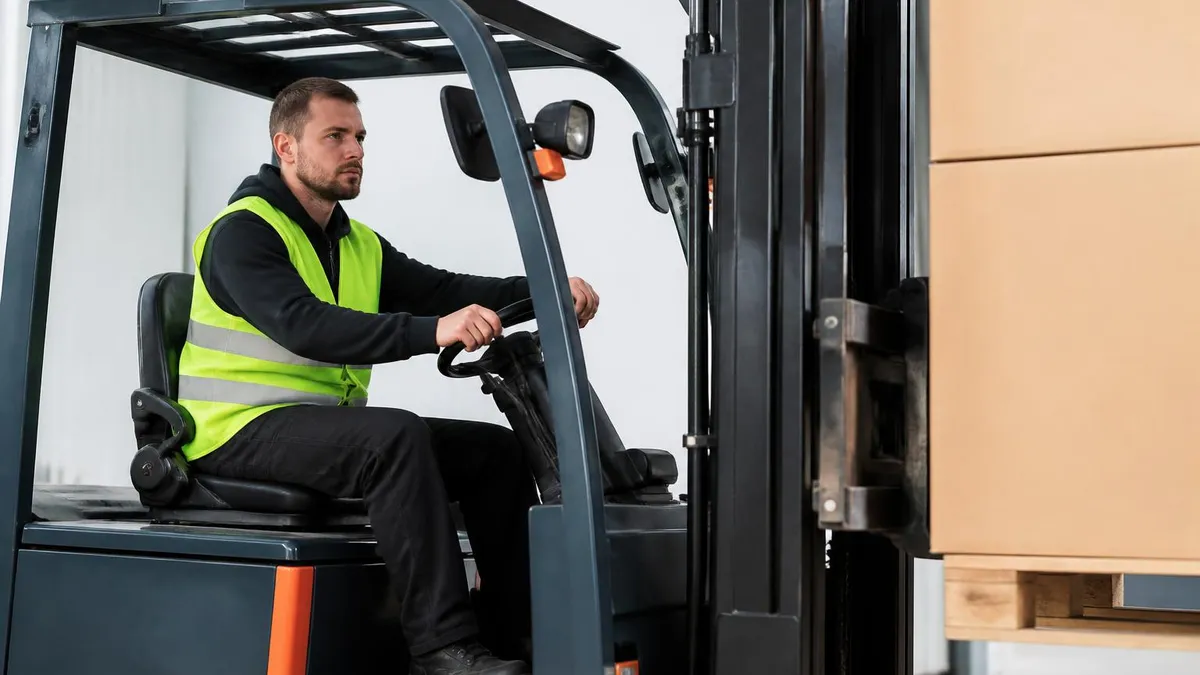
Forklift Clearance Height: Complete Guide to Forklift Specifications for TLILIC0003 Operators in Australia
Forklift Licence Near Me: How to Find Local TLILIC0003 Training Providers in Australia
About the Author

Certified Crane Operator & Skilled Trades Exam Specialist
Ferris State UniversityRobert Martinez is a Journeyman Ironworker, NCCCO-certified crane operator, and forklift trainer with a Bachelor of Science in Construction Technology from Ferris State University. He has 21 years of ironworking, rigging, and heavy equipment operation experience across high-rise and industrial construction sites. Robert prepares candidates for crane operator, rigger, forklift, and skilled trades certification examinations.