
Forklift Clearance Height: Complete Guide to Forklift Specifications for TLILIC0003 Operators in Australia
🆕 Forklift clearance height explained for TLILIC0003 operators. Learn mast dimensions, load centres, capacities and Australian workplace requirements.
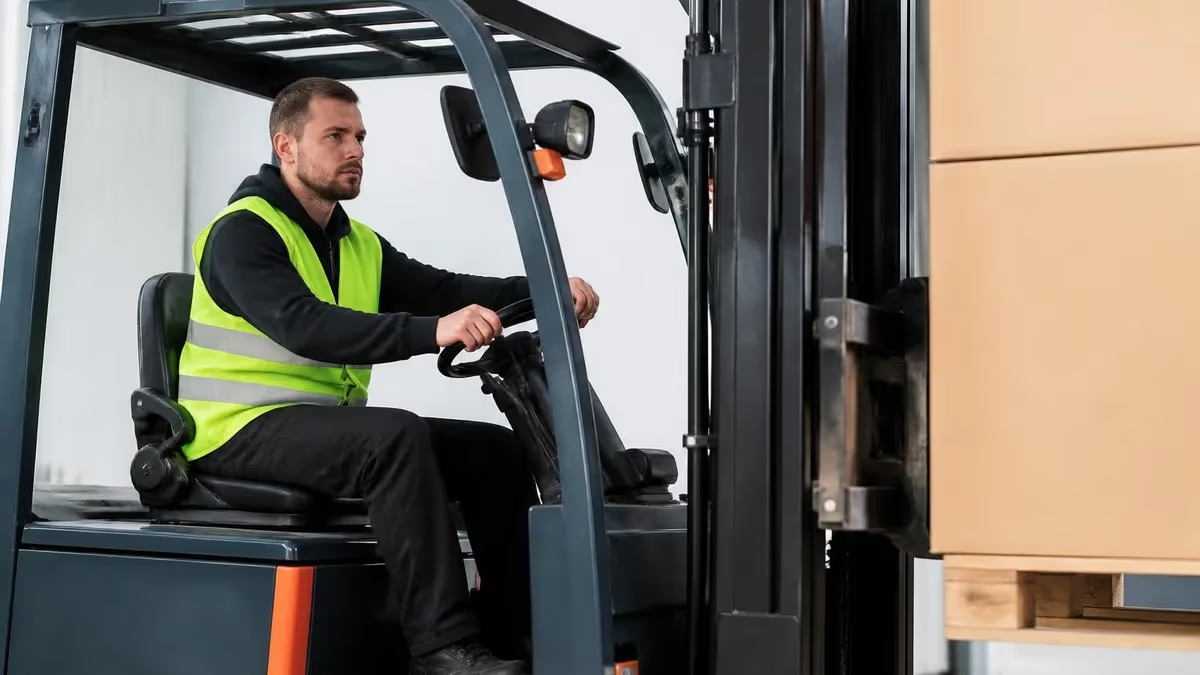
Understanding forklift clearance height is one of the most critical skills any Australian operator must master before stepping onto a worksite under TLILIC0003. Clearance height refers to the maximum vertical space a forklift needs to travel safely beneath doorways, mezzanine floors, overhead piping, sprinkler systems and warehouse roof trusses. Get this measurement wrong by even fifty millimetres and you risk shearing mast components, tearing electrical conduit from ceilings or causing the entire load to topple onto pedestrians below in busy distribution environments.
The Safe Work Australia general guide for industrial lift trucks treats clearance dimensions as a non-negotiable pre-start check, not a suggestion. Operators are expected to know their machine's collapsed mast height, extended mast height, overhead guard height and tilted-back travel height long before they engage the hydraulics. These four numbers determine which doorways you can enter, which racking aisles you can service and which mezzanine levels remain off-limits for your particular truck configuration on any given shift.
Most counterbalance forklifts sold in Australia sit between 2,070 mm and 2,300 mm at the overhead guard, but the figure that catches operators out is the collapsed mast height, which can range from 1,995 mm on a compact three-wheel electric to over 2,600 mm on a high-lift triplex unit. If your warehouse roller door clears only 2,100 mm, that triplex truck simply cannot enter the building with the mast in transport position. This single specification dictates your entire daily route through the facility.
Beyond the headline number, clearance interacts with load height, fork tilt angle and tyre compression under load. A pallet of stacked plasterboard adds another 1,200 mm above the fork heel, and tilting the mast back four degrees for safe travel lifts the load tip even higher. Experienced operators learn to visualise the highest point of their machine plus cargo as a single travelling envelope, constantly comparing that envelope against the next obstacle they intend to drive beneath during normal operations.
This guide unpacks every clearance-related specification you will encounter in the TLILIC0003 assessment and on the factory floor. We will work through mast dimensions, overhead guard requirements, aisle widths, turning radii, load centres and capacity data plates, then connect each measurement back to the practical decisions you make every shift. A solid grasp of forklift parts and their dimensions transforms paperwork into instinct, which is exactly what assessors want to see during your practical evaluation.
By the end of this guide you will be able to read any forklift data plate, interpret the manufacturer's specification sheet, calculate residual capacity at extended heights and identify the three or four clearance figures that matter most for your specific worksite. These same competencies form the backbone of every TLILIC0003 written examination and verbal questioning session conducted by registered training organisations across Australia from Perth to Brisbane.
Whether you are preparing for your first high-risk work licence or refreshing knowledge after years on the seat, treating clearance height as a foundation specification will make every other aspect of forklift operation safer and faster. The numbers themselves are not difficult, but the discipline of checking them, verifying them against site conditions and refusing to operate when they do not match is what separates competent operators from those who appear in incident reports each year.
Forklift Specifications by the Numbers
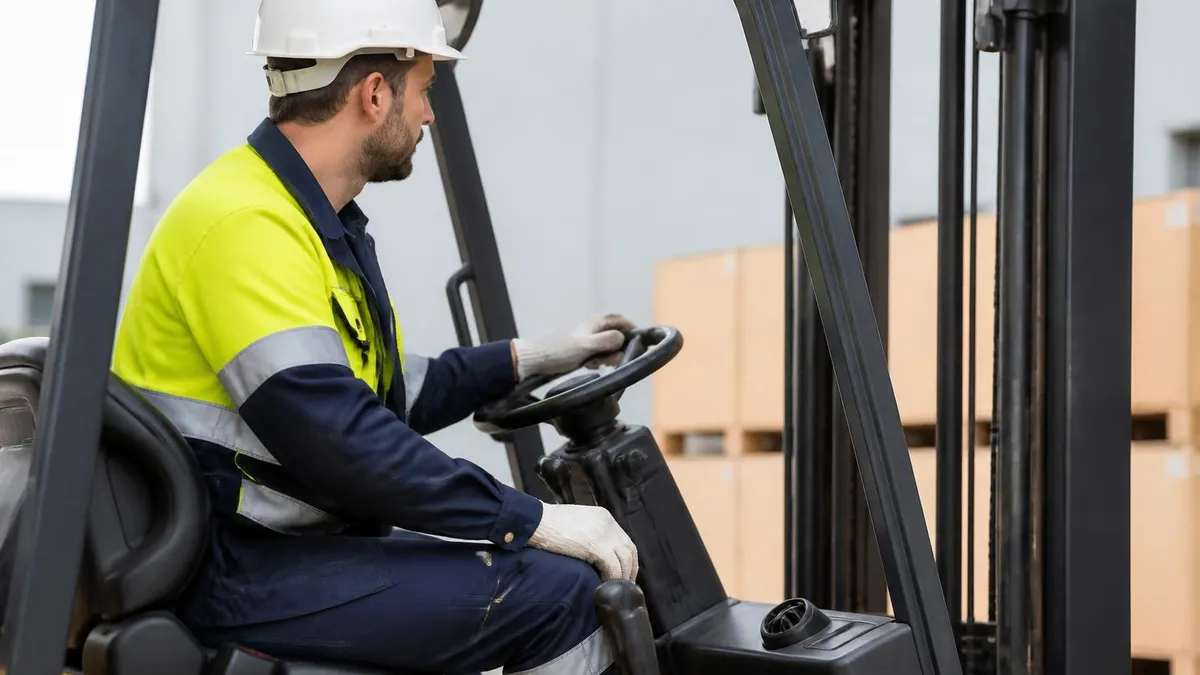
Mast and Overhead Guard Dimensions
The total height of the mast in its lowered position. This is the critical figure for entering buildings, passing under doorways and travelling between bays. Typically 1,995–2,600 mm depending on lift height.
Maximum height reached when forks are fully raised. Used to confirm clearance to ceiling beams, sprinklers and lighting. Always verify against the lowest overhead obstruction in the work area before lifting.
The protective canopy above the operator, typically 2,070–2,300 mm. Designed to FOPS standards to absorb falling loads. Never modify or remove, even temporarily, to fit beneath low doorways.
How far the forks rise before the inner mast begins extending. Critical in container work and low-ceiling areas where the outer mast cannot break the roof line during initial lift.
The forklift data plate, also called the capacity plate or compliance plate, is the single most important document attached to any industrial truck operating in Australia. Mounted within the operator's direct line of sight, usually on the dashboard or mast upright, this rectangular metal tag carries the specifications that legally govern what the machine can and cannot do. Under TLILIC0003 you are required to locate, read and interpret this plate during every pre-start inspection, no exceptions, even for trucks you operate daily.
The plate displays the truck's serial number, manufacturer, model designation, fuel type, unladen weight, rated capacity, load centre distance, maximum fork height and attachment information. The rated capacity figure, typically expressed in kilograms, applies only at the listed load centre and only with the standard fork carriage. Add a slip-on extension, a rotator or a paper roll clamp and the entire capacity equation changes, often dropping by twenty to thirty percent depending on attachment weight and offset.
Australian Standard AS 2359.2 requires that capacity plates remain legible throughout the life of the equipment. If you find a faded, painted-over or missing plate, the truck must be tagged out immediately and referred to a competent person for replacement before further use. Operating without a readable capacity plate breaches both state work health and safety regulations and the conditions of your high-risk work licence, exposing you personally to enforcement action by SafeWork inspectors during routine site audits.
Reading the plate goes beyond glancing at the headline capacity number. Look for the load centre, usually 500 mm or 600 mm in Australia, which represents the distance from the fork heel to the centre of gravity of a standard test load. Loads with a centre of gravity further forward than this reference point reduce the truck's safe lifting capacity dramatically. A 2,500 kg truck rated at 500 mm load centre may handle only 1,800 kg at a 700 mm load centre, a difference that determines whether a stack tips or stands.
The plate also lists residual capacity at various mast heights when fitted with attachments or operating at extended lift. This downrating reflects the physics of use: as the load rises, the truck's centre of gravity shifts upward and forward, reducing the counterbalance effect of the rear weights. Modern trucks display this information as a graph or table on the same plate, and the operator is expected to read across to the relevant lift height before committing to the lift, especially near rated maximum.
For operators working with specialised equipment, understanding how attachment weights interact with the plate becomes essential daily knowledge. Reviewing the principles outlined in our guide to forklift rotators and attachments alongside the original equipment plate will give you the complete picture. The plate is your final authority, the manufacturer's contract with the operator, and ignoring it is the most common single cause of forklift tipping incidents recorded across Australian workplaces each financial year by safety regulators.
Train yourself to photograph the data plate of every new truck you operate and save the image on your phone. This habit means that when supervisors ask whether a particular load can be lifted, you have immediate access to the actual numbers rather than relying on memory or guesswork. Assessors viewing this practice during a TLILIC0003 evaluation invariably mark it favourably, because it demonstrates the professional habits that separate licenced operators from casual users of equipment they barely understand.
TLILIC0003 Practice Test Questions
Prepare for the Forklift Licence Australia - TLILIC0003 exam with our free practice test modules. Each quiz covers key topics to help you pass on your first try.
TLILIC0003 Forklift Licence Australia Atta...
TLILIC0003 Exam Questions covering Forklift Licence Australia Attachments and Modifications. Master TLILIC0003 Test concepts for certification prep.
TLILIC0003 Forklift Licence Australia Batt...
Free TLILIC0003 Practice Test featuring Forklift Licence Australia Battery and Fuel Safety. Improve your TLILIC0003 Exam score with mock test prep.
TLILIC0003 Forklift Licence Australia Emer...
TLILIC0003 Mock Exam on Forklift Licence Australia Emergency Procedures. TLILIC0003 Study Guide questions to pass on your first try.
TLILIC0003 Forklift Licence Australia Fork...
TLILIC0003 Test Prep for Forklift Licence Australia Forklift Pre-Operational Checks. Practice TLILIC0003 Quiz questions and boost your score.
TLILIC0003 Forklift Licence Australia Haza...
TLILIC0003 Questions and Answers on Forklift Licence Australia Hazard Identification. Free TLILIC0003 practice for exam readiness.
TLILIC0003 Forklift Licence Australia Load...
TLILIC0003 Mock Test covering Forklift Licence Australia Load Centre Calculations. Online TLILIC0003 Test practice with instant feedback.
TLILIC0003 Forklift Licence Australia Load...
Free TLILIC0003 Quiz on Forklift Licence Australia Load Handling and Capacity. TLILIC0003 Exam prep questions with detailed explanations.
TLILIC0003 Forklift Licence Australia Oper...
TLILIC0003 Practice Questions for Forklift Licence Australia Operating in Different Environments. Build confidence for your TLILIC0003 certification exam.
TLILIC0003 Forklift Licence Australia Oper...
TLILIC0003 Test Online for Forklift Licence Australia Operating Techniques. Free practice with instant results and feedback.
TLILIC0003 Forklift Licence Australia Pede...
TLILIC0003 Study Material on Forklift Licence Australia Pedestrian Safety. Prepare effectively with real exam-style questions.
Load Centre and Capacity Calculations
The standard load centre in Australia is 500 millimetres, measured horizontally from the vertical face of the fork heel to the centre of gravity of a uniform cubic test load. This reference point is established under AS 2359 and represents a one-metre cube of evenly distributed weight resting on the forks. Every capacity rating on every Australian-supplied forklift assumes this benchmark unless a different load centre is specifically printed beside the rating figure.
Understanding why 500 mm matters takes a moment of thought. The forklift is essentially a class-two lever, with the front axle as the fulcrum, the load forward and the counterweight rearward. Moving the load's centre of gravity even fifty millimetres further from the fork heel dramatically increases the forward moment, requiring proportionally greater counterweight or reducing safe capacity. This is the fundamental physics every operator must internalise before the practical assessment.
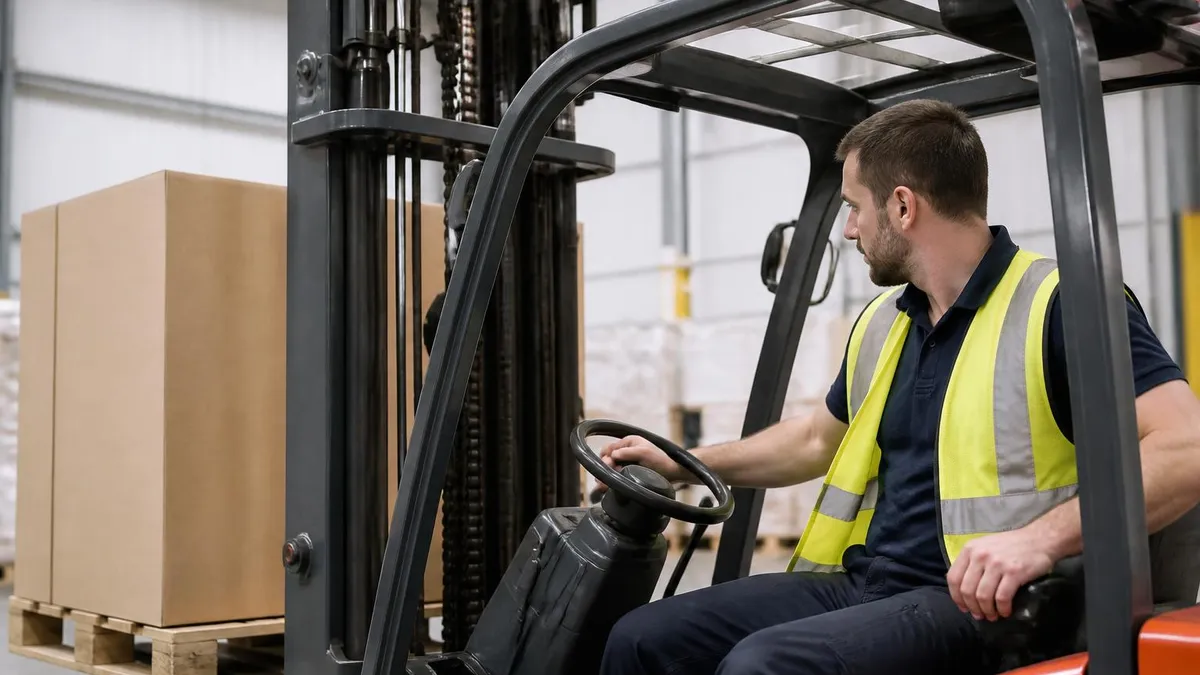
Higher Mast Configurations: Worth the Trade-off?
- +Increased vertical reach unlocks higher racking levels and storage density
- +Triplex masts provide free lift for container loading without breaking the roof
- +Greater throughput in narrow-aisle warehouses with vertical pick faces
- +Improved return on warehouse footprint by stacking higher rather than wider
- +Modern hydraulic systems handle extended lifts smoothly with minimal sway
- +Specialised mast designs improve operator forward visibility despite extra height
- −Collapsed mast height may exceed roller door and overhead obstruction limits
- −Residual capacity at full lift can drop by 30 to 40 percent of the rated figure
- −Higher centre of gravity reduces lateral stability during turns and ramp work
- −More maintenance points including extra hoses, chains and lift cylinders
- −Increased risk of mast contact with sprinklers, lighting and structural beams
- −Initial purchase cost is significantly higher than equivalent two-stage masts
Forklift Clearance Height Pre-Start Checklist
- ✓Locate and read the data plate, confirming rated capacity and load centre
- ✓Measure collapsed mast height against the lowest doorway on your route
- ✓Identify all overhead obstructions including sprinklers, lighting and beams
- ✓Verify overhead guard is intact and unmodified with all fasteners present
- ✓Check fork tilt range and confirm hydraulic mast operation through full travel
- ✓Confirm rear-view mirrors and warning lights are clean and functional
- ✓Inspect mast chains for stretch, kinking, lubrication and equal tension
- ✓Check residual capacity figures for any planned high-lift operations
- ✓Walk the intended travel path to identify temporary obstructions or stock
- ✓Sign the pre-start log and report any defect to your supervisor in writing
A 50 mm miscalculation is enough to cause catastrophic damage
Safe Work Australia incident data consistently identifies overhead contact as a leading source of forklift damage and serious injury. The remedy is simple yet often overlooked: measure once, record the figure, then verify it against every overhead obstruction before each lift. Operators who treat clearance as a guess rather than a measured specification are the ones who appear in incident reports filed every year nationally.
Aisle width and turning radius are clearance dimensions in the horizontal plane, every bit as critical as the vertical figures discussed earlier. The minimum aisle width required for a forklift to turn ninety degrees and place a load is calculated from the truck's outer turning radius, the load length, the operator clearance and a safety margin of typically 200 millimetres. Get this calculation wrong and pallets gouge racking uprights, columns get clipped and forks puncture stored stock without warning to anyone on the floor.
A standard 2.5 tonne counterbalance forklift typically requires between 3,400 and 3,800 millimetres of aisle width for stacking work with a 1,200 mm pallet. Reach trucks operating in narrow aisles need only 2,700 mm or less because they extend the forks into the racking rather than rotating the entire chassis. Articulated forklifts can work in aisles as tight as 1,800 mm, but they carry trade-offs in lift capacity and travel speed that may not suit every Australian warehouse environment or business model.
The outer turning radius listed on the specification sheet measures from the centre of the steering axle to the furthest outside corner of the truck during a full lock turn. This figure does not include the fork tips, which protrude further forward and trace a larger arc during rotation. Operators must mentally add at least 1,200 millimetres to the published radius to account for empty forks, and more again when carrying a load with significant overhang beyond the fork tips.
Tyre type and condition affect effective turning radius in ways the specification sheet cannot capture. Worn drive tyres reduce traction and increase tail swing, while solid pneumatic tyres handle differently from cushion tyres on smooth concrete. Wet floors, oil contamination and floor expansion joints all change the truck's behaviour during turns. A well-prepared operator factors these variables in before committing to a manoeuvre, slowing down significantly when surface conditions deviate from clean, dry, level concrete inside the building.
Stacking method also influences aisle width requirements. A ninety-degree stack, where the truck enters perpendicular to the rack face, demands the most space. An angled or fork-first stack reduces requirements but slows throughput considerably. Most Australian distribution centres design aisles around ninety-degree stacking for speed, then enforce strict speed limits and operator training to manage the increased manoeuvring complexity that comes with this layout choice across multiple shift patterns.
Operators servicing multiple sites should request the specification sheet for each truck model encountered and keep a personal reference card with the key dimensions. This habit pays off when supervisors ask whether a particular truck can work in a particular aisle, because you can answer with confidence rather than guesswork. It is also exactly the kind of preparation that TLILIC0003 assessors look for during oral questioning and practical observation across registered training organisations.
Finally, remember that pedestrian zones and exclusion areas often consume part of what looks like usable aisle space. A painted yellow walkway 600 mm wide along an aisle effectively reduces the manoeuvring corridor by that amount. Site rules may require complete pedestrian exclusion during forklift operation, but until that exclusion is verified by spotters or barriers, the practical aisle width is always the painted boundary, not the wall to wall measurement which appears on the warehouse plan.
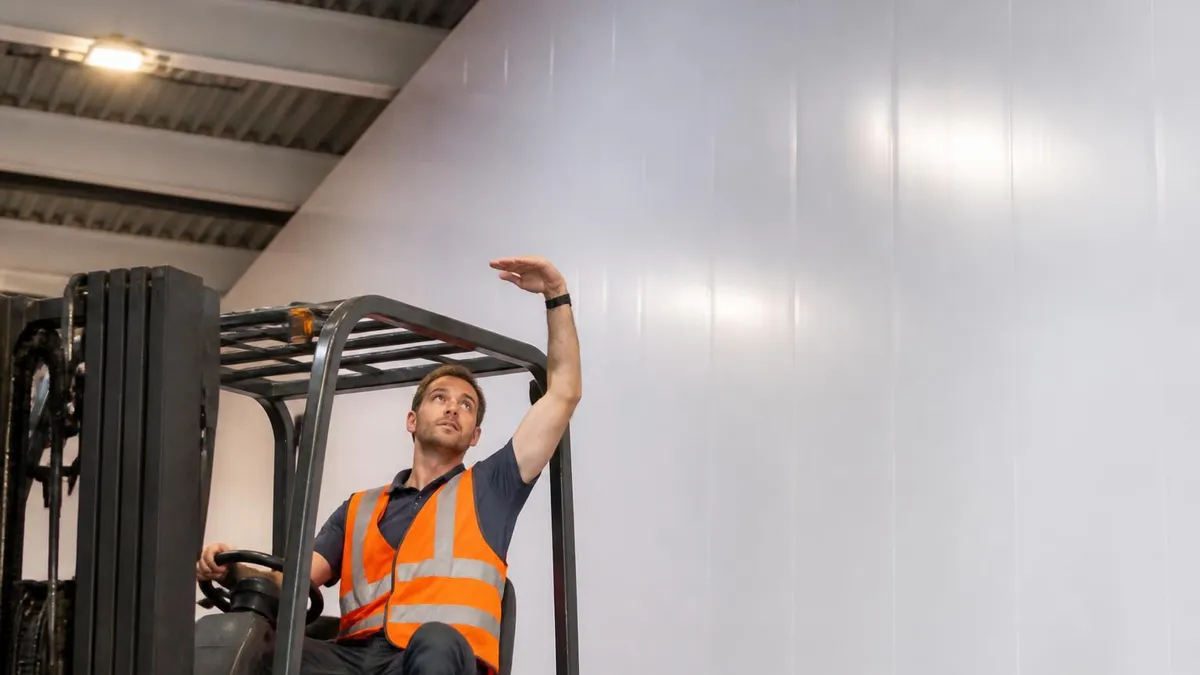
Never modify any forklift dimension, including cutting an overhead guard, fitting an unapproved attachment or extending forks, without written engineering certification. Modified machines must have updated capacity plates fitted by a competent person, and operating without that updated plate is a notifiable breach. Penalties under state WHS legislation can exceed $50,000 for individuals across multiple Australian jurisdictions.
Matching the right forklift to your worksite is a specification exercise before it becomes a purchasing or hiring decision. Start with the lowest overhead clearance in the building, subtract a 100 mm safety margin, and use that figure as the absolute maximum collapsed mast height your fleet can accommodate. Then work forward from the highest required lift, the heaviest typical load and the narrowest aisle that must be serviced during normal operations across every working area of the facility, including loading docks.
A common mistake is sizing the truck to the headline lift height without considering the building envelope. A triplex mast capable of reaching 6,500 mm sounds impressive until you discover that the collapsed mast at 2,400 mm cannot pass beneath your 2,100 mm roller doors. Specification matching must always work from the constraints inward, not from the ideal outward, and this discipline avoids the expensive mistake of buying or hiring equipment that cannot enter the building.
Container work introduces its own clearance puzzle. Standard shipping containers have an internal height of 2,393 millimetres, and high-cube containers offer 2,693 millimetres. To work inside either, you need a forklift with sufficient free lift to raise the forks without breaking the container roof, plus a collapsed mast height that clears the door opening of around 2,280 mm for standard containers. Specialised container-spec trucks combine these features with reduced overhead guard heights for tight applications.
Outdoor yard work allows for taller masts because overhead obstructions are typically lighting poles, gantries and crane rails rather than ceilings. However, outdoor operations introduce wind loading on raised loads, uneven ground and pneumatic tyre flex that increase the practical capacity reduction at height. A 4.5 tonne diesel counterbalance with a 6,000 mm two-stage mast is a typical configuration for Australian outdoor timber yards and steel suppliers across regional and metropolitan distribution sites.
Cold store and food-grade operations bring additional clearance considerations. Door curtains, air locks and refrigeration coils all reduce the effective working envelope. Stainless steel masts and food-safe lubricants change the truck's weight balance slightly, which the manufacturer documents on the data plate. The specification dance between freezer compliance, manoeuvrability and lift performance is one of the more complex tasks for operations managers planning a fleet refresh across multi-temperature distribution centres around the country.
For operators who work across multiple truck types in a single shift, understanding how each forklift type and part configuration changes the specification envelope becomes a daily survival skill. A diesel counterbalance, an electric reach and a powered pallet jack each have radically different turning radii, lift heights, capacities and travel speeds. Switching between them mid-shift without resetting your mental model of clearance and capacity is one of the more common sources of avoidable damage to stock and infrastructure across Australian workplaces.
Finally, remember that specifications change as machines age. Worn chains stretch and reduce free lift slightly. Compressed tyres lower travel height a few millimetres. Bent forks alter the effective load centre. A specification-savvy operator factors these realities in by treating the published numbers as a starting point and verifying actual current performance during pre-start inspection. This is the professional discipline TLILIC0003 was created to embed in every licenced Australian forklift operator across every state and territory.
Putting specification knowledge into practice on the floor takes more than memorising numbers. Start each shift by physically walking the route your forklift will travel, looking up to check overhead clearances and looking sideways to confirm aisle widths and pedestrian zones. This pre-shift walk takes less than five minutes and catches the overwhelming majority of clearance hazards before they become incidents. Make it a non-negotiable habit, just like fastening your seatbelt or completing the pre-start checklist book.
Carry a small notebook or use your phone to record the key specifications of every forklift you have authority to operate. Include the collapsed mast height, extended mast height, rated capacity, load centre and turning radius. When supervisors ask whether a job is possible, you can answer with documented numbers rather than guesses. Assessors during your TLILIC0003 evaluation will recognise this preparation immediately and mark it as evidence of competent, professional operation rather than improvised seat-of-the-pants estimating.
When loads do not fit the standard 500 mm load centre assumption, do the residual capacity calculation before lifting, not during. A quick mental check using the ratio of standard to effective load centre takes seconds and prevents the truck from tipping. Some operators draw a simple chart inside their pre-start book showing common loads and their derated capacities. This kind of memory aid is fully acceptable on Australian worksites and demonstrates the planning culture that safety auditors look for during inspection visits.
Be wary of complacency on familiar trucks. The most common clearance incidents involve experienced operators on machines they have used for years, where the daily routine has eroded the discipline of checking. Specifications do not change, but worksites do. A new shelving installation, a relocated sprinkler head or a temporary pallet stack can transform a familiar aisle into a hazard overnight. Treat every route as if you were seeing it for the first time, even when you genuinely are not on any given morning shift.
Communicate specification information clearly when handing over a truck between shifts. If you have noticed worn chains, soft tyres or any drift in performance, write it down in the logbook and tell the incoming operator verbally as well. Specification drift is gradual, and the operator who notices it first owes a duty of care to colleagues following them onto that machine. This kind of communication is a hallmark of mature workplace safety culture, exactly what TLILIC0003 was designed to promote across every Australian industry sector.
Refuse to lift when the numbers do not add up. This is the single hardest piece of advice for new operators, because workplace pressure to keep moving stock is real and constant. However, the legal and moral responsibility for safe lifting rests with the operator at the controls. If a load exceeds rated capacity at its effective centre, if clearance is uncertain or if the data plate is unreadable, the correct answer is always to stop, communicate and escalate. Supervisors who push you to override these decisions are exposing both themselves and you to enforcement action.
Finally, keep refreshing your knowledge throughout your career. Specifications evolve as new mast designs, lithium battery configurations and intelligent stability systems enter the Australian market each year. The fundamentals taught in TLILIC0003 remain the foundation, but the operator who reads manufacturer bulletins, attends refresher courses and stays curious is the operator least likely to feature in a SafeWork investigation. Treating your licence as a continuous learning commitment rather than a one-off tick of a box is what professional operators do every single day in workplaces large and small.
TLILIC0003 Questions and Answers
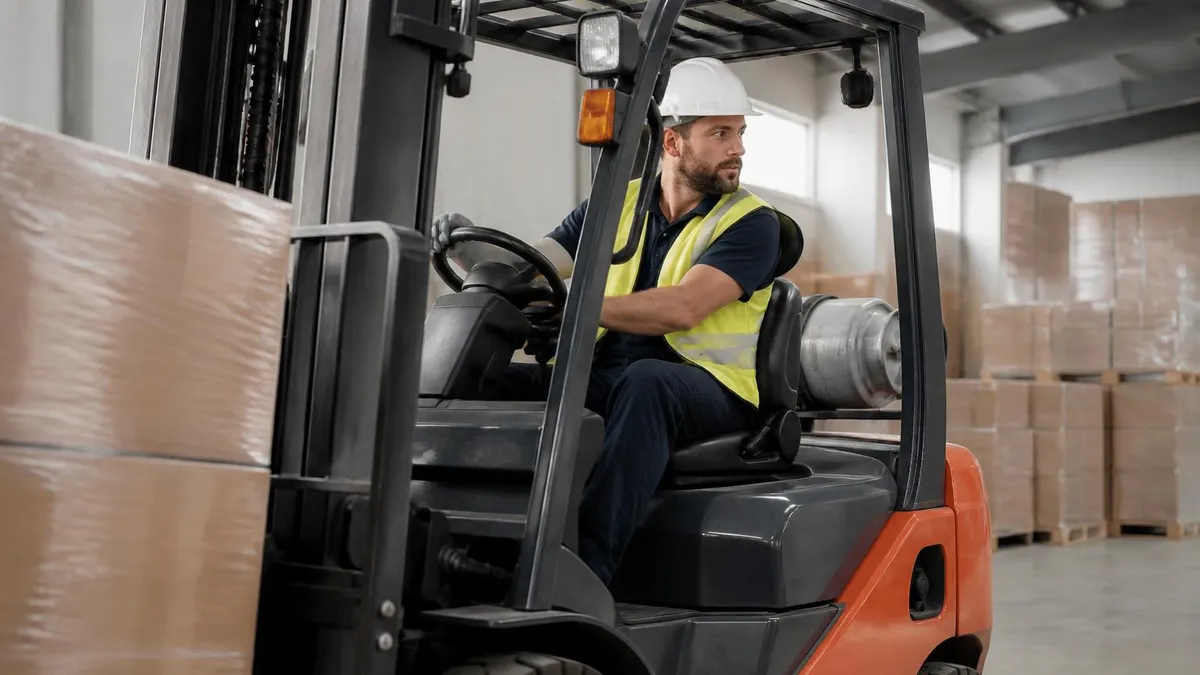
Mast of Forklift: Complete Guide to Forklift Parts for TLILIC0003 Operators in Australia
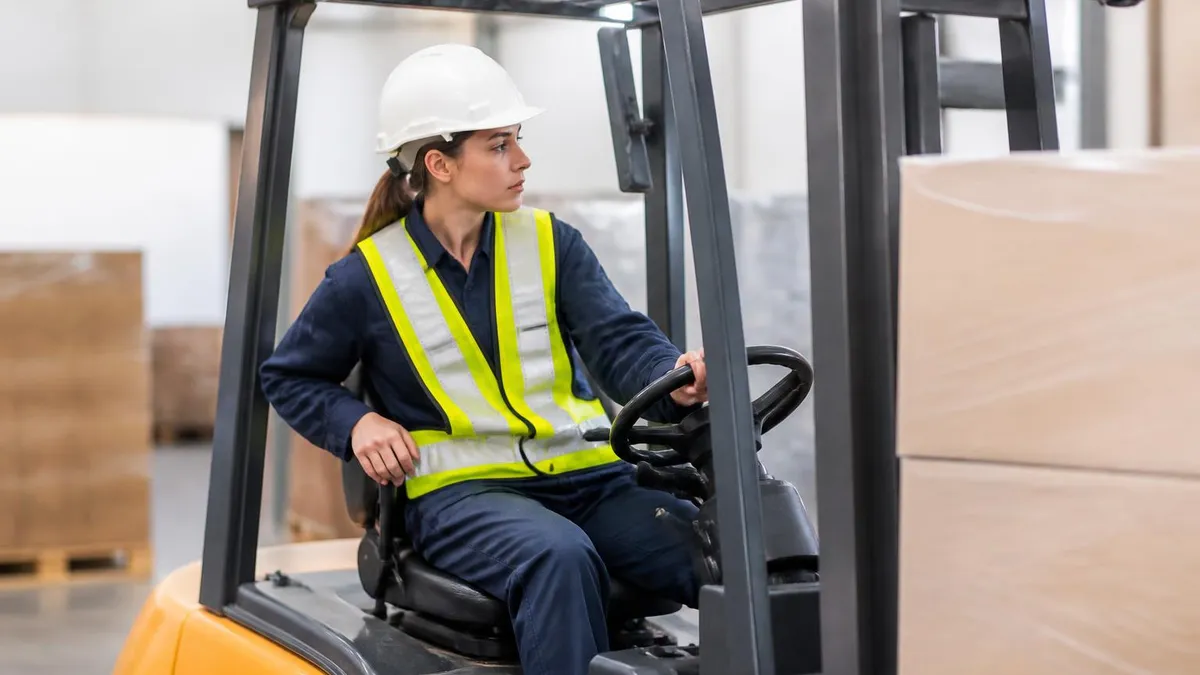
Multi Directional Forklift Trucks: Complete Guide to Forklift Types and Parts for TLILIC0003 Operators in Australia
Free Forklift Practice Test 2026 - Forklift Exam Questions
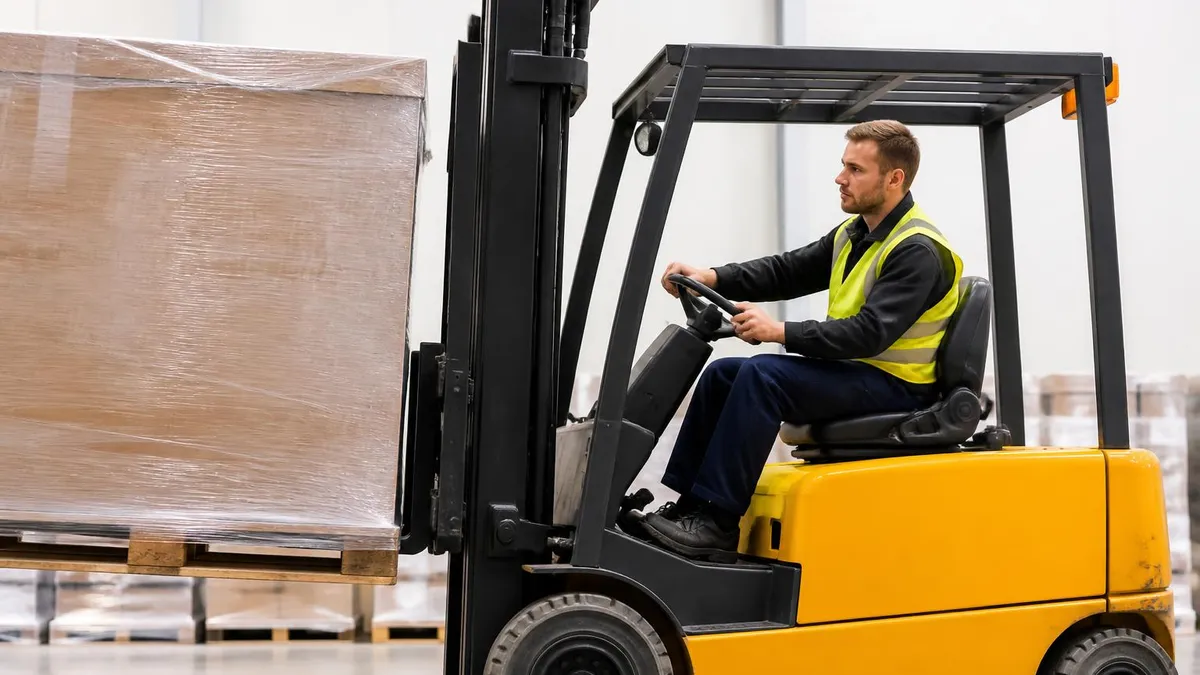
Forklift Licence Australia: How to Get Certified (TLILIC0003)
Forklift Rotators and Attachments: Complete TLILIC0003 Guide for Australian Operators
About the Author

Certified Crane Operator & Skilled Trades Exam Specialist
Ferris State UniversityRobert Martinez is a Journeyman Ironworker, NCCCO-certified crane operator, and forklift trainer with a Bachelor of Science in Construction Technology from Ferris State University. He has 21 years of ironworking, rigging, and heavy equipment operation experience across high-rise and industrial construction sites. Robert prepares candidates for crane operator, rigger, forklift, and skilled trades certification examinations.