
SafeServ Practice Test 2026 September: Free ServSafe Food Handler Prep
🏆 Get ready for your servsafe manager practice test certification exam. Practice questions with step-by-step answer explanations and instant scoring.

SafeServ Practice Test 2026: Free ServSafe Food Handler Prep
SafeServ vs. ServSafe: Same Program, Different Spelling
If you searched for a "SafeServ practice test" and landed here, you're exactly where you need to be. SafeServ and ServSafe are the same program. "SafeServ" is one of the most common misspellings and informal alternate names for ServSafe, the food safety certification administered by the National Restaurant Association Educational Foundation (NRAEF). You'll also see it spelled "Safe Serve," "Safe Serv," or "Safe-Serv" depending on who's typing it out.
The confusion makes sense. The name ServSafe blends "service" and "safe" in a way that makes the alternate spelling feel natural — almost intuitive. Some employers and state health departments even use the informal "safe serve" phrasing when listing certification requirements in job postings or onboarding documents, which adds another layer of confusion for workers trying to figure out exactly what they need. Whether your employer told you to get your "SafeServ card" or your county health department lists "safe serve certification" as a condition for a food handler permit, they're referring to the official ServSafe program.
From this point on, we'll use ServSafe — the official name — throughout this guide. Everything here applies directly to whatever version of the name you've encountered at your workplace or during your job search.
Food Handler vs. Manager: Which Do You Actually Need?
ServSafe has two main certification tracks, and confusing them is an expensive mistake. The Food Handler certificate is the entry-level credential for line workers, prep cooks, servers, and cafeteria staff. The Manager certification is a proctored, advanced exam for supervisors and certified food protection managers (CFPMs) — it's a completely different product at a very different price point.
The ServSafe Food Handler exam is 40 questions, untimed, and requires a 75% passing score (30 out of 40 correct). There's no proctor required, and many employers let workers take it during onboarding on company time. Cost runs roughly $15–$25 depending on your source — employer-sponsored, county health department, or directly through ServSafe.com. The certificate is valid for 3 years in most states, though some jurisdictions require renewal every 2 years.
The ServSafe Manager exam is a fundamentally different challenge — 90 questions (80 scored, 10 unscored pretest, 70% / 56-of-80 needed to pass), mandatory proctoring, and an all-in cost of around $175–$250 including required study materials and proctoring fees. ServSafe does not publish an official time limit for the Manager exam, though many test centers informally report a session of around 2 hours. It targets supervisors and food service directors responsible for overseeing food safety systems in an establishment. If you're a cook, dishwasher, food prep associate, or server, you almost certainly need the Food Handler exam, not the Manager exam. Confirm with your employer before registering for anything — it saves real money and real frustration.
This article focuses on the Food Handler track — the 40-question exam required in most states for anyone who handles, prepares, or serves food commercially. If you need manager-level prep, see our dedicated ServSafe Manager practice test guide instead.
Who Needs a ServSafe Food Handler Certificate?
Short answer: most people who handle food for pay. The longer answer depends on your state. As of 2026, states with food handler certification requirements include California, Texas, Washington, Illinois, Arizona, Utah, Colorado, Nevada, New Mexico, and several others. A handful of states — New York and Florida, for example — require only the manager-level CFPM without mandating individual food handler cards for every employee. But even in states where it's not a legal requirement, the overwhelming majority of restaurant chains, hospital food services, hotel kitchens, and catering companies require it as a condition of employment regardless of state law.
If you work in any of these settings, you likely need the certificate: restaurants and fast food establishments, school and hospital cafeterias, hotel banquet and catering kitchens, food trucks and mobile vendors, grocery store deli and prepared foods departments, correctional facility food service programs, senior living and assisted care dining operations, and bars or nightclubs that serve food. If you're unsure whether your specific role in your specific state requires it, check your local health department's website or ask your employer directly — don't assume either way.
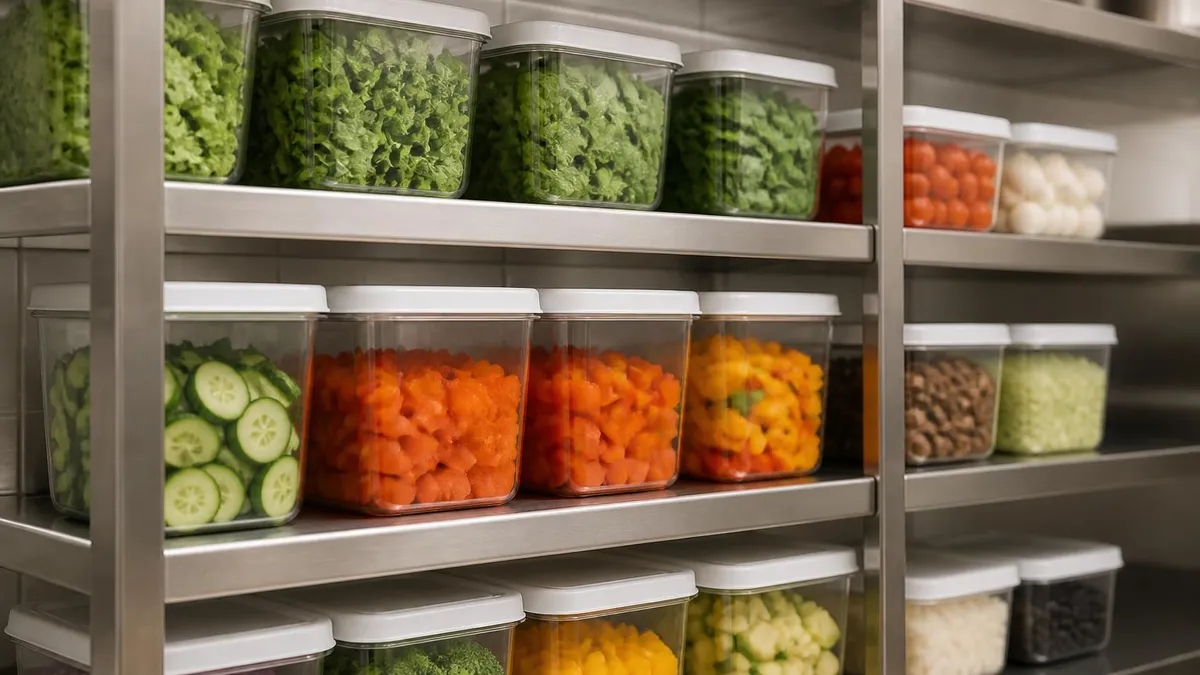
ServSafe Food Handler Exam Format
The Food Handler exam is straightforward compared to the Manager exam, and that's exactly the point — it's designed for entry-level food service workers, not supervisors with years of food safety management experience. On test day: 40 multiple-choice questions, no time limit (most people finish in 30–45 minutes), no proctor required, and available online or on paper depending on your training provider. The exam is offered in English, Spanish, Chinese, Korean, Vietnamese, and several other languages — contact your provider to confirm language availability in your specific region before scheduling your exam date.
The questions aren't designed to trick you, but they do test specific, concrete knowledge. You can't pass on general common sense alone. You need to know exact temperature ranges, specific time windows (like the 4-hour cumulative rule for TCS foods in the danger zone), and the correct sequence of steps for handwashing, thawing frozen food safely, and cleaning and sanitizing equipment. These aren't things you're expected to just inherently know — they're defined standards you study and practice. That's exactly what targeted practice tests are designed to lock in before the real exam.
The exam draws from five core topic areas: personal hygiene, time-temperature control for safety (TCS foods), cross-contamination prevention, cleaning and sanitizing, and foodborne illness and HACCP basics. Each topic is covered in detail in the sections below — along with the approximate number of questions each generates on the actual exam.
Knowing the question distribution helps you prioritize your study time where it generates the most return. Temperature control alone can account for 20–25% of your total score, which means every hour you invest in memorizing cooking temperatures and the danger zone is disproportionately valuable compared to time spent on lower-frequency topics like pest control or regulatory knowledge.
One more thing worth knowing before you start studying: the exam is scored immediately when taken online. You'll see your pass or fail result as soon as you submit. If you're taking a paper-based version, your instructor or testing provider will score it and notify you shortly after. Either way, you're not waiting days or weeks for results — which means if you need to retake it, you can schedule a second attempt quickly rather than letting certification lapse for an extended period while you wait on results.
ServSafe Food Handler Exam Topics
Personal hygiene accounts for 6–8 exam questions. Core rules: wash hands for at least 20 seconds — wet, apply soap, scrub back of hands and between fingers, rinse under running water, dry with a single-use paper towel, and use that towel to shut off the faucet. Wash hands after handling raw meat, using the restroom, coughing or sneezing, touching your face or hair, handling chemicals, handling garbage, or returning from a break. Hand sanitizer supplements handwashing — it does not replace it.
No bare-hand contact with ready-to-eat (RTE) foods — use gloves, tongs, or deli paper. Remove jewelry before food prep. Keep hair tied back or covered. Avoid eating, drinking, or chewing gum in food prep areas. If you have vomiting, diarrhea, jaundice, or a sore throat with fever, report immediately to your manager — they must restrict or exclude you from working with food.

Pest Control and Facility Safety
Don't skip pest control — it typically shows up in 3–5 questions, and it's an easy topic to overlook in favor of temperatures and hygiene. Pests (rodents, cockroaches, flies) are significant vectors for foodborne illness. Signs of a problem include droppings, gnaw marks, nesting materials, grease marks along walls, and live or dead sightings. If you spot any of these, notify your manager immediately. Never attempt to handle an infestation yourself using store-bought chemicals in a food service environment — that's a serious health code violation on top of being ineffective.
Integrated Pest Management (IPM) is the standard commercial approach, built on three principles. First, deny entry: seal gaps in walls, floors, and doors, maintain proper door sweeps, and check incoming shipments for signs of pests before accepting them. Second, deny food and water: clean spills immediately, store food in sealed containers at least 6 inches off the floor and away from walls, and fix any plumbing leaks or standing water issues promptly.
Third, deny shelter: eliminate cardboard clutter, keep storage areas organized, and don't allow debris to accumulate near food storage. Pesticides in food service areas must always be applied by a licensed pest control operator (PCO) — not kitchen staff. All pest control services must be documented on-site.
How to Score 75% — And What Actually Trips People Up
You need 30 correct answers out of 40 — and knowing where those 30 come from makes studying dramatically more efficient. Temperature control is the single highest-yield section. If you've memorized the danger zone (41°F–135°F), the 4-hour rule, and the five critical cooking temperatures, you've potentially secured up to 25% of your score before you even open the personal hygiene section.
Most people who fail the Food Handler exam get tripped up on specific numbers. Common mistakes include: confusing cold-hold at 41°F with the cooling endpoint of 41°F (same number, completely different context); forgetting that poultry requires 165°F while whole cuts of beef only need 145°F; not knowing that ground meat falls between those two at 155°F. Another frequent failure point is the cleaning and sanitizing section — test-takers know the two steps are different but can't recall the correct sequence, the three-compartment sink order, or the specific chemical concentrations.
Practice tests reveal these gaps early. Scoring 80% or higher on full 40-question practice runs is your benchmark for exam readiness. If you're in the 65–70% range, one more focused session costs nothing and a retake fee does.
ServSafe Food Handler Study Checklist
- ✓Memorize the 5-step handwashing procedure — in order
- ✓Know the Temperature Danger Zone: 41°F to 135°F
- ✓Learn the 4-hour rule for TCS foods in the danger zone
- ✓Memorize cooking temps: poultry 165°F, ground beef 155°F, whole cuts 145°F
- ✓Know the cooling timeline: 135°F→70°F in 2 hours, 70°F→41°F in 4 more hours
- ✓Understand refrigerator storage order (top = RTE, bottom = raw poultry)
- ✓Know all 4 approved thawing methods — and that counter-thawing is never allowed
- ✓Learn the 5-step cleaning and sanitizing process
- ✓Know three-compartment sink order: wash → rinse → sanitize
- ✓Memorize sanitizer types and their concentration ranges (chlorine, quats, iodine)
- ✓Identify the 5 major foodborne pathogens and their most common food sources
- ✓Know the 7 HACCP principles at a recognition level
- ✓Understand IPM pest control principles and PCO requirements
- ✓Practice 80%+ on two full 40-question practice tests before exam day
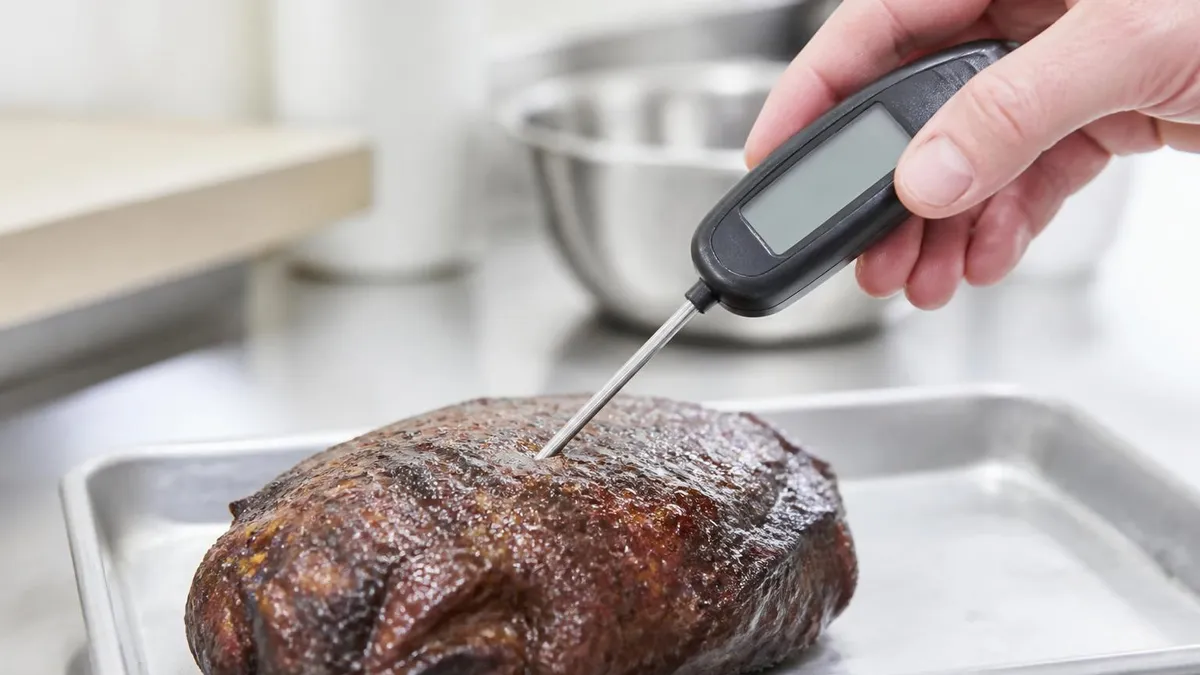
Cost and Renewal: What to Expect in 2026
The ServSafe Food Handler exam is one of the most affordable professional certifications available. Through ServSafe.com directly, the online exam alone runs $15–$22. Combined online course-plus-exam packages cost $22–$35. County health departments typically charge $10–$20, and many employers cover the fee entirely as part of onboarding. If cost is genuinely a barrier, check whether your local health department offers subsidized testing — many do, specifically for food service workers in entry-level positions.
The certificate is valid for 3 years in most states. Texas requires renewal every 2 years. Some county-level jurisdictions set their own timelines that differ from the state standard. Always confirm the exact requirement with your employer or local health authority — don't assume the 3-year standard applies in your area.
Renewal works exactly like the initial exam: you retake the same 40-question test. There's no shortened renewal version or credit for prior certification. Mark your expiration date when you receive your certificate and set a 30-day advance reminder. A lapsed card can get you removed from your shift in states where it's legally required — preventable with a simple calendar reminder.
Your 5-Day Study Plan
Five focused sessions is all most people need for the Food Handler exam. Day 1: personal hygiene — master the handwashing steps in order, memorize illness reporting rules, and review glove and bare-hand contact policies. Day 2: TCS foods and temperature control — write out the danger zone (41°F–135°F), the 4-hour rule, the cooling timeline (135°F to 70°F in 2 hours, then to 41°F in 4 more hours), and all five critical cooking temperatures. Drill until those numbers are automatic. Day 3: cross-contamination — refrigerator storage order top to bottom, approved thawing methods, cutting board protocols.
Take a 15-question mixed practice test to benchmark your progress. Day 4: cleaning vs. sanitizing steps, three-compartment sink procedure, chemical concentrations, major foodborne pathogens and their food sources, basic HACCP principles. Day 5: take two full 40-question practice tests under realistic conditions. Review every wrong answer, identify which topics cost you points, and do a focused 20-minute review of your two weakest areas before finishing. Consistent 80%+ practice scores mean you're ready for the real exam.
ServSafe Practice Test Questions
Prepare for the ServSafe - ServSafe Food Safety exam with our free practice test modules. Each quiz covers key topics to help you pass on your first try.
ServSafe Allergens Practice Test
ServSafe Exam Questions covering Allergens Practice Test. Master ServSafe Test concepts for certification prep.
ServSafe Food Handler Practice Test
Free ServSafe Practice Test featuring Food Handler Practice Test. Improve your ServSafe Exam score with mock test prep.
ServSafe - Alcohol Test
ServSafe Mock Exam on - Alcohol Test. ServSafe Study Guide questions to pass on your first try.
ServSafe Alcohol Test - Primary and Advanc...
ServSafe Test Prep for Alcohol Test - Primary and Advanced (2). Practice ServSafe Quiz questions and boost your score.
ServSafe Alcohol Test - Primary and Advanc...
ServSafe Questions and Answers on Alcohol Test - Primary and Advanced (3). Free ServSafe practice for exam readiness.
ServSafe Alcohol Test - Primary and Advanc...
ServSafe Mock Test covering Alcohol Test - Primary and Advanced (4). Online ServSafe Test practice with instant feedback.
ServSafe - Allergens Test
Free ServSafe Quiz on - Allergens Test. ServSafe Exam prep questions with detailed explanations.
ServSafe Facilities, Cleaning & Sanitizing...
ServSafe Practice Questions for Facilities, Cleaning & Sanitizing, and Pest Management Test. Build confidence for your ServSafe certification exam.
ServSafe Management Test
ServSafe Test Online for Management Test. Free practice with instant results and feedback.
ServSafe Management Test #1
ServSafe Study Material on Management Test #1. Prepare effectively with real exam-style questions.
ServSafe Manager Exam 1 (2)
Free ServSafe Test covering Manager Exam 1 (2). Practice and track your ServSafe exam readiness.
ServSafe Manager Exam 1 (3)
ServSafe Exam Questions covering Manager Exam 1 (3). Master ServSafe Test concepts for certification prep.
ServSafe Manager Exam 1 (4)
Free ServSafe Practice Test featuring Manager Exam 1 (4). Improve your ServSafe Exam score with mock test prep.
ServSafe Manager Exam 1 (5)
ServSafe Mock Exam on Manager Exam 1 (5). ServSafe Study Guide questions to pass on your first try.
ServSafe Manager Exam
ServSafe Test Prep for Manager Exam. Practice ServSafe Quiz questions and boost your score.
ServSafe Manager Exam 6
ServSafe Questions and Answers on Manager Exam 6. Free ServSafe practice for exam readiness.
ServSafe Manager Exam 7
ServSafe Mock Test covering Manager Exam 7. Online ServSafe Test practice with instant feedback.
ServSafe Manager Exam 8
Free ServSafe Quiz on Manager Exam 8. ServSafe Exam prep questions with detailed explanations.
ServSafe Manager Practice Exam
ServSafe Practice Questions for Manager Practice Exam. Build confidence for your ServSafe certification exam.
ServSafe Personal Hygiene Test
ServSafe Test Online for Personal Hygiene Test. Free practice with instant results and feedback.
ServSafe Practice Test
ServSafe Study Material on Practice Test. Prepare effectively with real exam-style questions.
ServSafe Practice Test 1
Free ServSafe Test covering Practice Test 1. Practice and track your ServSafe exam readiness.
ServSafe Practice Test 2
ServSafe Exam Questions covering Practice Test 2. Master ServSafe Test concepts for certification prep.
ServSafe Practice Test 3
Free ServSafe Practice Test featuring Practice Test 3. Improve your ServSafe Exam score with mock test prep.
ServSafe Practice Test Allergens
ServSafe Mock Exam on Practice Test Allergens. ServSafe Study Guide questions to pass on your first try.
ServSafe Preparation, Cooking and Serving ...
ServSafe Test Prep for Preparation, Cooking and Serving Test. Practice ServSafe Quiz questions and boost your score.
ServSafe Purchasing, Receiving and Storage...
ServSafe Questions and Answers on Purchasing, Receiving and Storage Test. Free ServSafe practice for exam readiness.
ServSafe Purchasing, Receiving and Storage...
ServSafe Mock Test covering Purchasing, Receiving and Storage Test (2). Online ServSafe Test practice with instant feedback.
ServSafe Purchasing, Receiving and Storage...
Free ServSafe Quiz on Purchasing, Receiving and Storage Test (3). ServSafe Exam prep questions with detailed explanations.
ServSafe Food Handler Practice Test Pros and Cons
- +Reveals specific knowledge gaps that passive reading alone can't identify
- +Immediate answer feedback shows exactly what you got wrong and why
- +Free practice tests cost nothing and cover the same topic areas as the real exam
- +Score tracking gives a measurable readiness benchmark before test day
- +Targeted topic tests (allergens, hygiene) let you focus on weak areas
- −Third-party practice tests vary in quality and exam alignment — not all are accurate
- −Taking tests before any content review produces misleading low scores
- −Memorizing specific question answers without understanding the concept won't transfer to new question formats
- −Practice scores slightly overestimate or underestimate real exam performance for some test-takers
- −Official ServSafe practice material is limited compared to third-party resources
Pros and Cons at a Glance
| Pros | Cons |
|---|---|
| Reveals specific knowledge gaps that passive reading alone can't identify | Third-party practice tests vary in quality and exam alignment — not all are accurate |
| Immediate answer feedback shows exactly what you got wrong and why | Taking tests before any content review produces misleading low scores |
| Free practice tests cost nothing and cover the same topic areas as the real exam | Memorizing specific question answers without understanding the concept won't transfer to new question formats |
| Score tracking gives a measurable readiness benchmark before test day | Practice scores slightly overestimate or underestimate real exam performance for some test-takers |
| Targeted topic tests (allergens, hygiene) let you focus on weak areas | Official ServSafe practice material is limited compared to third-party resources |
ServSafe Questions and Answers
Ready to Start Practicing?
The ServSafe Food Handler exam is completely passable with focused preparation — and you now have everything you need to prepare effectively. The full content framework is laid out above: every major exam topic, the critical temperature numbers you need to memorize, a realistic cost breakdown for 2026, the renewal timeline for your state, and a 5-day study plan that gets most people to test-ready without overcomplicating the process.
What comes next is repetition and feedback. Take practice tests, review the explanations for questions you miss — not just the correct answer, but why it's correct — and progressively narrow in on the specific numbers or step sequences where you're losing points. The difference between a 68% score and an 80% score on the Food Handler exam is almost always a handful of specific temperature values or a misremembered cleaning sequence. Practice tests make those gaps visible while they can still be fixed.
The practice tests on this page cover the same five topic areas as the real ServSafe exam. Start with the general practice tests to get a baseline score, then pivot to the topic-specific tests — allergens, cooking and serving, cleaning and pest management — to drill the areas that need more work. Most people find TCS temperature control and the cleaning vs. sanitizing process are the two sections that require the most repetition before they stick. Give those extra focus, run through the explanations for every incorrect answer, and you'll be well past the 75% threshold on test day.
Whether your employer calls it ServSafe, SafeServ, or Safe Serve — the exam and the certification are the same program, offered by the same organization, and recognized by the same state and local health authorities. Passing it means you're a more informed, safer food handler, and that's the entire purpose of the certification system. Employers require it. Health inspectors actively check for it during routine inspections. And now you have all the preparation you need to earn it. Start your free ServSafe practice test above and find out exactly where you stand before you sit for the real thing.
About the Author

Registered Sanitarian & Food Safety Certification Expert
Cornell University College of Agriculture and Life SciencesThomas Wright is a Registered Sanitarian and HACCP-certified food safety professional with a Bachelor of Science in Food Science from Cornell University. He has 17 years of experience in food safety auditing, regulatory compliance, and foodservice management training. Thomas prepares food industry professionals for ServSafe Manager, HACCP certification, and state food handler examinations.
Join the Discussion
Connect with other students preparing for this exam. Share tips, ask questions, and get advice from people who have been there.
View discussion (7 replies)