
A Cutting Board Is Scratched and Chipped: ServSafe Food Safety Guide
Learn what to do when a cutting board is scratched and chipped per ServSafe. Study guide + practice test tips for the manager exam. ✅

If you are studying for a ServSafe practice test and encounter the scenario where a cutting board is scratched and chipped, ServSafe rules are unambiguous: that board must be taken out of service immediately and discarded. Scratches and chips are not cosmetic flaws — they are direct food safety hazards. Bacteria such as Salmonella, Listeria, and E. coli embed deeply into grooves where cleaning and sanitizing chemicals cannot reach, creating persistent contamination risks across every food item that contacts the board.
Understanding why damaged equipment violates food safety standards is a core competency tested on every ServSafe manager exam. The National Restaurant Association's ServSafe program covers equipment condition extensively because foodborne illness outbreaks are frequently traced back to improperly maintained food-contact surfaces. A single cracked cutting board used across a prep shift can expose dozens of customers to pathogens, resulting in illness, legal liability, and facility closure. The exam rewards candidates who can identify these violations on sight and explain the corrective action.
This article walks through the complete ServSafe cutting board framework: what the rules require, the science behind surface contamination, how to identify a board that must be discarded, proper cleaning protocols for boards that are still in acceptable condition, and how this topic appears on the actual certification exam. Whether you are a first-time test-taker or renewing your manager credential, mastering equipment safety is one of the fastest ways to pick up points on the ServSafe test. For broader context on the certification itself, explore these servsafe manager practice tests to sharpen your knowledge.
ServSafe standards align with the FDA Food Code, which classifies food-contact surfaces as a critical category requiring smooth, non-porous, easily cleanable finishes. Cutting boards that develop cracks, deep scores, discoloration, or chip-outs no longer meet this standard regardless of how thoroughly staff try to sanitize them. The porous zones created by physical damage act as biofilm reservoirs — communities of microorganisms protected by a self-secreted matrix that resists quaternary ammonium solutions, chlorine sanitizers, and even steam cleaning at normal concentrations.
From a test-prep standpoint, questions about cutting board condition usually appear in the "Cleaning and Sanitizing" or "Safe Facilities and Equipment" sections of the ServSafe Manager curriculum. Candidates who understand the underlying principle — that physical damage creates unsanitary surfaces — can answer variations of this question even when the wording changes. The correct answer is always to remove the damaged board, never to attempt repair or continued use at reduced capacity.
This guide also addresses related topics you will encounter on the exam: color-coded cutting board systems to prevent cross-contamination, proper cutting board materials approved under NSF/ANSI standards, sanitizing concentration requirements, and the inspection frequency that a food safety manager should enforce. Each of these subtopics connects directly to exam questions and to real-world compliance during health department inspections. Pair this reading with a timed ServSafe test prep session to convert your understanding into exam-ready recall.
By the end of this article you will know exactly what ServSafe requires for cutting board maintenance, why those requirements exist in terms of microbiology and regulatory compliance, and how to apply that knowledge on exam day. You will also have a practical inspection checklist your kitchen team can use right now to audit every cutting board in your facility — because food safety knowledge only protects guests when it is put into practice every single shift.
ServSafe Cutting Board Safety by the Numbers
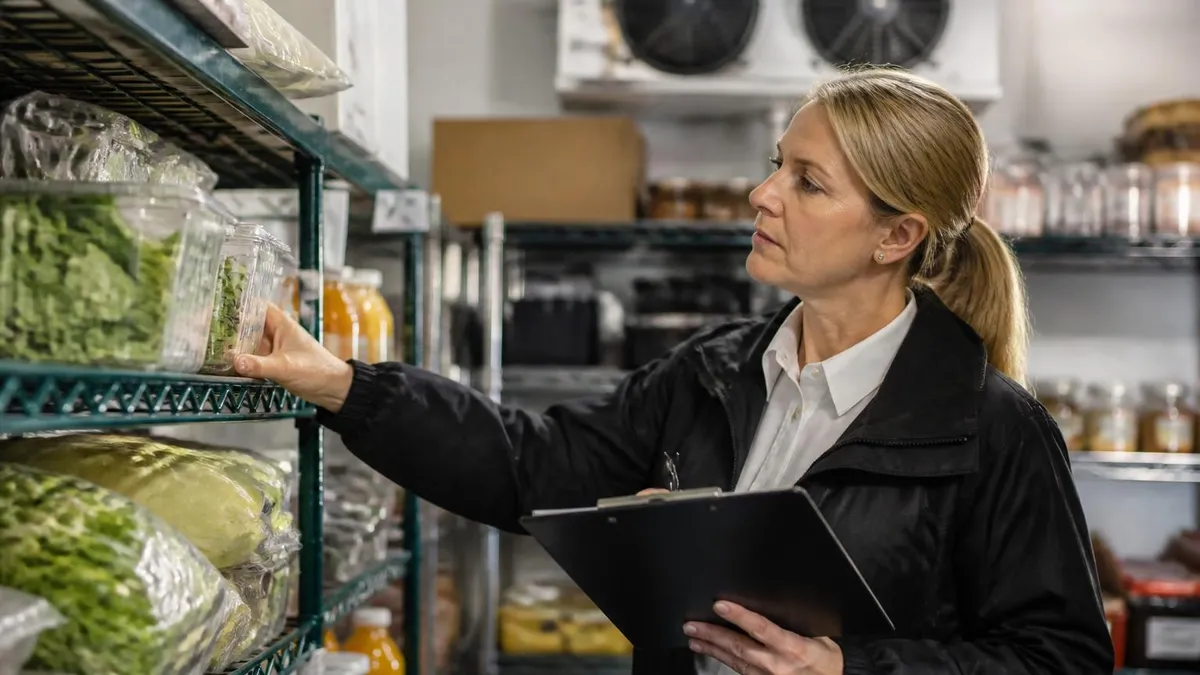
ServSafe Equipment and Surface Safety Requirements
All food-contact surfaces including cutting boards must meet NSF/ANSI Standard 2 or equivalent. This requires smooth, non-porous, corrosion-resistant materials that can withstand repeated cleaning and sanitizing without degrading over time.
Any cutting board showing cracks, chips, deep scores, warping, or discoloration must be pulled from service immediately. ServSafe does not permit continued use at reduced capacity — the board is either fully compliant or discarded.
ServSafe approves hard maple, high-density polyethylene (HDPE), and composite materials. Softwoods, glass, metal, and ceramic surfaces are prohibited because they either damage knife edges or create micro-fractures during normal use.
Boards must be cleaned (soap and hot water to remove organic matter) before sanitizing. Applying sanitizer to an unclean surface is ineffective because organic material neutralizes the active chemistry before pathogens are eliminated.
A certified food safety manager must inspect food-contact surfaces at the start of each shift and after any high-risk use such as raw poultry butchery. Document inspections on a maintenance log to demonstrate due diligence during health department audits.
The scientific reason that a scratched and chipped cutting board becomes a food safety emergency lies in the concept of biofilm formation. When a knife scores a polyethylene or wooden surface deeply enough, it creates micro-channels with surface area far greater than the flat exterior. Organic matter — blood, fat, protein fragments — accumulates in those channels during normal food preparation. Once organic matter is present, pathogenic bacteria begin colonizing within minutes, adhering to the surface with molecular-scale adhesion forces that neither scrubbing brushes nor standard sanitizer applications can fully overcome.
Biofilms are particularly dangerous in commercial kitchens because they are polymicrobial communities. Listeria monocytogenes is among the most concerning organisms found in cutting board biofilms, partly because it thrives at refrigerator temperatures (as low as 34°F / 1°C) where most other pathogens slow their growth. A chipped board stored in a walk-in cooler overnight does not become safer — it can actually harbor more viable Listeria the next morning than it did at the end of the previous service.
This is precisely why the ServSafe manager test curriculum emphasizes equipment condition as a critical control point, not merely a regulatory formality. If you want to connect this knowledge to broader food safety controls, reviewing the servsafe manager sample test on HACCP principles will show you how equipment maintenance fits into the seven-step hazard analysis framework.
Chlorine-based sanitizers (the most common in US foodservice) require direct contact with the surface at appropriate concentration — typically 50 to 100 parts per million (ppm) — for a contact time of at least 7 seconds on smooth surfaces. Inside a deep knife groove or a chip cavity, the sanitizer solution cannot maintain concentration or contact time because the geometry traps residual organic matter that chemically neutralizes the chlorine. Laboratory studies have demonstrated that even at 200 ppm chlorine, bacteria in well-established cutting board biofilms can survive at colony counts sufficient to cause illness when transferred to food.
Quaternary ammonium compounds (quats), another common sanitizer class, face the same physical access problem. Additionally, quats can be neutralized by the calcium and magnesium ions found in hard water, which is common in many US regions. When quats are mixed at the correct concentration but applied to damaged surfaces in hard water conditions, their effective sanitizing power drops dramatically. The ServSafe curriculum teaches food safety managers to understand these chemistry limitations — not just the "what to do" but the "why it matters" that makes correct decisions automatic under the pressure of a busy service environment.
Wood cutting boards present a specific set of considerations that appear frequently on the ServSafe manager practice test. Hard maple boards are permitted by ServSafe and the FDA Food Code for certain applications because maple's tight grain structure resists deep bacterial penetration when the board is new and well-maintained. However, wood boards are also the most vulnerable to scoring damage.
Once the grain is broken by knife cuts, moisture penetrates the wood fibers, causing swelling and creating even deeper crevices. A wood board that shows any visible knife score deeper than the surface layer should be discarded — there is no food-safe refinishing process approved by ServSafe for commercial kitchen use.
High-density polyethylene (HDPE) boards are the most widely used material in commercial kitchens today because they are non-porous when new, dishwasher-safe, lightweight, and available in the color-coded sets that modern ServSafe compliance programs require. However, HDPE is not immune to damage.
Repeated use of heavy cleavers, running boards through a warewasher at temperatures above the manufacturer's rating, and using abrasive scrubbing pads can all degrade the surface integrity of HDPE boards. Once white HDPE boards show dark staining in groove lines — a sign that the pigment layer has been breached and organic matter is embedded — the board has reached end of life and must be replaced regardless of how recently it was purchased.
Understanding the science of surface contamination transforms exam preparation from rote memorization into genuine comprehension. When you know that biofilms resist sanitizers, that cold temperatures do not kill Listeria, and that physical damage creates uncleanable micro-environments, every cutting board question on the ServSafe exam becomes answerable from first principles. You do not need to memorize every possible scenario — you need to understand the underlying food safety logic well enough to apply it to novel situations, which is exactly the competency the ServSafe Manager certification is designed to verify.
ServSafe Manager Exam: Cutting Board Topic Breakdown
The ServSafe manager practice tests include cutting board questions in at least two formats: scenario-based questions asking what action a manager should take when a board is damaged, and knowledge questions asking which materials are approved for food-contact surfaces. Scenario questions often describe a prep cook continuing to use a visibly scored board — the correct answer is always immediate removal from service, not increased sanitizing frequency or scheduling the board for replacement at end of shift.
Multiple-choice distractors on cutting board questions are carefully designed to identify common misconceptions. Incorrect answer choices typically suggest sanitizing more frequently, using the board only for fully cooked foods, or scheduling replacement at the next supply delivery. All of these are wrong because they allow continued use of a non-compliant surface. Recognizing these distractor patterns during your ServSafe test prep significantly improves your ability to eliminate wrong answers quickly under timed conditions.
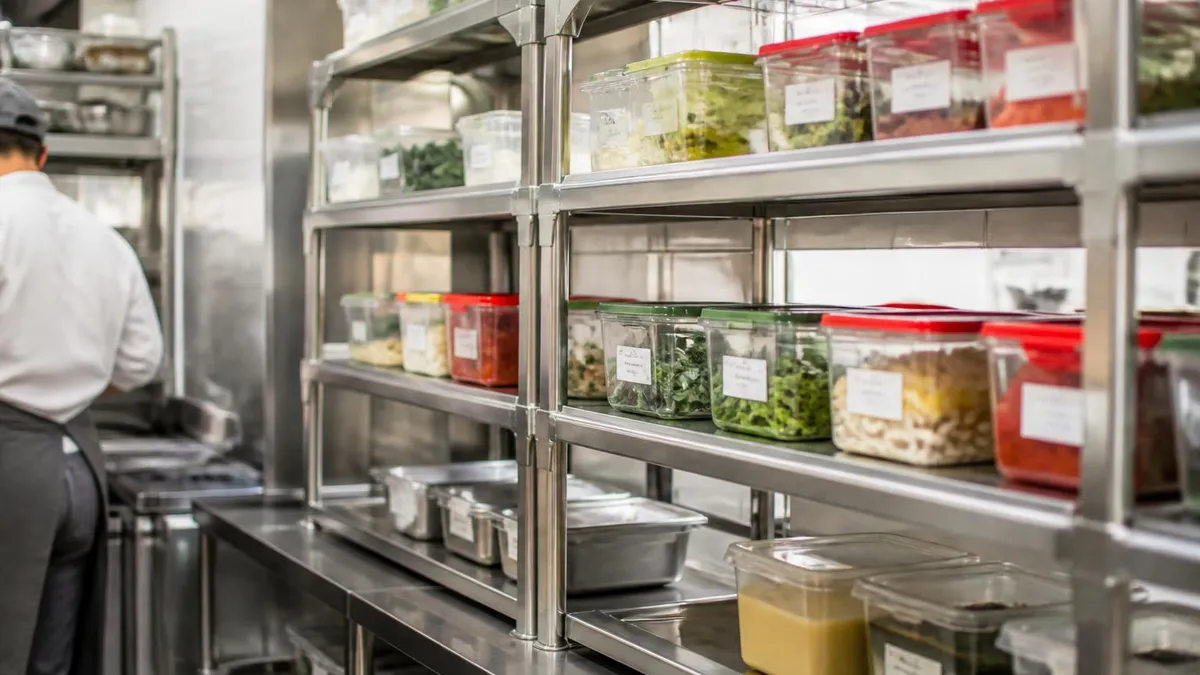
Polyethylene vs. Wood Cutting Boards: ServSafe Compliance Comparison
- +HDPE boards are non-porous when new, resisting bacterial penetration in intact surfaces
- +Plastic boards are dishwasher-safe and can be sanitized at high temperatures in commercial warewashers
- +Color-coded HDPE sets are commercially available and directly support ServSafe compliance programs
- +Plastic boards are lighter and easier to move during cleaning and sanitizing workflows
- +HDPE boards can be visually inspected for damage — discoloration and deep grooves are clearly visible
- +Replacement cost per board is lower than comparable wood boards, making discard-when-damaged policies economical
- −HDPE boards develop knife grooves faster than hard maple under heavy cleaver use
- −Warped plastic boards create rocking surfaces that increase cut injuries and are non-compliant with ServSafe
- −Plastic boards can retain odors in grooves even after sanitizing, indicating surface breakdown
- −High warewasher temperatures can warp thin plastic boards, creating non-compliant uneven surfaces
- −Staining in groove lines on white HDPE boards is difficult to distinguish from normal wear during casual inspection
- −Plastic boards may slide on prep surfaces without non-slip mats, creating a physical safety hazard in addition to food safety concerns
Pros and Cons at a Glance
| Pros | Cons |
|---|---|
| HDPE boards are non-porous when new, resisting bacterial penetration in intact surfaces | HDPE boards develop knife grooves faster than hard maple under heavy cleaver use |
| Plastic boards are dishwasher-safe and can be sanitized at high temperatures in commercial warewashers | Warped plastic boards create rocking surfaces that increase cut injuries and are non-compliant with ServSafe |
| Color-coded HDPE sets are commercially available and directly support ServSafe compliance programs | Plastic boards can retain odors in grooves even after sanitizing, indicating surface breakdown |
| Plastic boards are lighter and easier to move during cleaning and sanitizing workflows | High warewasher temperatures can warp thin plastic boards, creating non-compliant uneven surfaces |
| HDPE boards can be visually inspected for damage — discoloration and deep grooves are clearly visible | Staining in groove lines on white HDPE boards is difficult to distinguish from normal wear during casual inspection |
| Replacement cost per board is lower than comparable wood boards, making discard-when-damaged policies economical | Plastic boards may slide on prep surfaces without non-slip mats, creating a physical safety hazard in addition to food safety concerns |
Cutting Board Inspection Checklist for ServSafe Compliance
- ✓Remove all cutting boards from storage and inspect both surfaces and edges under bright light at the start of each shift.
- ✓Run a fingernail across the board surface — any groove that catches the nail is deep enough to harbor bacteria and requires discard.
- ✓Check board edges and corners for chips, cracks, or delamination that could introduce plastic or wood fragments into food.
- ✓Verify the board lies completely flat on the prep surface with zero rocking, warping, or flexing under light hand pressure.
- ✓Confirm the board's color matches its designated food category under your facility's color-coded system.
- ✓Test sanitizer concentration with the appropriate test strips before the first use and record the ppm reading on the maintenance log.
- ✓After cleaning, apply sanitizer at the correct concentration and allow the full contact time (7 seconds minimum for chlorine) before allowing the board to air dry.
- ✓Never towel-dry a sanitized cutting board — towels re-contaminate the surface and leave fiber residues that can introduce allergens.
- ✓Document any board removed from service with the date, reason, and staff member name on the equipment maintenance log.
- ✓Replace discarded boards within 24 hours and ensure replacement boards carry an NSF/ANSI certification mark before putting them into service.
Damaged Board = Immediate Discard, No Exceptions
ServSafe does not allow any grace period, temporary repair, or reduced-use status for a cutting board that is scratched and chipped. The moment physical damage is identified, the board must leave service permanently. No amount of sanitizing, boiling, or refinishing makes a commercially damaged food-contact surface compliant again under FDA Food Code or ServSafe standards.
Color-coded cutting board systems represent one of the most practical applications of ServSafe principles because they translate microbiology knowledge into a simple visual protocol that every kitchen employee can follow regardless of their level of food safety training.
The six-color system was developed specifically to address cross-contamination, which the CDC identifies as one of the five key risk factors contributing to foodborne illness outbreaks in retail food establishments. When a red board is used exclusively for raw beef and a yellow board exclusively for raw poultry, the pathway for pathogens like Salmonella Typhimurium (common in poultry) to contaminate ready-to-eat produce is physically interrupted.
However, color-coding only works as a system when every member of the kitchen team understands and follows the protocol consistently. The ServSafe Manager curriculum addresses this through its employee training requirements: a certified manager is responsible not only for knowing the rules but for teaching, monitoring, and correcting the team's behavior. Exam questions frequently present scenarios where a prep cook uses the wrong color board due to rush or convenience — the correct managerial response involves immediate correction, re-training, and documentation, not simply discarding the affected food and moving on without addressing the root cause.
Cross-contamination through cutting boards becomes especially dangerous when allergens are involved. The nine major food allergens identified by the FDA — milk, eggs, fish, shellfish, tree nuts, peanuts, wheat, soybeans, and sesame — can cause severe reactions at trace quantities measured in milligrams per kilogram of food.
A peanut-contaminated knife used on a board that later contacts a dish labeled allergen-free creates liability exposure far beyond a standard food safety violation. ServSafe's allergen management module teaches managers to designate specific boards for allergen-sensitive orders and to sanitize all contact surfaces with soap and water (not sanitizer alone, which does not denature proteins) before preparing allergy-accommodating meals.
The practical implementation of a color-coded board system requires management commitment at the purchasing level. Boards in all six colors must be available in sufficient quantity to support parallel prep tasks. A kitchen that owns two red boards and eight white boards will inevitably see red-board rules violated during high-volume service simply because the right equipment is not available. ServSafe-certified managers are expected to conduct periodic equipment audits to ensure that compliance infrastructure matches the actual operational demands of their facility, not just the theoretical protocol written in the food safety management plan.
Board storage is a compliance point that is frequently overlooked in busy kitchens. Clean, sanitized boards must be stored upright in designated racks rather than stacked horizontally. Stacking creates moisture trapping between boards, encourages mold and bacterial growth on the underside surfaces, and physically damages board edges through pressure contact. Racks should be located away from the floor, away from food prep areas (to prevent splash contamination during washing), and away from chemical storage areas. These storage requirements appear in health department inspection criteria and in ServSafe Manager exam scenarios testing whether candidates can identify compliant versus non-compliant storage practices.
Warewashing protocols for cutting boards follow a three-step process that ServSafe covers extensively: wash in hot soapy water (minimum 110°F / 43°C) to remove organic matter, rinse with clean water to remove detergent residue, and then sanitize at the correct chemical concentration with full contact time.
High-temperature sanitizing (180°F / 82°C final rinse in a commercial dishwasher) is an alternative to chemical sanitizing that some operations prefer because it eliminates the need to manage chemical concentrations. However, high-temperature warewashing can warp thin plastic boards — managers must verify that their board materials are rated for the dishwasher temperatures used in their specific equipment.
Logging equipment condition as part of a written food safety management plan is not just good practice — it is increasingly required by health departments implementing Food Safety Modernization Act (FSMA) principles at the retail level. A maintenance log that shows regular cutting board inspections, dates of discard, and replacement timelines demonstrates active management of food safety hazards and provides documented evidence of due diligence if an illness complaint triggers a regulatory investigation. ServSafe strongly encourages this documentation culture because it shifts food safety from reactive (responding to violations) to proactive (preventing them through systematic monitoring).

During a health department inspection, a chipped or deeply scratched cutting board in active service is typically cited as a Priority Foundation violation under the FDA Food Code — one level below the most severe Priority violations but serious enough to require immediate corrective action before the inspector leaves the premises. Multiple such violations in a single inspection can trigger follow-up inspections and, in some jurisdictions, temporary permit suspension. Inspectors are specifically trained to run their gloved finger across board surfaces and check grooves for visible organic matter.
Preparing effectively for the ServSafe Manager Exam requires understanding not just the rules about cutting boards but the entire ecosystem of food safety management in which those rules operate. The exam is 90 questions, and candidates have 2 hours to complete it. A passing score of 70% means you can miss no more than 22 questions while still earning certification. Given that equipment maintenance questions appear across multiple sections — cleaning and sanitizing, safe facilities, and managing food safety — a strong grasp of cutting board requirements can contribute to correct answers in several different question categories simultaneously.
The most effective study strategy for cutting board content is to connect each rule to its regulatory source. When you know that the scratch-and-discard rule comes from FDA Food Code 4-501.11 (Good Repair and Proper Adjustment) and 4-602.11 (Equipment Food-Contact Surfaces and Utensils), you understand that ServSafe is codifying federal food law rather than creating arbitrary rules. This understanding makes the content memorable because it has logical backing, and it prepares you for health inspection scenarios where inspectors will cite specific code sections when writing violations.
Practice under realistic exam conditions as early as possible in your study plan. The ServSafe Manager Exam is proctored and timed, which adds cognitive pressure that reduces recall performance for candidates who have only studied in relaxed environments. Taking a full-length timed ServSafe manager sample test at least two weeks before your exam date allows you to identify weak areas while there is still time to reinforce them.
Most candidates need 3 to 4 full practice exams before they consistently score above 85% — the buffer above the 70% passing threshold that experienced test-takers recommend as your target to account for exam-day stress. For food safety risk context that will inform your exam answers, the resource on servsafe manager test courses provides structured learning paths aligned to the current exam domains.
Exam questions about cutting boards often pair the surface condition issue with a secondary decision point that tests whether you understand priority. For example, a question might describe a prep cook who discovers a chipped board mid-shift during high-volume service — do they (A) finish the current prep task and then remove the board, (B) remove the board immediately and notify the manager, (C) increase sanitizing frequency for the remainder of the shift, or (D) move the board to a low-risk use station?
The correct answer is always (B) because the board's condition makes it non-compliant the moment damage is identified, regardless of operational pressure.
The ServSafe Food Handler and ServSafe Manager certifications both address cutting board safety, but at different depths. Food Handler training teaches the practical rules — color-coding, basic cleaning steps, when to report damage. Manager training requires understanding the why behind every rule, the regulatory framework that mandates it, and the management responsibility to ensure the entire team complies. If you are studying for the Manager credential, do not stop at memorizing rules — push yourself to understand the food safety rationale so you can answer novel scenarios that the exam may present in ways you have not seen before.
Study groups are an underutilized resource for ServSafe exam preparation. Working through practice scenarios with colleagues who have real kitchen experience brings a practical dimension that solo studying from a textbook cannot replicate.
When a fellow student describes the specific scenario of finding a badly scored board during prep and asks the group what to do, the discussion that follows — covering immediate discard, documentation, replacement sourcing, team notification — builds the kind of multi-layered recall that exam scenario questions require. Many ServSafe study groups organize their sessions around the exam's seven content areas, spending one focused session on each before running full-length timed tests.
Finally, remember that the ServSafe Manager certification exam is not the end of the food safety learning journey — it is the beginning of your formal responsibility as a certified manager. The two-hour exam tests a snapshot of your knowledge on exam day, but the real test is the daily practice of inspection, training, documentation, and correction that certified managers perform in their kitchens.
The cutting board rules you learn for the exam are the same rules you will enforce on the prep line next week. Studying them thoroughly means your guests are safer — which is the entire point of the ServSafe certification program.
On exam day, the difference between candidates who pass on their first attempt and those who need to retest often comes down to how they handle unfamiliar question wording rather than gaps in subject knowledge. The ServSafe Manager Exam uses scenario-based questions designed to test applied judgment, not just memorized facts.
A question about a cutting board might not use the words "scratched and chipped" directly — it might describe a board with "visible score marks and a corner fragment missing" and ask what the food safety manager should do first. Candidates who understand the principle recognize both descriptions as the same violation and apply the same correct answer.
Time management during the exam matters more than most candidates expect. With 90 questions in 120 minutes, you have approximately 80 seconds per question. Questions with lengthy scenarios can consume 2 to 3 minutes if you read slowly or second-guess your initial answer. Experienced test-takers recommend flagging any question that takes more than 90 seconds on a first pass and returning to it after completing the rest of the exam. This strategy ensures you capture all the points on questions you know confidently before spending extra time on harder items.
The morning of your exam, review your highest-yield topics rather than attempting to read new material. For cutting board content specifically, a quick mental review of the discard rule, approved materials, sanitizer concentrations, and the color-coded system takes less than five minutes but reinforces the neural pathways you built during your study sessions. Avoid cramming the night before — sleep deprivation measurably reduces recall performance on timed tests, and a rested, focused candidate consistently outperforms a sleep-deprived one who studied for an extra three hours.
After passing your exam, maintain your certification knowledge by scheduling quarterly self-assessments using updated practice materials. The FDA Food Code is revised on a four-year cycle, and ServSafe updates its curriculum accordingly. Cutting board standards have remained consistent across recent revisions, but other areas — particularly allergen requirements and temperature control for safety (TCS) food definitions — have evolved. A certified manager who stays current protects both their staff and guests while avoiding the embarrassment of citing outdated rules during a health inspection.
Consider building a kitchen food safety training calendar that rotates through all ServSafe content domains on a monthly basis. Dedicate one training session per quarter specifically to equipment condition — showing staff actual examples of compliant versus non-compliant cutting boards, walking through the inspection checklist, and role-playing the corrective action conversation between a prep cook who discovers a damaged board and the manager on duty. Hands-on training sessions produce significantly better retention than lecture-only formats, which is consistent with adult learning research and with ServSafe's own recommendation for interactive employee training methods.
The return on investment from thorough cutting board compliance is straightforward to calculate. A standard commercial HDPE cutting board costs between $15 and $40. A single foodborne illness incident traced to a contaminated food-contact surface can result in legal settlements, medical costs, and reputation damage worth tens or hundreds of thousands of dollars — plus the potential loss of the operating permit. The ServSafe Manager certification equips you with the knowledge to make the economically rational and ethically correct decision every single time: discard the damaged board immediately, replace it promptly, and document everything.
Use the quiz tiles and practice resources throughout this article to test your retention right now while the content is fresh. Research consistently shows that active recall through practice testing produces significantly stronger long-term memory than re-reading notes. Taking a timed quiz immediately after reading a study guide section — even a short five-question quiz — accelerates learning and reveals specific gaps that additional reading can then address. This is the study methodology that the most successful ServSafe candidates report using, and it is directly aligned with the evidence-based learning science that modern test-prep platforms are built on.
ServSafe Questions and Answers


About the Author

Registered Sanitarian & Food Safety Certification Expert
Cornell University College of Agriculture and Life SciencesThomas Wright is a Registered Sanitarian and HACCP-certified food safety professional with a Bachelor of Science in Food Science from Cornell University. He has 17 years of experience in food safety auditing, regulatory compliance, and foodservice management training. Thomas prepares food industry professionals for ServSafe Manager, HACCP certification, and state food handler examinations.
Join the Discussion
Connect with other students preparing for this exam. Share tips, ask questions, and get advice from people who have been there.
View discussion (7 replies)