
ServSafe 90 Questions and Answers — Free Practice Test 2026 September
Free ServSafe test 90 questions and answers with answers and detailed explanations for every question, instant scoring and hints. 💡
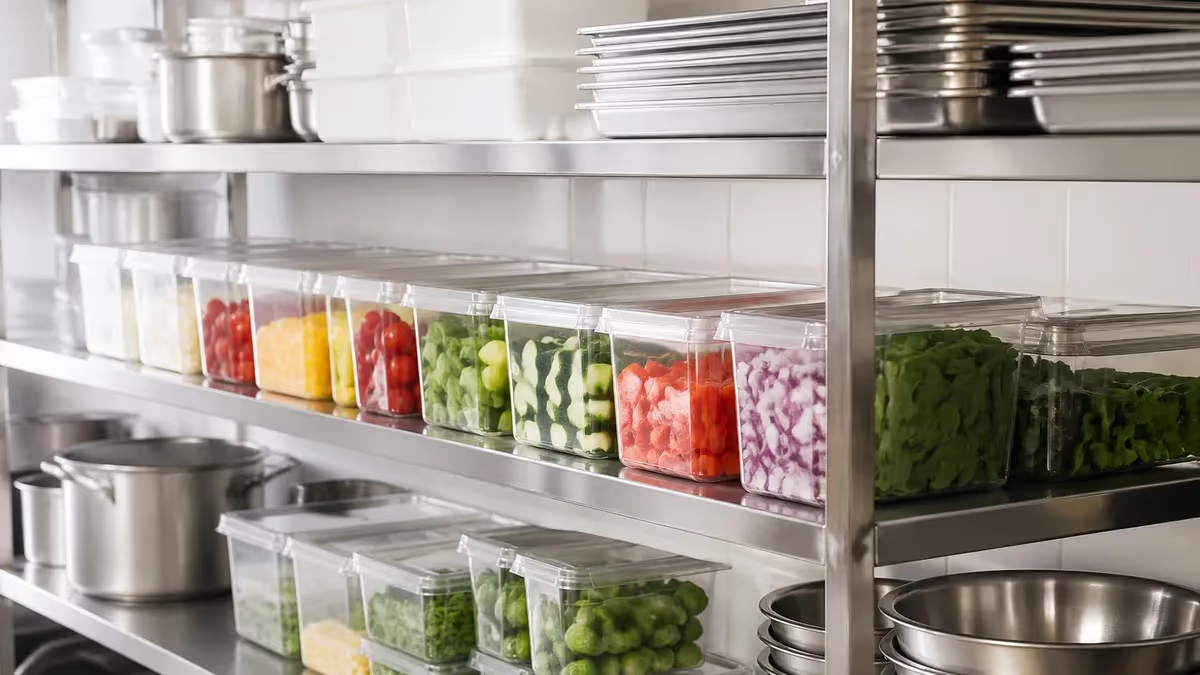
ServSafe 90 Questions and Answers — Free Practice Test 2026
The ServSafe Manager Certification exam has 90 questions. You'll need to answer at least 70% of the scored questions correctly — that's 56 out of 80 — to earn your certification. That's a tough bar, especially when the questions cover eight different food safety domains, from personal hygiene to HACCP to facility management.
Here's what most people don't realize: the exam feels harder than it looks on paper. It's not just memorizing temperatures. ServSafe tests your ability to apply food safety principles to real scenarios — contaminated equipment, sick employees showing up for a shift, improper storage situations. You have to think, not just recall.
This guide breaks down exactly what the ServSafe Manager test 90 questions include, which topics get the most questions, and how to practice efficiently so you don't waste time on low-priority content. You'll also find a ServSafe practice test 90 questions free of charge below, plus a ServSafe practice test PDF download at the end of the page — both mirror the real exam format.
One more thing worth knowing: these 90 questions include 10 pilot questions that don't count toward your score. You won't know which ones they are — so you treat all 90 the same way. That means you actually need to correctly answer 56 out of 80 scored questions to pass. The math matters.
Don't skip the practice tests. The format of the real exam rewards people who've seen ServSafe-style questions before. Scenario-based questions read differently than straightforward knowledge checks — and you need to be comfortable with both.
The ServSafe Manager exam is proctored — you take it either at a testing center or with an approved online proctor. You'll need valid government-issued photo ID. No notes, no textbook, no phone. Just what you've memorized and practiced. That's exactly why doing full-length, timed practice runs matters so much before exam day. Show up prepared and the roughly 2-hour window feels comfortable. Show up under-prepared and it feels impossibly short. The people who pass on their first try almost always took multiple full practice tests beforehand. That's not luck — it's preparation.
What to know about the ServSafe Manager exam right now
- The ServSafe Manager Certification exam is 90 multiple-choice questions, including 10 unscored pilot items; you're graded on the remaining 80 scored questions. (source)
- The passing score is 70% — 56 correct answers out of the 80 scored questions. (source)
- Retakes: ServSafe allows two attempts within any 30-day period; after a second failed attempt you must wait 60 days before testing again, up to a maximum of four attempts in a 12-month period. (source)
- ServSafe Manager Certification is valid for 5 years from the date you pass, after which recertification (retaking the exam) is required. (source)
- 2026 ServSafe store pricing: an exam-only access code is $38.99; a Pearson VUE or online-proctored exam runs about $99; the online course is about $125; combined course-and-exam bundles run roughly $152.95–$179 depending on format. Prices vary if purchased through an employer or approved provider. (source)
- Current study material is the ServSafe Coursebook, Ninth Edition. The exam itself is still written to the FDA 2022 Food Code and its Supplement, not the FDA Food Code 2026 published September 17, 2026 — so the temperatures and procedures on this page match what today's exam expects. (source)
Last verified: September 22, 2026 against servsafe.com (ServSafe Manager program page and FAQs) and the FDA Food Code 2026 page. ServSafe's own domain-by-domain question breakdown is not published, so this page does not state an exact question count per topic.
What the 90 Questions Actually Cover
ServSafe doesn't distribute questions equally across all eight domains, and the ServSafe questions and answers on this page are weighted the same way. Some topics carry far more weight — and if you don't know which ones, you'll over-study the easy stuff and under-prepare for the high-stakes content.
Temperature control is the biggest single topic. Questions about the temperature danger zone (41°F–135°F), safe internal cooking temps, and proper cooling procedures show up constantly. Get these numbers locked in cold — no pun intended. A lot of test-takers fail because they mix up chicken (165°F) and pork (145°F) under pressure.
Foodborne illness is the second-heaviest domain. You need to know the Big Six pathogens — Norovirus, Hepatitis A, Salmonella Typhi, Shiga toxin-producing E. coli, Nontyphoidal Salmonella, and Shigella. ServSafe loves asking about exclusion vs. restriction for sick employees. Exclusion means the employee leaves the premises entirely; restriction means they can work but not handle food directly. Mix those two up and you'll miss a guaranteed question.
Cross-contamination and food handling make up another significant chunk. The questions here test your understanding of allergen management, proper storage order in refrigerators (ready-to-eat on top, raw poultry on the bottom), and how to prevent chemical contamination from cleaning supplies. These are scenario-heavy — they'll describe a specific situation and ask what the correct action is.
Personal hygiene questions focus almost entirely on handwashing procedure and when employees must wash their hands. The answer is almost always "more often than you think." After touching your face, after handling raw meat, after removing gloves, after taking out trash — these all require fresh handwashing. The exam will give you edge cases and you need to know them.
Temperature Questions — The Ones Most People Miss
Temperature questions are the bread and butter of the ServSafe exam — and also where most test-takers drop points. Not because they don't know the basic danger zone, but because they don't know the edge cases.
The temperature danger zone is 41°F to 135°F. TCS (Temperature Control for Safety) foods can't stay in that range for more than four hours cumulatively. After four hours, you discard. Not taste, not reheat — discard. That rule is absolute on the ServSafe exam.
Cooling is its own maze. You have to cool hot food from 135°F to 70°F within two hours, then from 70°F to 41°F or lower within an additional four hours. Total cooling time: six hours. A lot of people remember "six hours" but forget the two-hour intermediate checkpoint — which the exam absolutely tests. Use an ice bath, blast chiller, or shallow stainless steel pans to hit that first benchmark.
The internal cooking temperatures you need memorized cold: poultry and stuffing 165°F; ground beef and pork 155°F; whole cuts of beef, pork, veal, and lamb 145°F; fish 145°F; plant-based TCS foods 135°F. There's a reason ServSafe puts these on every practice test — they show up that often on the real one. Link these numbers to a specific food in your memory — don't just recite them as a list.
One more temperature fact that trips people up: hot-held food must stay at 135°F or above. If it drops below that, you have a two-hour window to reheat it to 165°F. You can't just crank it back up slowly — it has to hit 165°F quickly. Time-temperature abuse happens in small gaps like this, and ServSafe wants managers who catch those gaps.

HACCP Questions — Don't Wing These
HACCP (Hazard Analysis and Critical Control Points) questions show up across multiple domains on the exam — not just in the dedicated "Food Safety Management Systems" section. You'll see HACCP principles applied to scenarios in the flow of food questions too.
The seven HACCP principles in order: (1) Conduct a hazard analysis, (2) Identify critical control points (CCPs), (3) Establish critical limits, (4) Establish monitoring procedures, (5) Identify corrective actions, (6) Verify the system works, (7) Establish record-keeping procedures. You need these in sequence. ServSafe often asks what step comes next given a specific situation.
A CCP is a step where you can prevent, eliminate, or reduce a food safety hazard to an acceptable level. Cooking is the most common CCP — it kills pathogens. Chilling and storage can also be CCPs depending on the operation. The exam will describe a food production step and ask if it qualifies as a CCP. The key word is "control" — if you can't control the hazard at that step, it's not a CCP.
Critical limits are the measurable boundaries at each CCP. For cooking chicken, the critical limit is an internal temp of 165°F. If that limit isn't met, corrective action is required — meaning you either cook it longer or discard. ServSafe distinguishes between corrective action (fixing the immediate problem) and verification (checking that the system works over time). Know the difference. Many test-takers confuse steps 5 and 6.
ServSafe Exam Day Checklist
- ✓Review all 8 exam domains — don't skip facility management or regulations
- ✓Memorize the Big 6 pathogens and their exclusion/restriction rules
- ✓Lock in all critical internal cooking temperatures (165°F, 155°F, 145°F, 135°F)
- ✓Practice the two-step cooling process: 135→70°F in 2 hrs, 70→41°F in 4 hrs
- ✓Know the 7 HACCP principles in order — exam tests sequential understanding
- ✓Complete at least 3 full 90-question practice tests before exam day
- ✓Bring valid government-issued photo ID to the testing center
- ✓Plan for about 2 hours — don't rush, but don't linger on hard questions
Cross-Contamination and Allergen Questions
Cross-contamination questions are deceptive. They seem straightforward — don't let raw meat touch ready-to-eat food — but ServSafe goes much deeper. You'll face questions about cross-contact (allergens), proper refrigerator storage order, and how to prevent contamination through equipment and surfaces.
Refrigerator storage order from top to bottom: ready-to-eat foods and washed produce on top, then seafood, then whole cuts of beef/pork, then ground meats and ground fish, then whole and ground poultry on the bottom. This order exists because of minimum cooking temperatures — the higher the required temp, the lower it goes in the fridge. One misplaced item on the exam means a missed point. ServSafe temperature guide covers this in more detail.
Allergen cross-contact is different from cross-contamination. Cross-contact happens when an allergen is unintentionally transferred from one food to another. Unlike bacteria, allergens aren't destroyed by cooking — so heating a dish doesn't fix a cross-contact problem. ServSafe tests whether you know this distinction. If a customer has a nut allergy and their food touched a surface that had peanut oil on it, the dish must be discarded and remade entirely.
The Big 9 allergens: milk, eggs, fish, shellfish, tree nuts, peanuts, wheat, soybeans, and sesame. You'll need to know that sesame was added as a major allergen in January 2023 — some older study materials don't include it. The exam uses the current list. ServSafe allergens guide breaks down each allergen and common hidden sources.
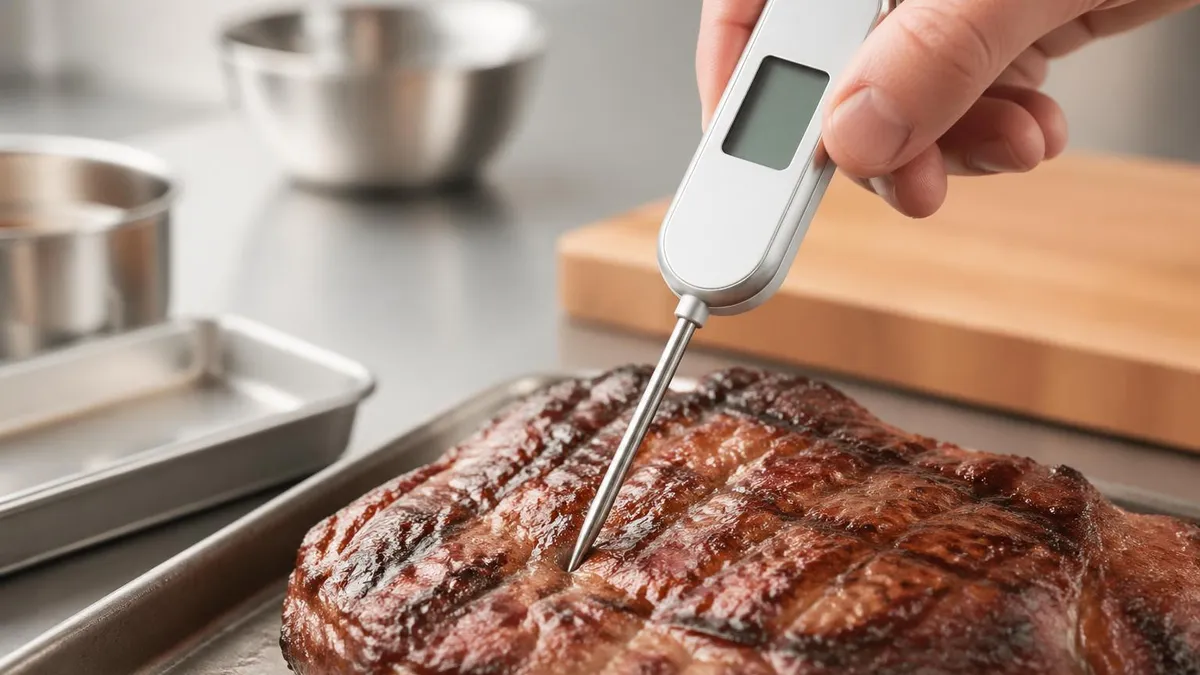
ServSafe Practice Test Topics — Deep Dive
Big 6 Pathogens (Highly Contagious — Employee Exclusion Required):
- Norovirus — most common cause of foodborne illness outbreaks; spreads through fecal-oral route; employees must be excluded
- Hepatitis A — affects the liver; long incubation period (15–50 days); employees must be excluded
- Salmonella Typhi — causes typhoid fever; spreads through contaminated water/food; very low infectious dose
- Shiga toxin-producing E. coli (STEC) — includes E. coli O157:H7; found in ground beef; causes HUS in severe cases
- Nontyphoidal Salmonella — common in poultry, eggs, produce; employees with diarrhea must be restricted or excluded
- Shigella — spreads easily person-to-person; very low dose needed to cause illness; found in produce and salads
Employees diagnosed with the Big 6 must be excluded from the operation (not just restricted). Exclusion = sent home entirely.
Study Strategy for the 90-Question Format
Three weeks of prep is enough — if you're strategic. Most people who fail the ServSafe Manager exam didn't fail because they didn't study. They failed because they studied the wrong way. Reading the textbook cover to cover feels productive. It isn't. You need active recall, not passive reading.
Week one: focus on the four heaviest domains — Forms of Contamination, Flow of Food, Food Safety Management Systems, and the Safe Food Handler. ServSafe doesn't publish an official per-domain question count, but these four domains cover more Coursebook content than the other four, so they're worth extra study time. Get fluent here first. Use flashcards for temperatures and pathogen names. Take a short practice test after each domain to check retention.
Week two: cover the remaining domains — Providing Safe Food, Safe Facilities, Cleaning and Sanitizing, and Food Safety Regulations. These are less question-heavy individually, but they're also more manageable to memorize. Chemical concentrations for sanitizers are pure memorization — put them on a card and drill them daily.
Regulatory authority questions are scenario-based and easier once you understand the health inspector's role vs. the manager's role. Health inspectors have authority to inspect, cite violations, and close operations. Managers implement systems to stay compliant — they don't argue with inspectors or refuse entry. The exam frames these as judgment calls and the "right" answer is always cooperative and proactive.
Week three: simulate the real exam. Take 2–3 full runs of a ServSafe Manager 90 question practice test under timed conditions. Two hours goes faster than you think. Flag questions you're unsure about, then review those specific topics — not everything. Focused review beats re-reading entire chapters every time. ServSafe exam tips has specific strategies for the most common question traps on the real exam.
One thing that separates passing scores from failing ones: comfort with scenario questions. These questions don't ask "what is the temperature danger zone?" — they describe a catering manager who finds food at 50°F after two hours and ask what they should do. The knowledge is the same, but the application layer trips people up. A ServSafe practice exam with answers explained trains your brain to translate knowledge into decisions quickly. That's the skill the ServSafe exam actually measures.
Common Wrong Answers and Why Test-Takers Choose Them
Pattern recognition is your secret weapon when you work through ServSafe certification exam questions and answers. Certain wrong answers appear repeatedly — and once you know why they're wrong, you'll stop choosing them under pressure.
The most common trap: confusing "restrict" with "exclude" for sick employees. Restriction means limiting duties (no bare-hand contact with food). Exclusion means the employee leaves the building. The Big 6 pathogens require exclusion, not just restriction. Many test-takers know the pathogens but apply the wrong policy. ServSafe Manager practice test has multiple questions specifically on this rule.
Another frequent miss: thinking that cooking kills allergens. It doesn't. Allergens are proteins that survive heat — a nut allergen in a dish doesn't disappear because you cooked it to 165°F. When a customer with a food allergy is involved, the dish must be remade in a clean environment with separate utensils. ServSafe will absolutely test this distinction.
The cooling process confusion is another big one. People know they need to get food to 41°F eventually, but they forget the intermediate checkpoint: food must drop from 135°F to 70°F within the first two hours. Fail that checkpoint — even if you hit 41°F by hour six — and the food is still unsafe.
The exam frames this as a scenario: a manager checks the temperature at hour three and finds the food at 75°F. What should they do? The answer is discard — the two-hour window already closed. You can't retroactively fix a missed cooling checkpoint. Time-temperature abuse doesn't reverse.
Here's a subtler trap that shows up a few times per exam: questions about sanitizer concentration. Many test-takers know that chlorine sanitizer should be between 50–99 ppm, but they don't know what to do when the concentration is wrong. Too low and it won't kill pathogens. Too high and it's a chemical hazard to food contact surfaces.
The correct action when concentration is off: discard the sanitizer solution and mix a fresh batch. Don't add more sanitizer to boost weak solution. Don't dilute with extra water to lower a strong one. Start fresh — that's the ServSafe answer every time.
Pest management questions surprise a lot of people. These aren't intuitive from a food prep background — they require knowing specifics about approved pest control methods and where rodent activity indicators are found. Short answer: a manager can take preventive measures (seal gaps, remove standing water, store food properly), but chemical pest control must be done by a licensed operator.
The exam will ask what the manager does first when pests are discovered. The answer is always: contact a licensed pest control operator immediately. Don't attempt to treat it yourself. Don't delay reporting it. The pest control operator handles the chemical response; the manager handles the prevention and documentation afterward.
ServSafe Manager Test 90 Questions: How Scoring and Retakes Work
The ServSafe Manager Certification exam is 90 multiple-choice questions, and 10 of them are unscored pilot items that ServSafe is trialing for future exams. Your result is calculated on the remaining 80 scored questions, and the passing score is 70% — 56 correct out of 80. You can miss up to 24 scored questions and still pass. Because pilot questions are not marked, the safest practice target is 65 or more correct out of 90 on a ServSafe manager 90 question practice test; that leaves a cushion even if several of your misses land on scored items.
The exam is proctored in every delivery format: a classroom session with a registered ServSafe proctor, a Pearson VUE testing center, or online proctoring from home. Bring valid government-issued photo ID.
If you fail, a retake means purchasing a new exam. ServSafe allows two attempts within a 30-day period; after a second failed attempt you wait 60 days before testing again, and the cap is four attempts in any 12-month period. Each exam draws from the same content areas, so review the topics you missed rather than starting over.
Current study material is the ServSafe Coursebook Ninth Edition. The FDA published the 2026 Food Code on September 17, 2026, but the exam is still written to the 2022 Food Code and its Supplement — the temperatures, times, and procedures on this page are what the test expects. Every ServSafe practice test 90 questions free set on this site follows that same standard.

ServSafe Manager Certification — Is It Worth It?
- +Nationally recognized — accepted in most US states and jurisdictions
- +Required by law in many states for at least one certified manager per food service location
- +Certification is valid for 5 years before renewal is needed
- +Increases your earning potential — certified managers earn more than uncertified staff
- +Demonstrates food safety competence to employers and health inspectors
- +The exam prep process itself teaches skills you'll use every single day on the job
- −Exam-only access code costs $38.99 from the ServSafe store; a proctored exam runs about $99, and course-plus-exam bundles run roughly $125–$179 depending on format and provider
- −90 questions in about 2 hours is genuinely difficult without thorough preparation
- −Renewal required every 5 years — adds recurring cost and study time
- −Some states have their own additional requirements beyond just ServSafe certification
ServSafe Questions and Answers
Official Resources
- ServSafe Manager (servsafe.com) — the National Restaurant Association's official program page, where you buy the exam, course, and Coursebook Ninth Edition and find a proctor or testing center.
- ServSafe Manager FAQs — official answers on exam format, the 70% passing score, proctoring options, retake limits, and how long certification is valid.
- FDA Food Code 2026 — the federal model code (published September 17, 2026) that ServSafe content is built on; use it to check any temperature or procedure at the source.
ServSafe Study Guide 2026 — How to Pass the ServSafe Manager Exam

ServSafe Temperature Guide — Food Safety Temperature Zones 2026

ServSafe HACCP Guide — The 7 Principles Explained for the Exam 2026
ServSafe Food Allergens Guide: The Big 9 & Exam Tips
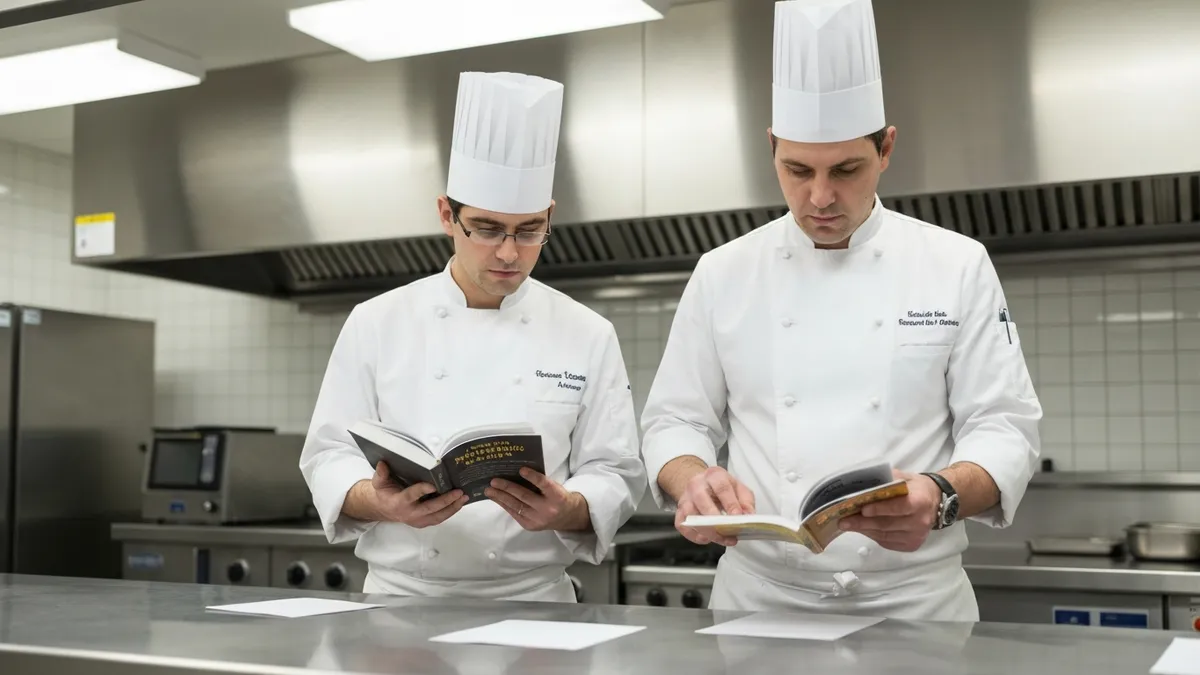
ServSafe Exam Tips: How to Pass the Manager Certification
About the Author

Registered Sanitarian & Food Safety Certification Expert
Cornell University College of Agriculture and Life SciencesThomas Wright is a Registered Sanitarian and HACCP-certified food safety professional with a Bachelor of Science in Food Science from Cornell University. He has 17 years of experience in food safety auditing, regulatory compliance, and foodservice management training. Thomas prepares food industry professionals for ServSafe Manager, HACCP certification, and state food handler examinations.
Join the Discussion
Connect with other students preparing for this exam. Share tips, ask questions, and get advice from people who have been there.
View discussion (7 replies)