
SERVSAFE Manager 2026: Complete Guide to the Manager Certification Exam
Pass the SERVSAFE Manager 2026: 🆕 Complete Guide exam with confidence. Practice questions with detailed explanations and instant feedback on every answer.

What Is the SERVSAFE Manager Certification?
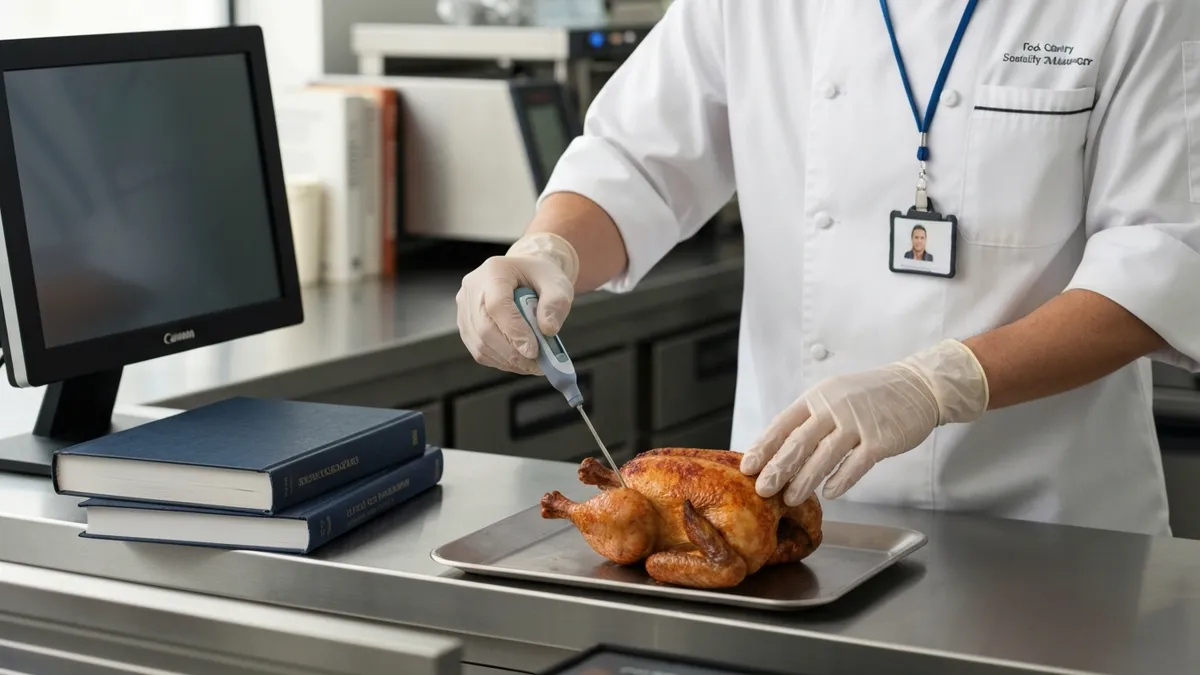
The SERVSAFE Manager certification is an advanced food protection credential that demonstrates a food service professional's mastery of food safety principles required to manage a restaurant, cafeteria, or other food service operation. While the entry-level servsafe food handler covers basic skills for frontline workers, the servsafe manager credential goes deeper — covering HACCP (Hazard Analysis and Critical Control Points) principles, regulatory compliance, food safety management systems, purchasing and receiving controls, and how to establish a food safety culture across an entire organization. Practice with the free ServSafe practice test on PracticeTestGeeks (1,350+ questions with answer explanations).
The certification is administered by the National Restaurant Association Educational Foundation and accredited by the American National Standards Institute (ANSI) National Accreditation Board (ANAB). This accreditation is what makes it legally recognized by state and local health departments as proof that a food establishment has a certified food protection manager on staff — a requirement in the majority of U.S. states. According to servsafe.com, more than 5 million people have earned the SERVSAFE Manager certification since the program's inception.
Food service managers, restaurant owners, executive chefs, food service directors, school nutrition managers, and healthcare food service supervisors are the primary candidates for this credential. Some states require at least one certified food protection manager per food establishment; in these jurisdictions, the servsafe manager exam is a mandatory career milestone. Review our full servsafe certification guide to compare all available SERVSAFE credentials side by side.
Free ServSafe Study Tools
Interactive ServSafe resources on PracticeTestGeeks, free to start:
- ServSafe practice test — 1,350+ questions with instant scoring and answer explanations
- ServSafe flashcards — review key terms and concepts card by card
- ServSafe study guide — topic-by-topic overview of what the exam covers
- ServSafe cheat sheet — one-page printable summary for last-minute review
SERVSAFE Manager Exam Format
The SERVSAFE Manager practice test and the real exam both use the same format: 90 multiple-choice questions, each with four answer options. Of the 90 questions, 80 are scored and 10 are unscored pilot questions used to evaluate future exam items. Pilot questions are not identified — you will not know which 10 questions are unscored, so you must treat every question as if it counts toward your final score.
Questions are drawn from a large question bank and presented in random order. Every exam administration presents a different set of questions, which is why thorough preparation using a servsafe manager practice test is essential — you need to understand the underlying concepts, not memorize specific questions. Our free practice tests at servsafe practice test include hundreds of questions across all tested domains.
All questions follow the same structure: a scenario or fact-based stem followed by four answer choices labeled A through D. Some questions present workplace scenarios and ask you to identify the correct food safety action. Others test specific knowledge of temperatures, time limits, or regulatory requirements. The exam is available in print-paper format and computer-based format depending on your testing site.
SERVSAFE Manager Certification: Who Needs It?
What is servsafe certified for managers specifically? In most U.S. states, at least one employee per food establishment must hold a valid Certified Food Protection Manager (CFPM) credential — and the SERVSAFE Manager certification is the most widely accepted CFPM credential in the country. As of 2026, over 40 states have adopted regulations requiring a certified food protection manager in food establishments, making the servsafe manager exam effectively mandatory for anyone who manages a food service operation.
The SERVSAFE Manager certification is required or highly recommended for: restaurant managers and owners, executive chefs, food service directors, school nutrition managers, hospital food service supervisors, catering managers, food truck owners, grocery store deli managers, and cafeteria directors. Even in states that don't legally require it, employers almost universally prefer or require the SERVSAFE Manager certification for management positions. Check out the full career impact in our servsafe certification.
Managers who are already certified under a previous version of the exam (e.g., SERVSAFE 6th Edition) must retake the exam under the servsafe manager exam to keep their credential current. The exam content is updated periodically to reflect changes in the FDA Food Code, and all certifications have a strict 5-year validity period regardless of which edition you were tested on.
SERVSAFE Manager Study Guide: How to Pass the Exam
The servsafe test prep process for the Manager exam is more demanding than for the Food Handler assessment — you have 90 questions to answer in 2 hours on topics ranging from HACCP principles to regulatory compliance. Candidates who dedicate 20–40 hours of focused study time over 2–4 weeks consistently pass at higher rates than those who cram the night before.
The most effective study strategy combines three tools: the official SERVSAFE Manager Coursebook, chapter review questions, and multiple rounds of practice tests using free servsafe manager materials. The coursebook covers all eight content domains tested on the exam and includes chapter-end review questions that mirror the real exam format. Work through one chapter per study session, complete the review questions, and note any topics you answered incorrectly — these become your priority focus areas in the final week of preparation.
Our free servsafe test prep outlines the full eight-chapter curriculum and links to targeted practice questions for each domain. Candidates who complete at least three full-length practice tests before their exam appointment pass at significantly higher rates than those who only study the coursebook. Use our servsafe study guide to structure your preparation timeline and track your progress chapter by chapter.

SERVSAFE Manager Certification Online: Online vs. Classroom Training
The servsafe certification online path and the traditional classroom approach both lead to the same proctored exam and the same credential — the key differences are format, cost, and learning style. Understanding which option fits your schedule and learning preferences helps you choose the most efficient path to certification.
The servsafe manager online course is a self-paced digital version of the standard 8-hour curriculum. It covers all eight content domains at your own speed, includes interactive exercises, chapter quizzes, and video content. The online course is available 24/7 and can be completed over multiple sessions — there is no requirement to finish it in one sitting. The $149 bundle includes both the online course and the proctored exam voucher. The exam itself is always proctored regardless of whether you choose online or classroom training. Explore our ServSafe courses overview to compare all current training options and prices.
For those who prefer structured in-person learning, servsafe certification online free options don't exist for the official exam, but many community colleges and culinary schools offer subsidized classroom training for how to get servsafe certified at reduced rates. Check with your local health department, restaurant association, or community college for upcoming SERVSAFE Manager classroom courses in your area. Our ServSafe classes near me guide lists resources for finding local training providers.
SERVSAFE Food Handlers vs. SERVSAFE Manager: What Counts Toward Compliance?
A common point of confusion is whether holding a servsafe food handler certificate makes an employee legally compliant as a food protection manager. It does not. The servsafe food handler and servsafe food handlers certificates are entry-level credentials that satisfy food handler card requirements in states that mandate training for frontline workers. They do not satisfy the Certified Food Protection Manager (CFPM) requirement under the FDA Food Code.
State health codes that require a certified food protection manager specifically require a credential from an ANAB-accredited CFPM program — which includes SERVSAFE Manager but excludes SERVSAFE Food Handler. A restaurant that has a manager holding only a Food Handler certificate is not in compliance with CFPM requirements, even if every employee on staff has a food handler card. The distinction matters significantly during health inspections. Read more in our how to get servsafe certified for full compliance context.
Understanding this distinction also helps managers structure their team's training program correctly: all employees should hold the servsafe food handler certificate or equivalent, while at least one manager per establishment must hold the full servsafe manager credential. Some states and localities require multiple certified managers per large establishment. Our servsafe manager exam explains how to build a compliant training program from the ground up.
SERVSAFE Manager Exam Prep Checklist
- ✓Purchase your exam voucher or bundle at ServSafe.com — $89 exam only or $149 with online course
- ✓Study all 8 content domains using the official ServSafe Manager Coursebook or equivalent materials
- ✓Memorize cooking temperatures: 165°F poultry, 155°F ground meats, 145°F fish/whole-muscle pork, 135°F produce
- ✓Master the cooling rule: 135°F → 70°F within 2 hours, then 70°F → 41°F within the next 4 hours (6 hours total)
- ✓Learn all 7 HACCP principles in order — HACCP is a major exam topic not covered in the Food Handler exam
- ✓Know the Big 6 pathogens and when to exclude vs. restrict ill food workers
- ✓Study the 9 major food allergens: milk, eggs, fish, shellfish, tree nuts, peanuts, wheat, soybeans, sesame
- ✓Review sanitizer concentrations: chlorine 50–100 ppm, quaternary ammonium 200–400 ppm
- ✓Take at least 3 full-length servsafe manager practice tests and score 80%+ before your exam appointment
- ✓On exam day: bring a valid government-issued photo ID, arrive 15 minutes early, manage your pace at ~1.3 min/question
SERVSAFE Test Prep: Practice Tests and Study Resources
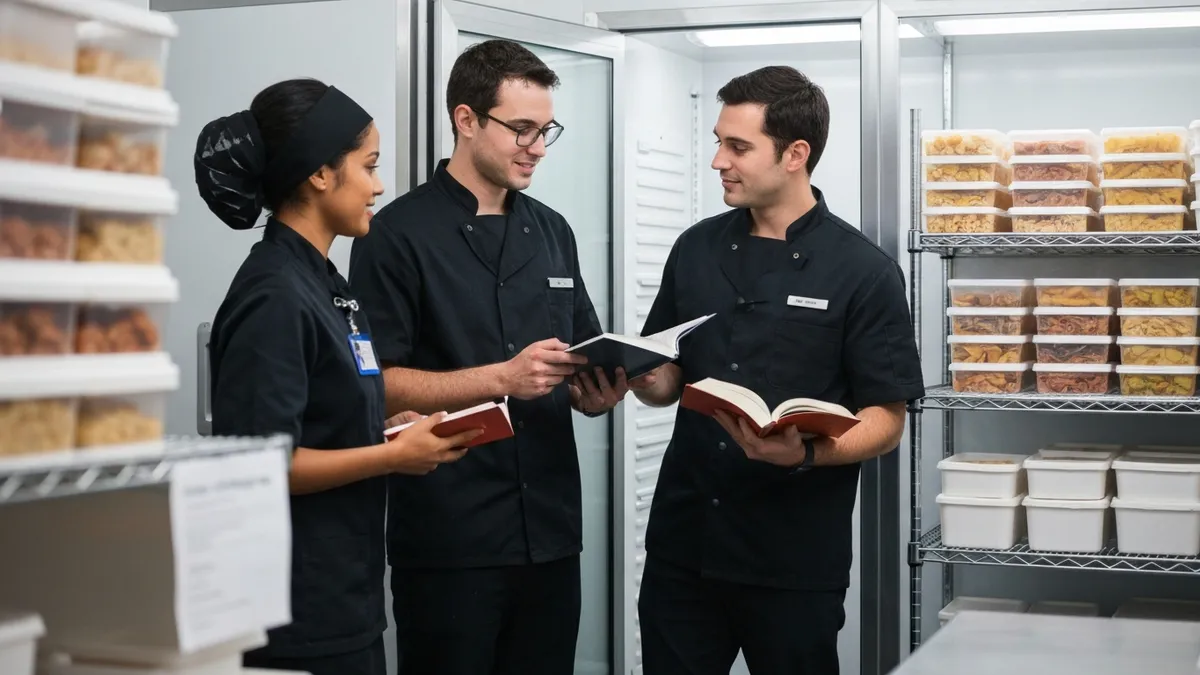
The most effective servsafe test prep strategy combines official coursebook study with targeted practice test sessions. Our free SERVSAFE practice test includes hundreds of questions modeled after the actual exam — covering all eight content domains, with explanations for every answer. Use practice tests after each chapter to gauge retention, and then take full-length simulated exams in the final week before your appointment.
The servsafe test prep resource provides visual explanations of key concepts that are hard to grasp from text alone — particularly HACCP process flow, cooling equipment, and temperature monitoring procedures. Visual learners who supplement their reading with video explanations consistently score higher on practice tests. The servsafe certification also includes topic-by-topic study breakdowns aligned with the official exam blueprint.
For managers who have been working in food service for years, the biggest risk is overconfidence on HACCP and regulatory compliance questions — topics that may not come up in daily operations but account for a significant portion of the exam. Even experienced food service professionals should complete at least 2–3 full practice test sessions using a servsafe manager practice tests format before their exam. Your servsafe com account will store your practice test history and highlight areas where you consistently miss questions.
- +Industry-recognized credential boosts your resume
- +Higher earning potential (10-20% salary increase on average)
- +Demonstrates commitment to professional development
- +Opens doors to advanced career opportunities
- −Exam preparation requires significant time investment (4-8 weeks)
- −Certification fees can be $100-$400+
- −May require continuing education to maintain
- −Some employers may not require certification
Sample ServSafe Practice Questions
Try these questions from our free ServSafe practice tests. The correct answer and an explanation follow each question.
A food handler comes to work with diarrhea. What should the manager tell the food handler to do?
- A. beverages
- B. go home
- C. clean the restroom after each use
- D. only bus tables
Answer: B. go home
Diarrhea is a symptom of several highly contagious foodborne illnesses. A food handler experiencing diarrhea must be immediately excluded from the operation to prevent the spread of pathogens to food and customers. The manager's primary responsibility is to send the employee home and report the illness to the regulatory authority if required.
After refusing alcohol service to a guest, the manager overrides the decision and orders the server to serve the guest. What should the server do?
- A. Comply immediately because the manager has authority
- B. Serve the guest but document the incident in the incident log
- C. Refuse to serve and follow responsible service guidelines, even if overruled by management
- D. Ask the guest to sign a release of liability form
Answer: C. Refuse to serve and follow responsible service guidelines, even if overruled by management
Servers have an independent duty to refuse service to visibly intoxicated guests; a manager's override does not remove the server's personal legal liability.
What document should a manager keep to verify supplier food safety practices?
- A. Supplier inspection reports or certificates
- B. Employee time cards
- C. Customer feedback cards
- D. Daily sales receipts
Answer: A. Supplier inspection reports or certificates
Managers should obtain supplier inspection reports to confirm safe sourcing.
A delivery of fresh chicken arrives and the driver cannot provide a temperature reading. What should the manager do?
- A. Accept the delivery and take the temperature after storing
- B. Take the internal temperature of the chicken before accepting the delivery
- C. Reject the delivery automatically without checking temperature
- D. Accept the delivery if the chicken looks and smells fresh
Answer: B. Take the internal temperature of the chicken before accepting the delivery
The manager must take the internal temperature of the chicken before accepting it to verify it meets the 41°F or below requirement.
Take the full ServSafe practice test
For more details, see our ServSafe Temperature Danger Zone: Complete Guide 2026 guide.SERVSAFE Manager Questions and Answers
More SERVSAFE Resources
About the Author

Registered Sanitarian & Food Safety Certification Expert
Cornell University College of Agriculture and Life SciencesThomas Wright is a Registered Sanitarian and HACCP-certified food safety professional with a Bachelor of Science in Food Science from Cornell University. He has 17 years of experience in food safety auditing, regulatory compliance, and foodservice management training. Thomas prepares food industry professionals for ServSafe Manager, HACCP certification, and state food handler examinations.