
ServSafe Test: Questions, Format, Pass Mark, and Study Plan 2026
❓ ServSafe test explained: 90 questions, 80 scored, 70% pass mark, 5 year validity, content domains, study plan, and tips to pass on the first try.
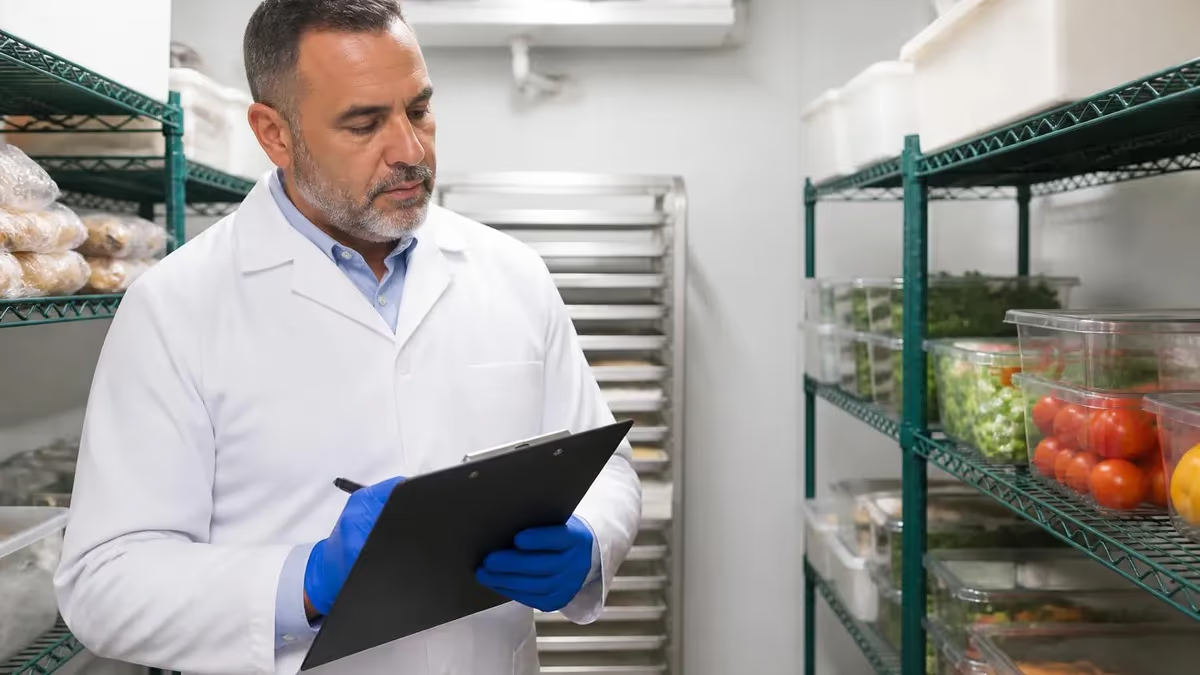
The ServSafe test is the food safety certification exam most US restaurants, hotels, and institutional kitchens accept as proof you know how to handle food without poisoning anyone. There are several versions, but when people say ServSafe test they usually mean the Food Protection Manager exam, the 90-question, 2-hour proctored test that gets you a credential good for five years in most states. This guide walks through what is actually on it, the pass mark, what to study, and the parts that trip up first-time test takers.
If you are taking the ServSafe practice test before sitting the real exam, the format is identical: multiple choice, four answer options, computer-based at most testing sites, paper-based when your employer brings the proctor on site. The questions are scenario-driven. You are not asked to recite a temperature out of context. You are asked what to do when a cook tells you the chicken hit 130 degrees and the lunch rush starts in five minutes.
- The ServSafe Food Handler assessment is a 40-question, non-proctored, multiple-choice test. (National Restaurant Association)
- The ServSafe Manager exam has 90 multiple-choice questions; 80 are scored and 10 are unscored pilot questions. (National Restaurant Association)
- The ServSafe Food Handler assessment has no time limit, and most test-takers finish within 90 minutes. (National Restaurant Association)
- Candidates have 2 hours to complete the ServSafe Manager exam, and the online-proctored launch process does not count toward that time. (National Restaurant Association)
- Students need a score of at least 75% on the ServSafe Food Handler assessment to earn the Certificate of Achievement. (National Restaurant Association)
- Passing the ServSafe Manager exam takes a score of 70% or higher, which means at least 56 of the 80 scored questions correct. (National Restaurant Association)
- The ServSafe Manager Book, 9th Edition, costs $54.99. (National Restaurant Association)
- A printed voucher for the ServSafe Manager Exam costs $38.99. (National Restaurant Association)
- Each retest of the ServSafe Manager exam requires buying a new exam. (National Restaurant Association)
Facts verified Oct 15, 2026 against National Restaurant Association. Dates that have passed are removed automatically.
ServSafe Exam at a Glance
| Item | Detail | Official source |
|---|---|---|
| Number of questions (food handler) | 40 multiple-choice questions | National Restaurant Association |
| Number of questions (manager exam) | 90 multiple-choice questions (80 scored + 10 unscored pilot) | National Restaurant Association |
| Time limit (food handler) | No time limit (about 90 minutes on average) | National Restaurant Association |
| Time limit (manager exam) | 2 hours | National Restaurant Association |
| Passing score (food handler) | 75% | National Restaurant Association |
| Passing score (manager exam) | 70% (56 of 80 scored questions) | National Restaurant Association |
| Exam fee (manager book 9th edition) | $54.99 | National Restaurant Association |
| Exam fee (manager exam (printed voucher)) | $38.99 | National Restaurant Association |
| Exam fee (manager online course) | $125.00 | National Restaurant Association |
| Exam fee (manager online course + exam (access code)) | $152.95 | National Restaurant Association |
| Exam fee (manager online course + exam (online proctor)) | $179.00 | National Restaurant Association |
| Exam fee (manager online course + exam (test center)) | $188.99 | National Restaurant Association |
| Retake fee (manager exam) | Full exam price for each retest (new exam purchase) | National Restaurant Association |
| Retake policy (food handler) | 3 attempts per course purchase | National Restaurant Association |
| Retake policy (manager exam) | 2 attempts in 30 days; 60-day wait before a 3rd attempt; max 4 attempts in 12 months | National Restaurant Association |
| Validity (food handler) | 3 years | National Restaurant Association |
| Validity (manager exam) | 5 years | National Restaurant Association |
| Renewal (manager exam) | Retest (new exam purchase) when current certification is expiring | National Restaurant Association |
| Delivery (food handler) | Online, no proctor (classroom/print version needs an instructor) | National Restaurant Association |
| Delivery (manager exam) | Proctored: registered instructor/proctor (print or online), ProctorU online proctoring, or Pearson VUE test center | National Restaurant Association |
| Eligibility (food handler) | No official prerequisite | National Restaurant Association |
| Score release (food handler) | Immediately after the online assessment | National Restaurant Association |
| Score release (manager exam) | Online: almost immediately (certificate within 24 h); print: 3–4 business days | National Restaurant Association |
| Testing window (food handler) | Start within 12 months of purchase; course expires 60 days after start | National Restaurant Association |
| Testing window (manager online course) | Unused: 1 year from purchase; once started: 90 days | National Restaurant Association |
Facts verified Oct 15, 2026 against National Restaurant Association. Dates that have passed are removed automatically.
ServSafe Test At A Glance
The Manager exam is the gold standard. It is approved by the ANSI National Accreditation Board, accepted in all 50 states, and required by health departments in most major cities. The version most people know, the green-cover study guide and the proctored test, is what your future boss is checking when they ask for a copy of your certificate. The Food Handler exam is a separate, shorter, lower-stakes credential aimed at line cooks and servers, and it is not the same thing.
You can take the ServSafe Manager exam in three ways. The most common is in a classroom with a proctor, after an 8-hour instructor-led course. The second is online with a remote proctor watching through your webcam. The third is at a Pearson VUE testing center, which is the route most people choose when their employer is paying or when they want to retest after failing. All three produce the same certificate.
Walk-in registration is not available. You must book your seat at least 24 hours ahead through the ServSafe website or the Pearson VUE portal. Same-day cancellations forfeit the exam fee. Reschedule at least 24 hours out to keep your fee. Plan your test day around traffic and parking, especially in city centers where the testing centers often share buildings with other professional certifications and parking can be tight during business hours.
Bring two valid forms of identification on test day. The primary form must be government-issued with a photo, such as a passport or driver license. The secondary form can be a credit card, school ID, or any document with your printed name. The first and last name on both must match the name on your exam registration exactly. A mismatch will get you turned away at the door without a refund, so check your registration confirmation before you leave the house.
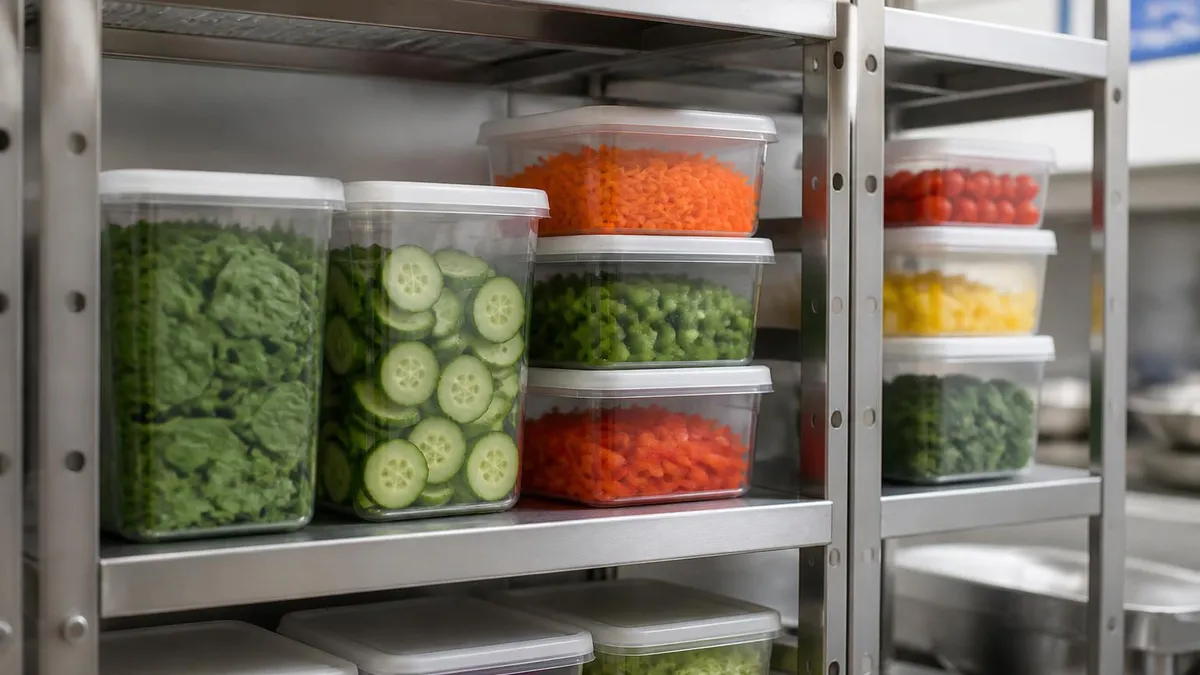
90 multiple-choice questions across 8 content domains. You have 120 minutes. Pass mark is 70% (you need 56 of 80 scored questions correct). Results post within 10 business days for proctored paper exams and immediately for computer-based exams. The certificate is valid 5 years in most states, 3 years in a few. Cost is around $36 to $179 depending on whether you take a course.
The 90 questions are spread across eight content domains. Roughly a quarter of the test covers safe preparation and cooking, minimum internal temperatures, cooling protocols, reheating rules. Another quarter covers receiving and storage. The remaining half is split across cleaning and sanitizing, facilities and pest management, food safety management systems, and staff health policies. The exam outline is published openly by the National Restaurant Association and worth printing before you start studying.
The two domains that fail more candidates than anything else are time and temperature control and the cleaning and sanitizing chemistry section. The first is mostly memorization: 165 for poultry, 145 for steaks and fish, 135 for cooked fruits and vegetables held hot, but you have to recall the numbers under pressure. The second mixes parts per million for chlorine, iodine, and quaternary ammonium with contact times, which is harder than it sounds when the wording is twisted.
Major Content Areas on the ServSafe Test
Internal cook temps, cooling from 135 to 41 in six hours, holding above 135 or below 41, reheating to 165 within two hours.
Cutting board color coding, separate utensils, raw protein storage order from top shelf to bottom by cook temperature.
Bare hand contact rules, glove changes, wound coverage, when to send a cook home for vomiting, jaundice, or sore throat with fever.
Three-compartment sink steps, sanitizer concentrations in ppm, contact time, test strips, the difference between clean and sanitized.
The big six pathogens show up everywhere. ServSafe expects you to recognize Salmonella, Shigella, E. coli STEC, Hepatitis A, Norovirus, and Nontyphoidal Salmonella by their food vehicles and their reportable status. A question might give you a server complaining of jaundice and ask what to do, the answer involves excluding the worker and notifying the regulatory authority. Another might describe diced tomatoes left at room temperature and ask which pathogen is most likely. Memorize the chart in chapter 2 of the study guide.
Allergens are now a full content domain on their own. The big nine allergens replaced the big eight when sesame was added in 2023, and the exam was updated to match. Expect questions about cross contact during preparation, cleaning between menu items, and the manager's obligation to brief servers when a guest declares an allergy. The legally correct answer is almost always to involve the manager, not the server, in any allergen-related guest communication.
What Happens After The Exam
You get a certificate, a wallet card, and a digital badge. The certificate is what your employer files. It is valid 5 years in most jurisdictions. You can verify your certificate number on the ServSafe website at any time. Some states require you to register the credential with the local health department, which is your responsibility, not the testing center's.

Study time varies. Career restaurant managers with five years of experience often pass after a weekend of review. Career changers and first-time food service workers usually need two to three weeks of evenings. The fastest predictor of pass rate is whether you have actually worked a hot line. People who have stood at a grill staring at a thermometer rarely fail the temperature questions. People who have never opened a walk-in cooler tend to miss the storage order.
Take a full ServSafe practice test early in your prep, not at the end. The diagnostic value is huge. A practice test taken cold will reveal which domains you already know and which you need to grind on. Then pick two domains and study only those for a week before taking a second practice test. Repeat. This beats reading the entire study guide cover to cover, which is what most people try first and what most quitters give up on.
ServSafe writers love negative phrasing: which is NOT acceptable, which would NOT be allowed, which is the LEAST effective. Always circle the negative on your scratch paper. The single biggest source of avoidable mistakes is reading a question fast, picking the obvious right answer, and missing that the question wanted the wrong one. Slow down on every question with capitalized words.
The exam is open in scoring. Each question is one point. There is no penalty for guessing, so you should answer every question even if you have to mark and skip back. The proctor flags blank answers more than you expect. The most efficient approach is to do a first pass answering everything you know in under a minute per question, then come back to the marked questions with the time you saved. Most candidates finish at the 75 to 90 minute mark.
What about HACCP? Hazard Analysis Critical Control Points is one of the eight domains and you should know the seven principles by name. Conduct hazard analysis, determine critical control points, establish critical limits, monitoring procedures, corrective actions, verification, record-keeping. ServSafe will not ask you to write a HACCP plan, but it will give you a scenario where one principle is being violated and ask which one. The most commonly tested principle is critical limits.
Two Week Study Plan That Works
- ✓Day 1: Take a full practice test cold, identify weak domains
- ✓Days 2 to 4: Memorize all temperature charts and the big nine allergens
- ✓Days 5 to 7: Drill cleaning, sanitizing chemistry, and storage order
- ✓Day 8: Take a second practice test, target above 80%
- ✓Days 9 to 11: Review missed questions and HACCP principles
- ✓Day 12: Light review only, focus on negatively worded questions
- ✓Day 13: Sleep, hydrate, eat real food, no cramming
- ✓Day 14: Take the exam
Cost is one of the bigger surprises. The exam alone with no course is around $36. Add the online course and it is closer to $125. A full instructor-led classroom course with the proctored exam can run $179 or more depending on the region and the provider. Some employers reimburse the full cost on successful pass, which is worth asking about before you pay out of pocket. Group rates apply when five or more take the course together.
The certificate is portable. When you change jobs, the credential goes with you. A ServSafe Manager certificate earned in Texas is valid in California, New York, and Florida with no extra step. The exception is local jurisdictions that require a separate city or county food handler card on top of the state requirement. Riverside County in California is a well-known example. Check the local health department before you assume your card is enough.
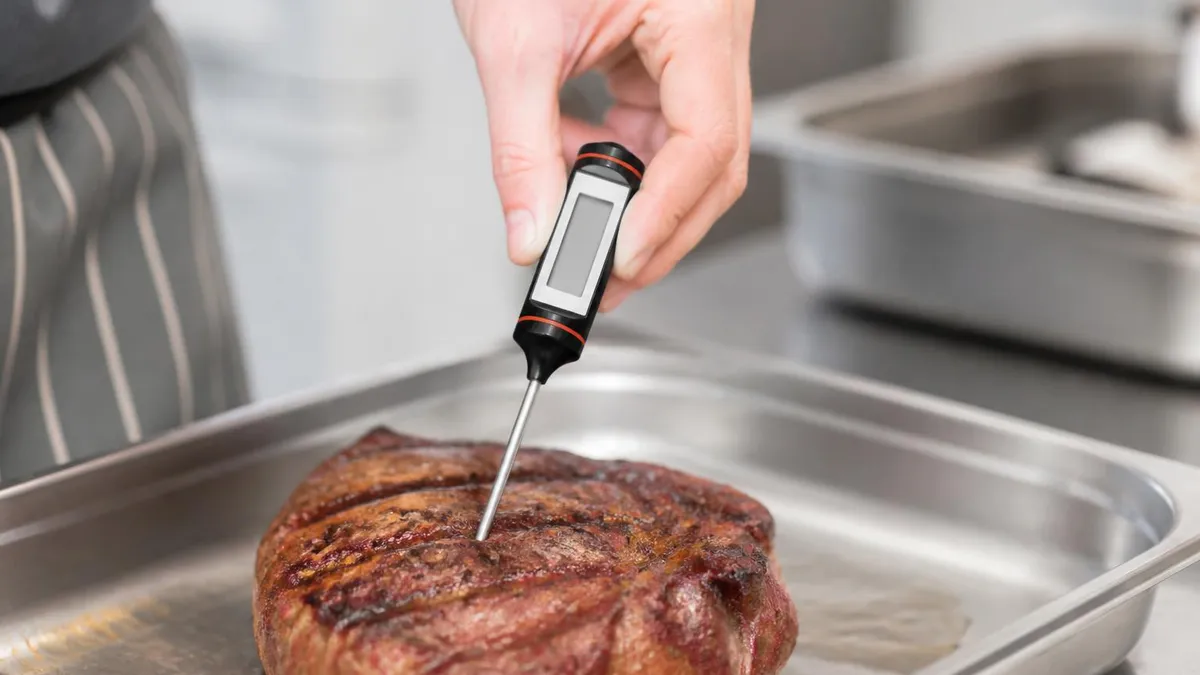
What is the difference between Manager and Food Handler? The Food Handler exam is 40 questions, takes about 90 minutes, and aims at line staff who touch food without supervisory authority. It costs around $15 and is valid three years in most places. The content overlaps but does not go as deep. The Manager exam covers HACCP, regulatory compliance, and crisis management at a level the Food Handler exam never touches. If you are sitting one to be a chef or kitchen manager, take Manager.
ServSafe also offers Alcohol, Workplace, and Allergens credentials, each with its own short exam. None of them substitute for Manager when your employer requires Manager. They are add-ons that round out a restaurant management profile and sometimes count toward state alcohol service requirements. Check whether your state recognizes the ServSafe Alcohol credential before paying. Some states require their own state-specific alcohol training.
ServSafe Manager Test Trade-offs
- +Accepted in all 50 states and most major cities
- +Five year validity in most jurisdictions
- +Online proctored option saves a classroom day
- +Wallet card and digital badge for portable proof
- +Same exam content nationwide, no state surprises
- −$179 or more if you take the full course
- −Trick wording fails candidates who otherwise know the material
- −Cleaning and sanitizing chemistry trips up first timers
- −No partial credit, no extension, retake required if you fail
- −Renewal requires retaking the full exam, no shortcut
Anxiety is a real factor on the day. The test room is usually quiet, the proctor is watching, and the clock is visible. If you struggle with test anxiety, ask your training provider whether extended time accommodations are available. They usually are with documentation. Eat a real breakfast. Caffeine if it is your normal routine, not double if it is not. Empty your bladder before you sit. These sound silly but they are the difference between focused and scattered for ninety minutes.
One more practical tip: the testing center will provide you with scratch paper and a pencil. Use them. Write down the temperature chart from memory in the first two minutes before you read a single question. Write the big nine allergens. Write the order of the three-compartment sink. Anchoring these on paper makes the recall questions effortless and frees your working memory to read the trickier scenarios carefully. Strong candidates always dump first.
Sleep matters more than people admit. The exam is 90 questions of pattern recognition under time pressure. Tired brains fail pattern recognition. If you have been cramming the night before, you are already at a disadvantage. The candidates who pass on the first try with the smallest study windows almost always slept eight hours the night before. The ones who fail with two weeks of study almost always pulled an all-nighter the day before. Treat your last 12 hours like an athlete treats game day, eat, hydrate, rest, no caffeine spike beyond your normal routine. The questions reward calm.
If English is your second language, the National Restaurant Association offers the Manager exam in Spanish, Korean, Chinese, French Canadian, and a few other languages. The Spanish version is the most widely available and accepted in all 50 states the same way the English version is. Ask your training provider about language options before registering. You can also request a reader or extended time accommodation if you qualify under ADA documentation, which the test vendor will arrange in advance for an additional fee that is sometimes covered by your employer.
Pearson VUE is the testing vendor for most computer-based ServSafe Manager exams in the United States, and the experience is the same as taking any other professional certification at one of their centers. You arrive 30 minutes early, present a valid government photo ID, store your phone and bags in a locker, and get walked to a workstation. The proctor logs you in. You read the on-screen instructions, accept the terms, and the 120-minute clock starts. There is a built-in calculator on screen for the rare temperature math question, though you will almost never need it.
Some candidates prefer the paper version delivered after an instructor-led class because they can underline questions, draw arrows, and process information visually. Paper exams take longer to grade. The proctor mails the answer sheets to the National Restaurant Association, and your result comes back via email in seven to ten business days. If you have a job offer riding on the certificate, do not take the paper version. Take the online proctored or Pearson VUE option so you walk away with same-day proof.
One of the under-discussed topics is the role of the Person In Charge, or PIC. The Food Code, which ServSafe is built around, requires every food establishment to have a designated PIC on duty during all hours of operation. The PIC is responsible for monitoring employee health, enforcing handwashing, supervising cooking temperatures, and intervening when a violation happens. Expect the exam to test you on whether the PIC needs to be certified, which depends on jurisdiction, and what the PIC must do when an inspector arrives. The legally correct answer is to cooperate, produce records, and not obstruct.
Another commonly tested area is calibration of thermometers. ServSafe wants you to know the ice-point method: fill a glass with crushed ice, add water, insert the thermometer stem into the middle of the ice slurry, and wait for the reading to stabilize. It should read 32 degrees Fahrenheit or zero degrees Celsius. If it does not, adjust the calibration nut on a dial thermometer or use the calibration mode on a digital model. Thermometers must be calibrated regularly, after a drop, and before each shift in some kitchens.
Active managerial control is the broader concept the test pushes. The phrase means the manager is proactively designing systems that prevent foodborne illness rather than reacting to inspection findings. ServSafe will frame scenarios where two answers look reasonable, one being a corrective action after a violation and one being a preventive control written into the standard operating procedure. The exam wants the preventive control. This pattern shows up in at least four or five questions across the eighty-six scored items, so internalize it.
The exam also expects you to know who the regulatory authority is. In most states, the local health department is the day-to-day regulator. The FDA writes the Food Code but does not inspect restaurants directly. The USDA inspects meat and poultry production but not retail kitchens. The CDC tracks outbreaks but does not regulate. State agriculture or public health departments fill the middle. A question might describe an outbreak and ask which agency to notify, the answer is almost always the local health department first.
Receiving Inspection Checklist
- ✓Check refrigerated truck and food temps before unloading, reject if above 41 F
- ✓Inspect frozen foods for ice crystals, soft spots, or pooled water at case bottom
- ✓Reject shellfish without intact shellstock tags from the harvest area
- ✓Date and label ready-to-eat items kept longer than 24 hours
- ✓Calculate discard date by adding 6 days to prep date for a 7-day max hold
- ✓Move items into proper storage within 15 minutes of acceptance
ServSafe Questions and Answers
About the Author

Registered Sanitarian & Food Safety Certification Expert
Cornell University College of Agriculture and Life SciencesThomas Wright is a Registered Sanitarian and HACCP-certified food safety professional with a Bachelor of Science in Food Science from Cornell University. He has 17 years of experience in food safety auditing, regulatory compliance, and foodservice management training. Thomas prepares food industry professionals for ServSafe Manager, HACCP certification, and state food handler examinations.