
ServSafe Alcohol Certification Guide 2026 September — Primary vs Advanced
Free ServSafe Alcohol Certification Guide practice test with questions and answer explanations. 🧠 Prepare for the 2026 September exam with instant scoring.

Why Alcohol Certification Matters
Responsible alcohol service is one of the most legally consequential skills a hospitality professional can have. Every year, establishments across the United States face lawsuits, license revocations, and criminal charges because a staff member served alcohol to a visibly intoxicated guest or a minor — often unknowingly. ServSafe Alcohol certification is the industry-recognized credential that trains servers, bartenders, and managers to prevent these situations before they escalate.
The National Restaurant Association Educational Foundation (NRAEF) developed ServSafe Alcohol as a standalone program separate from its ServSafe Food Handler and ServSafe Manager certifications. While food safety training focuses on temperature control and contamination, alcohol service training addresses a different kind of risk: human behavior, impairment assessment, and legal liability.
Whether you work as a server in a casual dining restaurant, a bartender at a nightclub, or a floor manager at a hotel bar, obtaining a ServSafe Alcohol credential demonstrates to your employer and state regulators that you understand the duty of care owed to every guest and the public at large.
Understanding Dram Shop Liability
The legal foundation behind responsible alcohol service is dram shop liability — a set of laws that hold alcohol retailers and their employees financially and sometimes criminally responsible for damages caused by intoxicated patrons they served. The name comes from the historical term "dram shop," a tavern that sold spirits by the dram.
Under dram shop statutes, which exist in over 40 U.S. states, a bar, restaurant, or liquor store can be sued if it sells alcohol to a visibly intoxicated person who then injures themselves or a third party. In the most severe cases — such as a drunk-driving fatality — civil judgments can reach millions of dollars, and employees involved may face personal liability or criminal charges.
ServSafe Alcohol Advanced covers dram shop law in significantly more depth than the Primary level, making it the appropriate credential for managers who set service policies, handle incident documentation, and train frontline staff. Understanding dram shop exposure directly shapes decisions about when to refuse service, how to document refusals, and how to handle conflict when a guest pushes back.
For a broader look at how certification protects your establishment, see the ServSafe Certification Guide and the ServSafe Career & Salary Guide.
Exam Details: ServSafe Alcohol Primary vs Advanced
ServSafe Alcohol Primary
The Primary exam is aimed at frontline alcohol service staff — servers, bartenders, bussers, and anyone who cards guests or delivers drinks. Key facts:
- Questions: 40 multiple-choice questions
- Passing score: 75% (30 correct out of 40)
- Proctor: Not required — completed online without supervision
- Validity: Three years from date of completion
- Languages: English and Spanish
- Format: Online, self-paced
The Primary exam tests whether a candidate can identify acceptable ID documents, calculate approximate blood alcohol levels based on drinks and body weight, recognize behavioral signs of intoxication, and apply a structured refusal process. It does not require deep knowledge of state-specific dram shop statutes — that is left to the Advanced level.
ServSafe Alcohol Advanced
The Advanced exam is the management-tier credential. It is recommended for bar managers, general managers, beverage directors, and anyone who writes alcohol service policies for their establishment.
- Questions: 70 multiple-choice questions
- Passing score: 80% (56 correct out of 70)
- Proctor: Required — taken through an approved online proctor or in a classroom setting
- Validity: Three years from date of completion
- Languages: English
- Format: Online proctored or in-person classroom
Advanced content includes everything in the Primary exam plus: state-by-state dram shop law analysis, incident documentation best practices, alcohol server training program development, and managing high-risk situations such as banquets and special events. The proctoring requirement exists because several states accept Advanced certification as a legal compliance credential, requiring verified identity and exam integrity.
It is worth noting that ServSafe Alcohol is entirely separate from the ServSafe Certification for food safety. Holding one does not grant the other. If your role involves both food preparation and alcohol service, you may need both credentials — check the servsafe cost to budget for combined training.
For test-taking strategy, our How to Pass the ServSafe Exam guide offers study frameworks that apply to both the food safety and alcohol exams.
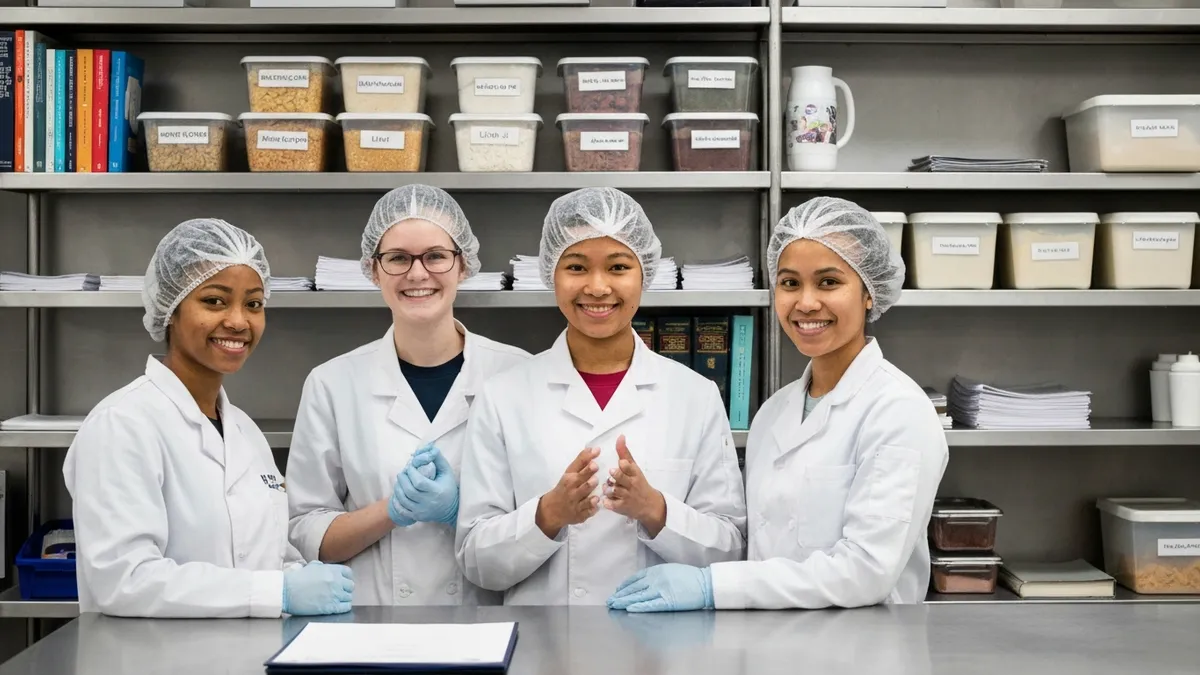
ServSafe Alcohol Checklist
- ✓Review acceptable ID types — driver's licenses, state IDs, passports, military IDs — and practice the "born before" date calculation for guests born in the cutoff year
- ✓Memorize standard drink equivalents: 12 oz beer (5% ABV) = 5 oz wine (12% ABV) = 1.5 oz spirits (40% ABV) — all deliver roughly 0.6 oz of pure alcohol
- ✓Study the BAC chart: understand how body weight, biological sex, number of drinks, and time elapsed affect blood alcohol concentration
- ✓Learn the four behavioral stages of intoxication and the observable signs at each stage — from relaxation and lowered inhibitions to disorientation and loss of motor control
- ✓Practice the structured refusal script: acknowledge the guest, explain the situation calmly, de-escalate if challenged, offer water or food, arrange safe transportation
- ✓Understand dram shop liability basics: what triggers it, who is named in lawsuits, how documentation reduces exposure (Advanced candidates: study your state's specific statute)
- ✓Review special event and banquet service rules: open bars, drink tickets, all-inclusive packages, and how to monitor consumption without individual drink counts
- ✓Take at least two full-length practice tests under timed conditions — aim for 85%+ before scheduling the real exam
ServSafe Alcohol Pros and Cons
- +ServSafe has a defined, publicly available content blueprint — candidates know exactly what to prepare for
- +Multiple preparation pathways (self-study, courses, coaching) accommodate different learning styles and schedules
- +A growing ecosystem of study resources means candidates at any budget level can access quality preparation materials
- +Clear score reporting allows candidates to identify specific strengths and weaknesses for targeted remediation
- +Professional recognition associated with strong performance provides tangible career and academic benefits
- −The scope of tested content requires substantial preparation time that competes with existing professional or academic commitments
- −No single resource covers the full content scope — candidates typically need multiple study tools for comprehensive preparation
- −Test anxiety and exam-day performance variability mean preparation effort does not always translate linearly to scores
- −Registration, preparation, and potential retake costs accumulate into a significant financial investment
- −Content and format can change between exam versions, making older preparation materials less reliable
ServSafe Questions and Answers
ServSafe Certification Guide 2026 — Food Handler & Manager

SERVSAFE Manager 2026: Complete Guide to the Manager Certification Exam

ServSafe Food Handler Guide 2026 — Certification Requirements
ServSafe Cost 2026: Exam Fees, Renewal & Training Prices

ServSafe - ServSafe Food Safety: Career Paths, Salary, and Requirements 2026
How to Pass the ServSafe Exam in 2026 — Complete Study Guide
About the Author

Educational Psychologist & Academic Test Preparation Expert
Columbia University Teachers CollegeDr. Lisa Patel holds a Doctorate in Education from Columbia University Teachers College and has spent 17 years researching standardized test design and academic assessment. She has developed preparation programs for SAT, ACT, GRE, LSAT, UCAT, and numerous professional licensing exams, helping students of all backgrounds achieve their target scores.
Join the Discussion
Connect with other students preparing for this exam. Share tips, ask questions, and get advice from people who have been there.
View discussion (7 replies)