
ServSafe Food Hierarchy Chart: Complete Guide to Proper Food Storage Order 2026
Master the ServSafe food hierarchy chart with our complete storage order guide. 🆕 Learn all 5 shelf tiers, proper temperatures, and pass the ServSafe exam.
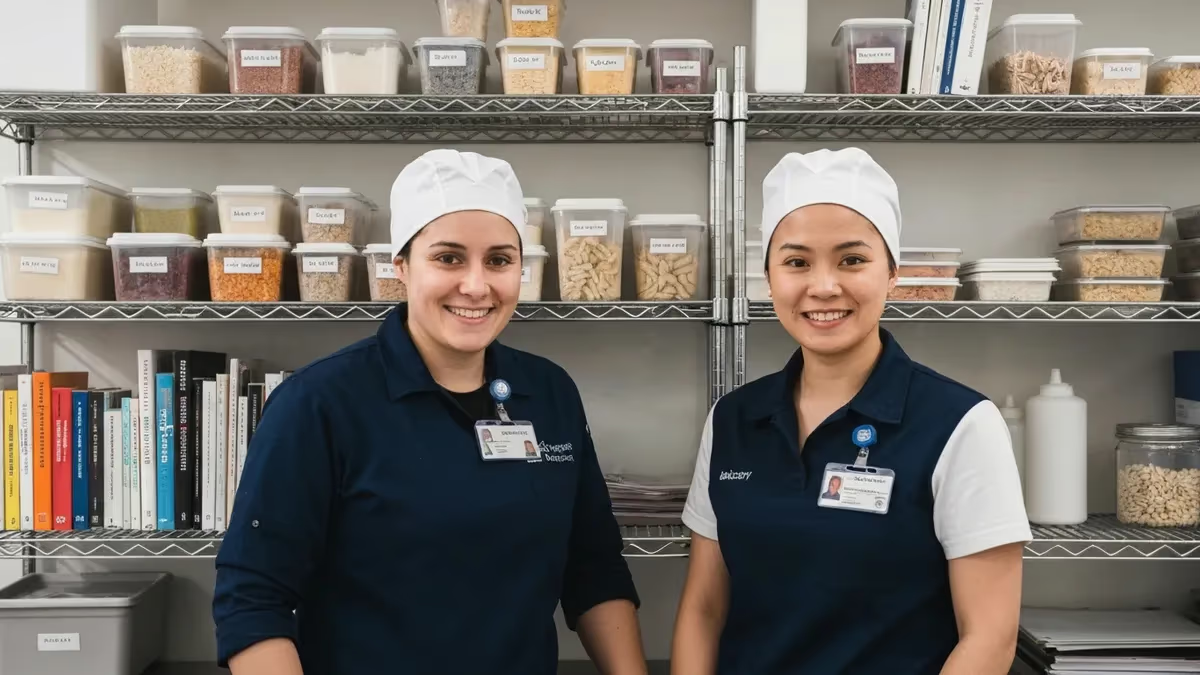
The ServSafe food hierarchy chart is one of the most critical concepts tested on the ServSafe Manager Certification exam and applied daily in professional kitchens across the United States. This chart provides a clear visual reference for how different categories of food should be organized within a commercial refrigerator or walk-in cooler. Proper shelf placement prevents cross-contamination, which remains one of the leading causes of foodborne illness outbreaks in restaurants, catering operations, and institutional food service establishments throughout every state in the country. Practice with the free ServSafe practice test on PracticeTestGeeks (1,350+ questions with answer explanations).
Cross-contamination occurs when harmful bacteria, viruses, or allergens transfer from one food item to another, typically through dripping juices, shared surfaces, or improper handling during storage. The food storage hierarchy addresses the dripping juice problem specifically by requiring that foods needing the highest cooking temperatures be stored on the lowest shelves. This logical arrangement means that even if raw poultry juices leak from their container, they cannot drip onto foods stored below because nothing is stored beneath the poultry shelf in the system.
The hierarchy is organized into five distinct tiers based on minimum internal cooking temperatures required by the FDA Food Code. Ready-to-eat foods sit at the very top of the refrigerator because they require no further cooking and are consumed directly by customers. Below them come fruits and vegetables, followed by whole cuts of beef, pork, and commercially raised seafood. Ground meats and eggs occupy the next tier down, and whole or ground poultry always goes on the bottom shelf at the lowest available point.
Many food service professionals find the hierarchy intuitive once they understand the underlying principle driving the shelf placement decisions. Foods that must reach higher internal temperatures during cooking pose greater contamination risks when stored raw. Poultry, which must reach 165 degrees Fahrenheit, carries the highest risk because it commonly harbors Salmonella and Campylobacter bacteria. By placing poultry at the bottom, any accidental leaks or spills only reach surfaces that can be easily cleaned rather than contaminating other stored food products.
For ServSafe exam preparation, memorizing the five tiers of the food hierarchy chart is not enough on its own to guarantee correct answers. You also need to understand why each tier is positioned where it is and how violations of this hierarchy contribute to specific foodborne illness scenarios. Exam questions often present real-world situations where a manager must identify improper storage arrangements, making it essential to apply the hierarchy concept rather than simply recite the order from memory.
Temperature control works hand in hand with proper shelf placement to keep stored foods safe for human consumption at all times. All refrigerated items must be held at 41 degrees Fahrenheit or below, and the refrigerator itself should be checked regularly with a calibrated thermometer placed near the door. Even with perfect shelf organization, foods stored at incorrect temperatures will still become unsafe for serving. The hierarchy chart assumes that baseline temperature requirements are already being met throughout the entire refrigeration unit consistently.
Throughout this guide, you will find detailed breakdowns of each tier in the food storage hierarchy, practical tips for organizing commercial refrigerators, common exam questions related to food storage order, and actionable checklists you can bring into your kitchen immediately. Whether you are studying for the ServSafe certification exam or looking to improve food safety practices in your current operation, mastering the food hierarchy chart will help you protect both your customers and your establishment from preventable contamination incidents.
Free ServSafe Study Tools
Interactive ServSafe resources on PracticeTestGeeks, free to start:
- ServSafe practice test — 1,350+ questions with instant scoring and answer explanations
- ServSafe flashcards — review key terms and concepts card by card
- ServSafe study guide — topic-by-topic overview of what the exam covers
- ServSafe cheat sheet — one-page printable summary for last-minute review
ServSafe Food Storage by the Numbers

The Five Tiers of the ServSafe Food Hierarchy Chart
Prepared salads, deli meats, cooked leftovers, desserts, and beverages that require no further cooking. Stored on the highest shelf to prevent any contamination from raw products dripping onto them from above.
Produce destined for cooking before service. Minimum cooking temperature of 135 degrees Fahrenheit places them above raw meats. Raw produce eaten uncooked is classified as ready-to-eat and belongs on the top shelf instead.
Whole cuts of beef, pork, lamb, veal, and commercially raised fish. Bacteria remain primarily on exterior surfaces, making these safer than ground products. Minimum internal cooking temperature of 145 degrees Fahrenheit.
Ground beef, ground pork, ground fish, injected meats, and shell eggs. Grinding distributes surface bacteria throughout the product. Minimum internal cooking temperature of 155 degrees Fahrenheit required for safety.
Chicken, turkey, duck, and all stuffed meats or pastas. Requires the highest minimum cooking temperature of 165 degrees Fahrenheit. Always stored on the lowest shelf to eliminate any possibility of dripping contamination.
The top shelf of any commercial refrigerator is reserved exclusively for ready-to-eat foods, which include items like prepared salads, sliced deli meats, cooked leftovers, chilled desserts, and bottled beverages. These foods will not undergo any further cooking before being served directly to customers, which means any bacteria introduced through cross-contamination would not be destroyed by additional heat. Placing ready-to-eat items on the highest shelf ensures that absolutely no raw food products stored above can drip juices down onto them.
The second tier belongs to fruits and vegetables that will be cooked before service at a minimum temperature of 135 degrees Fahrenheit. While many people think of produce as inherently low-risk, fruits and vegetables have been responsible for numerous foodborne illness outbreaks linked to pathogens such as E. coli, Listeria monocytogenes, and Salmonella species. Their minimum cooking temperature places them above whole meat cuts in the established hierarchy system. Raw produce that will be eaten without any cooking should be treated as ready-to-eat food and stored on the top shelf.
Whole cuts of beef, pork, lamb, veal, and commercially raised fish occupy the third tier of the food hierarchy chart used in ServSafe training. These proteins require a minimum internal cooking temperature of 145 degrees Fahrenheit, which is sufficient to eliminate most harmful pathogens found naturally in intact muscle tissue. The key distinction between whole cuts and ground meats is that bacteria on whole cuts remain primarily on the exterior surface where cooking heat reaches them first, making whole cuts comparatively safer overall.
Ground meats, injected meats, ratites such as ostrich and emu, and shell eggs make up the fourth tier and must be stored below whole cuts but always above poultry products. These items require a minimum internal cooking temperature of 155 degrees Fahrenheit because the grinding process distributes surface bacteria throughout the entire product uniformly. Shell eggs are included in this tier because they can harbor Salmonella enteritidis internally without showing any external signs of contamination visible to handlers.
The bottom shelf is permanently designated for whole and ground poultry, including chicken, turkey, duck, and any stuffed meats or stuffed pasta products. Poultry must reach 165 degrees Fahrenheit internally, which is the highest minimum cooking temperature in the entire food hierarchy system. This improved requirement exists because poultry products frequently carry dangerous pathogens including Salmonella and Campylobacter jejuni throughout the raw meat tissue, not just on exterior surfaces like whole beef cuts.
One common point of confusion on the ServSafe exam involves where to place seafood within the storage hierarchy. Commercially raised fish that is served as a whole cut follows the 145 degree Fahrenheit rule and belongs on the third tier alongside other whole meat cuts like steaks and chops. However, ground fish follows the 155 degree rule and should be stored on the fourth tier with ground meats and eggs. Understanding these subtle distinctions will help you correctly answer tricky exam questions that test nuanced storage knowledge.
Another frequently tested concept is the storage of raw and cooked versions of the same food item in the same refrigerator. For example, raw chicken belongs on the bottom shelf following the hierarchy chart, but leftover cooked chicken is classified as a ready-to-eat food and should be stored on the top shelf with other prepared items. This distinction trips up many exam takers who assume all chicken products belong together regardless of their current preparation state. The hierarchy is always based on what the food needs next.
ServSafe Practice Test Questions
Prepare for the ServSafe - ServSafe Food Safety exam with our free practice test modules. Each quiz covers key topics to help you pass on your first try.
ServSafe Allergens Practice Test
ServSafe Exam Questions covering Allergens Practice Test. Master ServSafe Test concepts for certification prep.
ServSafe Food Handler Practice Test
Free ServSafe Practice Test featuring Food Handler Practice Test. Improve your ServSafe Exam score with mock test prep.
ServSafe - Alcohol Test
ServSafe Mock Exam on - Alcohol Test. ServSafe Study Guide questions to pass on your first try.
ServSafe Alcohol Test - Primary and Advanc...
ServSafe Test Prep for Alcohol Test - Primary and Advanced (2). Practice ServSafe Quiz questions and boost your score.
ServSafe Alcohol Test - Primary and Advanc...
ServSafe Questions and Answers on Alcohol Test - Primary and Advanced (3). Free ServSafe practice for exam readiness.
ServSafe Alcohol Test - Primary and Advanc...
ServSafe Mock Test covering Alcohol Test - Primary and Advanced (4). Online ServSafe Test practice with instant feedback.
ServSafe - Allergens Test
Free ServSafe Quiz on - Allergens Test. ServSafe Exam prep questions with detailed explanations.
ServSafe Facilities, Cleaning & Sanitizing...
ServSafe Practice Questions for Facilities, Cleaning & Sanitizing, and Pest Management Test. Build confidence for your ServSafe certification exam.
ServSafe Management Test
ServSafe Test Online for Management Test. Free practice with instant results and feedback.
ServSafe Management Test #1
ServSafe Study Material on Management Test #1. Prepare effectively with real exam-style questions.
ServSafe Manager Exam 1 (2)
Free ServSafe Test covering Manager Exam 1 (2). Practice and track your ServSafe exam readiness.
ServSafe Manager Exam 1 (3)
ServSafe Exam Questions covering Manager Exam 1 (3). Master ServSafe Test concepts for certification prep.
ServSafe Manager Exam 1 (4)
Free ServSafe Practice Test featuring Manager Exam 1 (4). Improve your ServSafe Exam score with mock test prep.
ServSafe Manager Exam 1 (5)
ServSafe Mock Exam on Manager Exam 1 (5). ServSafe Study Guide questions to pass on your first try.
ServSafe Manager Exam
ServSafe Test Prep for Manager Exam. Practice ServSafe Quiz questions and boost your score.
ServSafe Manager Exam 6
ServSafe Questions and Answers on Manager Exam 6. Free ServSafe practice for exam readiness.
ServSafe Manager Exam 7
ServSafe Mock Test covering Manager Exam 7. Online ServSafe Test practice with instant feedback.
ServSafe Manager Exam 8
Free ServSafe Quiz on Manager Exam 8. ServSafe Exam prep questions with detailed explanations.
ServSafe Manager Practice Exam
ServSafe Practice Questions for Manager Practice Exam. Build confidence for your ServSafe certification exam.
ServSafe Personal Hygiene Test
ServSafe Test Online for Personal Hygiene Test. Free practice with instant results and feedback.
ServSafe Practice Test
ServSafe Study Material on Practice Test. Prepare effectively with real exam-style questions.
ServSafe Practice Test 1
Free ServSafe Test covering Practice Test 1. Practice and track your ServSafe exam readiness.
ServSafe Practice Test 2
ServSafe Exam Questions covering Practice Test 2. Master ServSafe Test concepts for certification prep.
ServSafe Practice Test 3
Free ServSafe Practice Test featuring Practice Test 3. Improve your ServSafe Exam score with mock test prep.
ServSafe Practice Test Allergens
ServSafe Mock Exam on Practice Test Allergens. ServSafe Study Guide questions to pass on your first try.
ServSafe Preparation, Cooking and Serving ...
ServSafe Test Prep for Preparation, Cooking and Serving Test. Practice ServSafe Quiz questions and boost your score.
ServSafe Purchasing, Receiving and Storage...
ServSafe Questions and Answers on Purchasing, Receiving and Storage Test. Free ServSafe practice for exam readiness.
ServSafe Purchasing, Receiving and Storage...
ServSafe Mock Test covering Purchasing, Receiving and Storage Test (2). Online ServSafe Test practice with instant feedback.
ServSafe Purchasing, Receiving and Storage...
Free ServSafe Quiz on Purchasing, Receiving and Storage Test (3). ServSafe Exam prep questions with detailed explanations.
Food Storage Methods for ServSafe Success
Commercial refrigerators used in food service establishments must maintain a consistent temperature of 41 degrees Fahrenheit or below at all times during operation. The food hierarchy chart applies specifically to refrigerator storage, where raw proteins and ready-to-eat items share the same enclosed cooling space. Position a calibrated thermometer near the front of the unit where temperatures tend to fluctuate most, and check readings at least twice per shift to ensure compliance with local health codes.
When organizing a standard reach-in refrigerator, work from top to bottom following the five-tier hierarchy exactly as outlined in the ServSafe training materials. Ready-to-eat foods on the top shelf should be covered with tight-fitting lids or food-grade plastic wrap. Each lower tier requires increasingly strong containment because the risk level of the stored proteins increases as you move toward the bottom shelf where raw poultry must always be placed in completely leak-proof containers to prevent any dripping.
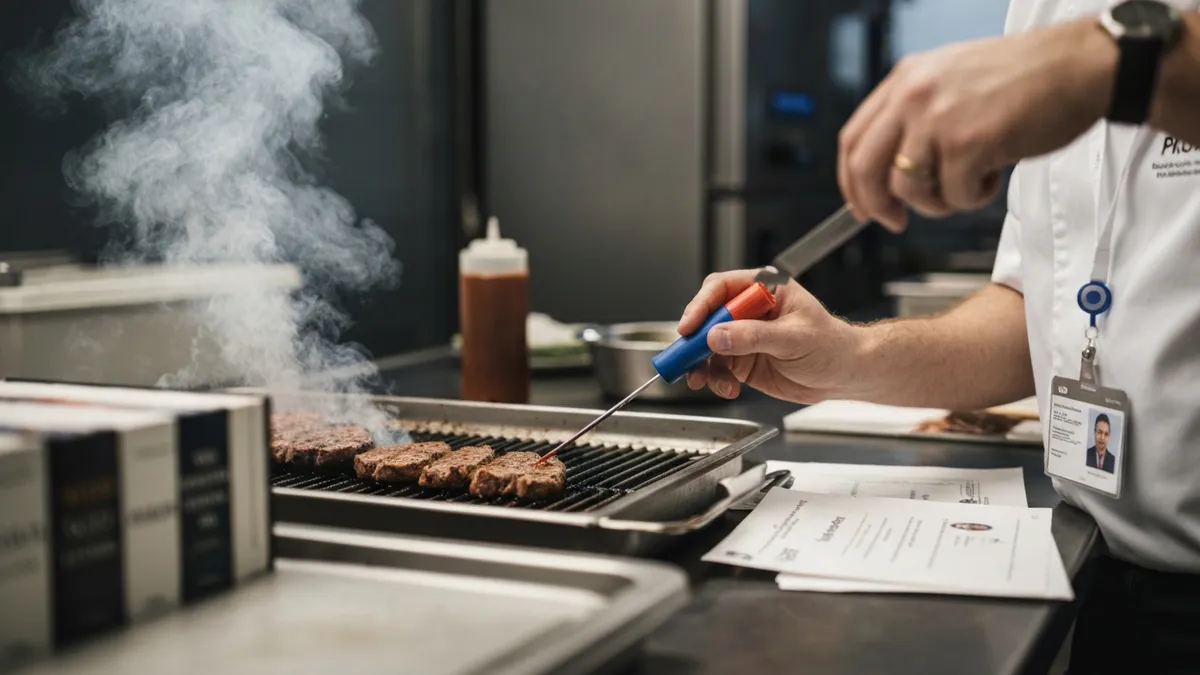
Benefits and Challenges of Implementing the Food Hierarchy System
- +Dramatically reduces cross-contamination risk between raw and ready-to-eat foods
- +Meets FDA Food Code requirements and satisfies health inspection standards
- +Creates a standardized system that all staff members can learn and follow consistently
- +Reduces foodborne illness liability and protects your establishment from costly lawsuits
- +Improves overall kitchen organization and speeds up food retrieval during busy service
- +Demonstrates food safety commitment to health inspectors resulting in better scores
- −Requires ongoing staff training and reinforcement across all shifts and new hires
- −Initial reorganization of existing storage may cause temporary disruption to operations
- −Overcrowded refrigerators make strict hierarchy compliance difficult during peak periods
- −Small kitchens with limited refrigerator space may struggle to maintain five separate tiers
- −Requires investment in additional containers and labeling supplies for proper implementation
- −Staff turnover means hierarchy training must be repeated frequently for new team members
Pros and Cons at a Glance
| Pros | Cons |
|---|---|
| Dramatically reduces cross-contamination risk between raw and ready-to-eat foods | Requires ongoing staff training and reinforcement across all shifts and new hires |
| Meets FDA Food Code requirements and satisfies health inspection standards | Initial reorganization of existing storage may cause temporary disruption to operations |
| Creates a standardized system that all staff members can learn and follow consistently | Overcrowded refrigerators make strict hierarchy compliance difficult during peak periods |
| Reduces foodborne illness liability and protects your establishment from costly lawsuits | Small kitchens with limited refrigerator space may struggle to maintain five separate tiers |
| Improves overall kitchen organization and speeds up food retrieval during busy service | Requires investment in additional containers and labeling supplies for proper implementation |
| Demonstrates food safety commitment to health inspectors resulting in better scores | Staff turnover means hierarchy training must be repeated frequently for new team members |
ServSafe Food Storage Hierarchy Compliance Checklist
- ✓Verify refrigerator temperature reads 41°F or below before storing any food items.
- ✓Place all ready-to-eat foods on the top shelf in covered, labeled containers.
- ✓Store fruits and vegetables destined for cooking on the second shelf tier.
- ✓Position whole cuts of beef, pork, lamb, and seafood on the third shelf level.
- ✓Place ground meats, injected meats, and shell eggs on the fourth tier shelf.
- ✓Store all whole and ground poultry on the bottom shelf in leak-proof containers.
- ✓Label every container with the food name, preparation date, and use-by date clearly.
- ✓Rotate stock using FIFO method so older products are used before newer deliveries.
- ✓Conduct temperature log checks at least twice per shift and document all readings.
- ✓Clean and sanitize all refrigerator shelves weekly working from top to bottom order.
The Bottom-Up Temperature Rule
The easiest way to remember the ServSafe food hierarchy chart is the bottom-up temperature rule: foods requiring the highest cooking temperatures go on the lowest shelves. Poultry at 165°F sits on the bottom, ground meats at 155°F sit above, whole cuts at 145°F go next, produce at 135°F follows, and ready-to-eat foods requiring no cooking sit on top. If you remember this single principle, you can reconstruct the entire chart from memory during your exam.
One of the most frequent food storage mistakes observed during routine health inspections is placing raw poultry on shelves above ready-to-eat items or other lower-risk raw foods. This violation creates an immediate cross-contamination hazard because raw chicken and turkey juices contain high concentrations of harmful bacteria that can survive and even thrive at refrigeration temperatures. Health inspectors consistently cite improper shelf placement as a critical violation that can result in immediate point deductions, reinspection requirements, or even temporary closure orders for food service establishments.
Another common error involves storing raw meats in containers without proper lids or adequate covering to prevent leakage. Even when foods are placed on the correct shelf tier following the hierarchy chart perfectly, uncovered containers allow juices to splash during normal handling or drip from condensation buildup over time. Every raw protein stored in a commercial refrigerator should be placed in a leak-proof container with a tight-fitting lid or securely wrapped in food-grade plastic wrap that extends fully around the product and its container.
Overcrowding refrigerators is a surprisingly dangerous practice that many kitchen teams consistently overlook during busy service periods when storage space becomes limited. When shelves are packed too tightly, cold air cannot circulate properly around food items, creating warm spots where pathogenic bacteria can multiply rapidly to dangerous levels. Additionally, overcrowded shelves make it nearly impossible to maintain proper hierarchy organization because stressed staff members will place items wherever they find available space rather than on the correct designated tier.
Labeling and dating all stored foods is a critical practice that complements the food hierarchy system and is tested extensively on the ServSafe exam. Even perfectly placed foods become unsafe if they are held beyond their recommended storage time in the refrigeration unit. The ServSafe guidelines require that all ready-to-eat potentially hazardous foods be consumed, sold, or discarded within seven days when stored at 41 degrees Fahrenheit or below. The day the food was prepared or the package was opened counts as day one of this window.
Many establishments struggle with implementing the FIFO method consistently, which stands for First In, First Out, across all shifts. This inventory rotation system requires that older products be placed in front of or on top of newer products so they get used before their shelf life expires. FIFO works alongside the food hierarchy chart to create a comprehensive storage system that addresses both contamination prevention and food quality maintenance simultaneously. Training all staff members on FIFO principles during initial onboarding significantly reduces waste and improves compliance.
Temperature monitoring should occur at least twice daily in all commercial refrigeration units, with every reading documented in a temperature log that health inspectors will review during their visits. Digital thermometers mounted near the door provide continuous readouts for convenient checking, but these should be verified weekly against a calibrated reference thermometer for accuracy. If a refrigerator temperature rises above 41 degrees Fahrenheit at any point, all potentially hazardous foods inside must be evaluated carefully for continued safety before use.
Staff training represents the single most effective strategy for maintaining consistent food storage hierarchy compliance across all shifts, seasons, and staffing changes. Posting a laminated copy of the food hierarchy chart directly on the refrigerator door provides a constant visual reminder for every team member who accesses the unit. Conducting brief daily pre-shift meetings that include a food safety topic keeps the information fresh and relevant. Managers should perform random storage audits during each shift and provide immediate corrective feedback when any hierarchy violations are discovered.
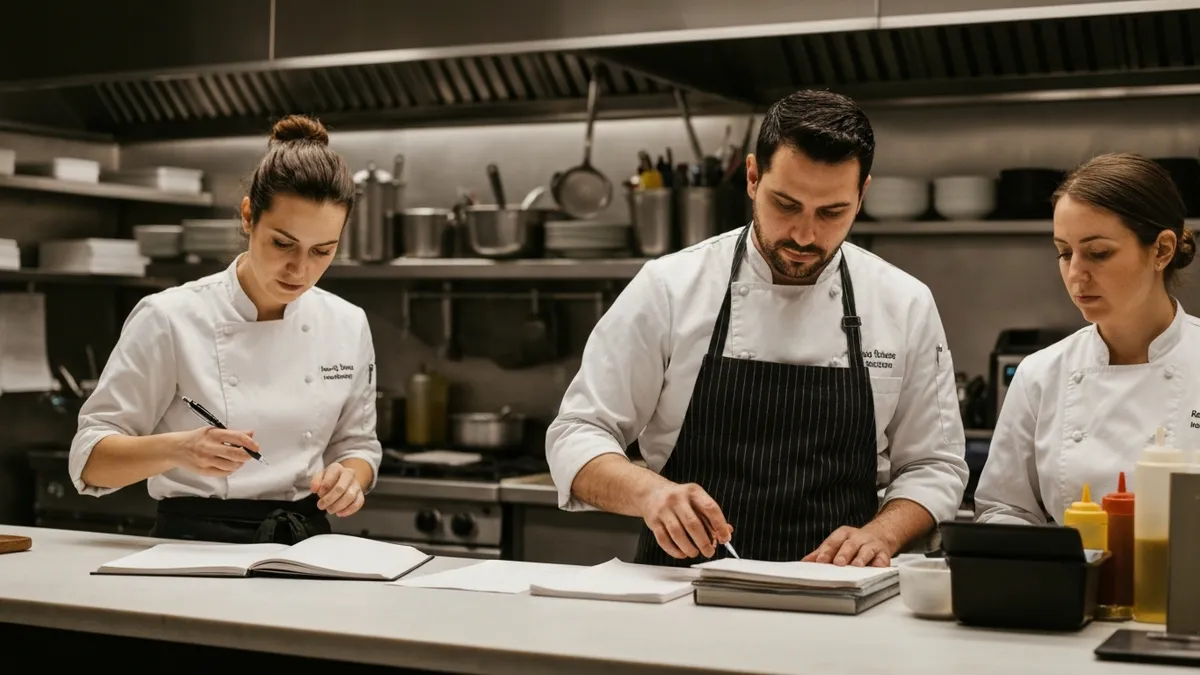
Health departments classify food storage hierarchy violations as critical violations that directly contribute to foodborne illness risk. A single instance of raw poultry stored above ready-to-eat foods can trigger an immediate reinspection requirement and significant point deductions on your facility score. Repeated violations may result in temporary closure, mandatory retraining for all staff, and public posting of inspection failures that can damage your establishment's reputation permanently.
When preparing for food storage questions on the ServSafe Manager Certification exam, focus on understanding the reasoning behind the hierarchy rather than relying on rote memorization techniques alone. Exam writers frequently design questions that present unusual or unfamiliar scenarios requiring you to apply hierarchy principles to new situations you have not encountered before. For instance, a question might describe a specialty protein product and ask where it should be stored based on its required cooking temperature. Knowing the underlying temperature logic allows you to answer these novel questions correctly.
Practice questions about cross-contamination scenarios are among the most common food storage topics appearing on the ServSafe exam each testing cycle. These questions typically describe a specific refrigerator arrangement with multiple food items and ask you to identify which item is stored incorrectly or which alternative arrangement would prevent contamination most effectively. The best strategy for answering these questions is to mentally walk through the hierarchy from top to bottom, checking each described item against its proper tier placement systematically.
Time-temperature abuse questions often intersect with food storage hierarchy concepts on the ServSafe exam in ways that require integrated understanding. You may encounter scenarios where a large food delivery arrives and must be stored properly within specific time constraints to maintain safety. Remember that all cold foods must be received at 41 degrees Fahrenheit or below and transferred to storage immediately in the correct hierarchy position. Foods that arrive above the proper receiving temperature should generally be rejected at the loading dock.
The ServSafe exam includes multiple questions about proper thawing methods, which directly relate to food storage hierarchy principles in important ways. There are four approved thawing methods under the FDA Food Code: refrigerator thawing, cold running water thawing, microwave thawing with immediate cooking, and thawing as part of the cooking process itself. When thawing foods in the refrigerator, the same hierarchy rules apply fully. Raw poultry being thawed must be placed on the bottom shelf to prevent its juices from contaminating other items.
Allergen storage questions represent another important intersection with the food hierarchy topic that appears regularly on the ServSafe exam. The nine major food allergens identified by the FDA must be stored separately from other ingredients whenever possible, and clear labeling is required throughout every stage of the storage and preparation process. While the hierarchy chart primarily addresses microbiological contamination risks, allergen cross-contact in storage areas is equally dangerous for sensitive customers and is tested separately on the certification exam.
Many successful students find that creating flashcards with common exam scenarios helps them prepare more effectively than simply reading the textbook chapters repeatedly. Write a realistic scenario on the front of each card and the correct hierarchy placement with explanation on the back. Include tricky situations like where to store a pot of leftover chicken soup, which is a ready-to-eat food despite containing chicken, or where to place marinated raw steaks, which follow the same rules as other whole cuts of beef.
Taking timed practice tests under realistic exam-like conditions is the most effective final preparation strategy for the food storage section of the ServSafe exam specifically. Set a timer matching the actual exam pace and work through question blocks without pausing to consult reference materials. After completing each practice set, review every question you answered incorrectly and identify the specific concept you need to reinforce through additional study. This targeted review process builds both speed and accuracy for examination day.
Implementing the food hierarchy chart in a real commercial kitchen requires more than theoretical knowledge because the fast-paced environment of food service presents unique practical challenges that classroom training and textbooks cannot fully prepare you for. Start by conducting a complete inventory of your current refrigerator and walk-in cooler organization to identify any items that are currently stored on incorrect shelves or in improper containers. Document every violation you discover and create a prioritized corrective action plan that addresses the highest-risk items first.
Color-coded shelf labels are one of the most effective and affordable tools for maintaining consistent hierarchy compliance across multiple shifts with different team members working. Assign a specific color to each tier of the hierarchy and attach colored labels or durable tape to the corresponding shelves in every refrigeration unit throughout your facility. Red for poultry on the bottom shelf, orange for ground meats and eggs above, yellow for whole cuts, green for fruits and vegetables, and blue for ready-to-eat items creates an intuitive visual system anyone can follow.
Container selection plays a crucial role in preventing cross-contamination even when the hierarchy shelf placement is followed correctly by all staff members. Choose containers made from food-grade materials that have secure, snap-fitting lids capable of preventing any leakage during normal handling, stacking, and daily storage operations. Clear containers offer the additional advantage of allowing visual inspection without opening the lid, which reduces unnecessary handling and potential contamination events. Label every container with the food type, preparation date, and calculated use-by date.
Walk-in coolers present additional organizational challenges compared to standard reach-in refrigerators because of their significantly larger interior size and the wider variety of products they typically contain at any given time. Designate specific zones within your walk-in for each tier of the hierarchy, using mobile shelving units that can be configured and reconfigured to match your particular inventory needs as they change seasonally. Keep raw poultry on the lowest available shelf furthest from the door where temperatures tend to be coldest consistently.
Receiving procedures set the foundation for proper food storage hierarchy implementation before food even enters the refrigerator or walk-in cooler. Train your receiving staff to carefully inspect all deliveries for proper temperature readings, packaging integrity, and complete labeling compliance before signing for any incoming shipment from suppliers. Rejected deliveries should be documented with the specific reason for rejection and communicated to your supplier immediately for credit or replacement. Accepted deliveries should be sorted by hierarchy tier during the receiving process.
Regular cleaning and sanitizing of refrigerator shelves prevents biofilm buildup that can harbor dangerous bacteria even when foods are stored in the correct hierarchy order at proper temperatures. Schedule thorough deep cleaning of all refrigeration units at least once per week, removing all food items temporarily to another properly cooled location and scrubbing each shelf with an approved sanitizing solution. Pay special attention to the lower shelves where raw meat juices are most likely to accumulate, and always clean from top to bottom.
Building a lasting culture of food safety excellence in your establishment requires consistent reinforcement through both positive recognition and clear accountability measures applied fairly across the team. Acknowledge team members who consistently maintain proper storage hierarchy organization during their shifts, and address violations promptly through constructive retraining rather than punitive measures. Document all food safety training sessions and hierarchy compliance audits in a log that demonstrates your establishment's ongoing commitment to compliance for health inspectors reviewing your operational records.
You can continue preparing with the servsafe test 90 questions and answers, which includes answer explanations for every question.
🥗 What sits on the top shelf of the food storage hierarchy?
Ready-to-eat foods go on the top shelf of the food hierarchy chart because they need no further cooking, so nothing above them can drip raw juices and contaminate them. This top tier is the safest zone in any commercial refrigerator.
🐟 Where do whole cuts of meat and seafood belong on the storage chart?
Whole cuts of meat, fish, and seafood sit in the third tier, cooked to a minimum of 145°F. On the food storage hierarchy chart they go below produce and ready-to-eat items but above ground meats and poultry.
🥚 Why do shell eggs and ground meats share the same shelf tier?
Shell eggs, ground meats, ground fish, and injected meats all require a minimum internal cooking temperature of 155°F, so the servsafe storage chart groups them on the fourth tier, below whole cuts and above raw poultry.
🍗 Why does poultry always sit on the bottom of the fridge?
Poultry needs the highest cooking temperature (165°F) and often carries Salmonella or Campylobacter, so the order of storage fridge guide puts it on the lowest shelf, where its juices cannot drip onto any other food.
🌡️ What is the maximum safe temperature for a commercial refrigerator?
Commercial refrigerators must hold 41°F or below at all times per the FDA Food Code and ServSafe guidelines. Staff should check and log the temperature at least twice per shift with a calibrated thermometer.
📋 What does the facility proper refrigerator storage chart look like top to bottom?
From top to bottom: ready-to-eat foods, fruits and vegetables, whole cuts of meat and seafood (145°F), ground meats and shell eggs (155°F), then whole and ground poultry (165°F) on the very bottom shelf.
🥬 Where do fruits and vegetables belong on the food hierarchy chart storage order?
Raw fruits and vegetables sit on the second tier, just below ready-to-eat items and above all raw proteins. This keeps produce that may be eaten raw safely separated from any meat, poultry, or seafood drip.
🔁 What is FIFO and how does it work with the food storage hierarchy?
FIFO means First In, First Out: older stock is rotated to the front so it gets used before newer stock. Pairing FIFO with the correct shelf order of storage keeps food both safely placed and safely timed.
❄️ How long can ready-to-eat TCS food stay in the refrigerator?
Ready-to-eat time/temperature-control-for-safety (TCS) food can be held a maximum of seven days at 41°F or below, counting the prep or opening day as day one. After seven days it must be discarded, no matter how it looks or smells.
🚫 What is the biggest mistake inspectors see on a food storage hierarchy chart check?
The most common violation is placing raw poultry above other foods, letting its juices drip down. Following the servsafe food storage hierarchy chart strictly, bottom-to-top by required cook temperature, eliminates this risk.
Official Resources
- FDA Food Code (Retail Food Protection) — the federal model code that sets the cold-holding temperature (41°F) and minimum cooking temperatures behind the ServSafe food hierarchy chart.
- FDA Food Code 2022 full text — the current edition adopted by most state and local health departments, useful for verifying exact storage and holding requirements.
- ServSafe Manager Certification Program — the official National Restaurant Association program that tests the food storage hierarchy and issues the credential this page helps you study for.
Sample ServSafe Practice Questions
Try these questions from our free ServSafe practice tests. The correct answer and an explanation follow each question.
A food service manager must exclude a food handler from working with food if the handler is diagnosed with which illness?
- A. Strep throat
- B. The common cold
- C. Salmonella Typhi
- D. Mild seasonal allergies
Answer: C. Salmonella Typhi
Salmonella Typhi (typhoid fever) is one of the Big 6 illnesses that requires complete exclusion from the food operation. The regulatory authority must also be notified. The other listed conditions do not require exclusion unless symptoms like vomiting or diarrhea are present.
What should a server do when taking a food order from customers who have concerns about food allergies?
- A. Tell customers with food allergies they will not be able to receive service
- B. When customers arrive, tell them the food may cause allergic reactions
- C. Explain the symptoms of an allergic reaction to customers before they order
- D. Describe each menu item to customers who ask, including any “secret” ingredients
Answer: D. Describe each menu item to customers who ask, including any “secret” ingredients
When customers have food allergies, it is critical for servers to provide accurate and comprehensive information about all ingredients in menu items. This includes disclosing any 'secret' or less obvious ingredients to ensure the customer can make a safe choice. Clear communication helps prevent severe allergic reactions and demonstrates responsible food service.
Which food is a TCS (time/temperature control for safety) food?
- A. Cut cantaloupe
- B. Uncooked dry rice
- C. Whole raw carrots
- D. Bottled vinegar-based hot sauce
Answer: A. Cut cantaloupe
Cut melons are TCS foods because their exposed flesh supports rapid bacterial growth.
When should a food service worker be excluded from working with food?
- A. When they have a headache or mild fatigue
- B. When they have been diagnosed with a reportable illness such as Salmonella typhi or Hepatitis A
- C. When they have a minor cut on their hand that is bandaged
- D. When they have seasonal allergies
Answer: B. When they have been diagnosed with a reportable illness such as Salmonella typhi or Hepatitis A
Workers with diagnosed reportable illnesses like Salmonella typhi, Hepatitis A, Norovirus, E. coli, or Shigella must be excluded from working with food.
ServSafe Questions and Answers

About the Author

Registered Sanitarian & Food Safety Certification Expert
Cornell University College of Agriculture and Life SciencesThomas Wright is a Registered Sanitarian and HACCP-certified food safety professional with a Bachelor of Science in Food Science from Cornell University. He has 17 years of experience in food safety auditing, regulatory compliance, and foodservice management training. Thomas prepares food industry professionals for ServSafe Manager, HACCP certification, and state food handler examinations.