
Food Handlers Card Arizona: How to Get Certified in 2026 September
Get your Arizona food handlers card for $7-$15 online. Learn requirements, approved courses, how long certification lasts, and who needs one in Arizona. 💯

Food Handlers Card Arizona: What You Need to Know
Whether you just got hired at a restaurant in Phoenix, you're starting a food truck in Tucson, or you're a grocery store employee in Flagstaff, one of the first things you need is your Arizona food handlers card. It's a legal requirement, it's cheap, it takes about an hour, and you can do it from your phone right now. No excuses — and no reason to delay, because some employers won't let you start working with food until the certificate is in hand. Here's everything you need to know to get it done today.
If you work with food in Arizona — as a cook, server, bartender, cashier at a restaurant, grocery store employee, food truck operator, or catering staff — you need a food handlers card. Arizona requires food handlers to complete an approved food safety training programme and obtain a food handler certificate (commonly called a food handlers card) as a condition of employment in food service. The requirement applies statewide and is enforced by county health departments through inspections and employment verification.
Getting your Arizona food handlers card is quick, affordable, and entirely available online. You take an approved food safety course (typically 60–90 minutes of instruction covering safe food handling, temperature control, cross-contamination prevention, personal hygiene, and allergen awareness), pass a short exam at the end, and receive your certificate immediately. The entire process can be completed in a single sitting for $7–$15 — making it one of the most accessible professional certifications in any industry.
Arizona's food handler requirement was established to reduce foodborne illness — contaminated food causes an estimated 48 million illnesses and 3,000 deaths per year in the United States. Trained food handlers who understand proper handwashing, temperature danger zones, cross-contamination prevention, and allergen management significantly reduce the risk of food safety incidents in their workplaces. The training isn't just a bureaucratic requirement; it teaches practical knowledge that protects public health.
This guide covers everything you need to get your Arizona food handlers card: where to take the course, how much it costs, what the exam covers, how long the certification lasts, and which specific Arizona counties have additional requirements. Whether you're starting a new food service job, renewing an expiring card, or an employer making sure your staff is compliant, the information here gets you certified quickly.
- Required for: Anyone who handles, prepares, or serves food in Arizona food establishments
- Cost: $7–$15 for most approved online courses (some employers pay)
- Time to complete: 60–90 minutes (online, self-paced)
- Exam: Short multiple-choice test at the end of the course — typically 70–80% passing score
- Valid for: 3 years from the date of completion (Arizona standard)
- Approved providers: Must be from an ANSI-accredited food handler training provider
- Available in: English and Spanish (most providers)
- When needed: Within 30 days of starting a food service job (some counties require it before starting)
How to Get Your Arizona Food Handlers Card
Step 1: Choose an Approved Online Course
Step 2: Complete the Training Course
Step 3: Pass the Food Handler Exam
Step 4: Download and Print Your Certificate
Step 5: Renew Before Expiration

What the Arizona Food Handler Course Covers
The content of an approved Arizona food handler course covers the essential food safety knowledge that every food service worker needs. While specific wording varies between providers, all approved courses cover the same core topics required by the ANSI accreditation standards.
Proper handwashing is the single most important food safety practice and is emphasised heavily in every course. You learn the correct 20-second handwashing technique (wet hands, apply soap, scrub all surfaces for 20 seconds, rinse, dry with a single-use towel), when handwashing is required (before handling food, after using the restroom, after touching raw meat, after sneezing or coughing, after handling garbage), and why handwashing prevents the spread of pathogens like norovirus, E. coli, and Salmonella.
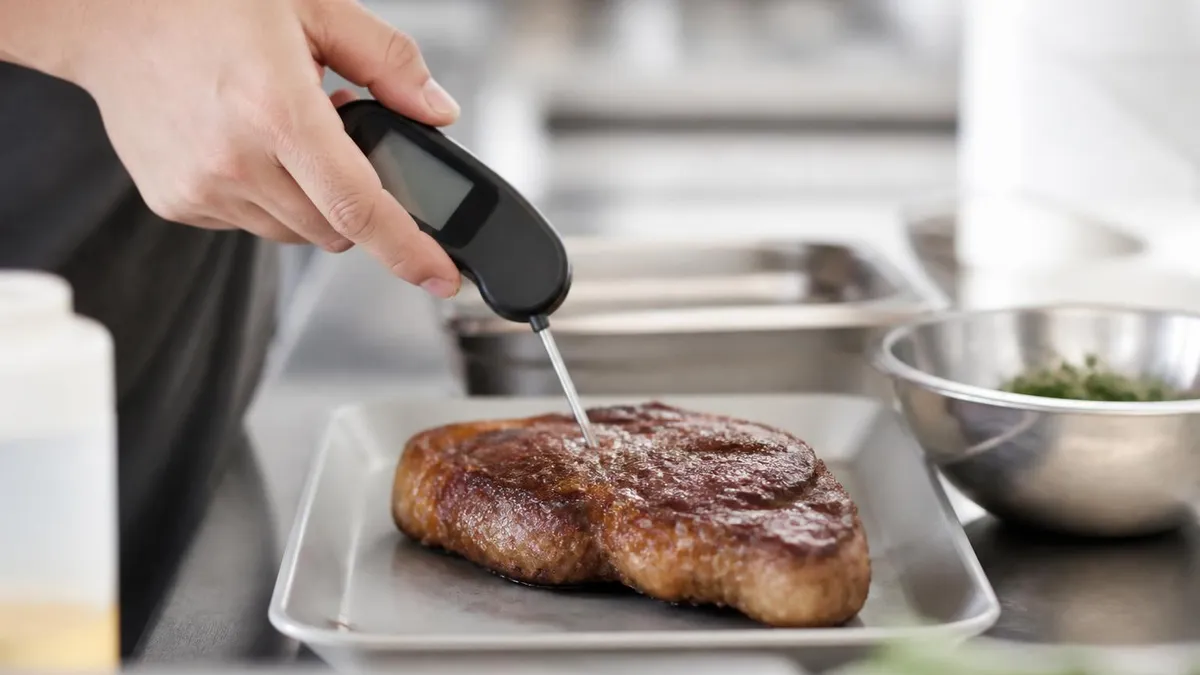
Temperature control covers the food temperature danger zone (41°F to 135°F / 5°C to 57°C) — the temperature range where bacteria multiply rapidly. You learn that perishable food shouldn't remain in the danger zone for more than 4 hours total, that hot food must be held at 135°F or above, that cold food must be held at 41°F or below, and that cooking temperatures vary by food type (165°F for poultry, 155°F for ground meat, 145°F for whole cuts of meat and seafood). Thermometer use and calibration are covered because temperature management requires accurate measurement.
Cross-contamination prevention teaches you how to prevent raw food (especially raw meat, poultry, and seafood) from contaminating ready-to-eat food. Key practices: separate cutting boards and utensils for raw and ready-to-eat items, store raw meat below ready-to-eat food in the refrigerator, clean and sanitise surfaces after contact with raw food, and never reuse marinades that touched raw meat without cooking them first. Cross-contamination is one of the most common causes of foodborne illness outbreaks in food service establishments.
Allergen awareness covers the eight major food allergens (milk, eggs, fish, shellfish, tree nuts, peanuts, wheat, soy — plus sesame, added as the ninth major allergen) and the importance of preventing cross-contact for customers with food allergies. You learn to communicate allergen information accurately to customers, use separate preparation areas for allergen-free orders when possible, and understand that even trace amounts of an allergen can trigger severe allergic reactions in sensitive individuals.
Cleaning and sanitising food-contact surfaces is distinct from general cleaning — and the course explains the difference. Cleaning removes visible dirt and food debris. Sanitising reduces bacteria to safe levels on surfaces that have already been cleaned. Both steps are required: cleaning alone doesn't kill bacteria, and sanitising a dirty surface doesn't work effectively. You learn the correct sanitiser concentration for different methods (chlorine bleach solution, quaternary ammonium compounds, hot water), how often food-contact surfaces must be sanitised during use, and the correct procedure for washing, rinsing, and sanitising in a three-compartment sink.
Personal hygiene requirements for food workers include wearing clean clothing, tying back hair, removing jewellery from hands and arms, covering wounds with bandages and gloves, and not working while experiencing vomiting, diarrhoea, or other symptoms of foodborne illness. Reporting illness to your manager is emphasised — working sick in food service is one of the highest-risk behaviours for causing foodborne illness outbreaks.
Arizona County-Specific Requirements
Maricopa County Environmental Services enforces food handler requirements for the Phoenix metro area. All food handlers in Maricopa County must have a valid food handler certificate from an approved provider. New employees have 30 days from their start date to obtain the card. Managers must hold a higher-level certification (Certified Food Protection Manager / ServSafe Manager). Maricopa County health inspectors verify food handler certificates during routine inspections.
Pima County Health Department enforces food handler requirements in the Tucson metro area. Requirements are similar to Maricopa County: food handlers must complete an approved training programme and keep their certificate current. The 3-year validity period applies. Pima County conducts unannounced inspections of food establishments and may ask to see food handler certificates for any employee handling food.
Coconino County (Flagstaff), Yavapai County (Prescott), Mohave County (Lake Havasu City), and other Arizona counties follow the statewide food handler requirement but may have slightly different enforcement timelines or additional local requirements. Check with your specific county health department to confirm any local variations. In most cases, a food handlers card from any ANSI-accredited provider is accepted across all Arizona counties.
If you're a kitchen manager, head chef, or person-in-charge at a food establishment, Arizona requires a higher-level Certified Food Protection Manager (CFPM) certification in addition to the basic food handlers card. ServSafe Manager Certification is the most common CFPM credential. The ServSafe Manager exam is significantly more comprehensive than the food handler exam and covers food safety management, HACCP principles, employee training, and regulatory compliance.
Approved Food Handler Course Providers for Arizona
Several ANSI-accredited providers offer online food handler courses accepted in Arizona:
- eFoodHandlers: $7–$10. One of the most affordable options. Available in English and Spanish. Consistently rated well by users for simplicity
- StateFoodSafety: $10–$15. Comprehensive course with video-based instruction. Arizona-specific content. Available in multiple languages
- ServSafe (National Restaurant Association): $15. The most widely recognised name in food safety certification. Their food handler course is separate from the ServSafe Manager exam
- 360training: $7–$10. Budget-friendly option with self-paced online instruction
- Learn2Serve: $10–$12. Part of the 360training platform. Accepted across Arizona
- Verification: Confirm the provider is ANSI-accredited and the course is approved for Arizona before paying

How Much Does the Arizona Food Handlers Card Cost?
The Arizona food handlers card is one of the most affordable professional certifications available. Online courses from approved providers cost $7–$15, and the price includes both the training course and the certification exam. There are no additional fees for the certificate itself — your digital card is included in the course price. Some providers charge a few dollars extra for a physical wallet card to be mailed to you, but the digital PDF certificate is all you need for employment and inspection purposes.
Compared to other food safety certifications, the food handlers card is dramatically cheaper. A ServSafe Manager certification (required for food managers, not general food handlers) costs $125–$175 for the exam alone. The basic food handler course at $7–$15 is accessible to everyone, which is the point — the requirement exists to protect public health, and pricing the certification out of reach would defeat that purpose.
Many employers pay for their employees' food handler training. Large restaurant chains, hotel food services, and institutional food operations (hospitals, schools, corporate cafeterias) typically cover the cost as part of new hire onboarding. Before paying out of pocket, ask your employer whether they provide the training or reimburse the cost. Even if you pay yourself, the $7–$15 investment is recovered many times over through the employment it enables — you can't work in food service without it.
If cost is genuinely a barrier, check whether your county health department offers free or subsidised food handler training. Some counties provide free food handler classes for residents, particularly for first-time food service workers. Community organisations and workforce development programmes sometimes cover food handler certification costs as part of job readiness training.
Arizona Food Handlers Card Checklist
- ✓Choose an ANSI-accredited online food handler course approved for Arizona — compare prices ($7–$15 is standard) and verify Arizona approval
- ✓Complete the 60–90 minute training course — pay attention to temperature danger zone (41°F–135°F), handwashing protocol, and cross-contamination prevention
- ✓Pass the exam (typically 70–80% passing score) — most people pass on the first attempt if they engaged with the course material
- ✓Download and save your certificate — keep a digital copy on your phone and a printed copy for your employer
- ✓Provide a copy to your employer — they must keep food handler certificates on file for health department inspections
- ✓Set a reminder for renewal 3 years from your certification date — renewal requires completing a new course and exam
- ✓If you're a food manager or person-in-charge, note that you also need a Certified Food Protection Manager (CFPM) certification like ServSafe Manager — the food handlers card alone isn't sufficient for management roles
Online vs In-Person Food Handler Training
- +Online courses are available 24/7 — complete the training on your own schedule, at any time of day, from any location with internet access
- +Online is faster — most people finish in 60–90 minutes without travel time, waiting for class to start, or breaks between sections
- +Online is typically cheaper — $7–$15 versus potentially higher costs for in-person classes, plus no travel expenses
- +In-person classes offer live instruction and the ability to ask questions — beneficial for visual learners or non-native English speakers who want interactive support
- −Online requires self-discipline — you need to actually engage with the material rather than clicking through screens without reading
- −In-person classes may not be offered frequently — availability depends on your county health department and local training providers
- −Online certificates are sometimes questioned by employers unfamiliar with digital credentials — having a printed copy ready prevents any confusion
- −In-person classes take longer (2–3 hours including travel and classroom time) but provide a more structured learning experience for some learners
Who Needs a Food Handlers Card in Arizona?
Arizona requires a food handlers card for anyone who works with food in a commercial food establishment. The requirement is broad — it covers more roles than many people realise and applies to positions you might not immediately think of as 'food handling.'
Obviously required: cooks, line cooks, prep cooks, chefs, bakers, and anyone who prepares food. Also obviously required: servers, bartenders, and baristas who handle food or beverages (including garnishes, ice, and drink ingredients). These roles involve direct food contact and are the primary targets of the food handler training requirement.
Less obviously required but still covered: cashiers who handle food items (handing bags, boxing items), grocery store deli and bakery staff, convenience store workers who prepare or serve food (hot dogs, fountain drinks, prepared sandwiches), food truck employees, catering staff, banquet servers, buffet attendants, and dishwashers in food establishments. The general principle: if your job involves touching food or food-contact surfaces in a commercial setting, you need a food handlers card.
Not required: office workers who bring lunch from home, food delivery drivers who don't prepare or handle unpackaged food, and farmers who grow but don't prepare food for direct retail sale. The requirement targets commercial food establishments regulated by county health departments, not personal food handling or agricultural production.
Volunteers at food-related events (church dinners, school fundraisers, charity bake sales) are generally not required to hold food handlers cards because these events are typically exempt from commercial food establishment regulations. However, if the event operates under a temporary food permit from the county health department, volunteers involved in food preparation may need certification depending on the county's rules. When in doubt, check with the event organiser or the issuing health department.
Employers are responsible for ensuring all food handlers on their staff have current, valid food handler certificates. During health department inspections, inspectors may ask any employee to show their food handlers card. If an employee can't produce a valid certificate, the employer faces a violation — which can result in fines, mandatory re-inspections, and in severe or repeated cases, establishment closure. This is why most employers verify food handler certification during the hiring process or early in the onboarding period.
Arizona Food Handlers Card: Key Numbers
Key Facts at a Glance
| Item | Value | Details |
|---|---|---|
| Cost of an approved Arizona food handler course — includes training, exam, and digital certificate. One of the most affordable professional certifications available | $7–$15 | |
| Time to complete the online food handler course — self-paced, can be finished in a single sitting or paused and resumed | 60–90 min | |
| Arizona food handlers card validity period — renewal requires completing a new course and exam before the expiration date | 3 years | |
| Time new food service employees have to obtain their food handlers card after starting work — some employers require it before the first day | 30 days |
Food Handler Card vs ServSafe Manager Certification
Two levels of food safety certification exist in Arizona, and confusing them is a common mistake that costs employers money and creates compliance issues during inspections.
The food handlers card (what this article covers) is the basic certification for all food service employees. It's a short course, costs $7–$15, takes about an hour, and covers fundamental food safety practices. Every person who handles food needs this certification.
The ServSafe Manager certification (or equivalent Certified Food Protection Manager credential) is a higher-level certification required for at least one person in each food establishment — typically the kitchen manager, general manager, head chef, or designated person-in-charge. The ServSafe Manager exam is significantly more comprehensive: it covers food safety management systems, HACCP principles, employee training responsibilities, regulatory compliance, and facility design. The exam costs $125–$175, takes 2 hours, has a lower pass rate than the food handler exam, and requires more preparation.
Arizona requires that at least one certified food protection manager be designated for each food establishment. This person is responsible for overseeing food safety practices, training staff, and ensuring compliance with health codes. Having all your food handlers certified with the basic food handlers card doesn't eliminate the requirement for at least one manager-level certification. If you're an owner or manager, verify that your establishment has a current CFPM on staff in addition to food handlers cards for all employees.
Not all online food handler courses are created equal — some are not ANSI-accredited and their certificates may not be accepted by Arizona county health departments. Before paying for any course, verify that the provider is accredited by the American National Standards Institute (ANSI) under the Conference for Food Protection (CFP) standards. Reputable providers display their ANSI accreditation prominently on their website. If a course costs $2–$3 and promises certification in 15 minutes, it's likely not from an accredited provider and the certificate may not satisfy Arizona's food handler requirement. Paying a few extra dollars for a legitimate, accredited course prevents the headache of being told your certificate isn't valid during a health inspection or by your employer.
Renewing Your Arizona Food Handlers Card
Your Arizona food handlers card expires 3 years from the date of completion. Renewal is straightforward — you take a new approved food handler course and pass the exam again, just like the initial certification. There's no abbreviated renewal option; you complete the full course each time. This ensures your food safety knowledge is refreshed and updated, since food safety guidelines and regulations can change over a 3-year period.
Set a calendar reminder for 1–2 months before your expiration date. Working with an expired food handlers card creates compliance risk for both you and your employer. Health department inspectors who find expired certificates during an inspection will cite a violation, and your employer may pull you from food handling duties until you renew. Don't wait for your employer to remind you — tracking your own certification expiration is a professional responsibility.
Renewal costs the same as initial certification: $7–$15 at most approved online providers. Some employers cover renewal costs as part of ongoing employee development. If your employer doesn't proactively offer to pay, ask — many will cover a $10 renewal fee rather than risk a health department violation from an expired certificate. Some larger employers track employee certifications centrally and send reminders when cards are approaching expiration, but don't rely on your employer to manage your professional certification timeline.
Your food handlers card is your credential — keeping it current is ultimately your responsibility, just like maintaining a driver's licence or any other professional requirement that enables you to work in your chosen field. The 3-year renewal cycle is long enough that it's easy to forget, which is exactly why proactively setting a calendar reminder well before the actual card expiration date truly matters. The cost is trivial relative to the compliance risk of an expired card.
If you've changed jobs since your last food handlers card, your existing certificate is still valid at the new employer — you don't need a new card for each job. The food handlers card is issued to you personally, not to a specific employer. Bring your current certificate (or a copy) to any new food service job as proof of compliance. If your card expires between jobs, complete the renewal before starting the new position so you can present a current certificate from day one.
Food Handlers Card Arizona Questions and Answers
About the Author

Registered Sanitarian & Food Safety Certification Expert
Cornell University College of Agriculture and Life SciencesThomas Wright is a Registered Sanitarian and HACCP-certified food safety professional with a Bachelor of Science in Food Science from Cornell University. He has 17 years of experience in food safety auditing, regulatory compliance, and foodservice management training. Thomas prepares food industry professionals for ServSafe Manager, HACCP certification, and state food handler examinations.
Join the Discussion
Connect with other students preparing for this exam. Share tips, ask questions, and get advice from people who have been there.
View discussion (7 replies)