
NSF and ServSafe: What the Organization Behind Food Safety Certification Means for Your Exam
Learn how NSF is an organization that ServSafe relies on for food safety standards. 🎯 Prep with free practice tests and pass first try.
If you have been searching for a servsafe practice test to help you prepare for your food safety certification, you have probably come across references to NSF International and wondered what role that organization plays in the ServSafe ecosystem. NSF is an organization that ServSafe managers and trainers reference constantly because NSF sets many of the baseline sanitation and equipment standards that appear directly on the servsafe manager exam. Understanding the relationship between these two bodies will sharpen your conceptual grasp of the material and give you a meaningful edge when answering scenario-based questions on test day. Practice with the free ServSafe practice test on PracticeTestGeeks (1,350+ questions with answer explanations).
ServSafe itself is a food and beverage safety training and certification program administered by the National Restaurant Association Educational Foundation (NRAEF). The program covers everything from proper temperature controls and cross-contamination prevention to pest management and employee hygiene protocols. When you take a servsafe manager practice test, you will notice that many questions reference specific numerical thresholds — minimum internal temperatures, maximum cold-holding temperatures, and sanitizer concentration ranges — that are grounded in third-party standards developed by organizations like NSF International, the FDA, and the CDC.
NSF International, formerly known as the National Sanitation Foundation, was founded in 1944 and is headquartered in Ann Arbor, Michigan. It operates as an independent, accredited organization that develops public health standards, conducts product testing, and provides certification services for food equipment, water filtration systems, dietary supplements, and a wide range of consumer products. When you see the NSF mark on a piece of commercial kitchen equipment, it means that product has been independently tested and found to meet rigorous standards for material safety, design, and cleanability — all topics relevant to your servsafe test prep.
The connection between NSF and ServSafe runs deep at the equipment and facility level. ServSafe instruction materials frequently direct food service managers to purchase or specify NSF-certified equipment because that certification is often required by local health codes and state regulations across the United States. During a servsafe manager test questions review session, you may encounter prompts asking which type of equipment is acceptable in a commercial kitchen — and the correct answer will almost always reference equipment that meets NSF or equivalent standards.
For the practical exam candidate, knowing that NSF is an accrediting and standard-setting body — not a government agency — is an important conceptual distinction. NSF operates on a voluntary certification model where manufacturers submit their products for testing, but once a product carries the NSF mark, health inspectors and food service managers treat that mark as a reliable indicator of compliance. This voluntary-yet-authoritative model mirrors how ServSafe certification itself functions: it is not federally mandated, yet most states and municipalities recognize or require it for food service managers.
Taking a high-quality servsafe manager practice test before your actual exam helps you internalize not just isolated facts but the underlying logic of food safety regulation — including why organizations like NSF exist and what function they serve in the broader regulatory landscape. Questions about equipment sanitation, facility design, and approved materials become much easier to answer correctly when you understand the ecosystem of standards bodies, federal agencies, and industry programs that collectively define safe food service in America.
This guide will walk you through NSF's history and mission, explain exactly how its standards intersect with ServSafe exam content, and give you a practical study framework for using servsafe practice tests to master this material. Whether you are sitting for the ServSafe Manager exam for the first time or refreshing your knowledge before recertification, understanding the NSF connection will make your preparation more efficient and your performance on exam day more confident.
Free ServSafe Study Tools
Interactive ServSafe resources on PracticeTestGeeks, free to start:
- ServSafe - Alcohol Test 1 — 49 questions with instant scoring and answer explanations
- ServSafe flashcards — review key terms and concepts card by card
- ServSafe study guide — topic-by-topic overview of what the exam covers
- ServSafe cheat sheet — one-page printable summary for last-minute review
NSF & ServSafe by the Numbers
- The ServSafe Food Handler assessment has 40 questions and is not proctored. (National Restaurant Association)
- The ServSafe Manager exam has 90 questions, of which 80 are scored and 10 are unscored pilot questions. (National Restaurant Association)
- The ServSafe Food Handler assessment has no time limit; the page estimates most people finish within 90 minutes. (National Restaurant Association)
- The online-proctored ServSafe Manager exam allows 2 hours. (National Restaurant Association)
- The ServSafe Food Handler assessment requires a score of at least 75%, though some jurisdictions may set a different required score. (National Restaurant Association)
- ServSafe Food Handler allows 3 attempts to pass the assessment, and a new course must be purchased after the third failed attempt. (National Restaurant Association)
- The ServSafe Manager exam may be taken twice within 30 days, requires a 60-day wait after three or more attempts, and allows at most four attempts in 12 months. (National Restaurant Association)
- The ServSafe Food Handler certificate is valid for three years. (National Restaurant Association)
- ServSafe Food Handler can often be taken online without a proctor, though some states require a proctor's presence. (National Restaurant Association)
Facts verified Oct 20, 2026 against National Restaurant Association. Dates that have passed are removed automatically.
ServSafe Exam at a Glance
| Item | Detail | Official source |
|---|---|---|
| Number of questions (Food Handler) | 40 questions | National Restaurant Association |
| Number of questions (Manager exam) | 90 questions (80 scored) | National Restaurant Association |
| Time limit (Food Handler) | No time limit (about 90 minutes on average) | National Restaurant Association |
| Time limit (Manager exam) | 2 hours | National Restaurant Association |
| Passing score (Food Handler) | 75% | National Restaurant Association |
| Retake policy (Food Handler) | 3 attempts | National Restaurant Association |
| Retake policy (Manager exam) | 2 attempts in 30 days; 60-day wait after 3+ attempts; max 4 in 12 months | National Restaurant Association |
| Validity (Food Handler) | 3 years | National Restaurant Association |
| Delivery (Food Handler) | Online, non-proctored (some states require a proctor) | National Restaurant Association |
| Delivery (Manager exam) | Online or classroom, with a physically present proctor for classroom exams | National Restaurant Association |
| Eligibility (Manager exam) | No prerequisite listed; check state and local requirements | National Restaurant Association |
| Registration deadline (Manager exam (online proctor)) | Schedule more than 72 h ahead for no extra fee; $8 for 24–72 h; $12 for under 24 h | National Restaurant Association |
| Testing window (Food Handler) | Start within 12 months; course expires 60 days after start | National Restaurant Association |
Facts verified Oct 20, 2026 against National Restaurant Association. Dates that have passed are removed automatically.

NSF International: Core Functions Relevant to ServSafe
NSF writes and publishes consensus-based public health standards for food equipment, water treatment, dietary supplements, and more. ServSafe managers must understand that NSF/ANSI 2 is the benchmark standard for commercial food equipment design and construction.
Manufacturers voluntarily submit products for NSF testing. Certified items carry the NSF mark, signaling that materials are non-toxic, surfaces are cleanable, and the design prevents harborage of pathogens — all key ServSafe exam themes.
Beyond equipment, NSF audits food production facilities and supply chains. Health inspectors and food managers across the US rely on NSF audit protocols when evaluating supplier credibility and facility compliance with sanitation codes.
NSF publishes guidance documents, whitepapers, and training resources that align closely with ServSafe curriculum topics including HACCP implementation, allergen management, and foodborne illness prevention strategies.
Understanding how NSF standards intersect with the servsafe manager exam requires a closer look at the specific content domains tested on the certification. The ServSafe Manager exam is divided into seven major topic areas: The Importance of Food Safety, The Microworld, Contamination, Food Allergens & Illness, The Flow of Food, Food Safety Management Systems, and Safe Facilities and Pest Management. NSF standards appear most prominently in the sixth and seventh domains, but their influence ripples through every section because equipment and facility design affect every stage of the food safety flow.
In the Flow of Food domain, ServSafe tests candidates on proper receiving procedures, including how to inspect incoming shipments and what types of containers and equipment are acceptable for food storage. NSF-certified containers, storage racks, and refrigeration units are the standard reference points here. When a servsafe manager practice exam question asks you whether a food manager should accept a delivery of produce stored in wooden crates, the correct answer (no — wood is porous and cannot be adequately sanitized) reflects NSF material standards that prohibit porous, hard-to-clean materials in commercial food contact applications.
The Safe Facilities and Pest Management domain is where NSF knowledge pays off most directly. ServSafe exam content in this area covers the design of food preparation areas, including floor, wall, and ceiling materials; ventilation and lighting requirements; handwashing station placement; and equipment installation standards.
NSF/ANSI standards specify that commercial equipment must be designed to be easily cleanable, that legs or feet must provide adequate clearance above the floor to allow cleaning underneath, and that all food-contact surfaces must be smooth, durable, and non-absorbent. These are not abstract regulatory details — they appear on the servsafe manager practice exam in multiple question formats.
Consider a common exam scenario: a health inspector visits a restaurant and cites the manager for storing a commercial mixer directly on the floor with no clearance underneath. The ServSafe-correct response is that equipment must be installed so that it is either sealed to the floor or elevated on legs providing a minimum of six inches of clearance — a standard directly derived from NSF installation guidelines and codified into FDA Food Code recommendations. Knowing the standard, not just memorizing the answer, helps you handle novel scenario variations you have not seen before.
Temperature control is another area where third-party standards shape ServSafe content. NSF certification for refrigeration equipment requires that units maintain food at or below 41°F (5°C) — the same threshold ServSafe requires for cold holding. When exam questions ask about acceptable refrigerator temperatures or describe a scenario where a unit is malfunctioning, the ServSafe answer aligns with NSF performance standards for certified refrigeration equipment. This consistency makes sense: ServSafe was designed to teach managers how to comply with the FDA Food Code, which in turn recognizes NSF standards as acceptable benchmarks for equipment performance.
Sanitizer concentration is yet another content area shaped by third-party standards. ServSafe specifies approved chemical sanitizers — chlorine, iodine, and quaternary ammonium compounds — along with their effective concentration ranges and contact time requirements. These concentration thresholds are validated through testing protocols that NSF and similar organizations have conducted. When you practice with a servsafe manager sample test and see a question about minimum chlorine sanitizer concentration (50–99 ppm for a one-minute contact time), you are recalling a standard grounded in laboratory-validated efficacy data.
One of the best ways to solidify this conceptual framework is to take timed servsafe practice tests that include facility and equipment questions and then review the rationale behind each answer rather than simply checking whether you got it right or wrong. When you understand that a specific answer is correct because it aligns with a recognized sanitation standard — whether from NSF, the FDA Food Code, or the CDC — the information becomes far more memorable and transferable to novel exam scenarios.
ServSafe Test Prep: Three Study Angles for NSF & Facility Topics
When studying equipment standards for the servsafe manager test, focus on the principles behind NSF certification rather than memorizing brand names. Key rules include: all food-contact surfaces must be smooth, durable, non-absorbent, and easily cleanable; equipment must be NSF-certified or meet equivalent national standards; and installation must allow thorough cleaning of surrounding surfaces. Countertop equipment weighing under 80 pounds should be movable for cleaning, while heavier units must be sealed to the counter or elevated six inches off the floor.
Practice questions in this area often present scenario-based prompts: a manager is remodeling the kitchen — which countertop material is acceptable? (Non-porous, smooth, durable surfaces like stainless steel or approved food-grade plastics.) Or: a new reach-in refrigerator does not have an NSF mark — is it acceptable? Technically, it must meet equivalent standards verified by another accredited body, but NSF certification is the clearest and most commonly accepted proof of compliance on ServSafe exams.

NSF Certification for Equipment: Pros and Cons for Food Service Managers
- +Provides independent verification that equipment meets food safety material and design standards recognized across all 50 US states
- +Simplifies health inspection compliance because inspectors immediately recognize the NSF mark as an accepted standard
- +Reduces liability for managers and operators by demonstrating due diligence in equipment selection
- +NSF-certified equipment is specifically designed for cleanability, reducing actual labor time spent on daily and deep cleaning tasks
- +Many jurisdictions legally require NSF or equivalent certification for commercial kitchen equipment, making it non-negotiable
- +Knowing which mark to look for on equipment is directly testable knowledge on the ServSafe Manager exam
- −NSF certification adds cost to equipment, making certified products more expensive than uncertified alternatives at initial purchase
- −The certification process focuses on the product at the time of testing — worn or damaged equipment may no longer meet standards even if it once carried the NSF mark
- −Some small operators confuse NSF certification with government approval, when in reality NSF is a private, voluntary third-party body
- −Managers must still verify that NSF-certified equipment is installed correctly — certification covers design, not installation compliance
- −International operations may need to navigate different certification bodies (CE marks in Europe, for example) that do not always align with NSF standards
- −Over-reliance on the NSF mark without understanding underlying sanitation principles can lead to gaps in food safety management
ServSafe Manager Exam Prep Checklist: NSF & Facility Topics
- ✓Review NSF/ANSI Standard 2 for commercial food equipment — understand the core material and cleanability requirements it establishes
- ✓Memorize the minimum equipment clearance rules: 6 inches off the floor for elevated equipment, sealed to floor or counter for stationary units
- ✓Study the FDA Food Code's reference to NSF certification as an acceptable standard for commercial kitchen equipment
- ✓Practice identifying acceptable versus unacceptable storage container materials — eliminate wood, cardboard, and porous materials from food contact
- ✓Review the foot-candle lighting requirements for food prep surfaces (50), walk-in coolers (20), and dining areas (10)
- ✓Learn the approved chemical sanitizers and their correct concentration ranges — chlorine (50–99 ppm), iodine (12.5–25 ppm), quats (200 ppm)
- ✓Study pest management principles: facility sealing, door and window standards, licensed applicator requirements for restricted pesticides
- ✓Take at least three full-length servsafe manager practice tests under timed, closed-book conditions to simulate exam pressure
- ✓Review your incorrect answers with focus on the regulatory rationale — not just the right answer but why it is right
- ✓Create a one-page summary of NSF's role as a voluntary, accredited, third-party standard-setting and certification organization
NSF Is Voluntary — But Effectively Mandatory in Practice
Although NSF certification is technically voluntary, most US jurisdictions have adopted the FDA Food Code or equivalent state regulations that require food service equipment to meet NSF or equivalent standards. On the ServSafe Manager exam, treat NSF-certified equipment as the default correct answer for any question about acceptable commercial kitchen equipment — unless the question specifically asks about an alternative accepted standard.
Equipment and facility knowledge is only one slice of what the servsafe manager exam covers, but it is a slice where many candidates lose unnecessary points because they approach it as pure memorization rather than applied understanding. The questions on this topic are almost always scenario-based: a health inspector makes a specific observation, a manager faces a particular purchasing decision, or an employee reports a facility issue. Your job is to apply the correct principle — grounded in NSF standards, FDA Food Code guidance, or ServSafe protocol — to arrive at the right course of action.
Let us walk through a realistic exam scenario. A food service manager is purchasing new prep tables for an upcoming kitchen renovation. She has two options: Option A is a stainless steel table with NSF certification that costs $800; Option B is an imported table made of a similar-looking material with no NSF mark that costs $520.
The ServSafe-correct guidance is to purchase Option A, the NSF-certified table, because it provides verifiable assurance that the material is food-safe and that the design meets cleanability requirements that health inspectors will look for. Option B may be perfectly safe, but without third-party verification, the manager cannot confirm compliance with health code requirements and risks a citation during inspection.
Another common exam scenario involves a manager conducting a monthly self-inspection of the kitchen. She notices that a reach-in refrigerator's door gasket is cracked and has visible mold growth in the folds. What is the correct action? According to ServSafe, the manager should immediately remove food from that unit, have the gasket replaced, and sanitize the interior of the refrigerator before returning food to it.
The damaged gasket compromises the unit's ability to maintain food-safe temperatures and creates a harborage point for pathogens — a problem NSF equipment standards specifically aim to prevent through design requirements for cleanable, replaceable seals and gaskets.
Understanding that NSF is an organization that establishes standards through a consensus-based process involving manufacturers, regulators, and public health experts also helps you answer questions about the authority and enforceability of food safety standards. On the servsafe test, you may encounter questions that ask whether a specific regulation is local, state, or federal, or whether a particular standard is legally required or voluntary. NSF standards occupy a specific niche: they are voluntary at the federal level but frequently adopted by reference into mandatory state and local health codes, giving them the practical force of law in most US jurisdictions.
The broader food safety regulatory landscape includes the FDA, the USDA, the CDC, state health departments, and local environmental health agencies. Each of these bodies plays a distinct role, and ServSafe exams test candidates on the jurisdictional hierarchy. The FDA publishes the Food Code, which is a model set of regulations updated every four years.
States may adopt the Food Code wholesale, adopt an earlier version, or develop their own equivalent standards. NSF standards are frequently incorporated by reference into both the FDA Food Code and state-level regulations, which is why NSF certification is so widely recognized and accepted by health inspectors nationwide.
Candidates who invest time in understanding this regulatory ecosystem — rather than just memorizing isolated facts — perform significantly better on complex scenario questions. When you understand that the FDA Food Code references NSF certification as an acceptable compliance pathway for equipment, you can reason your way to correct answers on questions you have never seen before. This is the difference between a candidate who barely passes and one who scores in the 80th or 90th percentile on the servsafe manager exam.
To build this kind of deep understanding, supplement your servsafe practice tests with brief study sessions on the regulatory bodies and standards organizations mentioned in your ServSafe textbook. You do not need to read the actual NSF standards documents — your ServSafe Manager textbook provides all the content you need — but knowing what each organization does and why it exists will help you contextualize the facts you are memorizing and retain them more effectively under exam pressure.
If you want more targeted practice, the servsafe practice test 90 questions page covers the same material with additional questions and explanations.
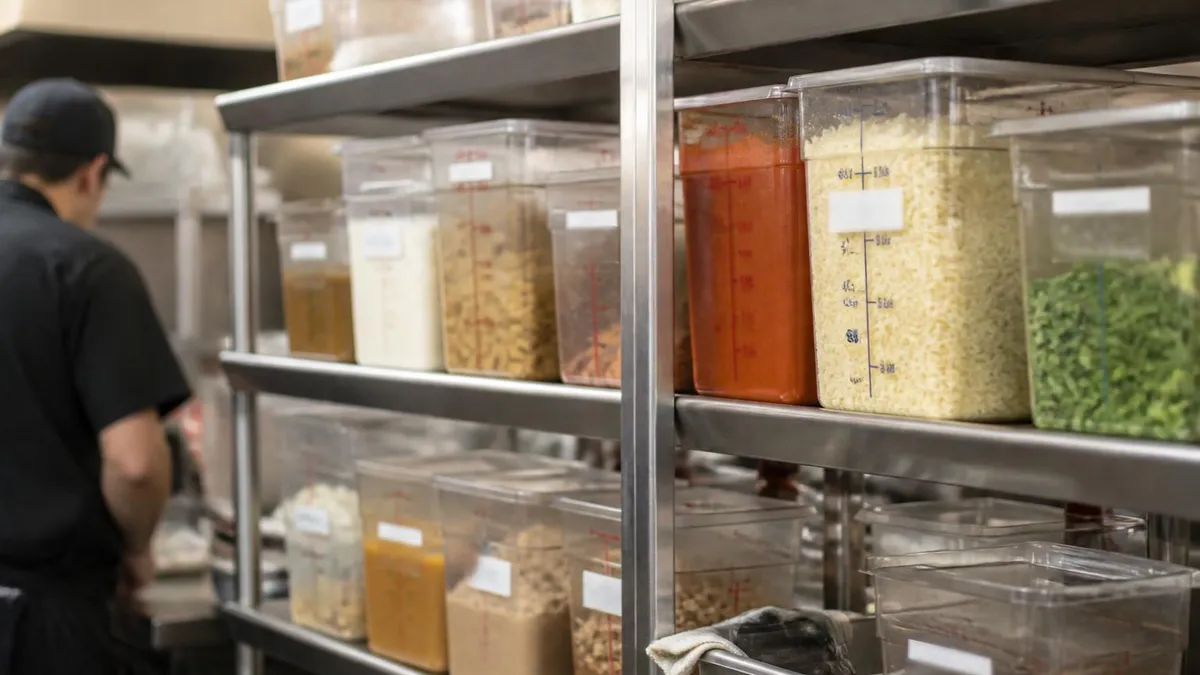
NSF International is a private, nonprofit, accredited third-party organization — it is NOT a government agency. It does not write laws or enforce regulations. However, because federal, state, and local health codes frequently reference NSF standards by name, NSF certification carries the practical weight of legal compliance in most US jurisdictions. On the ServSafe exam, always distinguish between voluntary standards bodies (NSF), model regulatory codes (FDA Food Code), and legally binding regulations (state and local health codes).
When you are preparing for the servsafe manager exam, one of the most valuable things you can do beyond taking practice tests is to read through a full set of servsafe exam answers with detailed rationales. Many candidates make the mistake of only reviewing questions they got wrong, but reviewing correct answers with their rationales is equally important because it reinforces the underlying logic and helps you identify any gaps in your conceptual understanding before they become exam-day liabilities.
The ServSafe Manager certification exam consists of 90 questions, of which 80 are scored and 10 are unscored pilot questions used to evaluate future exam content. You will not know which questions are pilot questions, so you must answer all 90 to the best of your ability. To pass, you need to answer at least 56 of the 75 scored questions correctly — a 75% passing threshold. The exam is closed-book and proctored, with a two-hour time limit that most candidates find sufficient if they have prepared adequately.
The seven content domains are weighted differently on the exam. Safe Food Handler content (personal hygiene, handwashing, illness policies) and The Flow of Food (receiving through service) together account for the largest share of questions. Safe Facilities and Pest Management, which is where NSF content is most concentrated, typically accounts for approximately 11–13% of the scored questions. That translates to roughly eight to ten questions on a typical exam — a meaningful number that can easily be the difference between passing and failing for candidates who are on the margin.
Practical preparation strategies for the facility and equipment domain include creating visual flash cards that pair each equipment standard with a concrete example — for instance, pairing the six-inch clearance rule with a mental image of a commercial mixer on adjustable legs. Visual and contextual memory anchors are more durable under exam pressure than rote memorization of abstract rules. Some candidates find it helpful to walk through their current or past workplace with ServSafe standards in mind, identifying compliant and non-compliant features in real space.
Timing your practice exams is also critical. Many candidates know the material but struggle to maintain pace through 90 questions in two hours. That works out to approximately 80 seconds per question — comfortable for straightforward factual recall questions but potentially tight for multi-step scenario questions that require you to work through a situation carefully.
Timed practice sessions build the pacing habits and decision-speed that translate directly to better exam performance. If you find yourself consistently running out of time on practice tests, identify whether the bottleneck is speed of recall, careful reading of scenarios, or uncertainty that leads to second-guessing.
For candidates who want to go beyond basic exam prep, ServSafe also offers a Food Handler certification and an Allergens certification that cover overlapping but distinct content. The allergens content is particularly relevant to the equipment and facility context because allergen cross-contact prevention requires the same NSF-aligned principles of cleanable surfaces, dedicated equipment, and rigorous cleaning procedures that apply to pathogen prevention generally. Studying allergen protocols alongside standard facility and equipment content reinforces both topic areas simultaneously.
Finally, remember that the goal of ServSafe certification is not just to pass an exam — it is to equip you with the knowledge and decision-making framework to protect public health in a food service environment. The NSF standards, FDA Food Code requirements, and ServSafe protocols you study are the tools of a food safety professional. The more deeply you internalize them as a coherent system rather than a disconnected list of facts to memorize, the more effectively you will apply them in your actual food service career.
As you enter the final stretch of your servsafe test prep, it helps to organize your remaining study time around the specific question types and content areas where you are weakest rather than reviewing material you already know well. After completing several full-length servsafe manager practice tests, categorize your errors by domain: Are you losing points on temperature ranges? Sanitizer concentrations? Pest management procedures? Facility design standards? Each of these error clusters points to a specific study priority for your final preparation sessions.
For facility and NSF-related content specifically, a targeted review approach works better than re-reading entire chapters. Compile a focused list of the twenty to thirty factual data points most commonly tested in this domain — equipment clearance heights, lighting foot-candle levels, sanitizer concentrations, approved surface materials — and review that list daily in the week before your exam. Keep it short enough to review in ten minutes, and revisit it each morning to reinforce retention through spaced repetition.
Scenario practice is equally important in the final week. Find or create ten to fifteen scenario-based questions specifically about facility design, equipment selection, and sanitation procedures, and practice answering them by first identifying the applicable principle before selecting an answer. This two-step approach — identify the rule, then apply it — slows you down slightly during practice but builds the analytical habit that prevents careless errors on real exam questions where distractor answer choices are designed to catch candidates who are pattern-matching rather than reasoning.
On exam day, read every question stem carefully before looking at the answer choices. Many facility and equipment questions include specific details — a temperature reading, a measurement, a material description — that determine which rule applies. Candidates who skim the stem and jump to familiar-sounding answer choices frequently select plausible but incorrect answers because they missed a key detail. Treat each question as a mini case study that requires full comprehension before you evaluate options.
If you encounter a question about NSF specifically — for example, a question asking what NSF is an organization that does, or what the NSF mark on equipment signifies — recall the core concepts: NSF is an independent, accredited, nonprofit organization that develops standards and certifies products for food equipment, water treatment, and consumer goods. The NSF mark on commercial food equipment means the product has been independently tested and found to meet material safety, design, and cleanability standards recognized by the FDA Food Code and state health regulations.
After you pass your servsafe manager exam, your ServSafe Manager certification is valid for five years from the date of your exam. To maintain certification, you must retake and pass the proctored exam before your certificate expires — there is no continuing education renewal option for the Manager certification.
During your five-year certification period, stay current with any updates to the FDA Food Code and your state's adopted food safety regulations, as these may change between your initial certification and recertification exams. NSF standards are also updated periodically, so equipment purchased at the start of your career may be evaluated against newer standards by the time you recertify.
The investment you make in thorough exam preparation pays dividends far beyond passing a single test. Managers who deeply understand food safety principles — including the role of organizations like NSF in establishing the standards that underpin those principles — are measurably better at protecting their teams and their customers, passing health inspections, and building the kind of food safety culture that prevents the costly and devastating outcomes of a foodborne illness outbreak.
Use your practice test sessions not just to learn answers but to build the professional knowledge base that will serve you throughout your food service career. If you want to find additional study materials and download resources, check out the servsafe test 90 questions and answers pdf free download page for more prep tools.
Sample ServSafe Practice Questions
Try these questions from our free ServSafe practice tests. The correct answer and an explanation follow each question.
A manager is setting up a food safety training program. Which group of employees should receive food safety training FIRST?
- A. Managers and supervisors only
- B. All employees who handle food or food-contact surfaces
- C. Dishwashers and bussers
- D. Only employees who work the morning shift
Answer: B. All employees who handle food or food-contact surfaces
Any employee who handles food or touches food-contact surfaces poses a risk to food safety and must receive appropriate training.
The Food Safety Modernization Act (FSMA), signed into law in 2011, fundamentally shifted federal food safety policy by emphasizing what approach?
- A. Reacting to foodborne illness outbreaks after they occur
- B. Transferring all inspection authority to state agencies
- C. Preventing food safety problems before they occur
- D. Eliminating HACCP requirements for small operations
Answer: C. Preventing food safety problems before they occur
FSMA represented the most sweeping overhaul of U.S. food safety law in decades, shifting the FDA's focus from responding to outbreaks to proactively preventing contamination throughout the food supply chain.
What is the maximum amount of time cooked potentially hazardous food (TCS food) can remain in the temperature danger zone during the cooling process?
- A. 6 hours total (135°F to 70°F in 2 hours, then to 41°F in 4 more hours)
- B. 4 hours total at any point in the cooling process
- C. 8 hours total provided the food stays below 70°F within 3 hours
- D. 2 hours total from 135°F to 41°F
Answer: A. 6 hours total (135°F to 70°F in 2 hours, then to 41°F in 4 more hours)
According to the FDA Food Code, TCS food must be cooled from 135°F to 70°F within 2 hours, then from 70°F to 41°F or below within the next 4 hours — a total maximum cooling time of 6 hours. The two-stage process is designed to move food quickly through the range where bacterial growth is fastest (between 70°F and 125°F).
A food handler with a small cut on their hand wants to prepare food. What is the correct action?
- A. The handler should not work with food until the cut is fully healed
- B. Cover the wound with a bandage and wear a single-use glove over it
- C. Apply antiseptic only and continue working
- D. Cover with a bandage; no glove is needed if the bandage is clean
Answer: B. Cover the wound with a bandage and wear a single-use glove over it
Cuts must be covered with a bandage and a single-use glove to prevent blood and pathogens from contaminating food.
ServSafe Questions and Answers





How this page was made: written with AI tools. Exam facts are checked against the official sources listed below. Not reviewed by a subject-matter expert. Editorial policy
Sources & references
Exam facts on this page (fees, format, dates, passing scores) are checked against these official sources; the date is our last check. Editorial policy
- servsafe.com — Exam format, registration deadline, retake policy, time limit, test delivery, eligibility, passing score, test dates, score validity · verified Oct 2026