
An Example of a Corrective Action Is ServSafe: What Food Managers Must Know 2026
An example of a corrective action is ServSafe-compliant food disposal. 🟢 Learn what corrective actions are, when to apply them, and how to pass your exam.
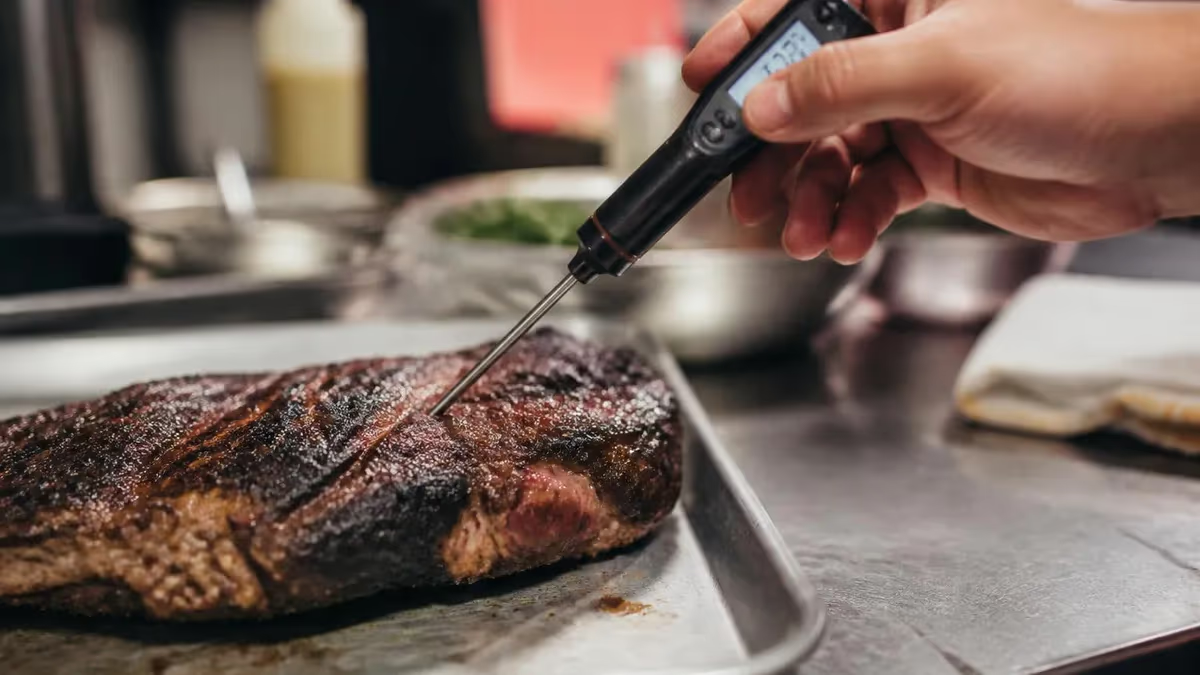
When studying for the ServSafe manager exam, one concept that trips up many test-takers is corrective action. An example of a corrective action is ServSafe-documented food disposal after a critical control point (CCP) failure — for instance, discarding a batch of poultry that never reached the required internal temperature of 165°F. Understanding what corrective actions are, why they matter, and how to apply them correctly is essential for passing your servsafe practice test and running a legally compliant food operation. Practice with the free ServSafe practice test on PracticeTestGeeks (1,350+ questions with answer explanations).
Corrective actions are the steps food managers must take when monitoring reveals that a critical control point has not been met. The ServSafe curriculum defines a CCP as any point in the food-handling process where a hazard can be prevented, eliminated, or reduced to a safe level. When a measurement — such as a cooking temperature or a holding temperature — falls outside the safe range, the manager cannot simply reheat the food and move on. A formal corrective action must be triggered, documented, and reviewed to prevent recurrence.
Many candidates preparing with a servsafe manager practice test are surprised to learn that corrective actions extend beyond just throwing food away. They also include retraining staff, recalibrating thermometers, adjusting equipment settings, and updating standard operating procedures. The ServSafe framework treats every CCP failure as an opportunity to identify a systemic weakness before it causes a foodborne illness outbreak. That proactive mindset is at the heart of both the HACCP system and the ServSafe certification program.
The ServSafe Manager Certification exam dedicates multiple questions to HACCP and corrective actions because these concepts form the backbone of professional food safety management. Students who invest time in servsafe test prep will encounter scenario-based questions asking them to identify the correct response when a CCP limit is exceeded. Knowing the difference between a corrective action and a preventive control, and understanding when each applies, can mean the difference between a passing and a failing score.
This article walks you through the full corrective action framework as defined by ServSafe and the FDA Food Code. We will cover real-world examples across multiple food categories, explain the documentation requirements that inspectors look for, and break down the HACCP principles that underpin every corrective action decision. By the end, you will have the knowledge and confidence to answer corrective action questions correctly on the servsafe manager exam and to implement these procedures in any professional kitchen.
Whether you are a line cook pursuing your first certification or a veteran food service director refreshing your credentials, understanding corrective actions is non-negotiable. Health departments in all 50 states use HACCP-based inspection criteria, and corrective action records are among the first documents an inspector requests during an audit. Getting this right protects your guests, your establishment, and your professional license — and it starts with the same content you will find on the ServSafe test.
Throughout this guide, we will also point you to practice resources so you can test your knowledge in real time. ServSafe exam practice questions that focus on HACCP corrective actions are available through several free and paid platforms, and taking a timed servsafe manager sample test before your exam date is one of the most reliable ways to identify remaining knowledge gaps and close them before exam day.
- The ServSafe Food Handler assessment has 40 questions and is not proctored. (National Restaurant Association)
- The ServSafe Manager exam has 90 questions, of which 80 are scored and 10 are unscored pilot questions. (National Restaurant Association)
- The ServSafe Food Handler assessment has no time limit; the page estimates most people finish within 90 minutes. (National Restaurant Association)
- The online-proctored ServSafe Manager exam allows 2 hours. (National Restaurant Association)
- The ServSafe Food Handler assessment requires a score of at least 75%, though some jurisdictions may set a different required score. (National Restaurant Association)
- ServSafe Food Handler allows 3 attempts to pass the assessment, and a new course must be purchased after the third failed attempt. (National Restaurant Association)
- The ServSafe Manager exam may be taken twice within 30 days, requires a 60-day wait after three or more attempts, and allows at most four attempts in 12 months. (National Restaurant Association)
- The ServSafe Food Handler certificate is valid for three years. (National Restaurant Association)
- ServSafe Food Handler can often be taken online without a proctor, though some states require a proctor's presence. (National Restaurant Association)
Facts verified Oct 20, 2026 against National Restaurant Association. Dates that have passed are removed automatically.
ServSafe Exam at a Glance
| Item | Detail | Official source |
|---|---|---|
| Number of questions (Food Handler) | 40 questions | National Restaurant Association |
| Number of questions (Manager exam) | 90 questions (80 scored) | National Restaurant Association |
| Time limit (Food Handler) | No time limit (about 90 minutes on average) | National Restaurant Association |
| Time limit (Manager exam) | 2 hours | National Restaurant Association |
| Passing score (Food Handler) | 75% | National Restaurant Association |
| Retake policy (Food Handler) | 3 attempts | National Restaurant Association |
| Retake policy (Manager exam) | 2 attempts in 30 days; 60-day wait after 3+ attempts; max 4 in 12 months | National Restaurant Association |
| Validity (Food Handler) | 3 years | National Restaurant Association |
| Delivery (Food Handler) | Online, non-proctored (some states require a proctor) | National Restaurant Association |
| Delivery (Manager exam) | Online or classroom, with a physically present proctor for classroom exams | National Restaurant Association |
| Eligibility (Manager exam) | No prerequisite listed; check state and local requirements | National Restaurant Association |
| Registration deadline (Manager exam (online proctor)) | Schedule more than 72 h ahead for no extra fee; $8 for 24–72 h; $12 for under 24 h | National Restaurant Association |
| Testing window (Food Handler) | Start within 12 months; course expires 60 days after start | National Restaurant Association |
Facts verified Oct 20, 2026 against National Restaurant Association. Dates that have passed are removed automatically.
Free ServSafe Study Tools
Interactive ServSafe resources on PracticeTestGeeks, free to start:
- ServSafe - Alcohol Test 1 — 49 questions with instant scoring and answer explanations
- ServSafe flashcards — review key terms and concepts card by card
- ServSafe study guide — topic-by-topic overview of what the exam covers
- ServSafe cheat sheet — one-page printable summary for last-minute review
ServSafe Corrective Actions by the Numbers

What Is a Corrective Action in ServSafe?
A corrective action is any procedure taken when monitoring shows a critical control point limit has not been met. It must address the immediate food safety problem and identify the root cause to prevent a repeat occurrence.
The first step is always to control the affected food — isolate, hold, or discard it. No food should leave the facility or be served to guests until a manager verifies it is safe or determines it must be destroyed.
After securing the affected product, managers must determine why the CCP failure occurred: equipment malfunction, employee error, supplier issue, or process deviation. This step prevents the same failure from happening again.
Corrective actions respond to failures that have already occurred. Preventive controls are designed to stop failures before they happen. Both are required under HACCP and are tested separately on the ServSafe manager exam.
Every corrective action must be recorded in writing: what happened, which food was affected, what action was taken, who was responsible, and what changes were made to prevent recurrence. Inspectors review these records during audits.
To truly understand what an example of a corrective action is in a ServSafe context, it helps to walk through specific scenarios across the most common food categories. Let us start with cooking temperature failures, which are by far the most frequently tested scenario on the servsafe manager exam.
If a food handler pulls a tray of chicken breasts from the oven and the thermometer reads 158°F instead of the required 165°F, the corrective action is clear: return the chicken to the oven, continue cooking, and re-verify the temperature before service. If the product cannot be safely reheated — for example, if it has been sitting in the temperature danger zone (41°F–135°F) for more than two hours — it must be discarded entirely.
Cold holding failures are another major corrective action trigger. The FDA Food Code requires that cold potentially hazardous foods be held at 41°F or below. If a walk-in cooler malfunctions overnight and the ambient temperature climbs to 50°F, the manager must first assess how long the food was above 41°F. If the time cannot be determined or exceeds four hours, all potentially hazardous items must be discarded. If the time is under two hours and the food can be quickly chilled back to 41°F, it may be salvaged — but only after a documented decision by a certified manager.
Hot holding is equally critical. Foods held for service on a steam table or heat lamp must stay at 135°F or above. If a serving line of mashed potatoes drops to 120°F, the corrective action depends on timing. Food that has been held below 135°F for less than two hours can be rapidly reheated to 165°F and returned to service. Food held below temperature for an unknown or excessive duration must be discarded, and the root cause — a malfunctioning steam table, inadequate portion depth, or improper setup — must be corrected and logged before service resumes.
Cross-contamination corrective actions are less obvious but equally important on the ServSafe test. If a food handler uses the same cutting board for raw chicken and then for ready-to-eat lettuce without sanitizing it in between, the corrective action is to discard the contaminated lettuce, sanitize all affected surfaces, and retrain the employee on separation protocols. The corrective action record should note which products were discarded, the approximate quantity and cost, and the retraining that occurred. Inspectors treat this documentation as evidence of a functioning food safety management system.
Allergen contamination is a growing area of corrective action in modern food service. If a dish is prepared with tree nuts due to miscommunication and a guest with a nut allergy is about to receive it, the corrective action is to intercept the dish immediately, prepare a new allergen-free version using clean equipment, and notify kitchen management so the communication process can be reviewed. For servsafe manager practice tests, allergen-related scenarios are increasingly common, reflecting updated FDA guidance on major food allergens added after the FASTER Act of 2021, which added sesame as the ninth major allergen.
Date-marking failures represent another corrective action category. The FDA Food Code requires that ready-to-eat potentially hazardous foods prepared in-house be date-marked if held for more than 24 hours, with a maximum hold time of seven days at 41°F or below. If a manager discovers an unlabeled container in the cooler and cannot determine when it was prepared, the corrective action is to discard the product. There is no safe workaround: without a preparation date, the manager cannot verify the food is within its safe consumption window, and the risk to guests outweighs the cost of replacement.
Personal hygiene violations also trigger corrective actions. If a manager observes an employee handling ready-to-eat food without gloves after touching their face, the immediate corrective action is to discard any food the employee may have contaminated, have the employee wash their hands and apply gloves, and pull any ready-to-eat food from the area that cannot be verified as uncontaminated.
The longer-term corrective action includes coaching or retraining the employee and, if violations are repeated, escalating to formal disciplinary measures. Every corrective action, whether related to temperature, cross-contamination, or personal hygiene, follows the same documentation protocol required by ServSafe and the FDA.
ServSafe Manager Exam: How Corrective Actions Are Tested
The ServSafe manager exam uses multiple-choice scenario questions to test corrective action knowledge. A typical question presents a situation — such as a walk-in cooler reading 48°F in the morning — and asks the test-taker to choose the best managerial response from four options. Distractors often include plausible-sounding but incorrect actions like simply lowering the thermostat without addressing the affected food, which would be an incomplete corrective action and a wrong answer.
Another common question format asks candidates to sequence corrective action steps in the correct order. For example: (1) identify the CCP failure, (2) segregate the affected product, (3) determine disposition — discard or salvage — (4) identify the root cause, (5) implement a fix, and (6) document everything. Questions may also ask which corrective action is required for a specific temperature deviation, requiring candidates to know both the critical limits and the appropriate response for different food types and processes.

Proactive vs. Reactive Corrective Actions: Key Differences
- +Proactive actions prevent CCP failures before food is at risk — the safest and most cost-effective approach
- +Regular equipment calibration catches thermometer drift before it causes a temperature failure
- +Staff retraining scheduled after near-miss events stops violations before they become full CCP failures
- +Scheduled HACCP audits identify systemic weaknesses in the operation before an inspector does
- +Preventive maintenance logs for refrigeration units reduce emergency corrective actions by up to 40%
- +Well-documented preventive measures demonstrate due diligence to health inspectors during routine visits
- −Reactive corrective actions are always more expensive — discarded food, potential fines, and reputational damage
- −Emergency equipment repair costs significantly more than scheduled preventive maintenance
- −A corrective action triggered by a customer complaint may already mean someone has been harmed
- −Reactive documentation is more likely to be incomplete or inaccurate because it is done under stress
- −Repeated reactive corrective actions for the same CCP signal a systemic failure that inspectors flag as a critical violation
- −Relying on reactive corrective actions rather than preventive controls can result in permit suspension in high-risk jurisdictions
Pros and Cons at a Glance
| Pros | Cons |
|---|---|
| Proactive actions prevent CCP failures before food is at risk — the safest and most cost-effective approach | Reactive corrective actions are always more expensive — discarded food, potential fines, and reputational damage |
| Regular equipment calibration catches thermometer drift before it causes a temperature failure | Emergency equipment repair costs significantly more than scheduled preventive maintenance |
| Staff retraining scheduled after near-miss events stops violations before they become full CCP failures | A corrective action triggered by a customer complaint may already mean someone has been harmed |
| Scheduled HACCP audits identify systemic weaknesses in the operation before an inspector does | Reactive documentation is more likely to be incomplete or inaccurate because it is done under stress |
| Well-documented preventive measures demonstrate due diligence to health inspectors during routine visits | Repeated reactive corrective actions for the same CCP signal a systemic failure that inspectors flag as a critical violation |
Corrective Action Documentation Checklist for ServSafe Compliance
- ✓Record the date and time the CCP deviation was discovered.
- ✓Identify exactly which CCP was violated and by how much (e.g., cooking temp was 155°F vs. required 165°F).
- ✓List all food products affected, including quantity, batch number, and approximate value.
- ✓Document the immediate action taken — discard, re-cook, rapid chill, or quarantine for further assessment.
- ✓Identify the root cause of the failure: equipment malfunction, employee error, or process gap.
- ✓Describe the corrective measure implemented to prevent recurrence (repair, retraining, process change).
- ✓Record the name and certification number of the manager who made the disposition decision.
- ✓Attach temperature logs or equipment readings that support the corrective action decision.
- ✓Note any products voluntarily condemned and the disposal method used.
- ✓Sign and date the corrective action record and file it for a minimum of one year or as required by local code.
The Two-Part Rule for Every Corrective Action
ServSafe examiners expect candidates to know that every corrective action has two mandatory parts: (1) address the immediate food safety problem by controlling or discarding the affected product, and (2) identify and fix the root cause to prevent recurrence. An answer that only addresses one part is always wrong on the exam, even if that part is correct on its own.
Understanding how corrective actions fit within the broader HACCP framework is essential for anyone pursuing a ServSafe Manager Certification. HACCP — Hazard Analysis and Critical Control Points — is a seven-principle system developed originally for NASA's space food program and later adopted by the FDA as the gold standard for food safety management.
Corrective action is the fifth of the seven principles, which means that before you can implement a proper corrective action, your operation must already have a working hazard analysis, identified critical control points, established critical limits, and an active monitoring system in place. Without those four preceding principles, corrective actions lack the framework needed to be effective or legally defensible.
The seven HACCP principles are: (1) Conduct a hazard analysis, (2) Identify critical control points, (3) Establish critical limits, (4) Establish monitoring procedures, (5) Establish corrective actions, (6) Establish verification procedures, and (7) Establish record-keeping and documentation procedures. On the servsafe manager exam, questions about corrective actions often test whether candidates understand that corrective actions are useless in isolation.
A candidate who can identify that chicken should be discarded when it fails to reach 165°F but cannot explain why that temperature is the critical limit — or what monitoring procedure detected the failure — is missing the systemic understanding that ServSafe and health departments require.
Verification, HACCP Principle 6, is closely related to corrective actions and is frequently tested alongside it. Verification means confirming that the HACCP plan is actually working as intended. After a corrective action is implemented, verification activities — such as re-testing equipment, reviewing temperature logs, or observing employee practices — confirm that the root cause has truly been addressed. The ServSafe curriculum distinguishes between monitoring (ongoing, real-time checks during operations) and verification (periodic, higher-level reviews of whether the system is functioning). Candidates who confuse the two often miss questions that ask about the manager's role after a corrective action is complete.
Record-keeping, Principle 7, closes the loop on corrective actions. Without written records, a corrective action essentially did not happen from a legal and regulatory perspective. The FDA Food Code and most state health codes require that HACCP records — including corrective action logs — be retained for at least one year for most operations, and for at least two years for processors who fall under FDA or USDA jurisdiction.
During a health inspection, an inspector who finds evidence of a CCP failure but no corresponding corrective action record will classify the finding as a critical violation, which can lead to point deductions, re-inspection fees, or in serious cases, permit suspension.
The relationship between corrective actions and the FDA Food Code's five risk factors is another area ServSafe tests heavily. The five risk factors responsible for most foodborne illnesses are: (1) purchasing from unsafe sources, (2) failing to cook food to the correct temperature, (3) holding food at improper temperatures, (4) using contaminated equipment, and (5) poor personal hygiene.
Every corrective action a food manager takes maps back to at least one of these five risk factors. Recognizing those connections helps candidates contextualize corrective action questions on the exam and answer them more accurately, because the correct action always addresses the specific risk factor that was violated.
For students using a servsafe manager sample test to prepare, one of the most common mistakes is memorizing specific temperature numbers without understanding the reasoning behind them. For example, knowing that poultry must reach 165°F is useful, but understanding that this temperature is required because it destroys Salmonella, Campylobacter, and other pathogens commonly found in poultry is what helps you answer scenario questions correctly when the numbers themselves are not directly stated.
ServSafe scenario questions often describe a situation without naming the specific temperature, requiring candidates to infer from context what the critical limit should be and whether a corrective action is warranted.
Finally, it is worth noting that corrective actions are not punitive — they are professional. The ServSafe curriculum consistently frames corrective actions as evidence of a well-run food safety program, not evidence of failure. An operation that has strong corrective action records is demonstrating to regulators that it monitors its CCPs, responds appropriately when deviations occur, and continuously improves its processes.
Health inspectors are trained to look favorably on operations with complete, accurate corrective action logs because those records show that the management team takes food safety seriously and has the systems in place to protect the public. Understanding this perspective helps candidates appreciate why ServSafe dedicates so much exam content to this topic.
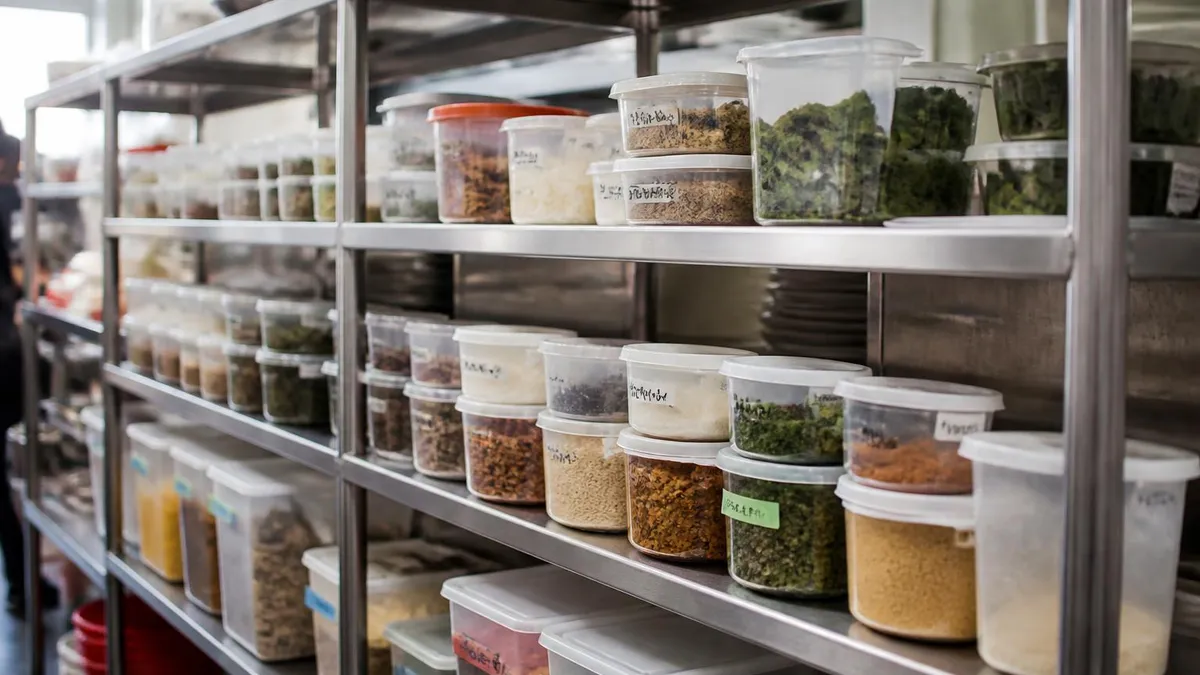
Taking corrective action without documenting it is one of the most common mistakes food managers make during health inspections. Even if you responded perfectly — discarding the food, retraining the employee, repairing the equipment — an inspector who finds no written record can still cite you for a critical violation. Documentation is not optional; it is legally required under the FDA Food Code and most state health codes.
Preparing for the corrective action sections of the ServSafe Manager Certification exam requires a multi-layered study strategy. The first layer is conceptual: you need to understand what corrective actions are, when they are required, and how they fit within the HACCP system. Most candidates get this foundational knowledge from the official ServSafe Manager textbook, which dedicates an entire chapter to HACCP and provides dozens of real-world examples. Reading this chapter carefully — not just skimming for bullet points — is the single most important study activity for corrective action questions.
The second layer is applied knowledge: you need to be able to recognize a CCP failure in a scenario description and identify the correct corrective action from a list of plausible options. This skill is built through practice, not passive reading. Taking a servsafe manager sample test that includes scenario-based HACCP questions will expose you to the kinds of distractors the exam uses.
Common distractors include answers that address only one part of the two-part corrective action rule, answers that describe a preventive control rather than a corrective action, and answers that identify the right action but apply it to the wrong food type or temperature range.
The third layer is speed. The ServSafe Manager exam gives you 2 hours to answer 90 questions — about 80 seconds per question. HACCP scenario questions are often longer than simple recall questions, so practicing under timed conditions is critical. If you consistently find yourself re-reading HACCP questions multiple times before answering, it means your conceptual knowledge is not yet automatic. The solution is more practice: complete at least three full-length timed practice exams in the two weeks before your scheduled exam date, and review every question you miss — not just the ones in the HACCP section.
A fourth often-overlooked study strategy is cross-referencing the ServSafe content with your state's actual food code. While the ServSafe curriculum is based on the FDA Model Food Code, individual states adopt their own versions, and some have stricter requirements than the federal baseline. For example, several states require that corrective action records be retained for two years rather than one, and some states have additional documentation requirements for operations serving highly susceptible populations such as nursing homes and childcare centers. Knowing your state's specific requirements is valuable both for the exam and for your professional practice.
Practice quizzes focused specifically on allergens are also valuable for corrective action preparation, because allergen-related corrective actions are among the most complex and most frequently added to updated exam versions. Since the FASTER Act of 2021 added sesame as the ninth major food allergen, ServSafe has updated its curriculum and exam questions to reflect the expanded allergen list. Candidates who studied from older materials may be unfamiliar with sesame-specific corrective action scenarios, so using updated practice resources is essential.
Study groups are another effective preparation tool that many candidates underutilize. Walking through HACCP scenarios with peers helps you articulate your reasoning out loud, which reveals gaps in your understanding that silent reading does not. When a study partner asks you to explain why poultry must reach 165°F rather than 160°F, and you can answer confidently and accurately, you have internalized the knowledge at a level that will serve you well on exam day. If you cannot explain it, that is a signal to go back to the textbook before attempting more practice questions.
Finally, do not overlook the physical exam environment as a factor in your preparation. The ServSafe Manager exam is administered at approved testing centers or, in some cases, through a proctored online format. Either way, candidates who have practiced reading and answering questions on a computer screen or paper under realistic time pressure perform better than those who studied exclusively from books. Take at least one practice exam in conditions that closely simulate the real thing — timed, without notes, and without interruptions. This rehearsal reduces test-day anxiety and helps you perform at the level your preparation deserves.
In the final days before your ServSafe Manager exam, your study strategy should shift from learning new material to consolidating and reinforcing what you already know. Corrective action is one of the topics where last-minute cramming is counterproductive — you are better served by reviewing your practice test mistakes and making sure you understand the reasoning behind each correct answer than by trying to memorize additional facts.
Create a one-page summary of the most critical corrective action scenarios: cooking temperature failures, cold holding deviations, hot holding failures, cross-contamination events, date-marking errors, allergen incidents, and personal hygiene violations. For each scenario, write down the critical limit, the immediate corrective action, and the documentation requirement.
On exam day, read every HACCP question twice before selecting your answer. The first read is for comprehension — understand the scenario, identify which CCP is involved, and note any temperature or time values mentioned.
The second read is for elimination — rule out any answer choice that addresses only one part of the two-part corrective action requirement, that describes a preventive control rather than a corrective action, or that applies the correct action to the wrong food type. In most cases, two of the four answer choices can be eliminated quickly, leaving you with a more manageable decision between the two remaining options.
Pay particular attention to questions that describe a manager's response to a CCP failure and ask whether the response was adequate. These questions test whether you know that a corrective action is incomplete without documentation and root cause identification. An answer that describes only the immediate food disposal step — without mentioning root cause analysis or record-keeping — is always incomplete according to ServSafe and should not be selected, even if the disposal step itself was correct. This nuance is tested repeatedly on the servsafe manager exam because many real-world managers make exactly this mistake.
For candidates who have already taken the exam once and did not pass, corrective action questions are worth reviewing carefully in your post-exam analysis. The ServSafe score report does not identify which specific questions you missed, but it does provide a breakdown by topic area.
If your HACCP score was below average, focus your re-study on corrective action scenarios and HACCP principles 4 through 7, which cover monitoring, corrective action, verification, and record-keeping. These four principles form an interconnected system, and understanding them together — rather than in isolation — is what separates candidates who pass on the first attempt from those who need a second try.
It is also worth remembering that the knowledge you gain preparing for the ServSafe manager exam has direct, immediate value in your daily work. Every time you monitor a cooking temperature, log a hot holding check, or document a corrective action in your HACCP binder, you are applying the skills that ServSafe certifies.
The exam is not just an academic exercise — it is a benchmark for the professional competencies that protect the health of every guest who sits down in your establishment. The commitment you make to thorough exam preparation is a commitment to the people who trust you to keep their food safe.
Building a habit of documentation before your exam is one of the most practical ways to prepare. If you are currently working in a food service operation, start reviewing your establishment's corrective action logs. Look at how CCP deviations are recorded, whether root causes are identified, and whether follow-up verification is documented. Comparing real-world records to the ServSafe standard helps you see where gaps exist and reinforces the exam content in a practical context. Many ServSafe candidates report that this real-world cross-referencing was the most effective study strategy they used.
Above all, approach the ServSafe Manager exam with confidence grounded in preparation. Corrective actions are a learnable, logical topic — there are no tricks, just a consistent framework applied across different food safety scenarios. Students who invest the time in servsafe test prep, practice with realistic exam questions, and understand the reasoning behind every corrective action step will find that the exam tests exactly what they have studied.
Trust your preparation, read every question carefully, and remember that the two-part corrective action rule — address the immediate problem, then fix the root cause — is the answer the exam is looking for in almost every HACCP scenario you will encounter.
Sample ServSafe Practice Questions
Try these questions from our free ServSafe practice tests. The correct answer and an explanation follow each question.
A manager finds that a batch of soup cooled from 135°F to 70°F in 3 hours. What corrective action is required?
- A. Continue cooling to 41°F within the next 4 hours
- B. Reheat the soup to 165°F and start the cooling process again
- C. Discard the soup immediately
- D. Move the soup to an ice bath and monitor
Answer: B. Reheat the soup to 165°F and start the cooling process again
If food does not reach 70°F within 2 hours during cooling, it must be reheated to 165°F for 15 seconds and cooled again, or thrown out.
After discovering that a CCP was not met, the food manager discards the affected product and retrains the employee. Both actions are part of which HACCP principle?
- A. Monitoring
- B. Verification
- C. Corrective action
- D. Record keeping
Answer: C. Corrective action
Corrective action (Principle 5) encompasses both disposing of unsafe food and addressing the root cause to prevent recurrence.
A food manager notices a prep cook handling raw chicken and then immediately grabbing a bag of salad greens without washing hands. What is the MOST appropriate immediate action?
- A. Log the incident in the corrective action log
- B. Stop the cook, have them wash hands, and discard the salad greens
- C. Instruct the cook to wash hands before the next task
- D. Sanitize the salad greens before serving
Answer: B. Stop the cook, have them wash hands, and discard the salad greens
The contaminated salad greens must be discarded and the cook must wash hands immediately to prevent cross-contamination.
A manager notices condensation dripping from overhead pipes onto exposed food. This is an example of which type of contamination?
- A. Chemical contamination
- B. Biological contamination
- C. Physical contamination
- D. Cross-contamination
Answer: C. Physical contamination
Condensation dripping onto food is physical contamination because a non-food substance has entered the food.
Take the full ServSafe practice test
ServSafe Questions and Answers




How this page was made: written with AI tools and published by Nathan Beja, founder of Practice Test Geeks, who is responsible for its content. Exam facts are checked against the official sources listed below. Not reviewed by a subject-matter expert. Editorial policy
Sources & references
Exam facts on this page (fees, format, dates, passing scores) are checked against these official sources; the date is our last check. Editorial policy
- servsafe.com — Exam format, score release, fees, time limit, test delivery, passing score, retake policy · verified Oct 2026