
ServSafe Allergen: Complete Study Guide & Practice Test Prep 2026 September
Master the ServSafe allergen exam with free practice tests, study tips, and a complete guide to the 9 major food allergens. Ace your certification in 2026 September. 🗨️
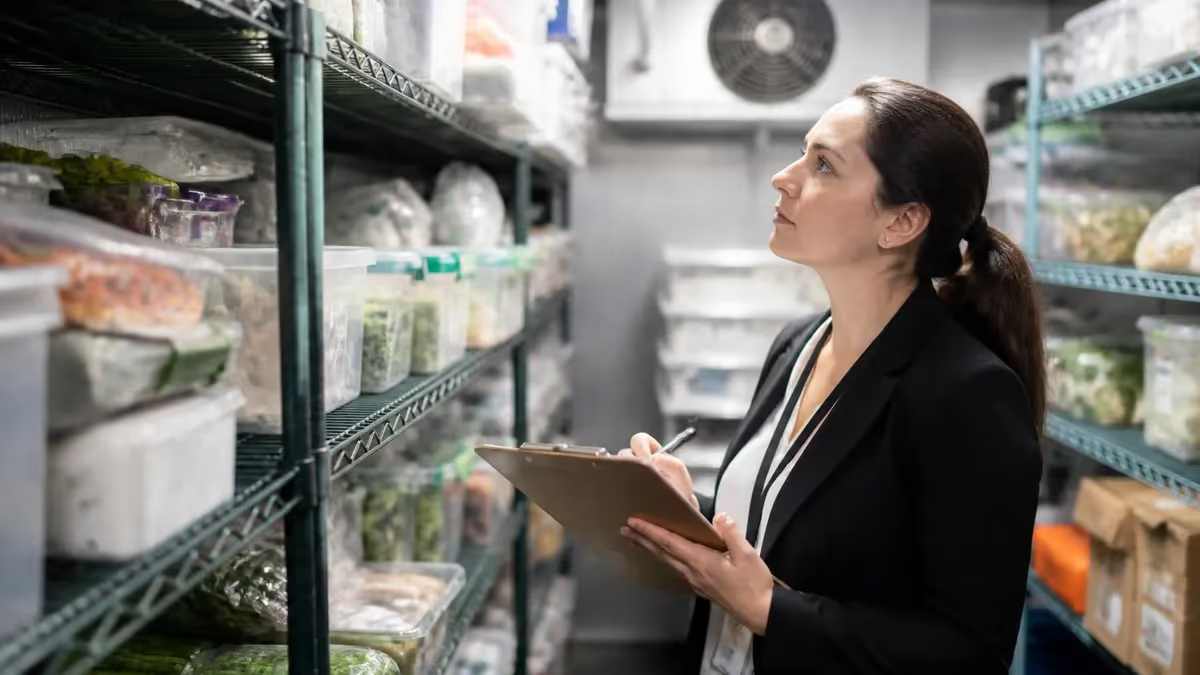
The ServSafe allergen component is one of the most critically tested areas on the ServSafe practice test, and for good reason — food allergen reactions send approximately 200,000 Americans to the emergency room every year. If you are preparing for your certification, understanding how to identify, prevent, and communicate about the nine major food allergens is non-negotiable. This guide walks you through everything from the legal definitions of allergens under the FASTER Act to practical kitchen protocols that show up directly on the exam.
Before you sit for your ServSafe manager practice test, you need to understand what separates an allergen reaction from ordinary food intolerance. An allergic response involves the immune system treating a food protein as a threat and releasing histamines and other chemicals that can escalate quickly. In severe cases this leads to anaphylaxis, a life-threatening drop in blood pressure and swelling of the airways that requires immediate epinephrine injection. The ServSafe curriculum emphasizes that food service workers must treat every allergen request as a genuine medical need, not a preference.
The nine major food allergens recognized by the FDA — milk, eggs, fish, shellfish, tree nuts, peanuts, wheat, soybeans, and sesame — are responsible for roughly 90 percent of serious allergic reactions in the United States. The FASTER Act of 2023 added sesame as the ninth major allergen, and that addition now appears on updated ServSafe exams. Many test-takers who relied on older study materials are caught off guard by sesame questions, so make sure any servsafe test prep resource you use reflects the current nine-allergen list.
Cross-contact is the allergen-specific term you must know cold before exam day. Unlike cross-contamination, which refers to harmful bacteria spreading between surfaces, cross-contact occurs when an allergen is inadvertently transferred from one food to another. Even microscopic amounts of an allergen — a residue on a cutting board or a splash of marinade — can trigger a reaction in a highly sensitive individual. The ServSafe exam tests whether candidates understand that cooking does not destroy allergens; a shrimp fried in oil will leave allergen proteins in that oil, making it unsafe for shellfish-allergic guests even if the shrimp is removed.
Labeling laws are a major exam topic that many candidates underestimate. Under the Food Allergen Labeling and Consumer Protection Act (FALCPA) and its FASTER Act updates, manufacturers must declare any of the nine major allergens on packaged food labels. For food service operations this means staff must read ingredient labels carefully every time a supplier changes a product formulation. A seemingly identical bag of breadcrumbs from a new distributor may contain a sesame-based ingredient that the previous brand did not. ServSafe test answers for labeling questions consistently require demonstrating this level of vigilance.
The ServSafe manager exam dedicates a full chapter to allergens because managers bear legal and ethical responsibility for the protocols their team follows. Managers must train all staff — including front-of-house servers who take orders — to recognize the nine allergens, understand cross-contact risks, and escalate every allergen request to the kitchen immediately. A well-run operation creates a written allergen policy, uses color-coded prep tools, and designates allergen-safe preparation zones whenever possible. These management-level protocols are exactly what the ServSafe manager test questions probe.
Working through dedicated allergen practice tests before your exam date significantly improves retention of these protocols. Because allergen questions are scenario-based — presenting a realistic kitchen or dining situation and asking what the correct response is — passive reading is rarely sufficient. You need to practice applying the rules to novel situations, which is what the quiz tiles below are designed to help you do. The more scenarios you work through, the faster you will recognize the right answer pattern on exam day.
ServSafe Allergen by the Numbers
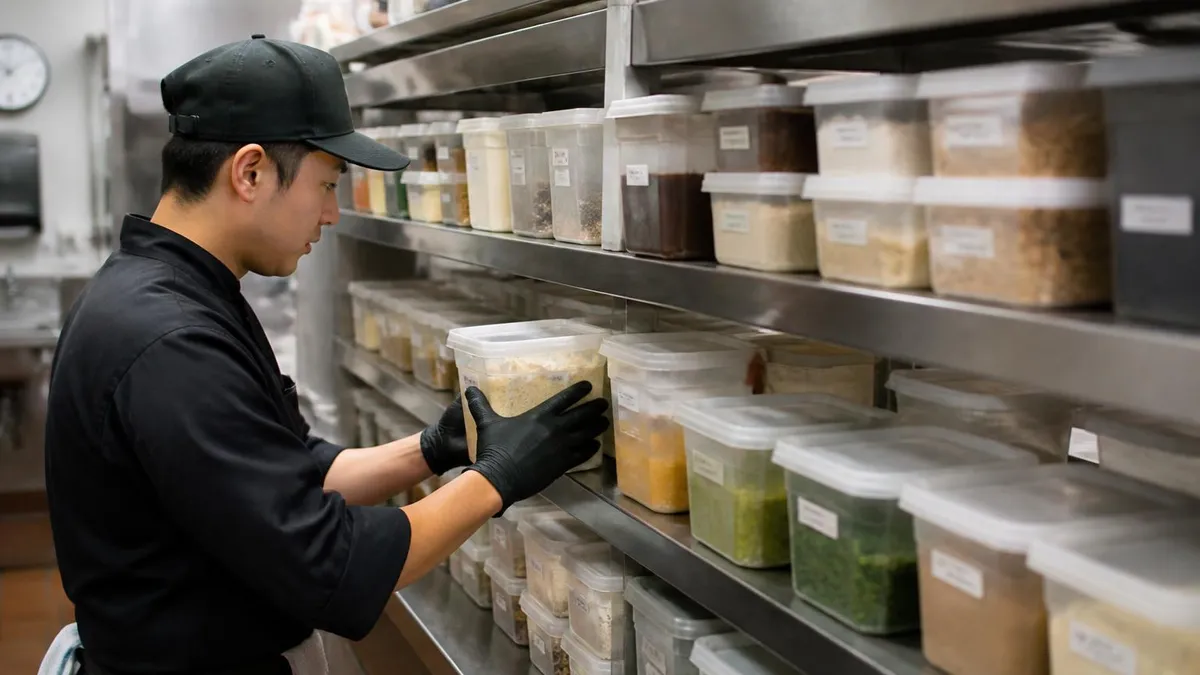
The 9 Major Food Allergens You Must Know
Dairy proteins (casein, whey) and egg proteins (ovalbumin) are hidden in sauces, baked goods, and dressings. Both are among the most common childhood allergens and frequently appear in ServSafe scenario questions about ingredient labeling.
Fish (salmon, tuna, tilapia) and shellfish (shrimp, crab, lobster) must be declared separately under FALCPA. Sesame was added as the ninth major allergen under the FASTER Act of 2023 and now appears on updated ServSafe exams.
Despite the word 'nut,' peanuts are legumes while tree nuts include almonds, walnuts, cashews, and pecans. Each must be declared individually. Both are associated with severe anaphylaxis and are common subjects of cross-contact questions.
Wheat gluten is present in countless restaurant staples — breading, pasta, soy sauce, and thickeners. Soy appears in marinades, edamame, and many processed products. Knowing hidden sources of these allergens is essential for passing the ServSafe manager exam.
Cross-contact is the single most tested allergen concept on the ServSafe manager practice test, and it trips up more candidates than any labeling question. The core principle is simple: an allergen protein that touches a surface, utensil, or food product contaminates that item, and no amount of heat or subsequent cooking will neutralize the protein. A chef who chops walnuts on a cutting board and then slices fruit on the same board without washing it has created cross-contact — even if both foods look perfectly clean to the naked eye.
Preventing cross-contact requires a systematic approach that ServSafe organizes into three categories: equipment, personnel, and preparation practices. On the equipment side, operations should use color-coded cutting boards assigned to specific allergen-free tasks, designate separate utensils that are clearly labeled, and wash, rinse, and sanitize all surfaces between allergen-sensitive preparations. Many high-volume kitchens store allergen-specific tools in sealed containers so they cannot accidentally be grabbed by a line cook during a rush.
Personnel practices are equally important and are heavily weighted in servsafe manager practice tests. Every employee who handles food must know which ingredients contain the nine major allergens, how to read a label for hidden allergen sources, and when to alert a manager. Critically, staff must wash their hands and change gloves between handling allergen-containing items and preparing allergen-free dishes. ServSafe emphasizes that glove changes alone are insufficient — vigorous handwashing first is required because allergen proteins can persist on skin.
Preparation practices include using fresh oil for allergen-sensitive frying, preparing allergen-free dishes first before other items during a service period, and never assuming a dish is safe simply because an allergen ingredient was removed. For example, if a customer with a peanut allergy orders a pad thai and asks for no peanuts, the dish cannot be safely prepared in a wok that has been used for other peanut-containing dishes. A completely fresh setup is required, or the kitchen must decline to accommodate the request and communicate that to the guest honestly.
Guest communication is a critical link in allergen management that the ServSafe exam covers through server-side scenario questions. Servers must know how to ask clarifying questions, relay allergen requests accurately to the kitchen using exact language (not shorthand), and confirm with the kitchen before delivering any allergen-modified dish. Many operations use a special ticket notation system — such as writing the allergen in red or using a dedicated allergen alert slip — so the information is impossible to miss during a busy service.
Ingredient labels and supplier communication form the back-end of a complete allergen management program. The ServSafe curriculum teaches managers to maintain an ingredient binder or digital allergen matrix that maps every menu item to its allergen content. This matrix must be updated every time a recipe changes or a supplier product is substituted, since manufacturers regularly reformulate products. Questions about the allergen matrix and ingredient sourcing show up on the ServSafe manager exam in the context of managerial responsibility and traceability.
Understanding the difference between an allergic reaction and other adverse food reactions is also tested content. An allergic reaction is immune-mediated and can occur from trace amounts; celiac disease is an autoimmune condition triggered specifically by gluten proteins in wheat, barley, and rye; and food intolerance (such as lactose intolerance) involves a digestive rather than immune response. ServSafe test answers frequently ask candidates to distinguish these conditions, because the appropriate kitchen response differs: an allergen requires full cross-contact prevention, while a food intolerance may have a higher threshold of concern but should still be taken seriously.
ServSafe Test Prep: Allergen Study Strategies
The most reliable way to memorize the nine major allergens for your ServSafe practice test is to use the mnemonic "My Eggs, Fish, Shellfish, Tree Nuts, Peanuts, Wheat, Soy, Sesame" — the first letters spell MEFSTPWSS, which you can turn into a short story. Pair each allergen with one common hidden source: milk in mashed potatoes, eggs in Caesar dressing, fish sauce in Asian dishes, shellfish stock in bisque, tree nuts in pesto, peanuts in satay sauce, wheat in soy sauce, soy in meat substitutes, and sesame in tahini.
Flashcard drills are especially effective for allergen-labeling scenarios. Write a food product on the front of each card and list every allergen it might contain on the back — include both obvious and hidden sources. Reviewing 20 cards per day for two weeks before your ServSafe manager exam will build the rapid-recall ability that scenario-based questions demand. Apps like Anki or Quizlet allow spaced repetition scheduling, which research consistently shows improves long-term retention far better than re-reading notes.

ServSafe Allergen Certification: Is It Worth the Effort?
- +Demonstrates legal compliance with FDA food allergen labeling regulations to inspectors and guests
- +Reduces liability exposure for restaurants in allergen-related injury lawsuits
- +Builds guest trust and expands your customer base to include the 32 million Americans with food allergies
- +Improves overall kitchen communication and discipline, which benefits food safety broadly
- +Required or preferred by many employers for management and supervisory food service roles
- +Allergen knowledge transfers directly to other certifications and food safety frameworks like HACCP
- −Requires ongoing staff retraining every time a supplier changes a product formulation
- −Implementing separate prep zones and color-coded equipment adds upfront cost for smaller operations
- −High-volume kitchens face significant workflow disruption when accommodating multiple allergen requests simultaneously
- −Staff turnover means allergen protocols must be re-taught frequently, straining training resources
- −Not all allergen reactions are predictable — even well-trained kitchens can face legal risk from trace exposures
- −The FASTER Act's sesame addition created widespread supply-chain labeling confusion that still affects some operations
Pros and Cons at a Glance
| Pros | Cons |
|---|---|
| Demonstrates legal compliance with FDA food allergen labeling regulations to inspectors and guests | Requires ongoing staff retraining every time a supplier changes a product formulation |
| Reduces liability exposure for restaurants in allergen-related injury lawsuits | Implementing separate prep zones and color-coded equipment adds upfront cost for smaller operations |
| Improves overall kitchen communication and discipline, which benefits food safety broadly | High-volume kitchens face significant workflow disruption when accommodating multiple allergen requests simultaneously |
| Required or preferred by many employers for management and supervisory food service roles | Staff turnover means allergen protocols must be re-taught frequently, straining training resources |
| Allergen knowledge transfers directly to other certifications and food safety frameworks like HACCP | Not all allergen reactions are predictable — even well-trained kitchens can face legal risk from trace exposures |
ServSafe Allergen Exam Prep Checklist
- ✓Memorize all nine major FDA allergens including sesame added under the 2023 FASTER Act.
- ✓Learn three hidden sources for each allergen that commonly appear in restaurant menus.
- ✓Distinguish cross-contact from cross-contamination and know which prevention steps apply to each.
- ✓Understand why cooking does not destroy allergen proteins and can never make a dish allergen-safe.
- ✓Practice reading food labels to identify allergen declarations including sub-ingredient disclosures.
- ✓Study the correct glove-change and handwashing sequence required between allergen-sensitive tasks.
- ✓Review manager responsibilities for training staff, maintaining ingredient matrices, and updating supplier records.
- ✓Work through at least three full allergen practice tests under timed conditions before your exam date.
- ✓Study guest communication protocols: how to take, relay, and confirm allergen requests accurately.
- ✓Review the legal distinction between a food allergy, celiac disease, and food intolerance as tested on the ServSafe exam.
Sesame Is Now the 9th Major Allergen — Know It Cold
The FASTER Act of 2023 officially designated sesame as the ninth major food allergen under U.S. federal law. Many candidates using older ServSafe study materials still list only eight allergens and lose easy points on exam questions that reference sesame. Update your flashcards, ingredient matrices, and any printed study sheets to reflect all nine allergens before sitting for your ServSafe manager exam.
Manager-level allergen responsibilities on the ServSafe exam go well beyond kitchen protocols — they extend into hiring, training, documentation, and regulatory compliance. A ServSafe-certified manager is expected to build allergen management into the operation's culture, not treat it as a checklist item pulled out only during health inspections. This means integrating allergen awareness into onboarding for every new employee, regardless of whether they work in the kitchen or in the dining room.
Written allergen policies are a cornerstone of the managerial curriculum. The ServSafe manager test frequently presents scenarios where a manager must decide whether an existing policy is adequate or needs revision. A strong written allergen policy should define which allergens the operation tracks, how allergen requests are communicated from guest to server to kitchen, what steps kitchen staff must take before preparing an allergen-modified dish, and how the operation handles situations where a safe preparation cannot be guaranteed. Having this policy in writing protects the business legally and ensures consistency across staff shifts.
Ingredient sourcing and supplier management are tested at the manager level in ways that line-cook questions are not. Managers must verify that their suppliers provide accurate, up-to-date allergen information for every product they deliver. This includes requesting allergen declarations for bulk ingredients, reviewing specification sheets when products change, and building a supplier communication process so that any formulation change triggers an immediate internal review of affected menu items. The ServSafe servsafe manager test content on this topic aligns closely with HACCP principles around identifying and controlling hazards at the sourcing stage.
Allergen incidents — situations where a guest experiences a reaction in the establishment — require a specific managerial response that the exam tests directly. A manager must know to call emergency services immediately if a guest shows signs of anaphylaxis, to provide first responders with a complete list of ingredients in the dish that was served, and to preserve all food and packaging from that dish for investigation purposes. Following the incident the manager must conduct an internal review to identify the source of the allergen exposure and implement corrective action before resuming normal service.
Staff empowerment is an underrated managerial topic in ServSafe allergen content. Employees who feel enabled to stop service and alert a manager when they are uncertain about an allergen request are far more effective at preventing incidents than employees who feel pressured to guess or proceed without confirmation. ServSafe emphasizes that creating a culture where asking questions is encouraged — not penalized — is a management responsibility. Scenario questions about allergen culture test whether candidates understand this human-factors dimension of food safety.
Menu design is also a manager-level consideration that the ServSafe curriculum touches on. Clear menu labeling that identifies the presence of the nine major allergens helps guests make informed decisions before they order, reduces the number of special requests kitchen staff must handle, and signals to customers that the operation takes allergen management seriously. Some states and municipalities now mandate allergen disclosures on menus, and ServSafe exam content increasingly reflects these evolving regulatory requirements. Candidates preparing for the ServSafe manager exam should familiarize themselves with their local jurisdiction's allergen labeling rules in addition to federal FDA requirements.
Training documentation is the final piece of the manager's allergen responsibility puzzle. ServSafe expects managers to keep records of allergen training sessions, including dates, employee names, and the topics covered. This documentation serves as evidence of due diligence in the event of a legal claim and helps managers track which employees are due for refresher training.
For operations that experience high staff turnover — common in food service — maintaining training logs also ensures that no new hire begins guest-facing work before completing allergen orientation, which the ServSafe exam identifies as a critical control point in the overall food safety system.
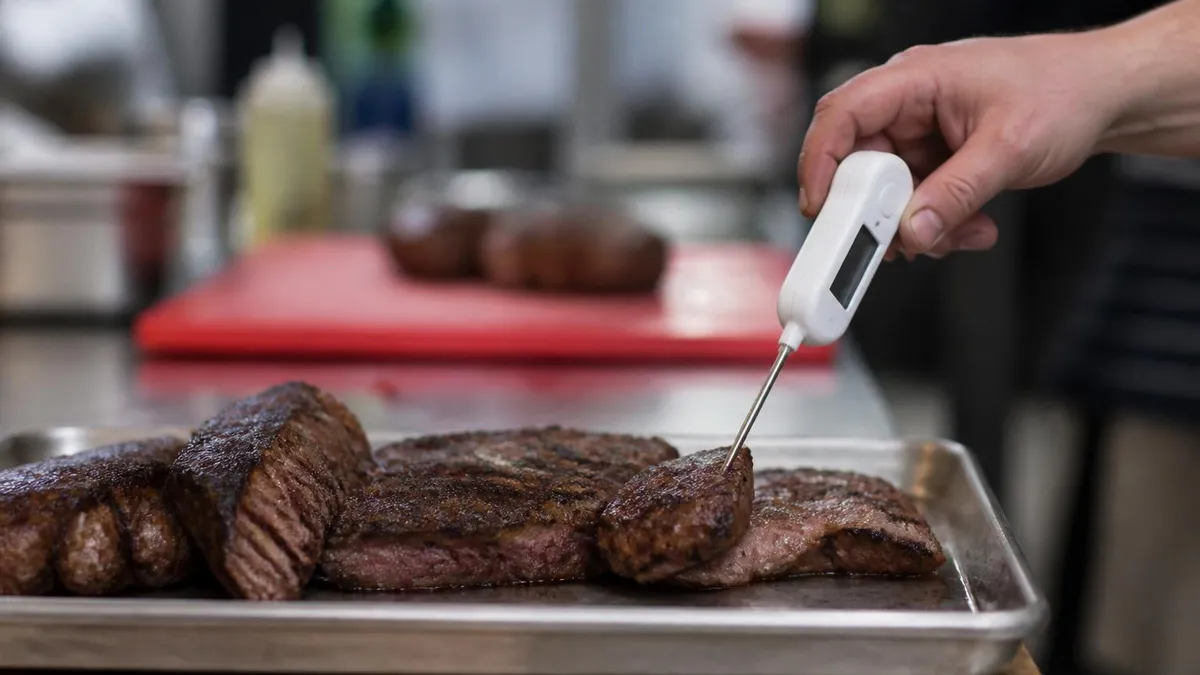
The FASTER Act of 2023 added sesame as the ninth major food allergen under U.S. federal law, effective January 1, 2026. Any ServSafe study guide, practice test, or flashcard set that lists only eight major allergens is out of date. Using outdated materials could cause you to answer sesame-related questions incorrectly on your actual exam. Always verify that your resources reflect the current nine-allergen standard before your test date.
Building an effective study plan for the allergen portion of the ServSafe certification exam starts with an honest assessment of your current knowledge. Most food service workers know the most common allergens — peanuts, shellfish, tree nuts — from daily kitchen experience, but the exam requires precision about all nine, including less visible allergens like sesame, soy, and fish. Before committing to a full study schedule, take a diagnostic practice test to identify which allergen categories and protocol areas need the most work, then allocate your study time proportionally.
Spaced repetition is the most evidence-backed technique for allergen memorization. Rather than reading through a list of nine allergens once and assuming you have it, schedule review sessions at increasing intervals — review on day one, day three, day seven, and day fourteen before your exam. Each review session should use a slightly different format: the first session might use flashcards, the second a written recall exercise, and the third a practice quiz with scenario questions. Varied retrieval practice encodes the information more deeply than repeated reading of the same material.
The ServSafe servsafe manager sample test on the official website is one of the most valuable free resources available for allergen exam prep. The official sample test reflects the actual question format, difficulty level, and topic distribution of the real exam. Working through it twice — once cold before your study period and once near the end as a final check — provides a clear before-and-after picture of your progress and highlights any remaining gaps that need attention in the final days before your exam.
Video-based learning is particularly effective for understanding allergen cross-contact scenarios because seeing a kitchen layout and workflow makes the concepts more concrete than reading a description. ServSafe's official YouTube channel includes instructional videos on allergen management, and several food safety training organizations offer free or low-cost video modules. Watching a five-minute video on allergen cross-contact after reading the chapter on the same topic reinforces comprehension through a second sensory channel and significantly improves retention.
Group study with colleagues who are also preparing for the ServSafe manager exam can accelerate allergen learning. Quizzing each other with scenario-based questions forces you to articulate the reasoning behind the correct answer, which deepens understanding more than simply recognizing the right choice. Group members often remember different details from the same material, so explaining concepts to each other fills gaps that individual study leaves unaddressed. Schedule at least one group session specifically focused on allergen scenarios two to three days before your exam date.
Practice tests should constitute at least forty percent of your total study time for the allergen component. Reading and watching explain the rules; practice tests build the applied judgment that the ServSafe exam actually measures. After completing each practice test, spend as much time reviewing wrong answers as you did taking the test — the explanation for each incorrect answer teaches the underlying principle more effectively than any summary reading. Most candidates who fail the allergen section of the ServSafe manager exam did not lack knowledge of the rules; they lacked practice applying those rules to unfamiliar scenarios.
The night before your exam, avoid cramming new allergen material and instead review your most persistent error categories from your practice test history. Sleep consolidates memory, and arriving rested and calm is worth more than an additional hour of anxious reviewing. Pack your identification and confirmation documents, arrive at the testing center early to settle your nerves, and trust that the preparation you have invested in the weeks before exam day has built the competence the ServSafe exam is designed to measure. Consistent, well-structured preparation is the single greatest predictor of ServSafe certification success.
In the final stretch of your ServSafe allergen preparation, practical application drills are more valuable than any additional reading. Take your practice tests under real exam conditions: sit at a quiet desk, set a timer for 90 minutes, put away all notes, and commit to answering every question without looking anything up.
This simulation trains your brain to recall allergen protocols under mild time pressure, which is exactly the cognitive state you will be in during the actual ServSafe manager exam. After each timed session, log the questions you hesitated on — not just the ones you got wrong — because hesitation reveals incomplete knowledge that could cost you time on exam day.
One of the most effective last-week tactics is to create a personal allergen cheat sheet — not to use during the exam, but as a synthesis exercise. Writing out all nine allergens, two hidden sources for each, the definition of cross-contact versus cross-contamination, the correct glove-change sequence, and the manager's incident response protocol forces you to retrieve and organize everything you have learned. The act of condensing the material into a single page reveals any gaps in your mental map before it is too late to fill them.
Allergen scenario questions on the ServSafe exam often include a tempting distractor answer that describes a real food safety practice applied incorrectly. For example, a question might describe a guest with a peanut allergy asking for a dish modification, and one answer choice will correctly describe sanitizing surfaces — which sounds right because sanitation is generally correct food safety practice, but sanitization alone does not remove allergen proteins. Train yourself to evaluate every answer choice specifically against the allergen-management principles you have studied, not just general food safety logic.
Understanding the legal framework behind allergen regulations helps contextualize why specific exam answers are correct. FALCPA (Food Allergen Labeling and Consumer Protection Act of 2004) established the original eight major allergens and required plain-English declaration on packaged food labels. The FASTER Act of 2023 expanded the list to nine by adding sesame and introduced the term "sesame" as a required plain-language declaration. The FDA also enforces regulations on "may contain" advisory labeling, and ServSafe exam questions occasionally probe whether candidates understand the difference between a mandatory allergen declaration and a voluntary advisory statement.
Real-world kitchen experience reinforces everything you study for the ServSafe allergen exam, but it can also introduce bad habits if your current workplace has not fully updated its protocols. If your kitchen still uses shared fryer oil for allergen-sensitive orders, or if servers in your operation are not using a formal allergen communication system, you need to be aware that those practices would be marked wrong on the exam even if they feel normal to you.
ServSafe test answers reflect best practices as defined by the current curriculum, not common industry shortcuts. When your real-world experience conflicts with what your study materials say, trust the study materials for exam purposes.
One nuanced topic that appears in higher-difficulty ServSafe manager practice tests is the concept of voluntary disclosure versus required disclosure for allergens. A restaurant is not legally required to test its dishes for allergen trace amounts, but it is legally required to accurately disclose ingredients that contain a declared allergen.
If a menu description omits a peanut-containing ingredient and a guest suffers anaphylaxis, the restaurant faces significant liability. ServSafe trains managers to err strongly on the side of disclosure — if there is any uncertainty about whether an allergen is present in a dish, that uncertainty must be communicated to the guest rather than resolved with a guess.
As you wrap up your allergen exam preparation, revisit the FASTER Act's sesame addition one final time because it remains the most frequently missed topic among candidates taking updated exams. Sesame is present in hummus, tahini, sesame oil, sesame seeds, and baked goods; it can also appear under alternative names like benne, gingelly oil, and til.
The 2023 regulation now requires sesame to be declared by name on labels, but products manufactured before the compliance date may still use older labeling. This transition period means that during your ServSafe manager exam, sesame questions may test whether you know both the regulatory change and the practical kitchen implication of that change — making it one of the highest-value topics to master before exam day.
ServSafe Questions and Answers



About the Author

Registered Sanitarian & Food Safety Certification Expert
Cornell University College of Agriculture and Life SciencesThomas Wright is a Registered Sanitarian and HACCP-certified food safety professional with a Bachelor of Science in Food Science from Cornell University. He has 17 years of experience in food safety auditing, regulatory compliance, and foodservice management training. Thomas prepares food industry professionals for ServSafe Manager, HACCP certification, and state food handler examinations.
Join the Discussion
Connect with other students preparing for this exam. Share tips, ask questions, and get advice from people who have been there.
View discussion (7 replies)