
ServSafe Training Online: Complete Guide to the ServSafe Practice Test & Manager Exam
Master the ServSafe practice test with our complete training guide. Manager exam prep, test tips & free questions. 🏆 Start studying today!

Whether you are preparing through 360 training ServSafe or studying on your own, passing the ServSafe practice test is the most reliable way to confirm you are ready for the real exam. The ServSafe certification, administered by the National Restaurant Association, is recognized across all 50 states and required by most food service employers before they will put you on the floor managing a kitchen. Understanding the exam structure, what topics appear most frequently, and how to use practice questions strategically can be the difference between passing on your first attempt and having to reschedule an expensive retake.
The ServSafe Manager certification exam consists of 90 questions, of which 80 are scored and 10 are unscored pilot questions randomly distributed throughout the test. You have 165 minutes to complete the exam, and you must answer at least 75 percent of the scored questions correctly — that means you need at least 60 correct answers out of 80. Many candidates underestimate this requirement and walk in underprepared, particularly on topics like temperature danger zones, HACCP principles, and cross-contamination prevention, which are consistently the most tested areas of the exam.
Online training options have expanded dramatically over the past several years, giving food service workers across the country access to flexible, self-paced study programs. Platforms like 360 training ServSafe, the official ServSafe website, and independent test prep sites such as PracticeTestGeeks.com all offer study materials tailored to different learning styles. Some candidates prefer structured video lectures, while others learn best by working through servsafe manager test questions repeatedly until the concepts stick. Both approaches can work, but research consistently shows that active recall through practice testing outperforms passive review of notes or videos.
One of the biggest mistakes test-takers make is focusing too heavily on memorizing individual facts rather than understanding how food safety principles connect. For example, knowing that the temperature danger zone runs from 41°F to 135°F matters less if you do not understand why bacteria multiply so rapidly in that range, or how that principle drives receiving, storage, and cooking temperature requirements across every domain of the exam. Building conceptual understanding makes it far easier to reason through questions you have not seen before, which is critical since the exam is not static — question banks rotate regularly.
ServSafe test prep should begin at least three to four weeks before your scheduled exam date. During the first week, focus on reading the ServSafe Manager textbook or completing an online training course to get a full overview of all eight content domains. In weeks two and three, shift to heavy practice testing using full-length 80- to 90-question practice exams under timed conditions.
Review every question you missed, not just the ones where you were completely lost, because the questions you almost got right often reveal the most important conceptual gaps. In week four, do light review and one final full-length practice exam two or three days before test day.
The cost of the ServSafe Manager exam and associated training varies depending on whether you purchase materials through an approved instructor, directly through the ServSafe website, or through a third-party provider like 360 training. Exam fees typically range from $36 to $175 depending on what is included in the package.
Many employers reimburse these costs after passing, particularly in chain restaurant environments, so it is worth checking your company policy before you pay out of pocket. Free practice resources, including those available at PracticeTestGeeks.com, can significantly reduce how much you need to spend on paid prep materials without sacrificing quality of preparation.
Passing the ServSafe Manager exam on your first attempt is absolutely achievable with the right preparation strategy. This guide covers everything you need to know about online training options, exam format details, the best study schedules, pros and cons of different preparation approaches, and dozens of practical tips drawn from the experiences of thousands of candidates who have successfully earned their certification. Bookmark this page and use it as your central study hub as your exam date approaches.
ServSafe Manager Exam by the Numbers
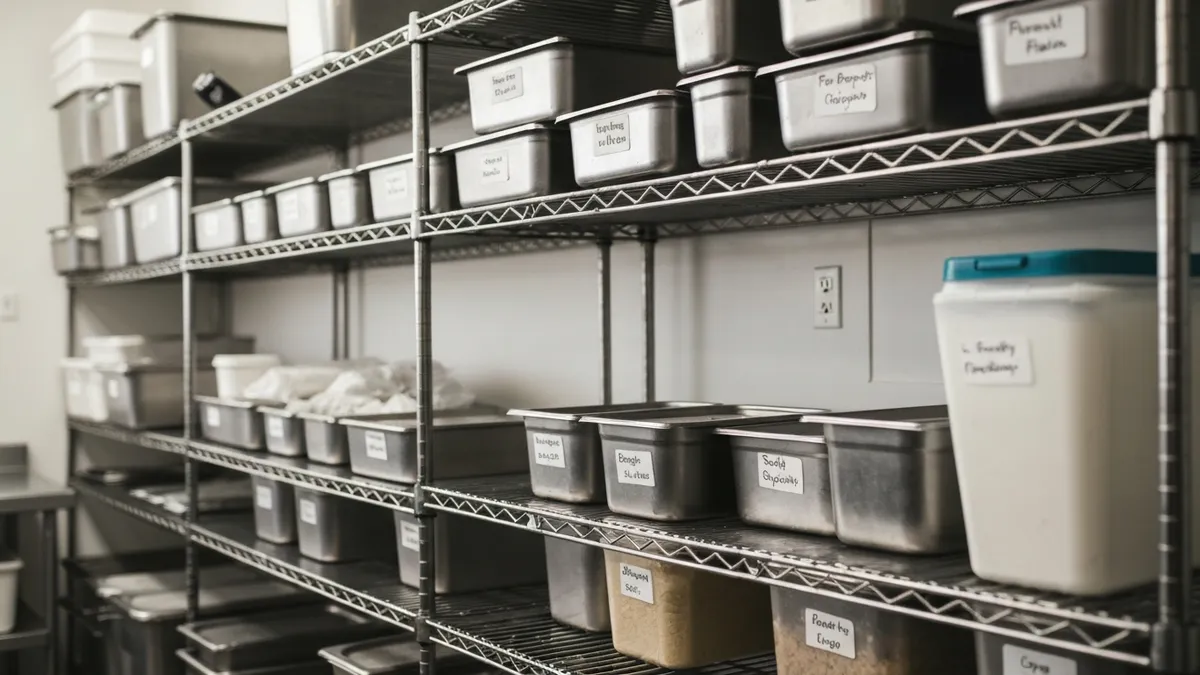
ServSafe Manager Exam Format
| Section | Questions | Time | Weight | Notes |
|---|---|---|---|---|
| Providing Safe Food | 15 | ~27 min | ~19% | Foodborne illness, contamination, staff health |
| Forms of Contamination | 12 | ~22 min | ~15% | Biological, chemical, physical hazards |
| The Safe Food Handler | 8 | ~14 min | ~10% | Handwashing, hygiene, illness policies |
| Flow of Food & HACCP | 20 | ~36 min | ~25% | Receiving, storage, cooking, serving temps |
| Food Safety Management | 13 | ~23 min | ~16% | Active managerial control, inspections |
| Safe Facilities & Pest Management | 12 | ~22 min | ~15% | Equipment, cleaning, pest prevention |
| Total | 90 | 2 hours 45 minutes | 100% |
Online ServSafe training has become the dominant method of preparation for the manager certification exam, and for good reason. Unlike traditional in-person classroom sessions, online programs allow you to study at your own pace, rewind difficult sections as many times as needed, and fit study time around a demanding restaurant schedule that might include closing shifts, early morning prep, and weekend rushes. The flexibility alone makes online training the preferred choice for the majority of food service professionals pursuing certification today.
The official ServSafe online course, available directly through the National Restaurant Association's website, covers all eight domains tested on the manager exam and includes an optional online proctored exam you can take from home. This is a significant advantage for candidates who do not have easy access to an approved testing center or who prefer the convenience of completing everything from a single device. The online proctored exam uses webcam monitoring technology to ensure exam integrity, so you will need a stable internet connection and a quiet, private space during the test.
Third-party platforms like 360 training ServSafe provide an alternative to purchasing directly through the National Restaurant Association. These authorized providers often bundle the training course and exam access at different price points and sometimes include additional study aids. When comparing providers, focus on three things: whether the course content is approved by the National Restaurant Association, whether the exam access is proctored or in-person, and what kind of practice material is included. A course without substantial practice questions is significantly less effective than one that includes full-length mock exams and chapter reviews.
Free practice resources, including those available at PracticeTestGeeks.com, can be used alongside any paid training program to dramatically increase the volume of practice questions you work through. The ideal study combination is a structured course that teaches content paired with a high-volume practice platform that tests your retention. Trying to pass the ServSafe manager exam using only free resources is possible but risky — a structured course ensures you do not have large gaps in content coverage going into test day. Use free practice tests to supplement, not replace, comprehensive training.
One feature to look for in any online training program is the ability to track your progress by content domain. Because the ServSafe manager exam tests six distinct areas, it is important to know which domains you are strong in and which need more attention.
A good training platform will show you your accuracy percentages by topic so you can redirect study time efficiently. For example, if your practice test results show 90 percent accuracy on personal hygiene questions but only 55 percent on HACCP and flow of food questions, spending equal time on both domains is a poor use of limited study hours.
Study groups and peer accountability are underutilized strategies for online learners. Because online training lacks the built-in social structure of a classroom, many candidates study in total isolation and miss out on the learning benefits of explaining concepts out loud or hearing another person articulate a principle differently. If you have coworkers also preparing for the exam, consider scheduling two or three group study sessions focused on working through servsafe manager practice exam questions together and discussing why each answer is correct. Teaching concepts to others is one of the most effective retention strategies known to educational researchers.
Regardless of which training platform you choose, the most important factor in ServSafe exam success is not the quality of the videos or the slickness of the interface — it is the number of deliberate, review-focused practice hours you put in before test day. Candidates who score highest on the ServSafe manager exam are almost always those who have worked through at least 200 to 300 unique practice questions under timed conditions and carefully reviewed every incorrect answer. Volume of quality practice, combined with conceptual understanding from a structured course, is the formula that consistently produces first-attempt passes.
ServSafe Manager Practice Test Strategies
The most effective way to use a ServSafe manager practice test is not simply to take it and check your score — it is to treat every incorrect answer as a learning event. After each practice session, review every question you missed and read the explanation carefully. Identify whether you missed the question because of a knowledge gap, a misread of the question stem, or a failure to apply the correct principle to a scenario you understood conceptually. Categorizing your errors this way helps you target the right kind of remediation.
Timed practice is equally important. The ServSafe manager exam gives you 165 minutes for 90 questions, which works out to roughly 110 seconds per question. Many candidates run out of time because they spend too long on difficult scenario-based questions early in the exam. Practicing under strict time limits trains you to make decisions efficiently, flag uncertain questions for review, and maintain focus for nearly three hours — a skill that is genuinely separate from content knowledge and must be developed through repetition.

Online ServSafe Training: Pros and Cons
- +Study at your own pace and fit training around shift schedules
- +Rewatch video lectures as many times as needed for difficult concepts
- +Take the proctored exam from home without visiting a testing center
- +Track progress by content domain to focus study time efficiently
- +Access a much wider variety of practice questions than print materials offer
- +Lower cost than many in-person classroom training programs
- −Requires strong self-discipline and motivation without external accountability
- −No instructor to ask questions or clarify confusing concepts in real time
- −Home exam environment requires stable internet and a distraction-free space
- −Quality of third-party online courses varies significantly — vet providers carefully
- −Online-only learners miss the collaborative learning benefits of classroom discussion
- −Technical issues during online proctored exam can cause significant stress
ServSafe Test Prep Checklist: 30-Day Study Plan
- ✓Enroll in an approved ServSafe online training course or purchase the current edition textbook before starting.
- ✓Schedule your exam date at least 30 days out to give yourself a structured preparation window.
- ✓Complete one full content domain per day during the first two weeks of study.
- ✓Take a diagnostic practice test at the end of week one to identify your weakest content areas.
- ✓Dedicate extra study sessions to flow of food and HACCP, the two most heavily weighted exam domains.
- ✓Work through at least 20 new ServSafe manager practice test questions every single study day.
- ✓Review every incorrect answer immediately after each practice session — do not skip explanations.
- ✓Practice under timed conditions starting in week two, aiming for 90 questions in 165 minutes.
- ✓Use a temperature reference chart daily until all minimum cooking and holding temperatures are memorized.
- ✓Take one complete, full-length, timed mock exam in week three to simulate real test conditions.
- ✓Review the ServSafe Manager textbook glossary during the final week to reinforce key vocabulary.
- ✓Stop heavy studying two days before your exam and focus on light review and sleep.

75% Is the Magic Number — Plan Accordingly
You need to answer 75 percent of scored questions correctly to pass the ServSafe Manager exam — that is 60 out of 80. This means you can miss up to 20 scored questions and still pass. Strategically, this means you should never leave a question blank: always make your best guess, because there is no penalty for wrong answers. Use this knowledge to manage anxiety during the exam: a few uncertain questions will not sink your score if you have prepared thoroughly across all domains.
Understanding how the ServSafe manager exam is scored — and what happens when you do not pass — is essential context for every candidate. When you complete the exam, you receive a score report that shows your overall percentage and your performance broken down by content domain. This breakdown is extremely valuable whether you passed or failed, because it tells you exactly which areas drove your result. Candidates who narrowly fail can use this data to target their retake preparation far more efficiently than candidates who simply reattempt the exam without analyzing what went wrong.
If you do not pass on your first attempt, you are allowed to retake the exam, but ServSafe imposes a 60-day waiting period between attempts. This waiting period exists for good reason — it gives candidates sufficient time to address the specific content gaps that caused them to fall short.
Many candidates who fail their first attempt do not use the 60-day window effectively. They wait until week seven or eight to start studying again, which compresses their remediation time unnecessarily. Treat the waiting period as an immediate study opportunity and start reviewing your score report the week after your exam.
The ServSafe manager certification remains valid for five years from the date it is issued. After five years, you must complete a full recertification process, which currently requires retaking the exam rather than completing a shorter renewal course. Some states have additional local requirements on top of the national ServSafe certification, so it is worth checking your state's food safety regulations to confirm that ServSafe alone satisfies your employer's and regulator's expectations. Some jurisdictions require completion of an accredited food handler training program in addition to the manager certification.
Score reports are typically available immediately after computer-based testing or within a few weeks for paper-based exams administered by an instructor. The ServSafe website provides a certificate lookup tool that employers can use to verify the validity of any ServSafe certification, which is why it is important to use your legal name on the exam registration exactly as it appears on your government-issued identification. Discrepancies between your exam registration name and your ID can create complications during the proctoring process and on official documents.
Many candidates ask whether studying ServSafe test answers from older exams or unofficial answer keys is a reliable study strategy. The short answer is no — the ServSafe exam question bank is periodically updated, and answer keys floating around the internet may reference outdated question versions or contain errors.
More fundamentally, memorizing answers without understanding the underlying food safety principles will not serve you well on the exam, which is heavily scenario-based. You need to be able to apply principles to novel situations, not recall specific answer sequences. Focus on conceptual mastery, not answer memorization, and you will perform far better.
The relationship between ServSafe certification and earning potential is real and measurable. Certified food service managers earn meaningfully more than non-certified peers in similar roles, and certification is increasingly required for promotion into shift lead, kitchen manager, and general manager positions at most major chain restaurants and many independent operations.
Some employers pay for the certification outright; others reimburse employees after passing. Either way, the investment in obtaining your ServSafe manager certification typically pays back within a few months in the form of higher wages and expanded career opportunities. You can find more details about exam fees and what is included in different packages by checking servsafe exam answers for the cost breakdown.
Recertification every five years is a built-in feature of the ServSafe program, not an arbitrary bureaucratic requirement. Food safety science evolves — new pathogens emerge, temperature guidelines are updated, and best practices for contamination prevention improve based on outbreak investigation data. The recertification requirement ensures that working food service managers stay current with the latest evidence-based standards rather than operating based on outdated practices learned years ago. Candidates who treat recertification as an opportunity to refresh their knowledge rather than a compliance obligation tend to find the process less stressful and more professionally valuable.
When registering for the ServSafe Manager exam, use your full legal name exactly as it appears on your government-issued photo identification. Proctors are required to verify your identity before the exam begins, and name mismatches can result in being turned away from the testing center or flagged during online proctoring. If your name has changed since you last registered, update your records before scheduling your exam to avoid complications on test day.
Test day preparation is a subject most study guides underemphasize, but it is one of the highest-leverage areas for performance improvement. Candidates who are well-rested, well-fed, and logistically prepared — arriving early, having their ID ready, knowing what to expect from the proctoring process — consistently perform better than those who arrive rushed, anxious, or uncertain about the format. Your brain cannot perform at its best under acute stress, so removing every preventable source of uncertainty before the exam is a concrete performance strategy, not just common sense.
If you are taking the exam at an in-person testing center, visit the location in advance if possible — at least do a map lookup to confirm travel time, parking availability, and building entry procedures. Arrive at least 20 minutes early to allow for unexpected delays and to give yourself time to settle in before the test begins. Bring your government-issued photo ID, your exam confirmation or registration number, and any approved materials your specific testing center allows, which typically means nothing beyond identification. Phones, notes, and food are generally not permitted in the testing room.
During the exam itself, use a consistent approach on every question: read the full question stem before looking at the answer choices, identify the key food safety principle being tested, eliminate obviously wrong answers first, and then choose from the remaining options. On scenario-based questions — which describe a situation in a restaurant and ask what a manager should do — look for the answer that represents best practice from a food safety standpoint rather than the answer that reflects what might happen in a real, rushed kitchen environment. The exam tests ideal practice, not common shortcut behavior.
Time management during the 165-minute exam window is critical. If you are using paper-based testing, mark uncertain questions with a light check mark in the margin so you can return to them without losing your place. On computer-based exams, use the flag feature to tag questions you want to revisit.
Aim to complete an initial pass through all 90 questions with about 20 minutes remaining, leaving that time for review of flagged questions. Never change an answer unless you have a specific reason — your first instinct on food safety questions is usually correct if you have studied the material thoroughly.
Post-exam anxiety is common — the wait for results can feel interminable, especially if you felt uncertain about several questions during the test. Remember that feeling uncertain about questions is normal and does not necessarily indicate you performed poorly. The exam includes 10 unscored pilot questions that you cannot identify, so some uncertainty is expected and built into the test design.
Most candidates who have completed adequate preparation and passed practice exams with 80 percent or higher accuracy will pass the real exam. If you scored consistently above 75 percent on full-length, timed practice tests, you are very likely to pass.
If you are helping employees at your restaurant prepare for the ServSafe manager exam, consider creating a structured internal study program rather than simply directing staff to study on their own. Provide access to a quality online course, schedule two or three group study sessions per week in the weeks leading up to the exam, and make practice testing part of each session.
Managers who earn their certification through a supported, structured process tend to retain the material better and apply food safety principles more consistently in daily operations — which is the ultimate goal of the certification program. You can also download a comprehensive set of servsafe test 90 questions and answers pdf free download to use as group study material.
The return on investment of ServSafe training extends far beyond the individual exam. Restaurants with certified managers have demonstrably better food safety inspection outcomes, lower rates of foodborne illness incidents, and stronger relationships with health department inspectors who recognize the commitment that certification represents.
In an industry where a single outbreak can generate devastating press coverage and permanent reputational damage, having a ServSafe-certified management team is one of the most cost-effective risk management investments a food service operator can make. The certification is not a checkbox — it is the foundation of a culture of food safety that protects your customers, your staff, and your business.
Practical study tips can make a significant difference in both the efficiency and effectiveness of your ServSafe exam preparation. One of the most powerful techniques is spaced repetition — reviewing material at increasing intervals rather than cramming everything the day before the exam. Spaced repetition leverages how human memory consolidates information during sleep, so distributing your study sessions over three to four weeks produces far better long-term retention than a single intense cramming session, even if the total study hours are identical.
Flashcards are particularly effective for memorizing the temperature-specific content that appears throughout the ServSafe manager exam. Create cards for minimum internal cooking temperatures, cooling time-temperature requirements, temperature danger zone boundaries, correct hot and cold holding temperatures, and maximum receiving temperatures for different food categories. Review these flashcard sets daily, and within one to two weeks most candidates find that temperature requirements become automatic rather than requiring effortful recall. Removing the cognitive load of temperature recall frees mental bandwidth for the more complex scenario-based questions on the exam.
Practice testing works best when it simulates real exam conditions as closely as possible. This means sitting at a desk rather than lying on a couch, silencing your phone, setting a timer, and resisting the urge to look anything up mid-quiz. Some candidates find it helpful to take at least one practice test in a setting that physically resembles a testing center — at a library, for example, or in a quiet office — to train their brain to associate that kind of environment with focused, high-performance thinking. Environmental context affects recall in ways that most people underestimate.
Common traps on the ServSafe manager exam include questions that describe a situation where an employee did something right but for the wrong reason, or questions that present two plausible answers where one is better food safety practice than the other. Train yourself to look for the answer that is safest, most comprehensive, and most consistent with HACCP and active managerial control principles — not just the answer that seems reasonable. Questions about what a manager should do first in a given scenario almost always have a best-practice answer grounded in food safety hierarchy, not logistical convenience.
Mental and physical preparation in the days before the exam matters more than most candidates realize. Sleep deprivation impairs performance on knowledge-retrieval tasks significantly — even one night of poor sleep before an exam can reduce performance by 10 to 20 percent relative to a well-rested baseline. In the 48 hours before your ServSafe manager exam, prioritize sleep over extra study hours. Do light review, not new material. Eat a balanced meal before the exam, avoid excessive caffeine, and arrive at the testing location early enough to settle your nerves before the clock starts.
Using multiple practice test sources is better than relying on a single question bank. Different practice platforms phrase questions differently, test the same concepts from different angles, and occasionally surface content areas that your primary study materials did not emphasize.
Using two or three different sources of ServSafe manager sample test questions exposes you to a broader range of question formats and difficulty levels, making you more adaptable when you encounter unfamiliar phrasing or unusual scenario setups on the actual exam. PracticeTestGeeks.com, the official ServSafe website, and other reputable test prep platforms each offer slightly different question styles that complement each other well.
Finally, trust your preparation. Many well-prepared candidates experience a spike in anxiety in the hours before the exam that causes them to doubt everything they have studied. This is normal and does not reflect your actual knowledge level. Anxiety is a physiological response to high stakes, not an accurate signal about your readiness.
If you have completed a structured training course, worked through hundreds of practice questions, scored consistently above 75 percent on full-length timed practice exams, and followed a disciplined study schedule, you are ready. Walk into that exam room with confidence, apply the principles you have internalized, and remember that the ServSafe certification is achievable — thousands of food service professionals earn it every single month.
ServSafe Questions and Answers





About the Author

Registered Sanitarian & Food Safety Certification Expert
Cornell University College of Agriculture and Life SciencesThomas Wright is a Registered Sanitarian and HACCP-certified food safety professional with a Bachelor of Science in Food Science from Cornell University. He has 17 years of experience in food safety auditing, regulatory compliance, and foodservice management training. Thomas prepares food industry professionals for ServSafe Manager, HACCP certification, and state food handler examinations.
Join the Discussion
Connect with other students preparing for this exam. Share tips, ask questions, and get advice from people who have been there.
View discussion (7 replies)