
ServSafe Practice Questions: Free Manager Practice Test 2026 September
🎯 Free ServSafe practice questions for the manager exam. Covers all 7 domains. Start your ServSafe test prep today and pass with confidence.

If you're preparing for the ServSafe Manager Certification exam, working through targeted servsafe practice questions is the single most effective study strategy available to you. The official exam consists of 90 multiple-choice questions drawn from seven content domains, and candidates must score at least 75 percent — answering 67 or more questions correctly — to earn their certification. Practice tests mirror the format, difficulty, and content weighting of the real assessment, giving you a reliable way to measure readiness before exam day arrives.
The ServSafe Manager exam is developed by the National Restaurant Association Educational Foundation (NRAEF) and is recognized by regulatory agencies across all 50 U.S. states. Many state and local health departments require food service managers to hold a valid ServSafe or equivalent certification. The exam covers critical topics including foodborne illness prevention, temperature control, personal hygiene, cross-contamination, cleaning and sanitizing, pest control, and the principles of HACCP. Each of these domains carries a specific percentage weight, so knowing where the exam focuses its attention helps you allocate study time efficiently.
One of the most common mistakes test-takers make is reading the textbook once and assuming they're ready. Food safety regulations involve a large volume of precise numerical thresholds — cooking temperatures, holding temperatures, refrigeration limits, time-temperature abuse windows — and the exam tests those specifics relentlessly.
You cannot pass by understanding concepts vaguely; you need to recall that poultry must reach an internal temperature of 165°F, that the danger zone runs from 41°F to 135°F, and that TCS (time/temperature control for safety) foods left in the danger zone must be discarded after four hours. Practice tests drill these facts until they become automatic.
Our free servsafe manager test questions on this page are organized to reflect the actual exam blueprint. You'll encounter scenario-based questions that describe realistic kitchen situations — a delivery of fresh fish, a buffet line at the wrong temperature, an employee with a norovirus-like illness — and ask you to identify the correct food safety response. This scenario-driven format is intentional. The NRAEF designed the exam to assess applied knowledge, not rote memorization, so your practice sessions should challenge you to think through real-world food service problems.
Consistent practice across multiple sessions outperforms a single marathon cram session. Research on memory consolidation consistently shows that spaced repetition — returning to material across several days — dramatically improves long-term retention compared to massed practice. We recommend completing one full practice test per day in the final two weeks before your exam, reviewing every incorrect answer against the ServSafe Manager Book, and then retaking questions you missed 48 hours later. This loop of test, review, and retest builds the durable memory traces you need when the pressure of the real exam is on.
Many candidates also benefit from understanding why wrong answers are wrong, not just why right answers are right. On the ServSafe exam, distractors are carefully crafted to reflect common misconceptions — for example, a student who believes refrigerators should be set to 45°F instead of 41°F will consistently choose incorrect temperature answers. By analyzing the logic behind each distractor, you expose and correct the specific gaps in your knowledge rather than simply building familiarity with questions you've already seen.
Whether you're a first-time test-taker, a food service professional renewing an expired certification, or a manager preparing your team for the exam, the practice resources on this page are designed to give you a genuine advantage. Start with the quizzes below, track your scores, focus your review on weak domains, and return to practice until you're consistently scoring above 80 percent. At that point, you're ready for the real thing.
ServSafe Manager Exam by the Numbers
Key Facts at a Glance
| Item | Value | Details |
|---|---|---|
| Total Exam Questions | 90 | 80 scored + 10 unscored pilot |
| Passing Score | 70% | 67 correct answers required |
| Time Limit | Not published | Paper-based exam format |
| Certification Validity | 5 yrs | Renewal required every 5 years |
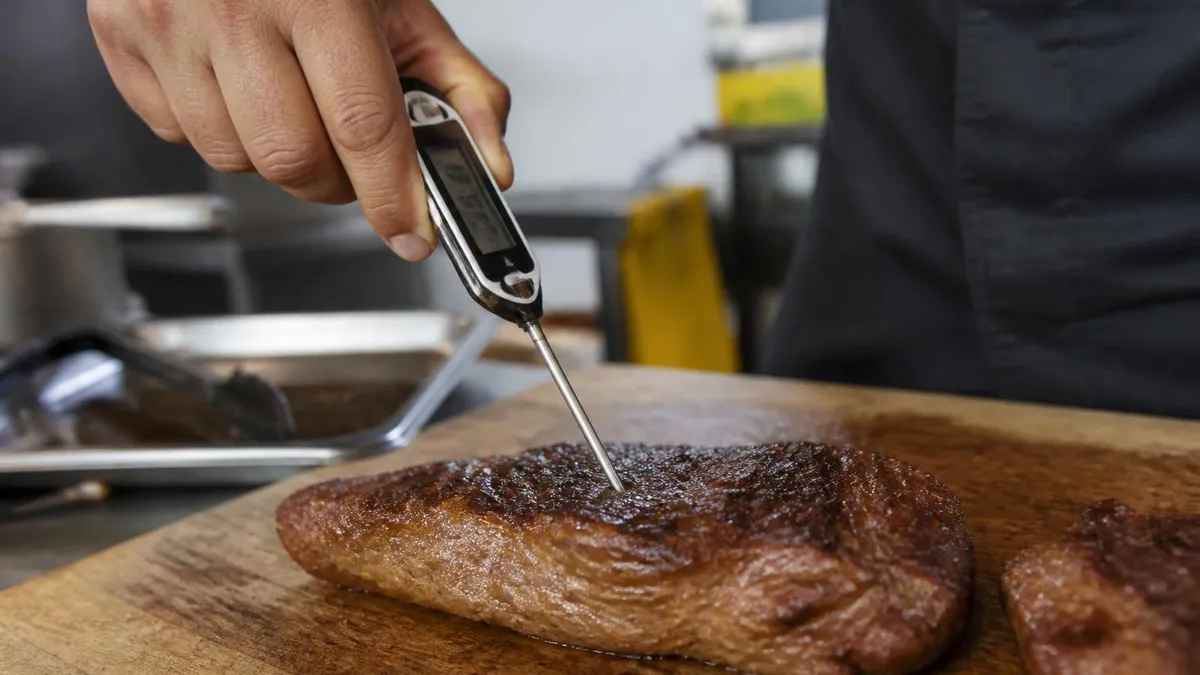
ServSafe Manager Exam Format & Structure
| Section | Questions | Time | Weight | Notes |
|---|---|---|---|---|
| Providing Safe Food | 15 | ~20 min | ~17% | Covers TCS foods, contamination sources, and the flow of food |
| Forms of Contamination | 10 | ~13 min | ~11% | Biological, chemical, and physical hazards |
| The Safe Food Handler | 8 | ~11 min | ~9% | Personal hygiene, handwashing, and illness policies |
| The Flow of Food: An Introduction | 7 | ~9 min | ~8% | HACCP overview, purchasing, receiving, and storing |
| The Flow of Food: Purchasing to Service | 22 | ~29 min | ~24% | Cooking temps, cooling, reheating, and service |
| Food Safety Management Systems | 8 | ~11 min | ~9% | HACCP 7 principles, Active Managerial Control |
| Safe Facilities and Pest Management | 10 | ~13 min | ~11% | Equipment, cleaning, sanitizing, and pest control |
| Total | 90 | 2 hours | 100% |
Understanding the content blueprint of the ServSafe Manager exam is the foundation of efficient test prep. The exam draws questions from seven major chapters of the ServSafe Manager Book, and each chapter carries a different percentage of the total scored questions. The heaviest single domain is the Flow of Food: Purchasing to Service, which accounts for roughly 24 percent of the exam.
This section covers cooking temperatures for all major protein categories, safe cooling procedures, proper reheating requirements, and the rules for hot and cold holding. If you only have limited time to study, prioritizing this domain gives you the greatest return on effort.
The Providing Safe Food chapter is the second most heavily tested area, covering the foundational concepts of what makes food unsafe, the categories of TCS (time/temperature control for safety) foods, the major foodborne pathogens, and the five most common risk factors that cause foodborne illness outbreaks in food service establishments. According to the Centers for Disease Control and Prevention, food prepared in commercial establishments accounts for approximately 60 percent of foodborne illness outbreaks in the United States each year — which is precisely why the ServSafe certification program exists and why regulators take the exam so seriously.
The Forms of Contamination chapter may be shorter in question volume, but it tests some of the most nuanced content on the exam. You need to understand the difference between biological hazards (bacteria, viruses, parasites, and fungi), chemical hazards (cleaning agents, pesticides, and naturally occurring toxins like those found in certain fish or mushrooms), and physical hazards (bones, metal fragments, glass, and other foreign objects). The exam will ask you to identify the type of hazard in a given scenario and to select the correct control measure — and confusing these categories is a frequent source of wrong answers.
Personal hygiene questions test your knowledge of proper handwashing procedures, when food handlers must wash their hands, which illnesses and symptoms require a worker to be excluded from the establishment entirely (as opposed to restricted from working with exposed food), and how foodborne illness can spread from sick employees to customers through ready-to-eat foods.
The Big Six pathogens — Hepatitis A, Norovirus, Salmonella Typhi, non-typhoidal Salmonella, Shiga toxin-producing E. coli, and Shigella — receive special emphasis because they are the pathogens most commonly linked to food service outbreaks and because infected employees must be excluded from the workplace, not merely restricted.
The servsafe manager practice tests on our platform are calibrated to reflect the actual distribution of questions across these domains. You'll notice that our quizzes include more questions from high-weight chapters and fewer from lower-weight ones — not because the lighter chapters are unimportant, but because your practice sessions should mirror the statistical reality of the real exam. If you take ten practice tests and consistently score well on hygiene questions but struggle with cooling procedures, that data tells you exactly where to focus your remaining study sessions.
Food Safety Management Systems is the chapter that covers HACCP — Hazard Analysis Critical Control Points — in depth. The seven HACCP principles are a perennial favorite of the exam writers: conduct a hazard analysis, identify critical control points, establish critical limits, establish monitoring procedures, identify corrective actions, verify the system works, and keep records and documentation.
Expect to see two to four questions that ask you to identify which HACCP principle applies to a described situation. Memorizing the seven principles in order and understanding what each one means in a practical kitchen context will serve you well on exam day.
Safe Facilities and Pest Management rounds out the content domains with questions about the design and maintenance of food safe equipment, the difference between cleaning and sanitizing (and why both are necessary), the correct concentration ranges for common sanitizers like chlorine, iodine, and quaternary ammonium compounds, and the principles of Integrated Pest Management (IPM). This is an area where many candidates lose points simply because they haven't studied the specific sanitizer concentration numbers. The exam will give you a number and ask whether it falls within the correct range — without memorizing those ranges, you're essentially guessing.
ServSafe Test Prep Strategies by Study Goal
If this is your first time sitting for the ServSafe manager exam, plan to spend three to four weeks on preparation. Begin by reading the ServSafe Manager Book cover to cover, taking notes on every temperature threshold, time limit, and pathogen name you encounter. The book is dense, but it is the authoritative source for all exam content — no practice test can substitute for genuine comprehension of the underlying material. After your initial read-through, start taking timed practice tests to identify your weakest chapters.
During your second and third weeks, shift the balance from reading to active practice. Take one full 90-question practice test every other day, review every incorrect answer immediately after finishing, and then revisit those specific textbook sections the following day. In your final week, focus exclusively on timed drills in your weakest domains. Aim for a consistent score of 80 percent or higher on practice tests before scheduling your official exam — this buffer accounts for the added pressure of the real testing environment and ensures you're well above the 75-percent passing threshold.

Is the ServSafe Manager Certification Worth It?
- +Recognized by health departments in all 50 U.S. states, making it the most portable food safety credential available
- +Required by law for food service managers in many states and municipalities, making it essential for legal compliance
- +Demonstrates a professional commitment to food safety that can support promotions into management roles
- +Certification is valid for five years, requiring only periodic renewal rather than annual testing
- +Preparation materials are widely available including free online practice tests, the official textbook, and instructor-led courses
- +The credential can meaningfully reduce a facility's risk of foodborne illness incidents, which protects both customers and the business's reputation
- −The exam fee ($36 for the exam alone, or bundled with course costs ranging from $125 to $200) can be a barrier for individual employees paying out of pocket
- −The textbook is lengthy and dense, requiring a genuine time commitment of at least 20 to 30 hours of study for first-time candidates
- −The five-year renewal cycle means ongoing costs and study time throughout a food service career
- −The exam is only available in English and Spanish, limiting accessibility for workers whose primary language is neither
- −Passing the exam does not guarantee competent day-to-day food safety practices — knowledge and behavior are not the same thing
- −Some jurisdictions require additional or alternative certifications beyond ServSafe, so local compliance requirements must still be verified independently
ServSafe Test Prep Checklist: What to Cover Before Exam Day
- ✓Memorize all cooking temperature minimums: 165°F for poultry, 155°F for ground meat, 145°F for whole cuts of meat and fish, and 135°F for hot-held foods
- ✓Know the temperature danger zone (41°F to 135°F) and the four-hour time limit for TCS foods left within that range
- ✓Study the Big Six pathogens — Hepatitis A, Norovirus, Salmonella Typhi, non-typhoidal Salmonella, STEC, and Shigella — and understand which require exclusion versus restriction
- ✓Learn the seven HACCP principles in order and be able to match each principle to a real-world food service scenario
- ✓Review the correct sanitizer concentration ranges: chlorine (50–100 ppm), iodine (12.5–25 ppm), and quaternary ammonium (follow manufacturer guidelines)
- ✓Practice the two-stage cooling method: food must cool from 135°F to 70°F within 2 hours, then from 70°F to 41°F within the next 4 hours
- ✓Understand the difference between cleaning (removing dirt) and sanitizing (reducing pathogens to safe levels) and why both steps are always required
- ✓Review proper receiving procedures including acceptance and rejection criteria for temperature, packaging integrity, and sensory indicators
- ✓Study the categories of TCS foods and be able to identify which foods require time-temperature control and which do not
- ✓Complete at least three full-length 90-question timed practice tests and review every incorrect answer before scheduling the real exam
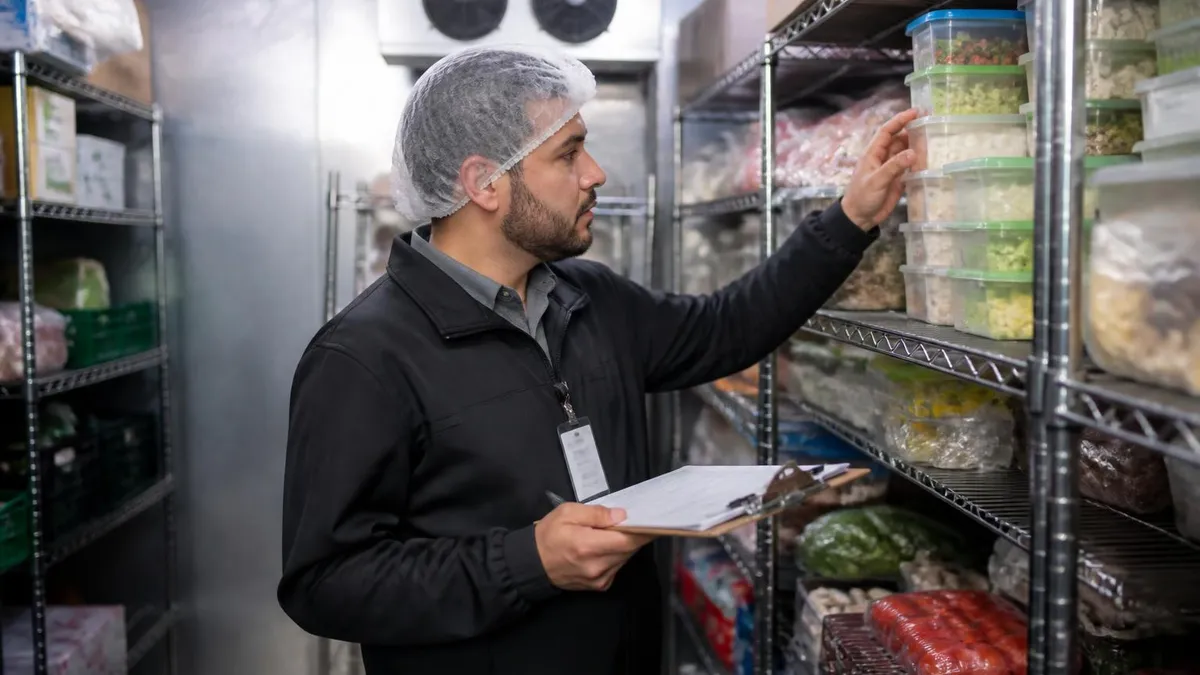
Score 80%+ on Practice Tests Before You Schedule the Real Exam
Candidates who consistently score 80 percent or higher on full-length ServSafe practice tests before sitting for the real exam have a dramatically higher first-time pass rate than those who schedule the exam after a fixed study period regardless of practice scores. Use your practice test performance — not the calendar — as the signal that you're ready. A 5-point buffer above the 75-percent passing threshold accounts for exam-day pressure and the natural variance in which questions appear.
The hardest topics on the ServSafe Manager exam consistently cluster around a handful of specific knowledge areas where precision matters enormously. Temperature thresholds are the most frequently missed category of questions, not because candidates don't know that food should be cooked thoroughly, but because the exact degree varies by food type and the exam exploits that specificity. A candidate who knows poultry cooks to 165°F but has not separately memorized that stuffed foods also require 165°F regardless of the stuffing ingredient will miss a question that seems straightforward to someone with complete knowledge.
Cooling procedures rank as the second hardest area on the exam. The two-stage cooling method requires food to drop from 135°F to 70°F within two hours, then continue cooling from 70°F to 41°F within the subsequent four hours — for a total cooling window of six hours.
The reason for the staged approach is that bacterial growth accelerates most rapidly in the upper portion of the danger zone, so getting food below 70°F quickly is the critical first step. Practice questions frequently present a scenario with incorrect cooling timelines and ask whether the food is safe — knowing the specific numbers is the only way to answer confidently.
Cross-contamination questions often involve allergens as well as pathogens, and the ServSafe exam distinguishes carefully between these two categories. Cross-contamination of pathogens refers to the transfer of microorganisms from one surface or food to another, while cross-contact refers specifically to the transfer of allergens. The control measures are similar in some ways — thorough cleaning, using separate equipment, proper storage sequencing — but the terminology differs, and the exam will use the correct technical terms and expect you to do the same.
Pest control questions test your knowledge of Integrated Pest Management (IPM) principles, including the importance of denying pests food, water, and shelter; the proper use of pesticides (always applied by a licensed pest control operator, and never in a way that could contaminate food or food contact surfaces); and how to identify the signs of a pest infestation.
The exam won't ask you for the name of specific pesticide compounds, but it will describe a scenario — cockroach droppings found near a dry storage shelf, a mouse burrow near the back door — and ask you to identify the correct next step from a list of four options.
Foodborne illness outbreak scenarios are another high-difficulty category because they require you to integrate knowledge from multiple chapters simultaneously. A typical question might describe a catering event where 40 guests developed nausea and vomiting 6 to 48 hours after eating, ask you to identify the most likely causative organism, and then ask what the food service manager should have done differently to prevent the outbreak. To answer correctly, you need to know the incubation periods for common pathogens, the foods most frequently associated with each pathogen, and the specific control measure that would have interrupted the chain of events.
The servsafe test answers to these complex scenario questions always trace back to one of the five CDC-identified risk factors for foodborne illness in food service: food from unsafe sources, inadequate cooking temperatures, improper holding temperatures, contaminated equipment, and poor personal hygiene. When you're stuck on a difficult practice question, ask yourself which of these five risk factors is present in the scenario — that framing will often point you toward the correct answer even if you can't immediately recall the specific fact being tested.
Active Managerial Control (AMC) is the ServSafe framework for proactively addressing these five risk factors rather than reacting to problems after they occur. Exam questions about AMC typically ask you to distinguish between reactive management (responding to a food safety failure after it happens) and proactive management (implementing monitoring systems that catch failures before they cause harm). Understanding this conceptual distinction — and being able to identify specific AMC strategies like temperature logging, employee health policies, and HACCP-based monitoring procedures — will help you correctly answer the Food Safety Management Systems questions that appear on the exam.
The ServSafe Manager Book is updated periodically to reflect changes in the FDA Food Code, and exam questions are drawn from the current edition. Using a textbook or practice test bank that's more than two years old risks preparing you for questions that no longer appear — or worse, reinforcing information that has since been revised. Always verify that your study materials reference the current edition of the ServSafe Manager Book before beginning your preparation.
Understanding what happens after you pass — and what happens if you don't — helps you approach the ServSafe Manager exam with the right mindset and the right contingency plan. When you pass, you receive a ServSafe Manager Certification that is valid for five years from the date of your exam. The certification is issued by the NRAEF and is printed with your name, certification number, and expiration date. Many food service managers laminate the certificate and keep it accessible at their facility because health inspectors frequently ask to see it during inspections.
The ServSafe Manager Certification is accredited by the American National Standards Institute (ANSI) and the Conference for Food Protection (CFP). This dual accreditation is significant because it means the credential meets the highest recognized standards for food manager certification in the United States. Some states have codified ServSafe specifically into their health codes, while others accept any ANSI-CFP accredited certification — but ServSafe's widespread recognition means it is accepted everywhere that any food manager certification is accepted.
If you do not pass on your first attempt, there is no mandatory waiting period before you can retake the exam. You can schedule a retake immediately, though most unsuccessful candidates benefit from at least one additional week of focused study before attempting again. The NRAEF does not limit the number of times you can take the exam, but each attempt requires paying the exam fee again. This makes thorough preparation before your first attempt a genuine financial incentive, not just an academic one.
Score reports are available through the ServSafe online portal and break your performance down by chapter, showing you exactly where you lost points. This granular data is invaluable for retake preparation because it eliminates guesswork about where your gaps are. Rather than studying everything equally, you can direct your energy to the specific chapters where you fell below the overall average — typically the chapters covering cooling procedures, sanitizer concentrations, or HACCP principles.
Many employers cover the cost of ServSafe certification for their managers, particularly in larger restaurant chains, hotel food service operations, school cafeterias, and healthcare food service settings. If your employer has not offered to pay for your certification, it is reasonable to ask — the credential directly benefits the business by reducing regulatory risk and demonstrating compliance with food safety laws. The total cost of the exam and study materials is typically between $100 and $200, which is modest relative to the professional value the certification provides.
Continuing education requirements vary by state, but the five-year recertification cycle means most managers will need to renew their ServSafe credential at some point during their career. Some states require additional annual food safety training beyond the five-year recertification, so verify your local requirements rather than assuming the ServSafe renewal alone covers all obligations. Your local health department website is the authoritative source for jurisdiction-specific requirements.
The broader value of the ServSafe curriculum extends beyond passing an exam. Food safety knowledge actively protects public health. The CDC estimates that 48 million Americans experience foodborne illness each year, resulting in 128,000 hospitalizations and 3,000 deaths. Food service managers who genuinely internalize ServSafe principles — rather than just memorizing answers long enough to pass a test — play a meaningful role in reducing those statistics. The practice questions on this page are a tool for certification, but the knowledge behind them is a tool for protecting every person who eats food prepared under your supervision.
In the final days before your ServSafe Manager exam, the most effective approach is to stop learning new material and focus entirely on reinforcing what you already know. Attempting to cram new chapters the night before the exam increases anxiety and creates interference with the well-consolidated knowledge you've built over weeks of study. Instead, spend your last 48 hours reviewing your personal cheat sheet of key temperatures, time limits, and pathogen names — the high-density numerical content that is most likely to blur under pressure.
Manage your exam logistics well in advance. Know the exact location of your testing center, confirm what identification documents are required (a government-issued photo ID is standard), and plan to arrive at least 15 minutes early. The ServSafe exam is administered through proctored testing centers across the country, and some are also available through online proctoring platforms. If you're taking the computer-based version, familiarize yourself with the interface through any available tutorials so that navigating the exam software doesn't consume mental energy you need for the questions themselves.
On exam day, read every question completely before looking at the answer choices. ServSafe exam questions frequently contain specific details — a temperature, a time window, a food type — that determine which answer is correct. Skimming questions and jumping to recognizable-looking answers is one of the primary causes of avoidable errors. Give each question its full attention, eliminate answers you know are wrong, and then select the best remaining option. If you're genuinely unsure, flag the question for review and move on rather than spending disproportionate time on a single item.
Time management during the exam is generally not a significant constraint — most candidates finish the 90-question exam well within the two-hour time limit. However, candidates who haven't practiced under timed conditions sometimes develop anxiety about time even when they have plenty of it. Taking full-length timed practice tests during your preparation period calibrates your internal sense of pacing and prevents unnecessary time-related anxiety on exam day.
After completing all questions, use any remaining time to review flagged items and double-check answers you felt uncertain about. Resist the urge to second-guess answers you felt confident about on the first pass — research consistently shows that first instincts on multiple-choice exams are correct more often than answers changed upon review, unless you have identified a specific reason to change your answer (like recalling a relevant fact you initially forgot or noticing that you misread the question).
If food allergen questions appear on your exam, remember that allergens are treated differently from pathogen contamination in ServSafe terminology. Cross-contact (allergen transfer) cannot be eliminated by cooking — a dish that contains peanuts will still trigger a peanut allergy response even after being fully cooked to temperature. This is fundamentally different from pathogen contamination, where proper cooking kills the organisms. This distinction appears frequently in practice questions and is a reliable source of errors for candidates who conflate the two concepts.
Finally, take a moment after completing your exam to reflect on the experience regardless of the outcome. If you pass, note which question types felt most natural so you can replicate that preparation strategy when you renew in five years. If you need to retake, your experience will have clarified exactly which content areas need more attention — and with targeted study and renewed practice, most candidates successfully pass on their second attempt. The ServSafe Manager Certification is an achievable goal for any committed food service professional who approaches preparation with the right strategy and the right resources.
ServSafe Questions and Answers





About the Author

Registered Sanitarian & Food Safety Certification Expert
Cornell University College of Agriculture and Life SciencesThomas Wright is a Registered Sanitarian and HACCP-certified food safety professional with a Bachelor of Science in Food Science from Cornell University. He has 17 years of experience in food safety auditing, regulatory compliance, and foodservice management training. Thomas prepares food industry professionals for ServSafe Manager, HACCP certification, and state food handler examinations.
Join the Discussion
Connect with other students preparing for this exam. Share tips, ask questions, and get advice from people who have been there.
View discussion (7 replies)