
Phlebotomy Schools 2026 October: Complete Guide to Programs, Costs, Certification & Career Paths
Compare phlebotomy schools, tuition costs, certification paths, and career outcomes. 💯 Find accredited programs near you and launch your healthcare career.
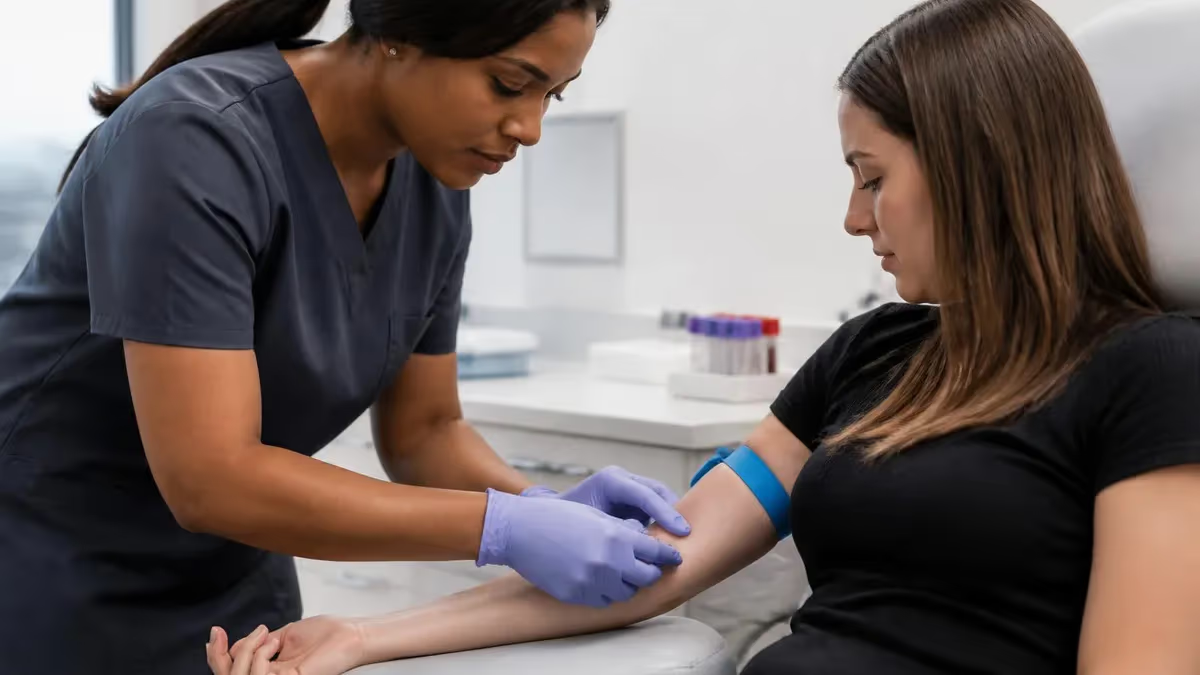
Searching for phlebotomy schools that fit your budget, schedule, and career goals can feel overwhelming when hundreds of community colleges, vocational institutes, and hospital-based programs all promise the same outcome. The reality is that program quality, accreditation status, externship hours, and pass rates vary widely across the United States, and choosing the wrong school can delay your certification by months or leave you ineligible for the credentials employers actually want. This guide walks you through every major decision you will face as a prospective student.
Phlebotomy is one of the fastest entry points into the healthcare workforce. Most accredited programs take between 4 and 12 weeks of full-time study, cost between $700 and $3,500, and prepare you to sit for a national certification exam. If you have been typing phlebotomy classes near me into search engines and feeling lost in the results, this guide will help you separate genuine training pathways from low-quality crash courses that leave graduates unprepared for clinical work.
The phlebotomy technician role is projected to grow 8 percent through 2032 according to the Bureau of Labor Statistics, which is faster than the average for all occupations. Hospitals, reference laboratories like Quest Diagnostics and LabCorp, blood donation centers, plasma collection facilities, and outpatient clinics all need certified phlebotomists. With a median annual phlebotomy salary near $40,580 in 2024 and overtime opportunities common in hospital settings, the return on a short training investment is among the strongest in allied health.
What separates a quality phlebotomy school from a diploma mill comes down to four factors: accreditation by an agency such as NAACLS or ABHES, a minimum of 100 supervised venipunctures, dermal capillary sticks on real patients during externship, and a clear pathway to a recognized credential like the CPT, RPT, or PBT. Many states including California, Louisiana, Nevada, and Washington legally require certification before you can draw blood for compensation, which means the school you choose must align with both national standards and your state's regulations.
This guide breaks down the types of phlebotomy programs available, what to expect in coursework, how externships work, total costs including hidden fees, certification options after graduation, expected starting salaries by region, and the specific questions you should ask any admissions counselor before signing an enrollment agreement. We will also cover common red flags that signal a program may not deliver on its promises, including missing externship guarantees, vague accreditation claims, and unrealistic job placement statistics.
Whether you are a high school graduate exploring healthcare, a career changer looking for a stable entry-level role, or a CNA or medical assistant looking to add a credential, the right phlebotomy school can launch you into clinical work within three months. Read carefully, take notes on programs that match your criteria, and use the comparison tools throughout this guide to shortlist three to five schools before scheduling tours or information sessions.
By the end of this article you will know exactly which questions to ask, which credentials matter most to local employers, and how to evaluate the long-term value of a program beyond its sticker price. Let's start with the numbers that define the phlebotomy education landscape in 2026.
Phlebotomy Schools by the Numbers

Types of Phlebotomy Programs Available in 2026
Typically 1-2 semesters with both lecture and lab components. Costs $1,200-$3,000, includes externship placement, and may stack credits toward an Associate of Applied Science in medical laboratory technology.
Accelerated 4-8 week programs focused exclusively on phlebotomy skills. Tuition runs $800-$2,500. Best for career changers needing fast entry into the workforce with flexible evening or weekend schedules.
Free or low-cost programs run by hospitals like HCA, Kaiser, and Cleveland Clinic. Often include a work commitment after graduation. Highly competitive admissions but offer paid externships and guaranteed hiring.
Theory delivered online with required in-person clinical hours at partner facilities. Ideal for working adults. Verify the externship site is near you before enrolling — this is the most common pitfall.
American Red Cross and similar nonprofits offer condensed 40-80 hour courses. Good for review or supplemental training but may not meet certification eligibility requirements in all states.
Tuition is rarely the only cost you will face when enrolling in a phlebotomy school, and savvy students learn to ask about the total cost of attendance rather than just the headline number on the brochure. Base tuition typically ranges from $700 for a brief Red Cross course to over $3,500 for a comprehensive community college certificate program. On top of that, you should budget for textbooks ($75-$200), uniforms and shoes ($80-$150), a stethoscope and basic supplies ($50-$100), background checks and drug screens ($60-$120), immunizations including hepatitis B series ($150-$300), and the certification exam fee ($90-$150).
Financial aid availability depends heavily on the type of school you choose. Accredited community colleges can accept federal Pell Grants, subsidized student loans, and state grants because they participate in Title IV funding. This makes them dramatically more affordable than private vocational schools for low-income students. Many trade schools accept WIOA (Workforce Innovation and Opportunity Act) vouchers, which can cover the entire program cost for eligible adults who are unemployed or underemployed. Visit your state's workforce development office to apply.
Employer sponsorship is an underused option worth investigating. Hospital systems, nursing homes, and large reference labs sometimes pay tuition in exchange for a 12-24 month employment commitment after graduation. If you currently work as a CNA, medical assistant, or hospital aide, ask your employer about tuition reimbursement before paying out of pocket. Some unions including SEIU and 1199 maintain training funds that cover phlebotomy certification for healthcare workers seeking to advance.
Looking up phlebotomy certification near me on accreditation databases helps you identify schools eligible for veterans benefits as well. The VA's Post-9/11 GI Bill, Vocational Rehabilitation (Chapter 31), and MyCAA (for military spouses) can fully cover phlebotomy training at approved institutions. Check the WEAMS database to confirm a program is VA-approved before assuming benefits will transfer. Some programs designed specifically for military veterans include accelerated scheduling and job placement guarantees with VA medical centers.
Beware of zero-interest financing offers from for-profit schools that bundle tuition with hidden administrative fees, equipment markups, and inflated exam preparation packages. The total amount you finance through these schools can be 40-60 percent higher than tuition at a comparable community college. Always request a complete itemized cost breakdown in writing, including dropout refund policies, before signing an enrollment agreement. Federal law gives you a three-day right to cancel most consumer contracts.
Scholarships specifically for phlebotomy students are limited but exist through state laboratory societies, AMT (American Medical Technologists), ASCP Foundation, and local hospital foundations. Award amounts typically range from $500 to $2,000 and require GPA documentation plus a short essay. Apply early — most cycles open in February and close by April for fall enrollment. Even one small scholarship can offset textbooks and exam fees, keeping your out-of-pocket investment under $1,000.
Finally, consider the opportunity cost of your time. A 4-week full-time accelerated program lets you start earning a phlebotomy technician wage within two months, while a part-time evening program at a community college might take 6 months but lets you keep your current job. Run the math on lost wages versus tuition savings — sometimes the cheaper sticker price is the more expensive choice overall.

Phlebotomy Practice Test Questions
Prepare for the Phlebotomy Test exam with our free practice test modules. Each quiz covers key topics to help you pass on your first try.
Phlebotomy American Medical Certification ...
Phlebotomy Exam Questions covering American Medical Certification Association Phlebotomy. Master Phlebotomy Test concepts for certification prep.
Phlebotomy American Medical Technologists ...
Free Phlebotomy Practice Test featuring American Medical Technologists Phlebotomy. Improve your Phlebotomy Exam score with mock test prep.
Phlebotomy American Society for Clinical P...
Phlebotomy Mock Exam on American Society for Clinical Pathology Phlebotomy. Phlebotomy Study Guide questions to pass on your first try.
Phlebotomy Association of Phlebotomy Techn...
Phlebotomy Test Prep for Association of Phlebotomy Technicians. Practice Phlebotomy Quiz questions and boost your score.
Phlebotomy National Center for Competency ...
Phlebotomy Questions and Answers on National Center for Competency Testing Phlebotomy. Free Phlebotomy practice for exam readiness.
Phlebotomy National Healthcareer Associati...
Phlebotomy Mock Test covering National Healthcareer Association Phlebotomy. Online Phlebotomy Test practice with instant feedback.
Phlebotomy Order of Draw and Additives
Free Phlebotomy Quiz on Order of Draw and Additives. Phlebotomy Exam prep questions with detailed explanations.
Phlebotomy Legal and Ethics
Phlebotomy Practice Questions for Phlebotomy Legal and Ethics. Build confidence for your Phlebotomy certification exam.
Phlebotomy Safety and Infection Control
Phlebotomy Test Online for Safety and Infection Control. Free practice with instant results and feedback.
Phlebotomy Special Collection Procedures
Phlebotomy Study Material on Special Collection Procedures. Prepare effectively with real exam-style questions.
Phlebotomy Specimen Processing and Handling
Free Phlebotomy Test covering Specimen Processing and Handling. Practice and track your Phlebotomy exam readiness.
Phlebotomy Test Arterial Blood Gas Collection
Phlebotomy Exam Questions covering Test Arterial Blood Gas Collection. Master Phlebotomy Test concepts for certification prep.
Phlebotomy Test Capillary and Dermal Puncture
Free Phlebotomy Practice Test featuring Test Capillary and Dermal Puncture. Improve your Phlebotomy Exam score with mock test prep.
Phlebotomy Test Pediatric Blood Collection
Phlebotomy Mock Exam on Test Pediatric Blood Collection. Phlebotomy Study Guide questions to pass on your first try.
Phlebotomy Test Phlebotomy Anatomy and Phy...
Phlebotomy Test Prep for Test Phlebotomy Anatomy and Physiology. Practice Phlebotomy Quiz questions and boost your score.
Phlebotomy Test Phlebotomy Exam Simulation
Phlebotomy Questions and Answers on Test Phlebotomy Exam Simulation. Free Phlebotomy practice for exam readiness.
Phlebotomy Test Phlebotomy Patient Identif...
Phlebotomy Mock Test covering Test Phlebotomy Patient Identification and Communication. Online Phlebotomy Test practice with instant feedback.
Phlebotomy Test Point of Care Testing
Free Phlebotomy Quiz on Test Point of Care Testing. Phlebotomy Exam prep questions with detailed explanations.
What You Learn: Phlebotomy Training Specialists Curriculum
Classroom instruction covers anatomy and physiology of the circulatory system, blood composition, common laboratory tests, infection control under OSHA bloodborne pathogen standards, HIPAA privacy requirements, and medical terminology. Expect 40-60 hours of lecture with quizzes weekly. Most programs use textbooks like Phlebotomy Essentials by McCall or Strasinger's Urinalysis & Body Fluids.
You will also study legal and ethical issues including informed consent, scope of practice, and documentation standards. Quality programs include simulations of difficult patient interactions, pediatric considerations, geriatric vein assessment, and how to recognize syncope, hematoma formation, and other adverse reactions before they escalate. Written exams typically require 75-80 percent passing scores.
Accelerated vs Traditional Phlebotomy Programs
- +Faster entry into the workforce — sometimes within 5-6 weeks
- +Lower total tuition for short condensed programs
- +Concentrated immersion improves skill retention
- +Less time off work for career changers
- +Cohort-based learning builds peer support quickly
- +Many include certification exam fee in tuition
- +Immediate clinical externship after didactic phase
- −Intense pace can overwhelm students balancing family responsibilities
- −Less time to absorb complex anatomy and pathology content
- −Limited financial aid for sub-15-week programs
- −Fewer review opportunities before certification exam
- −Externship slots may be harder to schedule rapidly
- −Less networking time with instructors and clinical mentors
- −Higher dropout rates reported in some accelerated cohorts
Pros and Cons at a Glance
| Pros | Cons |
|---|---|
| Lower total tuition for short condensed programs | Intense pace can overwhelm students balancing family responsibilities |
| Concentrated immersion improves skill retention | Less time to absorb complex anatomy and pathology content |
| Less time off work for career changers | Fewer review opportunities before certification exam |
| Cohort-based learning builds peer support quickly | Externship slots may be harder to schedule rapidly |
| Many include certification exam fee in tuition | Less networking time with instructors and clinical mentors |
| Immediate clinical externship after didactic phase | Higher dropout rates reported in some accelerated cohorts |

Choosing the Right Phlebotomy School: Essential Checklist
- ✓Confirm accreditation through NAACLS, ABHES, or your state board of education
- ✓Verify the program includes at least 100 supervised venipunctures during externship
- ✓Ask for the most recent first-time certification exam pass rate (target 70%+)
- ✓Request job placement statistics for the most recent three graduating cohorts
- ✓Confirm the school has signed affiliation agreements with local hospitals or labs
- ✓Check that the curriculum prepares you for at least two national certifications
- ✓Verify total cost in writing including books, supplies, fees, and exam vouchers
- ✓Read student reviews on Google, Indeed, and the Better Business Bureau
- ✓Tour the lab in person to inspect equipment quality and instructor availability
- ✓Ask about refund policies if you must withdraw within the first two weeks
- ✓Confirm scheduling fits your work and family obligations realistically
- ✓Verify the school is approved for VA, WIOA, or Pell Grant funding if needed
Always ask: "What happens if I cannot complete my externship hours?"
Quality schools have backup clinical sites, instructor-supervised remediation, and flexible scheduling to ensure every student finishes externship within the program timeline. Schools that dodge this question, charge extra for externship placement, or rely on students to find their own clinical sites are red flags. Without externship completion you cannot sit for certification, no matter how well you did in class.
Graduating from a phlebotomy school is only the first half of becoming a working professional. The second half is passing a national certification exam from one of six recognized credentialing agencies: ASCP (BOC PBT), AMT (RPT), NHA (CPT), NCCT (NCPT), AMCA (PTC), or ACA (CPT). Each agency offers a slightly different test, exam fee, and renewal requirement, but employers across the United States accept all six as equivalent for hiring purposes. Your school will likely steer you toward one based on its curriculum alignment.
The most widely recognized credentials are the ASCP Phlebotomy Technician (PBT) and the NHA Certified Phlebotomy Technician (CPT). ASCP exams contain 80 multiple-choice questions delivered in 2 hours at Pearson VUE testing centers. The NHA CPT contains 120 questions over 2 hours and 10 minutes at PSI centers. Both cost approximately $130-$155. Pass rates vary by school but national averages hover between 70 and 80 percent for first-time test takers from accredited programs.
California stands apart from other states because it requires its own state-issued Certified Phlebotomy Technician license (CPT1 or CPT2) administered through the California Department of Public Health Laboratory Field Services. The CPT1 license allows venipuncture and skin punctures, while the CPT2 adds arterial draws. California programs must meet 40 hours of basic instruction, 40 hours of advanced training, and 40 hours of practical experience before students can apply for state licensure.
Washington, Nevada, and Louisiana also have state-specific requirements layered on top of national certification. Even in states without legal certification mandates, the overwhelming majority of hospitals and reference labs require national certification as a hiring prerequisite. Skipping certification because your state does not technically require it is one of the most common mistakes new graduates make — it cuts your job pool by 80 percent and caps starting wages 15-20 percent below certified peers.
Continuing education is required to maintain certification. ASCP requires 24 contact hours every three years through its Credential Maintenance Program. NHA requires 10 hours every two years. AMT requires participation in their Certification Continuation Program with 45 points over three years. Most CE requirements can be met through free webinars, employer-sponsored training, or online courses costing $5-$20 per credit hour. Letting your certification lapse triggers reinstatement fees and possible re-examination.
After your initial credential, you can specialize. Donor Phlebotomy Technician (DPT) certification from ASCP qualifies you for blood bank and apheresis work, which typically pays $2-$5 per hour more than general venipuncture. Some phlebotomists progress into medical laboratory technician (MLT) programs, becoming full lab technicians with associate degrees in clinical laboratory science. Others move laterally into medical assisting, EKG technology, or patient care technician roles that combine phlebotomy with other clinical skills.
Plan your certification timeline carefully. Most graduates take the exam within 30-60 days of finishing classroom and externship work, while content is still fresh. Waiting longer than 90 days dramatically reduces pass rates. Schedule your exam date before you finish school, use free practice questions from multiple sources to identify weak areas, and review the agency's official test plan to focus your studying on the highest-weighted competencies.
Some online schools issue "certificates of completion" that are not the same as national certification from a recognized agency. These credentials are not accepted by hospitals, reference labs, or state licensing boards. Before paying, confirm that graduates are eligible to sit for ASCP, NHA, AMT, or another nationally recognized exam, and that the agency's logo appears on the school's official partner list.
Phlebotomy is one of the most reliable entry points into stable healthcare employment in the United States. The Bureau of Labor Statistics reported 135,500 phlebotomist jobs in 2023 with a projected 8 percent growth rate through 2032 — equivalent to roughly 19,500 openings per year from growth and replacement combined. Aging populations, increased chronic disease management requiring frequent lab monitoring, and expansion of outpatient and home-draw services all drive demand higher than the national average for all occupations.
Median annual wages reached $40,580 in May 2024 according to BLS data, with the top 10 percent earning more than $54,690 and the bottom 10 percent earning less than $32,330. Geography matters enormously: California, New York, Massachusetts, Washington, and Oregon consistently report the highest wages, often $46,000-$58,000 for experienced phlebotomists in major metros. Rural Southern states and parts of the Midwest pay closer to $32,000-$36,000 for similar work, though cost of living often offsets the wage gap.
Shift differentials, overtime, and weekend pay can add $4,000-$10,000 annually to base salary in hospital settings. Night-shift hospital phlebotomists often earn 15-25 percent more than their day-shift counterparts, and traveling phlebotomists working for mobile draw services or in-home care companies can negotiate per-stop pay structures that exceed standard hourly rates. Searching for a phlebotomy program near me with strong hospital affiliations will improve your access to these higher-paying shifts after graduation.
Employers vary widely in culture and pace. Hospital phlebotomists work fast-paced morning rounds drawing 30-60 patients before 9 AM, while outpatient clinic phlebotomists see a steady stream of scheduled patients with more time per draw. Reference lab phlebotomists at companies like Quest, LabCorp, and Sonic Healthcare typically work patient service center desks where they collect for outpatient orders. Blood donation roles at the American Red Cross or community blood banks combine venipuncture with donor screening and recovery monitoring.
Beyond traditional roles, certified phlebotomy technicians are increasingly hired by pharmaceutical research organizations for clinical trial blood draws, telehealth companies expanding into home phlebotomy, plasma collection centers (which often pay $18-$24/hour), and wellness companies offering biomarker testing at corporate offices. The phlebotomy credential combined with EKG or laboratory assistant training opens doors to patient care technician roles in dialysis and cardiology departments, where wages can exceed $50,000 with experience.
Career advancement is realistic and achievable. Many phlebotomists become lead phlebotomists or supervisors within 2-4 years, earning $45,000-$55,000 to oversee teams, train new staff, and manage scheduling. Some pursue Medical Laboratory Technician (MLT) associate degrees, which qualify them for higher-paid lab analyst roles starting around $55,000-$65,000. Others move into healthcare administration, education, or sales for laboratory equipment companies where phlebotomy expertise adds credibility with clinical buyers.
Demand remains strongest in metropolitan areas with major hospital systems, academic medical centers, and dense outpatient networks. Cities like Houston, Phoenix, Atlanta, Dallas, and Chicago consistently post hundreds of open phlebotomist roles at any given time. If you are willing to relocate or commute, your job search timeline can shrink to under two weeks from certification to first paycheck. Use Indeed, ZipRecruiter, hospital career pages, and LinkedIn to track openings during your final weeks of school.
Now that you understand the landscape of phlebotomy schools, let's translate this into practical next steps you can execute this week. Start by listing three to five programs within a 30-mile radius using your state's department of education accredited program database. Cross-reference each name against the NAACLS or ABHES website to confirm current accreditation status — agencies sometimes revoke accreditation, and outdated school marketing materials may not reflect that change. Eliminate any school that cannot produce a current accreditation letter on request.
Next, schedule information sessions or campus tours at your top three candidates. Pay attention to lab equipment condition, instructor availability, class size, and how admissions staff handle pointed questions about pass rates and job placement. Schools that produce documentation immediately are confident in their outcomes. Schools that promise to email you statistics later or deflect with marketing language often have weaker results they prefer not to publicize. Trust the data they can show you on the spot.
While you tour schools, also begin assembling your prerequisite documentation. Most programs require a high school diploma or GED, a recent physical exam, proof of immunizations (hepatitis B, MMR, varicella, Tdap, annual flu shot, COVID-19 series in most settings), a 10-panel drug screen, a CPR/BLS certification from the American Heart Association, and a background check clearance. Starting these now saves 2-4 weeks at enrollment and ensures you can begin externship on schedule without delays caused by missing paperwork.
Once enrolled, treat phlebotomy school like a job. Attend every class, take careful notes on order of draw mnemonics ("Boys Love Ravishing Girls Like Sister Greta" for Blood culture, Light blue, Red, Gold/SST, Green, Lavender, Pink, Sodium fluoride/Gray), practice tube identification flashcards nightly, and volunteer for every lab opportunity to perform additional sticks. Students who exceed minimum venipuncture counts almost universally outperform their peers on certification exams and in early job interviews where confidence in technique matters.
During externship, behave like a job candidate from day one. Phlebotomy supervisors at your clinical site routinely hire externs who demonstrate strong patient communication, accurate labeling, and a willingness to take on the difficult patients others avoid. Show up 15 minutes early, ask thoughtful questions, never argue with feedback, and follow up with a thank-you email when your rotation ends. Many phlebotomists in the field today landed their first job at the same hospital where they completed externship.
Begin certification exam preparation in the third week of your program rather than waiting until graduation. Use free online practice question banks daily, even if just 10-15 minutes during breaks or commutes. Track which content domains (safety, anatomy, special collections, processing) trip you up most frequently and concentrate review there. Pearson VUE and PSI testing centers fill up weeks in advance — schedule your exam slot before classes end so you do not lose momentum waiting for an open date.
Finally, build a professional support network early. Connect on LinkedIn with your instructors, externship preceptors, and classmates. Join your state's clinical laboratory science society as a student member (often $25-$50 annually) for access to job boards, mentorship programs, and continuing education events. Phlebotomy is a relationship-driven field where word-of-mouth referrals fill openings before they hit public job boards. The students who treat school as networking opportunity, not just instruction, get hired fastest after graduation.
Sample Phlebotomy Practice Questions
Try these questions from our free Phlebotomy practice tests. The correct answer and an explanation follow each question.
Which of the following represents a failure to adhere to the phlebotomy 'standard of care'?
- A. Informing the patient about the potential for bruising.
- B. Attempting to perform a venipuncture on a patient a third time after two unsuccessful attempts.
- C. Asking the patient to state their full name and date of birth.
- D. Disposing of the used needle in a sharps container immediately after use.
Answer: B. Attempting to perform a venipuncture on a patient a third time after two unsuccessful attempts.
The standard of care in phlebotomy, based on industry guidelines, generally recommends that a phlebotomist should not attempt a venipuncture on a patient more than twice. After two unsuccessful attempts, the phlebotomist should seek assistance from a more experienced colleague or notify the patient's nurse or physician. Continuing to attempt collection could cause unnecessary harm to the patient.
What is one benefit of obtaining the AMT RPT certification?
- A. Guaranteed job placement
- B. International recognition of credentials
- C. Waived state licensure requirements
- D. Automatic promotion to lab supervisor
Answer: B. International recognition of credentials
The AMT RPT certification offers international recognition of credentials, meaning the qualification is understood and respected across different countries. This benefit enhances a phlebotomist's professional mobility and standing, allowing their skills to be valued beyond national borders. It signifies a standardized level of competence that is widely acknowledged in the healthcare community.
What is one benefit of earning the NCPT certification?
- A. Guaranteed employment in healthcare facilities
- B. Recognition of competency by employers nationwide
- C. Exemption from all continuing education requirements
- D. Immediate eligibility for advanced laboratory roles
Answer: B. Recognition of competency by employers nationwide
Earning the NCPT certification provides significant recognition of competency by employers nationwide. This credential assures healthcare facilities that an individual has met national standards for phlebotomy skills and knowledge, enhancing their employability and professional credibility. It demonstrates a commitment to quality patient care and professional excellence.
The ethical principle of 'Nonmaleficence' as it applies to phlebotomy is best described as:
- A. Ensuring the patient understands and agrees to the procedure.
- B. Treating all patients fairly and equitably.
- C. The duty to 'do no harm' to the patient.
- D. Acting in the best interest of the patient.
Answer: C. The duty to 'do no harm' to the patient.
The principle of nonmaleficence is a core ethical tenet in healthcare, meaning to avoid causing unnecessary pain or harm to a patient. For a phlebotomist, this involves using proper technique, following safety protocols, and preventing complications like infection or nerve damage.
Phlebotomy Questions and Answers
About the Author

Registered Nurse & Healthcare Educator
Johns Hopkins University School of NursingDr. Sarah Mitchell is a board-certified registered nurse with over 15 years of clinical and academic experience. She completed her PhD in Nursing Science at Johns Hopkins University and has taught NCLEX preparation and clinical skills courses for nursing students across the United States. Her research focuses on evidence-based exam preparation strategies for healthcare certification candidates.