
Makeup Tutorial by Professional Makeup Artist: Skills, Techniques & Career Guide
Learn from a professional makeup artist near me guide. Tutorials, techniques, career steps & certification tips. ✅ Start your MUA journey today.

If you've been searching for a makeup tutorial by professional makeup artist or trying to find a skilled makeup artist near me, you already understand how significant expert technique can be. Professional makeup artistry blends scientific knowledge of skin types, color theory, and product chemistry with artistic vision that takes years to develop. Whether you're a client wanting to understand what separates an amateur from a pro, or an aspiring MUA ready to launch your career, this guide covers the full spectrum of professional makeup practice in the United States today.
The world of professional makeup artistry is far broader than most people realize. A working makeup artist might spend Monday morning on a commercial set in Manhattan, Tuesday afternoon doing bridal trials in a private studio, and Wednesday evening teaching a hands-on workshop for aspiring students. The variety is one of the most appealing aspects of the career. Professionals work across film, television, fashion, editorial, theater, special effects, and private client services — each niche demanding its own specialized skill set and kit of products.
Understanding the full landscape of what a makeup artist and beauty professional does on a daily basis helps clients choose the right specialist and helps students map out a realistic career path. Unlike many creative fields, makeup artistry has clearly defined professional milestones: formal education, hands-on apprenticeship, portfolio development, certification, and business licensing. Each step builds the credibility and technical depth that separates working professionals from hobbyists posting on social media.
Icons like lori anne allison makeup artist — who built her reputation working with some of Hollywood's biggest names before becoming a celebrated beauty entrepreneur — demonstrate that longevity in this industry comes from both technical excellence and personal brand building. Allison's career trajectory, from working in the entertainment industry to launching product lines, illustrates how a strong foundational skill set opens doors that pure networking alone never could. Her story is referenced throughout beauty schools precisely because it shows what disciplined artistry can achieve over decades.
The demand for certified, skilled makeup professionals continues to grow across the United States. The Bureau of Labor Statistics projects steady employment growth for barbers, hairstylists, and cosmetologists — a category that includes makeup artists — driven by expanding entertainment production, the booming wedding industry, and increased consumer spending on personal appearance services. In major metro areas, experienced MUAs with strong portfolios and active client rosters can earn six-figure annual incomes through a combination of editorial, commercial, and private bookings.
One of the most important distinctions clients should understand when searching for a makeup artist near me is the difference between a licensed cosmetologist who offers makeup services and a dedicated makeup artist who has trained specifically in artistry techniques. Cosmetology licenses cover a broad range of beauty services but may not include deep training in advanced contouring, color correction, airbrush application, or special effects. A dedicated MUA typically completes a focused curriculum and builds a portfolio specifically around makeup rather than general beauty services.
This comprehensive guide walks through professional tutorials and techniques, the steps to building a sustainable MUA career, what certifications actually matter in today's market, and how to position yourself — or how to evaluate a professional you're hiring — for success. You can also explore our resources on makeup artists near me who have built their careers at the highest levels of the entertainment industry, providing additional career inspiration and practical guidance.
Professional Makeup Artistry by the Numbers

Core Techniques Every Professional MUA Must Master
Skin Prep & Foundation Matching
Color Theory & Correction
Contouring, Highlighting & Sculpting
Eye Design & Liner Precision
Airbrush & Special Applications
Building a professional makeup artistry career in the United States follows a well-established path, though the specific route varies by the niche a prospective MUA wants to enter. The first decision most aspiring professionals face is whether to pursue a state-licensed cosmetology program, an accredited makeup artistry school, or a combination of both. State cosmetology licenses require between 1,000 and 1,600 hours of training depending on the state and typically include curriculum covering skin care, sanitation, color theory, and basic application techniques alongside hair and nail services.
Dedicated makeup artistry programs — offered by institutions like the Make-Up Designory (MUD), Cinema Makeup School, the Joe Blasco Makeup Artist Training Center, and dozens of community colleges — focus exclusively on makeup techniques and often include specialized modules in theatrical, special effects, airbrush, and editorial work. These programs range from intensive six-week certificate courses to 12-month diploma programs. For students who know they want to focus specifically on makeup rather than broader cosmetology, a dedicated artistry program typically provides deeper technical training in a shorter time frame.
After completing formal education, most working professionals strongly recommend assisting an established artist before going solo. Assisting means carrying kit bags, setting up workstations, cleaning brushes, organizing product, and observing the senior artist work with clients. It is often unpaid or minimally compensated, but the learning is invaluable. Assistants watch how established professionals handle client communication, manage timing on set, troubleshoot unexpected challenges, and adapt their techniques under real working conditions that no classroom can fully simulate.
Portfolio development runs parallel to education and assisting work. A professional portfolio — whether maintained as a physical book or a digital website — should demonstrate range across different skin tones, face shapes, lighting conditions, and looks. Industry professionals like gucci westman makeup artist built their reputations in part through editorial portfolios that showed exceptional range and a distinctive aesthetic voice. Early-career artists should seek out collaboration with photographers, stylists, and models for test shoots specifically designed to build portfolio content across multiple categories.
Certification adds another layer of professional credibility, particularly for MUAs who want to work in television, film, or union productions. The International Make-Up Association (IMA) offers certification programs, while IATSE (International Alliance of Theatrical Stage Employees) union membership is often required for work on major film and television productions in the US. Obtaining these credentials requires documented experience hours, demonstrated technical competency, and in some cases passing written and practical examinations that cover both artistry skills and safety and sanitation protocols.
Business skills are equally important to technical skills for long-term career sustainability. Most working makeup artists operate as freelancers or sole proprietors, which means they are responsible for marketing, client acquisition, contract management, invoicing, tax filing, and kit maintenance expenses. Many experienced MUAs recommend taking a basic business course or working with an accountant who specializes in creative freelancers early in the career — before income tax complications arise from juggling multiple 1099s and deductible kit expenses.
Networking remains one of the most powerful career-building tools in the industry. Industry events, beauty conferences, brand ambassador programs, and social media platforms — particularly Instagram and TikTok — all serve as discovery channels where new clients and collaborators find working artists. The key is to build an authentic presence that showcases genuine work rather than curated perfection, because art directors, brides, and production coordinators are equally interested in your working process and professional demeanor as in the finished images themselves.
Makeup Artist Specializations: Bridal, Film & Drag Artist Makeup
Makeup artist wedding makeup is one of the most lucrative and demanding specializations in the industry. Bridal work requires artists to balance the client's personal style with the practical demands of a full wedding day — typically 8 to 12 hours of wear, multiple lighting environments from indoor ceremony to outdoor reception, and the emotional pressure of one of the most photographed days of a person's life. Professional bridal MUAs conduct thorough consultations and trial sessions weeks in advance, testing product formulas for longevity and photographability before the wedding day arrives.
Bridal specialists often book 6 to 12 months in advance in major markets, particularly during spring and fall peak seasons. Packages typically include a trial session, day-of application, and services for the bridal party, with pricing ranging from $200 to $600 per person depending on the market and the artist's experience level. Building a bridal clientele requires specific portfolio content — ideally real wedding photography from professional photographers — along with strong reviews on platforms like The Knot, WeddingWire, and Google Business Profile.

Is a Professional Makeup Artistry Career Right for You?
- +High creative satisfaction working across diverse client types and artistic projects every week
- +Flexible schedule with the ability to set your own hours as a freelance MUA
- +Strong earning potential in major markets, especially for bridal and commercial specialists
- +Growing demand driven by entertainment, social media content, and the expanding wedding market
- +Opportunities to travel for editorial shoots, fashion weeks, and destination weddings globally
- +Low barrier to entry compared to many creative careers — no four-year degree required
- −Income can be highly irregular, especially in the first two to three years of freelancing
- −Physical demands are significant — long hours on your feet, carrying heavy kit bags
- −Kit investment can be expensive, with professional-grade products costing thousands of dollars
- −Highly competitive market in major cities requires constant portfolio and skill updates
- −Client-facing work requires excellent interpersonal skills and emotional labor, especially in bridal
- −Exposure to chemicals, latex, and strong products requires diligent safety and sanitation practices
Pros and Cons at a Glance
| Pros | Cons |
|---|---|
| High creative satisfaction working across diverse client types and artistic projects every week | Income can be highly irregular, especially in the first two to three years of freelancing |
| Flexible schedule with the ability to set your own hours as a freelance MUA | Physical demands are significant — long hours on your feet, carrying heavy kit bags |
| Strong earning potential in major markets, especially for bridal and commercial specialists | Kit investment can be expensive, with professional-grade products costing thousands of dollars |
| Growing demand driven by entertainment, social media content, and the expanding wedding market | Highly competitive market in major cities requires constant portfolio and skill updates |
| Opportunities to travel for editorial shoots, fashion weeks, and destination weddings globally | Client-facing work requires excellent interpersonal skills and emotional labor, especially in bridal |
| Low barrier to entry compared to many creative careers — no four-year degree required | Exposure to chemicals, latex, and strong products requires diligent safety and sanitation practices |
Professional MUA Certification & Career Readiness Checklist
- ✓Complete a state-accredited cosmetology or dedicated makeup artistry program with at least 300 curriculum hours
- ✓Obtain your state cosmetology or esthetics license if required in your state for client-facing work
- ✓Assist at least one established professional MUA for a minimum of 20 real client sessions before going solo
- ✓Build a portfolio with at least 30 images across five or more distinct looks and diverse skin tones
- ✓Invest in a professional starter kit including brushes, a foundation shade range of 20+ shades, and sanitation supplies
- ✓Create professional social media profiles on Instagram and TikTok with consistent posting of your work
- ✓Register your business as a sole proprietor or LLC and open a dedicated business bank account
- ✓Set your rates based on local market research and define your service menu with clear pricing
- ✓Draft a client contract template covering deposit policies, cancellation terms, and scope of services
- ✓Apply for membership or certification with the International Make-Up Association (IMA) to add professional credentials
The 10,000-Hour Rule Applies to Makeup Artistry Too
Industry veterans consistently report that true professional mastery — the ability to work quickly, adapt to any face, and troubleshoot problems under pressure — takes approximately three to five years of consistent, high-volume practice. Professionals who work on 200 or more faces per year develop pattern recognition that no amount of classroom instruction can substitute. Commit to volume early in your career, even if that means doing discounted portfolio shoots or assisting for minimal pay.
Building a sustainable client base is the central business challenge for most working makeup artists, and it requires a fundamentally different skill set than technical artistry. The most technically gifted MUA in a market will struggle if they cannot communicate their value effectively, manage client relationships professionally, and generate consistent referrals. In competitive markets — particularly major cities like New York, Los Angeles, Chicago, and Miami — there are hundreds or even thousands of working makeup artists competing for the same client pool, so differentiation through specialty, aesthetic, or exceptional client experience is essential.
Referral networks are the most powerful client acquisition channel for established MUAs. Wedding planners, photographers, hair stylists, event coordinators, and clothing boutiques all regularly refer makeup artists to their own clients, and cultivating these professional relationships is a high-return investment. Many experienced MUAs build formal referral partnerships with other wedding vendors — cross-promoting each other's services, sharing each other's social media content, and co-creating styled shoots that generate portfolio content for everyone involved while reaching each vendor's existing audience.
Social media strategy has become inseparable from makeup artistry career building in today's market. Instagram remains the dominant visual platform for beauty professionals, while TikTok has emerged as a powerful discovery channel for artists who can create engaging tutorial and behind-the-scenes content. The key insight that most successful MUAs emphasize is that social media success comes from consistency and authenticity rather than production value — a smartphone-filmed tutorial that teaches a genuinely useful technique will often outperform a professionally produced video that offers little practical value to the viewer.
Pricing strategy significantly impacts both client acquisition and career sustainability. New MUAs often undercharge dramatically in the early years, either out of lack of confidence or misunderstanding of their actual costs. A professional kit costs between $2,000 and $10,000 to build, requires ongoing replenishment as products expire or run out, and needs continuous updating as new formulas and tools enter the market. When calculating rates, experienced business coaches recommend working backward from a target annual income, factoring in business expenses, self-employment taxes, non-billable administrative time, and desired vacation time.
Exploring the work of celebrated professionals like those covered in our guide on makeup artist makeup reveals a common thread: the most successful career MUAs combine exceptional technical skill with strong personal branding and deliberate business development. They treat their artistry as a craft to be continuously refined and their business as a professional enterprise with real financial goals — not just a hobby that happens to generate income. This dual commitment to creative excellence and business discipline is what separates artists who build lasting careers from those who burn out or plateau after a few years.
Diversifying income streams is a strategy many established MUAs use to create stability beyond client bookings. Teaching workshops and masterclasses — whether in-person or online — generates revenue during slow booking periods and builds professional authority. Creating digital products like downloadable tutorials, e-books on color theory, or curated kit guides provides passive income. Brand partnerships and ambassador programs with cosmetics companies offer additional compensation for MUAs with strong social media followings, while editorial and commercial rates are typically significantly higher than private client rates.
Geographic expansion is another growth lever available to professionals who have maximized their local market. Destination wedding bookings, fashion week travel, and international editorial assignments are all realistic opportunities for experienced artists with strong portfolios and professional networks. Building relationships with agencies that represent makeup artists for commercial and editorial work — both in major US markets and internationally — opens doors to higher-paying projects that private client work alone cannot provide. The investment in these relationships typically pays dividends over a multi-year time horizon rather than immediately.

Makeup artist licensing requirements differ significantly by state. Some states require a full cosmetology license (1,000+ hours) to apply makeup professionally for compensation, while others have no licensing requirement at all. Before accepting paid client work, verify the specific regulations in your state through your state's cosmetology board website. Working without a required license can result in fines and may affect your ability to obtain professional liability insurance.
Assembling a professional makeup kit is one of the most significant financial investments an MUA makes in their career, and the decisions about which products to include have lasting implications for both the quality of client results and the artist's professional reputation.
A working kit is not simply a collection of products the artist personally loves — it is a curated professional toolkit that must serve diverse client needs across different skin tones, skin types, ages, and occasion requirements. Building a kit around only light-to-medium skin tones, for example, immediately signals limited professional range and will cost bookings among clients with deeper complexions.
Foundation selection is the cornerstone of any professional kit. Industry standard practice is to carry a minimum of 20 to 30 shades across at least three different formulas — one for clients who prefer full coverage, one for natural or skin-like coverage, and one suitable for photography or long-wear occasions. Professional brands favored by working artists include Armani Beauty, Make Up For Ever, NARS, Kryolan, and Cinema Secrets for their reliability, range of shades, and performance under various lighting conditions. Airbrush systems from Dinair or Temptu add versatility for bridal and commercial work.
Brush quality directly impacts the technical quality of work a professional can produce. Cheap brushes deposit product unevenly, shed bristles onto clients, and wear out quickly under the demands of professional use and daily sanitation. Professional MUAs invest in high-quality synthetic and natural hair brushes from brands like Sigma Beauty, Bdellium Tools, Wayne Goss, or Real Techniques Pro — building a comprehensive collection of face, eye, and lip brushes that covers every application technique. The initial investment of $300 to $800 in quality brushes pays for itself quickly compared to the ongoing replacement cost of inferior tools.
Sanitation is not optional — it is a legal and ethical requirement of professional practice. Every professional kit must include 70% isopropyl alcohol for sanitizing product surfaces and tools between clients, disposable applicators for mascara and lip products, a UV sanitizing tool for metal implements, and sealed containers for clean versus used tools. State cosmetology boards can conduct inspections, and industry liability insurance policies may be voided if contamination-related claims arise from inadequate sanitation practices. Establishing and consistently following a sanitation protocol protects both clients and the artist.
The film and television industry has specific kit requirements that differ from private client or editorial work. On-set professionals are expected to carry a comprehensive kit that can handle any makeup challenge the production presents without a shopping trip — this includes specialty products for special effects, body makeup, aging techniques, and corrective applications. Industry professional jane roe makeup artist guidance on building a film-ready kit emphasizes that productions evaluate an artist's kit during initial interviews, and an under-stocked or disorganized kit can cost you the job regardless of how strong your portfolio is.
Staying current with product innovation is an ongoing professional responsibility. The cosmetics industry introduces hundreds of new products, formulas, and technologies every year — from next-generation foundation formulas that perform seamlessly across all skin tones to new adhesive technologies for special effects applications. Professional MUAs regularly attend beauty trade shows like International Beauty Show New York, Premiere Orlando, and IMATS (International Make-Up Artist Trade Show) to discover new products, attend technical workshops, and maintain connections with brand representatives who can provide professional pricing on kit staples.
Organizing and maintaining a professional kit requires systems that keep products accessible during fast-paced work sessions while protecting them during transport. Rolling train cases, acrylic organizers, stackable palettes, and labeled compartments all contribute to the efficiency that separates a veteran professional from a novice artist fumbling for the right product mid-application. Many experienced MUAs create custom palettes by depotting individual pan products into magnetic palettes organized by function — creating a more compact, efficiently organized kit that reduces weight and speeds up application significantly during high-volume bridal or commercial booking days.
Preparing for professional makeup artistry certifications requires a structured study approach that addresses both theoretical knowledge and practical competency. The written components of most MUA certification exams cover topics including skin anatomy and physiology, color theory, sanitation and safety protocols, product chemistry, contraindications for makeup application, and business and professional ethics. Candidates who perform best on these assessments are those who approach study systematically rather than relying solely on practical experience, since many experienced artists have gaps in their theoretical knowledge that written exams specifically probe.
Understanding skin anatomy at a professional level means being able to identify the layers of the epidermis, understand how different skin conditions — including rosacea, eczema, acne, and hyperpigmentation — affect product selection and application technique, and know when to refer a client to a dermatologist rather than attempting to cover a condition that requires medical attention. This clinical knowledge foundation separates professionally trained MUAs from self-taught artists and is a core competency evaluated in most formal certification programs across the United States.
Color theory as applied to makeup artistry goes significantly beyond the basics covered in introductory art classes. Professional-level color theory includes understanding how different light sources (daylight, tungsten, LED, fluorescent) affect the appearance of pigments on skin, how the color wheel applies to corrective techniques across all skin tones, how warm and cool undertones interact with foundation formulas, and how to mix and customize shades to achieve precise matches that no single off-the-shelf product provides. These concepts require both memorization and extensive hands-on practice to truly master.
Sanitation and safety knowledge is weighted heavily in professional certifications because it directly relates to public health and legal compliance. Candidates must demonstrate knowledge of state board regulations, proper disinfection versus sterilization protocols, bloodborne pathogen exposure prevention, allergy and sensitivity management, and correct disposal of single-use items. In practical examinations, evaluators typically observe workspace setup and teardown procedures as well as between-client sanitation protocols — giving significant weight to safety practices alongside the quality of the makeup application itself.
Practice tests are one of the most effective preparation tools available to certification candidates, and research consistently shows that active recall through testing outperforms passive study methods like re-reading notes or watching tutorial videos. The mechanism behind this finding — called the testing effect or retrieval practice effect — is that actively retrieving information from memory strengthens the neural pathways associated with that knowledge more effectively than simply reviewing the information again. Candidates who complete multiple practice exams before their actual certification test consistently achieve higher scores and report feeling more confident during the actual assessment.
Time management during practical examination components is a commonly underestimated preparation area. Most professional MUA examinations include timed practical components where candidates must complete specific makeup applications within defined time limits. Artists who have not deliberately practiced working under time pressure often find their technical skills deteriorate significantly when a clock is running — reaching for the wrong brush, second-guessing color choices, or spending too long on one area and running out of time before completing the look. Incorporating timed practice sessions into your preparation builds the automaticity that allows technique to hold up under examination conditions.
Mentorship from working professionals who have recently completed the certification you are pursuing provides invaluable insider perspective on what the examination actually tests, which study resources are most accurate and comprehensive, and what common mistakes to avoid. Many professional associations and beauty schools help mentorship connections between experienced professionals and candidates preparing for certification. These relationships often extend beyond exam preparation into the early career years, providing guidance on building a client roster, navigating the professional marketplace, and handling challenging situations that textbooks rarely address adequately.
Sample MUA - Makeup Artist Practice Questions
Try these questions from our free MUA - Makeup Artist practice tests. The correct answer and an explanation follow each question.
What is the Fitzpatrick Scale used for in professional makeup artistry?
- A. Measuring brush sizes
- B. Classifying skin types by response to UV light and pigmentation level
- C. Grading foundation coverage levels
- D. Identifying undertones using color theory
Answer: B. Classifying skin types by response to UV light and pigmentation level
The Fitzpatrick Scale classifies skin into six types based on melanin content and UV response, helping artists understand diverse skin tones.
In professional settings, what is the purpose of completing a client intake form or consultation before a makeup application?
- A. To determine the makeup artist's skill level
- B. To document allergies, skin conditions, and preferences to ensure a safe and satisfactory service
- C. To set the price of the service
- D. To decide which products will be purchased
Answer: B. To document allergies, skin conditions, and preferences to ensure a safe and satisfactory service
A client intake form documents allergies, skin sensitivities, medical conditions, and preferences to protect both the client and the artist legally and professionally.
A makeup artist notices a client has visible pores. Which primer type best minimizes their appearance?
- A. Illuminating primer
- B. Pore-filling silicone primer
- C. Color-correcting primer
- D. Hydrating primer
Answer: B. Pore-filling silicone primer
Silicone-based pore-filling primers fill in the pores to create a smooth, even surface before foundation application.
A makeup artist recommends a 'non-comedogenic' product to a client. This term means the product is formulated to do what?
- A. Prevent aging
- B. Not clog pores
- C. Provide maximum coverage
- D. Contain no fragrance
Answer: B. Not clog pores
Non-comedogenic products are formulated to not clog pores, reducing the risk of breakouts for acne-prone clients.
Take the full MUA - Makeup Artist practice test
MUA Questions and Answers
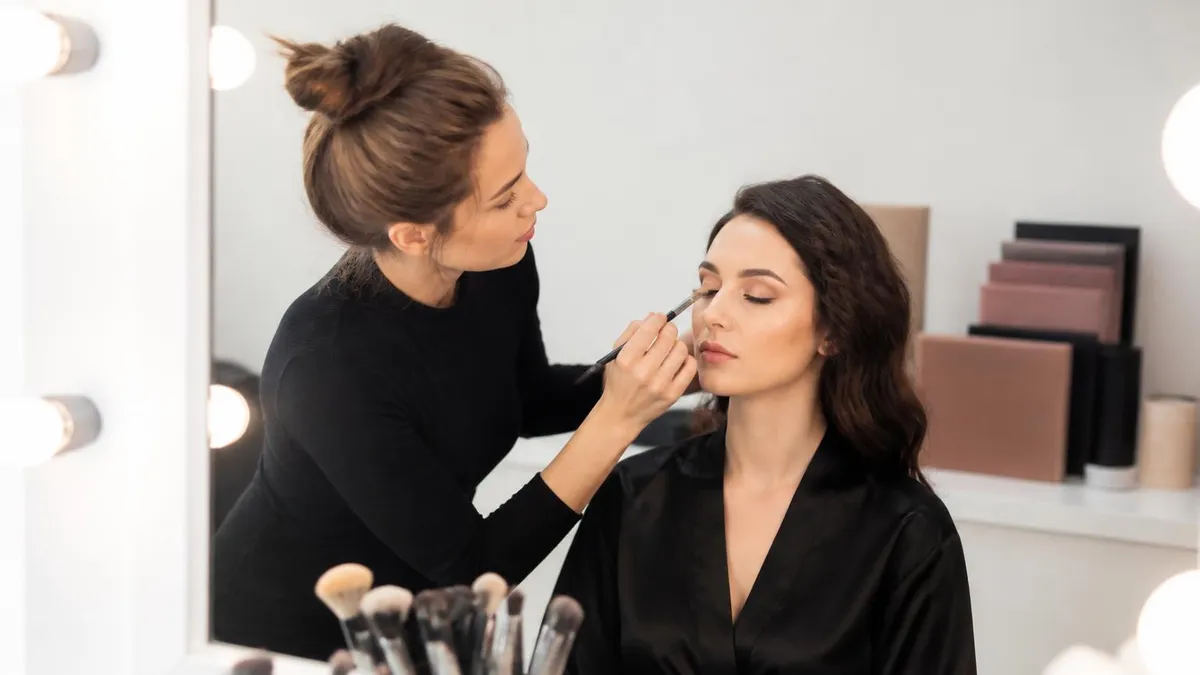
Celebrity Makeup Artist: How to Become One (2026 Career Guide)

Makeup Artist for Film: How to Break Into the Industry and Build a Career

Makeup Artist Names: Famous MUAs, Career Inspirations & How to Build Your Brand

Makeup Artist Portfolio: How to Build, Present, and Land Clients in 2026

MUA Makeup Brushes: The Complete Professional Guide to Every Brush You Need
About the Author
Licensed Cosmetologist & Beauty Licensing Exam Specialist
Paul Mitchell SchoolsMichelle Santos is a licensed cosmetologist with a Bachelor of Science in Esthetics and Salon Management from Paul Mitchell School. She has 16 years of salon industry experience and 8 years preparing students for state cosmetology board exams in theory, practical skills, and sanitation. She specializes in licensure preparation for cosmetologists, estheticians, and nail technicians.
Join the Discussion
Connect with other students preparing for this exam. Share tips, ask questions, and get advice from people who have been there.
View discussion (7 replies)