
Makeup Artist for Film: How to Break Into the Industry and Build a Career
Want to become a makeup artist for film? 🎯 Learn skills, salary, union rules, and how to find work near you in 2026 October.

If you have ever searched for a makeup artist near me with film industry experience, you already understand how specialized this career path truly is. Working as a makeup artist for film is one of the most technically demanding and creatively rewarding branches of the beauty industry. Unlike wedding or commercial work, film makeup requires a deep understanding of camera behavior, lighting conditions, continuity requirements, and the physical and emotional demands placed on actors during long production days that can stretch sixteen hours or more.
The film and television industry employs thousands of makeup artists across the United States, from major studio productions in Los Angeles and New York to independent films shot in smaller markets across the country. The Bureau of Labor Statistics classifies film makeup artists under the broader category of theatrical and performance makeup artists, a segment that has seen consistent demand growth as streaming platforms have dramatically increased content production volume over the past decade. More content means more productions, and more productions mean more opportunities for skilled makeup artists to find steady work.
Breaking into film makeup is rarely a straight line. Most successful film makeup artists spend years building foundational skills through cosmetology school or esthetics programs, then supplement that technical education with specialized training in prosthetics, airbrush application, period-accurate styling, and the unique challenges of working under high-definition cameras that reveal every flaw and every detail with unforgiving clarity. The gap between a general beauty practitioner and a film-ready makeup artist is significant, and bridging it requires intentional effort and targeted experience.
Many aspiring film makeup artists begin their careers working on student films, music videos, and low-budget independent productions where the pay is modest but the experience is invaluable. These early projects teach you how a set actually operates, how to collaborate with directors and cinematographers, how to read a call sheet, and how to manage your kit under time pressure. Every seasoned film makeup department head will tell you that their first years were spent hustling on small productions, building relationships, and refining their craft one job at a time.
Understanding union versus non-union work is also critical for anyone pursuing film makeup as a career. The International Alliance of Theatrical Stage Employees (IATSE) Local 706 is the primary union representing makeup artists working on major studio productions in Hollywood. Joining the union opens doors to higher pay scales, benefits, and access to the biggest productions, but it also requires meeting specific work hour thresholds and paying initiation fees. Many artists spend years working non-union before they accumulate enough credits to qualify for membership.
The digital revolution has also changed what film makeup artists need to know. High-definition and 4K cameras demand a level of precision that was simply not required in the era of standard-definition television or lower-resolution film stocks. Foundation must be matched with extraordinary accuracy. Contouring must be subtle enough to read naturally on screen without appearing theatrical.
Special effects makeup that once relied on physical distance to sell the illusion must now withstand extreme close-up scrutiny. These evolving technical standards mean that continuous education is not optional in this field — it is essential for staying competitive. Working across these specializations is what separates general makeup artist makeup artists from those who thrive specifically in film environments.
Whether you are just beginning to explore this career or you are actively working to level up from entry-level positions, this guide covers everything you need to know about building a sustainable career as a makeup artist for film — from foundational training and certification to union membership, salary expectations, kit essentials, and the networking strategies that actually result in getting hired on real productions.
Makeup Artist for Film: Key Industry Numbers

How to Become a Film Makeup Artist: Step-by-Step Path
Complete Foundational Education
Specialize in Film-Specific Techniques
Build Your Kit and Portfolio
Work Student Films and Indie Productions
Join Industry Networks and Assist Veterans
Pursue IATSE Union Membership
Salary is one of the most important practical considerations for anyone pursuing makeup artistry for film, and the numbers vary widely depending on union status, geography, experience level, and the type of production you are working on. According to the Bureau of Labor Statistics, the median annual wage for theatrical and performance makeup artists in the United States sits around $64,000, but this figure obscures enormous variation.
An entry-level makeup artist working non-union on indie productions in a mid-sized market might earn $200 to $400 per day, while a department head on a major studio feature in Los Angeles can command $2,500 or more per day under union minimums.
IATSE Local 706 publishes negotiated minimum rates for covered productions, and these minimums represent the floor, not the ceiling, for union makeup artists. As of the most recent contract cycle, key makeup artists on studio features earn daily minimums in the $600 to $900 range, with department heads earning considerably more. Overtime rules, meal penalties, and kit rental fees are all covered under the union agreement, which means a skilled union department head can earn six figures annually even without working every week of the year.
Geography plays a significant role in earning potential. Los Angeles and New York remain the dominant markets for film and television production, and makeup artists based in those cities have access to a volume and variety of work that is simply unavailable elsewhere. However, the expansion of film production incentive programs in states like Georgia, New Mexico, Louisiana, and Texas has created genuine opportunities for film makeup artists outside the traditional hubs. Atlanta in particular has become a major production center, with dozens of features and series shooting there simultaneously in any given season.
Non-union productions pay on a negotiated basis, and rates can vary dramatically. Low-budget independent films often pay day rates of $150 to $300 for entry-level artists, with key positions earning more. Music video work tends to pay $300 to $600 per day depending on the budget. Commercial makeup work can be quite lucrative, with some union commercial contracts paying over $1,000 per day for key artists, making commercial crossover a smart income diversification strategy for film-focused makeup artists who experience seasonal gaps in production work.
Freelance income from film makeup is inherently variable, which is why most working film makeup artists maintain multiple income streams. Teaching workshops, selling educational content, doing private makeup sessions for clients, and working events during production slow seasons all help smooth out the financial peaks and valleys of project-based work. Searching for makeup artists near me with film credentials often reveals that the most successful practitioners have built diverse service offerings rather than relying exclusively on film bookings.
Kit rental is an often-overlooked component of film makeup artist income. Most productions pay a daily or weekly kit rental fee on top of the artist's day rate, compensating them for the cost of maintaining and transporting their professional supplies. Kit rentals for key artists typically range from $50 to $150 per day, and for department heads with extensive prosthetics or special effects supplies, kit fees can be substantially higher. Over the course of a long feature shoot, kit rental income can add thousands of dollars to total project earnings.
Retirement planning is a critical issue for freelance film makeup artists because income is project-based rather than salaried. Union members benefit from pension and health trust contributions negotiated into the collective bargaining agreement, which provide a measure of financial security that non-union freelancers must create for themselves. Setting aside 25 to 30 percent of gross income for taxes, maintaining a dedicated emergency fund, and contributing to a SEP-IRA or Solo 401(k) are financial practices that separate sustainable long-term film makeup careers from short-term ones that burn out under financial pressure.
Film Makeup Artist Specializations
Beauty and character makeup forms the foundation of most film productions, covering everything from photogenic everyday looks for lead actors to aging, injury simulation, and subtle character transformations. Continuity is critical in this specialization — every application must be photographed and recorded so that the look can be replicated precisely across multiple shooting days, even when scenes are filmed out of chronological order.
Artists in this specialty must understand how different camera lenses and lighting setups affect the appearance of makeup on screen. A beauty look that reads perfectly under tungsten lighting may appear flat or overly warm under LED panels, requiring adjustment. Mastery of color theory, skin undertones, and the interaction between cosmetics and camera sensors is what separates a technically proficient film beauty artist from a truly excellent one.

Is a Film Makeup Artist Career Right for You?
- +Creative and varied work — no two productions or characters are ever identical
- +High earning potential for experienced union department heads and key artists
- +IATSE union membership provides health benefits, pension, and negotiated minimums
- +Opportunities to travel domestically and internationally on location shoots
- +Growing demand driven by streaming platform content expansion
- +Strong professional community with mentorship traditions and collaborative culture
- −Irregular income and project-based employment with unpredictable gaps
- −Long and physically demanding work days of 12 to 16 hours are standard
- −Significant upfront investment required for professional makeup kit and tools
- −Competitive industry where breaking in requires years of low-pay entry-level work
- −IATSE union entry barriers — work hour thresholds and initiation fees are substantial
- −Work-life balance challenges due to production schedules that include nights and weekends
Film Set Readiness: What Every MUA Needs to Know
- ✓Obtain your cosmetology or esthetics license before pursuing professional film work
- ✓Complete at least one specialized film or theatrical makeup training program
- ✓Build a kit that covers a full range of skin tones from lightest to deepest
- ✓Practice continuity documentation by photographing every look from multiple angles
- ✓Work on at least five student or indie film projects before pursuing paying union gigs
- ✓Learn to read a call sheet and understand standard film production department hierarchy
- ✓Research IATSE Local 706 membership requirements and begin tracking qualifying work hours
- ✓Build relationships with cinematographers and directors of photography in your market
- ✓Create a professional portfolio website featuring your best film work with production credits
- ✓Invest in a rolling makeup case or production-ready kit storage system for set efficiency
Continuity Is Your Most Valuable Film Set Skill
Film directors and script supervisors consistently rate continuity tracking as the most critical skill for onset makeup artists. A single continuity error — mismatched foundation tone, a changed hair position, a wound that appears on the wrong cheek — can halt production and require costly reshoots. Develop a rigorous system for photographing and documenting every look before each shooting day begins.
The International Alliance of Theatrical Stage Employees (IATSE) and specifically Local 706 — the Make-Up Artists and Hair Stylists Guild — is the cornerstone institution of professional film makeup in the United States. Understanding how union membership works, what it requires, and what it provides is essential knowledge for anyone who wants to build a long-term career in the Hollywood studio system or on major network and streaming productions that operate under union agreements.
IATSE Local 706 membership is not something you can simply apply for without qualifying experience. The union maintains an Eligible Roster system that allows makeup artists to accumulate work hours on covered productions before they qualify for full membership. Artists must typically accrue a set number of days worked under the union contract — requirements have varied over the years, so checking the current Local 706 guidelines directly is always advisable. Once you meet the threshold, you pay an initiation fee that can run several thousand dollars and become a dues-paying member with full access to union work.
The benefits of union membership are substantial and extend well beyond the negotiated day rate minimums. IATSE provides access to the Motion Picture Industry Pension and Health Plans, which offer medical, dental, vision, and life insurance coverage along with defined contribution retirement benefits. For freelance artists who would otherwise need to purchase individual health insurance on the open market at considerable expense, these benefits alone often justify the costs and effort of pursuing union membership. The pension plan, funded by employer contributions, provides retirement income for artists who accumulate sufficient vesting credits over their careers.
Union productions also operate under work rules that protect makeup artists from the most exploitative scheduling practices. The Minimum Guarantee establishes a floor for daily pay, overtime rules kick in after ten hours, and meal penalty provisions require production to pay additional compensation when mandatory meal breaks are not provided on schedule. These protections may seem administrative, but on a long feature shoot, they translate into thousands of dollars of additional compensation that non-union artists working on similar productions would never receive.
Non-union film work remains an important and legitimate pathway, particularly for artists building their initial credits and experience. Many successful union makeup artists spent years working non-union before they qualified for Local 706 membership, and non-union productions continue to provide valuable training ground and networking opportunities.
The key is to treat non-union work as a deliberate stepping stone rather than a permanent destination, keeping careful records of all work days that might qualify toward union membership thresholds. Lori Anne Allison, noted as a makeup artist and former spouse of Johnny Depp, built her early career through exactly this kind of gradual professional development before achieving industry recognition.
For makeup artists working outside the Hollywood studio market — in regional markets, on commercial productions, or in the independent film sector — union membership may be less immediately relevant but still worth understanding. IATSE has locals in multiple cities beyond Los Angeles, and understanding the union landscape in your specific market helps you make informed decisions about what productions to prioritize and how to position yourself as you build your career. Some regional productions are signatory to IATSE agreements even outside the major hubs, providing union experience opportunities in unexpected locations.
Staying current with union contract negotiations is also important for working film makeup artists. IATSE negotiates its contracts with the major studios on a periodic cycle, and the outcomes of those negotiations — covering everything from minimum rates to streaming residuals to artificial intelligence usage policies — directly affect the working conditions and compensation of every union member.
The 2023 negotiations, which came after a period of significant industry tension, resulted in important gains for below-the-line workers including makeup artists, reinforcing why union membership and active engagement in union governance matters for individual artists who care about the long-term sustainability of their profession.

IATSE Local 706 membership thresholds and initiation fees are subject to change with each contract cycle. Do not rely on secondhand information or outdated blog posts when planning your union qualification timeline. Visit the official Local 706 website or contact the union office directly to confirm current requirements before you begin tracking qualifying days toward membership eligibility.
Networking is the engine that actually drives hiring in the film makeup industry. Talent and technique matter enormously, but in a project-based business where most hiring decisions are made through personal recommendations and existing professional relationships, who you know is at least as important as what you know. Understanding this reality is not cynical — it is simply accurate, and the artists who accept it and invest in building genuine professional relationships are the ones who find consistent work throughout their careers.
The most effective networking for film makeup artists happens on set. Every production you work on is an opportunity to build relationships with directors, producers, cinematographers, production designers, and other department heads who will eventually be working on other projects and making hiring recommendations. Showing up prepared, working efficiently, maintaining a positive attitude under pressure, and producing excellent work consistently is the most powerful networking strategy available, because it gives everyone around you a direct experience of your professional value.
Industry events, workshops, and trade shows are also valuable networking venues. The Makeup Show, IMATS (International Makeup Artist Trade Show), and regional industry events bring together working professionals, educators, and vendors in environments designed for connection. Attending these events as a participant rather than just a consumer — signing up to assist with live demonstrations, volunteering at booths, or presenting your own workshop if you have specialized expertise — dramatically increases the networking value of attending versus simply browsing the show floor.
Online presence has become an increasingly important component of professional networking for film makeup artists. A well-maintained Instagram profile featuring behind-the-scenes production content, finished looks with appropriate production credits, and educational content that demonstrates your expertise can attract the attention of producers, directors, and fellow artists who are actively looking for talent. The key is consistency and authenticity — accounts that post regularly with genuine professional content build audiences and credibility over time in ways that sporadic posting never achieves.
Professional associations beyond IATSE also provide networking value. The Makeup Artists and Hair Stylists Guild maintains educational programming and events for members. State cosmetology associations often have industry networking components. Online communities in Facebook groups, Discord servers, and professional platforms connect working film makeup artists across geographic boundaries, making it possible to learn about production opportunities in markets you might not otherwise have visibility into. Exploring resources like makeup artist wedding makeup related career guides can also surface professional communities and educational networks worth joining.
Mentorship relationships are among the most valuable professional assets a film makeup artist can cultivate. Finding an established department head who is willing to take you on as an assistant, share their knowledge, and advocate for you with their professional contacts can accelerate a career by years.
The traditional model of working up through the ranks as a production assistant, then a second assistant makeup artist, then a first assistant, and eventually a key or department head still describes the career arc of most successful film makeup professionals. Respecting this hierarchy and approaching it with patience is not just protocol — it is genuinely the most reliable way to build the skills and relationships that sustain a long career.
Geographic flexibility also significantly expands networking opportunities and work availability for emerging film makeup artists. Being willing to relocate temporarily for production work, whether to Atlanta for a studio feature, New Mexico for a streaming series, or New Orleans for an independent film, exposes you to new professional networks in each location and builds a national reputation that eventually makes you attractive to productions anywhere. Many of today's most in-demand film department heads built their early reputations precisely by being willing to go wherever the work was rather than limiting themselves to a single market.
Building a kit for film work is one of the most significant financial investments a makeup artist will make, and approaching it strategically rather than impulsively can save thousands of dollars while ensuring you have exactly what productions need from you. A professional film makeup kit is not built overnight — it is assembled gradually over years of working, learning what you actually use versus what seemed essential in theory, and investing in quality products that perform consistently across diverse skin types and lighting conditions.
The foundation of any film makeup kit begins with a comprehensive range of base products covering the full spectrum of skin tones. Film productions cast diverse casts, and a makeup artist who cannot match every actor's skin tone accurately is a liability on set. Invest in foundations, concealers, and setting powders from professional lines that are known for their camera performance — brands like RCMA, Ben Nye, Kryolan, and Make Up For Ever have decades of film industry use that validates their reliability under high-definition cameras and challenging lighting conditions.
Special effects supplies deserve their own dedicated section of your kit even if you are not primarily specializing in SFX work. Productions regularly need basic wound simulation, bruising, minor prosthetic adhesion, and temporary tattoo application, and being able to handle these needs in-house without calling in a specialist makes you more valuable on lower-budget productions where department budgets are tight. A basic SFX supply including spirit gum, various adhesive removers, rigid collodion, gelatin, and a selection of bruise and wound colors covers most common requests without requiring you to maintain a full specialty SFX kit.
Organization and mobility are as important as the products themselves. Your kit needs to be organized so that you can find any item within seconds under pressure, because production sets do not pause to wait while you search for a product. Rolling trolley cases with removable train cases, clearly labeled compartments, and dedicated sections for different product categories allow you to work efficiently even in cramped or poorly lit conditions.
Many experienced film makeup artists carry a primary kit plus a secondary touch-up bag that contains only what they need for between-takes maintenance, keeping the full kit safely organized while maintaining quick access to the essentials.
Skincare products deserve particular attention in a film-focused kit. Actors spend hours under hot lighting equipment, often in physically demanding scenes that cause sweating, and their skin must remain camera-ready throughout. Investing in quality primers that extend foundation longevity, mattifying products that control shine under hot lights, and setting sprays that lock makeup in place under physical stress protects both the actor's comfort and your continuity documentation. Understanding ingredient-level skincare also helps you manage any skin sensitivities or allergies that actors may disclose, which is an ongoing concern for any professional working close to clients' skin for extended periods.
The investment in your kit is also an investment in your professional identity. When a production department head sees an organized, well-stocked, professionally maintained kit, it signals that you take your work seriously and that you are prepared for the demands of professional production work. Conversely, arriving with an incomplete or disorganized kit — or with consumer-grade products instead of professional formulas — sends an immediate message about your level of preparation and professional commitment.
Your kit is a physical representation of your professional standards, and maintaining it accordingly is part of what it means to work at the level that film productions require. For artists exploring drag artist makeup techniques, many of the same principles around kit organization and product performance apply across all high-production-value makeup disciplines.
Digital tools have also become part of the modern film makeup artist's kit. Continuity apps that allow you to annotate photographs, reference color swatches, and log daily look documentation are widely used on professional productions. Color-accurate reference monitors help you evaluate your work under different simulated camera profiles. Research into the camera systems being used on your specific production — whether ARRI, RED, Sony Venice, or another system — allows you to optimize your product choices for the specific color science of that camera, a level of technical sophistication that distinguishes truly top-tier film makeup artists from their peers.
MUA Questions and Answers
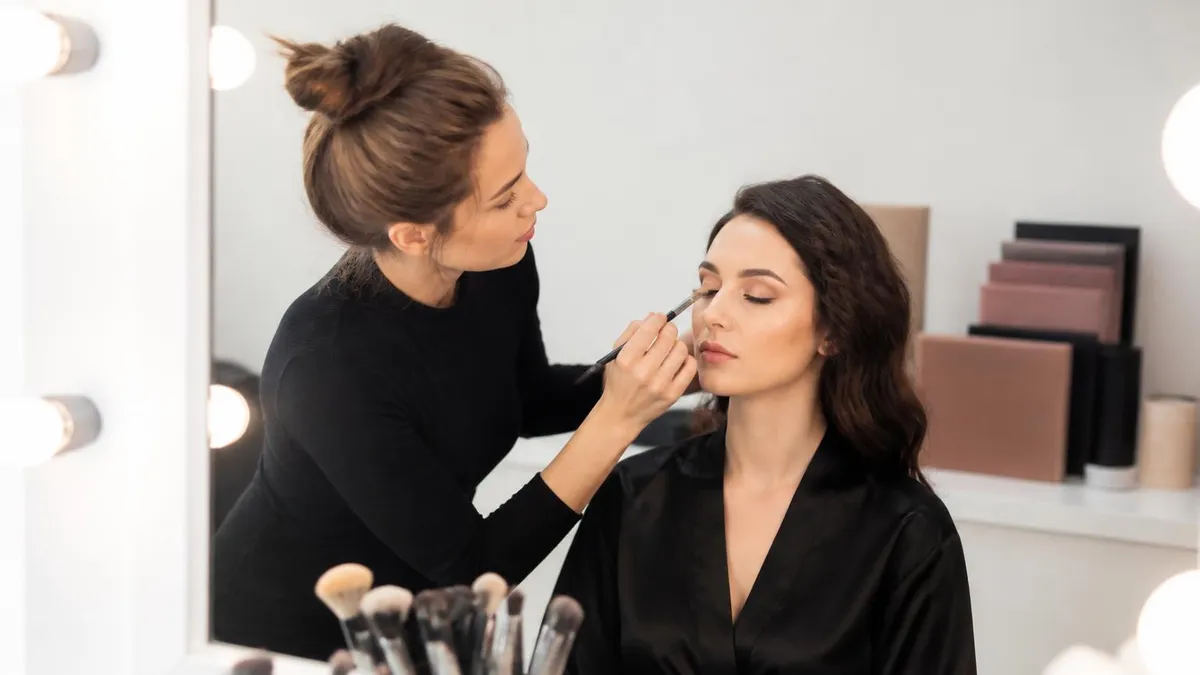
Celebrity Makeup Artist: How to Become One (2026 Career Guide)

Grinch Makeup Artist: How to Create the Perfect Holiday Character Look

Makeup Artist Long Island: Career Guide, Salaries & How to Get Started

Makeup Artist Names: Famous MUAs, Career Inspirations & How to Build Your Brand

Makeup Artist Portfolio: How to Build, Present, and Land Clients in 2026
About the Author
Licensed Cosmetologist & Beauty Licensing Exam Specialist
Paul Mitchell SchoolsMichelle Santos is a licensed cosmetologist with a Bachelor of Science in Esthetics and Salon Management from Paul Mitchell School. She has 16 years of salon industry experience and 8 years preparing students for state cosmetology board exams in theory, practical skills, and sanitation. She specializes in licensure preparation for cosmetologists, estheticians, and nail technicians.
Join the Discussion
Connect with other students preparing for this exam. Share tips, ask questions, and get advice from people who have been there.
View discussion (7 replies)