
BLS Instructor Jobs: What to Know Before Pursuing This Career Path
What is a BLS certification and how do you turn it into a teaching career? Explore BLS instructor jobs, pay, requirements, and pathways. ✅

If you've ever wondered what is a BLS certification and whether it could open the door to a teaching career, you're not alone. Basic Life Support credentials are among the most widely required in healthcare, and the demand for qualified instructors who can deliver that training continues to grow. BLS instructor jobs place you at the intersection of emergency preparedness and professional education, giving you the ability to shape how nurses, paramedics, and physicians respond in life-or-death moments every single day.
What does BLS stand for, exactly? Basic Life Support is a level of medical care used by trained providers — and sometimes bystanders — to sustain a patient experiencing cardiac arrest, respiratory failure, or airway obstruction until advanced care arrives. Understanding this foundation is essential for anyone considering an instructor role, because you won't just be teaching chest compressions; you'll be explaining the science, correcting technique, and ensuring each student can replicate skills under pressure without hesitation or error in a real emergency.
Many people also ask: is BLS the same as CPR? The short answer is no, though they overlap significantly. CPR (cardiopulmonary resuscitation) is one core skill within the broader BLS framework, which also includes bag-mask ventilation, AED use, team dynamics, and relief-of-choking protocols for adults, children, and infants. BLS instructors must master all of these components and be able to demonstrate them with precision, because their students — healthcare professionals — are held to a higher standard than community-level responders.
The pathway to teaching BLS begins with holding a current provider certification, typically through the American Heart Association or the American Red Cross. The AHA's Basic Life Support for Healthcare Providers course is the gold standard, and most hospital systems and training centers require instructor candidates to have completed the basic life support exam American Heart Association pathway before applying for instructor status. Familiarity with the AHA BLS exam format, question types, and skills-testing criteria gives you a significant edge when you apply for instructor roles.
If you're searching for how to become a bls instructor, the process generally involves completing an Instructor Essentials course, being monitored by an experienced instructor, and affiliating with a Training Center. Each of these steps has its own timeline, cost, and documentation requirement, and skipping any one of them can delay your ability to start teaching. We'll break down each stage in detail throughout this article so you can map out your personal roadmap with clarity and confidence.
BLS instructor jobs exist in hospitals, community colleges, fire departments, corporate wellness programs, and independent training centers. The role can be part-time or full-time, paid hourly or salaried, and can serve as a standalone income stream or a supplement to your primary clinical work. Understanding the full landscape — including compensation, scheduling expectations, and career advancement — will help you decide whether this path aligns with your professional goals and lifestyle preferences before you invest time and money into the process.
This guide covers everything from basic terminology like what does BLS stand for to practical questions about salary ranges, required credentials, employer expectations, and strategies for standing out in a competitive applicant pool. Whether you're a newly certified provider considering your first teaching role or an experienced clinician looking to diversify your career, the information ahead is designed to give you a complete, honest, and actionable picture of what BLS instructor jobs actually involve.
BLS Instructor Jobs by the Numbers

Core Requirements for BLS Instructor Jobs
You must hold an unexpired BLS provider certification from an AHA-authorized or Red Cross training center. Most employers require AHA specifically. Your card must remain valid throughout the instructor application and monitoring process, which can take 3–6 months.
The AHA Instructor Essentials course is a prerequisite for all instructor disciplines. It covers adult learning theory, course logistics, skills evaluation, and AHA policies. The online portion is self-paced; a required skills session with a Training Center Faculty member must be completed in person or via video.
AHA instructors must be affiliated with an authorized Training Center — a hospital, EMS agency, or independent organization holding an AHA Training Center agreement. You cannot issue BLS cards as an independent instructor without this affiliation. Your Training Center Coordinator manages your status and card inventory.
Before you receive your instructor card, a Training Center Faculty member or experienced instructor must observe you teaching a full BLS course. This monitoring verifies that you can manage classroom flow, perform all skills accurately, conduct proper evaluations, and handle student questions under real teaching conditions.
Instructors are held to a higher standard than providers. You must demonstrate flawless compression depth, rate, recoil, and ventilation technique — because students will replicate exactly what they see you do. Annual skills checks and regular self-practice are strongly recommended even between formal renewal cycles.
Getting certified to teach BLS is a multi-step process that takes most candidates between three and six months from start to finish, depending on how quickly they can complete prerequisites and schedule required sessions. The first and most important step is ensuring your BLS provider card is current and not expiring within the near future. If your card will expire before you complete the instructor pathway, you'll need to complete a basic life support renewal class first — attempting instructor certification with an expiring provider card is one of the most common and avoidable delays candidates face.
Once your provider card is secure, you'll register for the AHA Instructor Essentials course, which is available online through the AHA's training portal. This self-paced module covers instructional theory, how to structure a BLS class, how to administer the written exam, and the policies that govern how AHA courses must be conducted. Most candidates complete the online portion in four to six hours, though taking notes and revisiting sections on skills evaluation and testing protocol is highly recommended since these topics come up frequently during your monitoring session.
After the online module, you must schedule an Instructor Essentials skills session with a Training Center Faculty (TCF) member or a Training Center Coordinator (TCC). In this session, you'll demonstrate your own BLS skills, practice teaching segments of a BLS class, and receive formative feedback on your instructional style and clarity. Think of this as a rehearsal for your monitoring session — the more seriously you take the Instructor Essentials skills session, the better prepared you'll be to teach a real class with real students watching your every move and expecting confident, accurate instruction.
The monitoring session itself requires you to teach a complete BLS provider course while an experienced AHA instructor observes. This typically includes the adult CPR and AED skills segment, the infant CPR segment, and the relief-of-choking scenarios. You'll be evaluated on your ability to facilitate video-based content, manage the classroom, conduct hands-on practice in small groups, and administer the skills and written evaluations correctly. Receiving a successful monitoring evaluation is the gateway to receiving your official AHA BLS Instructor card through your affiliated Training Center.
Affiliating with a Training Center before or during your instructor training is essential. Some Training Centers actively recruit instructor candidates and will pair you with a mentor from the start. Others require you to reach out independently, submit an application, and demonstrate your provider competency before they'll sponsor your instructor pathway. Hospital-based Training Centers, large EMS agencies, and dedicated CPR training companies are your most reliable options for affiliation, and many of them list open instructor positions on their websites and job boards even while you're still in training.
If you're pursuing the bls instructor jobs pathway through the American Red Cross rather than the AHA, the process shares many similarities but differs in course structure and materials. The Red Cross red cross basic life support course uses its own instructor certification pathway, requires affiliation with a Red Cross chapter or authorized partner organization, and issues credentials on a two-year renewal cycle aligned with its own course update schedule. Knowing which organization dominates in your local job market is worth researching before you commit to one pathway or the other.
Once you hold your instructor card, maintaining it requires staying current with your own BLS provider certification, completing any course updates the AHA or Red Cross issues when guidelines change — which typically happens every five years following the major resuscitation science review cycles — and meeting your Training Center's minimum teaching frequency requirements. Many Training Centers require instructors to teach at least two courses per year to remain in active status. If you drop below that threshold, your TC may place your card on inactive status, which requires remediation steps before you can resume issuing certifications to your students.
Basic Life Support Exam: American Heart Association vs. Red Cross vs. Independent
The basic life support exam American Heart Association pathway is the most widely recognized route in the United States. The AHA BLS written exam consists of 25 multiple-choice questions, and students must score at least 84 percent to pass. The exam covers compression ratios, ventilation rates, AED operation, team dynamics, and recognition of cardiac arrest across adult, child, and infant patients. Instructors must administer this exam exactly as written, with no modifications to question order or wording.
The AHA BLS skills evaluation is equally important. Students must pass each skills station — adult CPR with AED, infant CPR, and relief of foreign-body airway obstruction — before receiving a provider card. As an instructor, your ability to objectively evaluate student performance using the AHA's standardized skills checklists is critical. Inconsistent or lenient evaluation is one of the most common reasons instructors receive negative quality reviews from their Training Centers during audits, so rigor and consistency matter enormously in every session you teach.

Pros and Cons of Pursuing BLS Instructor Jobs
- +Direct impact on patient outcomes by training healthcare providers in life-saving skills
- +Flexible scheduling — many BLS instructor roles offer evening, weekend, or part-time options
- +Supplemental income alongside clinical or administrative healthcare work
- +Career credential that strengthens your resume for education, management, and clinical roles
- +Access to a professional network of training centers, EMS agencies, and hospital educators
- +Relatively low barrier to entry compared to other healthcare education roles
- −Initial certification costs can range from $200 to $600 including course fees and materials
- −Training Center affiliation is required — independent teaching without a TC is not permitted under AHA rules
- −Physical demands of demonstrating CPR skills multiple times per class can cause fatigue and joint strain
- −Guideline updates every 5 years require course recertification and re-learning updated protocols
- −Part-time instructor pay is typically hourly and may not cover certification maintenance costs alone
- −Student failure and remediation situations require tactful communication skills not everyone finds natural
Pros and Cons at a Glance
| Pros | Cons |
|---|---|
| Direct impact on patient outcomes by training healthcare providers in life-saving skills | Training Center affiliation is required — independent teaching without a TC is not permitted under AHA rules |
| Flexible scheduling — many BLS instructor roles offer evening, weekend, or part-time options | Physical demands of demonstrating CPR skills multiple times per class can cause fatigue and joint strain |
| Supplemental income alongside clinical or administrative healthcare work | Part-time instructor pay is typically hourly and may not cover certification maintenance costs alone |
| Career credential that strengthens your resume for education, management, and clinical roles | Student failure and remediation situations require tactful communication skills not everyone finds natural |
BLS Instructor Job Application Checklist
- ✓Obtain and maintain a current AHA or Red Cross BLS provider card before starting the instructor pathway
- ✓Complete the AHA Instructor Essentials online module and save your completion certificate
- ✓Schedule and attend the Instructor Essentials skills session with a Training Center Faculty member
- ✓Identify and contact at least two local Training Centers about instructor affiliation opportunities
- ✓Complete a monitored BLS instructor course and receive written feedback from your evaluator
- ✓Submit all required documentation to your Training Center Coordinator for card issuance
- ✓Build a short teaching portfolio or CV highlighting any prior education, training, or clinical experience
- ✓Research salary ranges and class rates at local hospitals, EMS agencies, and CPR training companies
- ✓Sign your Training Center affiliation agreement and review minimum teaching frequency requirements
- ✓Schedule your first independent BLS class within 60 days of receiving your instructor card
Your Provider Exam Score Signals Your Readiness to Teach
Candidates who score 96–100% on the AHA BLS written exam are statistically more likely to pass their instructor monitoring sessions on the first attempt. If you scored below 90% as a provider, spend extra time with practice exams and the AHA BLS handbook before enrolling in the instructor pathway — gaps in your own knowledge will surface when students ask questions mid-class.
Salary and compensation for BLS instructor jobs vary considerably depending on employment structure, employer type, geographic location, and whether teaching is your primary role or a secondary function. Full-time instructors employed by large hospital systems or academic medical centers in major metropolitan areas can expect annual salaries in the range of $55,000 to $72,000, particularly when the role includes coordination duties, curriculum development, or management of other instructors. In smaller community hospitals or rural settings, the same role may pay $38,000 to $50,000 annually, reflecting both lower cost-of-living adjustments and smaller training volume.
Part-time and contract BLS instructors typically earn between $25 and $75 per hour, depending on the region and the type of training center. Independent CPR training companies that run high-volume classes often pay instructors a flat rate per class rather than hourly — typically $75 to $200 per four-hour BLS provider course — which can translate to a strong hourly equivalent if you teach multiple sessions per day. Some instructors structure their own independent businesses, charging clients directly after securing their Training Center affiliation, which can push earnings significantly higher for those willing to manage scheduling, marketing, and materials logistics.
The work environment also shapes the day-to-day experience considerably. Hospital-based BLS instructors typically teach in dedicated simulation labs or conference rooms, have access to high-quality manikins and AED trainers, and benefit from administrative support for scheduling, student registration, and card processing. Independent training center instructors may need to transport their own equipment, set up and break down classrooms, and handle all their own administrative tasks in addition to the teaching itself. Both environments have genuine appeal depending on whether you prefer institutional structure or entrepreneurial flexibility.
Corporate wellness and occupational health settings represent a growing market for BLS instructors. Companies in healthcare, construction, manufacturing, and education increasingly require employees to hold BLS or CPR certifications, and they prefer bringing a certified instructor on-site rather than sending staff to external courses. As a corporate BLS instructor, you may teach a mix of healthcare and non-healthcare employees, which requires adjusting your explanations and pacing to audiences who lack clinical backgrounds. This adaptability is a marketable skill that can command premium rates from corporate clients who value professionalism and flexibility.
EMS agencies and fire departments represent another significant employer category for BLS instructors. Many agencies require all field personnel to hold BLS instructor credentials, and designated training officers lead monthly skills maintenance sessions in addition to onboarding new recruits. EMS-based instructor roles often come with strong benefits, union protections, and opportunities for advancement into paramedic instructor or EMS education coordinator positions. If you're already working in emergency services, the BLS instructor credential is a logical first step toward building an education-focused career track within your department.
Community colleges and vocational schools that offer healthcare assistant, phlebotomy, medical billing, and nursing prerequisite programs frequently need BLS instructors on an adjunct or part-time basis. Teaching in an academic setting adds a different dimension to the role — you're not just certifying working clinicians, you're preparing students who may be encountering clinical skills education for the very first time. This requires exceptional patience, creativity in explanation, and an ability to build student confidence during skills practice that goes beyond what's needed when teaching experienced nurses in a hospital renewal class.
Geographic location remains one of the biggest determinants of both opportunity and compensation for BLS instructor jobs. Coastal metro areas like New York, Los Angeles, Chicago, and Boston have the highest density of training centers, hospitals, and corporate clients, and instructors there benefit from more competition for their skills. However, rural and suburban markets with fewer credentialed instructors sometimes offer better individual opportunity because there's less supply to meet existing demand. Assessing your local market before making career investments in the instructor pathway is a sound strategic move that can substantially affect your earning potential and workload from day one.

BLS instructor candidates who allow their provider certification to lapse during the instructor training process must complete a full provider recertification — not just a basic life support renewal class — before their instructor application can proceed. This can add six to eight weeks and $80–$120 in additional costs to your timeline. Schedule your renewal class at least four months before your current card expires if you're actively pursuing instructor status.
Advancing your career beyond an entry-level BLS instructor role requires strategic credential stacking, relationship building within your Training Center network, and a willingness to take on responsibilities that go beyond simply teaching provider classes. The most natural next step after BLS instructor certification is pursuing ACLS (Advanced Cardiovascular Life Support) or PALS (Pediatric Advanced Life Support) instructor status through the AHA, both of which require the same basic pathway — provider card, Instructor Essentials completion, and a monitored course — but open doors to teaching far more advanced clinical audiences including physicians, intensivists, and resuscitation team leaders.
Training Center Faculty (TCF) status is a significant milestone for instructors who want to mentor other instructors and contribute to the AHA's quality assurance process. TCF members can conduct Instructor Essentials skills sessions, perform monitoring evaluations for new instructor candidates, and serve as a resource for their affiliated Training Centers on policy, course updates, and equipment standards.
Achieving TCF status requires a strong teaching record, formal nomination by your Training Center Coordinator, completion of a TCF course, and approval by your AHA Regional Faculty. The process is selective, but TCF status can substantially increase your hourly rate and open doors to consulting and curriculum development work.
Curriculum development is another avenue for advancement that combines instructional expertise with project management and writing skills. Large hospital systems, EMS agencies, and healthcare education companies regularly need experienced BLS instructors to help design onboarding programs, update training materials following guideline changes, and develop simulation scenarios that go beyond the standard AHA course content. Building a portfolio of curriculum projects — even small internal projects within your current Training Center — demonstrates initiative and creativity that distinguish you from instructors who only teach standard courses.
For clinicians who hold BLS instructor status alongside an active clinical license, the combination creates unique opportunities in simulation education. High-fidelity simulation centers at academic medical centers and teaching hospitals increasingly hire educators who can bridge bedside clinical experience with structured instructional design. A registered nurse or respiratory therapist with BLS and ACLS instructor credentials and even modest simulation education experience is a compelling candidate for a full-time simulation educator role, which typically pays in the $60,000–$85,000 range and includes strong benefits in an academic or hospital employment setting.
National conferences hosted by organizations like the Society for Simulation in Healthcare (SSH), the National Association of EMS Educators (NAEMSE), and the American Heart Association's own instructor networks provide invaluable professional development and networking for BLS instructors at every career stage. Presenting a poster, co-teaching a workshop, or simply attending sessions on adult learning theory and resuscitation education research keeps your skills current and your professional network active. Many instructors report that conference connections led directly to new affiliate opportunities, freelance contracts, or full-time job offers within their specialty area.
Online platforms have also created new income streams for experienced BLS instructors willing to create digital content. YouTube channels, Udemy courses, and social media accounts focused on BLS education can build audiences of students preparing for the basic life support exam American Heart Association pathway, and while these channels cannot replace the hands-on skills component required for official certification, they serve a real educational need and can be monetized through advertising, sponsorships, or premium content subscriptions.
Several experienced instructors have built audiences of tens of thousands of subscribers by creating clear, accurate, and engaging explanations of topics like high-quality CPR technique, AED operation, and team dynamics during resuscitation.
Ultimately, the ceiling for a BLS instructor career is determined more by the individual's ambition and adaptability than by any external limitation on the field. Instructors who combine technical BLS expertise with strong communication skills, a commitment to continuous learning, and a proactive approach to building relationships within their professional community consistently find opportunities that others miss.
Whether your goal is a stable part-time teaching income, a full-time role as a hospital education specialist, or the independence of running your own CPR training company, the BLS instructor credential is a genuinely versatile asset that rewards those who invest in it seriously and strategically over the long arc of a healthcare career.
Practical preparation for BLS instructor jobs begins long before you submit your first application or register for the Instructor Essentials course. The single most valuable thing you can do in the months leading up to your instructor pathway is to maximize your own mastery of BLS content and skills — not just to a passing level, but to a demonstrably expert level that will hold up under student scrutiny and evaluator observation.
This means reviewing the AHA BLS handbook thoroughly, practicing skills on a manikin regularly, and taking timed practice exams to identify and address any knowledge gaps before they become liabilities in front of a class.
Observing experienced BLS instructors teach is a practice that's technically optional but practically invaluable. If your Training Center or a local hospital allows it, sit in on two or three BLS provider classes as an observer before your monitoring session.
Pay attention to how the instructor manages time, handles students who are struggling with skills, corrects technique without embarrassing participants, transitions between video segments and hands-on practice, and fields unexpected questions about clinical scenarios that aren't covered in the standard course content. Taking notes on what works well and what you'd do differently is the beginning of developing your own instructional style.
Building your teaching toolkit early gives you a significant advantage. Invest in a quality BLS instructor manual, a pocket reference card for skills checklists, and if possible, access to a manikin for home practice. The AHA's official course video is available through authorized Training Centers, but familiarizing yourself with the pacing and content of the video before your first class prevents the common beginner mistake of falling behind the video or losing control of student skill practice while the video advances. Knowing the video's rhythm allows you to cue students to pause, practice, and resume at exactly the right moments.
Time management during a BLS class is a skill that takes most new instructors several sessions to master. A standard AHA BLS provider course runs approximately four hours, and pacing the written exam, skills practice stations, and video segments to fit neatly within that window without rushing or running over requires deliberate planning. Creating a personal class timeline with estimated durations for each segment — and practicing it mentally before each class — helps prevent the most common first-time instructor problem: running out of time before all students have completed their skills evaluations and received their cards.
Student evaluation is the most challenging aspect of BLS instruction for many new instructors, particularly the requirement to fail students who do not meet the AHA's skills criteria. Compression depth less than 2 inches on an adult, inadequate recoil, excessive ventilation — each of these is a defined failure point that requires you to provide the student with remediation and re-evaluation before issuing a card.
Developing a calm, direct, and supportive communication style for these conversations is something you should actively work on before your first class. Students who receive honest, specific feedback in a respectful manner almost always respond well and successfully complete remediation.
Marketing yourself for BLS instructor positions requires a targeted approach that goes beyond generic job board searches. Introduce yourself directly to Training Center Coordinators at local hospitals, EMS agencies, and CPR training companies before you've even completed your instructor certification.
Many Teaching Centers have informal waiting lists of candidates they want to bring on, and making a memorable in-person or phone introduction while you're still completing your training can result in a job offer the week your instructor card arrives. LinkedIn is also a genuinely useful tool for connecting with Training Center Coordinators and other instructors in your area who may know of openings or be looking for co-instructors for large corporate events.
Finally, approach your first year as a BLS instructor as a learning phase rather than a performance phase. Every class you teach will reveal something you can refine — a clearer way to explain compression recoil, a better sequence for organizing the two-rescuer CPR station, a more efficient way to administer the written exam to a group of 14 students simultaneously.
Keeping a brief teaching journal after each class, noting what went well and what you'll adjust next time, accelerates your development dramatically. Instructors who reflect deliberately on their teaching practice after each session typically progress from competent to excellent within their first 10 to 15 classes, which is right around the point when referrals, repeat business, and better-paying opportunities start arriving organically.
BLS Questions and Answers
Free Basic Life Support MCQ Questions and Answers Guide
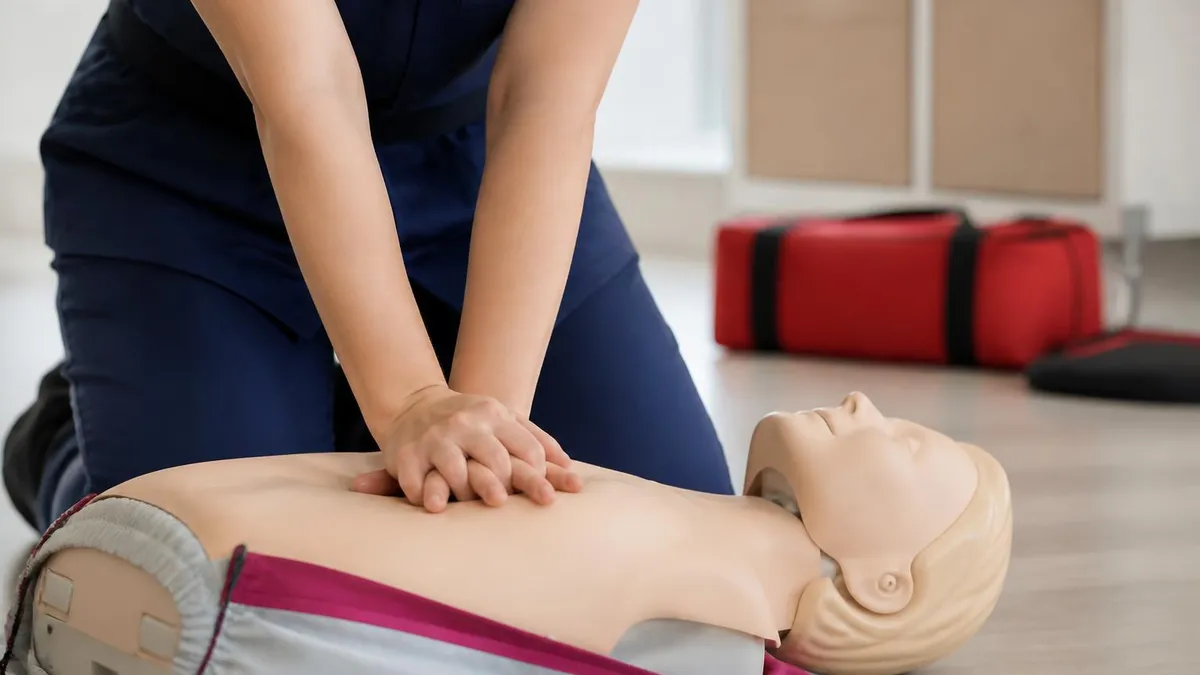
AHA BLS Certification: Course, Renewal, and Exam Guide
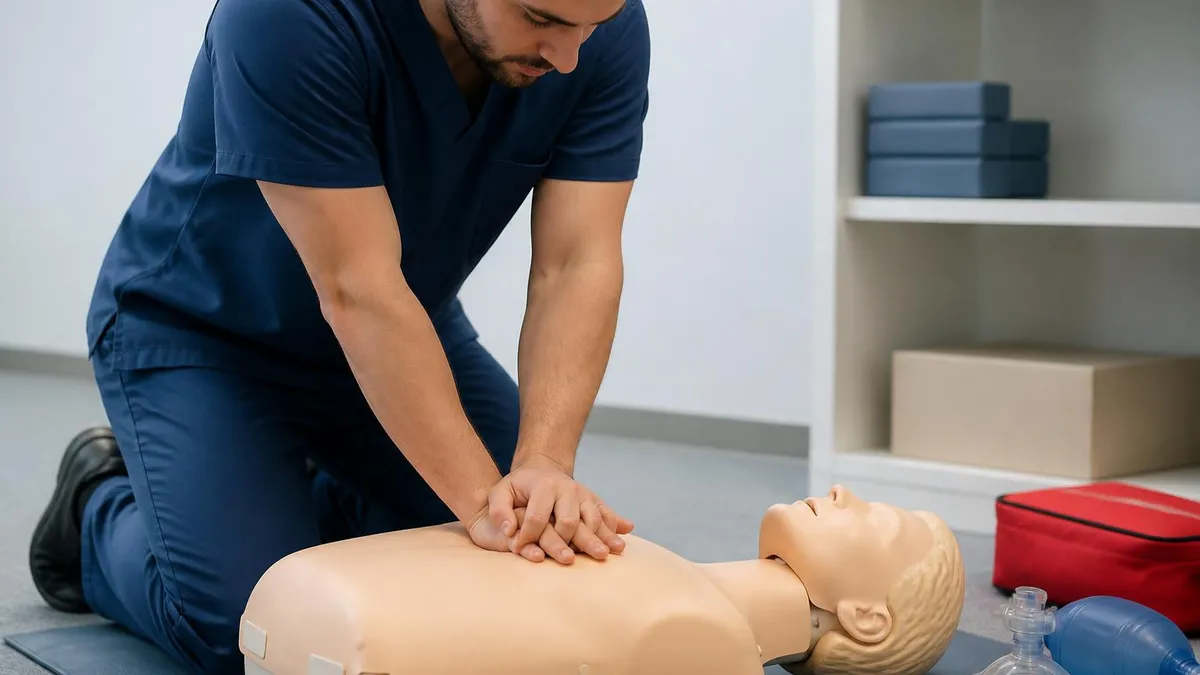
BLS Training: Course Content, Format & How to Get Certified

Online BLS: Complete Guide to Getting Your Basic Life Support Certification

BLS and ACLS Certification: Complete Training Guide for Healthcare Providers
About the Author

Registered Nurse & Healthcare Educator
Johns Hopkins University School of NursingDr. Sarah Mitchell is a board-certified registered nurse with over 15 years of clinical and academic experience. She completed her PhD in Nursing Science at Johns Hopkins University and has taught NCLEX preparation and clinical skills courses for nursing students across the United States. Her research focuses on evidence-based exam preparation strategies for healthcare certification candidates.
Join the Discussion
Connect with other students preparing for this exam. Share tips, ask questions, and get advice from people who have been there.
View discussion (8 replies)