
Makeup Artist Makeup: Pro Kits, Brands & Setup (2026 September)
Makeup artist makeup explained: 🟢 what pros really use, kit essentials by skin tone, top brands, hygiene rules, and how to build a working kit on a budget.
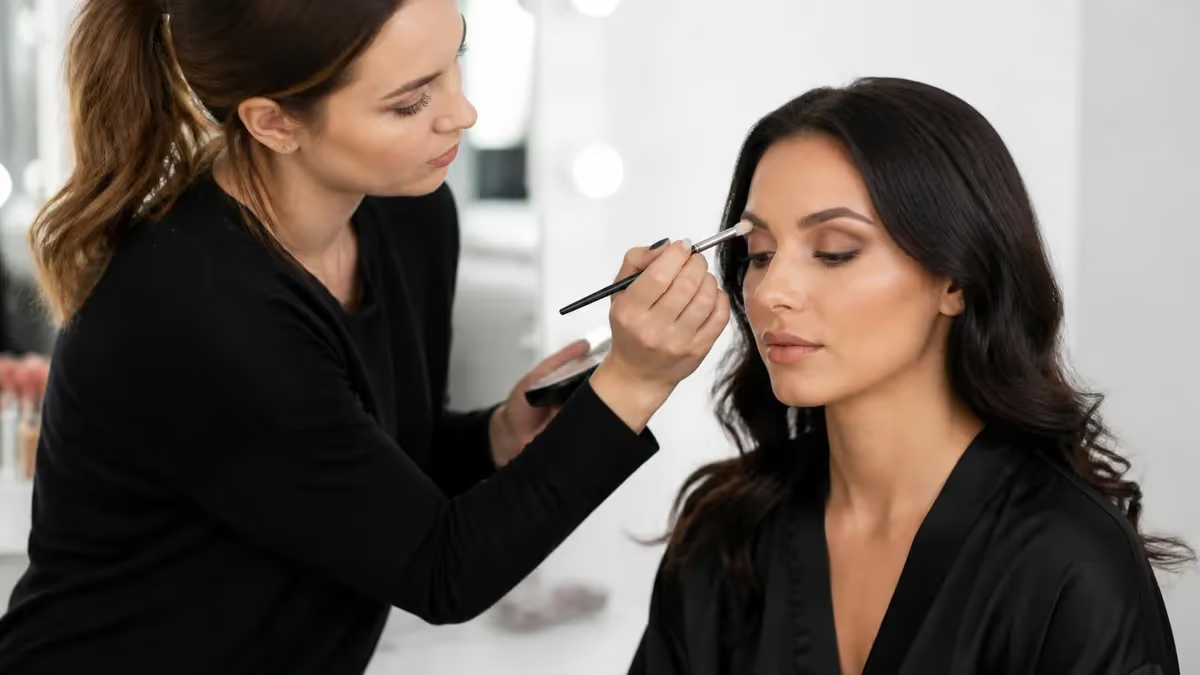
Type "makeup artist makeup" into Google and you get a confusing mix of celebrity kit videos, retail brand ads, and influencer hauls. None of it tells you what a working makeup artist actually carries to a shoot. The truth is simpler — and much more useful. Pro kits are built around pigment load, longevity, and hygiene, not packaging. The brand on the tube matters far less than how well a product photographs, how easy it is to sanitize, and whether you can use it on every skin tone that walks through the door.
This guide breaks down what really lives inside a working makeup artist's kit in 2026 — the categories, the brand-name benchmarks, the sizes that survive freelance life, and the things you can skip entirely. It is written for new artists building a first kit, mid-career pros refreshing a tired one, and anyone studying for the MUA certification who needs to know what "professional product" actually means.
MUA Kit at a Glance

What "Makeup Artist Makeup" Really Means
The phrase has two overlapping meanings. Consumers use it to describe products marketed as "pro" — usually anything sold at MAC, NARS, or Make Up For Ever. Working artists use it more strictly: products that hold up under HD cameras, theatre lights, and sweat; come in sizes large enough to service multiple clients; and can be sanitized between uses. A drugstore mascara can be makeup artist makeup if it photographs well and you decant it. A $90 luxury eye palette can fail the test if the pigment lifts under flash.
The single most useful filter is does it work on every skin tone. A foundation line with 12 shades that all skew warm is a consumer line. A foundation line with 40+ shades across undertones — like Fenty, MAC Studio Fix, or Make Up For Ever HD Skin — is a kit line. This same logic applies to concealers, powders, lip products, and even brow tints. If you cannot service a Fitzpatrick I and a Fitzpatrick VI from the same drawer, that drawer is not a pro kit yet.
The Categories Every Working Kit Needs
Forget brand worship for a minute. A working kit is organized by function, not by logo. There are nine categories you cannot skip: skin prep, complexion, concealing and correcting, setting, eyes, brows, lashes, cheeks, and lips. Inside each you need a range — multiple shades, multiple finishes, and at least one waterproof option. Specialty categories (special effects, airbrush, body, bridal hair) layer on top once the foundation is solid. Most artists overspend on eyes and underbuild on complexion. Flip that ratio.
Kit Categories Ranked by Spend
Two foundation systems, 20-30 shades, full undertone range. Liquids for daily, cream or stick for editorial. Where most of the kit budget should land.
25-40 brushes, doubled where possible. Sponges single-use. Tweezers precision-grade. Curved scissors for lash work.
Translucent, tinted, and deep-tone powders plus a matte locking spray and a hydrating finishing spray.
Neutral, warm, smoky palettes plus 15-20 singles for custom builds. Editorial brights as separate add-on.
Twin brow pencils, gel, pomade. Strip and individual lashes. Cream and powder cheeks. 20+ lipsticks decanted.
70% iso, brush cleaner, disposable wands, metal palettes, stainless spatula, nitrile gloves.
Complexion: Where Most of Your Budget Goes
Complexion is the single biggest line item in a working kit, and the one most worth investing in. You need at least two foundation systems — one liquid for everyday wear and one cream or stick for editorial and longwear. Stock 20 to 30 shades total to cover Fitzpatrick I through VI, and split them across warm, neutral, and cool undertones inside each depth. Most artists carry Make Up For Ever HD Skin or MAC Studio Fix Fluid for liquid, and Cinema Secrets or Kett for cream and stick.
Concealer is a separate decision. A liquid concealer like NARS Radiant Creamy covers tired skin and matches foundation. A high-pigment cream concealer like Ben Nye Mediapro hides tattoos, beard shadow, and post-acne marks. You want both. Add color correctors in peach, salmon, and orange for darker skin tones, and lavender or yellow for paler tones — the correcting step is the difference between okay coverage and invisible coverage.
Setting Products: Why Finish Beats Brand
Powder is where artists waste the most money. You do not need a $60 luxury setting powder. You need a translucent finishing powder that does not flashback under cameras, a tinted powder for medium depths, and a deep-tone powder that does not turn ashy. Laura Mercier Translucent is the industry default. Make Up For Ever Ultra HD Loose Powder is the HD-safe alternative. Coty Airspun is the budget pick that works surprisingly well on warm undertones. Sample each on every skin depth before committing.
Setting spray is more important than most beginners realize. A working artist carries at least two: a matte locking spray for oily skin and long days, and a hydrating finishing spray that revives without disrupting makeup. Misted from 12 inches at the right pressure, setting spray melts powder into skin and removes the cakey look that gives away amateur work. Skindinavia Bridal, Urban Decay All Nighter, MAC Fix+, and Charlotte Tilbury Airbrush Flawless are the most-decanted bottles in the industry.
Brand Strengths by Category
Make Up For Ever HD Skin, MAC Studio Fix Fluid, Fenty Pro Filt'r, Cinema Secrets cream, and Kett liquid lead working kits. Depth range and undertone variety are why these dominate — every line offers 40+ shades across warm, neutral, and cool. Beyond shade, the binder system matters: silicone-heavy foundations grip oily skin; water-based foundations photograph cleaner under flash; cream sticks layer for editorial and SFX work.

Eyes, Brows, and Lashes
Eyeshadow is the only category where consumers and pros use almost identical products. Anastasia Beverly Hills, Natasha Denona, Pat McGrath, Viseart, and Make Up For Ever Artist palettes all live in working kits. The trick is not which palette you buy — it is owning at least one neutral palette, one warm palette, one smoky palette, and a bright color story for editorial work. Singles matter more than palettes here. Build a custom palette of 15 to 20 singles in finishes you actually use: matte mid-tones, satin transition shades, and three or four metallic toppers.
Brows are quick wins for a kit. Stock two brow pencils (taupe and dark brown), one tinted brow gel, one clear gel, and one brow pomade. Benefit Precisely My Brow, Anastasia Brow Wiz, and Hourglass Arch Brow are the household names. For lashes, carry strip lashes from Ardell, Lilly Lash, and Velour, plus individual flares. The single most useful lash skill is cutting and stacking two strip lashes to fit different eye shapes.
Cheeks and Lips
Cheeks are simple if you respect undertone. Carry three cream blushes (peach, rose, berry), three powder blushes in the same family, one cream bronzer, one powder bronzer, and one highlighter in champagne plus one in copper. NARS, MAC, Make Up For Ever, and Patrick Ta all make kit-friendly shades. The biggest mistake on cheeks is going too matte on deeper skin tones — pearl and satin finishes read more natural than dry mattes on melanin-rich skin.
Lips need range. Stock at least 20 lipsticks split across nudes, pinks, mauves, reds, berries, and browns, plus a clear gloss, a tinted balm, and three lip liners that span undertones. Decant from the tube into a metal palette so you can sanitize with 70 percent isopropyl alcohol between clients. This single workflow change — palette decanting — separates artists who pass health inspections from those who do not.
Top Brands Working MUAs Actually Use
There is no single "best brand" — only categories where a brand outperforms. Make Up For Ever dominates HD complexion and pigments. MAC owns the lip and powder game. NARS is the cheek and concealer benchmark. Fenty Beauty redefined shade ranges and made every other brand expand. Pat McGrath sets the editorial eye standard. Ben Nye, Kryolan, and RCMA cover theatrical, film, and SFX. Cinema Secrets and Kett serve TV and HD. Anastasia rules brows. Charlotte Tilbury wins for bridal and skin finish.
Notice what is missing from that list — almost every "luxury" brand that markets to consumers. Working kits are utilitarian. A $150 highlighter looks identical to a $24 one on camera. Where you should spend is foundation depth, longwear pigments, and tools. Where you should save is packaging, gimmick palettes, and anything labelled "limited edition collector." Examiners on the MUA exam want to see you can match product to job, not memorize price tags.
Every state board and licensing body treats double-dipping, unsanitized brushes, and shared powder puffs as immediate disqualifiers on exam day and during salon inspections. Decant everything into metal palettes. Use disposable wands for mascara and lip products. Sanitize brushes with 70% isopropyl or a brush cleaner like Cinema Secrets between every client. Replace sponges per face.
Hygiene: The Rule That Saves Your Career
Every state board and licensing body treats sanitation as non-negotiable. You cannot double-dip a lip wand. You cannot use a powder puff on more than one client. You cannot apply mascara from the tube. The pro workflow is simple: decant every cream and liquid into stainless palettes, use disposable wands and spatulas, sanitize brushes between clients with 70 percent isopropyl alcohol or a proprietary brush cleaner like Cinema Secrets, and replace any sponge that touches skin.
Build sanitation into your kit setup. Stock 70 percent iso in a spray bottle, brush cleaner in a dunk jar, disposable mascara wands by the hundred, disposable lip wands, metal palettes, and a stainless steel spatula. Add nitrile gloves for SFX and color work. The first thing a senior artist or production supervisor checks on a new freelancer is whether they are double-dipping. Get this wrong once and you do not get hired again.
Tools: Brushes, Sponges, and Lashes
A working brush set runs 25 to 40 brushes minimum. You need at least two duplicates of every face brush — one in use, one drying — and triple-stocked eye brushes because you switch shades constantly. Real Techniques, Morphe, Sigma, and Sephora Pro are kit-friendly. Wayne Goss, Hakuhodo, Rephr, and Suqqu are investment-grade. Sponges (Beautyblender or dupes) are single-use per face for hygiene, so buy in bulk. Tweezers should be precision-grade (Tweezerman Pro), and you want at least three pairs of curved scissors for lash work.
First-Kit Build Checklist
- ✓Two foundation systems covering Fitzpatrick I through VI (liquid + cream/stick)
- ✓Liquid concealer plus high-pigment cream concealer in matching depths
- ✓Color correctors in peach, salmon, orange, lavender, and yellow
- ✓Translucent, tinted, and deep-tone setting powders
- ✓Matte locking spray and hydrating finishing spray
- ✓25-40 brushes with face-brush duplicates and triple-stocked eye brushes
- ✓Two brow pencils (taupe, dark brown), clear and tinted gel, pomade
- ✓Strip lashes from Ardell, Lilly Lash, Velour, plus individual flares
- ✓Cream and powder blush trio, cream and powder bronzer, two highlighters
- ✓20+ lipsticks decanted into a sanitizable metal palette plus three lip liners
- ✓Sanitation kit: 70% isopropyl spray, brush cleaner, disposable wands, metal palettes, spatula
Specialty Adds: Airbrush, SFX, Bridal
Once your core kit is solid, layer specialty categories. Airbrush adds reach and longevity on bridal and film — Temptu, Dinair, and Iwata are the leading systems, paired with silicone-based airbrush makeup like Temptu S/B. SFX adds bald caps, gelatin, blood, and prosthetics from Ben Nye, Skin Illustrator, and PPI. Bridal adds long-wear primers, anti-shine, blotting papers, and a structured emergency kit with safety pins, sewing kit, and tissues. Each specialty unlocks higher day rates and recurring contracts.
Building a Kit on a Budget
You do not need $10,000 to start. A solid working kit can be built for $1,500 to $2,500 by buying in this order: foundation range first (40 percent of budget), brushes second (20 percent), powder and setting (10 percent), eyes (10 percent), brows and lashes (5 percent), cheeks (5 percent), lips (5 percent), and sanitation supplies (5 percent). Add specialty categories from your first 10 paid jobs. Buy from MUA discount programs — Make Up For Ever, MAC, NARS, and Smashbox all run pro discount cards once you provide proof of certification or industry work.
Pro discount cards typically save 30 to 40 percent. That alone funds your second wave of restocking. Apply once you have your MUA certification or a portfolio of paid work — many require both. Combine with bulk wholesale on disposables (Frends Beauty, Camera Ready Cosmetics, Alcone) and you cut roughly 25 percent off your annual restock budget.

Investing in a Full Pro Kit vs. Buying as You Book
- +Pro discount cards unlock 30-40% off retail after certification
- +Full kit lets you accept any job that comes in without scrambling
- +Depth range protects you from losing clients to better-prepared MUAs
- +Bulk sanitation and disposable supplies cost far less per unit
- +One audit per quarter keeps your foundation range honest
- −Upfront $1,500 to $2,500 is steep for new artists
- −Trends shift; some product will sit unused and expire
- −Specialty categories (SFX, airbrush) add another $1K+ each
- −Expiry dates on cream products mean unused stock is dead money
- −Kit weight grows fast; you will need a real case and possibly a cart
Pros and Cons at a Glance
| Pros | Cons |
|---|---|
| Full kit lets you accept any job that comes in without scrambling | Trends shift; some product will sit unused and expire |
| Depth range protects you from losing clients to better-prepared MUAs | Expiry dates on cream products mean unused stock is dead money |
| Bulk sanitation and disposable supplies cost far less per unit | Kit weight grows fast; you will need a real case and possibly a cart |
Skin Prep: The Step Beginners Skip
Skin prep is what makes professional makeup look professional. Before a drop of foundation goes on, every working artist runs the same micro-routine: gentle cleanse if the client is fresh, hydrating mist, eye cream, a moisturizer matched to skin type, lip balm, and a primer chosen for the lighting conditions of the job. The whole sequence takes four minutes and adds two hours to longevity. Skip it and your foundation grabs on dry patches, slides off oily zones, and breaks down by the time the cake gets cut.
Stock multiple primers, not one. A gripping silicone primer (Smashbox Photo Finish, Make Up For Ever Step 1) holds foundation on combination skin. A hydrating gel primer (Charlotte Tilbury Magic Cream, Embryolisse Lait-Crème) revives mature or dehydrated faces. A pore-blurring primer (Hourglass Veil Mineral) photographs beautifully under direct flash. And a true mattifying primer (Tatcha Silk Canvas) controls oil through humid eight-hour bookings. One primer cannot do all four jobs — accept that and your complexion work will jump.
Skin Prep in 4 Minutes
Cleanse if needed
Hydrate
Eye + Lip
Prime
Foundation
Color Theory: The Skill Brands Cannot Sell You
The best kit in the world fails without color theory in the artist's head. Undertone matters more than depth. A medium-deep client with cool undertones photographs orange in a warm foundation no matter how perfect the depth match is. Train your eye against the wrist test, the jaw test, and the neutral-paper test until shade-matching becomes automatic. Practice on family and friends until you can pick a foundation shade in under 30 seconds in any lighting. That speed is what separates a $250 artist from a $450 artist.
Color correcting is the other lever. Peach corrects blue-purple discoloration on light to medium skin. Orange corrects deeper blue tones on medium to deep skin. Lavender neutralizes yellow sallowness. Green cancels redness. Yellow brightens dullness. None of this requires a $90 corrector palette — a $14 LA Girl Pro corrector range does the same physics. Spend the saved money on a wider foundation depth range and your kit gets stronger.
What to Skip Entirely
Every kit is heavier than it needs to be. Skip glitter palettes you use twice a year — buy single jars. Skip duplicate neutral eye palettes from five brands. Skip every lip gloss in a non-sanitizable tube. Skip rolling brush belts (they jam under set load). Skip drugstore mascaras unless you decant. Skip face mists labeled "hydrating spray" if you already carry MAC Fix+. Skip any product without a clear ingredient list — you cannot risk allergy reactions on a client. Lighter kit, more jobs.
Putting It All Together
The working makeup artist kit is not a shopping list — it is a system. Build categories before brands, depth before luxury, sanitation before everything, and tools that outlast you. Test every product on at least three skin tones before adding to your active kit. Audit twice a year, dump anything you did not touch, and never let your foundation range fall behind your client base. That last point is the difference between an artist who books and an artist who does not: the kit always matches the room you are working in.
Ready to test what you know? Work through the full product knowledge set before sitting any state board exam. Questions are pulled from the same bank examiners use and reinforce the kit logic above with real testing scenarios.
MUA Questions and Answers
About the Author
Licensed Cosmetologist & Beauty Licensing Exam Specialist
Paul Mitchell SchoolsMichelle Santos is a licensed cosmetologist with a Bachelor of Science in Esthetics and Salon Management from Paul Mitchell School. She has 16 years of salon industry experience and 8 years preparing students for state cosmetology board exams in theory, practical skills, and sanitation. She specializes in licensure preparation for cosmetologists, estheticians, and nail technicians.
Join the Discussion
Connect with other students preparing for this exam. Share tips, ask questions, and get advice from people who have been there.
View discussion (7 replies)