
Makeup Artist Celebrity: How Stars Get Their Red-Carpet Looks 2026 September
Discover how a makeup artist celebrity career works — 🧠 skills, pay, how stars like Lori Anne Allison built iconic careers in Hollywood.

The world of makeup artist celebrity work sits at the intersection of artistry, stamina, and relentless professional networking. Every red-carpet moment, every magazine cover, and every blockbuster close-up you admire begins hours before the camera rolls, inside a makeup trailer with a skilled makeup artist and a client who trusts them completely. Understanding how this elite tier of the beauty industry operates — and how working professionals actually break into it — is essential knowledge for anyone serious about pursuing a career in makeup artistry at the highest level.
Celebrity makeup artists are not simply talented with a brush. They are logistics experts who coordinate with publicists, stylists, and directors on a moment's notice. A single Oscar-night call time might require a makeup artist to arrive at a client's home at 3 a.m., pack a kit worth thousands of dollars, and deliver a flawless look under pressure that will be photographed by hundreds of cameras worldwide. That level of preparation is the product of years of deliberate skill-building and industry relationship cultivation, not overnight luck.
The demand for skilled makeup artists continues to expand well beyond Hollywood. The rise of streaming platforms, influencer culture, and digital content creation has created entirely new categories of celebrity client — YouTubers, podcasters, and social media personalities who need professional looks for live appearances, press tours, and brand partnerships. This diversification means that aspiring makeup artists today have more pathways into high-profile work than any previous generation.
Drag artist makeup has also pushed the boundaries of what celebrity beauty looks like, with performers like RuPaul's Drag Race contestants bringing sculptural, hyper-theatrical techniques into mainstream editorial and advertising work. The cross-pollination between drag artistry and traditional celebrity makeup has raised technical expectations across the board, rewarding artists who invest deeply in color theory, prosthetics, and creative experimentation alongside classical beauty training.
Bridal and special-occasion makeup represents another high-visibility category where artists build celebrity-adjacent reputations. Makeup artist wedding makeup for high-profile clients — athletes, executives, reality television personalities — can serve as a launchpad for editorial and entertainment bookings, particularly when the resulting photographs circulate widely on social media and wedding industry platforms. Many of today's working celebrity MUAs started their careers doing weekend bridal work while building a portfolio and a client list.
Geography plays a meaningful role in career trajectory. Working in Los Angeles, New York, Atlanta, or London puts artists in physical proximity to the production studios, talent agencies, and casting offices where celebrity clients originate. That said, the growth of remote production hubs and the prevalence of location shoots means that a well-connected artist working out of Miami, Chicago, or Nashville can still build a nationally recognized client roster with the right combination of skill and strategic visibility.
This guide walks through every dimension of the makeup artist celebrity career path — from the foundational training and certification that establish credibility, to the business practices and portfolio strategies that attract high-profile clients. Whether you are just beginning your journey or you are already a working MUA looking to elevate your clientele, the sections ahead will give you concrete, actionable insight into how the most successful celebrity makeup artists built their careers and what it realistically takes to follow their path.
Celebrity Makeup Artistry by the Numbers

Celebrity MUA Career Path: Step by Step
Complete Formal Makeup Artistry Training
Build a Diverse Portfolio
Assist an Established Celebrity MUA
Join a Union or Agency Roster
Cultivate Your Celebrity Client List
Build Your Personal Brand & Social Presence
Understanding the financial landscape of celebrity makeup artistry requires distinguishing between several overlapping markets, each with its own rate structures and negotiation dynamics. Film and television productions covered under union agreements — primarily IATSE Local 706 in Los Angeles and Local 798 in New York — have standardized minimum rates that provide a reliable floor for working professionals. Day rates for union productions typically start around $500 per day for background and secondary work and can exceed $2,000 per day for department head positions on major studio productions. Overtime, kit rental fees, and residuals can substantially increase total compensation.
Editorial makeup for magazines and advertising campaigns operates on a different fee structure. A beauty editorial for a major fashion publication might pay anywhere from $500 to $2,500 per day depending on usage rights, the prestige of the publication, and whether the booking comes through an agency. High-end advertising campaigns — fragrance, luxury skincare, fashion — often represent the most lucrative single-day rates in the business, with top-tier artists earning $5,000 to $15,000 for a single shoot day when usage rights are broad and the brand budget is substantial.
Personal celebrity clients — artists retained directly by actors, musicians, or public figures for ongoing representation — are compensated through a combination of daily rates and monthly retainers. A makeup artist retained by a major recording artist for a touring cycle might earn a flat weekly salary of $3,000 to $7,000 plus travel and accommodations, providing financial stability that day-rate work cannot. These retainer arrangements are highly coveted precisely because they smooth out the feast-or-famine income volatility that characterizes most freelance makeup artistry careers.
The makeup artist makeup artists who achieve the highest earnings in the celebrity space typically have diversified income streams that include direct client work, product collaborations, masterclass revenue, and brand ambassador fees. A mid-career celebrity MUA might earn $80,000 from direct client bookings, $40,000 from a cosmetics brand collaboration, $20,000 from online courses, and $15,000 from press junket day rates — totaling well over $150,000 annually without ever working for a single studio production. This diversification is increasingly the norm rather than the exception among financially successful makeup artists.
Geographic considerations affect earning potential significantly. Los Angeles and New York command the highest rates in the domestic market, reflecting the concentration of entertainment production, fashion industry headquarters, and high-net-worth personal clients in those markets. Artists based in secondary markets — Atlanta, Miami, Chicago, Dallas — typically earn 20 to 40 percent less for comparable work, though the lower cost of living in those cities can partially offset the rate differential. The growth of Atlanta as a major film production hub has substantially narrowed the gap between that market and Los Angeles over the past decade.
Bridal makeup artistry represents a meaningful revenue stream for celebrity-adjacent artists, particularly those who serve high-profile clients from the entertainment, sports, and business worlds. Makeup artist wedding makeup for celebrity or high-profile brides can command $800 to $3,000 for the wedding day alone, plus additional fees for engagement shoots, rehearsal dinners, and on-site touch-up services. A robust bridal business can generate $60,000 to $100,000 annually for an artist working 40 to 50 weekends per year in a major metropolitan market, providing a financial foundation while celebrity bookings are being cultivated.
Negotiation skills are as important as technical ability when it comes to maximizing earnings at the celebrity level. Many artists significantly undercharge early in their careers, driven by fear of losing bookings to lower-priced competitors. Understanding your market value — researching union minimums, asking trusted colleagues about their rates, and tracking what agencies charge for comparable talent — allows you to price yourself appropriately and avoid the trap of building a career on rates that can never support the business expenses a professional practice requires.
Makeup Artists Near Me: Where Celebrity MUAs Work
Film and television remain the most prestigious and consistently lucrative categories for celebrity makeup artists. Working on a major studio production means collaborating daily with the biggest names in entertainment — actors, directors, and cinematographers whose exacting standards push every artist to maintain peak technical performance. Department heads on union productions oversee teams of assistants, manage budgets exceeding $100,000, and are responsible for character continuity across months of shooting.
The path into film and television typically runs through IATSE union membership, which requires accumulating a minimum number of verified work hours on qualifying productions. Many artists begin by working non-union student films, independent productions, and short-form commercial content to build their hours and on-set experience before pursuing union qualification. Once on a union roster, consistent work and strong department head recommendations drive advancement toward more prominent productions and lead artist positions.

Pros and Cons of a Celebrity Makeup Artist Career
- +Access to high-profile, creatively stimulating projects that showcase your best work
- +Above-average earning potential with top artists earning $150,000–$300,000+ annually
- +Opportunities for product collaborations, brand partnerships, and passive income streams
- +Continuous professional development driven by diverse client needs and trend exposure
- +Global travel and on-location work with productions shooting in exciting destinations
- +Significant personal and professional satisfaction from transformative, visible creative work
- −Highly competitive field with limited positions at the celebrity tier for working artists
- −Irregular income and feast-or-famine scheduling common in freelance celebrity work
- −Demanding hours including pre-dawn call times, weekend events, and international travel
- −High kit investment costs — a professional celebrity kit can exceed $10,000–$20,000
- −Intense pressure to perform flawlessly under time constraints in high-stakes situations
- −Career advancement depends heavily on relationships and referrals over pure technical skill
Building Your Celebrity Kit and Portfolio Checklist
- ✓Invest in professional-grade foundations covering at least 40 shades across all undertones
- ✓Build a comprehensive color correction palette for diverse skin tones and complexions
- ✓Stock multiple setting spray formulas optimized for different skin types and shoot conditions
- ✓Maintain a hygienic brush set with backups for every essential application tool
- ✓Document every significant look with high-resolution photographs for your portfolio
- ✓Organize your kit for rapid setup — every minute on a celebrity's time is valuable
- ✓Include specialty products for drag-inspired editorial, bridal, and theatrical applications
- ✓Build a digital portfolio website with distinct sections for editorial, celebrity, and bridal work
- ✓Maintain an active Instagram account posting portfolio images at least three times per week
- ✓Obtain product knowledge certification from at least two major professional cosmetics brands
- ✓Keep sanitation supplies visible and use them consistently — professionalism builds trust fast
- ✓Update your kit seasonally to reflect current hero products and trending techniques
The Kit Is Your Business Card
Celebrity clients and their teams judge a makeup artist's professionalism before a single brush touches skin. An organized, well-stocked, impeccably clean kit signals that you operate at a professional level. Industry insiders consistently report that the condition of a makeup artist's kit is one of the first things celebrity clients' stylists and managers notice — and one of the fastest ways to lose a repeat booking if it falls short of expectations.
The history of celebrity makeup artistry is populated with iconic figures whose work shaped both Hollywood aesthetics and the broader beauty industry. Understanding who these artists are, how they built their careers, and what distinguished their work provides invaluable context for anyone seeking to follow a similar path. These artists did not simply develop superior technical skills — they cultivated distinctive creative identities that made their work immediately recognizable and made their presence on set an asset beyond pure execution.
Lori Anne Allison is among the most referenced names when discussing how personal relationships and professional resilience intersect in the celebrity makeup world. Originally known as a makeup artist who worked extensively in the entertainment industry, she built a career that demonstrated the importance of sustained skill development and professional reinvention over time. Her trajectory illustrates that longevity in celebrity makeup artistry requires continuous adaptation to changing beauty standards, client needs, and industry structures. Learning more about lori anne allison makeup artist career highlights just how much persistence matters in this field.
Pat McGrath stands as perhaps the most influential makeup artist in the modern era, having shaped runway beauty at hundreds of fashion shows per year while simultaneously building a cosmetics brand valued at over one billion dollars. McGrath's career began in editorial, working with photographers and designers in London before expanding to global fashion weeks and eventually a direct-to-consumer product line that commands fierce consumer loyalty. Her story demonstrates that elite technical skill, when combined with a distinctive creative vision and sharp business instincts, can generate generational wealth and industry-defining influence.
Charlotte Tilbury similarly translated a decades-long career doing celebrity and editorial makeup into a cosmetics empire. Tilbury's genius was making her celebrity roster — which includes Penélope Cruz, Kate Moss, and Amal Clooney — central to her brand narrative, creating a feedback loop in which her product line lent credibility to her artistry and her artistry drove product desirability. This alignment between personal brand and commercial product is increasingly the template that ambitious celebrity makeup artists are following in the current market.
Mario Dedivanovic, known professionally as Mario, built his celebrity career through a long-running collaboration with Kim Kardashian that made him the most recognized makeup artist on social media globally. His Masterclass courses have generated millions in revenue, and his product collaborations with KKW Beauty and his own Makeup By Mario line represent the kind of career diversification that insulates top artists from the volatility of freelance booking income. Mario's career arc is a masterclass in leveraging a single high-profile client relationship into a multi-platform professional empire.
Sir John, whose full name is Sir John Barnett, has served as Beyoncé's personal makeup artist for over a decade while simultaneously building a profile in editorial, advertising, and brand collaboration. His work on Beyoncé's Renaissance visual album and world tour represents some of the most photographed and analyzed celebrity makeup of the past several years. Sir John's emphasis on celebrating darker skin tones and challenging traditional beauty hierarchies has made him not only a technically respected artist but also a culturally significant voice in conversations about representation in the beauty industry.
The common thread across all of these careers is a willingness to invest deeply — in skills, in relationships, in personal branding, and eventually in entrepreneurial ventures — well beyond what the immediate demands of any single booking required. Celebrity makeup artistry at the highest level rewards artists who think of their career as a long-term creative and business project, not a sequence of individual jobs. The technical foundation must be impeccable, but the architecture of a lasting celebrity career is built on vision, relationships, and relentless professional development over years and decades.

IATSE Local 706 (Los Angeles) and Local 798 (New York) require documented work hours on qualifying productions before membership is granted — you cannot simply apply as a newcomer. Working non-union productions to accumulate experience is standard practice, but be aware that repeatedly crossing union picket lines or working on productions actively boycotted by the union can permanently damage your ability to join and work on major studio projects later in your career.
Breaking into the celebrity makeup industry requires a strategy that combines technical excellence, intentional networking, and a clear-eyed understanding of how the industry actually works versus how it appears from the outside. Most aspiring celebrity MUAs dramatically underestimate the importance of the assisting phase — the period of working directly under established artists on professional productions that provides the experiential foundation no classroom can replicate. Rushing past this phase to pursue solo bookings prematurely is one of the most common and costly mistakes in the industry.
Agency representation is a significant accelerant for artists at the right stage of their career. Makeup artist agencies — Streeters, Art Department, Exposure NY, The Wall Group — manage rosters of editorial and celebrity artists and handle the booking, negotiation, and client relationship management that would otherwise consume enormous amounts of an artist's time.
Getting on a reputable agency's roster typically requires a strong portfolio, some existing industry credits, and a recommendation from another artist already on the roster. Agencies are selective, but the representation they provide can dramatically change the caliber and volume of bookings available to a working artist.
Social media has fundamentally altered how celebrity clients discover new makeup artists. Ten years ago, an aspiring celebrity MUA's visibility was almost entirely dependent on their physical proximity to the industry and their personal network of contacts. Today, a technically gifted artist in any city can build a national or global following through consistent, high-quality content that demonstrates both their skill and their personality. Celebrity clients and their teams actively scout Instagram and TikTok for artists whose aesthetic aligns with their vision, meaning that social media is no longer optional — it is a primary business development channel.
Understanding how the artist makeup artist ecosystem works in your specific target market is critical for strategic career planning. In Los Angeles, the entertainment production industry dominates, making union membership and on-set experience paramount. In New York, editorial and advertising work is more central, and relationships with photographers and creative directors matter enormously. In smaller markets, versatility across bridal, commercial, and event work may be more valuable than deep specialization in any single category. Matching your strategy to your market significantly improves your efficiency in building toward celebrity-level bookings.
Continuing education is non-negotiable for artists who want to stay relevant as the celebrity makeup landscape evolves. The growth of high-definition and now 8K video production has created new technical demands around product selection and application precision that artists trained a decade ago may not have fully incorporated into their practice. Similarly, the expanding diversity of celebrity clients — in terms of skin tone, age, gender expression, and cultural background — requires artists to develop genuine fluency across a much wider range of beauty aesthetics than a purely Eurocentric classical training would provide.
Professional associations including the International Make-Up Association (IMA) and the Makeup Artists and Hair Stylists Guild (IATSE) provide resources for professional development, industry networking, and certification that can support career advancement at multiple stages. Attending industry events, trade shows like IMATS, and brand-sponsored masterclasses keeps working artists current with product innovation and connected to the professional community where opportunities circulate. Even established celebrity MUAs prioritize continuing education precisely because the artists who stay at the top of the field are those who never stop learning.
Financial planning is an underappreciated element of building a sustainable celebrity makeup career. The income volatility inherent in freelance work — combined with the significant upfront investment in kit, training, and marketing — means that artists who do not manage their finances carefully can find themselves cash-poor despite impressive gross revenues.
Setting aside a consistent percentage of earnings for taxes, maintaining an emergency fund to cover slow booking periods, and investing kit dollars strategically rather than impulsively are habits that separate artists who build lasting careers from those who burn out or leave the industry within a few years of starting.
Practical preparation for a career in celebrity makeup artistry begins long before you ever step into a celebrity client's dressing room. The habits, systems, and professional standards you develop early in your career become the foundation on which everything else is built — and the artists who reach the top consistently report that the disciplines that served them as assistants and emerging artists are the same ones they rely on decades later as established professionals. There are no shortcuts to lasting excellence in this industry, but there are smart, efficient ways to build the skills and relationships that matter most.
Kit organization and hygiene are non-negotiable starting points. Professional celebrity clients — and more importantly, their managers and stylists — make rapid judgments about an artist's professionalism based on the condition of their kit. A disorganized, unsanitary, or poorly stocked kit communicates carelessness that no amount of technical skill can fully overcome. Invest in quality cases, organize products by category and frequency of use, sanitize brushes between every client, and replace worn or expired products before they embarrass you in front of a high-stakes client.
Time management on set is a skill that must be deliberately developed. Celebrity clients often have multiple competing demands on their time — interviews, wardrobe changes, publicist check-ins — and a makeup artist who cannot consistently deliver a polished result within an agreed-upon time window will not be rebooked regardless of how beautiful the finished look is. Practice working efficiently under simulated time pressure during portfolio shoots, track how long each application phase actually takes, and develop reliable routines that allow you to work both quickly and precisely without sacrificing quality.
Communication skills are as important as any technical ability in the celebrity makeup world. The ability to listen carefully to a client's vision, ask clarifying questions that surface unstated preferences, and explain your technique choices in accessible language builds the trust that sustains long-term professional relationships. Many celebrity clients have worked with dozens of makeup artists before finding one they trust implicitly — that trust is built through consistent, respectful, attentive communication as much as through beautiful results.
Building a signature technique or aesthetic can significantly accelerate career development. While versatility is essential, artists who are known for doing something exceptionally well — whether that is a particular skin-finish approach, an expertise in mature skin, a mastery of editorial color, or a reputation for flawless bridal makeup — are easier for industry contacts to recommend because the recommendation comes with a specific, credible claim. Identify your genuine strengths, develop them to a level that is unambiguously elite, and make those strengths visible in your portfolio and your social media presence.
Mentorship relationships provide advantages that no formal training program can fully replicate. Seek out established artists whose careers you admire and whose professional values align with yours, and look for organic opportunities to assist, observe, or collaborate with them. The knowledge transfer that happens in these relationships — about industry dynamics, client management, rate negotiation, and the unwritten rules of professional conduct — compresses your learning curve in ways that would otherwise take years of isolated trial and error to replicate. Give generously in these relationships, and the returns will be substantial.
Finally, approach your career with a long-term perspective that values professional reputation above any single booking. The celebrity makeup industry is smaller and more interconnected than it appears from the outside — word travels quickly about artists who are difficult to work with, unreliable, or indiscreet. Conversely, a reputation for professionalism, generosity, and consistent excellence compounds over time into the kind of industry standing that generates referrals, unsolicited bookings, and opportunities that never appear in any job listing. Build that reputation deliberately, protect it vigilantly, and it will serve as the most powerful career asset you possess.
MUA Questions and Answers
Hair & Makeup Artist: Dual-Discipline Career Guide

How to Become a Makeup Artist: Certification, Licensing & Career Path
Celebrity Makeup Artist: How to Become One (2026 Career Guide)
Makeup Artist Training: How to Pick a Program in 2026
What Is a MUA? The Complete Guide to Makeup Artists, Their Duties, and Career Path
About the Author
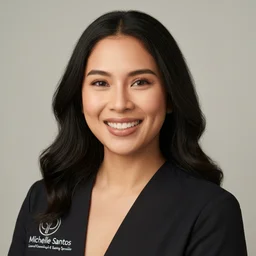
Licensed Cosmetologist & Beauty Licensing Exam Specialist
Paul Mitchell SchoolsMichelle Santos is a licensed cosmetologist with a Bachelor of Science in Esthetics and Salon Management from Paul Mitchell School. She has 16 years of salon industry experience and 8 years preparing students for state cosmetology board exams in theory, practical skills, and sanitation. She specializes in licensure preparation for cosmetologists, estheticians, and nail technicians.
Join the Discussion
Connect with other students preparing for this exam. Share tips, ask questions, and get advice from people who have been there.
View discussion (7 replies)