
Wedding Makeup Artist 2026 October: Pay, Bookings, and How to Become One
Wedding makeup artist career guide: average pay, booking rates, training, building a bridal portfolio, and how to scale a wedding makeup business. 📝
Wedding Makeup Artist 2026: Pay, Bookings, and How to Become One
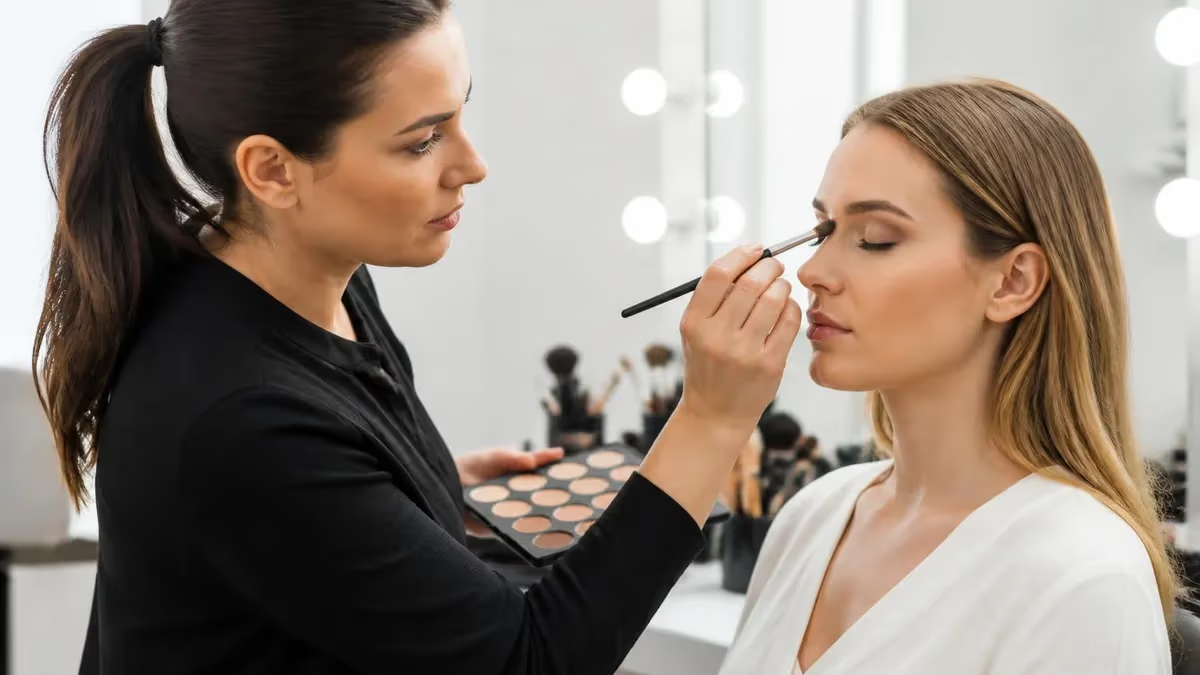
The wedding makeup artist business is the highest-margin segment of the entire makeup industry. A typical wedding booking averages $400-$1,200 for the bride alone, with bridal-party services adding $150-$300 per person. A weekend with two weddings can produce more revenue than an entire month of retail counter work at a department store. The catch is that the wedding industry is also one of the hardest to break into, requiring portfolio depth, vendor relationships, and a tolerance for the emotional intensity of working on the most photographed day of someone's life.
This guide covers the full picture for anyone considering wedding makeup as a primary career or side business. What bridal makeup actually pays in different markets, how the booking calendar works, what training and licensing are required, how to build a portfolio that gets you booked, and how to scale from solo artist to multi-artist team. It also covers the practical realities: the early-morning trial schedules, the tear-resistant product choices, the family dynamics on the wedding morning, and the way booking deposits insulate you from cancellations.
If you are not yet a certified MUA, our How to Become a Makeup Artist guide walks through licensing and education. For the broader career path, see Makeup Artist Career Guide. The MUA Certification practice test hub has free practice questions for state licensing exams.
The Short Answer
A wedding makeup artist specializes in bridal and bridal-party makeup, typically charging $400-$1,200 for the bride alone with additional $150-$300 per bridal-party member. Most wedding MUAs operate as freelance or small-team businesses, booking 60-150 weddings per year and earning $50,000-$150,000+. The role requires state cosmetology or esthetician licensure in many states, a strong bridal-focused portfolio, vendor relationships with wedding planners and photographers, and excellent customer-service skills. Peak season runs May through October with the highest demand on Saturdays.
Wedding Makeup Artist Pay Snapshot

How Much Does a Wedding Makeup Artist Actually Make?
The answer depends on how aggressively the artist books, what region they serve, and whether they run a solo practice or a team-based business. A solo wedding MUA in a mid-size city booking 60-80 weddings per year typically grosses $50,000-$90,000 with the bride averaging $500-$700 and bridal-party add-ons of $400-$1,000 per event. After product costs, travel, taxes, and unpaid time, take-home settles in the $35,000-$60,000 range.
Top earners run team-based operations. A senior MUA who books 100+ weddings, hires assistant artists for bridal-party services, and charges premium rates regularly grosses $150,000-$300,000. The team model multiplies the booking capacity because the lead artist can do the bride while assistants handle the bridesmaids, mothers, and other party members at the same wedding. A single wedding morning can generate $2,000-$5,000 in revenue with a team of 2-3 artists.
The very top of the market is the celebrity and editorial bridal niche. MUAs who have built reputations through magazine features, Instagram followings, or work with high-profile brides command $2,000-$5,000 per bridal booking and select only 30-50 weddings per year. Some travel internationally for destination weddings and charge premium rates that include flights, hotels, and per-diem expenses.
Wedding MUA Pricing Tiers
- Bridal rate: $200-$400
- Experience: 0-2 years
- Annual revenue: $25K-$50K
- Bridal rate: $500-$800
- Experience: 3-7 years
- Annual revenue: $60K-$110K
- Bridal rate: $700-$1,500
- Experience: 5+ years
- Annual revenue: $120K-$300K+
- Bridal rate: $2,000-$5,000+
- Experience: 10+ years
- Annual revenue: $200K+ select bookings
How Wedding Makeup Bookings Actually Work
The booking process for wedding makeup is more structured than most makeup services because the date is fixed and the stakes are high. Brides cannot reschedule a wedding the way they can reschedule a regular makeup appointment, which means the MUA's booking and contract process has to be airtight.
The Inquiry Stage
Most wedding makeup leads come through one of three channels: referrals from wedding planners and photographers, social media inquiries (Instagram and Pinterest dominate), and wedding-marketplace listings like The Knot and WeddingWire. The bride contacts the MUA roughly 6-18 months before the wedding date, typically before all other vendors are booked.
The Trial Run
Almost every bride wants a makeup trial 1-3 months before the wedding. The trial is a 1.5-2 hour appointment where the MUA tests one or two looks with the bride, refines based on feedback, and documents the final look with photos. Trial pricing typically runs $100-$300 separately from the wedding-day booking and is either credited toward the booking or charged in addition.
The Contract
A professional MUA never books a wedding without a signed contract and a deposit. The standard contract covers: wedding date and venue, makeup services included (bride, bridal party count, mother, etc.), trial date if applicable, total fee, payment schedule, cancellation and rescheduling terms, travel fees, and timing. The deposit is typically 25-50 percent of the total fee and is non-refundable past a defined date.
The Wedding Day
The MUA arrives 4-6 hours before ceremony time to begin makeup on the bridal party. The bride goes last so her look stays freshest for photos. Most artists offer a touch-up service before the ceremony and sometimes during the reception. The wedding-day timeline is dictated by the photographer's schedule, which the MUA must coordinate with the wedding planner.
Wedding Makeup Pricing by Region
Bride average: $700-$1,500
Bridesmaid: $200-$350
Notes: The NYC metro is the most expensive wedding market in the U.S. and supports the highest MUA rates. Manhattan and Brooklyn brides regularly book makeup at $1,000-$2,000. Outer-borough and suburban NJ rates run lower but still premium. Travel fees are standard for venues outside the city.

How to Become a Wedding Makeup Artist
The path from interested beginner to booked wedding MUA typically takes 1-3 years of focused effort. The license is the easy part. The portfolio, the relationships, and the business systems are what determine success.
Step 1: Get the Required License
State requirements vary significantly. About 35 states require either a cosmetology license or an esthetician license to perform makeup on paying clients. The license requires 300-1,600 hours of training depending on state and credential. Several states (including California, Florida, and Texas) offer a makeup-only license with reduced training hours, usually 300-600. Some states have no licensing requirement for makeup-only work, but a license is still recommended for insurance and professional credibility.
Step 2: Build a Bridal Portfolio
The portfolio is what gets you booked. Most new wedding MUAs offer free or heavily discounted bridal trials to friends, family, and acquaintances during the first 6-12 months in business. Each session produces 2-4 polished portfolio images. Pair the makeup work with a photographer who is also building a portfolio for a barter arrangement that benefits both. Aim for 25-40 high-quality bridal images before you start charging full rates.
Step 3: Get Listed on Wedding Marketplaces
The Knot, WeddingWire, and Zola are the dominant U.S. wedding marketplaces. A free or basic profile generates inquiries from the start. Paid premium listings cost $200-$800 per month and substantially increase inquiry volume, but only invest in paid listings once you have enough portfolio depth to convert inquiries.
Step 4: Build Vendor Relationships
The single highest-converting lead source for wedding MUAs is referrals from wedding planners and photographers. These vendors meet brides earlier in the planning process and recommend a slate of trusted MUAs. Building relationships with 5-15 wedding planners and 10-20 photographers in your market is more valuable than any paid advertising. Bring coffee, do free makeup for vendor headshots, attend bridal expos as a team.
Step 5: Develop Your Pricing and Contract
Pricing should reflect your portfolio quality, market position, and time commitment. Most MUAs increase rates 10-25 percent annually as their portfolio and reputation grow. The contract should be reviewed by a lawyer in your state to ensure deposits, cancellations, and travel fees are enforceable.
Year-by-Year Wedding MUA Trajectory
Year 1
Year 2
Year 3
Year 5
Year 7+
What Wedding Makeup Trials Look Like
The trial is the most important pre-wedding meeting between the MUA and the bride. Done well, it locks in the booking, refines the look, and reduces stress on wedding day. Done poorly, it produces a bride who second-guesses every product choice in the weeks leading up to the wedding.
Pre-Trial Communication
Ask the bride to send photos of her wedding dress, hairstyle inspiration, and 5-10 makeup looks she likes. Inspiration images set expectations and help the MUA preview which products and techniques will work. Ask about skin concerns, allergies, contact lenses, and lash-extension status, all of which affect product choice.
The Trial Session
The trial typically runs 1.5-2 hours. The MUA tests one or two looks based on the inspiration images, photographs the final look in natural light, and adjusts based on the bride's feedback. The session should end with both parties clear on the wedding-day look: foundation shade, lip color, eye shadow tones, lash style, and any specific notes the bride wants to remember.
Post-Trial Notes
The MUA should document every product used in detail: foundation brand and shade, eye-shadow palette and specific shadows, lip color and finish, mascara brand. These notes get pulled out on wedding day to recreate the look exactly. Most MUAs maintain a digital file for each bride with the trial photos, product list, and any special notes.
Common Trial Pitfalls
The most common mistake is doing the trial too close to the wedding. A trial scheduled the week before the wedding leaves no time for adjustments. The sweet spot is 4-8 weeks before. The second common mistake is not photographing the final trial look. Memory is unreliable, and the bride may forget what she loved by wedding day. Photos lock in the agreement.
Solo Wedding MUA vs Team-Based Studio
- +Solo: Lower overhead — No assistant artist payments. All revenue flows to you minus product and travel.
- +Solo: Personal client relationships — The bride knows exactly who is doing her makeup. Strong referral generation.
- +Team: Higher revenue ceiling — One wedding morning generates $2K-$5K with multiple artists serving the bridal party simultaneously.
- +Team: Scale and capacity — Book 100+ weddings per year without burning out. Maintain quality through trained assistants.
- −Solo: Hard income ceiling — Maximum revenue is what you can produce alone. Burnout common at 60+ weddings per year.
- −Solo: Vulnerability to illness — If you get sick, the wedding has no backup unless you have referral partners.
- −Team: Quality control — Assistant artists' work reflects on your brand. Training and oversight are constant.
- −Team: Management overhead — Scheduling, contracts, training, and payroll add 15-25% of your time to non-makeup work.

First-Year Wedding MUA Action Plan
- ✓Complete state-required licensure (cosmetology, esthetician, or makeup-only depending on state)
- ✓Buy a starter professional kit with foundations spanning 30+ shades across multiple brands
- ✓Build a portfolio of 25-40 high-quality bridal images through trades with photographers
- ✓Create a basic website with portfolio, services, pricing, and contact form
- ✓Set up free profiles on The Knot, WeddingWire, and Zola wedding marketplaces
- ✓Draft and have a contract reviewed by a lawyer (deposits, cancellations, travel)
- ✓Attend at least 3 bridal expos as an attendee to learn the local market dynamics
- ✓Reach out to 10-15 wedding planners and 15-20 photographers in your service area
- ✓Get liability insurance ($300-$600 annually) to protect against rare client incidents
- ✓Build a follow-up email sequence for past clients to drive referrals and repeat business
Building a Wedding Portfolio That Books Brides
The portfolio is the single most important asset for a wedding makeup artist. Brides scroll Instagram, Pinterest, and wedding marketplace listings comparing dozens of MUAs before reaching out. The artists whose portfolios resonate get the inquiries. The rest get scrolled past.
What Makes a Strong Bridal Portfolio
Strong bridal portfolios share four traits. First, the photography is professional, not iPhone shots. Hire or trade with photographers who shoot in natural light with proper post-processing. Second, the images cover diverse skin tones. A portfolio of only fair-skin brides signals limited capability. Third, the images show range without losing coherence. Three distinct styles (natural, glam, editorial) shown well beats ten variations on the same look. Fourth, the images are recent. Brides assume a 5-year-old portfolio reflects outdated technique even when the work is timeless.
Building the Portfolio Through Trades
Most new wedding MUAs build their first 25-40 portfolio images through trade arrangements with photographers and models. Photographers also building portfolios offer free photography in exchange for free makeup. The model can be a friend, a paid model from a local agency ($75-$150), or a free model recruited through Instagram or Model Mayhem. A productive trade session in 4 hours can produce 10-20 polished portfolio images.
Styled Bridal Shoots
A styled bridal shoot involves multiple vendors (photographer, MUA, florist, dress shop, venue, model) collaborating on a portfolio-building photoshoot. Each vendor contributes their service in exchange for usage rights to the photographs. The result is a coordinated set of images that look like a real wedding, which is far more valuable than headshots. Most successful wedding MUAs participate in 2-4 styled shoots per year to keep their portfolio fresh.
Real Wedding Documentation
Once you start booking real weddings, build a system for collecting and using wedding photographs. Ask the bride for permission to use her photos in your marketing (most agree). Coordinate with the wedding photographer to receive a few selected images. Add 5-10 real-wedding images to your portfolio each year to demonstrate ongoing professional work.
Wedding-Morning Time Allocation
Wedding-Day Workflow That Keeps You On Time
Even highly experienced wedding MUAs run behind on the wedding morning if they have not built a tight workflow that anticipates the inevitable late bridesmaid, the lost lipstick tube, and the photographer arriving 20 minutes early to grab getting-ready candid shots before the bridal party is even finished getting dressed.
Even highly experienced wedding MUAs run behind on the wedding morning if they have not built a tight workflow. The bride's makeup window is squeezed between hair, dress fitting, photography, and the ceremony itself, and being 30 minutes late cascades into delays that the entire wedding party feels.
The Pre-Wedding Week
Confirm the timeline with the bride and photographer 7 days before. Reconfirm 2 days before. Pack the kit with two of every essential, since dropping a single product in transit cannot derail the day. Bring backup contact lenses solution, hairspray, and a small lint roller for last-minute dress emergencies, which often fall to the MUA simply because the MUA has the calmest demeanor in the room.
Arrival and Setup
Arrive 30-45 minutes before your first makeup application time. Setup includes finding the best natural light in the bridal suite, arranging your kit on a stable surface, plugging in any lit mirrors or hair tools, and introducing yourself to anyone who has not met you yet. Take three minutes to scan the room for outlets and lighting before unpacking anything.
The Order of Bridal Party Makeup
Most MUAs work backward through the bridal party in order of who has the longest hair to finish or who is most relaxed about timing. Mothers of the bride and groom often go second to last because they tend to be the most punctual. The bride goes last so her look stays freshest for photos. Maintain a written timeline so the bride knows exactly when each person is sitting in your chair.
Touch-Ups and Departure
Plan one round of touch-ups for the bride right before she walks down the aisle and another touch-up after the first-look photos if scheduled. Carry a small touch-up kit (powder, lip color, blotting papers, a mirror) that you can leave with the maid of honor for use during the reception. Photograph the final bridal look in natural light before you leave the suite so you have content for your portfolio.
Dealing with Tears, Emotions, and Last-Minute Changes
Brides cry. Mothers cry. Bridesmaids cry. Build product choices that survive emotional moments. Waterproof mascara and tear-proof eyeliner are non-negotiable for wedding work. Carry a small pack of tissues that does not leave fibers on makeup. If the bride has a last-minute request to change a small detail, accommodate if possible without throwing off the schedule. The wedding morning is not the moment to push back on creative differences.
Sample MUA - Makeup Artist Practice Questions
Try these questions from our free MUA - Makeup Artist practice tests. The correct answer and an explanation follow each question.
Which primer type is most beneficial for a bride with oily skin to prevent breakdown throughout a long wedding day?
- A. Illuminating or dewy primer
- B. Silicone-based pore-filling and oil-controlling primer
- C. Heavy moisturizing primer
- D. SPF-only primer
Answer: B. Silicone-based pore-filling and oil-controlling primer
Silicone-based oil-controlling primers minimize pores, create a smooth base, and help foundation adhere through oil production.
When calculating arrival and setup time for a wedding with 6 people receiving makeup services, what is the most critical scheduling factor?
- A. Product inventory
- B. Sequential timing with buffer for unexpected delays
- C. Venue distance only
- D. Number of dresses being worn
Answer: B. Sequential timing with buffer for unexpected delays
Each service slot must be timed sequentially with buffer for delays to ensure the bridal party is ready before the ceremony.
For an outdoor summer wedding, which product property is most critical for the client's makeup to survive heat and humidity?
- A. High shimmer content
- B. Waterproof and long-wearing formulations
- C. Thick oil-based primers
- D. Loose powder finish
Answer: B. Waterproof and long-wearing formulations
Waterproof and long-wearing formulations are most resistant to sweat, humidity, and tears in warm outdoor conditions.
A bride calls to change her look two days before the wedding. What is the professional response?
- A. Refuse to accommodate any changes
- B. Accommodate all changes without question
- C. Assess feasibility, discuss options, and note that major changes may not be possible without a new trial
- D. Cancel the booking
Answer: C. Assess feasibility, discuss options, and note that major changes may not be possible without a new trial
Last-minute significant changes may compromise the look without a trial; a professional communicates limitations clearly while trying to accommodate reasonable requests.
Wedding Makeup Artist Questions and Answers

About the Author
Licensed Cosmetologist & Beauty Licensing Exam Specialist
Paul Mitchell SchoolsMichelle Santos is a licensed cosmetologist with a Bachelor of Science in Esthetics and Salon Management from Paul Mitchell School. She has 16 years of salon industry experience and 8 years preparing students for state cosmetology board exams in theory, practical skills, and sanitation. She specializes in licensure preparation for cosmetologists, estheticians, and nail technicians.
Join the Discussion
Connect with other students preparing for this exam. Share tips, ask questions, and get advice from people who have been there.
View discussion (7 replies)