
Where to Get an MRI: Facilities, Costs, and How to Choose 2026
Where to get an MRI: 💯 hospital radiology, freestanding imaging centers, mobile MRI units, and national chains. Find cost, quality, and booking tips.
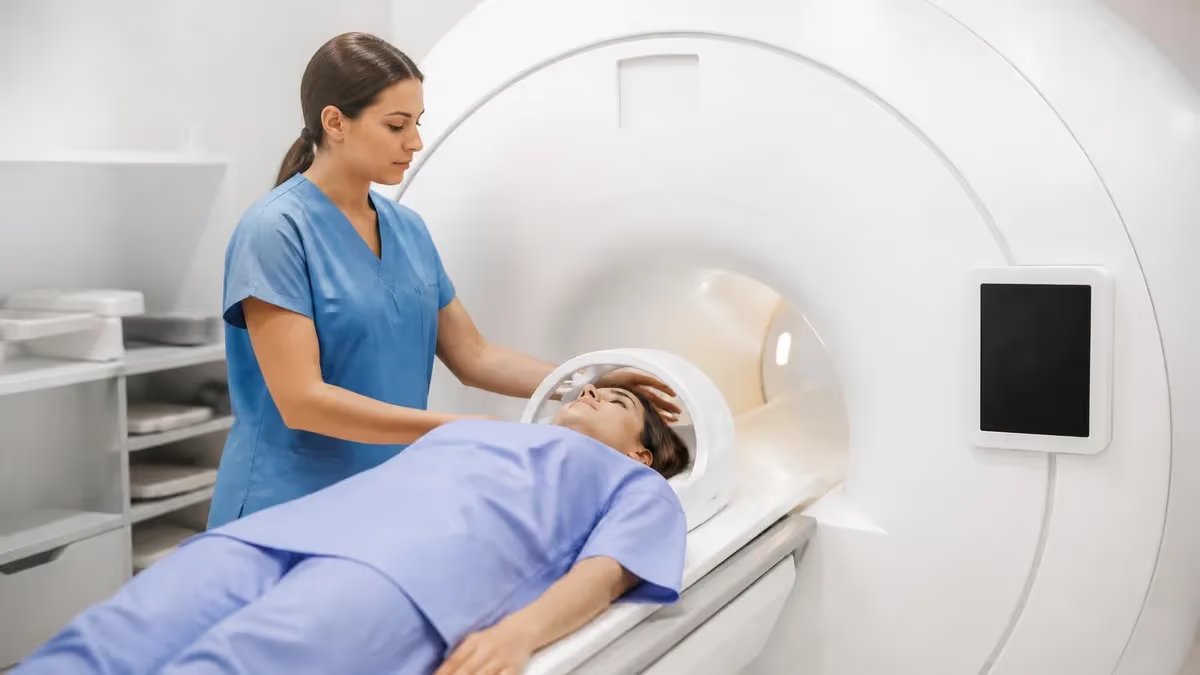
So you need an MRI, and now the question lands in your lap: where do you actually go to get one? It is not always obvious. Your doctor hands you a prescription, mumbles something about "any imaging center," and the rest is on you.
Here is the short version. MRIs are performed in five main places: hospital radiology departments, freestanding MRI imaging centers, mobile MRI trailers that park at smaller clinics, university medical centers tied to research programs, and a growing number of orthopedic offices that have squeezed a scanner into a back room.
Each option has its trade-offs. Hospitals charge the most but handle the most complex cases. Freestanding MRI centers are usually 40-70% cheaper and run on tighter schedules. Mobile units fill gaps in rural counties. Academic hospitals attract the rare cases. And those in-office ortho scanners can get you in within 48 hours if you do not mind paying cash up front.
The right choice depends on what is being scanned, who is reading the images, what your insurance covers, and how fast you need an answer. The rest of this guide walks through each option, names the major national chains, and gives you a clean checklist to use before you book.
One more thing before we dig in. The MRI market in the US is fragmented. A scan that costs $450 in one ZIP code can run $2,800 ten miles down the road for the same protocol, same magnet strength, same radiologist credentials. Geography, ownership, and billing codes drive the gap more than quality does. Knowing which questions to ask is the difference between getting a fair price and overpaying by a factor of six.
Most insurance plans require prior authorization for MRI scans. Booking before approval can leave you with the full bill, often $1,200 to $3,500. Call your insurer or the imaging center's intake desk and get a written approval reference number before your appointment.
The Five Places You Can Get an MRI Scan
Most people default to whatever building their doctor mentions first. That is rarely the cheapest or the fastest option. Here is what each setting actually looks like in practice.
Hospital radiology departments run 24/7 and own the highest-field scanners, usually 3 Tesla. They are the only realistic choice if you are inpatient, post-op, or need same-day imaging with a radiologist on call. They are also the most expensive. The same scan that costs $450 at a freestanding center can run $2,800 inside a hospital.
Freestanding imaging centers are the workhorses. Most cities have several. They book elective scans, run weekday and Saturday hours, and bill at the lower professional-services rate. Read more about how MRI imaging locations differ by ownership and accreditation.
Mobile MRI trailers visit smaller hospitals and rural clinics on set days. They are 1.5T machines, perfectly fine for routine spine and joint work.
University medical centers attract complex cases. You may end up imaged on a 7T research scanner if your case is unusual enough.
Orthopedic clinics with on-site MRI are the fastest path if your injury is musculoskeletal. The orthopedist reads the scan immediately, often within minutes of the table. The trade-off is that these scanners are usually extremity-only or weight-bearing units, which means they cannot image your brain, abdomen, or chest. For ACL tears, rotator cuff injuries, and meniscus damage, they are hard to beat on speed.
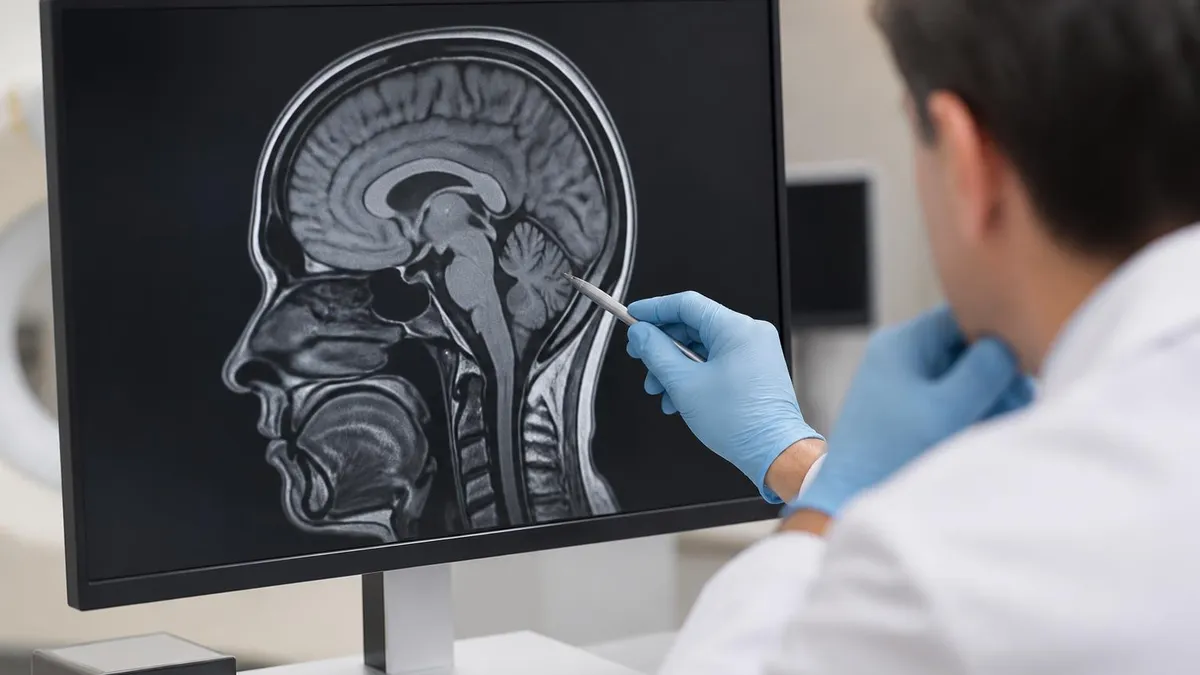
MRI Cost and Wait Time Snapshot
The Big National Imaging Chains You Will Probably See
A handful of companies operate most of the freestanding MRI centers in the United States. Knowing the names helps because their websites usually have a clean location finder, transparent self-pay prices, and online scheduling.
RadNet is the largest, with more than 400 centers across California, Maryland, Delaware, New Jersey, New York, Florida, and Arizona. It runs under several brand names locally, including Liberty Pacific, ProMedical, and DIS.
Akumin operates roughly 130 centers across Florida, Texas, Pennsylvania, Illinois, Delaware, Kansas, Georgia, and a handful of other states. It is one of the easier chains to deal with for self-pay patients.
SimonMed Imaging covers around 170 locations, heaviest in Arizona, California, Florida, Texas, Nevada, and the Northeast. SimonMed publishes flat-rate cash pricing on its site, which is unusual in the industry.
Touchstone Medical Imaging runs about 40 sites across Texas, Oklahoma, Tennessee, Florida, and Arkansas.
Northeast Radiology serves the Hudson Valley and Connecticut. Smaller footprint, strong reputation for sub-specialty reads.
There are also dozens of regional players worth knowing — Shields Health Care in New England, Inland Imaging in the Pacific Northwest, Dignity Health Imaging in California and Nevada, Solis Mammography in the South. Most regional chains contract with the same fellowship-trained radiologists who read for the local hospitals, so quality is comparable. The price difference shows up almost entirely on the facility-fee line of your bill.
Three free ways to find an MRI center near you
Your insurer's online directory is the safest starting point. Every plan has a search-by-procedure tool that returns in-network imaging centers within the radius you choose. Filtering by MRI removes the X-ray-only sites.
RadiologyInfo.org's facility locator, run jointly by the Radiological Society of North America and the American College of Radiology, lists ACR-accredited centers. Accreditation matters because it means the scanner, the techs, and the radiologists meet defined quality standards.
Google Maps with the search phrase "MRI center" or "open MRI" plus your ZIP returns nearby facilities with hours, photos, and patient reviews. Sort by rating and read the recent ones.
Do You Need a Prescription to Get an MRI?
In most states, yes. MRI is a medical imaging procedure regulated under state law, and you need a referral from a physician, nurse practitioner, physician assistant, or chiropractor. The order names the body part, the protocol, whether contrast is required, and the clinical reason for the scan. Insurance will not pay without it.
That said, several states allow what is called direct-access MRI. Patients in Washington, California, New York, Florida, Texas, and a handful of other states can book a scan and pay cash without a referring provider. The center still requires a radiologist to read the images, and you will need to bring the report to someone who can interpret it clinically. Self-referred scans are popular for sports injuries, lingering back pain, and full-body screening.
If you go the self-pay direct-access route, ask the front desk whether the report will be sent to a provider of your choosing. Most centers will fax or upload the read to any clinician you name. Costs vary a lot — read our guide on the cost of an MRI without insurance before paying out of pocket.
One nuance worth flagging. Even in direct-access states, certain protocols still require a physician order — MRI with contrast, MRI of the breast, and MRI under sedation almost always need one because the contrast agent (gadolinium), the protocol selection, and the sedation order all require prescriber-level decisions. Direct access mostly covers non-contrast MRI of joints, the spine, and the brain. If you are not sure, call the center and ask which protocols they will run without a referral.
Pick the Right MRI Facility for Your Needs
Best for inpatient scans, post-surgical imaging, urgent cases, and pediatric patients needing sedation. Highest cost. Same-day availability for emergencies. Sub-specialty radiologists available 24/7.
Best for routine elective scans of the spine, joints, abdomen, and brain. 40-70% cheaper than hospitals. Evening and Saturday slots common. Most are ACR-accredited and run modern 1.5T or 3T scanners.
Best for patients in rural counties or smaller community hospitals. Trailers rotate through fixed locations on set weekdays. Always 1.5T. Wait times vary by route.
Best for rare conditions, research protocols, and second-opinion cases. Access to 3T and occasionally 7T research scanners. Longer wait, higher cost, top-tier sub-specialty reads.
Best for sports injuries and joint imaging where the orthopedist will interpret findings immediately. Quick scheduling, often 24-72 hours. Usually 1.5T extremity or weight-bearing scanners. Limited to musculoskeletal work.
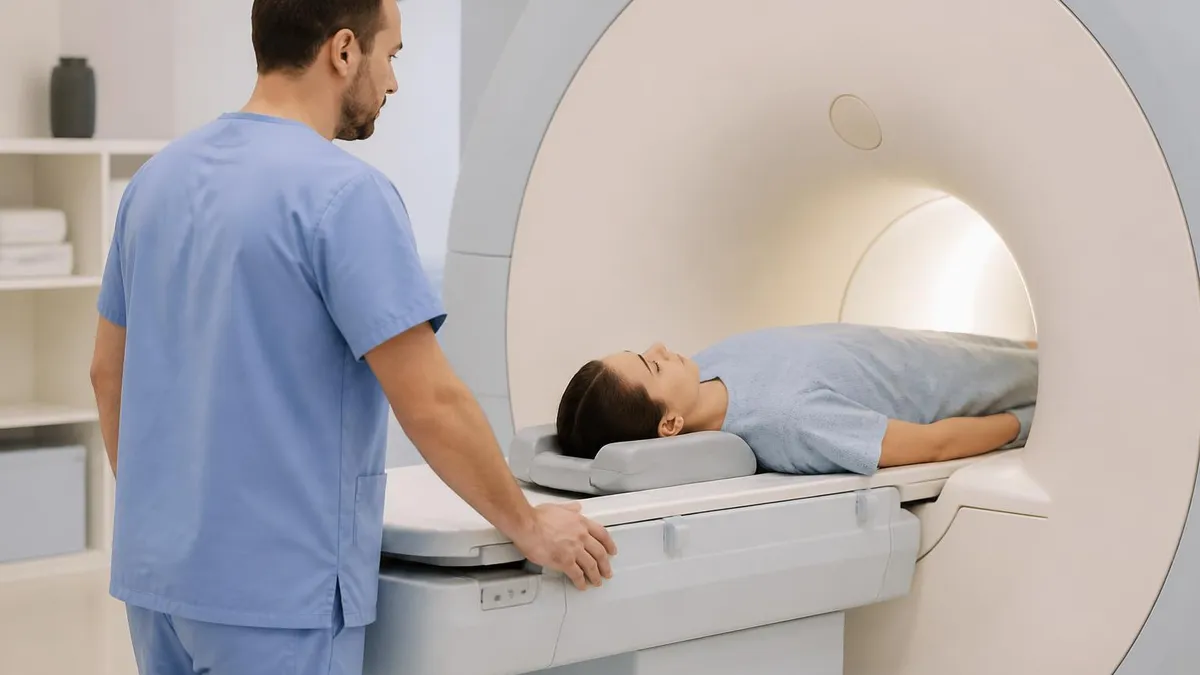
Open MRI vs Closed MRI: Which Should You Book?
A closed MRI is the long tube most people picture. It produces the highest-quality images because the magnet wraps the patient on all sides. Almost every diagnostic scan in the country still happens inside a closed bore.
An open MRI uses two parallel magnetic plates with open sides. It is the right call if you are claustrophobic, very large (the tube has a weight and diameter limit), or scanning a child who cannot hold still inside the bore. The trade-off is lower magnet strength, usually 0.3T to 1.2T, which means the images are softer and small lesions can be missed.
Wide-bore closed scanners are a middle ground. They are still closed at the top, but the tube is wider and the table accommodates patients up to 550 pounds. Most newer 1.5T and 3T machines are wide-bore.
If a radiologist or surgeon wants a high-resolution read of soft tissue, ligament, or a small lesion, do not settle for a 0.3T open machine. Ask whether the center has a wide-bore 1.5T or 3T option and book that instead.
Compare MRI Scanner Strengths Side by Side
Older field strength still found in some rural hospitals and budget centers. Acceptable for routine spine and large-joint imaging. Scan times are longer, often 45-60 minutes per body part, and small structures show less detail. Avoid for cardiac, breast, or fine neurological work.
How Far in Advance Should You Book?
Scheduling lead times vary enormously by facility type and region. In a metro area with several freestanding chains, you can usually find a same-week appointment if you call before 10 AM. Suburban centers with one or two scanners book one to two weeks out. Hospitals running elective MRI on a single dedicated machine push routine bookings 21 to 30 days.
Mobile units have the longest waits because the trailer is only on site one or two days a week. Plan three to four weeks ahead if your local clinic uses one.
If your scan is time-sensitive (suspected cancer, post-trauma, escalating neurological symptoms), tell the booking agent. Most centers reserve same-day or next-day slots for urgent referrals and will pull from a cancellation list. The phrase "the referring physician marked this urgent" gets you to the front of the line faster than asking nicely.
For elective screening or full-body MRI bookings, you can usually pick the exact day and time. Saturday morning is the most-requested slot and books out first.
Cancellation lists are an underused trick. Ask the scheduler to put you on the standby list — most centers get 5-10% no-shows on any given day, especially Monday mornings and Friday afternoons. If you can keep your phone on and get there within 30 minutes, you can move a three-week wait down to 48 hours. It costs nothing to ask.
What to Ask Before You Book Your MRI
Most people pick the first center their doctor mentions. A 90-second phone call can save you hundreds of dollars and weeks of waiting on a misread image. The right questions matter more than the right ZIP code.
Start with cost. Ask for the all-in price including the technical fee and the radiologist read. Insurance-billed prices are different from self-pay prices, and the difference can be 200%. If you have a high deductible, ask about the cash rate and compare.
Then ask about the radiologist. Sub-specialty matters. A musculoskeletal-trained radiologist reads a knee MRI very differently from a general radiologist. For brain, neuro-radiology fellowship training is the gold standard. For breast, fellowship in breast imaging. The center should tell you who reads what.
Finally ask about image delivery. You want a CD or, better, a HIPAA-compliant cloud link your physician can open from any computer. Centers that still mail film are behind the curve. Before you go, read up on how to prepare for an MRI so your scan goes smoothly.
While you have them on the line, confirm turnaround time on the report. The technical scan is one thing. The radiologist read is another, and that is what your referring doctor actually needs. Most centers commit to 48-72 hours. Some advertise 24-hour reads for an extra fee, and a few offer same-day reads for urgent cases. If your follow-up appointment is next Tuesday, you want the report in your physician portal by Monday morning, not Tuesday afternoon while you sit in the waiting room.
Pre-Booking Checklist for Your MRI
- ✓Confirmed your insurance has approved the scan and you have an authorization number
- ✓Asked for the all-in price, including the technical fee and the radiologist read
- ✓Verified the scanner is at least 1.5T (or 3T if your protocol calls for it)
- ✓Confirmed the center is ACR-accredited
- ✓Asked which radiologist will read your scan and whether they have sub-specialty training in your body part
- ✓Confirmed the report will be sent to your referring provider within 48-72 hours
- ✓Asked how images are delivered to you — CD, USB, or a cloud-based portal
- ✓Verified parking, building access, and check-in time (most centers want you 30 minutes early)
- ✓Listed any implants, pacemakers, surgical clips, or shrapnel and confirmed they are MRI-safe at the scanner strength
- ✓Asked about the cancellation policy in case you need to reschedule
Why Independent Imaging Centers Cost Less
It comes down to overhead. Hospitals carry the cost of the emergency room, the inpatient floors, the 24-hour staffing, the malpractice umbrella, and the indigent care write-offs. Every billable service inside the hospital absorbs a share of that overhead. An MRI is no exception.
A freestanding center owns one building, runs a 9-to-7 schedule with a Saturday shift, employs a smaller staff, and only does outpatient imaging. The cost structure is leaner. Insurance pays the lower outpatient rate, and self-pay patients see cash prices in the $300 to $700 range for a single body part, compared to $1,500 to $3,500 at a hospital for the same scan.
The quality of the read is not lower. Most freestanding chains contract with the same fellowship-trained radiologists who read for the local hospitals. The scanner is usually newer because the centers buy on faster refresh cycles. The waiting room is quieter. And the front desk has more time to answer billing questions before you commit.
If your scan is elective, the math almost always favors the freestanding option. The one exception is when your insurance steers you back to the hospital network with a narrow tiered formulary, in which case the in-network discount can flip the calculation. Always run the numbers both ways before you book.
Hospital vs Freestanding MRI Center
- +Freestanding centers are 40-70% cheaper for the same MRI scan
- +Most freestanding chains publish flat-rate cash prices online for self-pay patients
- +Newer scanners with wider bores are more common at freestanding sites
- +Saturday and evening appointments make freestanding centers easier to schedule
- +Many freestanding centers contract with the same radiologists who read at local hospitals
- −Hospitals are the only option for inpatient, post-surgical, or sedation-required scans
- −Some insurance plans steer you toward the hospital network and apply a penalty for going elsewhere
- −Freestanding centers do not have radiology coverage 24/7, so urgent reads can wait until morning
- −Smaller centers may not stock contrast agents for every protocol
- −Hospital radiologists have on-site sub-specialty backup for complex unexpected findings
Where to Find MRI Centers When You Are Traveling or Relocating
Out-of-network MRIs are surprisingly easy to arrange in most US cities. RadNet, Akumin, and SimonMed all run national booking lines that can find a center near any ZIP code and quote a cash price on the call. If you are traveling and need an unplanned scan, this is the fastest route.
For international travelers, the picture changes. Outside the US, MRI is usually 20-60% cheaper because government healthcare systems negotiate hardware and operating costs. Medical tourism for elective MRI exists in Mexico, India, Turkey, and parts of the EU. The images travel back home on disc or via secure upload, but the radiologist read is what your US physician will want to repeat anyway, so factor that into the total.
If you have a chronic condition that requires periodic MRI follow-up — multiple sclerosis, a known brain lesion, a watch-and-wait tumor — set up a relationship with one MRI scan center near you and stay there. Comparing serial scans on the same machine, same protocol, same radiologist gives the cleanest read.
The bottom line: there is no single right answer to where to get an MRI. There is a right answer for your specific scan, your insurance, your timeline, and your tolerance for cost. The freestanding chains win on price and convenience for routine elective work. Hospitals win when the case is complex, urgent, or post-surgical. Academic centers win for the rare and unusual. Mobile units fill the gaps everywhere else.
Spend ten minutes on the phone before you commit. Compare two or three centers, ask about pricing and radiologist credentials, and choose the option that gives you the right scanner strength at the right price with a clean handoff back to your referring physician.
MRI Questions and Answers
How this page was made: written with AI tools. Exam facts are checked against the official sources listed below. Not reviewed by a subject-matter expert. Editorial policy
Sources & references
Exam facts on this page (fees, format, dates, passing scores) are checked against these official sources; the date is our last check. Editorial policy
- arrt.org — Passing score, score release, fees, exam information · verified Oct 2026
- assets-us-01.kc-usercontent.com — Renewal, score validity, test delivery, eligibility, exam format, test dates, time limit · verified Oct 2026