
MRI Imaging Centers: Complete Guide to Independent Outpatient MRI Facilities
MRI imaging centers offer faster scheduling and 40-70% lower costs than hospitals. Find ACR-accredited outpatient MRI facilities near you with this guide. ✍🏼
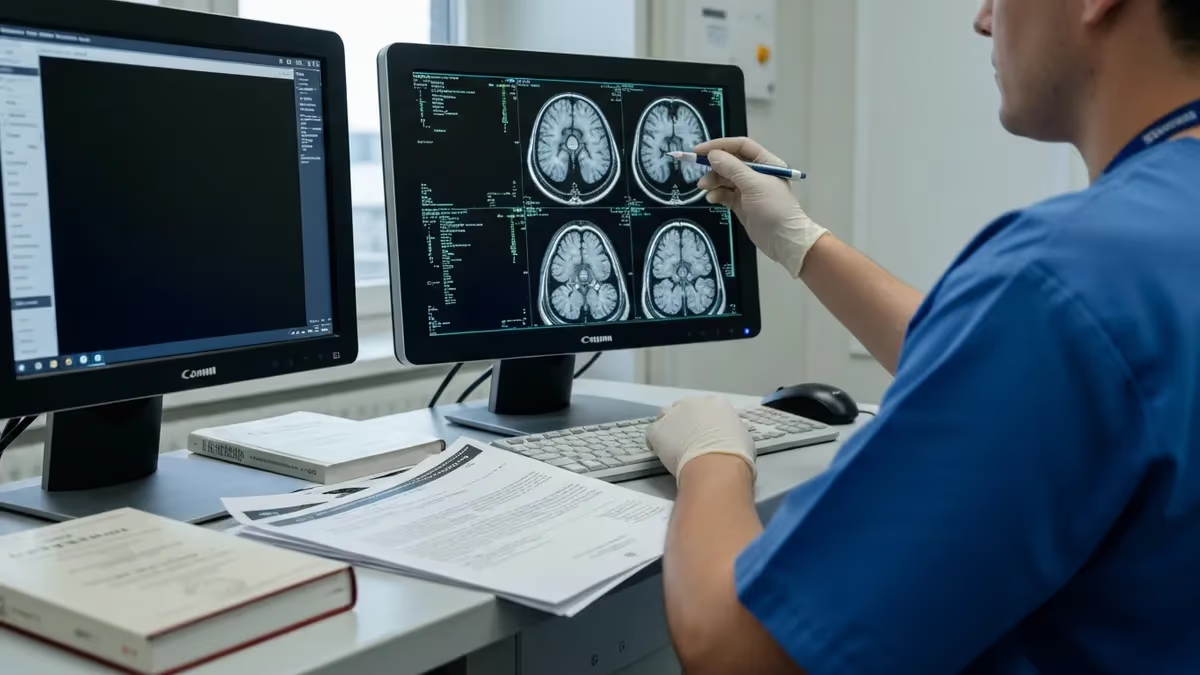
If your doctor just handed you an MRI order, you've got a choice most patients don't realize they have. You can get scanned at a hospital, or you can head to an independent MRI imaging center down the street. The difference matters.
Imaging centers usually cost 40 to 70 percent less than hospitals. They schedule you within a week instead of a month. And they skip the parking-garage nightmare. This guide walks you through what they are, how to find a good one, what to check, and how the costs stack up.
Roughly 40 million MRIs happen in the US every year, and a growing share now run through outpatient imaging centers rather than hospital radiology departments. The trend has accelerated as employer health plans push patients toward lower-cost sites and as price transparency rules force hospitals to publish their charges. There's a very clear reason for the shift.
You don't need a hospital's overhead to lie still in a magnet for 30 minutes. You need a clean machine, a board-certified radiologist, and someone who answers the phone. Let's break down how to spot a quality center and avoid getting steered into a $4,000 hospital scan when a $700 outpatient option sits ten minutes away.
For routine outpatient MRIs, independent imaging centers win on cost, speed, and convenience. Expect to pay 40-70 percent less than a hospital, get an appointment within 1-7 days instead of 2-4 weeks, and walk into a facility built around outpatients rather than emergency cases. The trade-off? Hospital radiology departments still make sense for urgent cases, complex inpatient workups, and rare specialty scans. For everything else — knee pain, back pain, headaches, follow-up scans — the imaging center is almost always the smarter pick.
An MRI imaging center is a freestanding outpatient diagnostic facility. It performs MRI scans and usually a stack of other imaging too — CT, X-ray, ultrasound, mammography, sometimes DEXA bone density and PET/CT for the larger sites.
These centers operate independently from hospitals. That means lower overhead, lower prices, and a workflow built entirely around scheduled outpatient visits. No ER traffic. No inpatient backlog. No facility fees padding your bill at the end of the month.
Most centers belong to a regional or national chain. RadNet, SimonMed, RAYUS Radiology, Akumin, and Touchstone Medical Imaging together run thousands of locations across the US. Smaller independent shops fill the gaps in mid-sized cities and rural areas across the country.
The business model is simple. A center owns a 1.5T or 3T scanner, employs technologists, contracts with radiologists to read the images, and bills your insurance for the technical and professional fees. That's it. No room and board. No ER. Just imaging done well at a reasonable price.
Many centers also offer same-day or next-day appointments for urgent cases, walk-in X-ray, and mammography clinics that run alongside the MRI suite. The economics work because the equipment runs nearly all day, every day. A scanner that sits idle is a scanner that loses money.
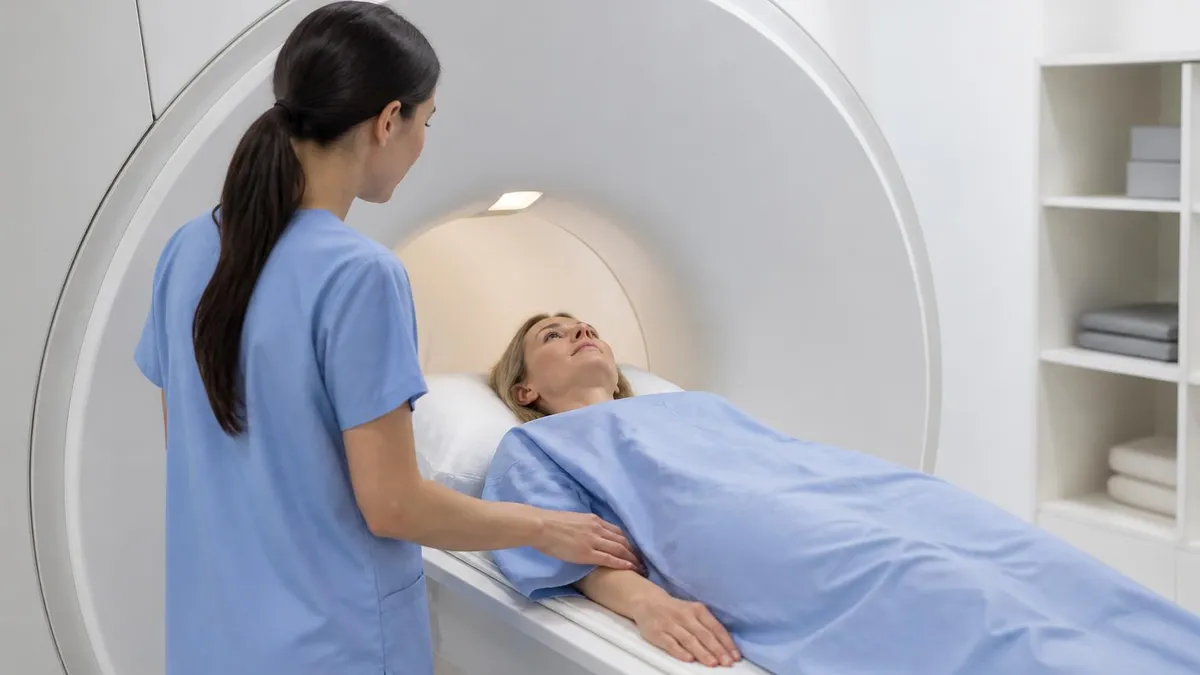
Hospital MRI vs Independent Imaging Center vs Mobile MRI
Hospital-based MRI departments sit inside a larger health system. You'll pay a facility fee on top of the scan itself, which is why hospital MRIs run $1,500 to $5,000 depending on body part and contrast. Wait times stretch 2-4 weeks for non-urgent outpatient scans because inpatient and ER cases take priority. The upside? Tight integration with your hospital's electronic medical record, on-site backup if something goes wrong with contrast, and access to subspecialty radiologists for complex cases. Best fit: inpatients, urgent workups, complicated oncology cases, or when your specialist insists on reading the scan in-house.
The cost gap between hospital MRI and imaging center MRI is the single biggest reason to shop around. A brain scan that runs $3,500 at a major academic hospital might cost $700 at an ACR-accredited imaging center five miles away.
Same magnet strength. Same radiologist credentials. Same final report your doctor reads. The only real difference is the building and the billing code attached to the claim form. Hospitals tack on a facility fee that imaging centers simply don't charge.
That facility fee is where the hospital padding comes from. Add operating room overhead, 24/7 staffing, ER readiness, and inpatient infrastructure, and the same scan ends up costing three to five times more. None of that overhead helps you when you're getting a routine knee MRI on a Tuesday morning.
For a deeper look at pricing, check the full breakdown on MRI scan cost and how your plan handles it on MRI cost with insurance. Spending an hour on price comparison can save you a thousand dollars or more out of pocket.
MRI Cost Comparison: Hospital vs Imaging Center
Not every imaging center is created equal. Some run gleaming new 3T scanners with subspecialty neuroradiologists on staff. Others run a tired 1.0T machine pushed into its second decade, with a generalist radiologist reading every scan from a different time zone.
The difference shows up in your report. A missed meniscus tear because the resolution wasn't sharp enough. A vague "recommend correlation" hedge because the radiologist couldn't quite see what mattered. Equipment and reader expertise aren't optional — they're the whole product.
Start with accreditation. The American College of Radiology runs the gold-standard program. ACR-accredited centers must meet strict standards on equipment quality, technologist credentials, radiologist qualifications, image quality, and safety protocols. If a center isn't ACR-accredited, walk away.
Then look at the magnet itself. A 1.5T scanner is the workhorse — fine for almost everything. A 3T is sharper and better for brain, joints, and small structures. Anything below 1.0T is usually an open MRI, which trades resolution for claustrophobia comfort.
What to Look For in an MRI Imaging Center
- ✓ACR (American College of Radiology) accreditation
- ✓Equipment field strength of 1.5T or 3T
- ✓Scanner under 10 years old
- ✓Board-certified radiologists, ideally subspecialists
- ✓In-network with your insurance plan
- ✓Appointment available within 7 days
- ✓Same-day or next-day slots for urgent cases
- ✓Online scheduling and patient portal
- ✓Results turnaround of 24-48 hours
- ✓Open MRI option if you're claustrophobic
- ✓Transparent self-pay pricing
- ✓Easy parking and reasonable location
- ✓4+ stars on Google reviews from real patients
- ✓Clear pre-scan instructions sent in advance
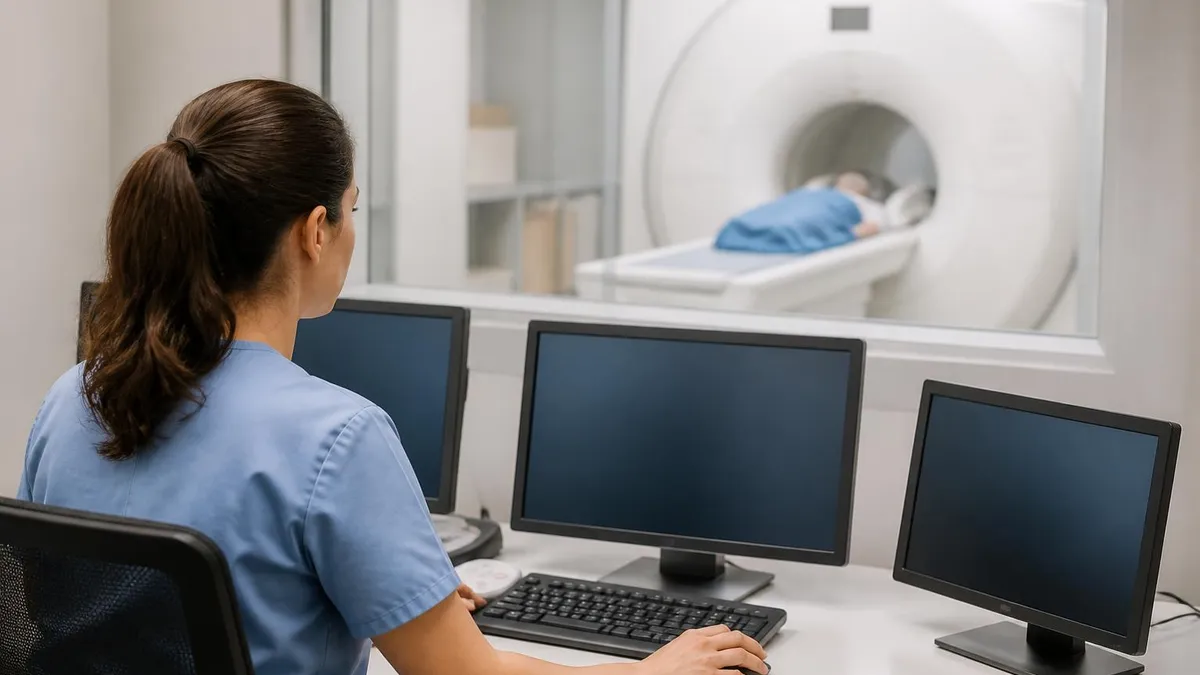
Field strength changes what the radiologist can see. A 3T magnet generates roughly twice the signal of a 1.5T. That translates to sharper images, thinner slices, and better detection of subtle pathology in tight anatomical spaces like the inner ear or pituitary.
For a routine knee scan or a follow-up brain MRI, 1.5T is plenty. For evaluating a small pituitary lesion, mapping a brain tumor before surgery, or chasing down a tricky cartilage tear, 3T earns its premium price tag every single time.
Ask the center which scanner you'll be on. If they hesitate or don't know, that's a signal worth paying attention to. Equipment quality also drives the overall picture compared to a MRI vs CT scan decision your doctor might be weighing for the same body part.
The magnet brand matters too. Modern MRI machine models from GE, Siemens, Philips, and Canon all produce excellent images. What you want to avoid is a 12-year-old scanner running outdated software with old coils. A good center tells you the make, model, and year if you ask. A great center publishes it on their website along with sample images and accreditation badges.
MRI Equipment Tiers Explained
- Field strength: 0.3 to 0.7 Tesla
- Best for: Claustrophobic and bariatric patients
- Image quality: Lower resolution, longer scans
- Typical cost new: $1.0M-$1.8M
- Field strength: 1.5 Tesla, 70-cm bore
- Best for: Anxious patients, larger body habitus
- Image quality: Excellent, near 3T for most exams
- Typical cost new: $1.8M-$3.5M
- Field strength: 1.5 Tesla
- Best for: 90% of clinical MRI exams
- Image quality: Workhorse standard
- Typical cost new: $1.5M-$3.0M
- Field strength: 3 Tesla
- Best for: Neuro, MSK, small structures
- Image quality: Highest resolution available
- Typical cost new: $2.5M-$5.0M
Let's talk chains. The US imaging market consolidated hard over the last decade. Most patients today get scanned at a center owned by one of a handful of national operators. Knowing the players helps you figure out who's nearby and what to expect.
RadNet runs more than 350 centers concentrated in California, New York, New Jersey, Maryland, Delaware, Rhode Island, and Florida — the largest US chain by volume. SimonMed Imaging operates 170+ centers across Arizona, Florida, California, and Nevada.
RAYUS Radiology (formerly Center for Diagnostic Imaging) covers 200+ locations nationwide. Akumin runs 200+ centers mostly in the Southeast and Midwest. Touchstone Medical Imaging fills the Texas, Oklahoma, Arkansas, and Mississippi corridor with 80+ sites.
Smaller regional players matter too. Outpatient Imaging Affiliates operates 90+ joint-venture centers with hospitals. Premier Radiology, Quantum Imaging, JCAS Imaging, and dozens of independent groups serve specific metro areas around the country.
The chain doesn't determine quality on its own — every individual location varies. But national operators usually have standardized equipment, ACR accreditation across the network, and consistent reporting workflows. Always check the specific location's reviews and accreditation rather than trusting the brand alone.
Major National MRI Imaging Center Chains
RadNet runs 350+ centers, making it the largest US outpatient imaging operator. Heavy presence in California, New York, New Jersey, Maryland, Delaware, Rhode Island, and Florida. Most locations are ACR-accredited, with a mix of 1.5T and 3T scanners. Subspecialty radiologists handle reads in major metros. SimonMed Imaging operates 170+ centers across Arizona, Florida, California, and Nevada. Known for aggressive self-pay pricing and fast scheduling. Both chains offer online booking, patient portals, and 24-48 hour turnaround.
Now let's get practical. How do you actually find a good imaging center and book a scan? The process has eight steps. It pays to slow down on a few of them rather than just clicking the first center your insurance app suggests.
The cheapest center isn't always the best. The closest one isn't always the cheapest. A little homework saves serious money and gets you a better scan with a faster turnaround time on results.
Plan to spend about an hour on the front end. Pull your insurance card, your doctor's order, and a notebook. Make three or four phone calls. Compare wait times, prices, and equipment. The difference between the first center you find and the third one you call can be hundreds of dollars and a week of waiting.
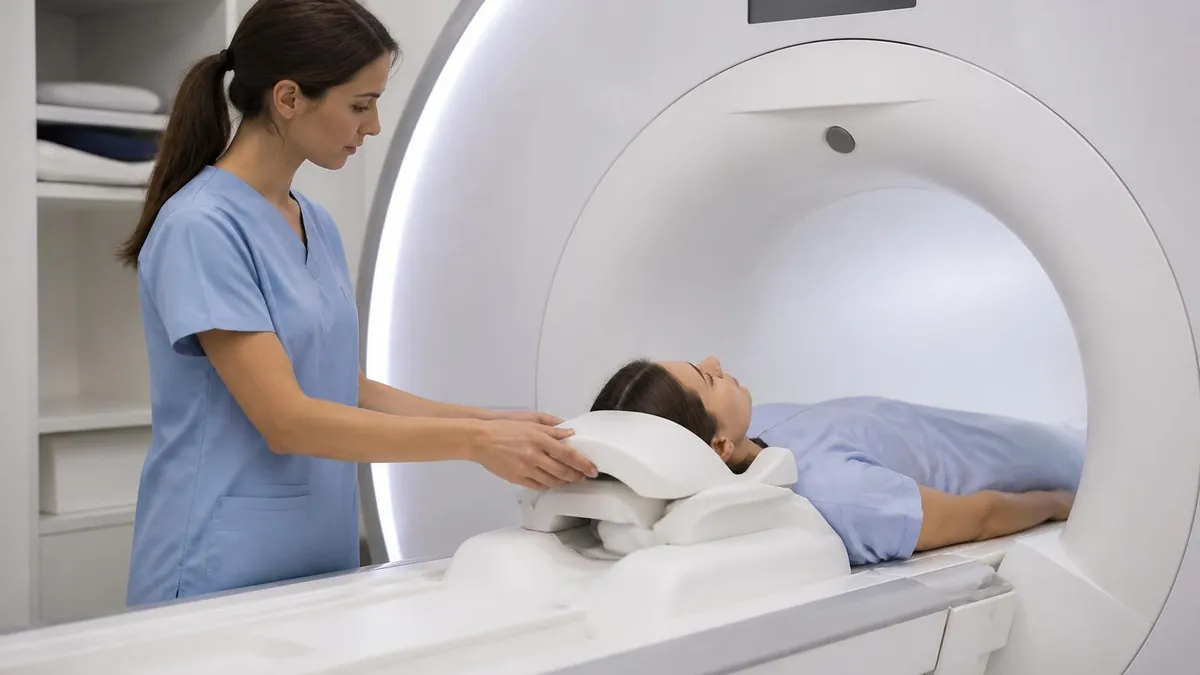
How to Schedule an MRI at an Imaging Center
Get the Order
Verify Pre-Authorization
Find In-Network Centers
Compare 2-3 Options
Book the Appointment
Complete Intake
Get Scanned
Receive Results
Insurance is where most patients get tripped up. Pre-authorization is required for almost every MRI in 2026 — somewhere around 95 percent of plans demand it. Your doctor's office usually files the request.
But it's on you to confirm it cleared before you show up. Walking into a scan without auth means you might get billed the full cash price, which can hit four figures fast. Call your insurance member services line and ask for the auth number directly. Write it down. Bring it with you.
In-network status matters even more. An out-of-network imaging center might cost three to five times more than an in-network one, even with insurance. Use the provider locator on your insurance company's website or app to filter for in-network MRI centers near you.
If you're shopping for self-pay because you're uninsured or have a high deductible, imaging centers almost always beat hospital prices. Many publish self-pay rates right on their website. Tools like Healthcare Bluebook and NewChoiceHealth.com let you compare prices across centers in your area before you book.
Always confirm pre-authorization is approved before your appointment. Around 95% of insurance plans require prior auth for MRI, and showing up without it can mean the full charge falls on you. Call your insurance member services line, get the auth number, and write it down. If your doctor's office filed the request, ask for the reference number. If denied, you have the right to appeal — most denials get overturned when the ordering physician submits proper clinical justification. Don't skip this step.
Walking in on appointment day, expect a routine that's been refined over thousands of scans. Arrive 30 minutes early to handle paperwork and screening. The technologist will ask about metal implants, prior surgeries, claustrophobia, and kidney function if contrast is ordered.
You'll change into a gown and lock up jewelry, watches, phones, anything ferromagnetic. If contrast is needed, an IV goes in. Then you lie on the table, the body part gets positioned in a coil, and you get earplugs or headphones. The machine is loud — somewhere between a jackhammer and a lawnmower depending on the sequence.
The actual scan runs 30 to 60 minutes for most exams. A simple knee or wrist might wrap in 25 minutes. A multi-sequence brain with and without contrast can stretch past an hour. The big rule: stay still. Movement smears the images and may force a repeat sequence, which adds time.
The technologist talks to you between sequences through the intercom. If you need to stop — anxiety, cramp, anything — squeeze the call ball and they'll pull you out. After the scan, you're done.
Results land with your doctor in 24 to 48 hours via fax or HL7 electronic feed. For specific exam types like an MRI brain scan, the protocol may run longer because of the multiple sequences involved.
Eat normally before your scan unless you're getting an abdominal mri cpt code, which usually requires a 4-hour fast. Take all your usual medications. Wear comfortable clothes without metal — yoga pants, a cotton t-shirt, no zippers or underwire. Most centers will have you change anyway, but starting metal-free saves time at check-in.
Bring a list of any prior imaging you've had, especially if it was at a different center or hospital. The radiologist comparing your new scan to old ones can spot changes faster and more accurately. If your prior scan was at a hospital, request a CD copy ahead of time so you can hand it to the technologist on arrival.
Imaging Center vs Hospital MRI: The Trade-Offs
- +Cost runs 40-70% less than hospital MRI
- +Appointment available within 1-7 days
- +Easier parking and shorter check-in
- +Patient experience built around outpatients
- +Transparent self-pay pricing at many centers
- +Online scheduling and patient portals
- +Often better customer service
- +Same equipment quality at top-tier centers
- −Less integration with hospital electronic medical records
- −May not handle truly urgent or unstable patients
- −Fewer subspecialty radiologists at smaller centers
- −Limited backup if contrast reaction occurs
- −Some niche scans (cardiac MRI, fetal MRI) only at large centers
- −Hours may be more limited than hospital radiology
Pros and Cons at a Glance
| Pros | Cons |
|---|---|
| Easier parking and shorter check-in | Less integration with hospital electronic medical records |
| Patient experience built around outpatients | May not handle truly urgent or unstable patients |
| Transparent self-pay pricing at many centers | Fewer subspecialty radiologists at smaller centers |
| Online scheduling and patient portals | Limited backup if contrast reaction occurs |
| Often better customer service | Some niche scans (cardiac MRI, fetal MRI) only at large centers |
| Same equipment quality at top-tier centers | Hours may be more limited than hospital radiology |
One question worth asking before you book: who's reading my scan? The radiologist matters as much as the magnet itself. A board-certified radiologist with subspecialty training in neuroradiology will catch things on a brain MRI that a generalist might miss entirely.
Same goes for musculoskeletal, body imaging, breast, and pediatric scans. Top imaging centers route scans to subspecialists by body part. Smaller centers may have one or two general radiologists reading everything. Both can be excellent. But for complex cases — known cancer, surgical planning, unexplained neuro symptoms — push for a subspecialist.
Reading turnaround is another quality marker worth checking. A good center delivers a final report to your ordering physician within 24 to 48 hours. Stat reads happen within an hour for urgent cases. If a center quotes you a week for results, something's broken in their workflow and you should look elsewhere.
Most patient portals now post the radiologist report the moment it's signed, so you can read it before your follow-up appointment with your doctor. Just remember the report is written for clinicians. It'll use terms like "signal hyperintensity" and "T2 prolongation" that need translation.
Don't panic at jargon. Wait for your doctor to walk you through what it means in plain English. The radiologist's job is to describe what they see. Your doctor's job is to put that description in the context of your symptoms, your history, and the next step in your care plan.
Where do you actually search for a quality imaging center? Start with the ACR Accredited Facility Locator at acraccreditation.org. It lets you filter by modality and location, and every result has verified accreditation already in place.
Cross-reference with your insurance provider locator to find in-network options. Then check Google reviews and Healthcare Bluebook for price and patient experience signals. Centers averaging 4+ stars from real patients (not just a handful of reviews) tend to deliver consistent service over time.
Ask your primary care doctor or specialist which centers they trust. Physicians who read MRI reports daily know which centers produce reliable images and clear reports. Their recommendation often beats any online review aggregator on the market.
If you're paying cash or hitting a high deductible, call 2-3 centers and ask for their self-pay rate for the specific exam your doctor ordered. Prices vary surprisingly between centers in the same city. Some publish rates online; others quote on the phone.
Don't be shy about asking for a discount. Many centers offer 20-30 percent off the published cash price for upfront payment. NewChoiceHealth.com aggregates self-pay quotes for major procedures. Healthcare Bluebook gives a fair-price benchmark you can use to negotiate. The transparency is finally arriving in healthcare pricing, and MRI is one of the easiest places to take advantage of it.
Sample MRI - Magnetic Resonance Imaging Practice Questions
Try these questions from our free MRI - Magnetic Resonance Imaging practice tests. The correct answer and an explanation follow each question.
Gibbs (truncation) artifact is caused by:
- A. Patient motion during scanning
- B. Undersampling of k-space — insufficient high-frequency data to represent sharp tissue interfaces
- C. Field inhomogeneity near air-tissue interfaces
- D. Aliasing from a FOV smaller than the patient
Answer: B. Undersampling of k-space — insufficient high-frequency data to represent sharp tissue interfaces
Gibbs artifact arises from the Fourier series representation of sharp edges when high spatial-frequency k-space data is truncated, producing ringing lines parallel to the interface.
Magnets formed of ferrous material found naturally or from blocks or slabs.
- A. Selenoid
- B. Reistive
- C. Permanent
- D. Superconducting
Answer: C. Permanent
Permanent magnets are created from naturally occurring ferromagnetic materials or specially treated blocks of ferrous material. These magnets retain their magnetism without requiring an external power source. They produce a constant magnetic field and are typically utilized in low-field MRI systems, offering a simpler and less costly design.
On MRI of the liver, a simple hepatic cyst is expected to show which signal characteristics?
- A. T1 high, T2 low
- B. T1 low, T2 high, no enhancement
- C. T1 high, T2 high, with peripheral enhancement
- D. T1 low, T2 low
Answer: B. T1 low, T2 high, no enhancement
Simple hepatic cysts have low T1 signal, very high T2 signal due to pure fluid content, and show no contrast enhancement.
Wraparound (aliasing) artifact in MRI is caused by:
- A. Structures outside the FOV contributing signal that is folded back into the image
- B. Gradient non-linearity at the edges of the bore
- C. T2* dephasing from metallic objects
- D. Phase errors from pulsatile flow
Answer: A. Structures outside the FOV contributing signal that is folded back into the image
When anatomy extends beyond the selected FOV in the phase-encode direction, it is aliased and appears superimposed on the opposite side of the image.
Take the full MRI - Magnetic Resonance Imaging practice test
MRI Imaging Centers Questions and Answers
Bottom line: independent MRI imaging centers are the smart default for most outpatient elective MRIs in 2026. You'll save 40 to 70 percent over hospital pricing, get an appointment within a week instead of a month, and walk into a facility built around scheduled outpatients.
The keys are simple. Verify in-network status with your insurance. Confirm ACR accreditation. Check the magnet (1.5T minimum, 3T for complex cases). Read patient reviews. Ask about radiologist subspecialty. Get pre-authorization sorted before you show up.
Do those six things and you'll get a high-quality scan at a fair price, with results in your doctor's hands within two days. Hospital MRI still has its place — urgent cases, inpatients, complex oncology, anything where on-site backup matters most.
But for the routine knee scan, the follow-up brain MRI, the back pain workup, the orthopedic surgery prep — head to the imaging center. Your wallet, your calendar, and your sanity will thank you for the choice.
Use the ACR locator, your insurance provider tool, and a couple of phone calls to compare prices. You'll find a quality center within 30 minutes of home that delivers exactly what your doctor ordered. The healthcare system finally lets you shop around for a major procedure — take advantage of it.
One last tip: if your scan turns up something concerning, ask the center for a CD or digital copy of your images before you leave. Many ordering physicians want to see the raw images themselves, and having a copy on hand speeds up second opinions if you decide you need one. Most centers provide images free or for a small fee.
About the Author

Medical Laboratory Scientist & Clinical Certification Expert
Johns Hopkins UniversityDr. Sandra Kim holds a PhD in Clinical Laboratory Science from Johns Hopkins University and is certified as a Medical Technologist (MT) and Medical Laboratory Scientist (MLS) through ASCP. With 16 years of clinical laboratory experience spanning hematology, microbiology, and molecular diagnostics, she prepares candidates for ASCP board exams, MLT, MLS, and specialist certification tests.
Join the Discussion
Connect with other students preparing for this exam. Share tips, ask questions, and get advice from people who have been there.
View discussion (8 replies)