
MRI Center Near Me: How to Find, Compare, and Book the Right Imaging Facility
🆕 Searching 'MRI center near me'? Compare hospital vs outpatient imaging, cost ranges, magnet strength, wait times, and what to bring to your scan.
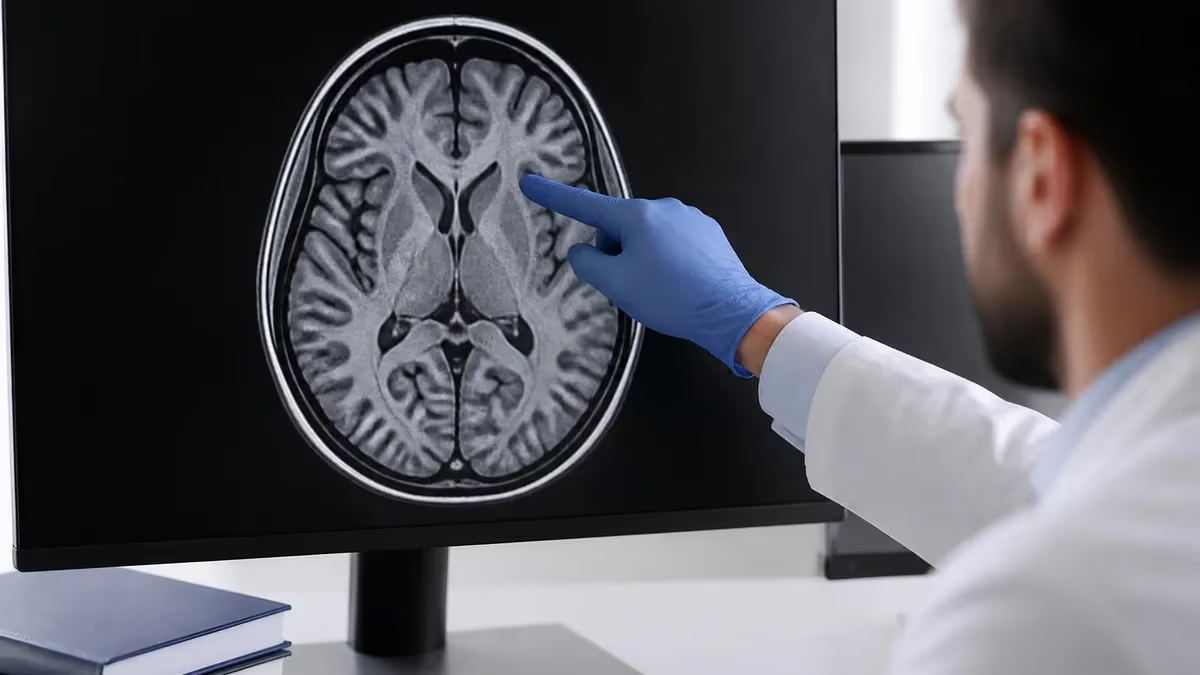
Typing mri center near me into a search bar is usually the first move after a doctor hands over an imaging order, and the results can be overwhelming. You will see hospital radiology departments, freestanding outpatient centers, mobile MRI trailers, and chains that advertise same-day appointments. Each option has different pricing, scheduling windows, magnet strength, and patient experience, and choosing wisely can save you hundreds of dollars and weeks of waiting without sacrificing image quality.
Most U.S. metropolitan areas now have between five and forty MRI providers within a fifteen-mile radius, but only a handful will be in your insurance network, accept your specific order, and offer a slot inside the time window your physician wants. Calling each one is exhausting, so this guide breaks down exactly what to ask, how to compare apples to apples, and which red flags justify driving an extra twenty minutes to a different facility.
The price difference between the most expensive hospital outpatient MRI and a high-quality freestanding imaging center can exceed two thousand dollars for the identical study, even with the same insurance card. That spread exists because hospitals add facility fees and chargemaster markups that independent centers simply do not have. Knowing this single fact gives you negotiating power and the confidence to ask your ordering provider whether a non-hospital site is acceptable for your clinical question.
Quality is not just about the magnet. A 1.5 Tesla scanner operated by an experienced technologist and read by a fellowship-trained radiologist will often produce a more useful report than a 3T scanner at a center with high tech turnover. When evaluating any nearby MRI center, the radiologist subspecialty, the scanner age, and the protocol library matter just as much as the headline magnet strength advertised on the website.
Scheduling is another hidden variable. Hospital MRI departments prioritize inpatients and emergency cases, so outpatient slots can stretch to three or four weeks. Dedicated outpatient centers run leaner schedules, and many offer evening, weekend, and early morning appointments specifically to compete on access. If your order is time-sensitive, such as a suspected disc herniation with progressive weakness, the nearest center is rarely the right answer; the fastest qualified center is.
Finally, the patient experience matters more than people admit. Open or wide-bore scanners, in-room music, weighted blankets, and pediatric-trained staff can mean the difference between a completed scan and an aborted one that has to be rebooked under sedation. This guide walks through every factor, from the moment you receive an order to the day your radiologist signs the final report, so you can pick the imaging center that genuinely fits your situation.
Whether you are searching for a routine knee MRI after a sports injury, an urgent brain MRI for new headaches, or a screening prostate MRI recommended by your urologist, the framework below applies. Use it like a checklist, take twenty minutes on the phone, and you will book a scan that is faster, cheaper, and better than the default first result on the map.
MRI Centers by the Numbers
Types of MRI Centers You Will Find Nearby
Attached to a hospital and equipped for inpatients, emergencies, contrast reactions, and sedation. Highest cost due to facility fees, often longest wait for outpatients, but best for complex or critically ill patients needing immediate intervention.
Independent imaging facilities that focus exclusively on diagnostic studies. Lower prices, faster scheduling, evening and weekend hours, and modern scanners. Ideal for routine orthopedic, neurological, and abdominal MRIs without complicating medical issues.
Branded outpatient centers operated by a hospital system. Convenient and well-staffed, but billing may still include hospital facility fees. Always confirm whether the location is billed as hospital-based or true outpatient before booking.
Specialize in claustrophobic, bariatric, and pediatric patients. Use lower-field open magnets or wide-bore 1.5T and 3T scanners. Excellent comfort, though open scanners produce lower-resolution images for fine neurologic or musculoskeletal work.
Trailer-mounted scanners that rotate between rural hospitals and clinics. Convenient in underserved areas, often using older 1.5T systems. Acceptable for routine studies but ask about radiologist coverage and report turnaround.
Choosing the right MRI center near you starts with reading the actual order. Your physician will specify the body part, whether contrast is required, and sometimes a particular protocol such as MR arthrogram, MR enterography, or breast MRI. Not every facility performs every protocol. A small outpatient center may not stock gadolinium contrast on weekends, and many do not offer specialized exams like cardiac MRI, MR-guided biopsies, or functional brain imaging at all.
Once you know what the order requires, narrow the list by network status. Call your insurance plan or use the online directory to confirm the center is in-network for your specific plan, not just the parent insurer. A common trap is finding a center listed as in-network for an HMO product when you actually have a PPO, or vice versa. Get the confirmation in writing or note the representative's name and reference number for any cost dispute later.
Next, evaluate the radiologists. Ask the center which group reads their studies and whether subspecialists are available for your body part. A musculoskeletal radiologist reading a shoulder MRI will catch labral tears and rotator cuff partial thickness lesions that a generalist might describe vaguely. For brain and spine work, a neuroradiologist is the gold standard, and centers serving major medical groups usually have one on contract even if the scan is performed in a suburban strip mall.
Look at scanner generation, not just field strength. A ten-year-old 3T scanner with outdated coils can underperform a current-generation 1.5T system, especially for shoulder, knee, and pelvic imaging. Ask when the scanner was installed, what coil packages are available, and whether the center performs the specific protocol your doctor ordered routinely. High-volume sites tend to have refined protocols, faster scan times, and fewer repeat sequences.
Distance matters less than people assume. Driving an extra fifteen miles to a center that scans you next Tuesday instead of three weeks out is almost always worth it, especially when symptoms are evolving. The same logic applies to price: a forty-minute drive to a freestanding center can easily save a thousand dollars over the nearest hospital. Reviewing what MRI can detect for your specific symptoms helps you and your provider judge how urgent the timing really is.
Reviews on Google and Yelp can be informative but skew toward complaints about wait times and front-desk experiences rather than image quality. Better signals are accreditation by the American College of Radiology (ACR), participation in employer direct-contract networks, and recommendations from your ordering physician's office, which sees report quality every day. Ask the scheduler directly whether the center holds ACR accreditation for the specific modality you need.
Finally, evaluate communication. The right center returns your call within a business day, sends preparation instructions by text or email, confirms insurance preauthorization before your appointment, and uploads images to a patient portal you can access. A center that gets these basics right will almost certainly handle the scan itself with the same attention to detail.
MRI Practice Test Questions
Prepare for the MRI - Magnetic Resonance Imaging exam with our free practice test modules. Each quiz covers key topics to help you pass on your first try.
MRI Knowledge
MRI Exam Questions covering Knowledge. Master MRI Test concepts for certification prep.
MRI Physics
Free MRI Practice Test featuring Physics. Improve your MRI Exam score with mock test prep.
MRI Anatomy and Pathology
MRI Test Prep for MRI Anatomy and Pathology. Practice MRI Quiz questions and boost your score.
MRI Anatomy and Positioning
MRI Questions and Answers on MRI Anatomy and Positioning. Free MRI practice for exam readiness.
MRI Contrast Agents
Free MRI Quiz on MRI Contrast Agents. MRI Exam prep questions with detailed explanations.
MRI Patient Care and Positioning
MRI Practice Questions for MRI Patient Care and Positioning. Build confidence for your MRI certification exam.
Comparing Your Nearest MRI Center Options
Hospital MRI departments are the right choice when you have complex medical issues, need sedation, are pregnant, or might need immediate follow-up imaging or intervention. They stock every contrast agent, employ anesthesia staff, and connect directly to inpatient services if findings escalate. Trauma, oncology, and cardiac patients almost always belong in a hospital setting.
The trade-off is cost and wait time. Facility fees can double or triple the bill, and outpatient slots routinely run two to four weeks behind because inpatients take priority. If your clinical situation is straightforward and stable, the hospital MRI center down the street is rarely your most efficient option, even when it appears at the top of your map search.
Hospital vs Freestanding MRI Center Near Me
- +Freestanding centers typically cost 40–70% less than hospital outpatient departments
- +Outpatient appointments are often available within 2–5 business days
- +Evening, early morning, and weekend slots are common at independent centers
- +Many freestanding centers post cash prices online for transparent comparison
- +Modern wide-bore scanners reduce claustrophobia without sacrificing image quality
- +Subspecialty radiologists are increasingly available through teleradiology contracts
- +Patient portals provide direct image download and second-opinion sharing
- −Independent centers cannot manage severe contrast reactions as quickly as hospitals
- −Pediatric sedation and anesthesia services are usually hospital-only
- −Complex protocols like cardiac MRI or MR-guided biopsy require hospital sites
- −Some insurers steer patients toward hospital systems through tiered networks
- −Mobile units may have inconsistent staffing and slower report turnaround
- −Older outpatient scanners may lack the latest coil and software upgrades
Pros and Cons at a Glance
| Pros | Cons |
|---|---|
| Evening, early morning, and weekend slots are common at independent centers | Independent centers cannot manage severe contrast reactions as quickly as hospitals |
| Many freestanding centers post cash prices online for transparent comparison | Pediatric sedation and anesthesia services are usually hospital-only |
| Modern wide-bore scanners reduce claustrophobia without sacrificing image quality | Complex protocols like cardiac MRI or MR-guided biopsy require hospital sites |
| Subspecialty radiologists are increasingly available through teleradiology contracts | Some insurers steer patients toward hospital systems through tiered networks |
| Patient portals provide direct image download and second-opinion sharing | Mobile units may have inconsistent staffing and slower report turnaround |
Booking an MRI Center Near Me: 10-Point Checklist
- ✓Confirm the exact body part, contrast requirement, and protocol from your physician's order
- ✓Verify in-network status with your specific insurance plan, not just the parent carrier
- ✓Ask whether prior authorization is required and who is responsible for obtaining it
- ✓Request both the insurance-billed price estimate and the cash-pay self-pay price
- ✓Confirm scanner type: open, wide-bore, 1.5T, or 3T, and ask the installation year
- ✓Verify the radiology group reading studies and whether subspecialists cover your body part
- ✓Ask about ACR accreditation for the modality and body region being imaged
- ✓Confirm fasting, medication, and clothing instructions for your specific exam
- ✓Request the expected report turnaround time and how results will reach your physician
- ✓Get patient portal login information so you can download images and reports directly
Always ask for the cash price, even with insurance
A growing number of freestanding MRI centers offer cash prices between $400 and $700 for routine studies, often less than what your insurance company will apply toward your deductible. If you have not met your deductible, paying cash and submitting a superbill can be cheaper and faster than running the claim through insurance.
Magnet strength is the headline specification at every MRI center, but it is widely misunderstood. The three common categories are low-field (0.3T to 0.7T, almost always open scanners), mid-field 1.5 Tesla, and high-field 3 Tesla. Higher field strength generally improves signal-to-noise ratio, allowing thinner slices, faster scans, and clearer images for small structures. For most clinical questions, however, both 1.5T and 3T produce diagnostic-quality images, and the choice depends on body part and patient factors.
3 Tesla scanners are particularly valuable for brain imaging, pituitary studies, internal auditory canal evaluations, prostate MRI, and small joint work such as wrist and ankle. The increased signal lets radiologists detect tiny lesions, evaluate cartilage in fine detail, and complete advanced sequences like diffusion tensor imaging, MR spectroscopy, and high-resolution MR arthrography. If your order mentions any of these, search specifically for a 3T MRI center near you.
1.5 Tesla remains the workhorse for the vast majority of musculoskeletal, abdominal, pelvic, and routine brain MRIs. It is also more forgiving of metallic implants, dental work, and motion artifacts. Patients with cochlear implants, certain stents, or cardiac devices may only be safely scanned at 1.5T, so do not assume newer is automatically better. Reviewing what a normal MRI looks like at 1.5T versus 3T helps set realistic expectations for the images you will receive.
Open and low-field scanners have specific niches. They are valuable for severely claustrophobic patients, very large patients exceeding wide-bore weight limits, and pediatric work where the child can sit upright with a parent nearby. The trade-off is image resolution; subtle meniscal tears, small disc herniations, and early multiple sclerosis lesions can be missed on low-field studies, sometimes requiring repeat imaging at a higher-field center later.
Beyond magnet strength, coil technology drives image quality. Multi-channel surface coils dramatically improve resolution for shoulders, knees, breasts, and prostates compared with older single-channel designs. When you call an MRI center, ask whether they use modern multi-channel coils for the body part being imaged. The scheduler may not know offhand, but the lead technologist can answer in under a minute.
Software matters as well. Newer scanners run accelerated acquisition techniques like compressed sensing and AI-based reconstruction that cut scan times by thirty to fifty percent while maintaining or improving image quality. Shorter scans mean less motion, fewer aborted studies, and lower sedation rates for anxious patients. Ask if the center has performed software upgrades within the last two years; reputable facilities do this regularly.
Finally, technologist experience can outweigh hardware differences. An experienced MRI technologist will position you precisely, select the right coils, modify protocols to compensate for hardware or implants, and recognize when additional sequences would help the radiologist. Centers with low technologist turnover, in-house continuing education, and dedicated lead technologists consistently produce better images, regardless of whether the scanner badge says 1.5T or 3T.
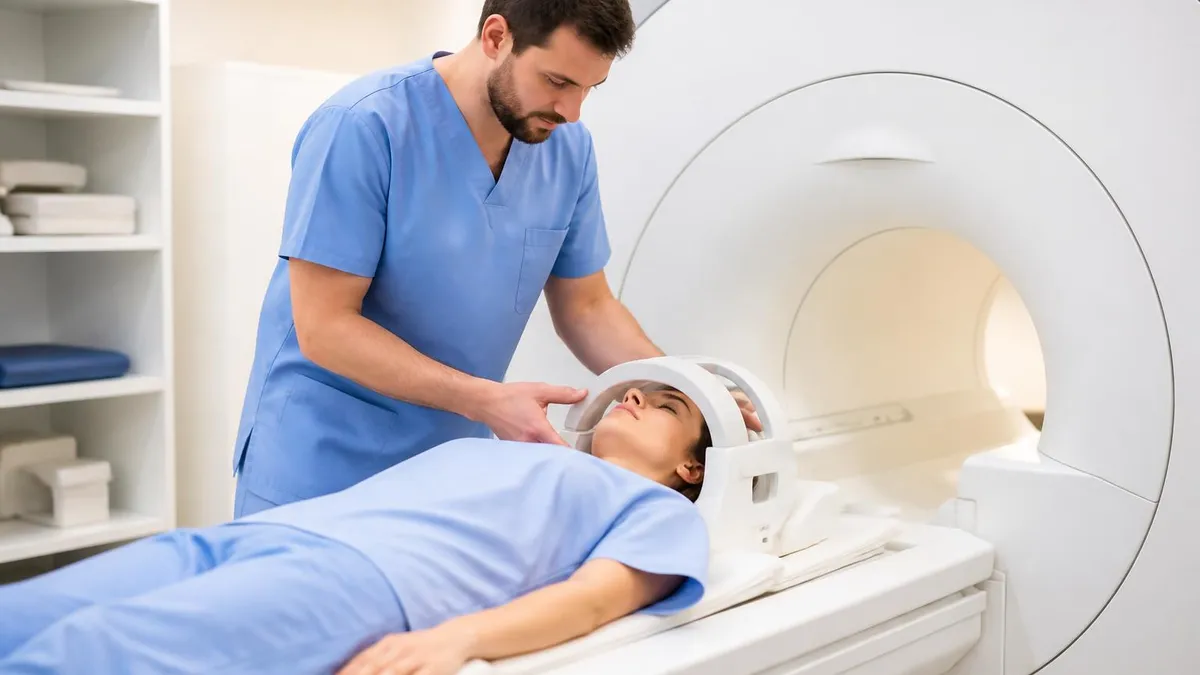
Before booking any MRI center near you, list every implant, surgical clip, stent, pacemaker, neurostimulator, cochlear device, insulin pump, and tattoo on your screening form. Some devices are MR-conditional only at 1.5T, others are absolutely contraindicated, and some require specific scan parameters. Never assume the center will catch a missing disclosure; safety is a shared responsibility.
Cost transparency at MRI centers has improved dramatically since federal price disclosure rules took effect, but you still need to ask the right questions to avoid surprise bills. Start by requesting a Good Faith Estimate, which uninsured and self-pay patients are legally entitled to receive in writing. The estimate must include the facility fee, professional read fee, and any contrast charges, broken out separately so you can compare line items across centers.
Insured patients should request both the in-network negotiated rate and the patient responsibility estimate based on deductible status. Many centers can pull this information from a real-time eligibility check, but you may need to call your insurer separately to confirm. If the deductible is unmet, the negotiated rate is what counts toward your out-of-pocket maximum, so a cheaper hospital may sometimes be the right answer if it accelerates deductible burn-down.
Cash pay is a powerful tool that few patients exploit. National averages place cash MRI prices between $400 and $700 for non-contrast outpatient studies, with some centers advertising bundled prices for two or three body parts done in a single visit. Be cautious, though: paying cash usually means the charge does not apply to your insurance deductible, which can be a poor trade if you expect significant medical expenses later in the year. Articles like our full body MRI guide explain when bundled scans are worth the premium.
Watch out for split billing. A hospital-owned outpatient center may bill the technical component (the scan itself) under a hospital tax ID and the professional component (the radiologist's interpretation) separately. Each can trigger a different copay or deductible application, doubling your apparent cost. Always ask whether billing is unified or split, and request copies of both fee schedules in advance.
Contrast adds $50 to $400 depending on the agent and the center's pricing model. Gadolinium-based contrast is required for many cancer staging studies, MS follow-ups, infection workups, and tumor evaluations. If your order includes contrast, verify the center stocks the requested agent (macrocyclic gadolinium-based agents are now standard) and that your kidney function lab work has been reviewed if you have any renal history.
Patient assistance programs and prompt-pay discounts are surprisingly common at independent centers. Ask if a same-day cash payment unlocks a discount, whether the center offers interest-free payment plans, and if there is a hardship application available. Hospital systems often have written charity care policies that can reduce or eliminate the bill for qualifying patients, but you typically have to apply within ninety to one hundred eighty days of service.
Finally, keep all paperwork. Save the order, the Good Faith Estimate, the consent form, the technologist worksheet if provided, and every billing statement. Disputes arise months later when explanation-of-benefit statements roll in, and the documentation makes appeals straightforward. The best MRI centers are accustomed to this and will provide records willingly; centers that resist transparent record-sharing are a signal to choose differently next time.
Day-of-scan preparation determines whether your MRI is completed on the first try and whether the images are diagnostic. Arrive thirty minutes early to handle paperwork, change into a gown, and complete the safety screening. Wear comfortable clothing without metal closures, zippers, or embedded fibers. Leave jewelry, watches, hearing aids, and removable dental hardware at home or in a locker; the magnet is always on and metallic items become projectiles inside the scan room.
If contrast is ordered, ask whether you should eat lightly beforehand. Most outpatient contrast MRIs do not require fasting, but abdominal and pelvic studies sometimes do. Hydrate well in the twenty-four hours before the scan; well-hydrated kidneys clear gadolinium efficiently and IV placement is easier. If you have any history of renal disease, confirm a recent eGFR is on file before the appointment to prevent last-minute cancellation.
Anxiety and claustrophobia are common, and the best MRI centers prepare for them proactively. Ask in advance about in-bore mirrors, prism glasses that let you see out of the bore, music or movie streaming, weighted blankets, and warmed bedding. If you anticipate severe anxiety, ask your physician about a single dose of an anxiolytic such as lorazepam taken thirty minutes before the scan. Bring a driver if you take any sedating medication; you should not drive yourself home.
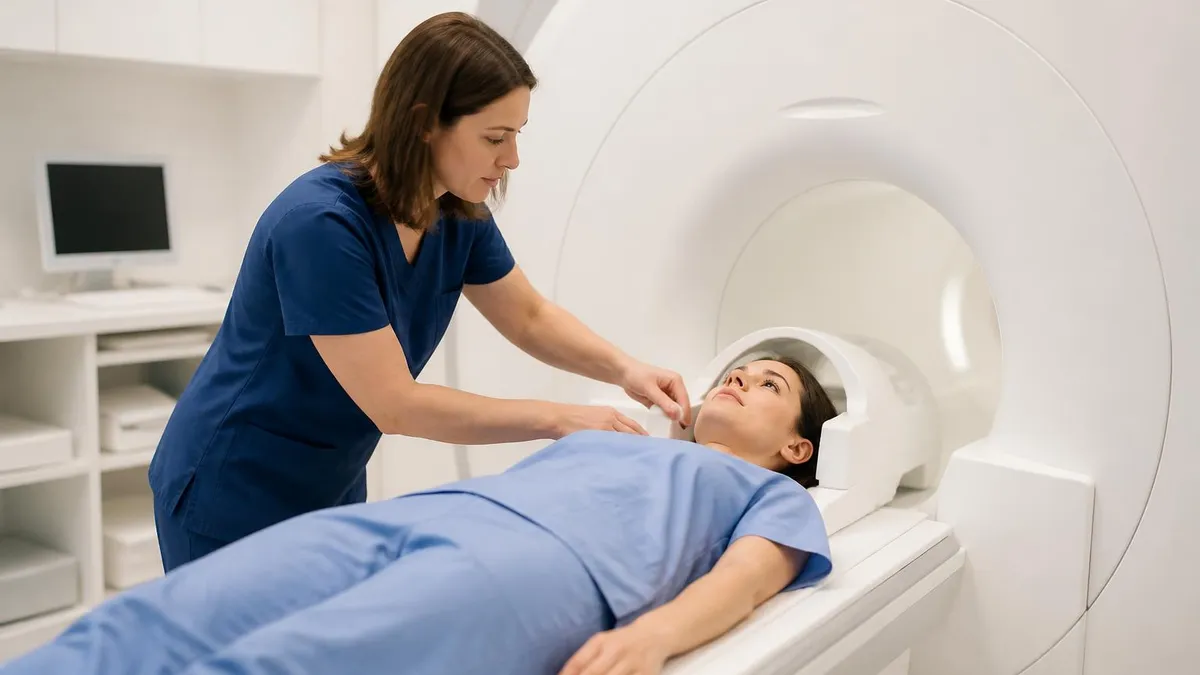
Communicate with the technologist throughout the exam. You will have a squeeze ball or call button connected to the control room. Ask how long each sequence lasts so you know exactly when to hold still, when you can swallow, and when you can breathe normally. Modern scanners often display sequence countdowns on the in-bore mirror, which makes a noticeable difference in patient cooperation, especially for studies running over forty minutes.
For musculoskeletal MRIs, positioning is everything. Spend a moment helping the technologist place the coil, the body part, and the support pads exactly as needed. A shoulder rotated five degrees out of alignment can hide a labral tear; a knee bent two degrees off-axis can blur the meniscus. The technologist will appreciate your cooperation and may run a quick localizer to confirm before committing to the full protocol. Our guide to common MRI findings walks through what the radiologist looks for in each region.
After the scan, ask exactly when and how results will be available. Many centers post images to a patient portal within hours and the final radiologist report within one to two business days. Request a CD or DICOM download for your personal records; second-opinion specialists, surgical consultants, and future imaging comparisons all benefit from having the original DICOM files rather than printed films or screen captures.
If anything about the experience felt off, the images appear blurry on the portal, or the report contradicts your symptoms, do not hesitate to request a second read or a repeat study at a different center. Reputable MRI centers welcome quality feedback and will release images to a second radiologist without fuss. The goal is a diagnostic-quality study that answers the clinical question, not loyalty to the first facility you scheduled with.
Sample MRI - Magnetic Resonance Imaging Practice Questions
Try these questions from our free MRI - Magnetic Resonance Imaging practice tests. The correct answer and an explanation follow each question.
For MRI of the internal auditory canals (IACs), which imaging plane is most commonly used as the primary plane?
- A. Sagittal oblique
- B. Axial
- C. Coronal
- D. Oblique coronal
Answer: B. Axial
Axial high-resolution images are the primary plane for IAC MRI because they show the full length of CN VII and CN VIII within the canal.
In k-space, what does the center of k-space primarily determine?
- A. Image contrast
- B. Image resolution
- C. Slice position
- D. Echo time
Answer: A. Image contrast
The center of k-space contains low spatial frequencies that carry the bulk of image contrast and overall signal intensity.
Echo planar imaging (EPI) is used in which MRI techniques due to its extremely fast acquisition speed?
- A. Conventional T1 spin echo and MRCP
- B. DWI, fMRI, and perfusion imaging
- C. MR arthrography and spectroscopy
- D. STIR and inversion recovery sequences
Answer: B. DWI, fMRI, and perfusion imaging
EPI acquires an entire k-space in a single excitation, enabling the speed needed for diffusion-weighted imaging, fMRI BOLD imaging, and dynamic perfusion studies.
The magnetic field's intensity is changed by this gradient coil from right to left.
- A. Z
- B. X
- C. Y
Answer: B. X
In a standard MRI coordinate system, the X-axis typically corresponds to the right-to-left (or left-to-right) direction across the patient. The X-gradient coil is engineered to produce a linear change in the magnetic field strength along this X-axis. This gradient is primarily used for spatial encoding, particularly for frequency encoding, in the right-to-left dimension.
Take the full MRI - Magnetic Resonance Imaging practice test
MRI Questions and Answers
About the Author

Medical Laboratory Scientist & Clinical Certification Expert
Johns Hopkins UniversityDr. Sandra Kim holds a PhD in Clinical Laboratory Science from Johns Hopkins University and is certified as a Medical Technologist (MT) and Medical Laboratory Scientist (MLS) through ASCP. With 16 years of clinical laboratory experience spanning hematology, microbiology, and molecular diagnostics, she prepares candidates for ASCP board exams, MLT, MLS, and specialist certification tests.
Join the Discussion
Connect with other students preparing for this exam. Share tips, ask questions, and get advice from people who have been there.
View discussion (8 replies)