
How Long Does a MRI Take? Scan Times by Body Part 2026 September
An MRI scan takes 15 to 90 minutes depending on the body part and whether contrast is used. Learn what affects MRI duration and how to prepare. 💯
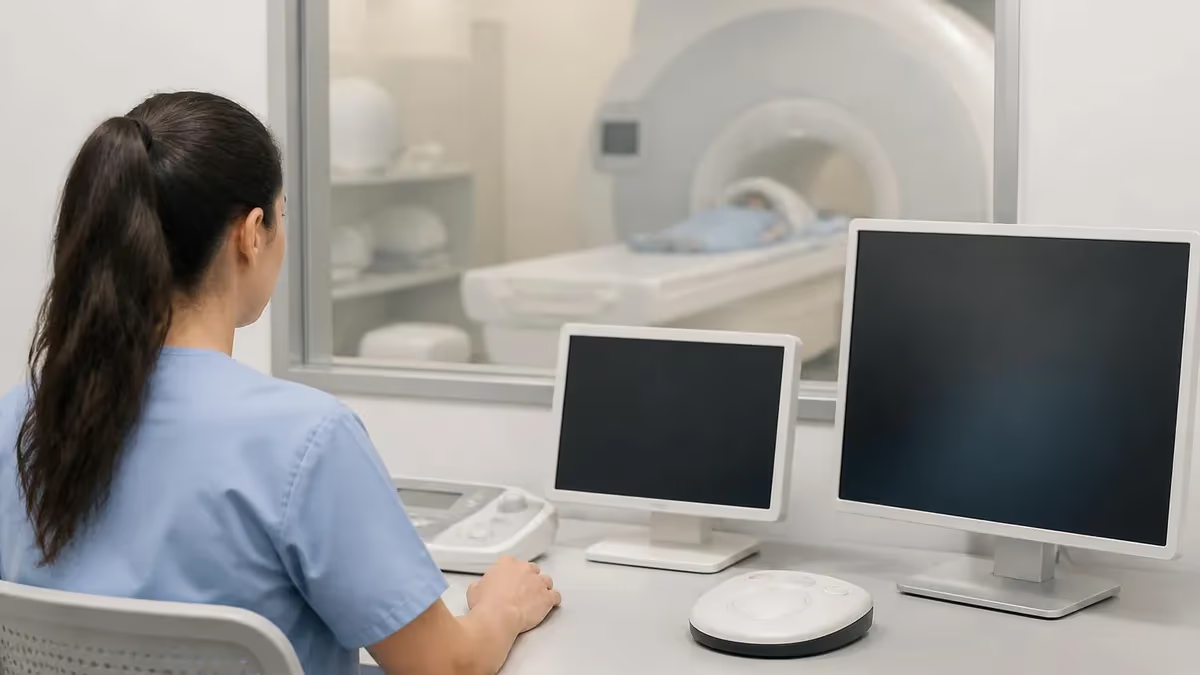
How Long Does an MRI Take?
When your doctor tells you they're ordering an MRI, one of the first questions that comes to mind is how long you'll actually be inside that machine. The answer varies more than you might expect — and it matters because knowing the duration upfront helps you prepare mentally, arrange your schedule, and decide whether you need to discuss sedation options with your doctor before the appointment.
Plenty of patients go in expecting 15 minutes and find out the scan is 45 minutes long, or cancel a scan they were dreading only to learn it would have been over in 20 minutes. Getting accurate information about your specific scan type eliminates that uncertainty.
A standard MRI scan takes between 15 and 90 minutes, with most scans falling in the 30- to 60-minute range. The exact duration depends on which body part is being scanned, whether contrast dye is used, how many sequences (image sets) the radiologist needs, and whether you're able to stay still throughout the scan. Moving during a sequence means that sequence has to be repeated, which adds time — sometimes significantly.
If you're about to have your first MRI, the time question is probably what concerns you most. Lying still inside a narrow tube while the machine makes loud knocking and buzzing sounds isn't anyone's idea of a good time, and knowing what to expect makes the experience considerably less stressful. A knee MRI might be done in 20 minutes.
A brain MRI with and without contrast could take 45 minutes. A full-body MRI can run 90 minutes or longer. The variation is wide, and your doctor's office should give you an estimated scan time when scheduling, but this guide breaks down typical times by body part so you know what's realistic.
It's worth noting that total appointment time is longer than scan time. You'll arrive early for check-in and screening, change into a gown, have an IV placed if contrast is needed, be positioned on the MRI table, and then have the actual scan. After the scan, there's usually a brief observation period if contrast was administered. Plan to be at the imaging centre for 1–2 hours total even if the scan itself is only 30 minutes. Ask the facility for their specific guidance when you schedule the appointment.
This guide covers scan durations for the most common MRI types, what factors make scans longer or shorter, what happens during the scan, and tips for getting through the experience comfortably — especially if you're claustrophobic or anxious about the procedure.
- Brain MRI: 20–45 minutes (longer with contrast)
- Spine MRI (cervical, thoracic, or lumbar): 30–45 minutes per region
- Knee MRI: 20–35 minutes
- Shoulder MRI: 30–45 minutes
- Abdomen/Pelvis MRI: 30–60 minutes
- Cardiac MRI: 45–90 minutes
- Full-body MRI: 60–90+ minutes
- Breast MRI: 30–45 minutes
- With contrast dye: Adds 15–30 minutes to any scan (includes IV placement and additional post-contrast sequences)
- Total appointment time: Plan for 1–2 hours including check-in, preparation, scan, and post-scan observation
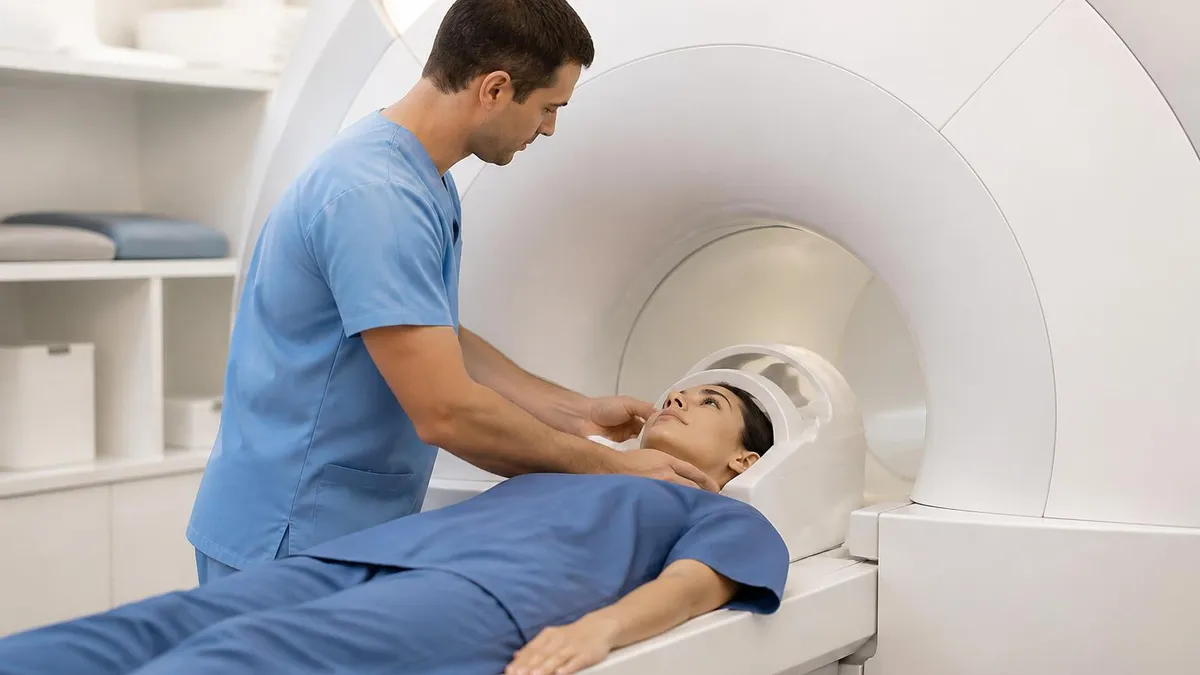
What Happens During an MRI: Step by Step
Check-In and Screening (15–20 minutes)
IV Placement (if contrast needed, 5–10 minutes)
Positioning on the MRI Table (5–10 minutes)
The Scan Itself (15–90 minutes)
Post-Scan (5–15 minutes)
MRI Duration by Body Part
The body part being scanned is the biggest factor in how long your MRI takes. Different anatomical areas require different numbers of sequences, different coil setups, and different levels of image resolution — all of which affect total scan time.
Brain MRI is one of the most common scans and typically takes 20–45 minutes. A basic brain MRI without contrast (screening for headaches, dizziness, or neurological symptoms) is usually 20–30 minutes. Adding contrast for tumour evaluation or multiple sclerosis assessment extends the scan to 35–45 minutes because additional post-contrast sequences are needed to show how tissues take up the contrast agent.
Spine MRI scans take 30–45 minutes per region (cervical, thoracic, or lumbar). If your doctor orders MRI of two spine regions — for example, cervical and lumbar — the total scan time is roughly double, since each region requires its own set of sequences and its own coil positioning. Spine MRIs are commonly ordered for disc herniation, spinal stenosis, nerve compression, and spinal cord abnormalities.
Knee MRI is relatively quick — typically 20–35 minutes — because the knee is a small, well-defined area and the coil setup is straightforward. Knee MRIs are among the most common orthopaedic MRI scans, frequently ordered for meniscus tears, ligament injuries (ACL, MCL), and cartilage damage. The short scan time makes knee MRI one of the more tolerable scans for first-time patients.
Shoulder MRI takes 30–45 minutes and is ordered for rotator cuff tears, labral tears, impingement, and other shoulder pathology. Some shoulder MRIs use a contrast injection directly into the shoulder joint (MR arthrogram) rather than intravenous contrast, which adds time for the joint injection before the scan begins.
Abdomen and pelvis MRI takes 30–60 minutes and often involves contrast. These scans are used to evaluate liver lesions, kidney abnormalities, pancreatic pathology, reproductive organs, and other abdominal and pelvic conditions. abdominal mri cpt code may include breath-hold sequences where the technologist instructs you to hold your breath for 15–20 seconds during specific sequences to reduce motion artefacts from breathing.
Breast MRI takes 30–45 minutes and uses contrast in virtually all cases. You lie face down on a special table with openings for the breasts, which are positioned in dedicated coils. Breast MRI is used for screening high-risk patients, evaluating extent of known breast cancer, and assessing breast implant integrity. The prone position is different from other MRI scans and some patients find it less claustrophobic than lying on their back in the standard bore position.
Cardiac MRI is one of the longest common scans at 45–90 minutes. It uses ECG gating — synchronising the MRI sequences to your heart rhythm — which requires additional setup time and specialised sequences. Cardiac MRI evaluates heart structure, function, blood flow, and tissue characterisation (including scarring and inflammation). The length and complexity make cardiac MRI one of the most technically demanding MRI procedures.
Prostate MRI, ordered increasingly often as an alternative or complement to biopsy for prostate cancer evaluation, takes 30–45 minutes. It uses a multiparametric protocol (mpMRI) that acquires several types of image sequences to characterise prostate tissue in detail. The scan is performed without an endorectal coil at many centres now (using a 3T machine with surface coils instead), which makes the experience considerably more comfortable than it was when endorectal coils were standard.
Wrist and ankle MRI scans are among the shortest at 15–25 minutes, since these are small anatomical areas that require fewer sequences and straightforward coil positioning. If your MRI is for a hand, wrist, foot, or ankle injury, you can expect to be in and out relatively quickly compared to larger body-area scans.
For these extremity scans, some facilities have dedicated extremity MRI machines — smaller, open units that scan only the limb rather than the whole body, which eliminates claustrophobia entirely since your body doesn't enter an enclosed bore. Ask your ordering physician whether a dedicated extremity MRI unit is available and appropriate for your specific diagnostic scan.
Factors That Affect How Long Your MRI Takes
If your scan requires contrast, expect 15–30 minutes of additional time. The IV placement takes 5–10 minutes, and additional post-contrast sequences add another 10–20 minutes of scan time. Your doctor orders contrast when they need to see how blood vessels, tumours, inflammation, or infections enhance — which means the additional time is diagnostically necessary. Not all MRIs require contrast — your ordering physician determines this based on what they're looking for.
Moving during a sequence creates motion artefacts — blurry or distorted images that can't be used diagnostically. When this happens, the technologist has to repeat the affected sequence, adding time to the scan. Even small movements (swallowing, coughing, shifting position) can degrade image quality. Staying as still as possible is the most important thing you can do to keep scan time short. If you know you'll have difficulty staying still, discuss sedation options with your doctor before the appointment.
An MRI scan consists of multiple sequences, each producing images with different tissue contrast (T1-weighted, T2-weighted, FLAIR, diffusion-weighted, etc.). A basic screening scan may require 4–6 sequences. A detailed diagnostic scan investigating a specific pathology may require 8–12+ sequences, each adding 2–8 minutes. The radiologist or ordering physician determines how many sequences are needed based on the clinical question being addressed.
MRI machines vary in magnetic field strength — commonly 1.5 Tesla (1.5T) and 3 Tesla (3T). Higher field strength (3T) produces higher-resolution images but doesn't necessarily reduce scan time — in some cases 3T scans take longer because more detailed sequences are acquired. Open MRI machines (designed for claustrophobic or larger patients) use lower field strength and typically produce lower-resolution images, which may require longer sequences to compensate. The machine available at your imaging centre affects both image quality and scan duration.
Managing Claustrophobia and Anxiety During MRI
Claustrophobia and general anxiety are the most common reasons patients struggle with MRI scans. Several strategies can help:
- Ask about sedation: Mild oral sedation (usually a benzodiazepine like Valium or Ativan) is commonly prescribed for MRI patients with anxiety. Take it 30–60 minutes before the scan. You'll need someone to drive you home afterward.
- Close your eyes before entering the bore: Many claustrophobic patients find it easier if they close their eyes as they slide into the machine and keep them closed throughout. If you can't see the enclosed space, the experience is less triggering.
- Use the music option: Most MRI centres offer headphones with music during the scan. The music partially masks the machine noise and gives you something to focus on other than the environment.
- Focus on breathing: Slow, deep breathing throughout the scan reduces anxiety and also minimises motion from breathing.
- Remember the panic button: You have a squeeze ball that stops the scan immediately if you need to come out. Knowing you can stop at any time reduces the feeling of being trapped.
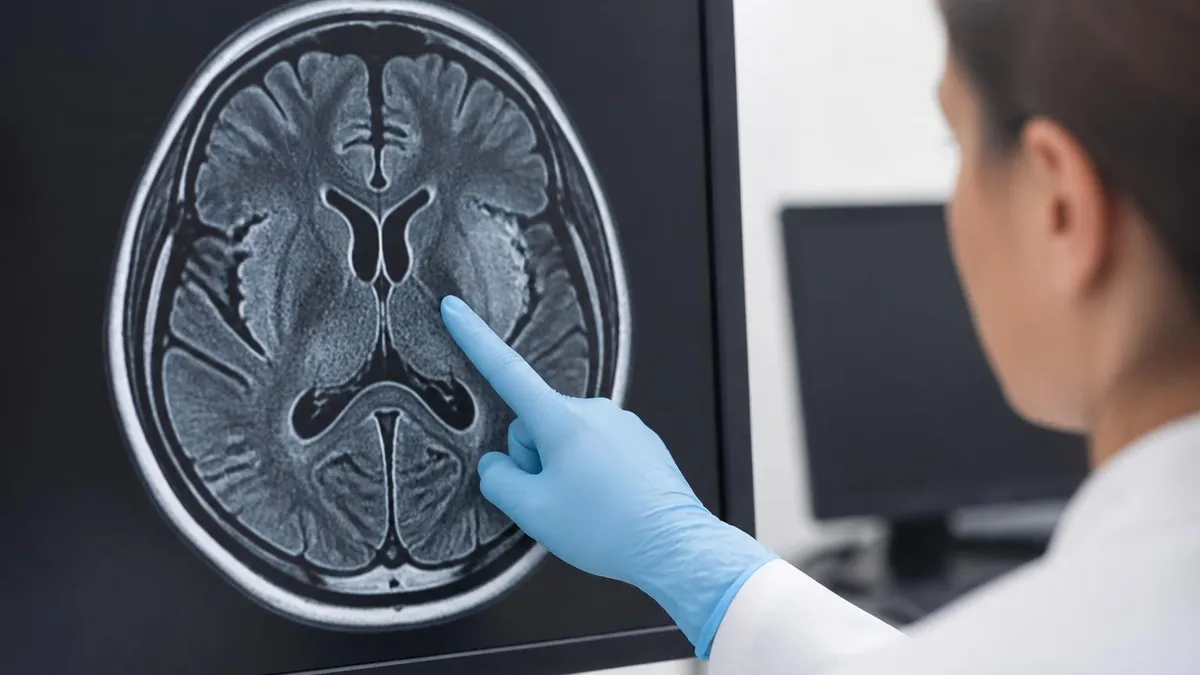
How to Prepare for Your MRI Appointment
Preparation for an MRI is straightforward — there's no fasting required for most scans (except some abdominal MRIs where your doctor may ask you not to eat for 4–6 hours before), and no dietary restrictions apply. The main preparation is practical: wearing comfortable clothing without metal (or being prepared to change into a gown), removing all jewellery and accessories, and arriving with enough time for check-in and screening.
Bring your photo ID, your insurance card, and the MRI order from your doctor. If you have any previous imaging (CT scans, X-rays, prior MRIs on disc or through a patient portal), bringing or uploading these for comparison can help the radiologist interpret your new scan. Let the scheduling staff know if you have claustrophobia so they can schedule extra time for the appointment and arrange sedation if needed.
If you have any metal implants — joint replacements, spinal hardware, cardiac stents, dental implants — tell the MRI team during screening. Most modern orthopaedic implants are MRI-compatible, but the technologist needs to verify compatibility before proceeding. Pacemakers and certain other electronic implants may be contraindicated for MRI, though many modern pacemakers are designed to be MRI-conditional under specific protocols. Bring documentation of your implant (the implant card from your surgeon) if you have one.
For contrast-enhanced MRIs, let the team know if you have kidney problems — gadolinium contrast is processed by the kidneys, and impaired kidney function increases the risk of a rare but serious side effect called nephrogenic systemic fibrosis. A blood test to check kidney function may be required before contrast administration if your medical history suggests risk. Also mention any previous allergic reactions to MRI contrast, which are uncommon but can occur.
MRI Appointment Preparation Checklist
- ✓Confirm your appointment time and arrival instructions — most centres ask you to arrive 15–30 minutes early for paperwork and screening
- ✓Wear comfortable clothing without metal zippers, buttons, snaps, or underwire — many centres provide gowns, but metal-free clothing avoids the change entirely
- ✓Remove all jewellery, watches, hair clips, piercings, and body jewellery before entering the MRI room — or leave them at home
- ✓Bring your photo ID, insurance card, and the MRI order from your doctor
- ✓If you have metal implants (joint replacements, stents, dental implants, spinal hardware), bring your implant card or documentation for the screening process
- ✓If you're claustrophobic, discuss sedation with your doctor in advance — a prescription for mild oral sedation should be arranged before the appointment, not on arrival
- ✓If contrast is ordered and you have kidney problems, let the team know — a kidney function blood test may be needed before contrast can be administered
- ✓Arrange a ride home if you're taking sedation — you cannot drive after taking anti-anxiety medication for the scan
MRI vs Other Imaging: When MRI Is the Best Choice
- +MRI produces the highest soft tissue contrast of any imaging modality — it excels at visualising muscles, tendons, ligaments, cartilage, brain tissue, spinal cord, and internal organs with detail that CT and X-ray cannot match
- +No ionising radiation — unlike CT scans and X-rays, MRI uses magnetic fields and radio waves, making it safe for repeated imaging and particularly preferred for children and pregnant patients (though caution is still exercised)
- +Multiplanar imaging — MRI can produce images in any plane (axial, sagittal, coronal, oblique) without repositioning the patient, providing comprehensive 3D anatomical information
- +Contrast agents (gadolinium) are generally safer than CT contrast (iodinated contrast) for patients with iodine allergies
- −MRI takes significantly longer than CT — a CT scan of the brain takes about 5 minutes; brain MRI takes 20–45 minutes. The longer scan time increases patient discomfort and the chance of motion artefacts
- −Claustrophobia and patient anxiety are common barriers — the enclosed tube and loud noise make MRI difficult for a significant percentage of patients, sometimes requiring sedation or alternative imaging
- −MRI is more expensive than CT or X-ray — out-of-pocket costs for MRI range from $400 to $3,500 depending on the body part, contrast use, facility, and insurance coverage
- −Contraindicated for some patients — pacemakers, certain metallic implants, and metallic foreign bodies (particularly near the eyes) may prevent MRI scanning, requiring alternative imaging
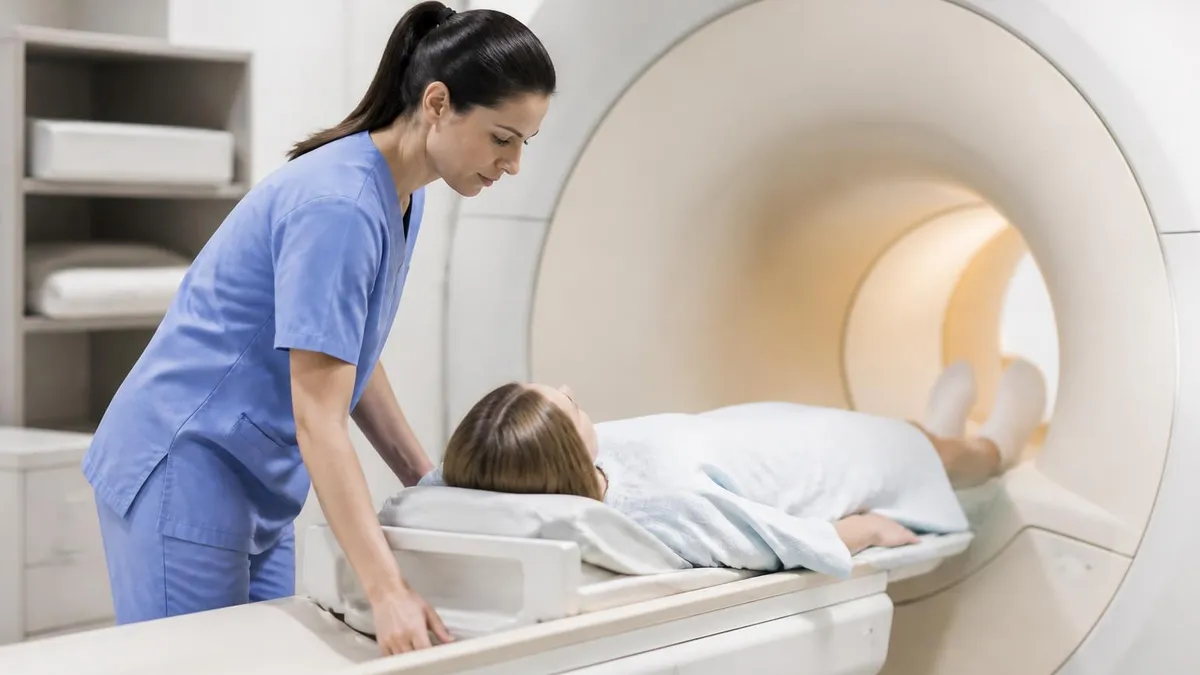
Understanding Your MRI Results
After your MRI scan, the images are reviewed by a radiologist — a physician specialising in medical imaging interpretation. The radiologist produces a report describing the findings, which is sent to your ordering physician (the doctor who requested the MRI). Turnaround time for results varies: routine outpatient MRIs are typically reported within 24–72 hours, while urgent scans ordered from the emergency department may be read within hours.
Your ordering physician — not the MRI technologist — is the appropriate person to discuss results with. The technologist who performed the scan cannot provide diagnostic information or discuss findings, even if you ask during the scan. This can feel frustrating when you're anxious about results, but the technologist's role is to acquire quality images, and interpretation requires the radiologist's specialised training and access to your full medical history.
Some imaging centres offer patient portal access where you can view the radiologist's report and even the MRI images themselves. While reading your own report can be informative, radiology reports use technical language (describing signal characteristics, anatomical locations, and comparison to normal) that can be confusing or alarming without clinical context. A finding described as 'nonspecific signal abnormality' might sound serious but could be entirely benign — or it could warrant further investigation. Your ordering physician interprets the report in the context of your symptoms, medical history, and physical examination to determine what the findings mean for you specifically.
MRI: Key Numbers
MRI Cost and Insurance Coverage
MRI costs vary dramatically depending on where you have the scan, what's being scanned, whether contrast is used, and your insurance coverage. Without insurance, MRI scans can range from $400 to $3,500 or more. With insurance, your out-of-pocket cost depends on your plan's deductible, copayment structure, and whether the facility is in-network.
Freestanding imaging centres (not attached to a hospital) are typically 40–60% cheaper than hospital-based MRI facilities for the same scan — because hospital-based facilities include facility fees that freestanding centres don't charge. If you have a choice of where to get your MRI and cost is a concern, ask your doctor if a freestanding centre is appropriate for your scan. Most routine outpatient MRIs can be performed at freestanding centres with equivalent image quality.
Prior authorisation from your insurance company is commonly required before an MRI scan. Your doctor's office typically handles this process, but it can take 1–5 business days for approval. If your MRI is urgent, your doctor can request expedited authorisation. If authorisation is denied, your doctor can appeal with additional clinical justification. Don't schedule the MRI until authorisation is confirmed — having a scan without authorisation can result in the full cost being your responsibility.
If you're uninsured or have a high-deductible plan, ask the imaging centre about cash-pay pricing before scheduling. Many centres offer significant discounts for cash payment at the time of service — sometimes 50% or more below the billed insurance rate. Shopping around between facilities is legitimate and encouraged: the same MRI scan can cost $500 at one centre and $3,000 at another in the same city. Websites like Healthcare Bluebook and MDsave provide pricing transparency tools that show typical costs for MRI scans in your area.
The MRI machine's magnetic field is extremely powerful — strong enough to pull metal objects across the room at dangerous speed. This is why metal screening before every MRI is critical for your safety. Report ALL metal in or on your body: surgical implants, joint replacements, cardiac devices, vascular clips, dental work, shrapnel, metallic fragments (even suspected ones from grinding or welding), body piercings, and tattoos (some inks contain metallic particles that can heat during MRI). Most modern surgical implants are MRI-compatible, but verification is required before every scan. If you have a cardiac pacemaker or defibrillator, special MRI-conditional protocols must be followed — never assume you can have an MRI without verification from both your cardiologist and the MRI team.
When to Call Your Doctor After an MRI
MRI is a safe procedure with essentially no recovery time — you can drive, eat, drink, and resume normal activities immediately after the scan (unless you received sedation, in which case you shouldn't drive until the medication wears off). There's no residual effect from the magnetic field or radio waves used during the scan.
Some patients report mild muscle stiffness or back discomfort from lying still on the MRI table for an extended period — particularly for longer scans like cardiac or full-body MRI. This resolves quickly once you're able to move and stretch after the scan. If you have pre-existing back problems, let the technologist know before the scan starts — they can provide additional padding, a knee bolster to reduce lower back strain, or position you more comfortably.
If gadolinium contrast was administered, mild side effects are possible but uncommon: headache, nausea, and a cool sensation at the IV site during injection are the most frequently reported. These typically resolve within minutes to hours. Serious allergic reactions to gadolinium are extremely rare (much rarer than reactions to CT contrast), but if you experience difficulty breathing, hives, swelling of the face or throat, or severe nausea after leaving the imaging centre, seek medical attention immediately.
The most common post-MRI anxiety is waiting for results. As mentioned, routine results take 24–72 hours. If you haven't heard from your doctor within a week, call the office to follow up — sometimes reports are received but not reviewed promptly, and a polite call ensures your results don't get overlooked. If the MRI was ordered urgently (for example, from the emergency department), results are typically communicated much faster — often the same day.
How Long Does a MRI Take Questions and Answers
About the Author

Medical Laboratory Scientist & Clinical Certification Expert
Johns Hopkins UniversityDr. Sandra Kim holds a PhD in Clinical Laboratory Science from Johns Hopkins University and is certified as a Medical Technologist (MT) and Medical Laboratory Scientist (MLS) through ASCP. With 16 years of clinical laboratory experience spanning hematology, microbiology, and molecular diagnostics, she prepares candidates for ASCP board exams, MLT, MLS, and specialist certification tests.
Join the Discussion
Connect with other students preparing for this exam. Share tips, ask questions, and get advice from people who have been there.
View discussion (8 replies)