
HVAC Repair Cost: Complete 2026 Pricing Guide for Common AC, Furnace, and Heat Pump Repairs
HVAC repair cost breakdown for 2026: average prices for AC, furnace, heat pump fixes, service fees, parts, and when to repair vs replace. 🗨️
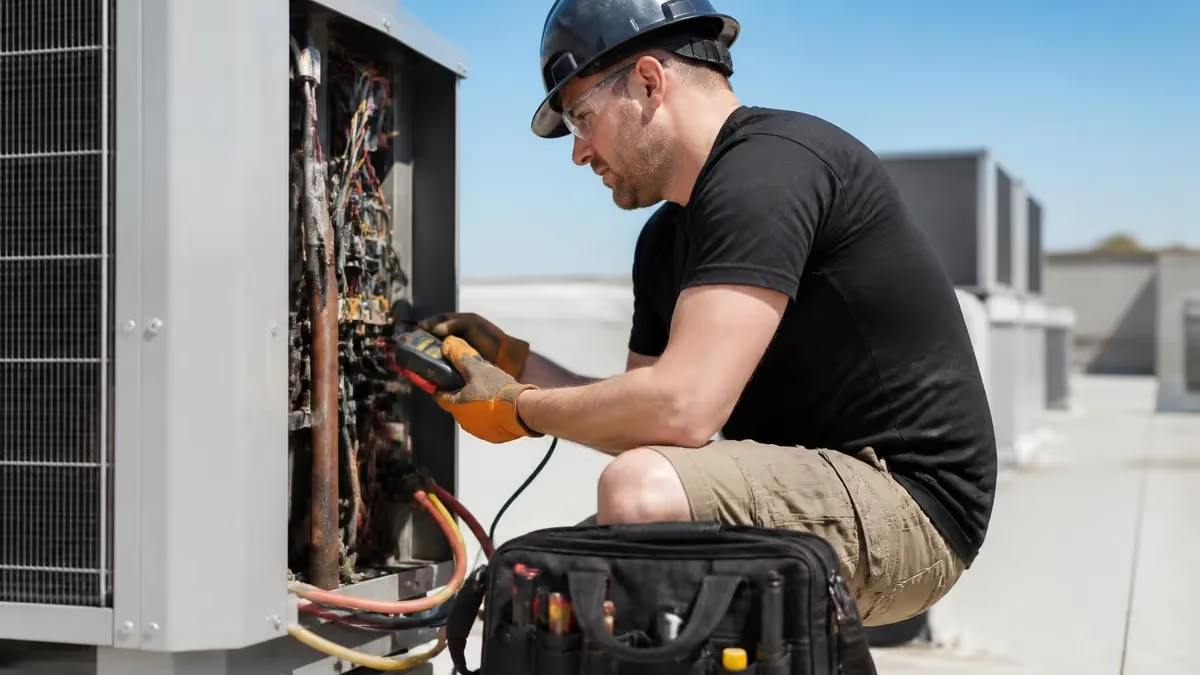
Understanding hvac repair cost in 2026 means more than just knowing a single average number. The national mean for a service call hovers around $350, but real-world bills range from $75 for a basic capacitor swap to over $3,500 for a compressor replacement. The total you pay depends on the component that failed, the age and brand of your system, refrigerant type, regional labor rates, time of year, and whether you call during business hours or at 2 a.m. on a holiday weekend. Knowing the cost drivers helps you negotiate fairly and avoid overpaying. Practice with the free HVAC practice test on PracticeTestGeeks (35 questions with answer explanations).
The most common HVAC repairs in American homes involve electrical components, refrigerant leaks, ignition issues, blower motors, and thermostat failures. Each of these has a fairly predictable price band, which means you can quickly tell whether a quote is in the normal range or wildly inflated. A capacitor or contactor replacement should run $150 to $400 installed. A thermostat swap typically costs $150 to $550. A blower motor replacement averages $450 to $1,200. Anything outside those ranges deserves a second opinion.
Labor costs make up roughly 50 to 70 percent of most HVAC repair invoices. Technicians in the United States bill between $75 and $200 per hour, and many companies add a flat diagnostic or trip fee of $75 to $200 just to come to your door. After-hours emergency rates can double those numbers. If you live in a high cost-of-living metro like San Francisco, Boston, or New York, expect labor rates near the top of the range. Smaller markets in the Midwest and South often see rates 20 to 30 percent lower.
Refrigerant repairs deserve special attention in 2026 because of the federal phaseout of R-410A. New equipment now uses R-454B or R-32, while older systems still rely on R-410A or, in some cases, R-22. Refilling R-22 can cost $100 to $200 per pound, and a typical residential system holds 5 to 15 pounds. That alone can push a leak repair past $2,000 and is often the tipping point where replacement makes more sense than continued repair. Working with skilled certified HVAC contractors helps you weigh those tradeoffs fairly.
Brand and equipment type also influence repair cost. Premium brands like Carrier, Trane, and Lennox tend to carry slightly higher parts costs, while value brands like Goodman, Ameristar, and Payne are often cheaper to fix. Heat pumps cost more to repair than straight air conditioners because they have more components — reversing valves, defrost boards, and dual-purpose refrigerant circuits. Furnaces vary by fuel type, with high-efficiency condensing gas units costing more to service than basic 80% AFUE models due to secondary heat exchangers and condensate systems.
Finally, timing matters. Homeowners who schedule repairs in the shoulder seasons — spring and fall — often pay 10 to 25 percent less than those who wait for a July heat wave or January cold snap. Annual maintenance contracts can also reduce the average annual repair spend by 30 to 40 percent because problems get caught early, before a $150 capacitor leads to a $1,200 compressor failure. This guide walks through every major cost category, explains what drives pricing, and shows you how to evaluate quotes intelligently.
By the end of this article you will know average prices for the 15 most common HVAC repairs, the red flags that signal an inflated estimate, the diagnostic questions to ask before approving any work, and the breakeven point where repair stops making financial sense and replacement becomes smarter. We will also cover warranty considerations, financing options, and how to read a repair invoice line by line so you understand exactly what you are paying for.
Free HVAC Study Tools
Interactive HVAC resources on PracticeTestGeeks, free to start:
- HVAC EPA 608 Refrigerant Certification — 35 questions with instant scoring and answer explanations
- HVAC flashcards — review key terms and concepts card by card
- HVAC study guide — topic-by-topic overview of what the exam covers
- HVAC cheat sheet — one-page printable summary for last-minute review
HVAC Repair Cost by the Numbers
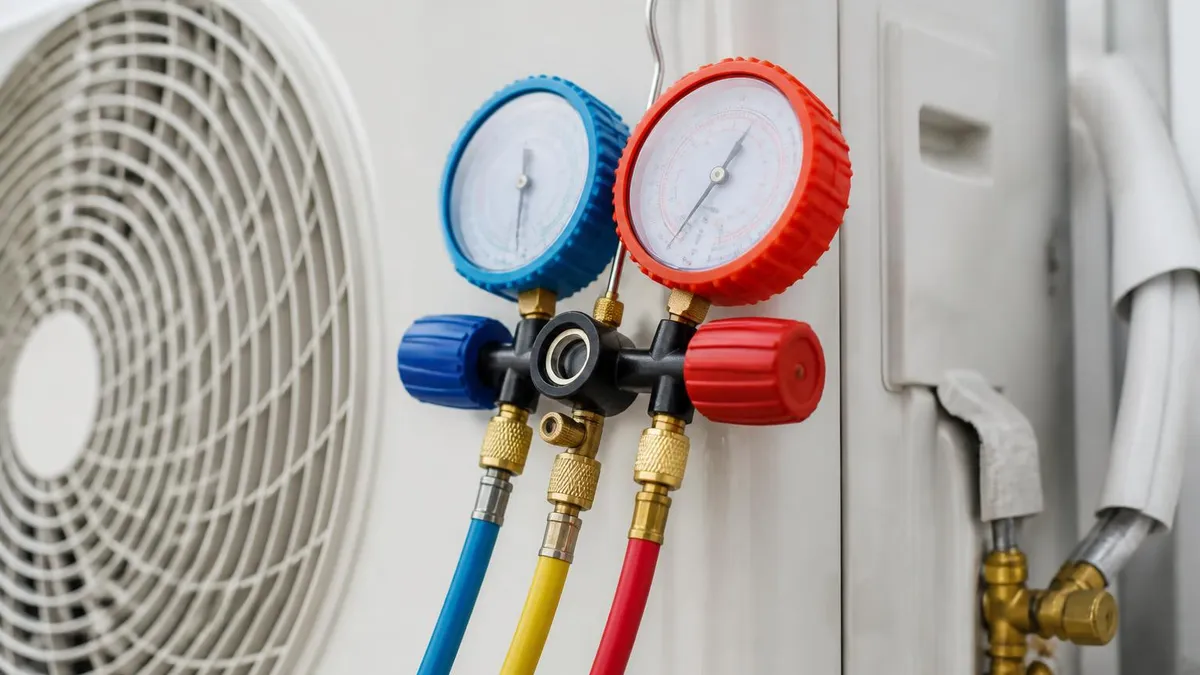
Average HVAC Repair Costs by Component
Cost drivers behind your hvac repair cost go well beyond the part itself. Labor accounts for the largest single line item on most invoices, and the hourly rate a contractor charges reflects training, licensing, insurance, vehicle costs, and overhead like dispatch software and parts inventory. A well-run company carrying full liability and workers comp insurance often charges $125 to $175 per hour, while uninsured handymen may quote $50 to $75. The savings sound attractive until you consider that improper refrigerant handling, electrical mistakes, or void warranties can easily cost ten times more later.
Geographic location plays a major role. Urban coastal markets like Seattle, San Diego, Miami, and Boston typically run 20 to 40 percent above the national average. Mid-sized metros in Texas, Arizona, the Carolinas, and Florida sit close to the average. Rural areas may be cheaper for labor but more expensive for parts due to limited local distributors and longer drive times. Some contractors add a fuel or trip surcharge for homes more than 25 miles from their shop, which can add $25 to $100 to your bill.
Equipment age is another huge variable. Parts for systems under 10 years old are usually in stock at local supply houses. Parts for units 15 to 20 years old may require special ordering, and parts for systems older than 20 years are sometimes discontinued entirely. When a part is discontinued, the technician has to find a compatible universal replacement, which adds engineering time and risk. Older R-22 systems are the most dramatic example because refrigerant cost alone can exceed $1,000.
Brand matters less than many homeowners assume, but it does influence parts cost. OEM parts from premium brands like Trane, Carrier, and Lennox typically cost 15 to 30 percent more than equivalent aftermarket parts. Many independent contractors stock universal capacitors, contactors, and motors that fit dozens of brands at lower cost. Asking your technician whether they are quoting OEM or aftermarket is fair and reasonable. Aftermarket is often fine for non-critical components and can shave $50 to $200 off a bill without sacrificing reliability.
Time of day and season have a measurable effect. After-hours, weekend, and holiday calls usually carry a 1.5x to 2x labor multiplier, and emergency dispatch fees can add $100 to $300 on top of the standard trip charge. Peak season demand also drives up prices because contractors are running at capacity and have less incentive to discount. Scheduling non-urgent repairs in April or October instead of July or January is one of the simplest ways to reduce commercial HVAC contractors near me bills and residential bills alike.
Warranty status can completely change the math. Most major HVAC manufacturers offer 5 to 10 year parts warranties, and some premium lines extend that to 12 years. If your system is under warranty, you may only pay labor — typically $200 to $600 depending on the job. Always have your model and serial number ready when scheduling service so the company can look up warranty status before they arrive. Skipping this step is one of the most common ways homeowners overpay.
Finally, financing and payment options affect total cost. Many contractors offer 0% promotional financing on repairs over $1,000, which sounds attractive but sometimes comes with a 3 to 5 percent price markup baked in. Paying by cash or check may earn a small discount at smaller companies. Credit card payments are convenient but rarely change the price. Always ask about discounts for veterans, seniors, first responders, or maintenance plan members before approving any quote.
HVAC Practice Test Questions
Prepare for the HVAC - Heating Ventilation and Air Conditioning exam with our free practice test modules. Each quiz covers key topics to help you pass on your first try.
HVAC Air Conditioning
HVAC Exam Questions covering Air Conditioning. Master HVAC Test concepts for certification prep.
HVAC Code Compliance
Free HVAC Practice Test featuring Code Compliance. Improve your HVAC Exam score with mock test prep.
HVAC Electrical Controls
HVAC Test Prep for Electrical Controls. Practice HVAC Quiz questions and boost your score.
HVAC Energy Efficiency
HVAC Questions and Answers on Energy Efficiency. Free HVAC practice for exam readiness.
HVAC Heating Systems
HVAC Mock Test covering Heating Systems. Online HVAC Test practice with instant feedback.
HVAC Load Calculations
Free HVAC Quiz on HVAC Load Calculations. HVAC Exam prep questions with detailed explanations.
HVAC Tools and Equipment
HVAC Practice Questions for HVAC Tools and Equipment. Build confidence for your HVAC certification exam.
HVAC Refrigeration
HVAC Test Online for Refrigeration. Free practice with instant results and feedback.
HVAC Safety Practices
HVAC Study Material on Safety Practices. Prepare effectively with real exam-style questions.
HVAC System Design
Free HVAC Test covering System Design. Practice and track your HVAC exam readiness.
HVAC Thermodynamics
HVAC Exam Questions covering Thermodynamics. Master HVAC Test concepts for certification prep.
AC vs Furnace vs Heat Pump Repair Pricing
Central air conditioner repairs average $150 to $650 for routine fixes like capacitors, contactors, fan motors, and thermostats. More involved work like coil cleaning runs $100 to $400, while refrigerant leak repairs typically land between $200 and $1,500 before adding the refrigerant itself. The compressor is the single most expensive AC component, ranging from $1,500 to $3,500 installed, and is usually the point where homeowners begin weighing full replacement against continued repair on an older system.
Window and ductless mini-split units fall outside these averages. A mini-split board replacement averages $400 to $700, and outdoor unit fan motors cost $300 to $600. Mini-splits often require manufacturer-specific parts that can be slower to source. Window units are generally not worth repairing if the cost exceeds $150, since new window ACs start around $250. Confirming whether your system is central, split, or window-style is the first step in benchmarking a fair quote.
Paying for HVAC Repair vs Full System Replacement
- +Lower upfront cost than replacement, often $300-$1,500 vs $6,000-$15,000
- +Faster turnaround, usually same-day or next-day completion
- +No permit, ductwork, or electrical upgrade required for most repairs
- +Preserves existing system warranties that may still be active
- +Allows time to budget and shop for a quality replacement later
- +Sensible choice for systems under 10 years old in good overall condition
- +Avoids refrigerant transition costs from R-410A to newer refrigerants
- −Repairs add up — three $400 fixes equal one major system component
- −Older systems lose 5-15 percent efficiency per decade, raising utility bills
- −Repair-only approach can mask larger underlying problems
- −R-22 refrigerant costs make older system repairs disproportionately expensive
- −No improvement in comfort, noise, or air quality after the repair
- −Risk of repeat failures on systems past 12-15 years of age
- −Tax credits and utility rebates for new high-efficiency units are forfeited
Pros and Cons at a Glance
| Pros | Cons |
|---|---|
| Faster turnaround, usually same-day or next-day completion | Repair-only approach can mask larger underlying problems |
| No permit, ductwork, or electrical upgrade required for most repairs | No improvement in comfort, noise, or air quality after the repair |
| Preserves existing system warranties that may still be active | Tax credits and utility rebates for new high-efficiency units are forfeited |
Homeowner Repair Approval Checklist
- ✓Confirm the technician is licensed, insured, and EPA 608 certified before any work begins
- ✓Ask for a written diagnostic explanation, not just a part name and price
- ✓Request the model and serial numbers and check manufacturer warranty status online
- ✓Get the part cost and labor cost broken out separately on the estimate
- ✓Ask whether the quoted part is OEM or aftermarket and why
- ✓Request at least one second opinion for any repair over $1,000
- ✓Confirm whether the diagnostic fee is waived if you approve the repair
- ✓Ask about maintenance plan discounts, military, senior, or first responder pricing
- ✓Verify that any refrigerant added is recorded with type and weight on the invoice
- ✓Get a written warranty on parts and labor — typically 1 year minimum
When repair cost exceeds half the price of a new system, replace.
If your HVAC system is older than 10 years and a quoted repair exceeds 50 percent of the cost of a new system, replacement is almost always the smarter financial choice. Multiply your system age by the repair cost — if that number exceeds $5,000, you are likely throwing good money at a failing system. Pair this with utility bill trends and refrigerant type to make a confident decision.
The repair-versus-replace decision is one of the most consequential calls a homeowner makes, and getting it right can save thousands of dollars over the next decade. The simplest framework is the 50 percent rule: if a quoted repair costs more than half the price of a comparable new system, replacement is usually the better long-term play. A $3,500 compressor on a 14-year-old, $7,000 AC system fails this test clearly. A $400 capacitor on a 6-year-old system passes it easily. Most decisions fall between these extremes and require a closer look.
System age is the single most important variable after repair cost. Manufacturers design residential HVAC systems for a 15 to 20 year service life under normal conditions, with 12 to 18 years being typical in real-world use. Once a system passes 12 years, the probability of additional failures rises sharply. A second component often fails within 18 to 24 months of the first major repair on an aging system, and homeowners who keep repairing end up paying for three or four service calls before finally replacing — often spending more than the replacement would have cost.
Efficiency loss is the silent cost of an aging system. A 14 SEER unit from 2010 may be operating closer to 11 or 12 SEER today due to coil degradation, refrigerant micro-leaks, and motor wear. New 2026 systems start at 14.3 SEER2 minimum and premium models reach 22 SEER2 or higher. Switching from an aging 11 SEER actual unit to a new 18 SEER2 unit can cut cooling costs by 35 to 45 percent. Over 10 years in a hot climate, that adds up to $3,000 to $7,000 in utility savings.
Refrigerant type tips the scale dramatically. R-22 was phased out in 2020, and prices for reclaimed R-22 now range from $100 to $200 per pound. A modest leak repair on an R-22 system can run $1,500 to $2,500 once refrigerant is included. R-410A is being phased out for new equipment in 2025-2026, so service availability and parts compatibility will gradually decline. If your repair quote involves either of these refrigerants on a system older than 10 years, replacement deserves serious consideration.
Comfort and reliability matter too. A system that struggles to maintain temperature during peak weather, runs constantly, makes new noises, or causes frequent humidity issues is signaling that even successful repairs will not restore normal performance. Two-stage and variable-speed equipment introduced in the last 8 years delivers noticeably better comfort than single-stage systems from the 2010s. If you have lived with mediocre comfort for years, replacement often delivers an immediate quality-of-life upgrade beyond the dollar math.
Tax credits and utility rebates can dramatically improve the replacement calculation. The Inflation Reduction Act includes federal tax credits of up to $2,000 for qualifying heat pumps and $600 for high-efficiency AC and furnace upgrades. Many state and local utility programs add another $500 to $1,500 in rebates. Some natural gas utilities offer incentives to switch to heat pumps as part of electrification programs. Always check the ENERGY STAR rebate finder and your utility website before deciding.
Finally, consider your timeline for staying in the home. If you plan to move within 2 to 3 years, a $1,500 repair on a marginal system may be the right answer, since you will not personally benefit from long-term efficiency gains. If you plan to stay 7 years or more, a new high-efficiency system pays back through lower utility bills, fewer service calls, longer warranty coverage, and the comfort of knowing you will not be making this decision again any time soon.
Be cautious of any contractor who pressures you to decide on a major repair or replacement on the spot, refuses to provide a written estimate, or quotes a repair without first running diagnostics. Reputable companies provide itemized estimates, give you time to think, and welcome second opinions. If a quote is dramatically higher or lower than two other estimates, treat it as a red flag rather than a bargain.
Saving money on HVAC repair starts long before the technician arrives. Routine maintenance is the single most effective way to reduce lifetime repair cost. A $150 to $250 annual tune-up catches loose electrical connections, dirty coils, low refrigerant, worn capacitors, and clogged drain lines before they cause cascade failures. Industry data shows that homeowners who maintain their systems annually spend 30 to 50 percent less on repairs over a 10-year window than those who only call when something breaks. Many contractors bundle two visits — spring AC and fall heat — into maintenance plans for $200 to $350 per year.
Air filter discipline is the easiest free win in HVAC ownership. A clogged filter restricts airflow, which forces the blower motor to work harder, causes evaporator coils to freeze, and accelerates compressor wear. Replace standard 1-inch filters every 60 to 90 days, and 4 to 5-inch media filters every 6 to 12 months. Set a phone reminder and buy filters in bulk online to save 30 to 50 percent over hardware store prices. This habit alone prevents many of the $300 to $1,200 repair calls related to airflow problems.
Smart thermostat use protects equipment from unnecessary cycling. Setting wider temperature swings when you are away from home, avoiding deep setbacks that force the system into long catch-up cycles, and using fan circulation modes appropriately all reduce stress on motors and compressors. A WiFi thermostat with usage reports also lets you spot abnormal runtime patterns early — a system suddenly running 20 percent longer than usual often signals a refrigerant leak or efficiency loss worth investigating before it becomes an hvac emergency repair mc lean.
Get multiple bids on any repair over $500. The HVAC industry has wide pricing variation between contractors, and a $1,200 compressor replacement quoted by one company may come in at $850 from another with identical parts and warranty. Use online platforms, neighborhood groups, and licensing board databases to find at least three local pros. When evaluating bids, focus on total value — warranty length, response time, and reviews matter as much as the headline price. Comparing options is similar to how you would evaluate HVAC technician jobs near me for hiring decisions.
Time repairs strategically when possible. If your AC fails in mid-July, you have little use and the contractor is booked solid. If your unit struggles but limps along, scheduling a thorough diagnostic in April locks in better pricing and longer appointment slots. Likewise, schedule furnace repairs in September or October rather than December or January. Off-peak pricing combined with technician availability for thorough diagnosis often saves 15 to 25 percent.
Use the manufacturer warranty aggressively. Register every new system within 60 to 90 days of installation to activate the full warranty period. Save your installation invoice in cloud storage so you can prove the install date years later. When scheduling service, provide your model and serial numbers ahead of time so the contractor checks warranty status before quoting. Some homeowners save hundreds simply by reminding the technician that a specific part is still under warranty.
Finally, build a relationship with one trusted contractor rather than treating every service call as a one-off. Loyal customers often get priority scheduling, waived diagnostic fees, returning-customer discounts, and access to maintenance plan pricing. A good contractor remembers your system history, knows which parts have been replaced, and can spot patterns over multiple visits that a new technician would miss. That relationship is worth real money over the 15 to 20 year life of an HVAC system.
Reading an HVAC repair invoice carefully is a skill that pays for itself the first time you use it. Every legitimate invoice should list the date, technician name, diagnostic findings, parts used with model numbers, labor hours, refrigerant added with type and weight, and warranty terms on parts and labor. If any of these line items are missing or vague, ask for clarification before paying. A line that simply says "repair $850" without breaking out parts and labor is a red flag and may indicate the technician is hiding markup or labor rate.
Refrigerant additions deserve special scrutiny in 2026. By federal law, technicians handling refrigerant must be EPA 608 certified, and refrigerant added to your system must be recorded by type, pressure measurement, and weight added. If your invoice shows refrigerant added but does not specify pounds and refrigerant type, request a corrected invoice. This documentation matters for warranty claims, future leak diagnosis, and resale disclosure. Adding refrigerant without first finding and repairing the leak is also a sign of a contractor cutting corners.
Permit requirements vary by city but generally apply to compressor replacements, furnace replacements, refrigerant line modifications, and electrical work involving disconnects or breakers. A reputable contractor pulls permits when required and explains why. Permit costs of $75 to $250 are sometimes absorbed in the quote and sometimes itemized. Skipping permits to save money creates problems at resale, can void homeowner insurance claims, and may force expensive rework if discovered later. Always ask whether your repair requires a permit.
Maintenance plan economics work best for systems 5 to 15 years old. Plans typically cost $200 to $400 per year, include two visits, and offer 10 to 20 percent discounts on parts and labor for any repairs. They also usually include priority scheduling during peak season. Run the math on your specific home: if your system is past 12 years, expect at least one repair per year, and the discount alone often justifies the plan. If your system is under 5 years old, basic seasonal tune-ups may be enough without a full plan.
Financing options have become widely available, with most major contractors offering 0% or low-interest plans through Synchrony, GreenSky, or in-house lenders. These plans typically require credit scores of 650 or higher and offer 12 to 84 month terms. Read the fine print: deferred-interest plans charge full retroactive interest if the balance is not paid in full by the promotional deadline. Consider whether a HELOC, credit union loan, or personal loan offers better terms than the contractor financing for repairs over $3,000.
Documentation habits protect you long-term. Keep a folder — paper or digital — with every HVAC invoice, model and serial numbers, maintenance records, and warranty registrations. When you sell the home, a buyer who sees a clean maintenance history is more likely to accept your asking price without requesting concessions or replacement. This habit also helps the next homeowner and increases the apparent value of your CFM HVAC basics understanding of the system.
Finally, recognize that a fair HVAC repair cost is one where both you and the contractor walk away satisfied. Lowest-bid contractors often cut corners on parts quality, refrigerant handling, or warranty terms. Highest-bid contractors may be padding margins. The sweet spot is typically the middle bid from a well-reviewed, properly licensed company that explains its work clearly and stands behind it. Build that relationship now and your future repair calls will be faster, cheaper, and far less stressful.
Sample HVAC Practice Questions
Try these questions from our free HVAC practice tests. The correct answer and an explanation follow each question.
A geothermal heat pump has a much higher COP than an air-source heat pump in winter. Why?
- A. Ground temperatures remain relatively stable year-round, providing a more favorable heat source than cold outdoor air
- B. Geothermal systems use larger compressors
- C. Underground refrigerant lines are shorter
- D. Geothermal systems use a different refrigerant cycle
Answer: A. Ground temperatures remain relatively stable year-round, providing a more favorable heat source than cold outdoor air
Ground temperatures at depth stay near 50–55°F year-round, giving geothermal heat pumps a much warmer heat source than outdoor air during cold winters, greatly improving COP.
How does a geothermal (ground-source) heat pump differ from an air-source heat pump?
- A. Geothermal uses gas combustion while air-source uses electricity
- B. Geothermal exchanges heat with the ground (stable temperature year-round) via buried loops, achieving higher efficiency than air-source which uses variable outdoor air temperature
- C. Geothermal provides cooling only; air-source provides both heating and cooling
- D. Geothermal is used only for commercial buildings; air-source only for residential
Answer: B. Geothermal exchanges heat with the ground (stable temperature year-round) via buried loops, achieving higher efficiency than air-source which uses variable outdoor air temperature
Ground-source heat pumps use the stable ground temperature (50-60°F in most of the US) as a heat source/sink, avoiding the efficiency penalty of extreme outdoor temperatures that affects air-source systems.
What is the purpose of an 'accumulator' in a heat pump system?
- A. To accumulate refrigerant charge for high-demand conditions; located at the condenser outlet
- B. A vessel in the suction line before the compressor that traps any liquid refrigerant, allowing only vapor to enter the compressor and preventing liquid slugging
- C. To store refrigerant during pump-down procedures; located in the liquid line
- D. To maintain system pressure during off cycles; located at the high-pressure service port
Answer: B. A vessel in the suction line before the compressor that traps any liquid refrigerant, allowing only vapor to enter the compressor and preventing liquid slugging
The accumulator is a suction line vessel that separates liquid refrigerant from vapor, allowing only refrigerant vapor into the compressor—protecting against liquid slugging damage, especially critical during defrost cycle transitions.
What is a 'reversing valve' in a heat pump?
- A. A valve that adjusts refrigerant flow rate based on demand
- B. A four-way valve that reverses refrigerant flow direction, switching the system between heating and cooling modes
- C. A pressure relief valve that prevents refrigerant overheating
- D. A check valve that prevents refrigerant from flowing backward during compressor shutdown
Answer: B. A four-way valve that reverses refrigerant flow direction, switching the system between heating and cooling modes
The reversing valve (four-way valve) is the key component that enables heat pump reversibility—it redirects refrigerant flow so the indoor coil becomes the condenser (heating mode) or evaporator (cooling mode).
HVAC Questions and Answers
HVAC Technician Jobs Near Me: How to Find, Land, and Grow in Local HVAC Careers
CFM HVAC Basics: How Airflow, Sizing, and System Performance Work Together

Commercial HVAC Contractors Near Me: How to Find, Vet, and Hire the Right Local Pro for Your Building
Certified HVAC Contractors: How to Find, Vet, and Hire the Right Professional for Your Home or Business

Ameristar HVAC: Complete Guide to Units, Reliability, Costs, and Buyer Considerations
How this page was made: written with AI tools. We have not yet matched this exam's facts to an official source, so confirm fees, dates and rules with the exam body. Not reviewed by a subject-matter expert. Editorial policy