
HVAC Jobs Near Me: How to Find Local Work, Pay, and Hiring Companies in 2026
Searching for an HVAC job near me? Compare local pay, apprenticeships, top employers, certifications, and how to land hiring interviews fast in 2026. 📗
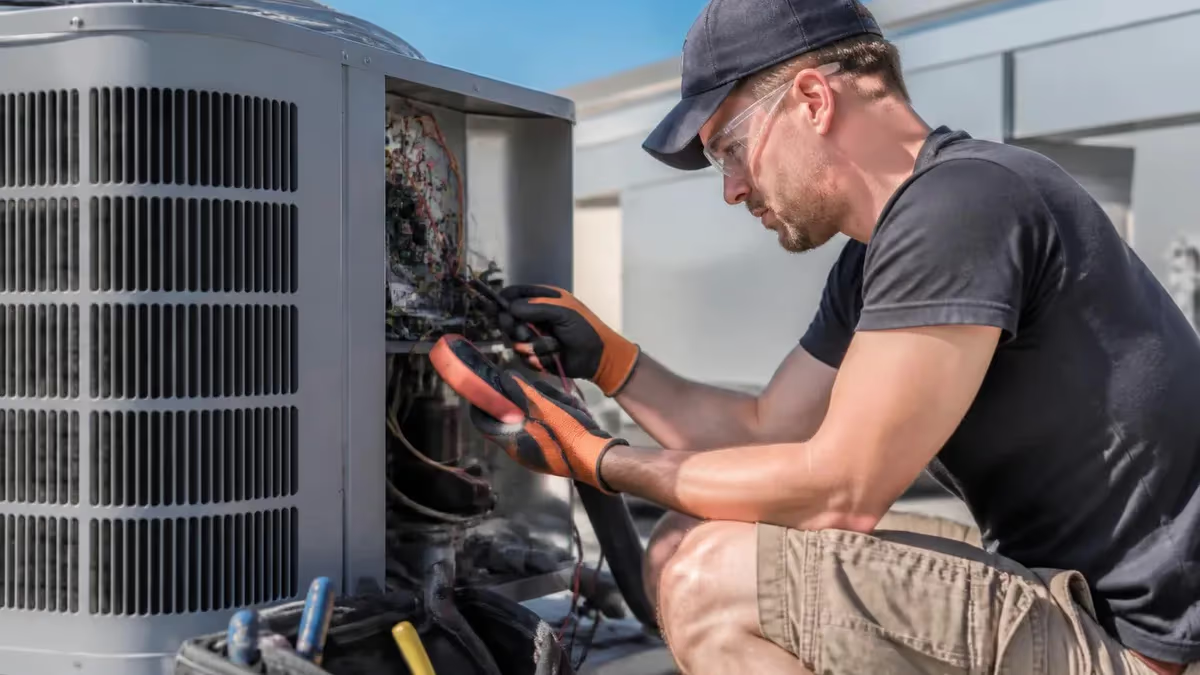
If you have been typing "hvac job near me" into Google late at night, you already know the market is hot, confusing, and full of mismatched listings. Heating and cooling work is one of the few skilled trades where local demand consistently outpaces the supply of trained technicians, which means the job nearest your zip code may pay more, offer better benefits, or close faster than the same role 20 miles away. This guide breaks down how to find real openings, what to expect for pay, and which credentials get you hired this month. Practice with the free HVAC practice test on PracticeTestGeeks (35 questions with answer explanations).
The Bureau of Labor Statistics projects 9 percent growth for HVACR technicians through 2033, with about 42,500 openings each year. That growth is not evenly distributed. Sunbelt metros like Phoenix, Houston, Tampa, and Las Vegas churn through residential service techs, while northern markets like Minneapolis, Boston, and Chicago hire heavily for commercial boiler, chiller, and heat pump retrofit work. Knowing which segment your local market favors changes how you should write your resume and which certifications you should chase first.
Local hiring also depends on who is buying HVAC services in your area. New construction booms push contractors to hire installers and helpers, while utility rebate programs and federal tax credits push them to hire system-design technicians who can sell and commission heat pumps. If your zip code has a strong rebate program, the contractor down the street may be paying a premium for techs who understand Manual J load calculations and can talk customers through efficiency upgrades.
This article assumes you want a concrete plan, not vague encouragement. We will cover the platforms that actually surface local HVAC jobs, the pay ranges by experience level, the certifications hiring managers screen for, and the questions employers ask in technical interviews. We will also flag the red flags that show up in too-good-to-be-true postings and the union versus non-union tradeoff that shapes long-term earnings.
If you are brand new to the trade, do not skip the apprenticeship section. Paid apprenticeships through ABC, PHCC, or local IBEW and SMART chapters remain the fastest legal way to earn while you learn, often starting at $18 to $22 per hour with full benefits after a 90-day probation. Many of the techs earning $80,000 plus today started exactly there five to seven years ago.
If you already hold an EPA 608 card and a year of field experience, your search should look very different. You are not hunting for entry roles. You are negotiating sign-on bonuses, company truck allowances, and on-call rotation pay. The mistake most mid-career techs make is applying to the same ten companies everyone else applies to instead of contacting the smaller shops that pay better but never post openings publicly.
By the end of this guide, you will know exactly where to look, what to ask, what to skip, and how to position yourself so the next "hvac job near me" search ends with a signed offer letter rather than another browser tab.
Free HVAC Study Tools
Interactive HVAC resources on PracticeTestGeeks, free to start:
- HVAC EPA 608 Refrigerant Certification — 35 questions with instant scoring and answer explanations
- HVAC flashcards — review key terms and concepts card by card
- HVAC study guide — topic-by-topic overview of what the exam covers
- HVAC cheat sheet — one-page printable summary for last-minute review
HVAC Hiring by the Numbers
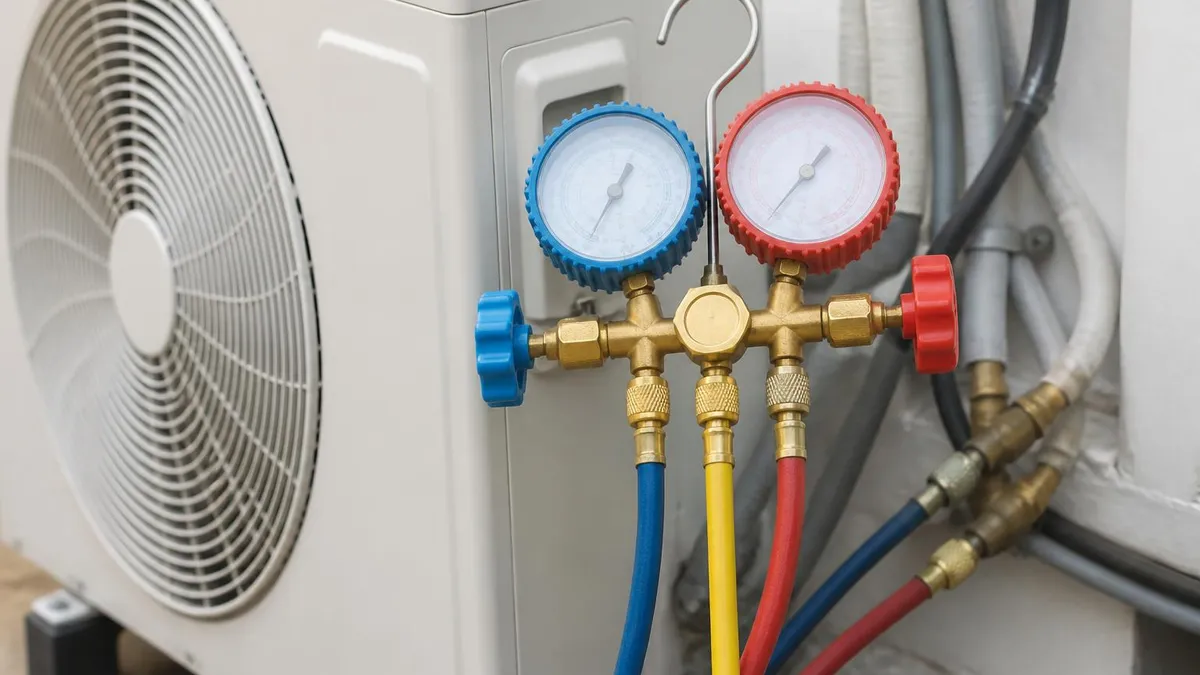
Local HVAC Job Types and Pay Tiers
Drives a stocked truck to homes for repair, maintenance, and replacement calls. Pay typically runs $22 to $38 per hour plus commission on accessory sales. High-volume markets often add $5,000 to $12,000 in annual spiff bonuses.
Works on rooftop units, chillers, VAV boxes, and building automation in office, retail, and industrial settings. Pay ranges from $28 to $48 per hour with predictable schedules. Requires stronger electrical and controls knowledge than residential.
Pulls and installs new equipment, ductwork, and refrigerant lines on construction or replacement jobs. Entry pay starts $17 to $22 per hour. Lead installers with five years experience often earn $30 to $40 per hour plus per-job bonuses.
Services walk-in coolers, supermarket racks, and ice machines. Pay is the highest tier in HVACR at $32 to $55 per hour because of on-call demands, ammonia systems, and the smaller pool of qualified technicians available.
Programs and commissions building automation systems from Honeywell, Johnson Controls, Siemens, or Tridium. Often a desk-and-field hybrid role paying $75,000 to $115,000 once you can write logic and troubleshoot networks.
Finding a real HVAC job near you starts with knowing that Indeed and ZipRecruiter only show a fraction of the openings in your zip code. The most active hiring shops in any market are owner-operated companies with 8 to 40 technicians, and many of them rely on word of mouth, supply-house bulletin boards, and Facebook groups instead of paying for job board listings. If you only check the big aggregators, you will miss the best-paying local roles every single week.
Start with Google Maps. Search "HVAC contractor" within a five-mile radius of your home, then list every company with at least 50 reviews and a 4-star or better rating. Visit each company website and look for a careers page, then follow the same companies on LinkedIn and Facebook. Roughly 60 percent of small shops post openings on social media days before they ever list on Indeed, and shop owners often hire the first qualified person who walks in with a resume.
The supply-house route is underrated. Walk into your local Ferguson, Johnstone Supply, or Baker Distributing counter at 7 a.m. on a weekday with a clean resume and ask the counter staff which contractors are hiring. They talk to every shop in town every morning and know who lost a tech last week, who just landed a big commercial contract, and who pays on time. Bring donuts. This sounds silly until you land your first interview from a counter recommendation.
Apprenticeship programs deserve their own pipeline. Search for your state name plus "HVAC apprenticeship" and check the U.S. Department of Labor apprenticeship finder at apprenticeship.gov. ABC (Associated Builders and Contractors), PHCC (Plumbing-Heating-Cooling Contractors), SMART Local sheet metal unions, and UA plumbing locals all run registered programs with paid OJT and free or low-cost classroom hours. These are competitive but legitimate launching pads.
If you are already certified, recruiter agencies that specialize in skilled trades can shortcut the process. Companies like Trades Hub, GPAC, and Aerotek place experienced techs into commercial and industrial roles, often with sign-on bonuses of $2,500 to $10,000. The catch is that recruiters work for the employer, not you, so always negotiate your final number directly with the hiring manager before signing.
Do not forget the manufacturer route. Carrier, Trane, Daikin, Lennox, and Mitsubishi all hire field service engineers and warranty technicians directly. Manufacturer roles pay slightly less in base salary than top contractor jobs but include company vehicles, pensions, tuition reimbursement, and predictable Monday-through-Friday schedules. They are ideal for techs in their thirties and forties who want to trade overtime hours for stability.
Finally, do not ignore institutional employers. Hospitals, universities, school districts, federal facilities, and large property management companies hire in-house HVAC techs for $30 to $42 per hour with pensions and union protection in many states. These jobs rarely show up on Indeed. Check each institution's careers portal directly once a week, and review related details in our HVAC inspection guide to understand the maintenance environments you would be supporting.
HVAC Practice Test Questions
Prepare for the HVAC - Heating Ventilation and Air Conditioning exam with our free practice test modules. Each quiz covers key topics to help you pass on your first try.
HVAC Air Conditioning
HVAC Exam Questions covering Air Conditioning. Master HVAC Test concepts for certification prep.
HVAC Code Compliance
Free HVAC Practice Test featuring Code Compliance. Improve your HVAC Exam score with mock test prep.
HVAC Electrical Controls
HVAC Test Prep for Electrical Controls. Practice HVAC Quiz questions and boost your score.
HVAC Energy Efficiency
HVAC Questions and Answers on Energy Efficiency. Free HVAC practice for exam readiness.
HVAC Heating Systems
HVAC Mock Test covering Heating Systems. Online HVAC Test practice with instant feedback.
HVAC Load Calculations
Free HVAC Quiz on HVAC Load Calculations. HVAC Exam prep questions with detailed explanations.
HVAC Tools and Equipment
HVAC Practice Questions for HVAC Tools and Equipment. Build confidence for your HVAC certification exam.
HVAC Refrigeration
HVAC Test Online for Refrigeration. Free practice with instant results and feedback.
HVAC Safety Practices
HVAC Study Material on Safety Practices. Prepare effectively with real exam-style questions.
HVAC System Design
Free HVAC Test covering System Design. Practice and track your HVAC exam readiness.
HVAC Thermodynamics
HVAC Exam Questions covering Thermodynamics. Master HVAC Test concepts for certification prep.
Certifications That Get HVAC Job Interviews
EPA Section 608 certification is non-negotiable for anyone touching refrigerant in the United States. The exam has four parts: Core, Type I (small appliances), Type II (high-pressure systems like residential AC and heat pumps), and Type III (low-pressure chillers). Universal certification covers all three types. Most employers list "EPA Universal" as a hard requirement, even for installer helpers who technically only need Type II.
You can take the proctored exam online for around $25 to $40 through ESCO Group, Mainstream Engineering, or your local trade school. The card never expires. If you do not have this card, get it before you apply anywhere. It is the single highest-ROI weekend you can spend on your HVAC career.

Union vs Non-Union HVAC Jobs Near You
- +Higher base wages, often 15 to 35 percent above non-union rates in same metro
- +Defined-benefit pension plus 401k in most locals
- +Employer-paid health insurance with low deductibles
- +Standardized apprenticeship with classroom hours covered
- +Grievance process protects you from unfair termination
- +Predictable raise schedule tied to apprenticeship steps
- +Strong safety culture and OSHA compliance enforcement
- −Initiation fees often $300 to $1,500 to join
- −Monthly dues of $40 to $90 reduce take-home pay
- −Slower hiring during construction slowdowns
- −Less flexibility to negotiate individual pay above scale
- −Travel requirements for jobs outside home local jurisdiction
- −Some non-union shops pay higher commission and spiffs
- −Apprenticeship slots are competitive and may have waitlists
Pros and Cons at a Glance
| Pros | Cons |
|---|---|
| Employer-paid health insurance with low deductibles | Slower hiring during construction slowdowns |
| Standardized apprenticeship with classroom hours covered | Less flexibility to negotiate individual pay above scale |
| Grievance process protects you from unfair termination | Travel requirements for jobs outside home local jurisdiction |
| Predictable raise schedule tied to apprenticeship steps | Some non-union shops pay higher commission and spiffs |
| Strong safety culture and OSHA compliance enforcement | Apprenticeship slots are competitive and may have waitlists |
HVAC Job Application Checklist
- ✓Update your resume to a single page with quantified results like "completed 8 service calls per day"
- ✓Pull a clean copy of your EPA 608 card and any NATE or OSHA certificates as PDFs
- ✓List every brand you have worked on (Trane, Carrier, Lennox, Goodman, Mitsubishi, Daikin)
- ✓Create a basic LinkedIn profile with headline "HVAC Service Technician" plus your city
- ✓Get two references from former supervisors and one from a customer if possible
- ✓Check your driving record for moving violations that disqualify company-vehicle drivers
- ✓Confirm you can pass a 10-panel drug screen, including marijuana in most states
- ✓Prepare a 60-second introduction covering experience, certifications, and why you are job hunting
- ✓Print three resume copies and a notebook to bring to every in-person interview
- ✓Research each employer's average review rating on Google and Glassdoor before applying
Reliability beats raw skill in 9 out of 10 hires
Owners and service managers consistently report that they would rather hire a moderately skilled tech who shows up every day on time than a brilliant diagnostician who calls out twice a month. If you can document a clean attendance record from your last job, mention it in the first interview. It carries more weight than an extra certification.
Pay negotiation is where most HVAC techs leave money on the table. Hiring managers expect you to negotiate, and they almost always have a $2 to $5 per hour band above the initial offer that they can approve without escalating to the owner. If you accept the first number without a counter, you are signaling that you do not know your market value, which paradoxically makes managers worry you will undervalue customer repairs in the field too.
Before you walk into any interview, know three numbers cold. First, the median wage for your role in your metro from the BLS Occupational Employment Statistics page. Second, the going rate at two or three direct competitors of your prospective employer, gathered from Glassdoor, supply-house gossip, or a quick text to former coworkers. Third, your personal floor, the number below which you simply will not accept the job. Write these on a notecard before the interview.
When the offer comes in, pause for at least three seconds before responding. Then say something like, "Thank you for the offer. Based on my certifications and the market rate for similar roles in this area, I was hoping for closer to X dollars per hour. Can we work toward that number?" Most managers will either meet you partway, offer a 90-day review with a guaranteed raise, or sweeten the package with a sign-on bonus, truck allowance, or extra PTO days.
Total compensation matters more than hourly rate. A $28 per hour job with a take-home truck, paid fuel, $500 monthly tool allowance, and full family health insurance often beats a $34 per hour job where you use your personal vehicle and pay $800 per month for family coverage. Calculate the annual value of every benefit and compare apples to apples on paper before signing anything.
On-call pay structures vary wildly and deserve close attention. Some shops pay $150 flat per on-call week regardless of how many calls you take. Others pay a $50 weekly stipend plus time-and-a-half for every dispatched hour after 5 p.m. The second structure can add $8,000 to $20,000 per year if your market has heavy summer demand. Ask for the exact policy in writing, not a verbal summary.
Commission and spiff structures are where top residential techs separate from average ones. A good plan pays 5 to 10 percent commission on accessory sales like surge protectors, UV lights, hard-start kits, and indoor air quality products, plus flat-rate spiffs of $50 to $300 for each new system sold. Techs who actively learn customer-facing sales habits routinely add $15,000 to $35,000 in annual commission on top of their hourly base.
Finally, ask about long-term growth. Does the company pay for NATE renewal, manufacturer training trips, or your contractor license exam? Does the owner promote from within, or do they hire managers from outside? Companies that invest in your credentials in years one and two are also the ones that promote you to lead tech, install supervisor, or service manager in years four and five. That trajectory matters more than the starting wage by a wide margin.

Avoid listings that promise "$100,000 first year" without disclosing the commission structure. Walk away from shops requiring you to buy your own truck, refrigerant gauges, and recovery machine on day one. Be cautious of companies with under 3.5 stars on Glassdoor and a pattern of complaints about unpaid overtime or missing commission checks. Always get the full pay structure in writing before your first ride-along.
The HVAC technical interview is part oral exam, part personality screen, and part hands-on test. Expect a 30 to 45 minute conversation with the service manager covering your work history, certifications, and a handful of diagnostic scenarios. Then expect a shop visit where you may be asked to identify components, read a schematic, or talk through how you would troubleshoot a no-cool call on a 95-degree afternoon. The questions are usually fair, but they move quickly.
Common scenario questions include: "A customer calls saying their unit is blowing warm air. Walk me through your first ten minutes on site." The right answer covers a quick customer interview, checking the thermostat, inspecting the air filter, going outside to confirm the condenser is running, then taking superheat and subcool measurements. Mentioning that you also check the breaker and disconnect before assuming a refrigerant issue earns you bonus points with experienced managers.
Another common question: "You arrive at a job and the previous tech left notes saying they replaced the capacitor yesterday but the unit is down again. What do you do?" The right answer is that you treat it like a fresh call, verify the capacitor reading, then look upstream for the underlying cause, usually a failing contactor, weak start winding, or restricted condenser airflow. Demonstrating that you do not blame the previous tech publicly earns trust with managers.
Bring questions of your own to the interview. Ask how many service calls per day a tech is expected to run, what the average ticket size is, who covers the cost of recertifications, and what the on-call rotation looks like. Asking these questions signals you are evaluating the company as carefully as they are evaluating you, which is exactly what experienced techs do. For background on related credentials, our HVAC tax credit guide can help you talk knowledgeably about the rebate programs driving residential demand.
Your first 90 days set the tone for everything that follows. Show up 15 minutes early every shift, keep your truck stocked and clean, document every call thoroughly in the company software, and ask your service manager for feedback at the 30-day mark. Techs who proactively ask "What am I doing well and where can I improve?" almost universally get raises and lead-tech promotions faster than techs who wait to be evaluated.
Build relationships with two or three senior techs in your first month. Offer to help them on big jobs after your route ends, even unpaid for the first few weeks. The technical mentorship you absorb in those ride-alongs is worth more than any classroom training, and senior techs talk to the owner about who deserves the next raise. Being known as the eager new tech who helps out is one of the highest-use career moves in the trade.
Track your own metrics. Keep a simple spreadsheet of calls per day, average ticket size, accessory sales, callback rate, and customer reviews mentioning your name. At your 90-day or annual review, walk in with this data printed out. Most techs show up empty-handed and hope their manager remembers their wins. Techs who arrive with data routinely negotiate raises 30 to 50 percent larger than their peers, because they are making the manager's job easier by handing over the justification.
If you want the full picture, the hvac job near me guide walks through it step by step.
Practical preparation in the week before your interview makes a measurable difference in offer rates. Pull out your multimeter and refresh the basics: how to read voltage drop across a contactor, how to test a dual-run capacitor with a meter that has a microfarad setting, and how to use clamp-on amp readings to estimate motor health. If you cannot do these from memory, watch one HVAC School podcast episode or a Bryan Orr YouTube tutorial each night for a week. The vocabulary alone improves your interview answers.
Review one Manual J load calculation and one duct sizing exercise even if you are interviewing for a service role. Hiring managers love when service candidates show installer-level awareness, because it means you can explain to customers why their existing system is undersized rather than just slapping a new condenser on a bad duct system. The Manual J basics are free on the ACCA website, and you can run a sample calculation in under an hour with online tools.
Dress one step above what you expect the working uniform to be. If techs wear company polos and work pants, wear a clean collared button-down with khakis or dark jeans, plus work boots that are scuffed enough to show you have actually been on jobs. A spotless brand-new boot signals you have never worked, while a filthy boot signals you do not respect your customers' homes. Aim for the middle.
Bring a printed portfolio. Include your resume, copies of your EPA 608 and any other cards, a one-page list of equipment brands you have serviced, and two or three before-and-after photos of installations or repairs you are proud of. Almost no candidates do this, and the ones who do stand out so dramatically that managers remember them weeks later. Photos with date stamps work even better than typed lists.
Plan to drive your interview route 24 hours in advance during the actual time of day your interview is scheduled. Traffic patterns in metro Atlanta at 8 a.m. are nothing like traffic at 2 p.m. Showing up sweaty and ten minutes late kills offers. Plan to arrive 20 minutes early, sit in the parking lot reviewing your notes, then walk in exactly five minutes before the scheduled time. This single habit will outperform almost any other interview prep tactic.
After every interview, send a short thank-you email within four hours. Three sentences is enough: thank the manager for their time, reference one specific topic you discussed, and confirm your interest in the role. Most candidates skip this step entirely. The ones who send a thoughtful note land the job over equally qualified applicants in close races. It costs five minutes and signals exactly the kind of follow-through that translates into reliable customer service later.
If you do not get the first offer you wanted, keep the relationship alive. Reach out to the manager every 90 days with a short update on a new certification or a project you finished. HVAC managers turn over every 12 to 18 months on average, and the company that passed on you in March often has an opening and a new decision maker in September. Persistent, professional candidates land roles that were technically not available when they first applied. The trade rewards patience as much as it rewards skill.
Sample HVAC Practice Questions
Try these questions from our free HVAC practice tests. The correct answer and an explanation follow each question.
A technician needs to work on an HVAC unit energized at 480V. According to NFPA 70E, what PPE category likely applies for this voltage level?
- A. PPE Category 0 — no PPE needed
- B. PPE Category 1 — safety glasses only
- C. PPE Category 2 or higher — arc flash suit and face shield
- D. Standard work clothes are sufficient
Answer: C. PPE Category 2 or higher — arc flash suit and face shield
480V systems typically require PPE Category 2 or higher per NFPA 70E, including arc-rated clothing, face shield, and insulated gloves.
What is the minimum safe distance a technician should maintain from an electrical panel before beginning work on an HVAC system connected to it?
- A. No specific distance is required if breakers are off
- B. At least 1 foot with insulated tools only
- C. Follow NFPA 70E arc flash boundary requirements based on voltage
- D. At least 6 feet at all times
Answer: C. Follow NFPA 70E arc flash boundary requirements based on voltage
NFPA 70E establishes arc flash protection boundaries that vary based on system voltage and available fault current.
During a pre-job safety briefing for an HVAC installation requiring work at heights, which topic must be addressed according to OSHA standards?
- A. The estimated completion time for the project
- B. Fall hazards, fall protection methods, and proper use of fall protection equipment
- C. The customer's preference for equipment placement
- D. The warranty terms for the equipment being installed
Answer: B. Fall hazards, fall protection methods, and proper use of fall protection equipment
OSHA requires that workers be trained on the nature of fall hazards, the correct use of fall protection systems, and the procedures for erecting, maintaining, and dismantling fall protection systems.
What is a 'standing seam' and when is it used in HVAC sheet metal work?
- A. A seam that extends vertically above the surface; used for roofing on HVAC equipment enclosures
- B. A longitudinal seam type where both edges are bent into standing flanges that are folded together; used for heavy gauge ductwork, outdoor casings, and higher-pressure applications
- C. A seam that resists standing water infiltration; used for floor-level ductwork
- D. A seam produced without machinery, standing seam is a hand-fabricated joint
Answer: B. A longitudinal seam type where both edges are bent into standing flanges that are folded together; used for heavy gauge ductwork, outdoor casings, and higher-pressure applications
Standing seams are formed by bending both sheet metal edges into standing flanges (perpendicular to the sheet surface) that are then folded or locked together, providing strength and rigidity.
HVAC Questions and Answers
How this page was made: written with AI tools and published by Nathan Beja, founder of Practice Test Geeks, who is responsible for its content. We have not yet matched this exam's facts to an official source, so confirm fees, dates and rules with the exam body. Not reviewed by a subject-matter expert. Editorial policy