
HVAC Helper Positions: The Complete Guide to Entry-Level HVAC Jobs, Hiring, Pay, and Career Advancement
HVAC helper positions explained: ⏳ pay, duties, hiring requirements, and how to land your first job and advance to apprentice or technician.
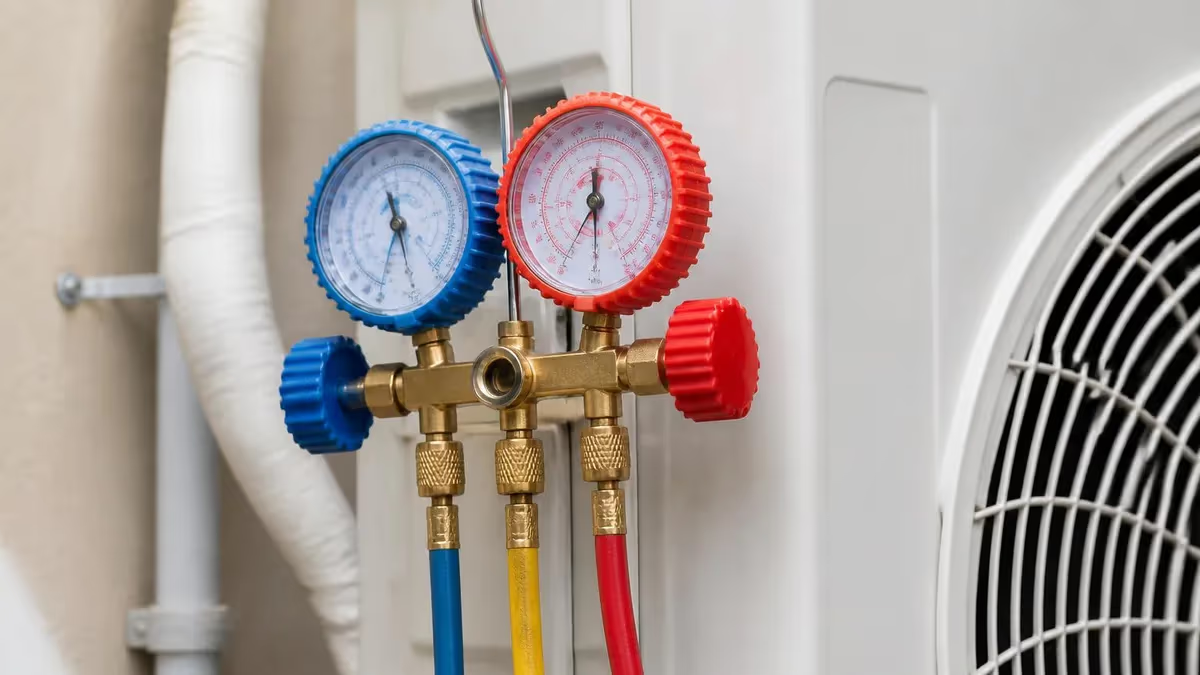
HVAC helper positions are the most common entry point into the heating, ventilation, and air conditioning trade, and they remain one of the fastest ways to start earning a paycheck while learning a high-demand skilled craft. A helper rides along with a licensed technician or installer, carries equipment, hands over tools, cleans job sites, and gradually picks up the diagnostic and mechanical skills that lead to apprentice, journeyman, and master technician roles down the road. Practice with the free HVAC practice test on PracticeTestGeeks (750+ questions with answer explanations).
The hiring market for HVAC helpers has tightened significantly between 2023 and 2026 as baby boomer technicians retire faster than new workers enter the field. The U.S. Bureau of Labor Statistics projects roughly 37,700 HVAC openings per year through 2032, and many of those start as helper or installer apprentice roles. Contractors are hiring helpers with no experience, providing on-the-job training, and paying competitive starting wages just to fill seats in their service trucks.
What makes helper roles attractive is the low barrier to entry. Most employers ask for a high school diploma or GED, a clean driver's license, the ability to lift 50 to 75 pounds, and a willingness to work outdoors in heat, cold, attics, and crawlspaces. You do not need EPA 608 certification on day one, although getting it within your first 90 days makes you significantly more valuable and bumps your pay. Some shops will even reimburse the exam fee once you pass.
Starting pay for helpers ranges from about $15 per hour in low cost-of-living markets to $24 per hour in metro areas like Seattle, Boston, and the San Francisco Bay Area. Add overtime during summer cooling season and winter heating emergencies, and many first-year helpers clear $45,000 to $55,000 in W-2 income. Union shops and large mechanical contractors often pay more, especially when prevailing wage projects are in the mix.
This guide walks through every angle of HVAC helper work: what the job actually looks like on a Tuesday morning, what hiring managers screen for, how to write a resume that gets callbacks, the certifications that accelerate promotion, and the realistic timeline from helper to lead installer to service technician. Whether you are a recent high school graduate, a career changer leaving retail or warehouse work, or a veteran using GI Bill benefits, the path is clearer than most people realize.
We also cover the parts of the job that recruiters do not advertise: the physical toll, the seasonal swings in hours, the unwritten shop culture, and the financial decision between staying with a residential service company versus moving into commercial or industrial mechanical work. The pay ceiling, work-life balance, and skill ceiling are very different depending on which path you choose.
By the end, you will have a concrete action plan: which jobs to apply to first, what to put in your cover letter, how to negotiate your starting rate, and which free or low-cost certifications to chase in your first 12 months to set up the highest possible earning trajectory.
Free HVAC Study Tools
Interactive HVAC resources on PracticeTestGeeks, free to start:
- HVAC EPA 608 Refrigerant Certification — 35 questions with instant scoring and answer explanations
- HVAC flashcards — review key terms and concepts card by card
- HVAC study guide — topic-by-topic overview of what the exam covers
- HVAC cheat sheet — one-page printable summary for last-minute review
HVAC Helper Hiring by the Numbers
Common HVAC Helper Position Types
Works on new construction and replacement systems in single-family homes. Carries equipment, runs lineset, helps set condensers, and assists with ductwork. Heavy lifting and ladder work daily.
Rides with a senior technician on diagnostic and repair calls. Learns refrigerant recovery, electrical testing, and customer interaction. Faster path to becoming a billable service tech.
Assists journeymen on rooftop units, large duct fabrication, and chiller work. Often unionized through SMART or SMACNA shops with structured wage progression and benefits.
Stages parts, builds duct sections in the shop, loads trucks, and manages inventory. Lower pay ceiling but stable hours and a softer entry for workers easing into field work.
Supports planned maintenance routes — filter changes, coil cleanings, belt inspections. High volume of stops per day, predictable schedule, and excellent for learning system variety quickly.
Real take-home pay for HVAC helpers depends on three things: market, season, and whether the shop pays overtime past 40 hours or only after 8 hours per day. In Texas, Florida, and Arizona, summer overtime can push a $19 hourly helper to gross over $1,200 per week from Memorial Day through Labor Day. In northern climates, the inverse happens in January and February when furnaces fail and emergency calls stack up.
Benefits separate the strong employers from the weak ones. Top shops offer health insurance with employer contributions of 60 to 80 percent of premiums, dental and vision, a 401(k) with 3 to 5 percent match, paid vacation starting at one week in year one, and a company truck or fuel stipend once you graduate from helper to apprentice. Weaker shops offer hourly wages only, no insurance, and expect you to bring your own hand tools.
Tool allowances are another hidden form of compensation. A typical helper needs about $400 to $800 in personal hand tools — screwdrivers, nut drivers, channel locks, a multimeter, a tape measure, a flashlight. Some employers reimburse this through a one-time bonus or a $25 per week tool stipend. Always ask about hvac contractors in your area and how they structure tool reimbursement before accepting an offer.
Union helpers in mechanical locals tied to the UA or SMART tend to start at higher hourly rates, often $22 to $28 per hour as a first-period apprentice, with structured 6-month raises tied to classroom hours and on-the-job hours logged. The trade-off is a more competitive application process — many locals only run apprentice intake once or twice per year and may require an aptitude test, interview panel, and background check.
Non-union residential service companies hire year-round, move faster on offers, and often promote from within based on performance rather than seat-time. If you are aggressive about learning, a non-union shop can move you from helper to billable technician in 18 to 24 months. A union path is more predictable but slower, typically 4 to 5 years to reach journeyman wage.
Geographic arbitrage matters too. A helper in Birmingham, Alabama at $16 per hour has more disposable income than a helper in San Jose at $26 per hour after rent. If you are mobile, consider markets with strong HVAC demand and reasonable housing — Nashville, Charlotte, Indianapolis, Phoenix, San Antonio, and Tampa all show up repeatedly on best-value lists for tradespeople in 2025 and 2026.
Finally, do not overlook bonuses. Sign-on bonuses of $500 to $2,000 are common in tight markets, paid out after 90 days or 6 months. Referral bonuses for bringing in another helper or technician can hit $1,000 to $3,000. Performance bonuses tied to callback rates, customer reviews, and service agreement sales add another $2,000 to $8,000 per year for top performers, even at the helper level.
HVAC Practice Test Questions
Prepare for the HVAC - Heating Ventilation and Air Conditioning exam with our free practice test modules. Each quiz covers key topics to help you pass on your first try.
HVAC Air Conditioning
HVAC Exam Questions covering Air Conditioning. Master HVAC Test concepts for certification prep.
HVAC Code Compliance
Free HVAC Practice Test featuring Code Compliance. Improve your HVAC Exam score with mock test prep.
HVAC Electrical Controls
HVAC Test Prep for Electrical Controls. Practice HVAC Quiz questions and boost your score.
HVAC Energy Efficiency
HVAC Questions and Answers on Energy Efficiency. Free HVAC practice for exam readiness.
HVAC Heating Systems
HVAC Mock Test covering Heating Systems. Online HVAC Test practice with instant feedback.
HVAC Load Calculations
Free HVAC Quiz on HVAC Load Calculations. HVAC Exam prep questions with detailed explanations.
HVAC Tools and Equipment
HVAC Practice Questions for HVAC Tools and Equipment. Build confidence for your HVAC certification exam.
HVAC Refrigeration
HVAC Test Online for Refrigeration. Free practice with instant results and feedback.
HVAC Safety Practices
HVAC Study Material on Safety Practices. Prepare effectively with real exam-style questions.
HVAC System Design
Free HVAC Test covering System Design. Practice and track your HVAC exam readiness.
HVAC Thermodynamics
HVAC Exam Questions covering Thermodynamics. Master HVAC Test concepts for certification prep.
What HVAC Helper Positions Actually Look Like
A helper's day starts between 6:30 and 7:30 AM at the shop or at a job site. You load the truck with materials pulled the night before, double-check the work order, and ride with the lead technician. The first stop might be a residential install — three workers setting a new 3-ton condenser, brazing line sets, pulling vacuum, and commissioning the system before lunch.
Afternoon work shifts based on the route. You might assist with a furnace replacement in a tight basement, then run to a customer's attic to swap an evaporator coil in 110-degree heat. The day ends back at the shop around 4:30 to 5:30 PM, restocking the truck, cleaning tools, and prepping for tomorrow. Expect 9 to 11 hour days during peak season.
Is an HVAC Helper Position Right for You?
- +No college degree or prior experience required to get hired in most markets
- +Starting wages of $15-$24 per hour with rapid raises tied to skill growth
- +Massive job security — HVAC cannot be outsourced or fully automated
- +Clear advancement path to apprentice, journeyman, and master technician
- +Tuition-free on-the-job training and often employer-paid certifications
- +Pension and strong benefits available through union mechanical locals
- +Eventual path to owning your own service company with low startup cost
- −Physically demanding work with real injury risk to back, knees, and shoulders
- −Seasonal swings mean 50-hour summer weeks followed by slower winters in some regions
- −Extreme temperatures in attics, crawlspaces, and rooftops year-round
- −On-call rotations and emergency calls disrupt evenings, weekends, and holidays
- −Initial tool investment of $400-$800 that comes out of your first paychecks
- −Customer-facing pressure even as a helper when techs are stressed or behind schedule
- −Lower starting pay than some warehouse or driving jobs until you advance past helper
Pros and Cons at a Glance
| Pros | Cons |
|---|---|
| No college degree or prior experience required to get hired in most markets | Physically demanding work with real injury risk to back, knees, and shoulders |
| Massive job security — HVAC cannot be outsourced or fully automated | Extreme temperatures in attics, crawlspaces, and rooftops year-round |
| Clear advancement path to apprentice, journeyman, and master technician | On-call rotations and emergency calls disrupt evenings, weekends, and holidays |
| Tuition-free on-the-job training and often employer-paid certifications | Customer-facing pressure even as a helper when techs are stressed or behind schedule |
| Pension and strong benefits available through union mechanical locals | Lower starting pay than some warehouse or driving jobs until you advance past helper |
HVAC Helper Hiring Checklist: What to Have Ready Before You Apply
- ✓Valid driver's license with a clean motor vehicle report (most shops pull MVRs)
- ✓High school diploma, GED, or equivalent transcript ready to upload or email
- ✓Government-issued ID and proof of work authorization for I-9 verification
- ✓Updated one-page resume highlighting any mechanical, manual labor, or trade-school experience
- ✓Three professional or character references with current phone numbers
- ✓Steel-toe work boots, work pants, and basic hand tools you can bring on day one
- ✓Reliable transportation to reach the shop by 6:30 or 7:00 AM
- ✓Willingness to pass a drug screen and a basic background check
- ✓EPA 608 Universal certification (huge advantage — push for this in first 90 days)
- ✓OSHA 10 card if available — many commercial sites require it before stepping on the jobsite
Walk into the shop, do not just apply online
Online applications sit in queues for weeks. Helpers who get hired fastest in 2026 still do it the old way: show up at the shop between 8 and 10 AM on a weekday, dressed in work clothes, ask for the service manager, hand over a one-page resume, and say you are ready to start Monday. Hiring managers report 3x higher callback rates from walk-in applicants versus Indeed submissions, especially at family-owned residential shops with 5 to 25 employees.
The promotion ladder from helper to fully billable technician is the most important financial trajectory in the trade. A helper at $19 per hour grosses about $40,000 per year on a 40-hour week. A first-year service technician at $28 per hour grosses about $58,000. A senior service tech with five years of diagnostic experience grosses $75,000 to $110,000 in most markets, and lead installers on commercial projects often clear $130,000 with overtime.
The bridge between helper and apprentice typically happens in 6 to 18 months. Shops want to see three things before promoting: reliability (you show up on time every day), curiosity (you ask intelligent questions about why a system failed, not just what to grab from the truck), and certification progress (you earned EPA 608 and started a community college HVAC program or NATE prep on your own time).
Most states do not license HVAC at the helper or apprentice level, but they do license journeymen and contractors. Check your state board early — Texas, Florida, Georgia, California, and Washington all have specific apprentice registration requirements, classroom hour minimums, and exam pathways. Some states require formal apprenticeship through a registered program like ABC, Associated Builders and Contractors, or the UA mechanical local.
Community college HVAC programs are a powerful accelerator if your employer will subsidize them. A typical 1-year certificate program costs $3,000 to $7,000 and covers refrigeration cycle theory, electrical fundamentals, controls, load calculations, and code. Many employers reimburse 50 to 100 percent of tuition for helpers who commit to a 2-year employment agreement. NATE, North American Technician Excellence, certifications are also widely respected and increase pay rates by $2 to $5 per hour per credential.
The shift from helper to billable technician comes when you can safely run a maintenance call alone, diagnose common no-cool and no-heat failures, recover and recharge refrigerant, and complete the paperwork without supervision. Some shops run a structured ride-along program for 6 months, then put you in a truck with a senior tech available by phone. Other shops just push you out when they need bodies — which is faster but riskier for your reputation if you mess up early calls.
Specialization is the next big lever after you are billable. Helpers who eventually focus on commercial refrigeration, controls and BAS, geothermal, or VRF systems command premium rates because the pool of qualified technicians is small. Controls techs in particular can earn $90,000 to $140,000 within 5 to 7 years of starting as helpers, especially in markets with heavy data center hvac and hospital construction.
Finally, think early about whether you want to stay in service, move into project management, or open your own shop. The classic trajectory is helper at 19, technician at 22, service manager at 28, business owner at 33. The trade rewards reliable people who learn fast and treat customers well — none of those skills require a college degree, but they all require consistent effort over a full decade.

A growing number of shady contractors hire helpers as 1099 independent contractors instead of W-2 employees to avoid payroll taxes, workers' comp, and overtime. This is almost always illegal under IRS and Department of Labor rules when the company controls your schedule, tools, and work assignments. Refuse 1099 helper offers — you lose unemployment eligibility, workers' comp coverage for injuries, overtime pay, and tax withholding. Report misclassification to your state labor board if needed.
Negotiating a helper offer feels uncomfortable, but it is normal and expected. Hiring managers leave $1 to $3 per hour of negotiation room in most offers, especially for candidates with any prior trade exposure, military service, EPA 608, or a clean driving record. Always ask what the top of the helper pay band is at the shop and what milestones unlock raises — most shops will tell you straight up.
When evaluating offers, weigh more than the hourly rate. A $20 per hour job with full health insurance, a 4 percent 401(k) match, paid PTO, and a tool stipend is worth roughly $7,000 to $10,000 more annually than a $22 per hour job with no benefits. Calculate the total compensation, not just the headline number on the offer letter. Ask explicitly about overtime policy, on-call pay, and how raises are scheduled — annually, at 90 days, or based on certification milestones.
Reputation matters in HVAC. The industry is smaller than it looks, especially within a metro area, and service managers talk to each other. If you bounce between three shops in your first year, recruiters notice. Try to stay at your first helper job for at least 12 to 18 months unless conditions are genuinely abusive. A clean reference from your first lead technician is worth more than $1 per hour at your second job. For homeowners' perspective on what techs handle daily, see our guide on HVAC repair Philadelphia for realistic service call dynamics.
Track your learning the way an athlete tracks training. Keep a small notebook in the truck and write down every system type you see, every failure mode the lead tech diagnoses, and every part number you install. Review the notebook on Sunday nights. After 6 months, you will have hands-on exposure to 50+ system types and 100+ common failures — that is the foundation of being a fast diagnostician.
Build your personal toolkit gradually. Start with the basics your employer requires, then add a quality digital multimeter, a manifold gauge set, a clamp meter, and a refrigerant scale within your first year. Quality matters — Fluke meters, Yellow Jacket gauges, and Klein hand tools are worth the extra money because they last decades. Cheap tools fail at the worst possible moments and embarrass you in front of customers.
Plan your certifications strategically. EPA 608 Universal first, then OSHA 10, then NATE Ready-to-Work or Core, then NATE Specialty in air conditioning or gas heating. Each one increases your pay rate and your portability between shops. By the end of year 2, target a state journeyman exam if your state offers one, or apply to your local mechanical apprenticeship for the structured wage progression and pension benefits.
Finally, take care of your finances from day one. HVAC pays well, but the seasonal income swings catch new workers off guard. Build a 3-month emergency fund within your first year, max out any 401(k) match available, and avoid the trap of financing a brand-new pickup truck the moment your overtime checks hit. Helpers who manage money carefully early become technicians and then business owners with real options.
Practical preparation in the two weeks before you apply makes the difference between a callback and silence. Print 10 copies of a clean, one-page resume on white resume paper. List your physical work history first — warehouse, landscaping, construction, food service — because hiring managers read it as proof you can handle physical labor. Lead with reliability metrics like attendance percentages or years of consistent employment, not job titles.
Pre-research the shops in your area. Look up which contractors are hiring, read their Google reviews to understand customer culture, and check the Better Business Bureau for complaints. Family-owned shops with 5 to 25 employees often offer the best mentorship for helpers because you ride with the owner or senior tech daily. Large national chains pay slightly more but expect higher production from day one.
Prepare for the in-person interview by reviewing the basic refrigeration cycle, the four major hvac components and materials (compressor, condenser, expansion valve, evaporator), the difference between R-410A and R-32 refrigerants, and the fundamentals of voltage versus amperage. You will not be expected to diagnose systems, but showing curiosity and basic vocabulary signals that you have done homework and will be a fast learner on the truck.
Bring questions to ask the hiring manager. Good questions include: What does the typical helper-to-apprentice timeline look like at this shop? Do you reimburse for EPA 608 testing? What is your on-call rotation policy? How often do helpers get formal feedback? These questions show you are thinking long-term about the trade, not just looking for a paycheck this week.
Plan your first 90 days like a probationary period because they are. Show up 15 minutes early every shift. Volunteer for the dirty jobs nobody wants — attic insulation removal, condenser pad demolition, basement furnace tear-outs. Ask the lead tech at the end of every day what you could have done better. By day 91, you will have built a reputation that puts you first in line for the next promotion or pay raise.
Stay current with industry news through free podcasts and YouTube channels. HVAC School with Bryan Orr, AC Service Tech with Craig Migliaccio, and the HVAC Know It All podcast are three of the most respected free resources. Listen during your commute and on lunch breaks. Senior techs notice when a helper asks intelligent questions about a topic they heard on a podcast — it accelerates trust and promotion conversations.
Finally, protect your health from day one. Wear safety glasses every time you touch refrigerant or use a hand drill. Wear hearing protection around large equipment. Use a respirator in attics with old insulation. The HVAC trade rewards a 40-year career, but only if your body is still functional at age 60. Treat your eyes, ears, lungs, and back as the most important tools in your kit, because they are.
Sample HVAC Practice Questions
Try these questions from our free HVAC practice tests. The correct answer and an explanation follow each question.
What is the value of continuing education in thermodynamics for HVAC professionals?
- A. It is only needed for recertification
- B. It keeps professionals current with evolving standards and practices
- C. It is primarily a social activity
- D. It replaces workplace experience
Answer: B. It keeps professionals current with evolving standards and practices
Continuing education ensures professionals stay current with the latest developments, standards, and best practices in their field.
What role does collaboration play in electrical controls for HVAC professionals?
- A. It slows down work unnecessarily
- B. It enhances outcomes through diverse perspectives and shared expertise
- C. It is only needed in emergencies
- D. It reduces individual accountability
Answer: B. It enhances outcomes through diverse perspectives and shared expertise
Collaboration leverages diverse perspectives and combined expertise to achieve better outcomes than any individual could alone.
What is the specific heat of water (BTU/lb·°F), a value commonly used in hydronic HVAC calculations?
- A. 0.24
- B. 0.50
- C. 1.0
- D. 4.18
Answer: C. 1.0
Water has a specific heat of 1.0 BTU/lb·°F, meaning 1 BTU raises 1 pound of water by 1°F.
In HVAC practice, what is the best approach to quality improvement in thermodynamics?
- A. Make changes without measuring results
- B. Use data-driven methods with measurable outcomes
- C. Wait for problems to occur before acting
- D. Copy what other organizations do without analysis
Answer: B. Use data-driven methods with measurable outcomes
Data-driven quality improvement with measurable outcomes ensures that changes actually produce the intended improvements and can be verified.
HVAC Questions and Answers

HVAC Duct Supplies: The Complete Buyer's Guide to Ductwork Components, Sizing, and Installation Materials
HVAC Duct Calculator: The Complete Guide to Sizing Ductwork for Airflow, Static Pressure, and System Efficiency
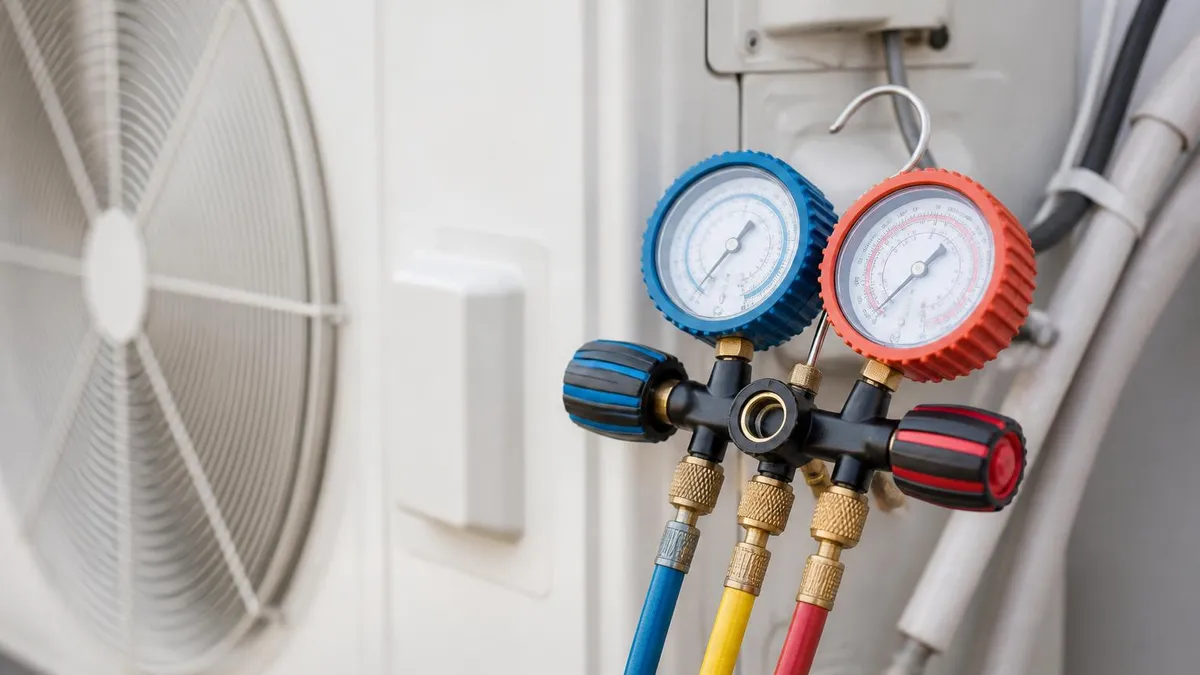
Certified HVAC Contractors: How to Find, Vet, and Hire the Right Professional for Your Home or Business
HVAC Repair Philadelphia: The Complete Homeowner's Guide to Finding, Hiring, and Working With Local Heating and Cooling Pros
Best HVAC Repair in Bandon, OR: Local Services Near Me Guide
How this page was made: written with AI tools. We have not yet matched this exam's facts to an official source, so confirm fees, dates and rules with the exam body. Not reviewed by a subject-matter expert. Editorial policy