
HVAC Filters: A Complete Guide to MERV Ratings, Sizing, and Replacement Schedules
📝 Filters HVAC guide covering MERV ratings, sizing, replacement schedules, and the best filter type for your home or commercial system.
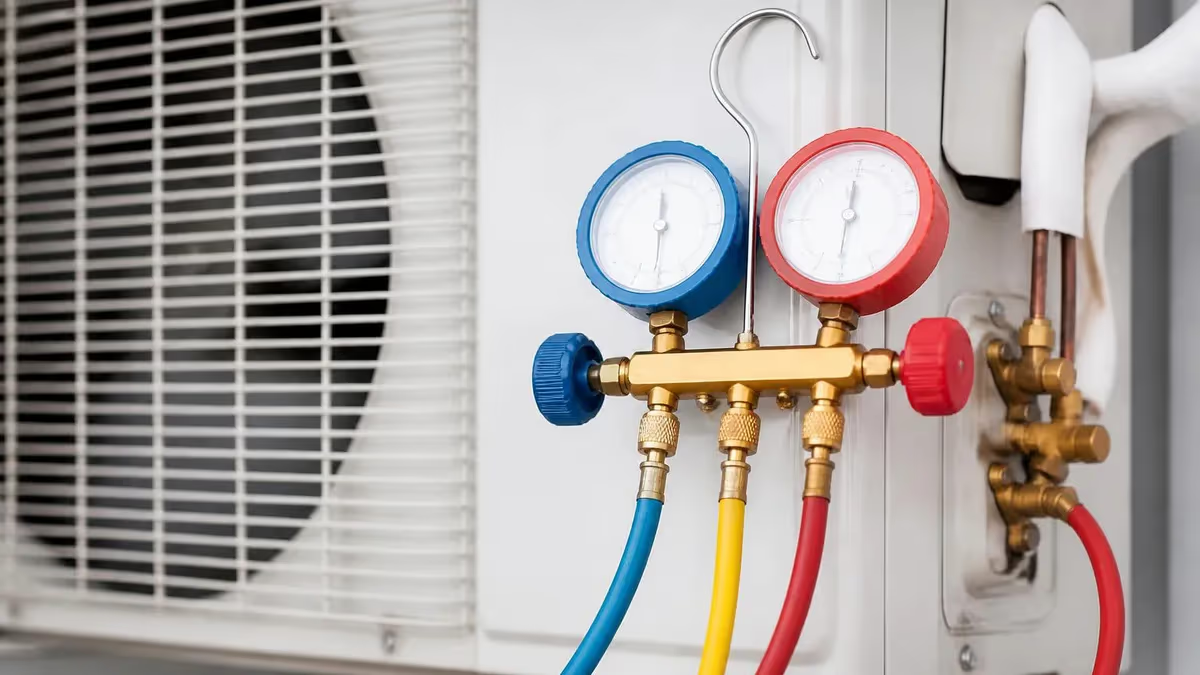
Choosing the right filters HVAC systems depend on is one of the most consequential maintenance decisions a homeowner or facility manager makes, and yet it is often reduced to grabbing whatever cardboard-framed pleated panel happens to fit. The truth is that a filter does far more than catch dust. It protects the blower motor, keeps the evaporator coil clean, influences static pressure across the entire duct system, and directly determines the indoor air quality that occupants breathe for roughly 90 percent of their day.
The HVAC filter sits at the return air path, where every cubic foot of conditioned air must pass through it before reaching the heat exchanger, cooling coil, and supply trunk. When that filter is matched to the equipment, the system runs near its design static pressure, the coil stays clean for years, and energy bills remain predictable. When it is mismatched, even a brand-new high-efficiency furnace can short cycle, ice over in cooling mode, or trip a limit switch on a cold winter night.
Most residential systems in the United States are engineered for filters between MERV 6 and MERV 13, with a face velocity of roughly 300 feet per minute. Push beyond that range without redesigning the return, and you risk starving the blower of air. Stay below it and you leave fine particulates, pollen, and mold spores circulating throughout the home. Striking the correct balance is part science, part installation craft, and part understanding your local environment.
This guide walks through every angle of HVAC filtration that matters in practice. We will cover MERV versus MPR versus FPR rating systems, the real-world differences between fiberglass, pleated, electrostatic, HEPA, and media cabinet filters, how to size a filter correctly, replacement intervals based on lifestyle factors, and the troubleshooting steps to take when filters seem to clog faster than expected. If your filter is part of a larger ductwork problem, our deep dive on HVAC Duct Installation: Materials, Sizing, Sealing and Best Practice pairs naturally with this article.
We will also address commercial filtration, where bag filters, V-bank rigid cells, and final HEPA stages serve hospitals, data centers, laboratories, and food processing facilities. Commercial filter selection is governed by ASHRAE 52.2 testing and increasingly by ISO 16890, and the wrong choice can mean a failed inspection or a contamination incident. Even in a small office, picking up a properly rated MERV 13 filter rather than a builder-grade panel can measurably reduce sick-day rates among tenants.
Finally, we will close with a practical decision framework, a maintenance checklist, and a frequently asked questions section that addresses the issues technicians hear most often. Whether you are a homeowner trying to stop dust accumulation, a building manager facing a new IAQ standard, or a student preparing for an EPA or NATE exam, the material below is the same material a working contractor would consult before quoting a filtration upgrade.
HVAC Filters by the Numbers
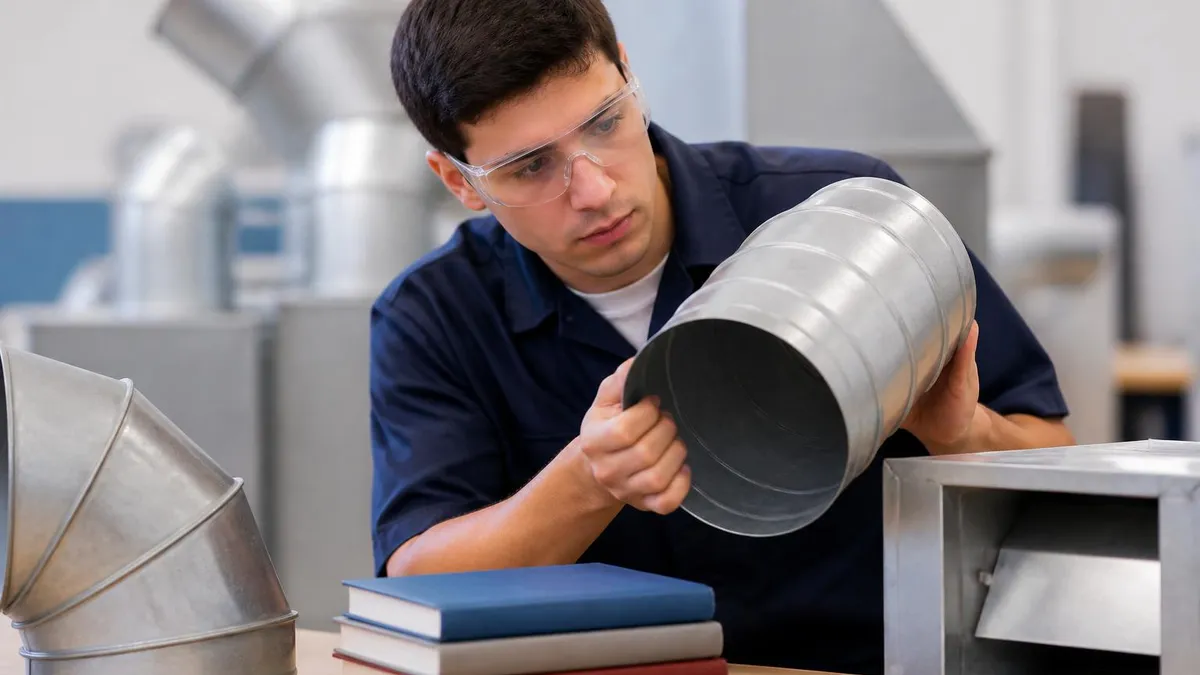
Filter Types and Construction
The cheapest option, typically MERV 1-4. Spun glass fibers in a cardboard frame catch only large lint and hair. Adequate for protecting the blower but useless for allergens. Replace every 30 days.
The workhorse of residential HVAC, ranging from MERV 8 to MERV 13. Folded polyester or cotton blend offers six to fifteen times the surface area of a flat panel, lowering static pressure while improving capture.
Reusable filters that build a static charge as air passes through. Marketed as eco-friendly, but real-world MERV ratings hover around 4-6 once dust loads. Must be fully dry before reinstallation.
Whole-house deep-pleated filters installed in a dedicated cabinet near the air handler. MERV 11-16 with replacement intervals of six to twelve months, far less restrictive than thin filters.
True HEPA filters capture 99.97% of 0.3 micron particles but require a bypass loop because they exceed the static pressure tolerance of most blowers. Carbon stages neutralize VOCs and odors.
Understanding rating systems is where most homeowners get confused, because every retailer seems to use a different one. The industry standard is MERV, the Minimum Efficiency Reporting Value developed by ASHRAE under standard 52.2. It runs from 1 to 16 for HVAC use, with values 17 through 20 reserved for HEPA-class media used in hospitals and cleanrooms. A higher number means smaller particles are captured at higher percentages, but it also means greater airflow resistance.
3M created the MPR, or Microparticle Performance Rating, specifically to highlight performance on particles between 0.3 and 1 micron, the size range that includes smoke, smog, and many viruses. An MPR of 1000 roughly corresponds to MERV 11, while MPR 1900 lines up with MERV 13. Home Depot promotes its own FPR, the Filter Performance Rating, which uses a simple 4 through 10 scale and color coding. FPR 7 is approximately MERV 11, and FPR 10 is approximately MERV 13.
For most homes built in the last 30 years, MERV 11 is the practical ceiling without modifying the return ductwork. It captures pet dander, fine dust, mold spores, and pollen with minimal pressure penalty. MERV 13 is the new baseline recommended by ASHRAE and the EPA for homes seeking serious particulate reduction, including wildfire smoke and the size range associated with airborne pathogen transmission. It is also the filter level often required for buildings pursuing LEED or WELL certification.
Pushing higher than MERV 13 on a residential system without checking static pressure is asking for trouble. A typical 1-inch MERV 13 filter creates roughly 0.25 inches of water column resistance when clean, climbing past 0.5 inches once loaded. The blower in a 90-percent efficient furnace is usually rated for 0.5 inches total external static pressure across the entire system. Add a restrictive filter to undersized return ducts and you exceed that budget before the air even reaches the supply registers.
The solution for homeowners who want true MERV 13 or higher performance is to install a 4-inch or 5-inch media cabinet. That deeper pleat geometry has roughly four times the filter media area of a 1-inch filter, dropping the pressure drop dramatically while extending replacement intervals to six or even twelve months. The cabinet retrofit typically costs $400 to $800 installed and pays for itself in reduced filter purchases and lower energy consumption within a few years.
Commercial buildings follow a different logic. ASHRAE 62.1 dictates minimum ventilation, while ASHRAE 52.2 sets filter testing protocol. ASHRAE 241, published in response to airborne pathogen concerns, now requires equivalent clean airflow rates that often demand MERV 13 or higher prefilters paired with final HEPA stages. ISO 16890, the newer global standard, classifies filters by their ability to remove PM10, PM2.5, and PM1 fractions, providing a more intuitive measure than MERV alone. Properly rated filtration is also a key element of any thorough HVAC Inspection: What's Included and Why It Matters visit.
HVAC Practice Test Questions
Prepare for the HVAC - Heating Ventilation and Air Conditioning exam with our free practice test modules. Each quiz covers key topics to help you pass on your first try.
HVAC Air Conditioning
HVAC Exam Questions covering Air Conditioning. Master HVAC Test concepts for certification prep.
HVAC Code Compliance
Free HVAC Practice Test featuring Code Compliance. Improve your HVAC Exam score with mock test prep.
HVAC Electrical Controls
HVAC Test Prep for Electrical Controls. Practice HVAC Quiz questions and boost your score.
HVAC Energy Efficiency
HVAC Questions and Answers on Energy Efficiency. Free HVAC practice for exam readiness.
HVAC Heating Systems
HVAC Mock Test covering Heating Systems. Online HVAC Test practice with instant feedback.
HVAC Load Calculations
Free HVAC Quiz on HVAC Load Calculations. HVAC Exam prep questions with detailed explanations.
HVAC Tools and Equipment
HVAC Practice Questions for HVAC Tools and Equipment. Build confidence for your HVAC certification exam.
HVAC Refrigeration
HVAC Test Online for Refrigeration. Free practice with instant results and feedback.
HVAC Safety Practices
HVAC Study Material on Safety Practices. Prepare effectively with real exam-style questions.
HVAC System Design
Free HVAC Test covering System Design. Practice and track your HVAC exam readiness.
HVAC Thermodynamics
HVAC Exam Questions covering Thermodynamics. Master HVAC Test concepts for certification prep.
Sizing, Installation, and Airflow for HVAC Filters
Filter sizing is governed by face velocity, which is the air speed expressed in feet per minute across the filter media. Residential systems target 300 fpm, while commercial systems often run 500 fpm with deeper bag or V-bank filters. To calculate the size you need, divide the system airflow in CFM by the desired face velocity, then convert to square feet of filter area. A 3-ton system at 1,200 CFM requires roughly 4 square feet of 1-inch pleated media.
Nominal versus actual dimensions cause endless confusion at the hardware store. A filter labeled 16x25x1 nominal typically measures 15.5 by 24.5 by 0.75 inches in actual size, providing slip clearance inside the slot. Always measure the existing filter or the frame opening with a tape, not the printed label. If the system uses an oddball size, custom filters from suppliers like FilterBuy or FilterKing arrive within a week and rarely cost more than retail.
High-MERV Filters: Are They Worth the Upgrade?
- +Captures fine particulates including PM2.5 and wildfire smoke
- +Reduces dust accumulation on furniture and electronics
- +Lowers allergen load for asthma and allergy sufferers
- +Protects evaporator coil from fouling, extending equipment life
- +Required for many green building certifications
- +Can reduce HVAC service calls related to dirty coils
- +Improves overall indoor air quality during pollen seasons
- −Higher static pressure unless paired with deep media cabinet
- −More expensive per filter and over time
- −May void warranty on some high-efficiency furnaces if not approved
- −Reduces airflow on older or undersized return duct systems
- −Can cause coil freezing in cooling mode if not monitored
- −Requires more frequent inspection in dusty environments
- −Not always compatible with 1-inch filter slots
HVAC Filter Replacement and Maintenance Checklist
- ✓Check the filter on the first of every month with a flashlight inspection
- ✓Replace 1-inch pleated filters every 60 to 90 days under normal use
- ✓Replace 4-inch media cabinet filters every 6 to 12 months based on visible loading
- ✓Replace more often if pets shed heavily or family members smoke indoors
- ✓Verify the airflow arrow points toward the blower before sliding the new filter into the slot
- ✓Tape or weatherstrip any gaps in the filter frame to prevent bypass
- ✓Inspect the evaporator coil annually for dust buildup that indicates filter bypass
- ✓Measure total external static pressure each spring and fall during professional service
- ✓Record the filter size and MERV rating on a label inside the access door for future reference
- ✓Stock at least two replacement filters at all times to avoid running the system bare
Inspect monthly, replace when loaded
Filter manufacturers print replacement intervals on the package, but real-world dust loading varies enormously by home, climate, pets, and occupancy. The professional standard is to inspect every 30 days regardless of brand claim. If the filter shows uniform gray loading across the pleats, it is ready for replacement. If only the center is loaded, you have a bypass problem worth investigating before installing the next filter.
Indoor air quality is no longer a niche concern. The EPA estimates that Americans spend roughly 90 percent of their time indoors, where pollutant concentrations are often two to five times higher than outdoor levels. The HVAC filter is the first and most affordable line of defense against this contamination, and upgrading from a builder-grade fiberglass panel to a MERV 13 pleated filter is often the single highest-impact change a homeowner can make for respiratory health.
Particulate matter is categorized by aerodynamic diameter. PM10 includes pollen, mold spores, and visible dust. PM2.5 includes combustion byproducts, wildfire smoke, and bacteria. PM1 includes viruses, ultrafine soot, and the diesel exhaust particles that penetrate deep into lung tissue. A MERV 8 filter captures most PM10 but very little PM2.5. MERV 11 captures roughly 65 percent of PM2.5, and MERV 13 captures 85 percent or more. Bumping up one step on the MERV ladder can meaningfully reduce the load on lungs over a year.
Volatile organic compounds, or VOCs, are a different challenge. Particle filters do nothing for gases. Off-gassing from paint, flooring, cleaning products, and new furniture creates a chemical soup that mechanical filtration cannot remove. Activated carbon filters or carbon-impregnated media stages address this category. They are commonly installed downstream of a particle filter as a polishing stage. Carbon must be replaced more frequently than the particle filter, typically every three to six months depending on cooking habits and ventilation rates.
Biological contaminants such as mold and bacteria require special attention because the filter itself can become a reservoir. Once organic dust accumulates on a damp filter, mold colonies can establish themselves and release spores into the airstream every time the blower starts. UV-C lights installed adjacent to the filter and coil have become a common addition, sterilizing the filter face and preventing colonization. Quality UV systems run between $300 and $600 installed and have measurable health benefits in humid climates.
Wildfire smoke has changed the conversation about residential filtration in much of the western United States. Smoke particles are predominantly in the PM2.5 and smaller range, slipping through MERV 8 filters almost untouched. During fire season, homeowners in affected regions should upgrade to MERV 13 minimum and consider running the blower continuously in fan-only mode. Some smart thermostats now offer an air-quality mode that automatically increases circulation when outdoor AQI exceeds a threshold.
Commercial buildings increasingly use multistage filtration. A typical office air handler now carries a MERV 8 prefilter to protect a MERV 14 or MERV 15 final filter, with optional HEPA or carbon stages for laboratory, healthcare, or cleanroom applications. The prefilter is changed quarterly while the final filter lasts a year or more, dramatically reducing the labor cost of high-efficiency filtration. Properly designed multistage systems also keep duct interiors cleaner, reducing the need for expensive duct cleaning every few years.
Health outcomes correlate strongly with sustained filter quality. Studies published by the EPA and Lawrence Berkeley National Laboratory have shown that schools and offices upgraded to MERV 13 filtration see measurable reductions in respiratory illness and absenteeism. For families with asthma, eczema, or seasonal allergies, the same upgrade often reduces medication use and emergency visits. The economics favor better filters at almost every level when the full picture of health, energy, and equipment life is considered.

Operating an HVAC system without any filter, even for one cycle, can foul the evaporator coil with dust and oils that are extremely difficult to remove. Coil cleaning service typically runs $400 to $800 and may require removing refrigerant lines. If your filter is missing or damaged, shut the system off until a replacement is installed correctly with the arrow pointing toward the blower.
When filters seem to clog faster than expected, the cause is rarely the filter itself. The most common culprit is duct leakage on the return side, which pulls unfiltered air from attics, crawl spaces, or wall cavities directly past the filter. A return duct in a dusty attic can deliver more contamination in one heating season than years of normal household dust. Sealing return joints with mastic or UL-181 tape stops the problem, and our overview of HVAC Tape: Types, Uses, and Common Misuses covers which products belong on supply versus return ducts.
Bypass around the filter frame is the next common issue. Filter slots manufactured to a generic 1-inch standard rarely seal tightly against the actual filter, leaving 1/8 to 1/4 inch gaps on the top and sides. Air takes those gaps at high velocity, depositing dirt directly on the coil. A roll of foam weatherstripping installed inside the slot solves the problem permanently for less than $10. Custom-built filter racks with gasketed doors are the professional solution for whole-house performance.
Short cycling and limit-switch trips during heating mode are classic symptoms of a clogged or oversized-MERV filter. The furnace heat exchanger cannot dump enough heat into the airstream, so the high-limit safety opens to prevent damage. Homeowners often replace the limit switch or the control board, only to have the problem return weeks later. The real fix is restoring airflow through filter or duct work, not chasing electrical symptoms downstream.
In cooling mode, restricted airflow causes the evaporator coil to drop below freezing, accumulating ice that further restricts airflow in a destructive loop. By the time the homeowner notices, the indoor coil is a solid block of ice, the outdoor compressor is slugging liquid refrigerant, and a sticky puddle is forming under the air handler. Pulling the filter and letting the coil thaw for several hours is a temporary fix. The permanent fix is installing a properly sized filter and verifying total external static pressure.
Whistling or sucking sounds at the filter grille indicate excessive face velocity. The filter is too small for the system, the duct between the grille and the blower is undersized, or both. The cure is increasing the filter face area, usually by adding a second return grille or upgrading to a larger filter rack. A whistling filter is also a sign that bypass is happening at the frame, so check for that first.
Static pressure measurement is the most powerful diagnostic in the technician toolkit. A digital manometer such as the Dwyer 475 or the Fieldpiece SDMN6 reads pressure to 0.001 inches of water column. Drilling small ports above and below the filter and on either side of the coil takes ten minutes and reveals exactly where pressure drops are happening. Most professional service calls related to comfort complaints could be resolved faster with this single test.
Finally, scheduled filter changes prevent the majority of nuisance problems. Setting a calendar reminder, subscribing to a filter delivery service, or installing a filter monitor that pairs with a smartphone app all work. The cost of one premium filter every quarter is trivial compared to a compressor replacement, and most warranty claims on modern furnaces and air conditioners require documented filter maintenance as a condition of coverage.
The practical filter selection process starts with three measurements: the existing filter size, the system airflow in CFM listed on the air handler nameplate, and the total external static pressure measured by a technician. With those three numbers, a homeowner or facility manager can choose a MERV rating that delivers indoor air quality goals without sacrificing equipment longevity. If static pressure is already at the top of the manufacturer specification, the answer is upgrading the filter cabinet rather than upgrading the MERV rating of the existing thin filter.
For most American households, the recommended path is a 4-inch or 5-inch media cabinet installed in the return plenum, loaded with a MERV 11 or MERV 13 cartridge. The cabinet costs $400 to $800 installed, the filter cartridge costs $40 to $70, and replacement happens once or twice a year rather than every two months. The math almost always favors the cabinet within two years, while the indoor air quality improvement is noticeable within days.
For renters or short-term occupants who cannot modify the system, the highest practical 1-inch filter is the goal. Look for MERV 11 pleated filters from reputable brands such as Filtrete, Honeywell, or Nordic Pure. Avoid no-name brands with vague rating claims because the cardboard frames often warp and bypass becomes the dominant problem. Replace every 60 days under normal conditions, every 30 days during pollen season or wildfire smoke events.
For commercial facility managers, the priorities shift toward labor and downtime. Multistage filtration with disposable prefilters and longer-life final filters minimizes maintenance hours. Bag filters in a holding frame can last 12 to 18 months, dramatically reducing change-out frequency. V-bank rigid cells offer similar life with a smaller footprint and are increasingly popular in retrofits where ceiling clearance is tight. Track filter loading with differential pressure gauges and replace based on actual condition rather than calendar.
For HVAC technicians and students preparing for licensing exams, filter knowledge is foundational. The EPA 608 certification, NATE Air Distribution specialty, and most state mechanical contractor exams include questions on MERV ratings, static pressure budgets, and code-required minimum filtration. The mechanical codes in many jurisdictions now reference ASHRAE 62.1 and 62.2 by name, which set minimum MERV ratings for new and replacement equipment. Knowing the numerical thresholds cold is essential for passing the exam and for daily fieldwork.
Looking ahead, expect filtration standards to keep tightening. ASHRAE 241 published in 2023 codified pathogen mitigation requirements that effectively make MERV 13 a baseline for many commercial settings. State energy codes are adding embodied carbon considerations that favor longer-life filters over disposable thin panels. The Inflation Reduction Act and successor programs may continue to subsidize whole-house IAQ upgrades alongside heat pump conversions, and homeowners who upgrade now should investigate whether their work qualifies; our guide to Tax Credit for Installing New HVAC: 2026-2026 Rules covers the current rules.
Whatever your role, the bottom line is that HVAC filters deserve more attention than they typically receive. A few minutes of measurement, a thoughtful product choice, and a disciplined replacement schedule can extend equipment life by years, reduce energy bills by double-digit percentages, and meaningfully improve the health of everyone breathing the conditioned air. The best filter is not always the highest MERV rating you can find. It is the filter that matches your system, your environment, and the way you actually live in or operate your building.
HVAC Questions and Answers

About the Author

NATE Certified HVAC Technician & Licensing Exam Trainer
Universal Technical InstituteMike Johnson is a NATE-certified HVAC technician and EPA 608 universal-certified refrigerant handler with a Bachelor of Science in HVAC/R Technology. He has 19 years of commercial and residential HVAC installation and service experience and specializes in preparing technicians for NATE certification, EPA 608, A2L refrigerant safety, and state HVAC contractor licensing examinations.