
Home Inspector Inspection Scope: What Gets Checked, What Doesn't, and How to Build a Career
What do home inspectors check for? Radon, scope limits, salary & certification explained. ✅ Full 2026 October guide for buyers & aspiring inspectors.

If you've ever searched for home inspectors near me before closing on a property, you already know that choosing the right inspector can mean the difference between a sound investment and a money pit. Home inspectors perform a visual, non-invasive examination of a property's accessible components — roof, foundation, electrical, plumbing, HVAC, and more — to identify existing defects and safety concerns.
One question buyers frequently ask is: do home inspectors check for radon? The short answer is that radon testing is a separate, optional add-on service, not a standard part of a general home inspection, though many inspectors are certified to perform it for an additional fee.
The scope of a standard home inspection is defined by the Standards of Practice published by organizations like the American Society of Home Inspectors (ASHI) and InterNACHI. These standards tell an inspector exactly what systems must be examined, what conditions must be reported, and — critically — what falls outside the inspector's obligation. Understanding this scope matters whether you're a buyer who wants to know what you're paying for, or an aspiring professional researching how to become a home inspector and wondering what your daily responsibilities will look like on the job.
From a career standpoint, home inspectors occupy a uniquely independent niche in the real estate industry. Many work as sole proprietors, setting their own schedules and pricing. Others join multi-inspector firms or franchise operations. The flexibility is a major draw, but it comes with real business responsibilities — carrying errors and omissions insurance, marketing your services, and staying current with continuing education requirements. Understanding what the job actually entails from day one sets realistic expectations and separates successful professionals from those who wash out within the first year.
Location matters enormously in this field. An inspector working in a dense urban market like Chicago will face a very different competitive landscape than one operating in rural Minnesota. Density of listings, average home prices, inspector licensing requirements, and prevailing fee structures all vary by state and metro area. Buyers in competitive markets often schedule inspections within 24 to 48 hours of an accepted offer, which means inspectors who respond quickly and communicate clearly tend to build referral networks faster than those who are slower to engage.
This guide covers the full scope of what a general home inspection includes and excludes, what specialized add-ons exist (including radon and sewer scopes), how much inspectors earn, what certification and licensing pathways look like across different states, and what practical steps you need to take if you're considering this as a career. Whether you're a first-time buyer trying to understand what you're paying for or a career-changer exploring a skilled trade that rewards thoroughness and integrity, this article gives you a comprehensive roadmap to understanding the home inspector's world.
The home inspection industry sits at the intersection of real estate, construction, and consumer protection. A skilled inspector doesn't just recite findings — they educate clients, prioritize concerns by severity, and help buyers make confident decisions. That communicative, educational role is one reason the profession continues to attract people from backgrounds in contracting, engineering, architecture, and teaching. The tools are relatively affordable, the startup costs are manageable compared to most trades, and the demand is tied directly to real estate transaction volume, which — even in slower markets — never fully disappears.
Throughout this article, you'll find detailed information about inspection scope, career pathways, salary expectations, insurance requirements, and study resources including practice tests that mirror the National Home Inspector Examination (NHIE) format. By the end, you'll have a clear picture of what home inspectors actually do, what the job pays, and exactly what it takes to earn your license and build a thriving inspection business.
Home Inspector Industry by the Numbers

Core Systems Covered in a Standard Home Inspection
Inspectors examine the foundation, framing, floors, walls, ceilings, and roof structure for evidence of movement, cracking, moisture intrusion, or deterioration. Visible structural defects are among the most consequential findings an inspector can report.
The roof covering, flashing, gutters, downspouts, skylights, and chimney are all assessed from the exterior. Inspectors look for missing shingles, improper flashing, and signs of active leaks or near-end-of-life materials.
The service panel, wiring type, outlets, fixtures, and visible branch circuits are evaluated for safety hazards such as double-tapped breakers, aluminum wiring, missing GFCI protection, and improper grounding.
Supply lines, drain waste vent systems, water heater, fixtures, and visible supply/drain piping are checked for leaks, corrosion, improper materials, and adequate water pressure and drainage function.
Heating and cooling equipment, distribution systems, filters, and thermostats are operated and evaluated. Inspectors note equipment age, condition, and whether systems respond to controls — not whether they will last a specific number of years.
One of the most common points of confusion for buyers is understanding what falls outside the standard inspection scope. Home inspectors are not required by ASHI or InterNACHI standards to test for radon, mold, lead paint, asbestos, pests, or underground storage tanks during a general inspection. These require separate, specialized testing protocols.
So when buyers ask do home inspectors check for radon, the technically correct answer is: not by default — but many inspectors offer radon testing as an add-on, typically deploying a continuous radon monitor or charcoal canister for a 48-hour test period at an additional cost of $100 to $200.
Radon is a naturally occurring radioactive gas that enters homes through foundation cracks and construction joints. The EPA estimates that radon is responsible for approximately 21,000 lung cancer deaths per year in the United States, making it the second leading cause of lung cancer after smoking. The EPA action level is 4 picocuries per liter (pCi/L), and any result at or above that threshold warrants mitigation.
In high-risk states like Iowa, Minnesota, North Dakota, and Pennsylvania, radon testing is considered almost mandatory by real estate professionals and savvy buyers. For buyers asking minnesota home inspectors pricing reddit, radon add-ons are a frequent topic because Minnesota has some of the highest radon prevalence rates in the country.
Beyond radon, buyers often wonder whether their inspector will check for mold. Inspectors will note visible microbial growth if they encounter it during their visual examination, but they are not obligated to perform air sampling or surface sampling tests — those require a separate industrial hygienist or mold inspector. Similarly, pest inspections (particularly for wood-destroying organisms like termites) are a separate service, though many states require a WDO inspection as part of the mortgage underwriting process. Buyers should confirm with their lender and real estate agent which add-ons are required and which are optional.
Sewer scope inspections have become increasingly popular in older markets, especially in cities with aging clay or cast-iron lateral lines. A sewer scope involves inserting a waterproof camera into the main sewer line to check for root intrusion, bellying, offset joints, and cracked pipe. In markets with homes built before 1980, a sewer scope can be one of the highest-value add-ons available, since a failed sewer lateral can cost $5,000 to $25,000 to repair or replace. Not all home inspectors offer sewer scopes — some specialize in it as a standalone service — but it's worth asking your inspector directly.
Oil tank sweeps are another specialized service relevant in the Northeast and Midwest, where homes were commonly heated with fuel oil through the 1960s and 1970s. Abandoned underground oil tanks can be environmental liabilities that are expensive to remediate. A tank sweep uses electromagnetic equipment to detect buried metal near the home's exterior. Inspectors who offer this service typically charge $150 to $300 and can save buyers from purchasing a property with a hidden environmental liability that insurance won't cover. Understanding which add-ons make sense for a given property requires local knowledge that experienced inspectors accumulate over years of practice.
Pool and spa inspections are another common add-on in Sun Belt markets. A general home inspection does not include a detailed evaluation of pool equipment, plumbing, or safety barriers beyond noting obvious hazards. A dedicated pool inspector will pressure-test plumbing lines, evaluate the pump and filter system, check electrical bonding, and assess the condition of the pool shell and decking.
In states like Florida, Texas, and California, pool inspections add meaningful protection for buyers who are inheriting expensive aquatic infrastructure. For buyers wondering how much do home inspectors charge for these specialized services, the answer depends significantly on the market and the inspector's certifications.
The takeaway for buyers is straightforward: the standard home inspection is a broad, visual overview that covers the major systems of a home — but it is explicitly not comprehensive in the forensic or environmental sense. Smart buyers in any market should budget for at least one or two add-on services based on the age, location, and known risk factors of the property they're purchasing. A conversation with your inspector before the inspection day about which add-ons make sense for that specific home is one of the best investments of 15 minutes a buyer can make.
Home Inspector Certification and Licensing Paths Explained
InterNACHI (International Association of Certified Home Inspectors) is the world's largest home inspector association and offers one of the most accessible entry points into the profession. Their free online inspector training program covers hundreds of courses and culminates in a proctored examination. Members must complete 24 hours of continuing education annually and agree to abide by the InterNACHI Code of Ethics. Many states accept InterNACHI certification as part of or all of their licensing requirements, making it a cost-effective starting point for new inspectors.
InterNACHI also offers the Certified Professional Inspector (CPI) designation, which is recognized across multiple states and carries significant marketing value when building a new inspection business. The association provides members with business tools, report-writing software, contract templates, and access to a referral network. For inspectors just starting out, the combination of free training, recognized certification, and business infrastructure support makes InterNACHI an attractive first step — particularly compared to the cost of attending a private home inspector school.

Is a Home Inspector Career Right for You? Pros and Cons
- +High schedule flexibility — most inspectors set their own hours and control their workload
- +Low startup costs compared to most licensed trades — under $10,000 for training, tools, and insurance
- +Strong local demand tied to real estate market activity in most US metro areas
- +Intellectually varied work — no two homes are identical, keeping daily tasks engaging
- +Clear career path from trainee to certified inspector to multi-inspector business owner
- +Opportunity to add revenue through specialized services like radon testing and sewer scopes
- −Income fluctuates with the real estate market — a slow sales environment means fewer inspections
- −Physically demanding work involving attic, crawlspace, and roof access in all weather conditions
- −Significant liability exposure — errors and omissions claims can be financially devastating without proper insurance
- −Building a client base takes 12 to 24 months and requires consistent marketing effort
- −Weekend and evening availability often expected, since buyers and agents dictate inspection timing
- −Continuing education and license renewal costs recur annually and must be budgeted for consistently
Pros and Cons at a Glance
| Pros | Cons |
|---|---|
| High schedule flexibility — most inspectors set their own hours and control their workload | Income fluctuates with the real estate market — a slow sales environment means fewer inspections |
| Strong local demand tied to real estate market activity in most US metro areas | Physically demanding work involving attic, crawlspace, and roof access in all weather conditions |
| Intellectually varied work — no two homes are identical, keeping daily tasks engaging | Significant liability exposure — errors and omissions claims can be financially devastating without proper insurance |
| Clear career path from trainee to certified inspector to multi-inspector business owner | Weekend and evening availability often expected, since buyers and agents dictate inspection timing |
| Opportunity to add revenue through specialized services like radon testing and sewer scopes | Continuing education and license renewal costs recur annually and must be budgeted for consistently |
Pre-Launch Checklist: Steps to Become a Licensed Home Inspector
- ✓Research your state's specific licensing requirements through the official licensing board website
- ✓Enroll in a state-approved pre-license education program (120–200 hours depending on state)
- ✓Complete all required field training hours under a supervised licensed inspector
- ✓Register for and pass the National Home Inspector Examination (NHIE) or your state's required exam
- ✓Obtain errors and omissions (E&O) and general liability insurance before performing any paid inspections
- ✓Submit your license application with all required documentation, fees, and proof of insurance
- ✓Join at least one professional association (InterNACHI or ASHI) for credibility and referral access
- ✓Purchase essential tools: moisture meter, electrical tester, thermal camera, flashlights, ladder, drone if permitted
- ✓Set up your business entity (LLC recommended), bank account, and professional inspection report software
- ✓Build your online presence with a Google Business Profile, website, and reviews strategy before your first inspection
The First 250 Inspections Are Your Real Education
Classroom training teaches you what to look for, but the first 250 inspections you complete build the pattern recognition that separates average inspectors from great ones. Shadow an experienced inspector as many times as possible before going solo, and debrief after every inspection to understand not just what they found, but why they recognized it and how they communicated it to the client.
When it comes to home inspector salary, the numbers vary widely based on geography, experience level, whether the inspector is employed or self-employed, and how many inspections they complete per week. According to the U.S. Bureau of Labor Statistics, the median annual wage for property appraisers and assessors — the occupational category that includes home inspectors — was approximately $64,000 as of recent data, but self-employed inspectors with established businesses frequently earn well above that figure. Inspectors who complete 15 to 20 inspections per week in high-price markets can generate gross revenues of $150,000 to $200,000 annually before expenses.
The question of how much do home inspectors make is best answered by breaking it down into a per-inspection fee model. In most US markets, a standard single-family home inspection runs between $300 and $600, with the price scaling up based on square footage, home age, and regional pricing norms. In high-cost-of-living metros like New York City, San Francisco, and Boston, inspection fees can exceed $800 for larger or older properties.
In more affordable midwestern markets, $300 to $375 is a common starting range. An inspector completing 10 inspections per week at an average of $400 generates roughly $208,000 in gross revenue annually — but operating expenses including insurance, vehicle costs, software, and continuing education typically reduce net income to $100,000 to $140,000 for a well-run solo operation.
Regional variation in both volume and pricing creates meaningful differences in earnings potential. Chicago area home inspectors benefit from a large, active real estate market with a relatively high volume of transactions. The Chicago metro area's density of single-family homes, condominiums, and multi-family properties means inspectors can often stay busy year-round, though the market does slow during harsh winter months. Conversely, inspectors in smaller markets may face more pronounced seasonality but also face less competition from other inspectors, allowing them to build tight referral networks with a smaller pool of active real estate agents.
New inspectors should plan for a ramp-up period of 12 to 18 months before reaching full income potential. During the first year, the focus is on building relationships with real estate agents, accumulating online reviews, and refining the inspection and report-writing process for speed and quality.
Many new inspectors supplement their income during this period by offering add-on services like radon testing and sewer scopes, which can meaningfully increase revenue per appointment without requiring additional client acquisition costs. Pricing your services correctly from the start — not underpricing to win business — sets the right market expectations and avoids the trap of building a high-volume, low-margin practice that's hard to sustain.
The path to higher earnings is often less about working more hours and more about working more efficiently. Experienced inspectors develop systems — arrival checklists, standardized roof assessment sequences, favorite circuit-testing workflows — that allow them to complete thorough, defensible inspections in two to three hours rather than four to five.
That efficiency gain allows them to schedule two inspections per day instead of one, effectively doubling revenue without doubling effort. Report-writing efficiency is equally important — many inspectors spend as much time writing the report as conducting the inspection, so mastering report templates and dictation tools is a genuine career accelerator.
For inspectors interested in long-term income growth, building a multi-inspector operation is the highest-use strategy available. Once you have a consistent referral stream and a documented inspection process, hiring and training additional inspectors allows you to capture inspection volume you couldn't cover alone. Many successful inspection business owners eventually transition from performing inspections themselves to managing a team, handling marketing and business development, and earning a margin on their inspectors' work. This path requires business management skills that go well beyond inspection knowledge, but it's the route to building a genuinely scalable, saleable enterprise.
Nationally, home inspector certification and professional development investment are strongly correlated with higher earnings. Inspectors who hold multiple certifications — NHIE, ASHI membership, infrared thermography certification, radon measurement certification — can command premium pricing and win over sophisticated buyers and agents who value demonstrated expertise. Continuing education isn't just a licensing requirement; it's a legitimate business investment that pays returns through higher fees, better reviews, and stronger referral relationships with agents who stake their own reputation on the inspectors they recommend to clients.

A home inspection report documents conditions visible and accessible on the day of the inspection — it is not a warranty or a guarantee against future defects. Inspectors who attempt to characterize their reports as guarantees expose themselves to liability that no E&O policy is designed to cover. Always review your inspection agreement carefully before signing, and understand that even the most thorough inspector cannot see inside walls, under slabs, or into buried systems without specialized equipment beyond the standard inspection scope.
Running a home inspection business requires more than inspection skill — it requires a solid understanding of business insurance, contracts, and liability management. The two most important insurance products for home inspectors are errors and omissions (E&O) insurance and general liability insurance. E&O insurance (also called professional liability insurance) covers claims arising from mistakes, omissions, or oversights in your inspection work — for example, failing to note a significant roof defect that leads to water damage discovered after closing.
General liability covers bodily injury or property damage that occurs during the inspection itself, such as a ladder falling and damaging a homeowner's siding. Both coverages are typically required by state licensing boards and by the professional associations inspectors join. For inspectors researching home inspectors professional liability, understanding the difference between these two coverage types is the foundation of every risk management conversation.
The cost of carrying adequate insurance is one of the most common concerns for inspectors entering the business. Annual premiums for combined E&O and general liability coverage typically range from $1,200 to $2,500 per year for a solo inspector, depending on the state, coverage limits, deductible levels, and inspection volume.
Some carriers offer pay-per-inspection models that can be more cost-effective for part-time inspectors who are building their practice. Shopping multiple carriers and working with an insurance broker who specializes in home inspector coverage — rather than a generalist agent — almost always results in better pricing and more appropriate coverage terms.
Contracts and inspection agreements are the other critical piece of the liability protection puzzle. A well-drafted pre-inspection agreement limits the inspector's liability to the cost of the inspection, establishes the scope of the inspection clearly, and sets expectations about what the report does and does not represent.
Many inspection associations provide member-reviewed contract templates that have been vetted by attorneys familiar with home inspection law in multiple states. Using a DIY contract or no contract at all is a significant professional risk that even a single substantial E&O claim can expose catastrophically. New inspectors should budget for an attorney review of their inspection agreement before their first paid inspection.
State-specific requirements add another layer of complexity to the business insurance picture. Some states mandate minimum coverage amounts, specific policy language, or require inspectors to file proof of insurance with the licensing board annually. A few states have enacted consumer protection statutes that limit an inspector's ability to contractually cap liability below certain thresholds, meaning the standard industry limitation-of-liability clause is unenforceable in those jurisdictions. Inspectors who operate in multiple states — common near state borders — must carry coverage that meets the most stringent requirements of any state where they perform inspections.
Beyond insurance, home inspectors should think carefully about their business entity structure. Operating as a sole proprietor exposes personal assets to business liability claims that exceed insurance limits. Forming a limited liability company (LLC) creates a legal separation between personal and business assets, providing an additional layer of protection.
The cost of forming an LLC varies by state but is typically $50 to $200 in filing fees, making it one of the highest-value legal steps a new inspector can take. Pair the LLC with a dedicated business bank account, and you establish the financial separation that makes the liability protection meaningful in the event of a claim.
Pricing strategy is closely connected to insurance and liability management. Inspectors who chronically underprice their services often cut corners — not always intentionally, but because completing inspections in less time is the only way to maintain volume at low fees. Rushing inspections creates the conditions for missed defects, which creates E&O claims.
Setting prices that reflect the actual time, skill, and liability exposure required to do the job correctly is not just fair to yourself — it's a risk management decision. For inspectors wondering about the going rate, resources like cheap general liability for home inspectors and industry association surveys provide data points on regional pricing norms that help inspectors benchmark their fees competitively without sacrificing professionalism.
Finally, client communication is an underrated element of liability management. Inspectors who communicate clearly, set accurate expectations, explain limitations verbally and in writing, and follow up promptly on client questions after the report is delivered face dramatically fewer disputes and claims than those who deliver a report and disappear. The relationship doesn't end when the inspection is complete — answering a follow-up question two weeks later about what a finding really means can prevent a misunderstanding from escalating into a formal complaint. Building a reputation for accessibility and transparency is both a marketing advantage and a genuine risk reduction strategy.
Preparing for the National Home Inspector Examination (NHIE) or a state-specific licensing exam requires a structured study approach that goes beyond simply reading the standards. The NHIE covers four broad domains: property and building inspection; analysis of findings; preparation of inspection reports; and professional responsibilities and practice.
Candidates who succeed on their first attempt typically invest 80 to 120 hours in dedicated exam preparation, combining textbook study, field practice, and timed practice examinations that simulate the actual test environment. Simply reading the ASHI or InterNACHI standards is necessary but not sufficient — you need to understand how to apply those standards to real-world scenarios presented in multiple-choice format.
Practice tests are one of the highest-impact study tools available to home inspector candidates. Working through hundreds of sample questions builds pattern recognition for the types of scenarios the exam presents, surfaces knowledge gaps early enough to address them, and builds the test-taking speed and confidence needed to complete the exam within the allotted time. The best practice materials mirror the NHIE's question style — scenario-based, context-dependent questions that require applying principles rather than simply recalling definitions. Candidates who use practice tests report significantly higher first-attempt pass rates than those who rely on reading alone.
Field experience is the complement to book study that no amount of classroom time can fully replace. Shadowing experienced inspectors gives candidates exposure to real defect patterns, report language, and client interaction approaches that textbooks can only approximate.
Many training programs formally require field hours for this reason — not as a bureaucratic hurdle, but because pattern recognition in an actual attic or crawlspace develops in ways that classroom scenarios cannot replicate. New candidates should seek out mentorship opportunities with experienced inspectors in their target market, even if it means working without pay initially, because the learning density of those sessions is extraordinarily high.
Study resources have expanded significantly with the growth of online education. Several providers offer comprehensive NHIE prep courses that include video lectures, reading materials, practice tests, and instructor support. InterNACHI's free online training library is an exceptional starting point that costs nothing beyond association membership fees. For inspectors who prefer structured, paced programs with accountability mechanisms, paid courses from providers like ICA School, American Home Inspectors Training (AHIT), and Inspection Certification Associates offer structured curricula designed specifically around state licensing requirements and the NHIE content outline.
Understanding the report-writing component of the profession is an area where many new inspectors underinvest their preparation time. Writing clear, accurate, legally defensible inspection reports is a skill that takes deliberate practice to develop. The best reports describe deficiencies specifically (not vaguely), prioritize findings by severity, distinguish between safety hazards and maintenance items, and avoid hyperbolic language that could create liability. Reviewing sample reports from experienced inspectors — available through InterNACHI and some state associations — is an excellent way to calibrate your own report-writing standards before you're writing reports for paying clients.
Technology adoption is increasingly a differentiator in the inspection industry. Modern inspection report software like HomeGauge, Spectora, and Tap Inspect allows inspectors to generate professional, photo-rich reports on mobile devices directly from the field, often delivering the finished report to the client within hours of the inspection.
Drone inspections for roofs are becoming more common in markets where they are legally permitted and practically useful for steep-pitch or high roofs. Infrared cameras, while expensive, allow inspectors who invest in thermography certification to detect moisture intrusion, insulation gaps, and electrical hot spots that are invisible to the naked eye — a genuine value-add that justifies premium pricing.
Marketing your services effectively in a competitive market requires both online and relationship-based strategies. Real estate agent referrals remain the dominant source of new inspection business in most markets, so building genuine relationships with active buyer's agents — through quality work, fast turnaround, and professional communication — is the highest-return marketing activity available to most inspectors.
Complementing agent referrals with a strong Google Business Profile, consistent positive reviews, and a professional website that clearly communicates your credentials, service area, and pricing builds the digital presence that converts online searchers into clients. Inspectors who combine strong agent relationships with a compelling online presence build referral momentum that compounds over time into a durable, recession-resistant business.
Sample Home Inspector Test Practice Questions
Try these questions from our free Home Inspector Test practice tests. The correct answer and an explanation follow each question.
During inspection, a home inspector notes that a vent pipe terminates 6 inches above the roof surface. What is the concern?
- A. The pipe is too high and may whistle in wind
- B. The pipe may be covered by snow or debris, blocking the vent
- C. Six inches exceeds the maximum allowed height
- D. The pipe needs a rain cap
Answer: B. The pipe may be covered by snow or debris, blocking the vent
Most codes require vent pipes to extend at least 6 inches above the roof, but in snow country a minimum of 12 inches is often required to prevent blockage.
During an inspection, a home inspector notices that a cantilevered deck ledger is attached to the house rim joist with only 3/8-inch lag screws spaced 24 inches apart. What is the PRIMARY concern?
- A. The ledger connection is likely undersized to resist the horizontal shear and withdrawal forces from deck loads
- B. Lag screw size and spacing are aesthetic choices with no structural implication
- C. 3/8-inch lags are adequate as long as they penetrate at least 1.5 inches into the rim joist
- D. The concern is only relevant in high-wind coastal areas
Answer: A. The ledger connection is likely undersized to resist the horizontal shear and withdrawal forces from deck loads
Deck ledger connections must be sized and spaced per code to resist both vertical shear from deck loads and potential uplift, and undersized connections are a leading cause of deck collapses.
During an inspection, a home inspector discovers asbestos-containing floor tiles that are in good condition. What is the appropriate recommendation?
- A. Immediate removal is required before occupancy
- B. Monitor the tiles and leave them undisturbed; removal is only needed if they become damaged
- C. Seal all tiles with two coats of polyurethane immediately
- D. No action is needed because asbestos was approved for flooring
Answer: B. Monitor the tiles and leave them undisturbed; removal is only needed if they become damaged
Intact asbestos-containing materials that are not friable pose minimal risk; disturbance or removal can actually release more fibers.
A home inspector observes that a deck is attached to the house with lag screws driven through the ledger board into the rim joist. What additional concern should be checked?
- A. Whether the deck boards are cedar or pressure-treated
- B. Whether flashing is properly installed at the ledger to prevent water intrusion
- C. Whether the deck color matches the house siding
- D. Whether the deck joists are 16 or 24 inches on center
Answer: B. Whether flashing is properly installed at the ledger to prevent water intrusion
Improper or missing ledger flashing allows water to enter behind the board, rotting the rim joist and potentially causing deck collapse.
Home Inspector Questions and Answers

Home Inspector vs Appraiser: Roles, Salary, and How to Choose Your Career Path
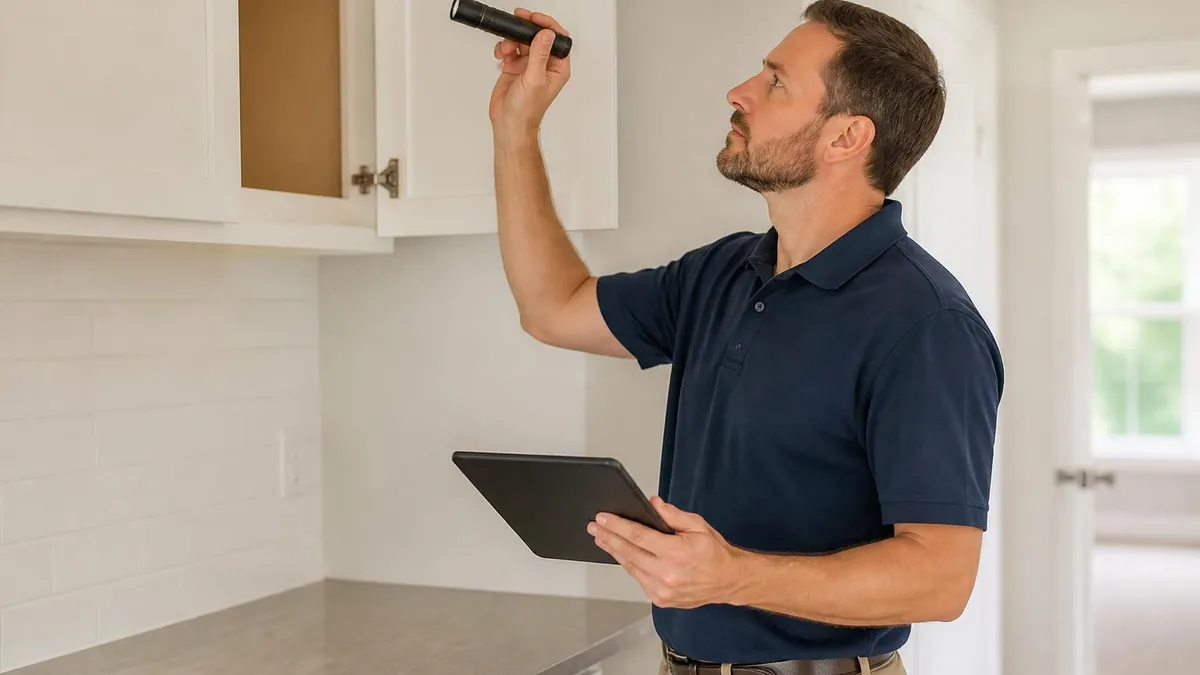
Home Inspector School: Complete 2026 Guide to Training Programs, Costs, Licensing & Career Launch
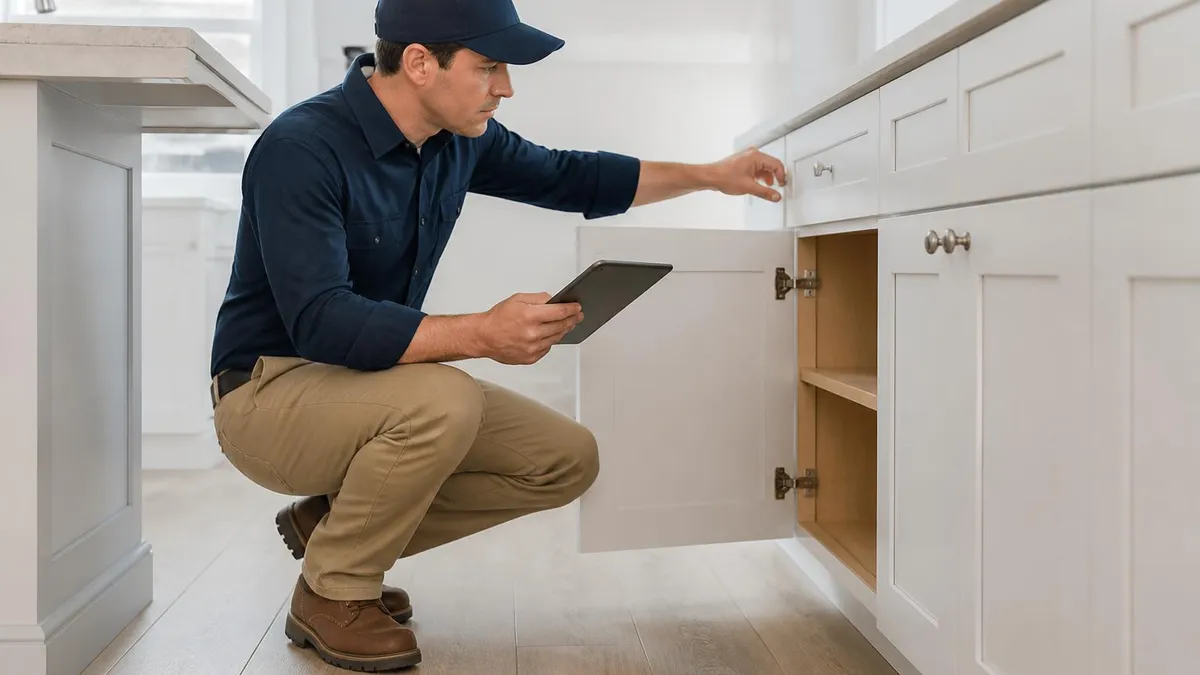
What Home Inspectors Look For: The Complete 2026 Buyer's Guide to Inspection Findings, Red Flags & Repair Negotiations
FREE Safety Home Inspector Questions and Answers

Home Inspector Certification Requirements by State: The Complete 2026 Guide
About the Author

Licensed Real Estate Broker & Licensing Exam Specialist
University of Wisconsin School of BusinessSandra Taylor is a Graduate Realtor Institute (GRI) and Accredited Buyer's Representative (ABR) designee with an MBA in Real Estate from the University of Wisconsin School of Business. She has 18 years of residential and commercial real estate brokerage experience and coaches real estate license candidates through state salesperson and broker pre-license examinations across multiple states.