
FAFSA and Bright Futures: How Federal Aid Works With Florida's Scholarship 2026
Learn how FAFSA and Bright Futures work together in 2026. Deadlines, eligibility, award stacking rules, and tips to maximize your Florida financial aid. 🎯

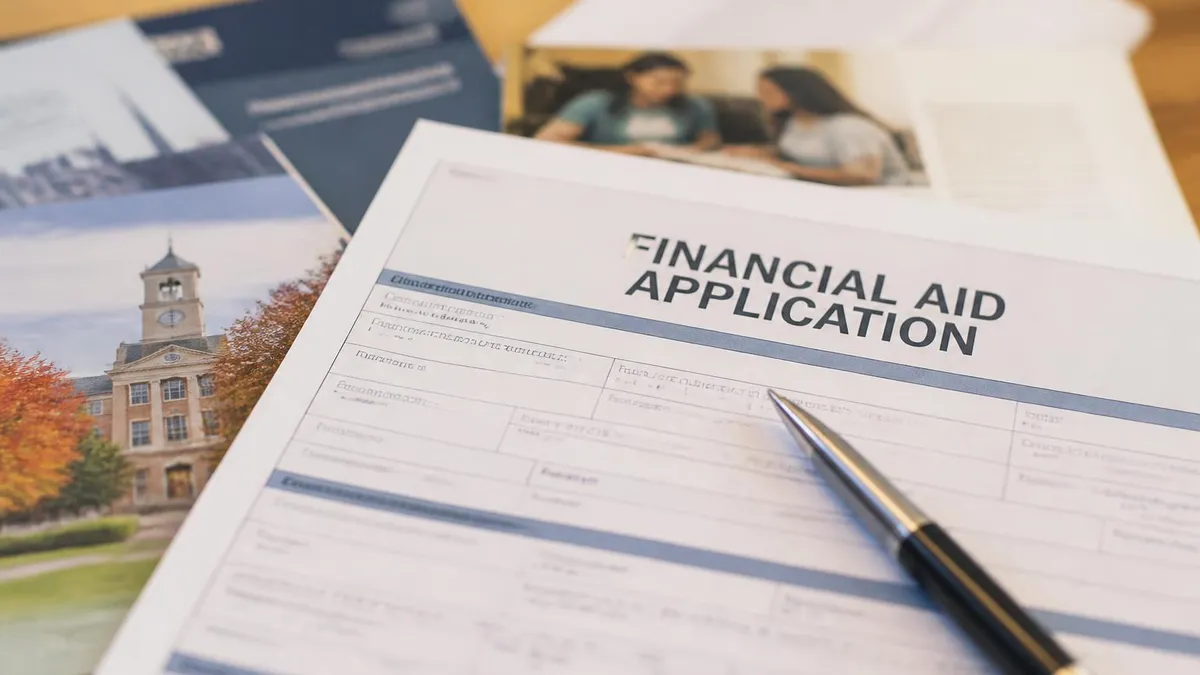
FAFSA and Bright Futures are the two most important financial aid sources available to Florida college students, and understanding how they interact can be the difference between graduating debt-free and taking on unnecessary loans. The Free Application for Federal Student Aid — better known as FAFSA — is the gateway to federal grants, work-study programs, and subsidized loans, while Florida's Bright Futures Scholarship Program rewards academic achievement with state-funded tuition coverage. Together, these two programs can cover a significant portion of your college costs, but only if you meet eligibility requirements and hit every deadline. Practice with the free FAFSA practice test on PracticeTestGeeks (150+ questions with answer explanations).
The FAFSA 2025 cycle opened on October 1, 2024, for the 2025-26 academic year, and students who complete it early gain access to the largest pool of available aid. Federal aid programs like the Pell Grant are first-come, first-served at many institutions, so filing the moment the application opens is a strategy that pays off in real dollars. The FAFSA deadline for federal processing is technically June 30 of the award year, but state and institutional deadlines — including those tied to Florida financial aid — are often months earlier, sometimes as early as May 15.
Bright Futures has its own eligibility timeline that runs parallel to FAFSA. Florida students must earn their scholarship award during high school based on GPA, standardized test scores, and community service hours, but they must also submit the FAFSA to be considered for the full financial aid package at most Florida public universities. Without a completed FAFSA on file, schools cannot determine your Expected Family Contribution (now called the Student Aid Index, or SAI), which directly affects how Bright Futures award amounts are calculated and packaged alongside other aid.
There are three tiers of Bright Futures awards — the Florida Academic Scholars (FAS) award, the Florida Medallion Scholars (FMS) award, and the Florida Gold Seal Vocational Scholars (GSV) award. Each tier has different GPA requirements, test score thresholds, and coverage levels. FAS, the highest tier, covers 100% of tuition and fees at Florida public universities for the 2025-26 academic year, while FMS covers 75%. Students pursuing vocational or technical programs can qualify for the GSV award, which covers 75% of tuition at eligible institutions.
One of the most common misconceptions is that Bright Futures replaces FAFSA or that receiving Bright Futures means you do not need to complete the federal application. This is false. FAFSA determines your eligibility for Pell Grants, Federal Supplemental Educational Opportunity Grants (SEOG), Federal Work-Study, and Direct Loans — none of which are covered by Bright Futures. When you stack a Pell Grant on top of a Bright Futures award, you may find that your institutional costs drop to near zero, and the remaining Pell funds can be applied to housing, books, and living expenses.
The coordination of these two programs also matters when it comes to overaward rules. Federal regulations prohibit students from receiving more financial aid than their total Cost of Attendance (COA). If Bright Futures plus other grants exceed the COA, the school must reduce some portion of your aid package, which is why knowing your school's COA budget ahead of time is critical. Most Florida universities post their COA figures on their financial aid websites, broken down by tuition, fees, housing, meals, books, and personal expenses, giving you a clear ceiling for aid stacking.
If you have encountered technical problems trying to complete your application, you are not alone — many students searching for help with fafsa and bright futures coordination also run into login errors, identity verification failures, and PDF submission issues that can delay their application by days or even weeks. Staying ahead of these technical hurdles by starting early and keeping your FSA ID credentials secure is the single most effective strategy for ensuring your aid package is ready before your institution's priority deadline.
Free FAFSA Study Tools
Interactive FAFSA resources on PracticeTestGeeks, free to start:
- FAFSA practice test — 150+ questions with instant scoring and answer explanations
- FAFSA flashcards — review key terms and concepts card by card
- FAFSA study guide — topic-by-topic overview of what the exam covers
- FAFSA cheat sheet — one-page printable summary for last-minute review
FAFSA and Bright Futures by the Numbers
Bright Futures Scholarship Tiers and Requirements
Requires a weighted GPA of 3.5 or higher, an SAT score of at least 1290 or ACT of 29, and 100 hours of community service. Covers 100% of tuition and fees at Florida public universities and provides a $300 per semester book stipend.
Requires a weighted GPA of 3.0 or higher, an SAT score of at least 1170 or ACT of 25, and 75 hours of community service. Covers 75% of tuition and fees at eligible Florida institutions, making it accessible to a wider range of students.
Designed for students in technical or vocational programs. Requires a 3.0 GPA in applicable courses, completion of a designated vocational program, and 30 hours of community service. Covers 75% of tuition at eligible career and technical education institutions.
Students must earn Bright Futures eligibility during high school and apply within a specific window after graduating. Initial eligibility expires if you wait too long to enroll. FAFSA must be filed each year to maintain full institutional aid packaging alongside the scholarship.
Stacking FAFSA-funded grants on top of Bright Futures is the financial strategy that makes Florida one of the most affordable states in the nation for in-state college students. The key is understanding that these two programs come from completely different funding sources — federal and state — and they operate under separate eligibility and renewal rules. Meeting one set of requirements does not automatically satisfy the other, so students must manage both applications simultaneously throughout their college careers.
To stack your aid effectively, start by filing the FAFSA as early as October 1 each year. Your SAI score, calculated from your and your parents' tax and asset information, determines your Pell Grant eligibility. Students with an SAI of zero receive the maximum Pell Grant — $7,395 for 2025-26 — which can be applied directly to any remaining costs after Bright Futures pays tuition. At a Florida state university where FAS covers 100% of tuition, a Pell-eligible student may receive thousands of dollars in refunds each semester that can fund living expenses entirely.
Bright Futures renewal requires maintaining satisfactory academic progress each academic year. FAS recipients must maintain a 3.0 cumulative GPA and complete a minimum number of credit hours per term. FMS recipients must maintain a 2.75 GPA. Falling below these thresholds means losing the scholarship for the following semester, and reinstatement requires meeting the GPA requirement again at the end of the next term. FAFSA renewal is simpler in comparison — you just refile each October — but late filings can affect your institutional aid package and delay disbursements.
The interaction between your FAFSA Expected Family Contribution and Bright Futures becomes most visible when you receive your official Student Aid Report (SAR) and your institution's Financial Aid Award Letter. Schools package all known aid sources together and compare the total against your Cost of Attendance. If the combined Bright Futures award plus grants plus any other scholarships exceeds your COA, the school will reduce need-based aid first, then merit aid if necessary. Understanding this packaging hierarchy helps you anticipate which awards might be trimmed and plan accordingly.
Private scholarships add another layer of complexity. When Florida students win outside scholarships and report them to their institution — as required by federal regulation — the financial aid office must reduce some portion of their package to keep the total below COA. In practice, schools first reduce self-help aid like work-study and loans before touching grants or Bright Futures. For students who have already maxed out grants, this means outside scholarships may simply replace loan eligibility, still reducing your debt without a dollar-for-dollar cash benefit in your pocket.
Work-Study is another FAFSA-unlocked program that pairs well with Bright Futures. Unlike grants, Work-Study funds are earned through part-time jobs — typically on campus or with approved nonprofits — and are not counted against your COA in the same way as direct grants. A student receiving FAS plus Pell Grant plus Work-Study has effectively covered tuition, supplemented living costs, and built work experience, all without taking on any debt. This combination represents the full power of coordinating FAFSA and Bright Futures from the very first semester of college.
Students who plan to transfer from a Florida community college to a state university should note that Bright Futures transfers with them, provided they have maintained the required GPA and credit hour minimums. The FAFSA ID — your unique Federal Student Aid identification credential used to sign and submit federal applications — remains the same across institutions as well, so your FAFSA data follows you seamlessly when you update your school list during the transfer process.
Key Deadlines for FAFSA 2025 and Bright Futures
The FAFSA deadline for the 2025-26 academic year at the federal level is June 30, 2026, but this date is misleading as a planning target. Federal aid programs like the Pell Grant have fixed annual funding, and some campus-based programs like SEOG and Work-Study run out of money long before the federal cutoff. Most financial aid advisors recommend filing no later than January 1 to be considered for all available funds at your institution.
When students ask "when is FAFSA due for 2025-26," the honest answer is: it depends on your school and state. The federal government sets a floor, but colleges and states layer earlier deadlines on top. Missing the federal deadline entirely means forfeiting Pell Grant eligibility for the entire year — a loss that can reach $7,395 for the lowest-income students. Set a calendar reminder for October 1 every year so filing becomes a habit, not a scramble.
Pros and Cons of Relying on FAFSA and Bright Futures Together
- +Combining both programs can cover 100% of tuition and fees at Florida public universities for FAS recipients
- +Pell Grant funds received on top of Bright Futures can be applied to housing, books, and living expenses
- +Both programs are renewable annually, providing multi-year funding stability throughout your degree
- +Bright Futures transfers between eligible Florida institutions, including community college to university pathways
- +FAFSA also unlocks Work-Study opportunities that build your resume while supplementing income
- +Florida students have among the lowest net tuition costs in the nation when both programs are fully used
- −Overaward rules mean outside scholarships may simply replace loans rather than adding extra cash
- −Bright Futures GPA and credit hour maintenance requirements create academic pressure each semester
- −Missing even one FAFSA deadline can delay disbursements and create cash flow problems at the start of term
- −FAFSA requires detailed parental financial information, which can be complicated for students with complex family situations
- −Bright Futures does not cover room and board, transportation, or personal expenses, leaving significant costs uncovered
- −Changes in enrollment status — dropping below full-time or withdrawing — can trigger repayment of Bright Futures funds
Pros and Cons at a Glance
| Pros | Cons |
|---|---|
| Pell Grant funds received on top of Bright Futures can be applied to housing, books, and living expenses | Overaward rules mean outside scholarships may simply replace loans rather than adding extra cash |
| Both programs are renewable annually, providing multi-year funding stability throughout your degree | Bright Futures GPA and credit hour maintenance requirements create academic pressure each semester |
| Bright Futures transfers between eligible Florida institutions, including community college to university pathways | Missing even one FAFSA deadline can delay disbursements and create cash flow problems at the start of term |
| FAFSA also unlocks Work-Study opportunities that build your resume while supplementing income | FAFSA requires detailed parental financial information, which can be complicated for students with complex family situations |
| Florida students have among the lowest net tuition costs in the nation when both programs are fully used | Bright Futures does not cover room and board, transportation, or personal expenses, leaving significant costs uncovered |
FAFSA and Bright Futures Application Checklist
- ✓Create or verify your FSA ID at studentaid.gov before October 1 — your parent also needs a separate FSA ID
- ✓Gather your and your parents' most recent federal tax returns, W-2s, and records of untaxed income
- ✓Complete the FAFSA at studentaid.gov starting October 1 using the IRS Data Retrieval Tool to auto-fill tax data
- ✓Add all Florida schools you are considering to your FAFSA school list — you can list up to 20 institutions
- ✓Verify your Bright Futures eligibility status through the Florida OSFA website at osfa.fldoe.org
- ✓Confirm your community service hours are logged and verified before your high school graduation date
- ✓Check each college's priority financial aid deadline and mark it on your calendar with a two-week buffer
- ✓Review your Student Aid Report (SAR) for errors within two weeks of submitting your FAFSA
- ✓Accept your financial aid award letter at your chosen institution before the school's stated deadline
- ✓Monitor your Bright Futures renewal requirements each semester and request a GPA verification if needed
Filing FAFSA Early Can Mean Thousands in Extra Aid
Students who file FAFSA on October 1 — the first available day — are more likely to receive campus-based aid like Federal Work-Study and SEOG grants, which are distributed until funds run out. At competitive Florida universities, these pools can be exhausted by February. Filing early costs nothing and could add $1,000 to $4,000 in additional aid that late filers simply never see.
Maximizing the combined value of FAFSA and Bright Futures starts with understanding exactly what each program covers and where the gaps remain. Even with FAS covering 100% of tuition and a Pell Grant covering a portion of living expenses, most Florida students still face a budget gap for housing, transportation, and personal costs that can easily reach $8,000 to $12,000 per academic year at on-campus living rates. Building a realistic college budget using your institution's official Cost of Attendance figures is the first step in knowing how much additional funding you actually need.
The FAFSA phone number for student aid support is 1-800-433-3243, and representatives are available to help with everything from FAFSA ID resets to questions about verification requirements and professional judgment appeals.
If your family's financial situation changed significantly between the tax year used on your FAFSA and your actual enrollment year — due to job loss, divorce, death of a parent, or medical expenses — you can request a Special Circumstances review from your financial aid office. Schools have the authority to adjust your SAI based on documented changes, which can unlock additional need-based aid that the standard FAFSA calculation would have missed.
Florida students who attend private universities in the state should know that Bright Futures is fully portable to any eligible Florida private college that participates in the program. Institutions like University of Miami, Rollins College, and Florida Southern College all accept Bright Futures, though the dollar value per credit hour varies because the award is calculated against the average Florida public university tuition rate rather than the private school's higher price.
The FAFSA remains equally important at private schools, where institutional grants from the school's own endowment can supplement both Bright Futures and federal aid to reduce the effective price significantly.
Understanding the Student Aid Index — the number that replaced the Expected Family Contribution in the 2024-25 FAFSA redesign — is crucial for planning. An SAI of zero means a student demonstrates the highest level of financial need and qualifies for the maximum Pell Grant. An SAI between zero and approximately 6,500 still qualifies for a partial Pell. Above that threshold, students are considered to have sufficient family resources to contribute to costs and receive no Pell Grant, though they may still receive institutional need-based grants and remain fully eligible for Bright Futures based on academic merit.
Verification is a process that affects roughly 30% of FAFSA filers each year. If your FAFSA is selected for verification, your school will request documentation — tax transcripts, verification worksheets, identity documents — before disbursing any aid. Verification does not mean you are suspected of fraud; it is a routine quality control process. However, failing to submit requested documents promptly will delay all your aid, including Bright Futures coordination. Most schools give students 30 days to submit verification documents, so treating this as a priority task the moment you receive the request is essential.
Graduate students should be aware that Bright Futures applies only to undergraduate study. Once you complete your bachelor's degree and enroll in a graduate program, you are no longer eligible for Bright Futures funding. FAFSA remains relevant for graduate students, however, because it determines eligibility for Federal Direct Unsubsidized Loans and Federal Graduate PLUS Loans. Graduate students are automatically classified as independent on the FAFSA regardless of their relationship to parents, which simplifies the application considerably.
For students considering dual enrollment during high school, it is worth knowing that dual enrollment credit hours taken at Florida colleges do not count against your Bright Futures credit hour limit. This means a student who enters college with 30 credit hours of dual enrollment credit has not used up any of their Bright Futures semester allotment and can still receive the scholarship for a full four-year program. Taking maximum advantage of dual enrollment is one of the smartest academic and financial moves a Florida high school student can make when planning their path to a debt-free degree.

Many Florida colleges set FAFSA priority deadlines as early as December 1 or January 15 — months before the federal June 30 cutoff. Missing the priority deadline can cost you campus-based grants and Work-Study funding that are awarded on a first-come, first-served basis. Always confirm your specific school's priority deadline directly with the financial aid office, and aim to file FAFSA no later than November 15 to be safe.
Even well-prepared Florida students run into obstacles when filing FAFSA alongside their Bright Futures applications. One of the most persistent problems is FSA ID issues — lost passwords, unverified email addresses, or identity mismatch errors that prevent the application from being digitally signed. The FSA ID is required to submit the FAFSA and to access your Student Aid Report, so resolving ID problems immediately is critical. The Federal Student Aid help desk can be reached at 1-800-433-3243, and ID issues can typically be resolved within one to three business days if you provide the right verification information.
FAFSA verification of identity underwent significant changes in the 2024-25 redesign. The new FAFSA uses a more strong identity verification system tied to Login.gov or ID.me, which requires government-issued photo identification and a selfie match. Some students with limited documentation — particularly undocumented students, DACA recipients, or those without traditional ID — may face barriers at this stage. Undocumented students are not eligible for federal aid through FAFSA, but they may still be eligible for state aid programs in Florida and should contact the OSFA directly for guidance on available alternatives.
Dependency status is one of the most misunderstood aspects of the FAFSA process. Most traditional-age college students are classified as dependent, which means parental financial information is required on the FAFSA regardless of whether parents actually contribute to college costs. Independent status is granted only in specific circumstances: being 24 or older, married, a veteran, an orphan, a ward of the court, or having legal dependents of your own. Students who believe they qualify for independent status but are uncertain should speak with their financial aid administrator, who can conduct a dependency override in documented exceptional circumstances.
Tax filing timing creates challenges for many FAFSA filers. The FAFSA for the 2025-26 year uses 2023 tax data — a two-year lookback called Prior Prior Year (PPY) — which means most families can use already-filed returns when the FAFSA opens on October 1. The IRS Data Retrieval Tool makes this process fast by pulling tax data directly into your FAFSA form.
However, if your family filed an amended return or had other unusual tax situations in the base year, you may not be able to use the DRT and will need to manually enter figures, increasing the risk of errors that could trigger verification.
Students with divorced or separated parents must follow specific FAFSA rules about which parent's information to report. Under the 2024-25 redesigned FAFSA, you report the financial information of the parent you lived with most during the past 12 months — regardless of who claims you as a tax dependent or who pays child support. If you lived equally with both parents, you report the one who provided the most financial support. Stepparent information is included if your custodial parent is remarried. These rules differ from prior FAFSA versions, so students with complex family structures should review the updated guidance carefully.
Maintaining enrollment full-time versus part-time significantly affects both FAFSA aid and Bright Futures. The Pell Grant is prorated for part-time enrollment — a half-time student receives 50% of their full Pell award. Bright Futures requires enrollment in at least six credit hours per semester to receive any payment, and full payment typically requires 12 or more credit hours. Students who drop below these thresholds mid-semester due to medical withdrawal or personal emergencies may be required to return a prorated portion of both their federal aid and their Bright Futures scholarship, creating unexpected financial burdens at an already difficult time.
Appealing a financial aid decision — whether it is a Bright Futures denial or a FAFSA verification outcome — is a legitimate and often successful strategy when you have documentation to support your case. Financial aid offices have professional judgment authority to adjust awards when circumstances warrant. Submit appeals in writing, attach all supporting documents, and follow up within the office's stated response window. Students who approach the appeals process professionally and provide complete documentation succeed at a surprisingly high rate, particularly for medical or family hardship situations that are well-documented.
Preparing to navigate FAFSA and Bright Futures successfully requires building good habits before senior year of high school even begins. Freshman and sophomore year in high school is the right time to start tracking your weighted GPA, monitoring your community service hours, and researching the test score benchmarks for each Bright Futures tier. By junior year, you should have a target score in mind for the SAT or ACT, and you should register for your first attempt with enough time to retake the exam before the Bright Futures deadline if necessary.
The FAFSA ID — officially called the FSA ID — should be created well before October 1 of your senior year. Both you and one parent need separate FSA IDs, and the identity verification process can take time if there are discrepancies between your FAFSA information and Social Security Administration records. Creating your FSA ID in September of senior year gives you three to four weeks to resolve any issues before the FAFSA officially opens. Parents who are not US citizens should verify their FSA ID eligibility early, as the process differs for non-citizen contributors.
Community service documentation is often the element that trips up otherwise strong Bright Futures applicants. The OSFA requires that community service hours be logged in the Florida Shines student portal and verified by an authorized supervisor from the organization where the service was performed. Hours must be completed and verified before your high school graduation date — they cannot be completed after graduation to meet the initial eligibility requirement. Keep a running log of every service activity, the supervising organization, and contact information for the verifying adult from the very first hour you complete.
For families with more than one college student at the same time, the FAFSA rules changed significantly in 2024-25. Previously, having multiple college students in the household reduced each student's SAI proportionally, providing additional need-based aid to all siblings. Under the new FAFSA rules, each student's SAI is calculated independently without any sibling enrollment adjustment. This change may increase the SAI for families with multiple simultaneous college students, reducing their need-based aid eligibility. Florida families in this situation should reach out to financial aid offices at their children's respective institutions to ask about professional judgment adjustments.
Summer coursework presents unique considerations for Bright Futures recipients. Florida's scholarship program does not automatically fund summer semesters — summer Bright Futures funding depends on whether the student has unused credit hours from the prior award year and whether their institution participates in summer disbursements. FAFSA-funded aid is also handled differently in summer, often split between trailing and leading award years. Students planning to take summer classes for the first time should consult their financial aid office in March or April to understand how their package will be structured and whether they need to file any additional forms.
Building a relationship with your school's financial aid office is one of the most underrated strategies for maximizing your aid package. Financial aid counselors know about emergency funds, department scholarships, and institutional grants that never appear on public websites. They can flag your account for special consideration, explain overaward situations before they become problems, and connect you with outside scholarship databases. Visiting the office in person rather than just emailing shows initiative and creates a human connection that can lead to better advocacy for your case when decisions are being made.
Finally, always keep copies of every document you submit in connection with FAFSA and Bright Futures — your FAFSA confirmation page, your Student Aid Report, your Bright Futures award letter, every verification document, and every award letter from your institutions. Financial aid offices process thousands of student files each cycle, and documents can occasionally be misplaced or fail to upload correctly.
Having your own organized records means you can quickly resolve disputes, demonstrate timely submission, and re-submit documents without starting from scratch. A simple digital folder organized by academic year is all it takes to stay on top of this process for the entirety of your college career.
Sample FAFSA Practice Questions
Try these questions from our free FAFSA practice tests. The correct answer and an explanation follow each question.
The Federal Supplemental Educational Opportunity Grant (SEOG) is awarded to students with what level of financial need?
- A. Moderate financial need
- B. Exceptional financial need, primarily to Pell Grant recipients
- C. Any enrolled student
- D. Students with an SAI above 1000
Answer: B. Exceptional financial need, primarily to Pell Grant recipients
SEOG is a campus-based grant reserved for students with exceptional financial need, with priority given to Pell Grant recipients with the lowest SAI.
A student with a drug conviction may lose eligibility for federal student aid under which condition?
- A. Any drug-related misdemeanor
- B. A drug conviction that occurred while receiving federal aid
- C. A conviction that occurred before age 18
- D. Any conviction regardless of timing
Answer: B. A drug conviction that occurred while receiving federal aid
Only drug convictions that occurred while the student was receiving federal student aid can result in a loss of eligibility.
Which document must all male students aged 18–25 confirm they have registered with to maintain FAFSA eligibility?
- A. Social Security Administration
- B. Selective Service System
- C. Department of Homeland Security
- D. Department of Education
Answer: B. Selective Service System
Male students between 18 and 25 must be registered with the Selective Service System to be eligible for federal student aid.
The Federal Supplemental Educational Opportunity Grant (FSEOG) is awarded to students with:
- A. Highest academic achievement
- B. Exceptional financial need, prioritizing Pell recipients
- C. Athletic scholarships
- D. Out-of-state status
Answer: B. Exceptional financial need, prioritizing Pell recipients
FSEOG is awarded to undergraduates with exceptional financial need, with priority given to Pell Grant recipients.
FAFSA Questions and Answers

Why Is the FAFSA Website Not Working? Fixes, Deadlines & What to Do

FAFSA Parent PLUS Loan: Eligibility, Rates, Risks and Alternatives

FAFSA Estimator: Tools, How They Work, and Realistic Expectations

How Long Is FAFSA Good For? Complete 2025-26 Validity and Renewal Guide

FAFSA by School: How CUNY, State Universities, and Private Colleges Use Your FAFSA Data
About the Author

Educational Psychologist & Academic Test Preparation Expert
Columbia University Teachers CollegeDr. Lisa Patel holds a Doctorate in Education from Columbia University Teachers College and has spent 17 years researching standardized test design and academic assessment. She has developed preparation programs for SAT, ACT, GRE, LSAT, UCAT, and numerous professional licensing exams, helping students of all backgrounds achieve their target scores.