
Pillar to Post Home Inspectors: Complete Guide to America's Largest Home Inspection Franchise
Pillar to Post home inspectors guide: services, costs, certification, salary data, and how to find top-rated inspectors near you in 2026 October. ✅
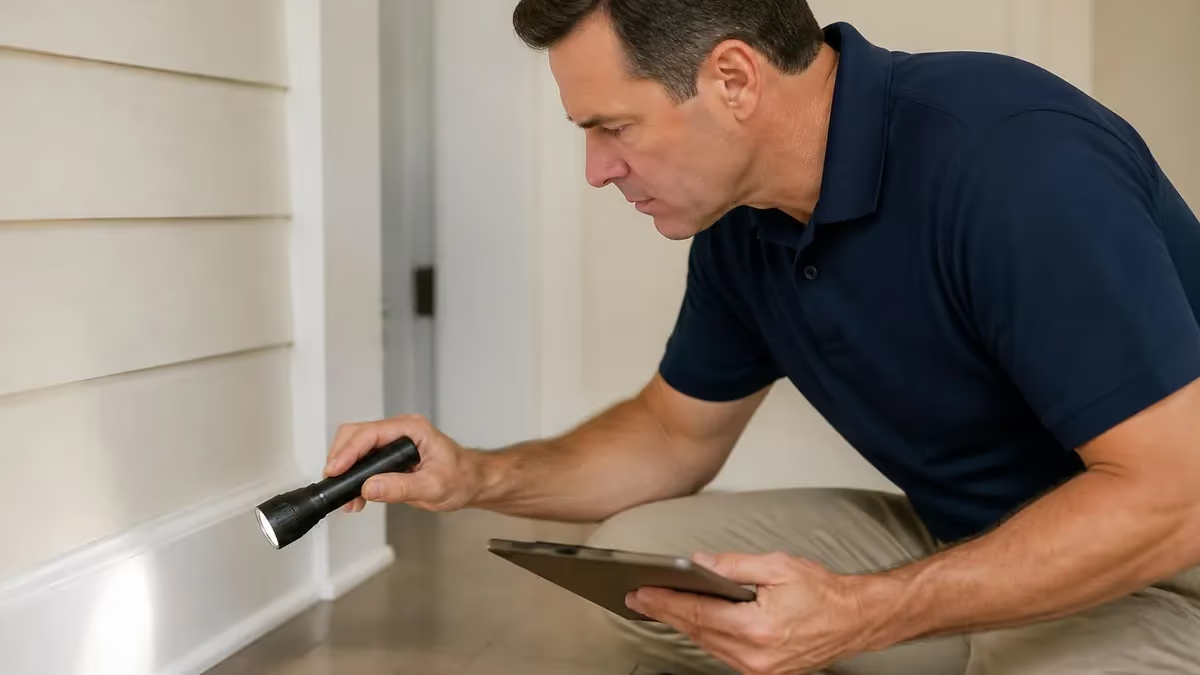
Pillar to Post home inspectors represent the largest home inspection franchise network in North America, with more than 460 franchise locations serving buyers, sellers, and real estate professionals across the United States and Canada. Founded in 1994 and headquartered in Tampa, Florida, the company has performed over three million inspections, making it a household name when homeowners search for trusted home inspectors near me during a property transaction. Their standardized inspection process and proprietary Home Inspection Report have become industry benchmarks.
The Pillar to Post system is built around a consistent, color-coded reporting format that helps buyers quickly understand the condition of major home systems. Each inspector follows the company's proprietary training program in addition to obtaining state-required certifications. This dual layer of training is part of why the brand has earned Entrepreneur Magazine's #1 ranking in the home inspection franchise category for multiple consecutive years. Their inspections cover structural elements, roofing, electrical, plumbing, HVAC, insulation, and interior components.
Pricing for a standard Pillar to Post inspection typically ranges from $325 to $600 depending on square footage, home age, and regional market rates. Additional services like radon testing, mold sampling, sewer scope, and termite inspections are offered as add-ons through their Premium and Prestige inspection packages. Many franchisees bundle these services into tiered offerings, giving homebuyers options that match their budget and risk tolerance during the due diligence period of a real estate transaction.
For aspiring inspectors curious about how to become a home inspector through a franchise system, Pillar to Post offers a turnkey business model with comprehensive training, marketing support, and proprietary software. The franchise fee starts around $34,500, with total startup investment typically falling between $43,000 and $51,000. New franchisees attend a two-week intensive training program at the company's Tampa headquarters before launching their territories with ongoing support.
The franchise's reputation for thoroughness is reinforced by their commitment to ASHI and InterNACHI standards, two of the most respected professional organizations in the industry. Every Pillar to Post inspector must complete continuing education hours annually to maintain certification, and the company carries E&O and general liability insurance for all franchisees. This combination of brand recognition, standardized procedures, and insurance backing gives consumers confidence when they hire a Pillar to Post inspector.
This comprehensive guide will walk you through everything you need to know about Pillar to Post home inspectors, including service offerings, pricing structures, franchise opportunities, career paths for inspectors, and how their services compare to independent local inspectors. Whether you're a homebuyer preparing for closing, a real estate agent vetting inspection partners, or someone considering an inspection career, this resource covers the practical details that matter most when making decisions about home inspection services.
We'll also explore how Pillar to Post compares on price, what their three-tier inspection packages actually include, what credentials their inspectors hold, and what to expect during the inspection day. By the end of this guide, you'll have a clear picture of whether Pillar to Post is the right fit for your transaction or your career, plus practical tips for getting the most value from any home inspection regardless of which company you choose.
Pillar to Post by the Numbers

Pillar to Post Inspection Service Packages
The standard package covers structural, roofing, exterior, electrical, plumbing, HVAC, insulation, ventilation, interior, and built-in appliances. Includes the proprietary color-coded report delivered same-day and a complimentary Home Reference Library.
Adds thermal imaging scans of accessible walls and ceilings to detect moisture intrusion, missing insulation, and electrical hot spots invisible to the naked eye. Ideal for older homes or properties with suspected water damage history.
The top-tier package bundles thermal imaging with additional environmental testing such as radon, mold air sampling, and water quality analysis. Best for high-value properties or buyers with health sensitivities and environmental concerns.
Sewer scope camera inspections, termite and WDO reports, well and septic evaluations, pool and spa assessments, and four-point insurance inspections for older homes seeking new policies. Pricing varies by region and inspector.
Marketed to sellers who want to identify and address issues before listing. The report becomes a marketing tool showing transparency and reduces the risk of buyer renegotiation or contract collapse after offer acceptance.
Understanding the financial side of home inspection matters whether you're a buyer budgeting for closing costs or an aspiring inspector evaluating the career. The typical home inspector salary in the United States ranges from $48,000 to $78,000 per year, with experienced inspectors in major metropolitan markets like Chicago, Dallas, and Seattle earning $90,000 to $120,000 annually. Pillar to Post franchisees often exceed independent inspector earnings because of established brand recognition, lead generation systems, and the ability to scale through multiple inspectors per territory.
For Pillar to Post franchise owners specifically, the Item 19 Financial Performance Representation in the franchise disclosure document indicates top-quartile franchisees gross between $250,000 and $400,000 annually before expenses. Net income depends heavily on overhead, marketing spend, and whether the franchisee performs inspections personally or hires staff. Single-operator territories typically net $70,000 to $130,000, while multi-inspector operations in growth markets can clear $200,000+ in net profit after wages, vehicle costs, insurance, and royalties.
Inspection pricing varies significantly by region. Chicago area home inspectors typically charge $400 to $550 for a standard single-family inspection, with Pillar to Post Chicago franchises priced near the middle of that range. In Minnesota, home inspectors pricing Reddit threads frequently mention $375 to $475 for standard inspections, with Pillar to Post Minneapolis-St. Paul locations falling within market norms. Texas, Florida, and California markets tend to skew slightly higher due to demand, while rural Midwest markets remain on the lower end.
Square footage is the primary pricing driver, but home age, foundation type, and additional structures like detached garages or guest houses also affect cost. A 1,500 square foot ranch home built in 2010 might inspect for $350, while a 4,500 square foot Victorian from 1905 could cost $650 due to complexity, more components to inspect, and longer inspection time. Multi-unit properties, condos, and townhomes have their own pricing structures that account for shared systems and HOA-maintained components.
Add-on services significantly increase total cost. Radon testing typically adds $125 to $175, mold air sampling runs $200 to $400 depending on number of samples, sewer scope inspections cost $200 to $350, and termite inspections range from $75 to $150 when bundled with the main inspection. A buyer purchasing a 30-year-old home in a flood-prone area might easily spend $900 to $1,200 on a comprehensive Pillar to Post Prestige package with all relevant add-ons included.
Compared to independent local inspectors, Pillar to Post pricing is generally competitive rather than premium. The brand commands a slight price premium of 5-15% in some markets due to standardized reporting, franchise insurance backing, and recognized brand quality. However, in highly competitive markets, franchisees often match local pricing to win business from real estate agent referral networks. Always request a written quote that specifies square footage, included services, and add-on costs before scheduling.
For consumers, the question of value goes beyond raw price. A $50 cheaper inspection that misses a $15,000 roof issue is the most expensive inspection you'll ever have. Pillar to Post's standardized training, mandatory continuing education, and proprietary reporting software create consistency that independent inspectors may or may not match. The right question isn't "who is cheapest" but "who will deliver the most thorough, defensible report that protects my purchase decision in this specific market."
Home Inspector Practice Test Questions
Prepare for the Home Inspector Test exam with our free practice test modules. Each quiz covers key topics to help you pass on your first try.
Home Inspector MCQ
Home Inspector Exam Questions covering MCQ. Master Home Inspector Test concepts for certification prep.
Home Inspector Test
Free Home Inspector Practice Test featuring Test. Improve your Home Inspector Exam score with mock test prep.
Home Inspector Trivia
Home Inspector Mock Exam on Trivia. Home Inspector Study Guide questions to pass on your first try.
Home Inspector Home Online Inspector Test
Home Inspector Test Prep for Home Online Inspector Test. Practice Home Inspector Quiz questions and boost your score.
Home Inspector Top Rated Home Inspector
Home Inspector Questions and Answers on Top Rated Home Inspector. Free Home Inspector practice for exam readiness.
Home Inspector Ultimate Home Inspector
Home Inspector Mock Test covering Ultimate Home Inspector. Online Home Inspector Test practice with instant feedback.
Home Inspector Electrical System Safety Ha...
Free Home Inspector Quiz on Electrical System Safety Hazards. Home Inspector Exam prep questions with detailed explanations.
Home Inspector Forced-Air Furnace Inspection
Home Inspector Practice Questions for Forced-Air Furnace Inspection. Build confidence for your Home Inspector certification exam.
Home Inspector Plumbing DWV Systems
Home Inspector Test Online for Plumbing DWV Systems. Free practice with instant results and feedback.
Home Inspector Roofing Systems and Materials
Home Inspector Study Material on Roofing Systems and Materials. Prepare effectively with real exam-style questions.
Home Inspector Structural Framing Defects
Free Home Inspector Test covering Structural Framing Defects. Practice and track your Home Inspector exam readiness.
What Do Home Inspectors Look For During an Inspection
Inspectors examine the foundation for cracks, settling, water intrusion, and bowing walls. They check the grading around the home to ensure water drains away from the foundation rather than toward it. The exterior siding, trim, windows, doors, decks, porches, and walkways are inspected for damage, rot, missing caulk, and safety hazards like loose railings or uneven steps that violate building code clearances.
Roofing inspections cover shingle condition, flashing integrity around chimneys and vents, gutter functionality, soffit and fascia health, and chimney exterior condition. When safe, inspectors walk the roof; otherwise, they inspect from a ladder at the eaves or use binoculars and drone imagery. Attics are checked for proper ventilation, insulation depth, evidence of leaks, pest activity, and signs of structural compromise in rafters and trusses.

Pillar to Post vs Independent Home Inspectors
- +Standardized inspection process across all franchise locations nationwide
- +Proprietary color-coded report makes findings easy to understand quickly
- +Comprehensive E&O and general liability insurance carried by all franchisees
- +Mandatory ongoing training and continuing education for every inspector
- +Three-tier package options let buyers match service to budget and needs
- +Strong relationships with real estate agents simplify scheduling and reporting
- +Brand recognition provides accountability and reputation pressure
- −Pricing tends to run 5-15% higher than budget independent inspectors
- −Inspector experience varies widely between newly-trained and veteran franchisees
- −Same-day reports can feel rushed compared to next-day detailed reports
- −Standardized format may miss nuances a specialist inspector would catch
- −Add-on service pricing can quickly inflate total cost above competitors
- −Franchise model means quality depends heavily on local owner-operator
Pros and Cons at a Glance
| Pros | Cons |
|---|---|
| Standardized inspection process across all franchise locations nationwide | Inspector experience varies widely between newly-trained and veteran franchisees |
| Proprietary color-coded report makes findings easy to understand quickly | Same-day reports can feel rushed compared to next-day detailed reports |
| Comprehensive E&O and general liability insurance carried by all franchisees | Standardized format may miss nuances a specialist inspector would catch |
| Mandatory ongoing training and continuing education for every inspector | Add-on service pricing can quickly inflate total cost above competitors |
| Three-tier package options let buyers match service to budget and needs | Franchise model means quality depends heavily on local owner-operator |
Home Inspection Day Checklist for Buyers
- ✓Confirm the inspection appointment time and address 24 hours in advance
- ✓Plan to attend the final 30-45 minutes for the walk-through summary
- ✓Bring a notepad and your phone to photograph any flagged issues
- ✓Ask your inspector to verbally explain major findings before leaving
- ✓Confirm all utilities (water, gas, electric) are turned on at the property
- ✓Request that pilot lights be lit if needed for HVAC testing
- ✓Ensure access to attic, crawlspace, electrical panel, and water heater
- ✓Move stored items blocking access to mechanicals if you own the home
- ✓Review the written report within 24 hours and flag clarification questions
- ✓Schedule follow-up specialist inspections for any major flagged systems
Verify state license, professional liability insurance, and recent sample reports
Before booking any inspector — Pillar to Post or otherwise — request proof of state licensing, E&O insurance coverage of at least $300,000, and two recent redacted sample reports. Quality inspectors share these documents without hesitation. Any pushback is a red flag worth heeding before you spend $400+ on services.
Pillar to Post home inspectors must hold all state-required licenses or certifications before they can operate independently. State requirements vary dramatically, ranging from no licensing in states like Colorado, Utah, and Kansas to rigorous testing and continuing education requirements in states like Texas, Florida, Illinois, and North Carolina. New franchisees who don't yet hold required state credentials must complete pre-licensing education and pass state exams in addition to the Pillar to Post training program before they can perform paid inspections in their territory.
The core home inspector certification process typically involves 60 to 120 hours of pre-licensing education, completion of supervised practice inspections (often 25 to 250 depending on the state), and passing the National Home Inspector Examination (NHIE) or a state-specific equivalent. The NHIE is a 200-question, four-hour computer-based test that covers structural systems, exterior, roofing, plumbing, electrical, HVAC, interior, insulation, ventilation, fireplaces, and professional practice. Passing scores typically fall around 70-75 percent.
Beyond state requirements, most Pillar to Post franchisees also hold credentials from one or both major professional organizations: the American Society of Home Inspectors (ASHI) and the International Association of Certified Home Inspectors (InterNACHI). ASHI Certified Inspector (ACI) status requires passing the NHIE, completing 250 paid inspections, and adhering to ASHI's Standards of Practice and Code of Ethics. InterNACHI Certified Professional Inspector (CPI) status requires passing the InterNACHI Online Inspector Exam and completing ongoing CE hours.
Pillar to Post's proprietary training program runs two weeks in person at their Tampa headquarters, covering the company's inspection methodology, proprietary reporting software, business operations, marketing systems, customer service standards, and ride-along field training. After classroom training, new franchisees receive ongoing mentorship from regional support staff and have access to a national network of veteran inspectors for technical questions during their first year of operation. This support reduces the steep learning curve new inspectors typically face.
Continuing education is mandatory for every Pillar to Post inspector, regardless of state requirements. The company requires minimum annual CE hours focused on emerging technologies, code updates, environmental hazards, and report-writing improvements. Many franchisees pursue additional specialty certifications in areas like commercial inspection, mold assessment, infrared thermography, indoor air quality, and energy auditing. These specialties allow franchisees to offer higher-margin services and differentiate their business in competitive markets.
Insurance is another critical credential. Every Pillar to Post franchisee carries Errors and Omissions (E&O) insurance and General Liability coverage as a condition of their franchise agreement. The standard policy provides $300,000 to $1,000,000 in E&O coverage per claim, which protects both the inspector and the client if a missed defect leads to a claim. This insurance backing is one of the strongest arguments for hiring a Pillar to Post inspector over an uninsured or underinsured independent operator, particularly on higher-value properties.
For aspiring inspectors evaluating career paths, understanding how much do home inspectors make alongside certification requirements is essential. Top earners in major markets routinely clear $100,000+ annually after three to five years of consistent business development. The path requires upfront investment in education, exam preparation, equipment ($3,000 to $8,000 for tools and software), insurance, and either marketing for independent inspectors or franchise fees for Pillar to Post operators. The career rewards thoroughness, continuous learning, and strong communication skills above all else.

Not all states regulate home inspectors. Always verify your state's specific requirements at your state's Department of Professional Regulation or Real Estate Commission before hiring. In unregulated states, professional certifications from ASHI or InterNACHI become even more important credentials to verify before hiring any inspector.
Choosing the right home inspector — whether Pillar to Post or independent — comes down to credentials, experience, communication style, and report quality. Start your search by asking your real estate agent for three to five referrals, then independently verify each inspector's state license, professional certifications, insurance coverage, and online reviews. Don't rely solely on agent recommendations; some agents prefer inspectors who deliver "deal-friendly" reports rather than thorough ones. Your inspection is one of the most important due diligence steps in your purchase.
Request a sample report from each inspector you're considering. Quality reports include high-resolution photos of every flagged item, clear descriptions of issues in plain language, severity ratings (safety hazard vs. cosmetic vs. maintenance), recommended next steps, and references to applicable codes or standards. Reports that consist mostly of disclaimers and generic language without substantive findings should be a warning sign. Pillar to Post's standardized color-coded format generally meets these criteria but quality still varies by individual inspector.
Ask each candidate inspector how long their typical inspection takes for a home of your size and age. A 2,000 square foot home should require minimum 2.5 to 3 hours of on-site inspection time. Anyone promising a one-hour inspection is either skipping critical steps or using helpers without disclosure. Also ask whether you can attend the inspection — quality inspectors welcome buyer attendance for the final walk-through and explanation, while inspectors who discourage attendance may be hiding inadequate methodology.
Check online reviews across Google, Yelp, and the BBB, but read critically. Look for patterns rather than single complaints — every busy inspector accumulates some negative reviews from clients with unrealistic expectations or sellers angry about findings. Concerning patterns include repeated complaints about missed major defects, poor communication, slow report delivery, or unprofessional behavior. Positive patterns include comments about thoroughness, clear explanations, willingness to answer follow-up questions, and helpful written reports that aided buyer negotiations.
Verify professional liability insurance directly. Ask for a current certificate of insurance showing E&O coverage of at least $300,000 and general liability of $1,000,000. Legitimate inspectors provide this within 24 hours; reluctant or evasive inspectors are not worth the risk. Pillar to Post franchisees have insurance built into their franchise agreement, but always verify it's current. Some states maintain searchable license databases that show insurance status, complaints, and disciplinary actions — use these resources before booking.
Consider the inspector's specialty experience. If you're buying a 100-year-old Victorian, an inspector with extensive historic home experience matters more than one who specializes in new construction. If you're buying a property with a septic system, well, or pool, confirm the inspector has specific certifications for those systems or can refer you to qualified specialists. Pillar to Post franchisees often partner with specialists for these add-on services, while some independent inspectors hold all certifications in-house — both models work when properly executed.
Finally, evaluate communication style during your initial phone call or email exchange. A great inspector is patient, answers questions thoroughly without being condescending, explains their process clearly, and provides written quotes with all costs disclosed upfront. Avoid inspectors who pressure you to book immediately, refuse to share sample reports, or seem rushed during pre-inspection conversations. The inspection itself involves significant communication, and an inspector who's poor at communication before you hire them won't suddenly improve during the actual inspection.
To maximize the value of any home inspection — Pillar to Post or otherwise — preparation and follow-through matter as much as choosing the right inspector. Start by reviewing the seller's property disclosure statement before the inspection so you can flag specific concerns for the inspector to investigate closely. If the seller disclosed past roof repairs, water damage, or HVAC replacements, give that information to your inspector ahead of time. Context allows them to direct extra attention to historically problematic areas of the property.
Plan to attend the final 30 to 45 minutes of the inspection for the walk-through summary. This is when the inspector takes you through major findings, explains their severity, and answers questions face-to-face. Bring a notepad and your phone to take photos and notes. Don't rely on memory — by the time you're reviewing the written report a few hours later, details from the verbal walk-through will already be fading. Photos help you confirm exactly what was discussed and where issues are located.
After receiving the written report, review it within 24 hours. Most purchase contracts include a short inspection contingency period — often five to ten business days — during which you can request repairs, ask for credits, or terminate the contract based on findings. Going through the report promptly gives you time to schedule specialist inspections for major systems flagged by the generalist home inspector. Common follow-up inspections include structural engineers for foundation issues, HVAC contractors for major equipment, roofers for damaged roofing, and electricians for panel concerns.
When negotiating repairs based on inspection findings, focus on safety hazards and major defects rather than every minor cosmetic issue. Sellers expect requests on items like missing GFCI outlets, leaking plumbing, roof damage, HVAC problems, mold, structural cracks, and safety code violations. Sellers often refuse to address cosmetic items, minor wear-and-tear, and items the buyer was aware of from initial walkthrough photos. Pick your battles strategically — overreaching can collapse deals while focusing on legitimate safety and major repair items typically produces results.
Save your inspection report indefinitely. It becomes a baseline document for tracking the home's condition over time, planning future maintenance, and providing context for future repairs and renovations. Some homeowners create a maintenance binder that includes the original inspection report, all subsequent specialist reports, repair receipts, and warranty documents for major systems. This documentation adds value when you eventually sell the home and want to demonstrate proactive maintenance to buyers.
Use your inspection findings to plan a maintenance schedule for the first year of ownership. Address safety issues immediately, plan budget for major repairs flagged as needing attention within five years, and create a recurring maintenance calendar for items like HVAC servicing, gutter cleaning, water heater flushing, and exterior caulking. Many issues that develop into expensive repairs start as small problems that proper maintenance would have prevented. Your inspection report essentially gives you a five-year maintenance roadmap if you use it strategically rather than filing it away after closing.
Finally, consider scheduling annual maintenance inspections every five to seven years even when you're not selling. A periodic professional inspection catches small issues before they become expensive problems and helps you plan capital improvements proactively. Pillar to Post and other inspectors offer these maintenance inspections at reduced rates compared to pre-purchase inspections since the urgency and liability profile is different. Treating your home as an asset that benefits from periodic professional evaluation generally saves money over the long run compared to reactive repair patterns.
Sample Home Inspector Test Practice Questions
Try these questions from our free Home Inspector Test practice tests. The correct answer and an explanation follow each question.
What standard governs the minimum scope of a home inspection in most U.S. states, commonly referenced by online inspectors as the baseline for remote inspections?
- A. ASHI Standards of Practice
- B. OSHA General Industry Standards
- C. EPA Radon Measurement Protocols
- D. HUD Housing Quality Standards
Answer: A. ASHI Standards of Practice
The American Society of Home Inspectors (ASHI) Standards of Practice define the minimum scope and performance requirements for home inspections in the U.S.
What is the primary limitation of an online home inspection compared to an in-person inspection?
- A. Inspector cannot physically touch or probe surfaces for hidden defects
- B. Inspector cannot see the exterior of the home
- C. Inspector cannot review building permits
- D. Inspector cannot communicate with the client
Answer: A. Inspector cannot physically touch or probe surfaces for hidden defects
Without physical access, an online inspector cannot probe for soft wood, test outlets directly, or detect issues that require tactile assessment.
Please indicate what the following home inspectors ARE NOT needed to mention when inspecting unfinished spaces:
- A. Ventilation
- B. Insulation
- C. Temperature
- D. Vapor retarders
Answer: C. Temperature
When inspecting unfinished spaces like attics or crawlspaces, home inspectors typically assess ventilation, insulation, and vapor retarders to identify potential issues with moisture, energy efficiency, and structural integrity. While temperature might be observed, it's not a standard required reporting item in the same way as the condition of the structural and environmental control elements.
Spalling bricks observed on a chimney exterior during a home inspection most commonly indicate what condition?
- A. The bricks were laid in an incorrect bond pattern during original construction
- B. The mortar mix used was too strong relative to the brick hardness
- C. Chronic moisture intrusion causing freeze-thaw deterioration inside the brick
- D. The chimney is structurally too tall relative to its base width
Answer: C. Chronic moisture intrusion causing freeze-thaw deterioration inside the brick
Spalling occurs when water absorbed into porous brick freezes, expands, and breaks away the brick face, indicating a long-standing moisture problem.
Home Inspector Questions and Answers
About the Author

Licensed Real Estate Broker & Licensing Exam Specialist
University of Wisconsin School of BusinessSandra Taylor is a Graduate Realtor Institute (GRI) and Accredited Buyer's Representative (ABR) designee with an MBA in Real Estate from the University of Wisconsin School of Business. She has 18 years of residential and commercial real estate brokerage experience and coaches real estate license candidates through state salesperson and broker pre-license examinations across multiple states.