
Certified Home Inspector: Complete Guide to Training, Certification, Salary & Career Path in 2026 October
Become a certified home inspector in 2026 October. Complete guide to training, 💯 certification requirements, salary expectations, exam prep, and starting your
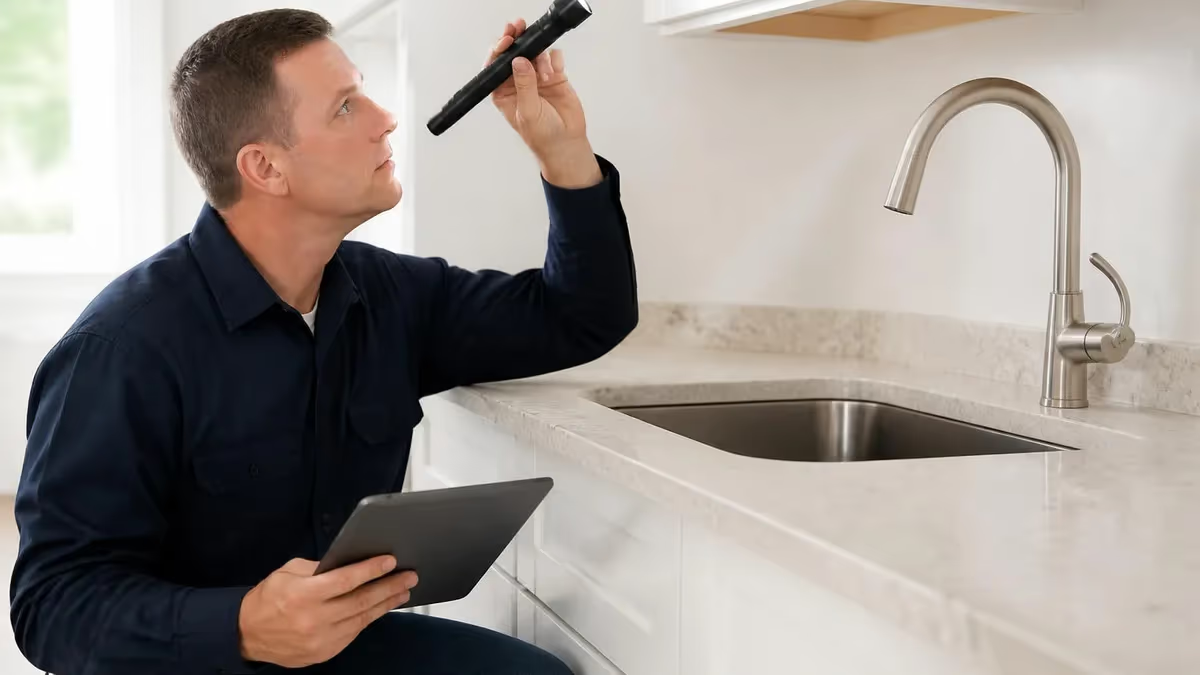
Becoming a certified home inspector is one of the most accessible paths into the real estate and construction industries, offering a unique blend of independence, technical knowledge, and meaningful client interaction. A certified home inspector evaluates residential properties for structural integrity, safety hazards, and system functionality, providing buyers and sellers with the critical information they need to make informed decisions. Whether you searched for home inspectors near me hoping to find a career mentor or you are exploring this profession from scratch, this comprehensive guide walks you through every step.
The home inspection industry has grown steadily over the past decade, with demand fueled by a strong real estate market, increasing buyer due diligence, and rising consumer awareness about property defects. According to industry surveys, more than 80% of residential transactions in the United States now include a home inspection contingency, which means inspectors are essential gatekeepers in nearly every closing. This trend has created stable opportunities for new entrants, particularly those willing to invest in proper training, certification, and ongoing education.
Unlike many professional careers that require a four-year degree, home inspection certification can typically be completed in three to six months, with total upfront costs ranging from $500 to $3,500 depending on your state and chosen training provider. After certification, inspectors enjoy considerable flexibility — many run their own businesses, set their own hours, and scale income based on the number of inspections they choose to take. This entrepreneurial element is one of the biggest reasons people switch to home inspection from construction, real estate, military, or engineering backgrounds.
However, the profession is not without challenges. Licensing requirements vary dramatically by state, with some states requiring no license at all while others demand hundreds of training hours, supervised field inspections, examinations, and professional liability insurance. Understanding these requirements before you invest time and money is essential, as is knowing which national certification bodies will provide the strongest credentials for your region and target market. Mistakes here can cost months of delays.
This guide covers the full path from beginner to working inspector, including how to become a home inspector, which certifications carry the most weight, what the day-to-day work actually looks like, realistic salary expectations, and how to build a sustainable inspection business. We also dive into exam preparation strategies, the specific defects inspectors look for during typical evaluations, and the insurance and legal considerations that protect your career long-term against unhappy clients or post-sale disputes.
Whether you are looking for a complete career change, a meaningful retirement second act, or a way to use existing construction expertise into a higher-margin service business, the certified home inspector path offers a clear, structured journey. By the end of this article you will know exactly what training to pursue, which exams to schedule, how much to charge, where to find your first clients, and how to differentiate yourself in increasingly competitive markets like Chicago, Dallas, Phoenix, and Minneapolis throughout 2026.
Certified Home Inspector Career by the Numbers

Certification Path & Requirements
Research State Requirements
Complete Approved Training
Pass the National Exam
Complete Field Inspections
Get Insurance & License
Launch Your Practice
Understanding home inspector salary expectations is essential before investing in training and certification. According to the U.S. Bureau of Labor Statistics and industry surveys conducted by InterNACHI and ASHI, the median annual home inspector salary in 2025 ranged from $58,000 to $72,000 nationally, with significant variation based on geography, experience, and business model. New inspectors typically earn $35,000 to $50,000 during their first year, while established solo inspectors with strong referral networks often clear $90,000 to $150,000 annually.
Geography plays a dominant role in determining how much do home inspectors make in any given market. Inspectors working in high-cost metropolitan areas like San Francisco, Seattle, Boston, New York, and Washington D.C. command premium fees of $500 to $800 per inspection. Meanwhile, rural inspectors in Mississippi, Arkansas, or West Virginia may charge $250 to $350 per inspection. Even within the same state, urban-rural disparities can equal a 60% income difference for inspectors performing equivalent work.
The most common business model is the independent solo inspector, performing two to four inspections per day at fees averaging $400 to $500 in metropolitan markets. At this pace, a focused solo inspector working 220 days per year can gross between $176,000 and $440,000, though net income drops substantially after insurance, marketing, vehicle expenses, software subscriptions, continuing education, and association memberships. Realistic net earnings for solo inspectors after three years range from $75,000 to $130,000.
Multi-inspector firms represent the highest-earning tier of the industry. Owners who hire and train additional inspectors typically retain 30-40% of each inspection fee, creating scalable revenue streams that can reach $300,000 to $700,000 annually for established firms. However, this model requires significant management skill, brand recognition, and consistent lead generation. Most multi-inspector firms take five to seven years to reach this scale and require substantial upfront investment in branding, technology infrastructure, and inspector recruitment campaigns.
Specialty add-on services dramatically boost per-inspection revenue. Radon testing typically adds $125 to $200, water quality testing adds $150 to $300, pool and spa inspections add $100 to $200, and termite or wood-destroying organism inspections add $75 to $150. Thermal imaging, sewer scoping, mold sampling, and pre-listing inspections are additional revenue streams that experienced inspectors use to push average ticket sizes from $400 to $700 or higher per appointment, significantly improving daily revenue without adding new clients.
Chicago area home inspectors illustrate a strong middle-market example. According to recent Illinois licensing data, inspectors in Cook, DuPage, and Lake counties typically charge $425 to $575 for a standard single-family home inspection, with experienced inspectors clearing $95,000 to $135,000 net annually. The Chicago market favors inspectors who carry strong continuing education credentials, maintain bilingual capabilities for diverse neighborhoods, and build durable referral relationships with the dense real estate agent population spread across the metro region.
Reddit threads about Minnesota home inspectors pricing reddit reveal that Twin Cities inspectors typically charge $400 to $525 for standard inspections, with discussion threads showing buyer frustration when fees climb above $600. This community feedback is valuable for new inspectors setting initial pricing — undercutting the market too aggressively damages perceived value, while overpricing without specialization or strong testimonials makes it difficult to win business in competitive metropolitan markets where buyers actively compare multiple inspector quotes.

Home Inspector Practice Test Questions
Prepare for the Home Inspector Test exam with our free practice test modules. Each quiz covers key topics to help you pass on your first try.
Home Inspector MCQ
Home Inspector Exam Questions covering MCQ. Master Home Inspector Test concepts for certification prep.
Home Inspector Test
Free Home Inspector Practice Test featuring Test. Improve your Home Inspector Exam score with mock test prep.
Home Inspector Trivia
Home Inspector Mock Exam on Trivia. Home Inspector Study Guide questions to pass on your first try.
Home Inspector Home Online Inspector Test
Home Inspector Test Prep for Home Online Inspector Test. Practice Home Inspector Quiz questions and boost your score.
Home Inspector Top Rated Home Inspector
Home Inspector Questions and Answers on Top Rated Home Inspector. Free Home Inspector practice for exam readiness.
Home Inspector Ultimate Home Inspector
Home Inspector Mock Test covering Ultimate Home Inspector. Online Home Inspector Test practice with instant feedback.
Home Inspector Electrical System Safety Ha...
Free Home Inspector Quiz on Electrical System Safety Hazards. Home Inspector Exam prep questions with detailed explanations.
Home Inspector Forced-Air Furnace Inspection
Home Inspector Practice Questions for Forced-Air Furnace Inspection. Build confidence for your Home Inspector certification exam.
Home Inspector Plumbing DWV Systems
Home Inspector Test Online for Plumbing DWV Systems. Free practice with instant results and feedback.
Home Inspector Roofing Systems and Materials
Home Inspector Study Material on Roofing Systems and Materials. Prepare effectively with real exam-style questions.
Home Inspector Structural Framing Defects
Free Home Inspector Test covering Structural Framing Defects. Practice and track your Home Inspector exam readiness.
What Do Home Inspectors Look For During an Inspection
Certified home inspectors systematically evaluate the structural integrity of every property, beginning with the foundation and working upward through framing, walls, ceilings, and roof structures. They identify cracks wider than one-eighth inch, signs of settlement, bowing basement walls, evidence of past water intrusion, and improper modifications that could compromise load-bearing capacity. Foundation issues represent some of the most expensive repairs buyers can face after closing, often costing $10,000 to $50,000.
Beyond foundations, inspectors examine attic framing for proper bracing, evidence of pest damage, sagging rafters, and moisture penetration. They look at exterior siding, soffits, and fascia for rot, separation, or insect damage. Crawl space inspections involve checking joists, support beams, sill plates, and ground moisture barriers. Documentation of structural concerns is photographed extensively and described in plain language so non-technical buyers can understand both the immediate concerns and the potential long-term implications.
Is Becoming a Certified Home Inspector Right for You?
- +Quick path to certification — typically 3-6 months total time investment
- +Strong earning potential with experienced solo inspectors clearing $100K+ annually
- +Flexible schedule with control over daily appointments and workload volume
- +Low startup costs compared to most professional careers requiring degrees
- +High demand driven by 5+ million annual U.S. residential real estate transactions
- +Entrepreneurial freedom to build, brand, and eventually sell your own business
- +Meaningful work helping families avoid costly post-purchase property surprises
- −Significant ongoing liability exposure requiring annual E&O insurance premiums
- −Physical demands — climbing ladders, crawl spaces, attics in all weather conditions
- −Seasonal income fluctuations tied closely to local real estate market cycles
- −Continuing education requirements vary by state, adding annual time and cost
- −Difficult clients who blame inspectors for problems discovered post-closing
- −Marketing and lead generation require constant attention from solo practitioners
- −Income ceiling for solo inspectors limited by physical inspection capacity daily
Pros and Cons at a Glance
| Pros | Cons |
|---|---|
| Flexible schedule with control over daily appointments and workload volume | Significant ongoing liability exposure requiring annual E&O insurance premiums |
| Low startup costs compared to most professional careers requiring degrees | Physical demands — climbing ladders, crawl spaces, attics in all weather conditions |
| Entrepreneurial freedom to build, brand, and eventually sell your own business | Seasonal income fluctuations tied closely to local real estate market cycles |
| Meaningful work helping families avoid costly post-purchase property surprises | Continuing education requirements vary by state, adding annual time and cost |

Pre-Certification Checklist for Aspiring Home Inspectors
- ✓Verify your state's specific home inspector licensing requirements and approved training providers
- ✓Budget $1,500-$3,500 for total certification costs including training, exam, and initial insurance
- ✓Choose between InterNACHI, ASHI, or state-specific certification body based on your market
- ✓Enroll in a state-approved home inspection course with hands-on field training components
- ✓Schedule and pass the National Home Inspector Examination (NHIE) at a Pearson Vue center
- ✓Complete required supervised field inspections — typically 25-100 hours depending on state
- ✓Purchase General Liability and Errors & Omissions insurance from specialized inspection insurers
- ✓Form a business entity (LLC recommended) and obtain federal EIN and state business registration
- ✓Invest in professional inspection software like Spectora, HomeGauge, or Horizon for reporting
- ✓Build initial referral network by attending local real estate association events and meetings
Your first 100 inspections determine your career trajectory.
Industry data shows that inspectors who exceed 100 paid inspections within their first 12 months have a 78% chance of building sustainable six-figure businesses by year three. Those who perform fewer than 50 first-year inspections have only a 22% success rate. Aggressive early marketing — even at break-even fees — builds the reviews, referrals, and confidence needed for long-term success.
Home inspectors professional liability insurance, commonly called Errors & Omissions (E&O) coverage, is the single most important business protection a certified inspector carries. Unlike general liability insurance, which covers bodily injury and property damage occurring during inspections, E&O insurance protects inspectors against claims that they failed to identify defects, made reporting errors, or provided inaccurate professional opinions. Without E&O coverage, a single missed cracked heat exchanger or undetected water damage could financially devastate an entire inspection practice immediately.
Typical E&O policies for solo home inspectors cost $1,200 to $2,800 annually depending on state, inspection volume, claims history, and coverage limits. Standard limits include $250,000 per claim with a $500,000 aggregate, though many state regulations and real estate franchise referral programs now require minimum $500,000 per-claim coverage. Higher limits cost incrementally more but provide essential protection in expensive housing markets where alleged missed defects can easily exceed $100,000 in claimed repair costs.
The most common E&O claims against home inspectors involve roofing defects, foundation cracks, hidden moisture damage, undisclosed prior repairs, and HVAC system issues that fail shortly after closing. Industry data from major insurance carriers shows that approximately 15% of inspectors face a claim within any five-year window, though only about 30% of those claims result in payouts. Strong reports, thorough photo documentation, and clear contractual limitations are the best preventive measures against costly litigation outcomes overall.
State licensing boards now require specific contract language in every home inspection agreement, including limitations of liability, dispute resolution procedures, scope-of-inspection disclosures, and specific exclusions. Inspectors who use generic contracts or fail to obtain signed agreements before inspections face significantly higher claim exposure. Many professional associations, including InterNACHI and ASHI, provide member-approved contract templates that have been reviewed by attorneys specializing in inspection law across multiple state jurisdictions consistently.
Pre-claim risk management is far more cost-effective than post-claim defense. Successful inspectors document every aspect of their inspections with hundreds of timestamped, geo-tagged photographs, maintain detailed inspection notes, retain copies of every client communication, and follow consistent inspection protocols on every property. When complaints arise, this documentation often resolves disputes before formal claims are filed, protecting both insurance premiums and professional reputation. Consistent process beats individual judgment for liability protection in nearly every documented inspector dispute case nationwide.
Cyber liability and data protection have emerged as new risk categories for digital-first inspection practices. Modern inspectors collect client photos, payment information, property addresses, and detailed home security information through their software systems. Standard E&O policies often exclude data breach claims, requiring separate cyber liability endorsements costing $300 to $800 annually. As ransomware attacks targeting small professional services increase, this coverage has become essential rather than optional for inspectors handling sensitive client property data.
Choosing the right insurance broker matters enormously for inspectors. Generalist commercial insurance agents often place coverage with carriers unfamiliar with home inspection risks, resulting in inappropriate exclusions, claims handling problems, and unexpected coverage gaps. Specialized inspection insurance brokers — including OREP, InspectorPro, Target Professional Programs, and Allen Insurance Group — provide carrier relationships, claims advocacy, contract review services, and risk management resources specifically designed for home inspectors at competitive premiums with deep professional industry knowledge.
Many states automatically suspend home inspector licenses for missed continuing education deadlines or expired insurance certificates — sometimes without warning notices. A lapsed license while performing paid inspections constitutes unlicensed practice, voids your E&O coverage, and exposes you to state fines plus civil liability. Set calendar reminders 90, 60, and 30 days before every renewal deadline without exception.
Building a sustainable home inspection business requires far more than technical certification — it demands consistent marketing, strategic networking, and operational discipline. The most successful inspectors treat their certification as merely the entry ticket, then invest equal energy into business development. Industry research shows that how much do home inspectors make correlates more strongly with marketing investment and referral relationships than with years of experience or technical credentials accumulated over time.
Real estate agents drive 70-85% of inspection business for most established inspectors. Building genuine relationships with 30 to 50 active agents typically generates enough referrals to fill a solo inspector's schedule. Strategies include attending local real estate association meetings, sponsoring continuing education classes for agents, providing co-branded marketing materials, and consistently delivering inspections on tight closing timelines. Agents prioritize inspectors who communicate clearly, deliver reports within 24 hours, and present findings without unnecessarily alarming nervous first-time homebuyers during stressful transactions.
Digital marketing represents the second pillar of modern inspection business growth. A professional website optimized for searches like home inspectors chicago, home inspectors near me, or location-specific terms generates direct buyer leads at significantly lower cost than agent referrals. Google Business Profile optimization, consistent five-star review collection, and content marketing through blog posts answering common buyer questions about inspection processes, costs, and findings drive durable organic visibility that compounds steadily over years of consistent search engine optimization effort.
Pricing strategy makes or breaks new inspection businesses. Undercutting market rates by 30% to win volume rarely produces sustainable income — instead, it attracts price-shopping clients, signals lower quality to agents, and traps inspectors in low-margin work cycles. The optimal positioning targets the 60th to 75th percentile of local pricing, supported by demonstrably superior reporting, faster turnaround, and stronger online reviews. Premium pricing combined with premium service consistently outperforms volume strategies in long-term business profitability metrics across virtually every metropolitan inspection market analyzed nationally.
Inspection report quality is the single most powerful marketing asset any inspector controls. Modern buyers share inspection reports with family members, contractors, and future agents — meaning every report functions as a long-term marketing document. Reports with clear executive summaries, hundreds of high-quality photos, video clips of moving parts, plain-language explanations, and actionable repair priorities consistently generate more referrals than dense technical reports buyers cannot understand. Software platforms like Spectora and HomeGauge dramatically improve report aesthetics and client comprehension simultaneously throughout most modern inspection businesses today.
Diversifying inspection types stabilizes seasonal income fluctuations dramatically. Beyond standard buyer inspections, successful inspectors offer pre-listing inspections for sellers, new construction phase inspections during builder construction stages, eleven-month warranty inspections before builder warranties expire, condominium reserve studies, commercial property condition assessments, and specialty environmental services like radon, mold, and asbestos testing. Each diversification expands the addressable market and reduces dependence on single-channel referral sources during slower real estate market periods experienced in winter months particularly.
Long-term success in home inspection ultimately depends on continuous learning and adaptation. Building codes evolve, construction materials change, new defect patterns emerge in aging housing stock, and consumer expectations rise constantly. The inspectors who thrive over decades maintain InterNACHI or ASHI memberships, attend annual industry conferences, complete more continuing education than minimum requirements demand, and actively participate in professional discussion forums where complex defect identification and reporting strategies are shared openly among experienced peers nationwide regularly.
Practical exam preparation strategies separate inspectors who pass the National Home Inspector Examination on first attempt from those who require multiple expensive retakes. The NHIE includes 200 multiple-choice questions covering structure, exterior, roofing, plumbing, electrical, heating, cooling, insulation, interior, fireplaces, appliances, professional practices, and standards of practice. Successful candidates report dedicating 80 to 120 hours of focused study spread across 8 to 12 weeks, supplementing course materials with practice question banks, video walkthroughs, and study group discussions throughout preparation.
Active recall outperforms passive reading by significant margins in inspection exam preparation research. Rather than re-reading textbooks repeatedly, successful candidates use flashcards, practice tests, and self-testing techniques to identify knowledge gaps. Each practice test should be followed by detailed review of every missed question, including understanding why the correct answer is right and why each distractor is wrong. This deeper review process transforms test-taking from memorization into genuine professional competency that translates directly into stronger field performance during real client inspections.
State-specific exam components require additional targeted preparation beyond the national exam. Many states layer state-specific legal, regulatory, and procedural questions onto the NHIE — sometimes administered separately — covering topics like licensing law, scope of practice limitations, mandatory contract clauses, complaint procedures, and renewal requirements. Failing to prepare for the state component is a common mistake that delays licensing by weeks or months for otherwise well-prepared candidates working through nationally-focused study materials exclusively without state-specific supplements throughout their preparation.
Field training experiences significantly improve exam performance even though the exam itself is purely written. Candidates who shadow working inspectors during the preparation phase consistently outperform classroom-only candidates on situational and judgment questions that comprise approximately 25% of the exam. Many training providers now incorporate live inspection observations, mock inspections with detailed feedback, and reciprocal inspection partnerships with established firms — these immersive experiences accelerate both exam readiness and post-licensing real-world inspection competence measurably across multiple skill domains simultaneously.
Test anxiety management is an underappreciated component of exam success. The NHIE allows four hours for 200 questions, meaning candidates have just over one minute per question. Many strong candidates fail not from knowledge gaps but from poor time management, second-guessing answers, or panic during difficult question sequences. Practice tests under strict time limits, simulated test conditions, and even physical exam location familiarization the day before testing all measurably improve performance for anxious test-takers preparing for high-stakes professional certification exams systematically.
Post-exam, immediate action accelerates the transition from certification to working inspector status. Successful candidates submit license applications within days of passing, schedule initial business setup tasks during the application review window, and begin marketing outreach to agents before their license officially arrives. This momentum-based approach typically reduces the gap between certification and first paid inspection to two to four weeks, compared to two to three months for candidates who wait passively for license arrival before initiating any business development activities at all consistently.
Continuing education planning should begin before your first inspection rather than reactively at renewal deadlines. Most states require 20 to 40 continuing education hours per renewal cycle, typically every one or two years. Strategic inspectors front-load specialty certifications — radon, mold, thermal imaging, sewer scoping, drone operations — that simultaneously satisfy CE requirements and add billable services. This approach transforms a regulatory burden into a revenue expansion strategy that compounds annual income while maintaining licensing compliance throughout multi-decade inspection careers built on continuous professional development.
Sample Home Inspector Test Practice Questions
Try these questions from our free Home Inspector Test practice tests. The correct answer and an explanation follow each question.
What hazard does improperly rated wire insulation in a high-temperature location (such as inside a luminaire) present?
- A. High temperature reduces wire resistance, increasing power draw
- B. Insulation can melt or char, causing a short circuit or fire within the fixture
- C. Wires in luminaires always use the same insulation as branch circuits
- D. High heat only affects aluminum wiring, not copper
Answer: B. Insulation can melt or char, causing a short circuit or fire within the fixture
Using standard insulation rated at 60°C in fixtures that reach higher temperatures causes insulation breakdown, leading to shorts and potential fire.
A home inspector observes that a double top plate in a load-bearing wall is only lapped at one corner of the building. What does this indicate?
- A. The top plate lap joints must be distributed around the building to tie wall sections together for lateral load transfer
- B. Double top plates only need to be lapped at corners; a single lap per corner is code-compliant
- C. Lap joints in the top plate have no structural significance in wood framing
- D. The top plate only needs to be continuous on exterior walls, not interior load-bearing walls
Answer: A. The top plate lap joints must be distributed around the building to tie wall sections together for lateral load transfer
Top plate laps must be staggered and distributed to continuously tie the wall framing together, transferring lateral forces across the entire perimeter.
An online inspector is evaluating a home's HVAC system remotely. What is the best method for the homeowner to demonstrate the system's operation?
- A. Run the system through a full heating and cooling cycle while filming the registers and thermostat
- B. Show the inspector the equipment brand label only
- C. Point the camera at the outdoor condenser unit only
- D. Read the HVAC manual aloud to the inspector
Answer: A. Run the system through a full heating and cooling cycle while filming the registers and thermostat
Observing airflow at registers, thermostat response, and audible operation during a full cycle provides the inspector with functional performance data.
An inspector finds a washing machine standpipe that is only 12 inches tall. What is the typical deficiency?
- A. The standpipe is too close to the wall
- B. The standpipe is too short to prevent backflow
- C. The pipe diameter is too large
- D. There is no clean-out access
Answer: B. The standpipe is too short to prevent backflow
Standpipes for washing machines must typically be 18–42 inches tall to prevent backflow and overflow onto the floor.
Home Inspector Questions and Answers

Pillar to Post Home Inspectors: Complete Guide to America's Largest Home Inspection Franchise
Home Inspector Pro Review 2026: Pricing, Features & Top Alternatives
Free National Home Inspector Questions and Answers
FREE Safety Home Inspector Questions and Answers
FREE Home Inspector Study Guide Questions and Answers
About the Author

Licensed Real Estate Broker & Licensing Exam Specialist
University of Wisconsin School of BusinessSandra Taylor is a Graduate Realtor Institute (GRI) and Accredited Buyer's Representative (ABR) designee with an MBA in Real Estate from the University of Wisconsin School of Business. She has 18 years of residential and commercial real estate brokerage experience and coaches real estate license candidates through state salesperson and broker pre-license examinations across multiple states.