
Home Inspector Near Me: How to Find, Hire & Verify Local Inspectors in 2026 October
Find a trusted home inspector near me. Compare local pricing, certifications, what inspectors look for, and how to hire the right pro in 2026 October. 💡
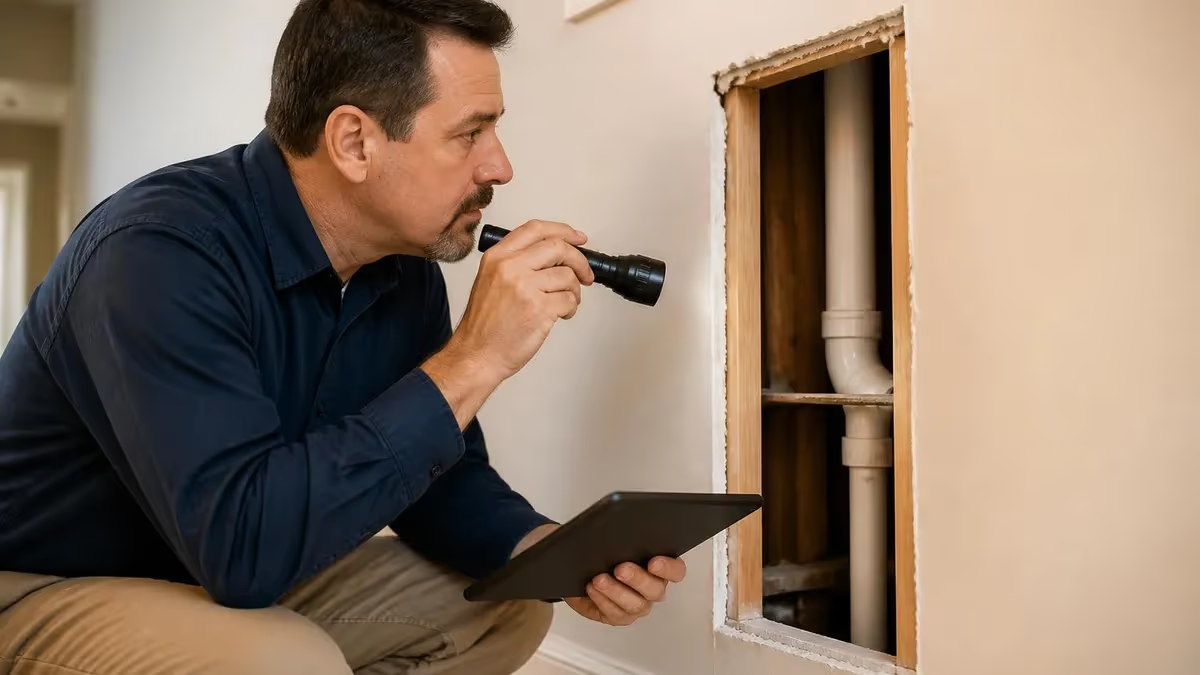
Searching for a home inspector near me is one of the most important steps you will take during a real estate transaction, and the inspector you hire can save or cost you tens of thousands of dollars. A skilled local inspector knows the climate quirks, soil conditions, building code variations, and common defects in your specific market, which translates into a far more useful report than a generic checklist.
Whether you are a first-time buyer, a seller preparing for listing, or an investor flipping properties, the right inspector becomes your most trusted second set of eyes on the largest purchase of your life.
The home inspection industry has matured rapidly over the last decade, with stricter licensing in most states, standardized reporting software, and detailed online review ecosystems that make vetting easier than ever. Yet quality still varies dramatically from inspector to inspector, even within the same zip code. Two professionals walking through the same 2,400 square foot ranch can produce wildly different reports, with one flagging twelve serious issues and the other noting only minor cosmetic concerns. Knowing how to choose, what to expect, and how to read the final report is essential.
This guide walks you through every practical question buyers and sellers ask when they begin their search. We cover how to find qualified home inspectors near me, what a typical inspection costs in 2026, what items an inspector legally must check, which red flags should make you walk away, and how regional markets like Chicago and Minnesota differ in pricing and scope. You will also learn how to interpret the report, negotiate repairs, and decide whether specialty add-ons like radon, sewer scope, or termite testing are worth the extra fee.
We have collected current data from professional associations including InterNACHI, ASHI, and state licensing boards, plus pricing surveys across forty major metropolitan areas. The result is a complete, vendor-neutral resource designed to help you make a confident decision in under an hour. By the end, you will know exactly what questions to ask, what to expect at the property, and how much you should reasonably pay for a quality inspection in your zip code in 2026.
For readers researching the profession itself, perhaps because you are considering a career change, we also explain how inspectors are trained, certified, and paid. Demand for qualified inspectors continues to climb because housing turnover, insurance requirements, and stricter lender rules have made third-party inspections nearly universal. The average inspector now performs between 200 and 400 inspections per year, and top performers in busy markets clear six figures.
If you are short on time, jump to the FAQ at the end for direct answers to the most common buyer and seller questions. Otherwise, work through each section sequentially. We have organized this guide to mirror the actual hiring journey, starting with how to find candidates, moving through pricing and scope, and ending with how to use the finished report as use during negotiations or, if necessary, as grounds to walk away from a bad deal entirely.
Home Inspections by the Numbers (2026)

How to Find Qualified Home Inspectors Near Me
Search InterNACHI, ASHI, and NAHI member directories by zip code. These organizations require continuing education, ethics agreements, and standardized reporting, so candidates listed there have at minimum baseline credentials and ongoing accountability to peers.
Forty-two states license home inspectors. Use your state's department of commerce or real estate division site to confirm current license status, insurance, and any disciplinary actions before you ever pick up the phone to request a quote.
Agents work with inspectors weekly and know who is thorough, who is fast, and who avoids confrontation. Ask for three names rather than one, and choose the inspector your agent privately admits is the toughest, not the friendliest.
Filter for inspectors with at least 50 reviews and a 4.7-plus average. Read three-star reviews carefully because they reveal real friction points, not extreme outliers from either delighted or furious customers.
Local buyer and homeowner groups produce honest, unsponsored recommendations. Search prior threads before posting fresh because the same two or three top inspectors typically surface repeatedly across hundreds of community endorsements.
So how much do home inspectors charge in 2026? The honest answer is that pricing varies more by region, square footage, and add-on services than by inspector skill. National median pricing sits around $425 for a typical 2,000 square foot single-family home, but the range stretches from $275 in low-cost rural markets to over $700 in dense coastal metros. Larger homes scale up roughly $50 per additional 500 square feet, and older homes with knob-and-tube wiring or galvanized plumbing often command a premium because they require more time and expertise to evaluate properly.
The biggest pricing question for buyers is whether to choose the cheapest bid or pay extra for a senior inspector. Our recommendation is almost always to spend the extra hundred dollars. The cost difference between a discount inspector and a top-rated one is trivial compared to the cost of missing a failing HVAC system, an active roof leak, or a foundation crack that signals structural settlement. Think of inspection fees as insurance against a six-figure surprise after closing.
Add-on services drive significant additional cost. Radon testing typically runs $125 to $200, sewer scope inspections cost $200 to $350, mold sampling adds $300 to $600, and pool or septic evaluations can add another $200 to $500 each. In many markets, package deals bundle these services at a 15 to 20 percent discount, so always ask for a comprehensive quote rather than ordering services piecemeal. For homes built before 1978, lead-based paint and asbestos testing may also be worth the additional expense.
Geographic variation matters more than buyers realize. A 2,500 square foot home in Phoenix typically inspects for $425, while the identical home in San Francisco runs closer to $750. Rural Midwest pricing remains the lowest in the nation, often under $325, while the Northeast and West Coast metros consistently rank highest. If you are relocating from another region, budget based on your new market, not your prior one, and remember that what counts as expensive in Texas might be a bargain in Boston.
Pricing transparency is another differentiator. The best inspectors publish flat-rate pricing on their websites, send a written engagement letter before the inspection, and never add surprise fees on the day of service. If an inspector refuses to quote in advance, treats pricing as confidential, or insists on cash-only payment, treat those as serious warning signs and continue your search. Reputable professionals accept credit cards, send digital invoices, and clearly itemize every charge for buyer review.
Curious about industry economics? The data shows that home inspector salary figures have climbed nearly 20 percent over the last five years, reflecting both higher fees and increased demand. Full-time inspectors performing four inspections per week typically gross between $90,000 and $160,000 annually, though that figure shrinks substantially after insurance, vehicle costs, software subscriptions, marketing, and continuing education are subtracted. Net income for established solo inspectors in mid-sized markets usually lands between $65,000 and $110,000.
Finally, never let price alone drive your decision. The two strongest predictors of inspection quality are years of experience and number of inspections completed. An inspector who has personally walked through more than 2,000 homes will spot subtle defects that a newer professional, however well-intentioned, simply has not seen often enough to recognize quickly. Pay for experience, not for the lowest bid, and you will rarely regret the choice once the report arrives in your inbox three days later.

Home Inspector Practice Test Questions
Prepare for the Home Inspector Test exam with our free practice test modules. Each quiz covers key topics to help you pass on your first try.
Home Inspector MCQ
Home Inspector Exam Questions covering MCQ. Master Home Inspector Test concepts for certification prep.
Home Inspector Test
Free Home Inspector Practice Test featuring Test. Improve your Home Inspector Exam score with mock test prep.
Home Inspector Trivia
Home Inspector Mock Exam on Trivia. Home Inspector Study Guide questions to pass on your first try.
Home Inspector Home Online Inspector Test
Home Inspector Test Prep for Home Online Inspector Test. Practice Home Inspector Quiz questions and boost your score.
Home Inspector Top Rated Home Inspector
Home Inspector Questions and Answers on Top Rated Home Inspector. Free Home Inspector practice for exam readiness.
Home Inspector Ultimate Home Inspector
Home Inspector Mock Test covering Ultimate Home Inspector. Online Home Inspector Test practice with instant feedback.
Home Inspector Electrical System Safety Ha...
Free Home Inspector Quiz on Electrical System Safety Hazards. Home Inspector Exam prep questions with detailed explanations.
Home Inspector Forced-Air Furnace Inspection
Home Inspector Practice Questions for Forced-Air Furnace Inspection. Build confidence for your Home Inspector certification exam.
Home Inspector Plumbing DWV Systems
Home Inspector Test Online for Plumbing DWV Systems. Free practice with instant results and feedback.
Home Inspector Roofing Systems and Materials
Home Inspector Study Material on Roofing Systems and Materials. Prepare effectively with real exam-style questions.
Home Inspector Structural Framing Defects
Free Home Inspector Test covering Structural Framing Defects. Practice and track your Home Inspector exam readiness.
What Do Home Inspectors Look For?
Inspectors begin outside, evaluating the roof covering, flashing, gutters, downspouts, and chimney for visible damage, missing shingles, or improper installation. They examine foundation walls for cracks wider than a quarter inch, evidence of settlement, water staining, or efflorescence indicating moisture intrusion. Grading around the perimeter receives close attention because soil sloping toward the home is a leading cause of basement leaks and crawlspace moisture problems in nearly every climate zone.
Siding, windows, doors, decks, porches, and railings are checked for rot, separation, peeling paint, and safety hazards such as loose handrails or improperly spaced balusters. Driveways, walkways, retaining walls, and exterior stairs round out the structural review. Most inspectors photograph each defect with annotations so the buyer can see exactly what was flagged and where, which makes negotiating repairs with the seller substantially easier during the option period.
Should You Hire the First Inspector Your Agent Recommends?
- +Agent referrals are pre-vetted for reliability and communication
- +Familiarity with local building stock speeds up the inspection
- +Easier scheduling because the inspector knows the agent's timeline
- +Reports follow a format your agent can interpret quickly
- +Established relationship means fewer transactional friction points
- +Often discounted rates through preferred-vendor arrangements
- −Possible bias toward closing the deal rather than flagging issues
- −You miss tougher, more thorough independent inspectors
- −Referral fees may quietly inflate the cost passed to buyers
- −Less likely to deliver an aggressive, deal-killing report
- −Conflict of interest if the inspector depends on agent referrals
- −You lose negotiating use when the agent controls the narrative
Pros and Cons at a Glance
| Pros | Cons |
|---|---|
| Agent referrals are pre-vetted for reliability and communication | Possible bias toward closing the deal rather than flagging issues |
| Familiarity with local building stock speeds up the inspection | You miss tougher, more thorough independent inspectors |
| Easier scheduling because the inspector knows the agent's timeline | Referral fees may quietly inflate the cost passed to buyers |
| Reports follow a format your agent can interpret quickly | Less likely to deliver an aggressive, deal-killing report |
| Established relationship means fewer transactional friction points | Conflict of interest if the inspector depends on agent referrals |
| Often discounted rates through preferred-vendor arrangements | You lose negotiating use when the agent controls the narrative |

Hiring Checklist: Verify Your Home Inspector Near Me
- ✓Confirm active state license through the official licensing board website
- ✓Verify current errors and omissions plus general liability insurance
- ✓Check InterNACHI, ASHI, or NAHI membership status directly with the association
- ✓Read at least 20 recent online reviews across Google, Yelp, and Facebook
- ✓Request a sample report to evaluate clarity, photos, and recommendation tone
- ✓Ask how many inspections the inspector has personally completed lifetime
- ✓Confirm written flat-rate pricing with no day-of surprise add-ons
- ✓Verify the inspector, not an assistant, will perform your specific inspection
- ✓Ask whether you can attend and walk through the property together
- ✓Confirm report delivery timeline, typically within 24 to 48 hours after inspection
Attend the inspection in person whenever possible
Buyers who attend their inspection learn ten times more about the home than those who only read the report. You get a live walkthrough, can ask questions on the spot, and develop a maintenance roadmap for the first five years of ownership. Block three hours, bring a notebook, and treat it as the most valuable real estate education you will ever receive.
Regional markets behave very differently, and Chicago and Minnesota provide two of the most instructive case studies for understanding how location shapes inspection scope and pricing. Chicago area home inspectors deal with century-old brick three-flats, basement apartments converted from coal storage, and concrete porches that have settled three inches over decades of freeze-thaw cycling. The defect patterns are predictable but unforgiving, and an inspector who has not worked Chicago housing stock will miss problems that a seasoned local will spot in seconds from the sidewalk.
Pricing for home inspectors Chicago averages between $475 and $625 for a typical single-family bungalow or two-flat, with downtown condos running slightly lower at $325 to $450 because the inspection scope is narrower. Two-flat and three-flat inspections command premium pricing, sometimes exceeding $800, because each unit must be evaluated separately, and shared mechanical systems require careful tracing through basement utility rooms that often contain mid-century knob-and-tube wiring or original 1920s steam boilers still in service.
Minnesota tells a different story. Discussion of minnesota home inspectors pricing reddit threads shows wide regional variation between Twin Cities metro pricing, typically $400 to $550, and outstate markets like Duluth or Rochester where inspections frequently run $300 to $425. Minnesota's harsh winters mean attic ventilation, ice dam history, and foundation insulation receive far more scrutiny than in southern markets. Radon testing is essentially mandatory because much of the state sits over uranium-rich glacial till that drives indoor radon levels above the EPA action threshold.
Chicago inspectors must understand city-specific code variations including porch construction permits after the 2003 collapse tragedy, basement bedroom egress requirements, and unique electrical issues stemming from the city's 1950s-era conduit-only wiring standard. Minnesota inspectors focus heavily on vapor barriers, exterior wall insulation depth, frost-protected shallow foundations, and the dreaded combination of bath fans vented into attics, which is the single most common cause of attic moisture damage statewide.
For both markets, choosing a local specialist matters far more than for buyers in milder climates. A Chicago inspector who learned the trade in suburban Atlanta will not recognize the specific signs of foundation undermining from sewer line collapses common in older Chicago neighborhoods. A Minnesota inspector unfamiliar with frost heaving cycles may overlook foundation cracks that telegraph serious structural movement during a single winter season. Always hire a professional with at least five years of continuous experience inspecting in your specific metro market.
Insurance complications also vary regionally. Chicago and Minnesota both have insurance carriers that increasingly require four-point inspections, roof certifications, and electrical updates before issuing or renewing homeowner policies. A skilled local inspector knows which insurance carriers operate in the market and will format reports in a way that makes underwriting smoother, which can shave weeks off your closing timeline and prevent last-minute carrier surprises that derail otherwise routine transactions for buyers who picked the wrong inspector.
Finally, climate-driven defects are seasonal. Inspecting a Chicago home in January means you cannot test air conditioning or examine roof drainage during a storm event. Inspecting a Minnesota home in July means you cannot evaluate furnace performance under heating load. Skilled local inspectors compensate by noting season-limited findings, recommending follow-up inspections in opposite seasons when material concerns exist, and adjusting their report language to reflect what they could and could not realistically evaluate during the specific weather window in which your inspection took place.
Walk away from inspectors who refuse to provide a sample report, lack current insurance, perform inspections in under 90 minutes regardless of home size, or pressure you to skip recommended specialty services. These shortcuts often indicate sloppy work or potential conflicts of interest with the listing agent or seller that compromise the independence your inspection is supposed to provide.
The inspection report itself is where the real work begins. A complete report from a quality inspector typically runs 40 to 80 pages, includes 200 to 600 annotated photographs, and organizes findings into severity categories such as safety hazards, major defects, minor defects, and maintenance recommendations. Resist the urge to panic when you see a long list of issues, because virtually every home has dozens of items flagged, including new construction. Focus on the safety and major defect sections first, because those drive negotiation and inform your decision about whether to proceed.
Reading the report effectively requires distinguishing between cosmetic items and material defects. A cracked outlet cover is a five-dollar fix. A failed double-pole 240-volt breaker feeding the dryer circuit is a serious safety concern requiring a licensed electrician. Inspectors do not provide repair cost estimates, so you may need to gather two or three contractor quotes for significant findings before requesting seller credits or repairs. Most attorneys recommend prioritizing concessions for items costing over $1,000 because smaller issues rarely move sellers to negotiate.
If the report reveals a deal-breaking issue such as active foundation movement, widespread mold, a failing septic system, or an unpermitted addition with serious code violations, your option period is the time to either renegotiate aggressively or terminate the contract. Buyers often hesitate to walk away because they are emotionally invested, but a bad inspection is precisely why you paid for the inspection in the first place. Trust the data, consult your agent and attorney, and make a clear-eyed decision before the deadline expires permanently.
For routine findings, work with your agent to draft a repair request or credit request based on the specific items in the report. Sellers typically respond more favorably to lump-sum credits at closing than to repair commitments, because credits give buyers control over contractor selection and quality. Repair requests work best when limited to safety-critical items such as electrical hazards, gas leaks, structural deficiencies, or water intrusion problems that could worsen significantly between contract signing and the closing date.
Many buyers wonder whether to hire specialty inspectors beyond the generalist. If the report flags HVAC concerns, electrical anomalies, or structural questions, a follow-up evaluation by a licensed contractor in that trade typically costs $150 to $400 and produces a definitive answer about scope and cost. Specialty inspections for radon, sewer scope, mold, termite, and chimney are usually best ordered alongside the original inspection rather than after, both for scheduling efficiency and for negotiation use during the option period.
Researching how to become a home inspector reveals an industry with strong job security and meaningful work helping families avoid costly mistakes. If you have a background in construction, real estate, or engineering, the career transition typically takes three to six months and pays for itself within the first year. Demand is rising as housing turnover, insurance requirements, and lender mandates push more transactions through formal inspection processes than ever before in modern American real estate history.
Once you have the report, store it permanently. Even after closing, the inspection report serves as a maintenance roadmap, a reference document for future repair planning, and supporting evidence if defects emerge that the seller should have disclosed. Many buyers reference their original inspection report a dozen times during the first three years of ownership, especially when scheduling preventive maintenance, planning renovations, or filing insurance claims related to issues that were documented at the time of purchase but not yet active.
Practical preparation for your inspection day makes a substantial difference in how much value you extract from the process. Show up fifteen minutes early, dressed for crawling into attics and basements if your inspector allows attendance in those areas. Bring a notebook, a phone with full battery, and a flashlight. Many inspectors welcome buyer involvement during the final walkthrough portion, where they summarize findings and answer questions, even if liability concerns prevent you from being present during attic and roof evaluations themselves.
Prepare a list of questions in advance based on what you noticed during your showings. Did you smell mustiness in the basement? Was one bedroom noticeably cooler than the others? Did the front door stick when you opened it? Specific observations help inspectors target their attention efficiently and produce a report that addresses your actual concerns rather than just the standardized checklist. Buyer-driven prompts often surface issues that would otherwise have been noted only in passing without deeper investigation.
Bring your real estate agent, but limit their role to observation rather than direction. Agents sometimes try to minimize concerns or rush the inspector to keep the deal on track. Your inspector works for you, paid by you, and reports to you alone. If your agent attempts to steer the conversation, kindly remind everyone that the inspection's purpose is to surface every meaningful concern so you can make an informed decision, not to validate the assumption that the deal must close on the original timeline regardless of findings.
Take photographs of any items you discuss with the inspector, especially defects that may be cosmetically minor but functionally significant. Your phone's voice memo feature is also invaluable for recording verbal explanations the inspector provides about specific findings. These notes supplement the formal report and capture nuance that the written document often loses, such as the inspector's assessment of how urgent a repair is or how long a marginal component might continue to function before requiring replacement.
Once the inspection ends, review the verbal summary carefully and ask the inspector to clarify any terms or recommendations you do not fully understand. Reputable inspectors welcome questions and will gladly spend an extra fifteen minutes explaining the difference between a hairline foundation crack and an active structural failure. If your inspector seems impatient with questions or unwilling to elaborate beyond the written report, take note for future referrals because that communication style suggests a transactional rather than educational approach to the work.
After receiving the written report, read it twice. The first read should be a quick scan to identify safety-critical and major defect items. The second read, done a day or two later, should be slower and more comprehensive, looking for patterns such as multiple plumbing issues that might indicate aging supply lines, or several electrical anomalies that might point to outdated panel components. Pattern recognition across findings often reveals the larger story the home is telling about deferred maintenance versus genuinely solid construction.
Finally, remember that how much do home inspectors make ultimately depends on volume and reputation, which means the best inspectors stay booked solid weeks in advance. If your top three choices cannot inspect within your option period, push your closing date back rather than settling for an inferior alternative. A two-week delay is trivial compared to the financial consequences of missing a structural defect that the right inspector would have caught immediately upon walking the perimeter and examining the foundation walls.
Sample Home Inspector Test Practice Questions
Try these questions from our free Home Inspector Test practice tests. The correct answer and an explanation follow each question.
Which condition is a home inspector MOST likely to find in a roof with insufficient attic ventilation?
- A. Premature shingle aging and potential for ice dam formation
- B. Excessive solar reflectance of roofing material
- C. Structural rafter cracking from wind loads
- D. Gutter overflow from debris accumulation
Answer: A. Premature shingle aging and potential for ice dam formation
Poor attic ventilation traps heat and moisture, causing shingles to age prematurely from heat below and increasing the risk of ice dams in cold climates.
What does a home inspector verify about the non-combustible hearth extension in front of a fireplace opening?
- A. That the hearth is decorative rather than functional in modern homes
- B. That the hearth tiles match the surrounding floor finish
- C. That the hearth extends at least 16 inches in front of and 8 inches to each side of the firebox opening
- D. That the hearth was installed by a licensed contractor
Answer: C. That the hearth extends at least 16 inches in front of and 8 inches to each side of the firebox opening
Hearth extensions must be non-combustible and extend a minimum of 16 inches forward and 8 inches laterally from the firebox opening to contain sparks and embers.
During a virtual home inspection, which tool allows an inspector to annotate areas of concern directly on shared screen footage?
- A. Screen annotation software
- B. PDF editor
- C. Word processor
- D. Email client
Answer: A. Screen annotation software
Screen annotation software lets inspectors draw, highlight, and label defects in real time during a live video walkthrough.
A home inspector notices that a vent pipe terminates in an attic rather than penetrating through the roof. What is the deficiency?
- A. Attic vents are permitted if the attic is ventilated
- B. Sewer gases will accumulate in the attic, creating a health hazard
- C. The pipe diameter must be increased in the attic
- D. Attic terminations require a larger cap
Answer: B. Sewer gases will accumulate in the attic, creating a health hazard
Vent pipes must terminate outdoors above the roofline; terminating in an attic allows toxic sewer gases to accumulate in the structure.
Home Inspector Questions and Answers
About the Author

Licensed Real Estate Broker & Licensing Exam Specialist
University of Wisconsin School of BusinessSandra Taylor is a Graduate Realtor Institute (GRI) and Accredited Buyer's Representative (ABR) designee with an MBA in Real Estate from the University of Wisconsin School of Business. She has 18 years of residential and commercial real estate brokerage experience and coaches real estate license candidates through state salesperson and broker pre-license examinations across multiple states.