
Home Inspector Courses: Best Schools, Costs & State Requirements (2026 October)
📝 Best home inspector courses ranked: InterNACHI, ASHI, AHIT, ICA. Compare price, hours, state approval, online vs in-person. Find the right program in 2026 October.
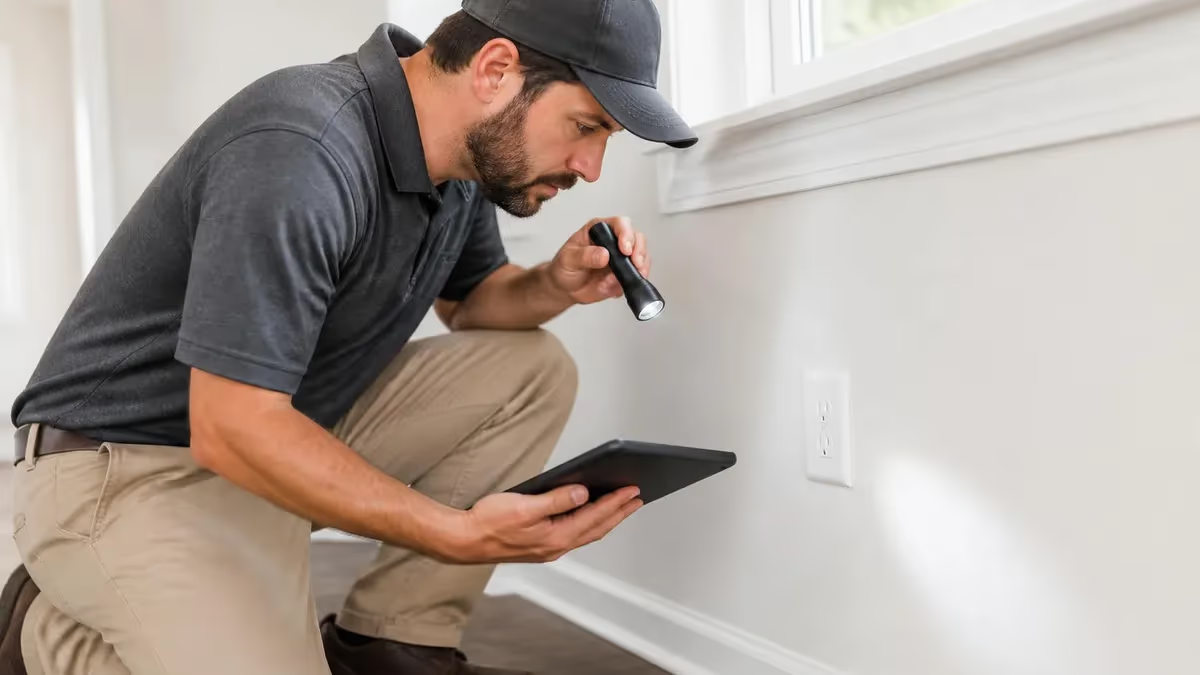
What to know before enrolling in 2026
The best home inspector courses cost between $499 and $2,000 for pre-license training, run 60 to 140 hours depending on your state, and combine online coursework with mentored field inspections. InterNACHI is the most enrolled program (1,000+ free courses with $499 membership), ASHI School carries the strongest reputation among real estate agents, and AHIT dominates the 1-week in-person bootcamp niche. State requirements vary wildly: Texas mandates 154 hours, Florida wants 120 hours plus 25 supervised inspections, California requires zero. Always confirm your state board approves the course before paying.
Home Inspector Course Snapshot
Key Facts at a Glance
| Item | Value | Details |
|---|---|---|
| Course Cost Range | $499–$2,000 | |
| Hours Required | 60–154 | |
| Time to Complete | 4–12 weeks |

Home Inspector Courses: Best Schools, Costs & State Requirements (2026)
Choosing the right home inspector course is the single biggest decision in your first 90 days as a future inspector. Pick well and you walk into your state exam with confidence, a real network of mentors, and a portfolio of supervised inspections that turn into paying clients.
Pick poorly and you burn $1,500 on a slick video library that ignores your state's specific licensing law and leaves you no closer to a paycheck. This guide compares every major provider in 2026, breaks down what each course actually covers, and tells you which schools are worth the price tag and which are not.
We pulled course catalogs, student reviews, state board approval lists, and tuition data from every nationally recognized home inspector school operating in the United States this year. We also cross-referenced what real working inspectors say on InterNACHI message boards, ASHI member forums, and r/HomeInspector. The result is a ranking that reflects what programs actually deliver, not what their marketing says they deliver.
If you have not yet decided whether home inspection is the right career, our how to become a home inspector walks through licensing routes, day-in-the-life expectations, and the first 90 days of practice. For income expectations, our home inspector salary covers pay by state, niche, and experience. The article you are reading now picks up after both of those decisions: which specific course do you actually enroll in?
A quick framing note before we get into provider-by-provider comparisons. There is no single best home inspector course for every reader. The right program depends on three things: your state's licensing law, your learning style (online self-paced versus classroom versus field bootcamp), and your starting budget. We will work through each of those filters so you can match yourself to the right school instead of just chasing the lowest sticker price.
The Top 8 Home Inspector Courses Ranked
The U.S. has dozens of training providers but only a handful that consistently produce inspectors who pass state exams, build profitable businesses, and stay in the industry past year three. Our ranking weighs state board approval coverage, exam pass rates, instructor quality, field training inclusion, and ongoing support after graduation. Here is how the eight major providers stack up in 2026.
1. InterNACHI (International Association of Certified Home Inspectors). The largest home inspector training organization in the world. A $499 annual membership unlocks 1,000+ online courses, 200+ certifications, free unlimited continuing education, marketing materials, contract templates, and a personal inspector website. Most new inspectors start here because the price is unbeatable and the coverage is comprehensive. The catch: InterNACHI courses are not state-board approved in every state. Check your state's pre-license requirements first.
2. ASHI School (American Society of Home Inspectors). The gold-standard reputation school. ASHI is the oldest professional organization in the industry and its training school carries weight with real estate agents and lenders. Courses run $895 for online to $2,000+ for hybrid online plus in-person field training. Job placement assistance is strong, and the ASHI Certified Inspector (ACI) credential is a marketing asset many inspectors keep for life.
3. AHIT (American Home Inspectors Training). The 1-week in-person bootcamp leader. AHIT offers online-only ($499–$899) and hybrid programs that combine 60+ online hours with a 5-day classroom intensive plus 1-2 mentored field inspections ($1,295–$1,499). Excellent for career changers who learn faster in person and want to be inspection-ready in 3-4 weeks. State board approvals are broad.
4. ICA School (Inspection Certification Associates). The most popular pure-online home inspector course. Tuition runs $599 to $1,199 depending on package. ICA includes lifetime access to course materials, a guarantee that you pass the National Home Inspector Exam, and free business-launch software. Reviews praise the affordability and dislike the lack of mandatory field component.
The Two-Program Stack Most Working Inspectors Recommend
5. ATI Training Center. An in-person classroom and field-training program based primarily in California with satellite locations. Tuition starts at $1,295 and runs to $2,500+ for the full certification package. ATI's strength is hands-on lab time with real defects, real systems, and instructor-led inspections of training homes. Best for hands-on learners.
6. PHII (Professional Home Inspection Institute). A comprehensive online provider with state-specific course tracks for nearly every licensing state. Tuition $895 to $1,495. PHII includes report-writing software training, marketing modules, and a 100% money-back exam pass guarantee. State board approval list is one of the longest in the industry.
7. NIBI (National Institute of Building Inspectors). A long-running provider with both online and in-person tracks. Tuition $895 to $1,995. NIBI's instructors are working inspectors, which keeps the curriculum tied to current standards of practice. Strong reputation in the northeast and midwest.
8. Allied Schools. Best known for real estate education, Allied also runs a home inspector pre-license course at $895 to $1,495. The program is approved in most licensing states and includes prep for the WIN Home Inspection franchise system, which is useful if you plan to franchise rather than independent.
Home Inspector Course Selection: Providers, Types, State Rules, Costs
1. InterNACHI ($499/yr membership): 1,000+ online courses, lifetime CE included, marketing tools, free inspector website. Best all-around value. First-year free trial available for serious candidates testing the field.
2. ASHI School ($895–$2,000+): Strongest brand reputation, agent recognition, in-person plus online options, job placement help. Best for inspectors who plan to compete on credibility and premium pricing.
3. AHIT ($499–$1,499): 1-week in-person bootcamps plus online prep. Best for career changers who want to be inspection-ready in 3–4 weeks. Excellent state board approval coverage.
4. ICA School ($599–$1,199): Most popular pure-online option. Pass-guarantee on the National Home Inspector Exam, lifetime course access, free business software. Best low-cost online path.
5. PHII ($895–$1,495): State-specific tracks for every licensing state, report-writing software training, 100% pass guarantee. Best for state-compliance certainty.
Course Tuition Tiers & What You Get

State-by-State Course Hour Requirements
Every U.S. state writes its own home inspector licensing law and the variance is dramatic. Some states demand more pre-license hours than a private pilot's license. Others require nothing at all. Before you pay a single dollar of tuition, look up your state's current requirement. The most common mistake new inspectors make is buying a slick national online course that does not satisfy their state board's specific hour or content requirements, then having to take a second state-approved course on top of it.
The licensing states with the highest hour requirements are Texas (154 hours), North Carolina (200 hours total when you include mentored inspections), New York (140 hours), Mississippi (120 hours), and Florida (120 hours plus 25 inspections). Mid-range states include Illinois (60 hours), Tennessee (90 hours), Indiana (64 hours), and Massachusetts (75 hours). Several states do not license home inspectors at all, including California, Colorado, Georgia, Idaho, Kansas, Michigan, Minnesota, Missouri, Montana, Nebraska, New Mexico, Ohio, Utah, Vermont, and Wyoming.
If your state does not license, you can still build a credible practice. Most non-licensing-state inspectors join InterNACHI or ASHI to gain a recognizable credential that real estate agents and homebuyers respect. In these states, the credential and your reviews matter more than any specific hour count, because there is no state-issued license to display. The marketing argument shifts entirely toward third-party certification and verified reviews.
A second variable that catches many candidates off guard is the supervised inspection requirement. States like Florida (25 inspections), North Carolina (80 hours of mentored field work), and New York (40 hours of field training) require you to perform real inspections under the eye of a licensed inspector before you can sit for the state exam. This is not coursework. It is field time with a mentor, often arranged through training schools or through paid apprenticeships. Plan for it in your timeline because it is the longest-pole item in many state pipelines.
What a Good Home Inspector Course Actually Covers
The content of a strong home inspector course is fairly standardized across reputable providers because all of them are teaching to either the National Home Inspector Exam (NHIE) blueprint or the InterNACHI Standards of Practice. Both cover the same nine major systems of a residential structure. Any course that skimps on any of these categories is not worth your tuition.
The nine systems you should expect to study in depth: structural components (foundation, framing, load paths), roof system (covering material, flashing, ventilation, drainage), exterior (siding, trim, doors, windows, grading), electrical (service entry, panels, branch circuits, GFCI/AFCI, grounding), plumbing (supply, drain-waste-vent, fixtures, water heaters), HVAC (heating, cooling, distribution, controls), interior (walls, ceilings, floors, doors, stairs), insulation and ventilation (attic, crawl, walls, vapor barriers), and built-in appliances (cooktops, dishwashers, garbage disposals).
Beyond the nine systems, a quality course covers report writing (using software like Spectora, HomeGauge, or Horizon), standards of practice (InterNACHI SOP or ASHI SOP), ethics and limitations (what an inspection is and is not), business operations (insurance, contracts, marketing, agent relationships), and state-specific law (your local licensing rules, disclosure requirements, and complaint procedures). Courses that skip the business and ethics modules leave new inspectors badly prepared for the realities of running a practice.
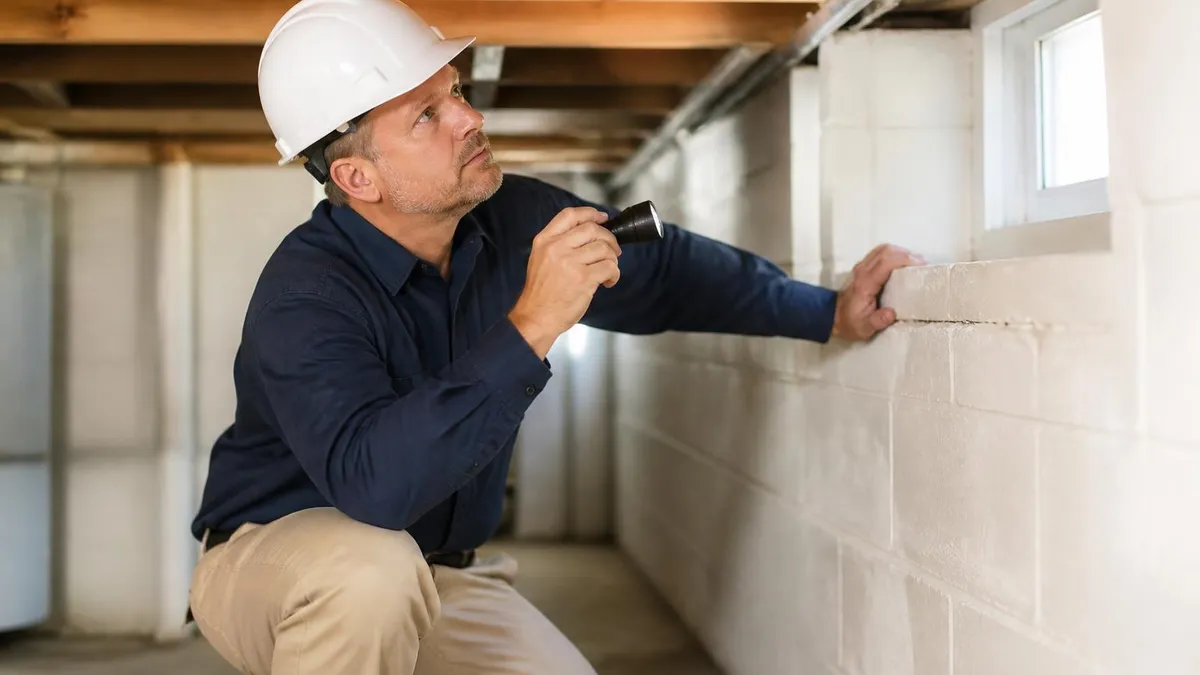
The single most predictive marker of course quality is whether the program includes supervised field inspections. You can memorize every page of every textbook, but until you have crawled into a 1953 basement with a flashlight and ID'd active termite damage in person, you are not actually ready to charge $500 for an inspection. Programs that include at least three mentored field inspections (AHIT, ASHI School hybrid, NIBI hybrid, ATI in-person) are dramatically more valuable than pure-online programs at the same price point.
5 Must-Haves in Any Home Inspector Course
- Why it matters: Required to sit for licensing exam
- How to verify: Check state real estate or commerce dept site
- Common mistake: Trusting a school's marketing claim alone
- Update frequency: Approval lists change yearly
- Minimum count: 3+ supervised inspections
- Best programs: AHIT, ASHI School hybrid, NIBI, ATI
- Why critical: Translates theory into real inspection skills
- Cost impact: Adds $300–$1,000 to tuition
- What to ask: % who pass NHIE/state exam on first try
- Good benchmark: 75%+ first-try pass rate
- Pass guarantee: ICA, PHII, AHIT offer money back
- Watch for: Vague 'high pass rates' without numbers
- Standard at: InterNACHI, ICA, AHIT, PHII
- Why it matters: Codes and standards update yearly
- Refresher use: Quick review before tough inspections
- Marketing edge: Strong CE foundation for renewal cycles
- Top platforms: Spectora, HomeGauge, ISN, Horizon
- Why included: Reports are 50% of your daily work
- Time savings: Faster reports = more inspections/week
- Cost after course: $50–$120/month subscription
Online Self-Paced vs In-Person Bootcamp: Which Wins?
Roughly 70% of new home inspectors complete their pre-license training online, but the data on long-term success rates suggests in-person and hybrid programs produce inspectors who are more ready to charge real fees in month one. Online self-paced is cheaper, more flexible, and works well if you already have a construction trades background. In-person and hybrid programs cost more but compress your ramp-up dramatically because you actually touch real systems with an instructor at your shoulder.
The honest answer for most career changers is hybrid. Spend $1,295 to $1,795 on a program that combines 60-100 online hours with a 1-week in-person bootcamp and 2-5 mentored field inspections. You will finish the program in 4-6 weeks, walk into your state exam with confidence, and have done enough real-world inspecting to feel competent on your first paid job. Pure online courses save $600-$1,000 in tuition but cost you 3-6 months of extra ramp-up time, which is a poor trade once you start earning $400+ per inspection.
One specific path worth knowing about: many inspectors complete a $499 InterNACHI membership and a $1,295 AHIT hybrid bootcamp simultaneously. Total cost is about $1,800. The InterNACHI side gives you lifetime CE, marketing tools, and a free inspector website. The AHIT side gives you the state-approved hours, the bootcamp experience, and the field inspections. This combination is one of the most efficient paths to a profitable inspection business in 2026.
Online Self-Paced vs In-Person Bootcamp
- +Online: cheapest option ($499–$1,199 typical)
- +Online: flexible schedule, study around your current job
- +Online: lifetime access to recorded material in most programs
- +Online: no travel or lodging costs
- +Bootcamp: hands-on practice with real systems and defects
- +Bootcamp: instructor feedback in real time
- +Bootcamp: peer network with other new inspectors
- +Bootcamp: faster ramp to first paying inspection (4–6 weeks)
- −Online: no hands-on practice unless you add a field component
- −Online: completion rates lower without classroom accountability
- −Online: limited instructor feedback on real-world judgment calls
- −Online: weaker peer network for ongoing referrals
- −Bootcamp: 2–4x the cost of pure online ($1,295–$2,500)
- −Bootcamp: requires travel and 1–2 weeks off existing work
- −Bootcamp: fixed start dates limit scheduling flexibility
- −Bootcamp: usually still requires online prep before attending
Exam Prep: The National Home Inspector Exam (NHIE) & State Tests
After you complete your pre-license hours, most states require you to pass the National Home Inspector Exam (NHIE), a state-specific exam, or both. The NHIE is used by 20+ states as the licensing exam of record. It is a 200-question, 4-hour computer-based test administered by PSI. The pass rate hovers around 65-72% on first attempt, which is lower than most candidates expect. Strong courses include NHIE-specific prep banks with 500+ practice questions; weak courses leave you to find prep on your own.
Top programs guarantee you pass. ICA School, PHII, and AHIT all offer 100% money-back guarantees if you fail the NHIE after completing their full program. The fine print typically requires you to actually complete every module, take all practice tests, and attempt the NHIE within 6-12 months of finishing the course. Read the guarantee terms before assuming you are covered.
State-specific exams add another layer in 18 states, including Texas, Florida, North Carolina, New York, and Tennessee. These exams test your state's specific licensing law, disclosure requirements, and state-adopted standards of practice. Pre-license courses that are sold as state-specific (PHII state tracks, AHIT state add-ons, InterNACHI state law modules) include this content. Generic national courses do not, and you will need to buy a separate state law prep module.
For broader exam prep, our home inspector test hub has free practice questions covering all nine systems, ethics, and report writing. Most candidates pair their school's prep with our free practice questions during the final 2-3 weeks before exam day. The repetition across different question sources dramatically improves first-try pass rates.

60-Day Course Completion Timeline (Hybrid Track)
Week 1: Enroll & Set Up
Weeks 2-3: Core Systems Online
Weeks 4-5: Remaining Systems & Business
Week 6: In-Person Bootcamp
Weeks 7-8: Mentored Field Inspections
Week 9: NHIE Prep Sprint
Week 10: Sit for Exam
Continuing Education (CE) Requirements After Licensing
Earning your initial license is only the start. Almost every licensing state requires ongoing continuing education to renew your license, typically every 1-2 years. CE hour requirements range from 8 hours per year (Tennessee, Indiana) to 32 hours every 2 years (Texas, North Carolina). InterNACHI members get unlimited CE included in the $499 annual membership, which is one of the strongest long-term value arguments for that organization. Non-members typically pay $200-$600 per year for state-approved CE through AHIT, ASHI, PHII, or state association chapters.
The mistake to avoid: waiting until your license renewal deadline to start CE. Most states require all hours to be completed and reported 30-60 days before renewal. Build CE into your annual rhythm instead. The slow season (December-February) is the natural time to complete a year's worth of hours and pick up advanced certifications like radon (NRPP or NRSB), commercial inspection, sewer scope, drone roof inspection (FAA Part 107), and thermal imaging. Each advanced certification adds a profitable add-on service to your business.
Some of the most valuable continuing education content covers updates to building codes (IRC and IBC change every 3 years), state law updates, and new technology like drone inspection regulations. Working inspectors consistently report that the biggest CE return on time invested is staying current on attic ventilation, foundation moisture intrusion, and electrical service upgrades, because those are the three areas where missed defects most often turn into liability claims.
Free & Low-Cost Course Options
You do not have to spend $1,500 to start. Several legitimate paths exist for budget-conscious candidates. InterNACHI offers a free 90-day trial of full membership for serious candidates, which gives you access to 1,000+ courses at no cost. If you decide home inspection is for you, the $499 membership starts at day 91. If not, you walk away with strong working knowledge and no financial loss.
The VA GI Bill covers AHIT, ASHI School, and several other ACE-approved home inspector programs for eligible veterans. This can cover 100% of tuition for a hybrid program, including the in-person bootcamp travel costs. Veterans should always start by contacting AHIT's military programs office and the VA education benefits hotline before paying out of pocket.
US Inspect, the largest multi-state inspection firm in the country, offers free 1-day intro courses and paid apprenticeship pathways in select markets. These are designed to feed candidates into US Inspect employment, but you keep your training credentials regardless of whether you take a position with them. Several state association chapters (Florida ASHI, Texas Professional Real Estate Inspectors) also offer subsidized intro courses through college continuing education partnerships.
A final budget path: take the InterNACHI courses ($499) as your primary curriculum, then pay $300-$500 for state-specific compliance training through your state association. Total cost stays under $1,000 and you cover both the general curriculum and the state-specific law requirements. This works in states with moderate hour requirements (Illinois, Indiana, Tennessee) but may not satisfy stricter states like Texas or Florida.
State-Specific Top Programs
If your state has a difficult or unusual licensing law, choose a course built specifically for it rather than a generic national program. Texas candidates do best with PHII Texas, AHIT Texas, or Champions School of Real Estate's home inspector track. Each is built around the TREC Apprentice/Real Estate/Professional inspector tiers.
Florida candidates should look at ICA Florida, AHIT Florida, or Inspection Certified Florida, all of which build in the 25 supervised inspections requirement. California has no state license but the California Real Estate Inspection Association (CREIA) offers a respected CCRI credential that buyers and agents recognize; CREIA's training partner programs are worth the slight premium.
For New York's 140-hour requirement, ASHI School NYC and AHIT New York are the two most enrolled providers. For Illinois, ICA Illinois and InterNACHI Illinois together cover the 60-hour pre-license. For North Carolina's strict 200-hour total requirement (120 classroom + 80 mentored), the dominant choice is the NC Home Inspector Licensure Board's approved provider list (a short list of about 8 schools, mostly in-person community college programs). Always verify your state board's current approval list before paying tuition.
Course Enrollment Checklist
- ✓Confirm your state's exact pre-license hour requirement on the state board website
- ✓Pull the state board's current list of approved course providers (changes yearly)
- ✓Verify the school you are considering appears on that approval list by name
- ✓Ask the school for first-try NHIE pass rate data and money-back guarantee terms
- ✓Confirm the program includes at least 3 mentored field inspections if your state requires them
- ✓Check that the curriculum covers all 9 systems plus report writing, ethics, and business operations
- ✓Confirm lifetime access to materials so you can refresh during CE cycles
- ✓Compare total cost (tuition + state add-ons + exam fees + license application)
- ✓Look up student reviews on InterNACHI message boards, r/HomeInspector, and Google reviews
- ✓Verify GI Bill or workforce-development funding eligibility if applicable
- ✓Plan a realistic 4-12 week timeline including bootcamp dates and field inspection scheduling
- ✓Budget another $1,500-$3,000 for tools, software, E&O insurance, and marketing in month one
What Working Inspectors Wish They Knew Before Enrolling
Across InterNACHI message boards, ASHI member surveys, and r/HomeInspector, the same regrets surface repeatedly from inspectors looking back at their original course choice. The single most common: "I should have paid more for the hybrid program with field inspections." Inspectors who started with pure online courses uniformly report a longer, more painful ramp from licensing to consistent paying clients, usually by 3-6 months compared to peers who did hybrid programs.
The second most common regret: "I should have joined InterNACHI in year one for the marketing tools and CE." Inspectors who joined InterNACHI early get free inspector websites, contract templates, marketing scripts, and ongoing CE that compounds across their career. Those who waited until year three or four report spending $2,000-$5,000 more on marketing materials and software they could have gotten through the membership.
The third common regret is more subtle: "I picked the cheapest course and then had to retake parts of it for my state." The lesson is that state-specific approval matters more than price. A $1,295 state-approved hybrid program is dramatically cheaper than a $599 generic online program followed by $800 in state-specific make-up coursework after you realize the original course was not approved.
Many candidates also underestimate the time commitment. A 120-hour course is 120 contact hours on average, but realistic study time for someone without a construction background is closer to 200-250 hours of total work including practice tests, report writing exercises, and exam prep. Plan for 15-20 hours per week if you are working full-time at another job during the course. Programs that promise "complete in 4 weeks part-time" are usually pitching to people who already have trades experience.
Finally, the most experienced inspectors stress that your course is the start, not the finish. The real education happens in your first 100 paid inspections. Schools that include mentorship programs, alumni networks, and ride-along opportunities (ASHI School, AHIT, ATI) deliver value that compounds for years after graduation. Schools that hand you a certificate and disappear leave you to figure out the hardest part of the career alone.
Putting It All Together
The right home inspector course in 2026 is the one that satisfies your state's licensing law, fits your learning style, gives you mentored field experience, and pairs with InterNACHI or ASHI membership for ongoing support. For most candidates, the highest-value path looks like this: $499 InterNACHI membership for marketing tools and CE, plus a $1,295-$1,795 state-approved hybrid bootcamp (AHIT, PHII, or ASHI School) that includes online theory, in-person bootcamp, and 3-5 mentored field inspections. Total investment of about $1,800-$2,300 puts you on a state exam, a real network, and your first paying inspection inside 8-12 weeks.
From there, the path forward is volume, add-on certifications (radon, sewer scope, thermal imaging), agent relationships, and Google reviews. We cover the income side of that journey in our home inspector salary, and the broader career mechanics in our how to become a home inspector step-by-step guide. For state exam practice, our home inspector practice test PDF covers every system and is free to download. The school you pick matters, but the system around it matters more. Build the full stack and the career rewards compound for decades.
Sample Home Inspector Test Practice Questions
Try these questions from our free Home Inspector Test practice tests. The correct answer and an explanation follow each question.
During a home inspection, the inspector observes that wood structural members in the crawl space show evidence of wood-boring beetle activity. Which sign BEST distinguishes active infestation from old, inactive damage?
- A. Fresh, powdery frass and clean exit holes indicate active beetles
- B. Any exit holes in lumber indicate an active infestation
- C. Darkened exit holes always mean the infestation is currently active
- D. Beetle damage is always active unless chemically treated
Answer: A. Fresh, powdery frass and clean exit holes indicate active beetles
Fresh, fine powdery frass and bright, clean-edged exit holes indicate active wood-boring beetles, while old holes are typically darker and lack fresh frass.
When inspecting a home built in the 1960s, a home inspector finds that the roof is framed with rafters but there are no collar ties or ridge beam — only a non-structural ridge board. What is the likely consequence over time?
- A. Without collar ties, outward thrust causes the walls to spread and the ridge to sag
- B. The absence of collar ties only affects the roof's ability to resist snow loads
- C. Ridge boards alone are sufficient to carry all rafter loads without collar ties
- D. Non-structural ridge boards are acceptable in warm climates with no snow
Answer: A. Without collar ties, outward thrust causes the walls to spread and the ridge to sag
Without collar ties to resist horizontal thrust, rafter loads push the top of the walls outward, allowing the ridge to drop over time.
An online inspector is evaluating a home's HVAC system remotely. What is the best method for the homeowner to demonstrate the system's operation?
- A. Run the system through a full heating and cooling cycle while filming the registers and thermostat
- B. Show the inspector the equipment brand label only
- C. Point the camera at the outdoor condenser unit only
- D. Read the HVAC manual aloud to the inspector
Answer: A. Run the system through a full heating and cooling cycle while filming the registers and thermostat
Observing airflow at registers, thermostat response, and audible operation during a full cycle provides the inspector with functional performance data.
When inspecting an older home, a home inspector observes that the floor joists rest directly on the foundation sill plate but no metal anchor bolts are visible at the sill. What hazard does this present?
- A. The floor and wall framing can slide or lift off the foundation during high winds or seismic events
- B. Lack of anchor bolts causes moisture to wick into the sill plate
- C. Without anchor bolts, floor joists will sag prematurely due to settlement
- D. Anchor bolts are only required in seismic zones and are cosmetic elsewhere
Answer: A. The floor and wall framing can slide or lift off the foundation during high winds or seismic events
Anchor bolts connect the sill plate to the foundation, preventing the entire structure from sliding or lifting off during lateral forces such as wind or earthquakes.
Home Inspector Questions and Answers

About the Author

Licensed Real Estate Broker & Licensing Exam Specialist
University of Wisconsin School of BusinessSandra Taylor is a Graduate Realtor Institute (GRI) and Accredited Buyer's Representative (ABR) designee with an MBA in Real Estate from the University of Wisconsin School of Business. She has 18 years of residential and commercial real estate brokerage experience and coaches real estate license candidates through state salesperson and broker pre-license examinations across multiple states.